Hi, what do you want to do?





TeachEngineering
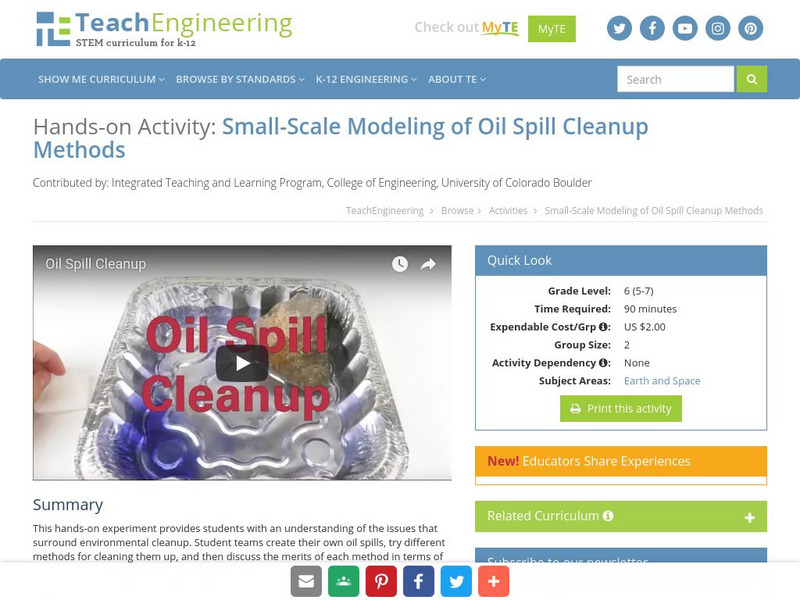
Teach Engineering: Oil Spill Cleanup
This hands-on experiment will provide students with an understanding of the issues that surround environmental cleanup. Students will create their own oil spill, try different methods for cleaning it up, and then discuss the merits of...

TeachEngineering
Teach Engineering: Who's Down the Well?
Drinking water comes from many different sources, including surface water and groundwater. Environmental engineers analyze the physical properties of groundwater to predict how and where surface contaminants will travel. For this lesson,...
TeachEngineering
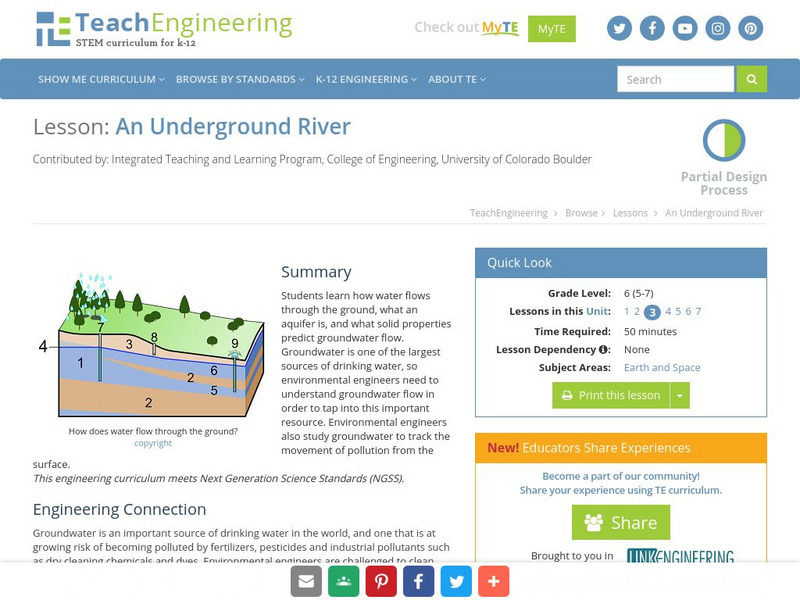
Teach Engineering: An Underground River
Groundwater is one of the largest sources of drinking water, so environmental engineers need to understand groundwater flow in order to tap into this important resource. Environmental engineers also study groundwater to predict where...
TeachEngineering
Teach Engineering: Interactions Everywhere!
This lesson introduces students to the concept of an environment and the interactions within it through written and hands-on webbing activities. The lesson also introduces students to environmental engineering careers and their roles in...
TeachEngineering
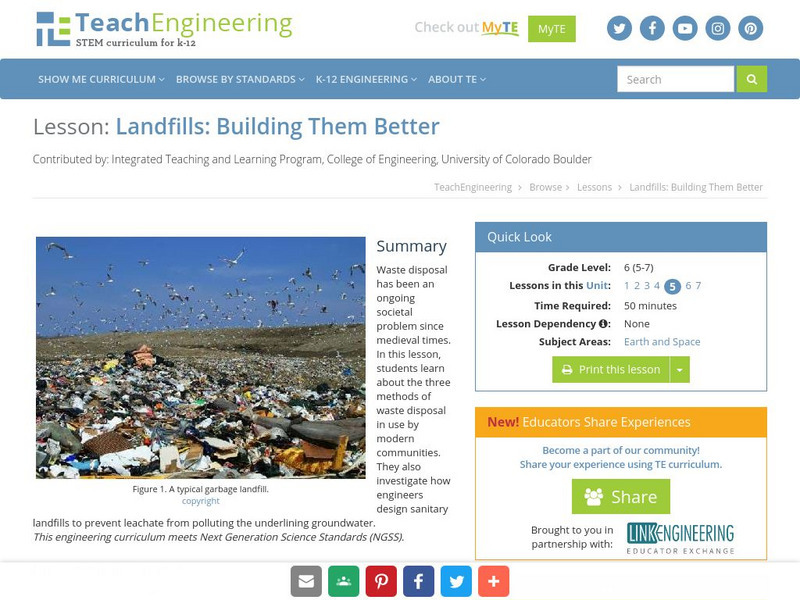
Teach Engineering: Landfills: Building Them Better
Waste disposal has been an ongoing problem since medieval times. Environmental engineers are employed to develop technologies to dispose of the enormous amount of trash produced in the United States. In this lesson, students will learn...
TeachEngineering
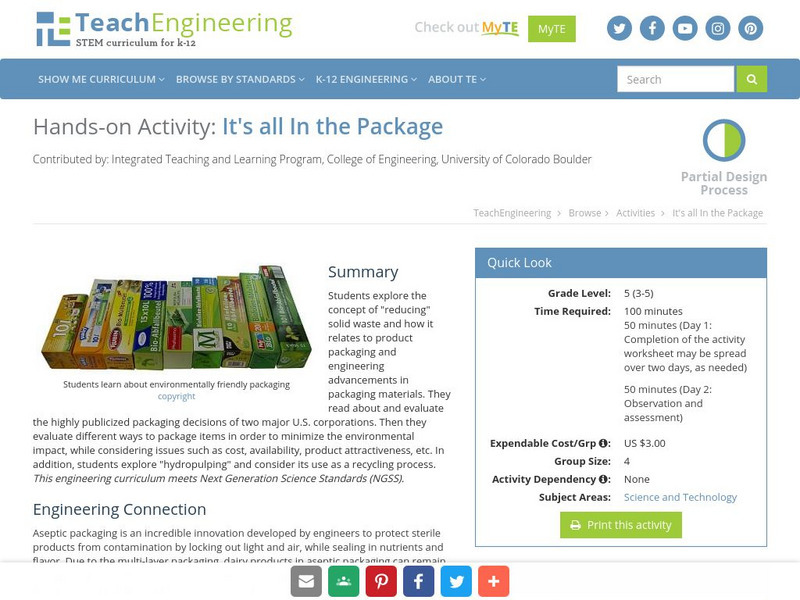
Teach Engineering: It's All in the Package
In this activity, students explore the concept of "reducing" solid waste and how it relates to product packaging and engineering advancements in packaging materials. Students read about and evaluate the highly publicized packaging...
TeachEngineering
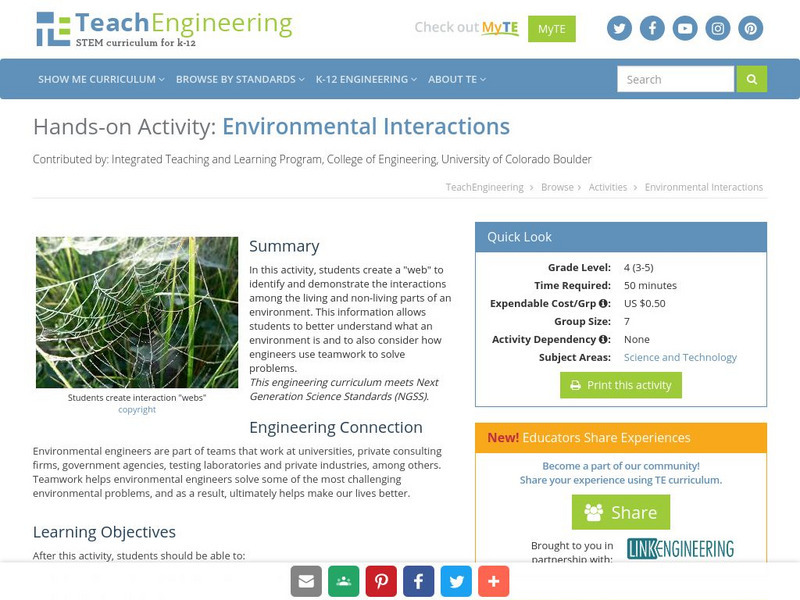
Teach Engineering: Environmental Interactions
In this activity, students create a "web" to identify and demonstrate the interactions among the living and non-living parts of an environment. This information allows students to better understand what an environment is and to also...
TeachEngineering
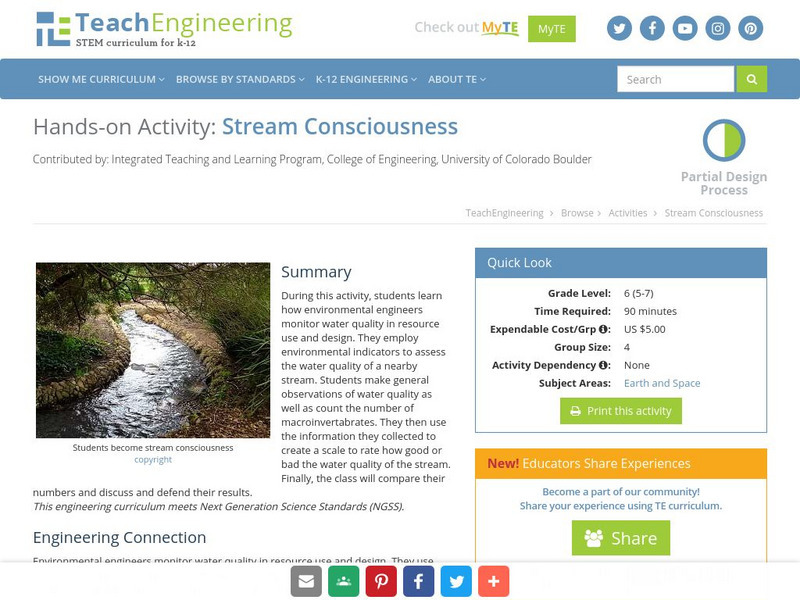
Teach Engineering: Stream Consciousness
During this activity, students will learn how environmental engineers monitor water quality in resource use and design. They will employ environmental indicators to assess the water quality of a nearby stream. Students will make general...
TeachEngineering
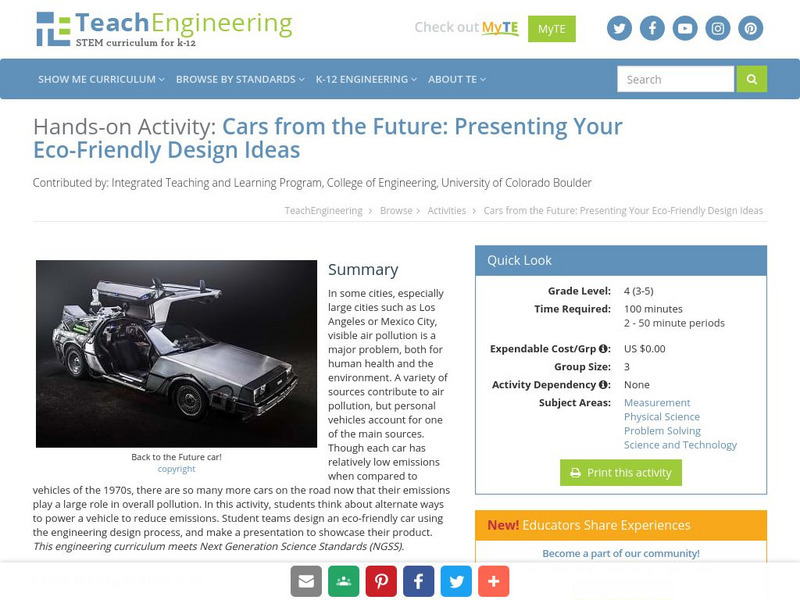
Teach Engineering: Cars From the Future
Students learn about air pollution caused by cars and what engineers are doing to try to help with the problem. Students then design their own environmentally friendly car and give a presentation to experience how engineers have to be...
TeachEngineering
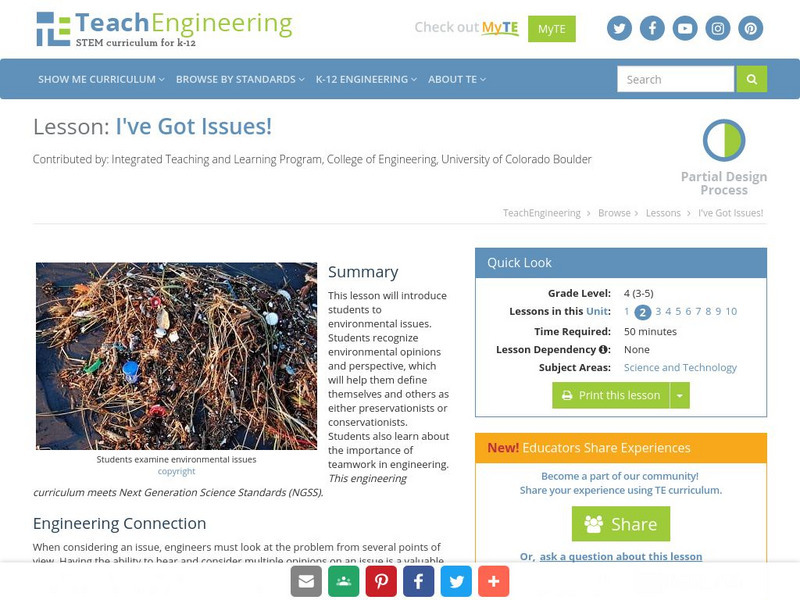
Teach Engineering: I've Got Issues!
This lesson will introduce students to environmental issues. Students will recognize environmental opinions and perspective, which will help them define themselves and others as either preservationists or conservationists. Students also...
TeachEngineering
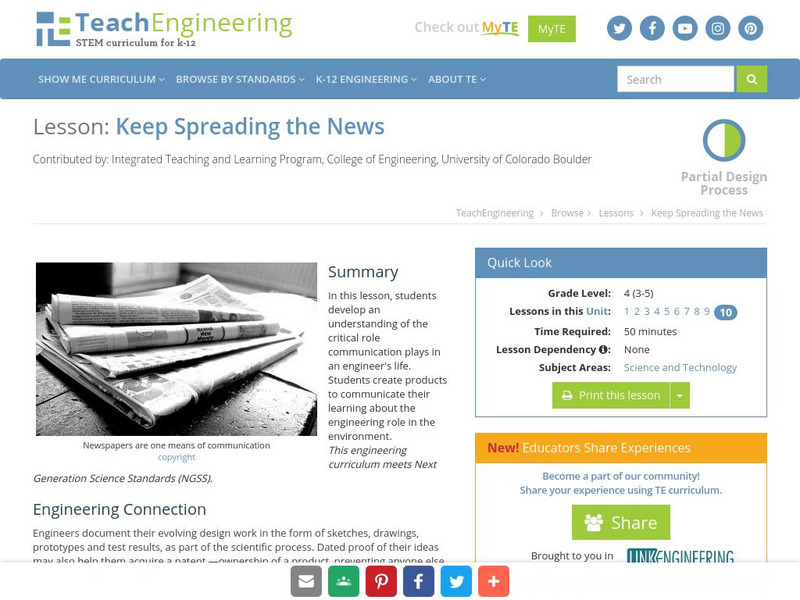
Teach Engineering: Keep Spreading the News
In this lesson, students develop an understanding of the critical role communication plays in an engineer's life. Students create products to communicate their learning about the engineering role in the environment.
TeachEngineering
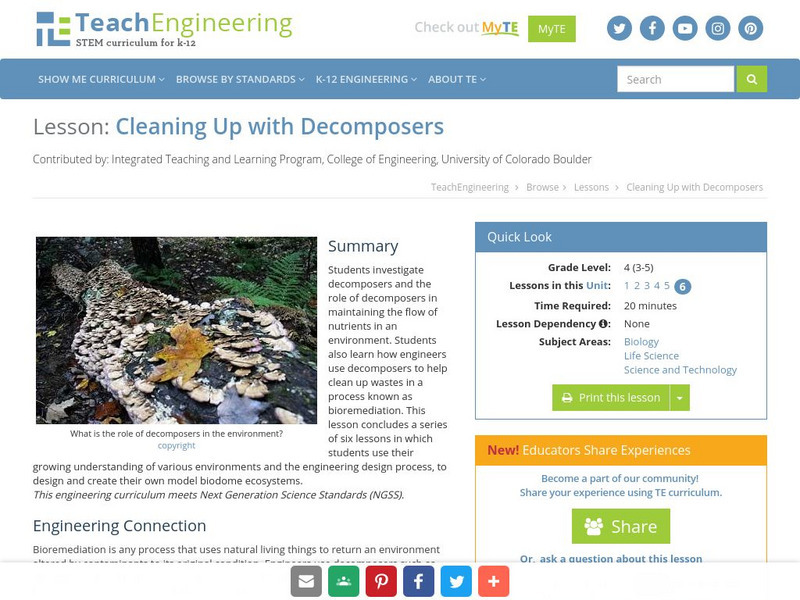
Teach Engineering: Cleaning Up With Decomposers
Young scholars investigate decomposers and the role of decomposers in maintaining the flow of nutrients in an environment. Students also learn how engineers use decomposers to help clean up wastes in a process known as bioremediation....
TeachEngineering
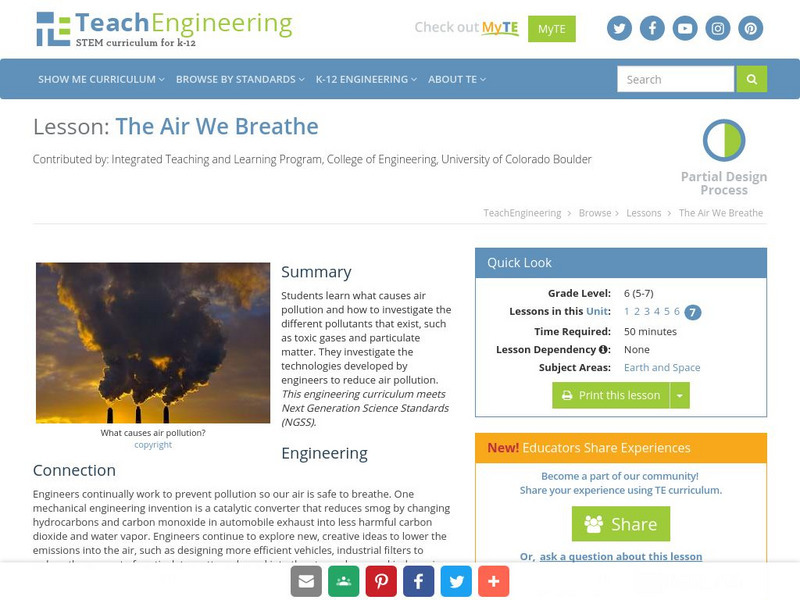
Teach Engineering: The Air We Breathe
During this lesson, learners will learn what causes air pollution and how to investigate the different pollutants that exist, such as toxic gases and particulate matter. Students will investigate the technologies developed by engineers...
TeachEngineering
Teach Engineering: 3 Rc (Reduce, Reuse, Recycle and Compost)
In this instructional activity, learners expand their understanding of solid waste management to include the idea of 3RC (reduce, reuse, recycle and compost). They will look at the effects of packaging decisions (reducing) and learn...
TeachEngineering
Teach Engineering: Renewable Energy
In this lesson, students are introduced to the types of renewable energy resources. They are involved in activities to help them understand the transformation of energy (solar, water and wind) into electricity. Students explore the...
TeachEngineering
Teach Engineering: This Land Is Your Land, This Land Is My Land
In this activity, students will review and evaluate the ways land is covered and used in their local community. They will also consider the environmental effects of the different types of land use. Students will act as community planning...
TeachEngineering
Teach Engineering: Glaciers, Water and Wind, Oh My!
This hands-on activity explores five different forms of erosion (chemical, water, wind, glacier and temperature). Students rotate through stations and model each type of erosion on rocks, soils and minerals. The students record their...
TeachEngineering
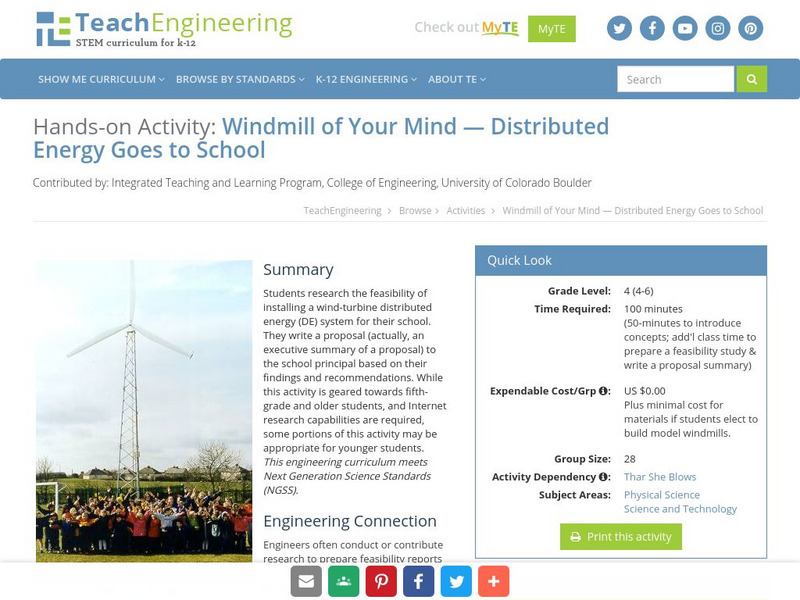
Teach Engineering: Windmill of Your Mind: Distributed Energy Goes to School
Students research the feasibility of installing a wind-turbine distributed energy (DE) system for their school. They write a proposal (actually, the executive summary of a proposal) to the school principal based on their findings and...
TeachEngineering
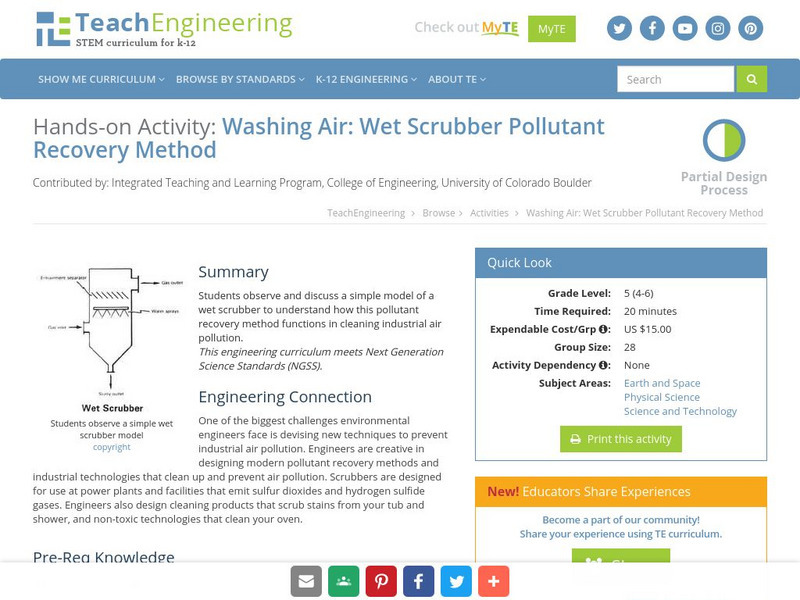
Teach Engineering: Washing Air
Students observe and discuss a simple model of a wet scrubber to understand how this pollutant recovery method functions in cleaning industrial air pollution.
TeachEngineering
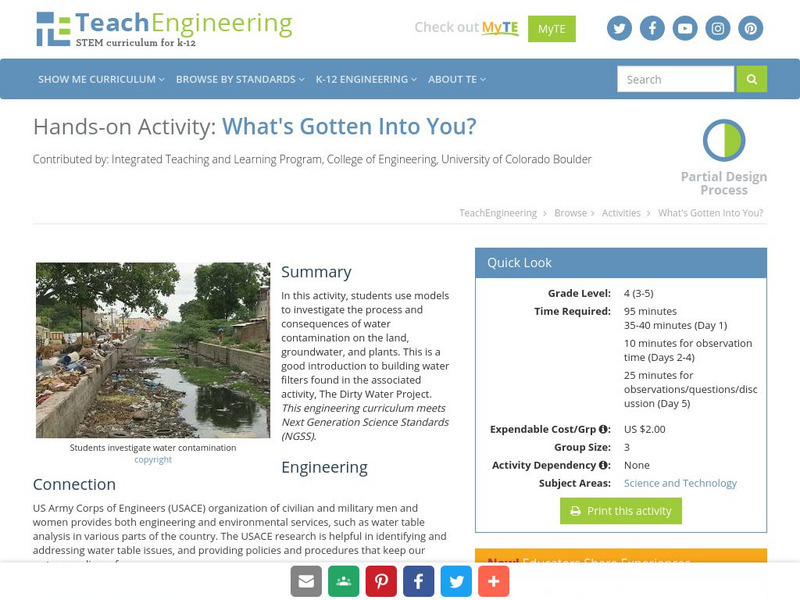
Teach Engineering: What's Gotten Into You?
In this activity, students use models to investigate the process and consequences of water contamination on the land, groundwater, and plants. This is a good introduction to building water filters found in the associated activity, The...
TeachEngineering
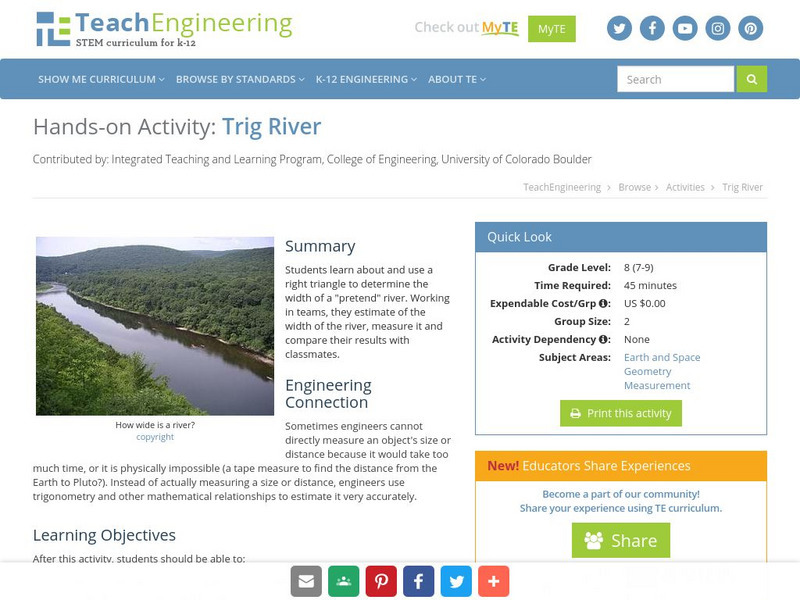
Teach Engineering: Trig River
Students learn about and use a right triangle to determine the width of a "pretend" river. Working in teams, they estimate of the width of the river, measure it and compare their results with classmates.
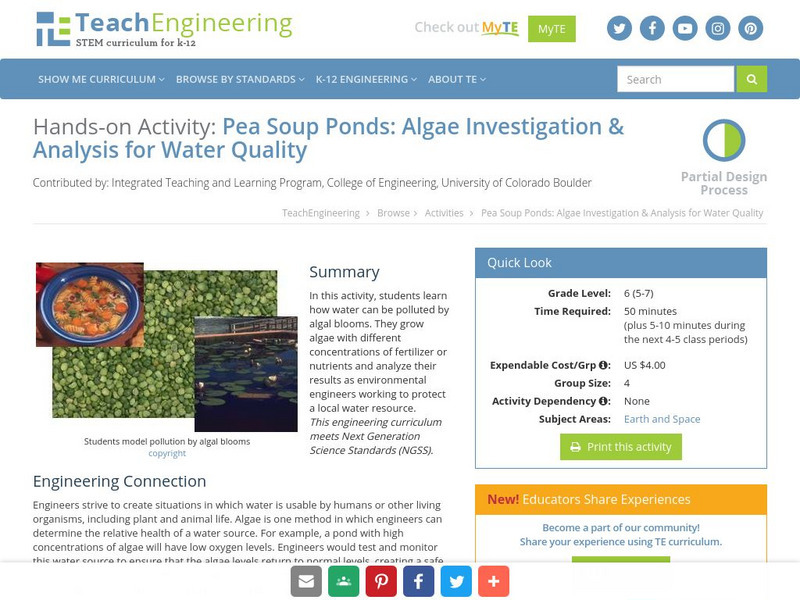
TeachEngineering
Teach Engineering: Pea Soup Ponds
In this activity, students will learn how water can be polluted by algal blooms. They will grow algae with different concentrations of fertilizer or nutrients and analyze their results as environmental engineers working to protect a...
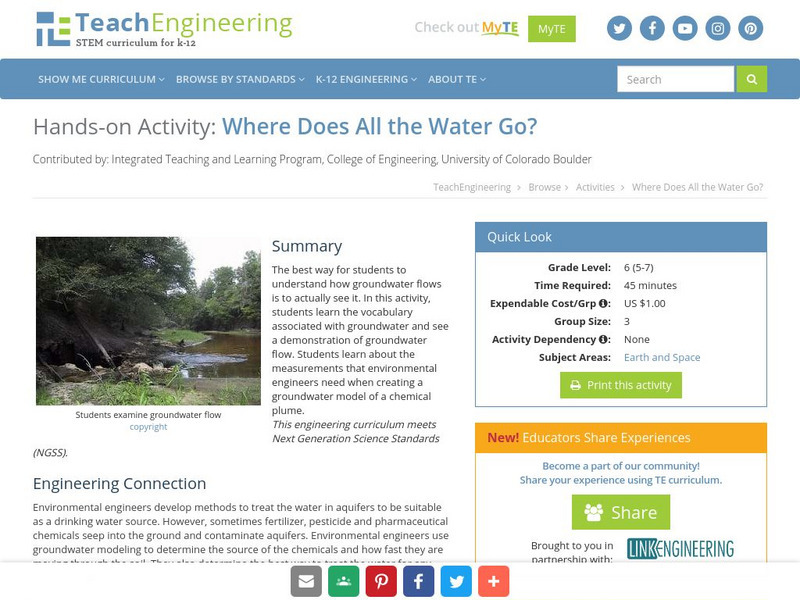
TeachEngineering
Teach Engineering: Where Does All the Water Go?
The best way for students to understand how groundwater flows is to actually see it. In this activity, students will learn the vocabulary associated with groundwater and see a demonstration of groundwater flow. Students will learn about...
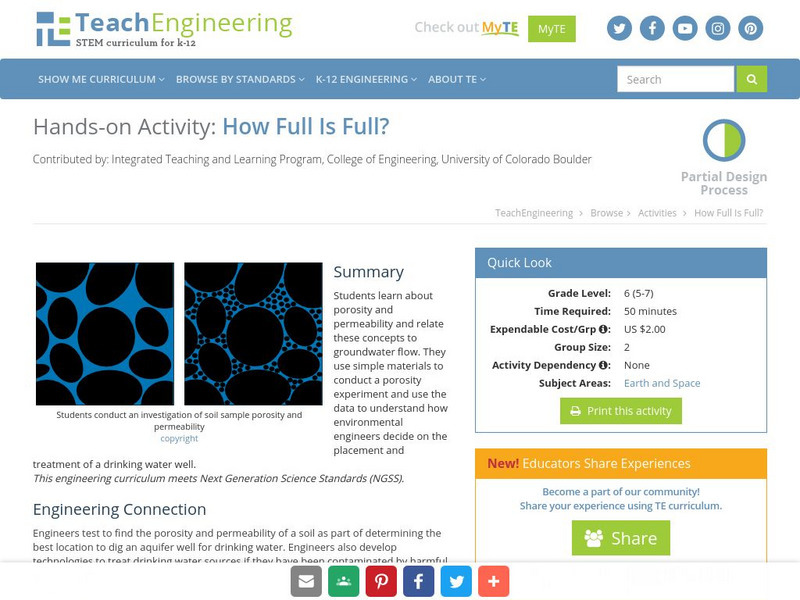
TeachEngineering
Teach Engineering: How Full Is Full?
During this activity, students will learn about porosity and permeability and relate these concepts to groundwater flow. Students will use simple materials to conduct a porosity experiment and use the information to understand how...