Hi, what do you want to do?





Science Buddies
Science Buddies: Design Requirement Examples
The design requirements for a science project will differ from those of anyone else because it will apply to a specific problem statement and the product, system, or experience that is being designed. In the table, are some examples of...

TryEngineering
Try Engineering: A Question of Balance
Young scholars work in teams to fill jars with a product that is uniform in weight or count. Lesson investigates how manufacturing engineers use weight scales and measurement to develop systems that can create consistent products.
Discovery Education
Discovery Education:nanotechnology,biological Engineering and Biosensors [Pdf]
A lesson plan where students use their innovative thinking skills to design biosensors for a future use. During the lesson, students will learn about nanotechnology and biosensors.
TeachEngineering
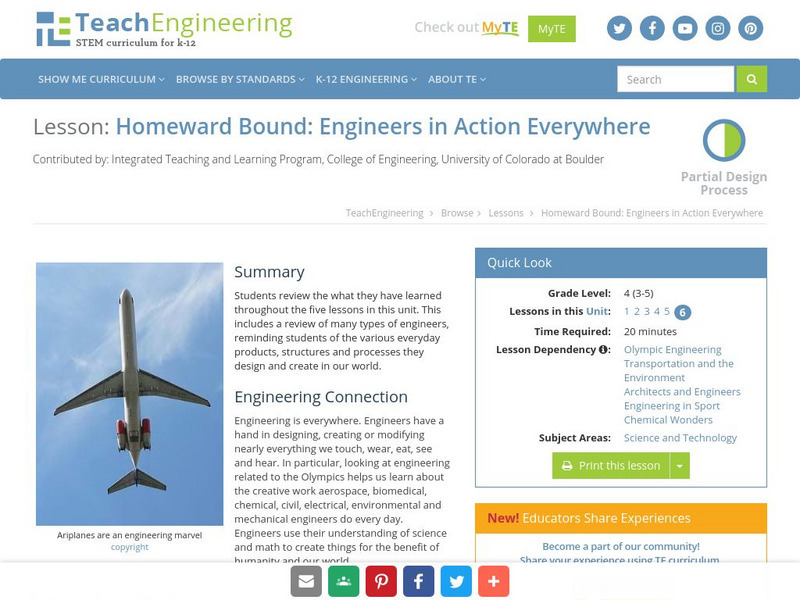
Teach Engineering: Homeward Bound
Students review the what they have learned throughout the five lessons in this unit. This includes a review of many types of engineers, reminding students of the various everyday products, structures and processes they design and create...
TeachEngineering
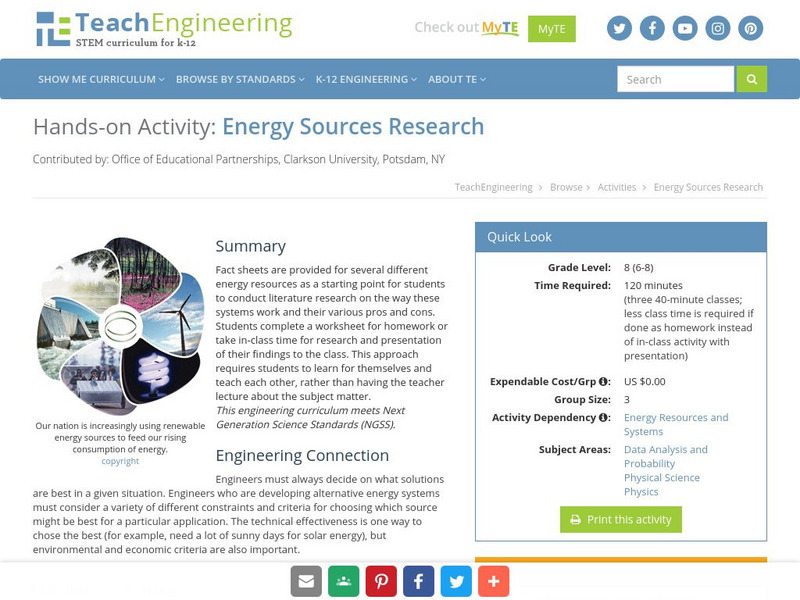
Teach Engineering: Energy Sources Research
Fact sheets are provided for several different energy resources as a starting point for students to conduct literature research on the way these systems work and their various pros and cons. Students complete a worksheet for homework or...
TeachEngineering
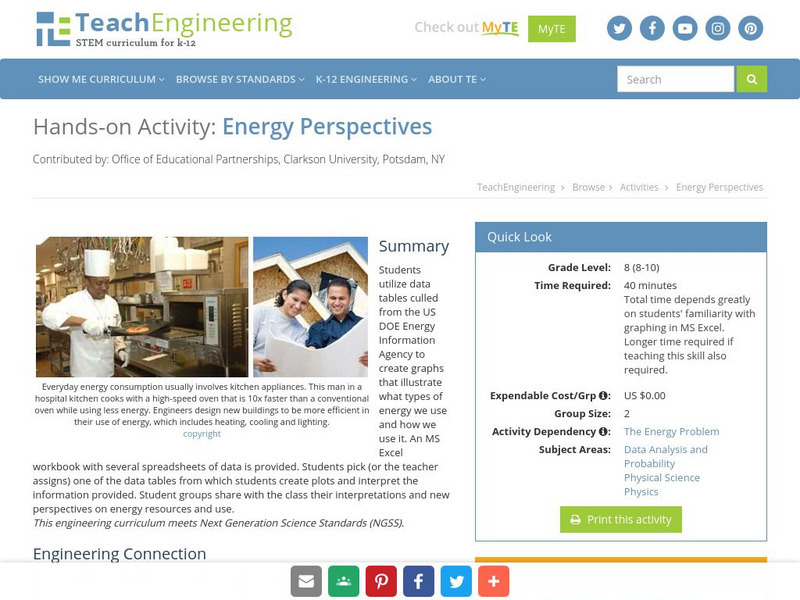
Teach Engineering: Energy Perspectives
Students utilize data tables culled from the US DOE Energy Information Agency to create graphs that illustrate what types of energy we use and how we use it. An MS Excel workbook with several spreadsheets of data is provided. Students...
TeachEngineering
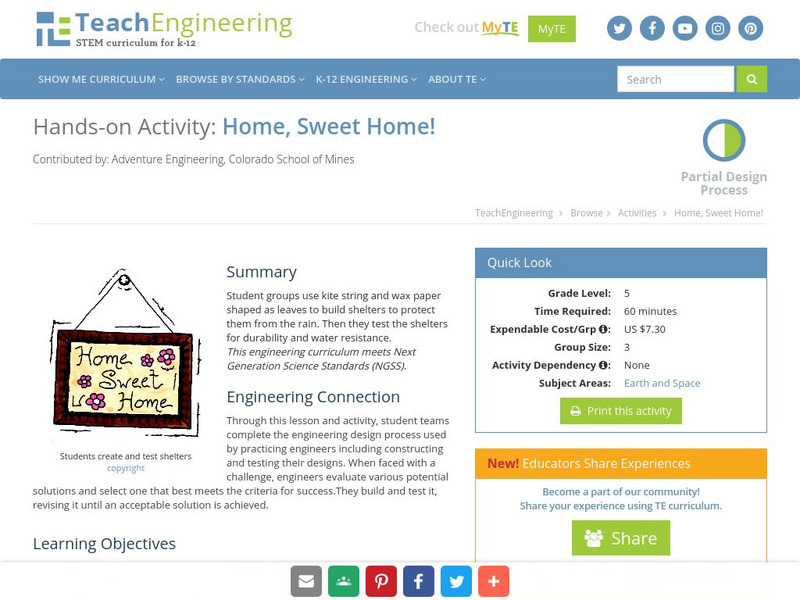
Teach Engineering: Home, Sweet Home!
In this activity, the students will use wax paper shaped as leaves and kite string to build a shelter to protect them from the rain. The students will then test the shelters for durability and water resistance.
TeachEngineering
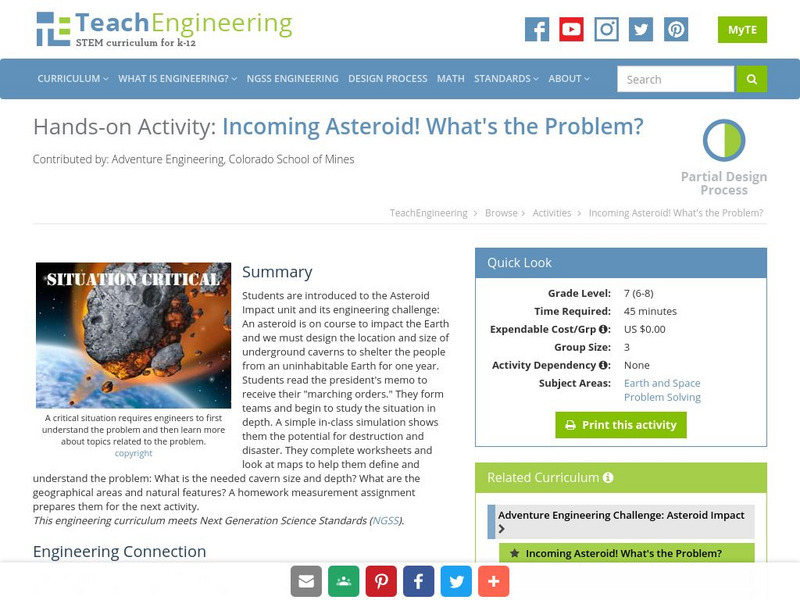
Teach Engineering: What's the Problem?
Students learn of the impending asteroid impact scenario, form teams and begin to study the situation in depth. A simple in-class simulation shows them the potential for destruction and disaster. They complete worksheets and look at maps...
TeachEngineering
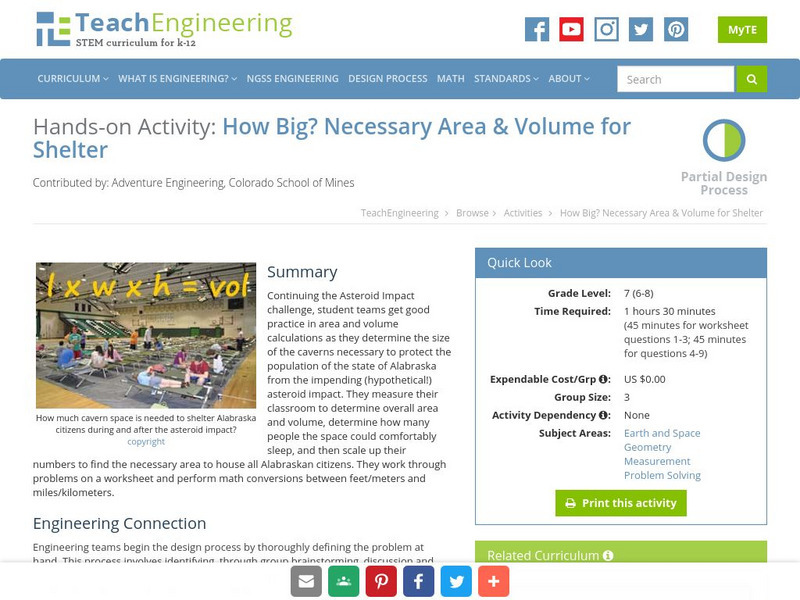
Teach Engineering: How Big?
Students teams determine the size of the caverns necessary to house the population of the state of Alabraska from the impending asteroid impact. They measure their classroom to determine area and volume, determine how many people the...
TeachEngineering
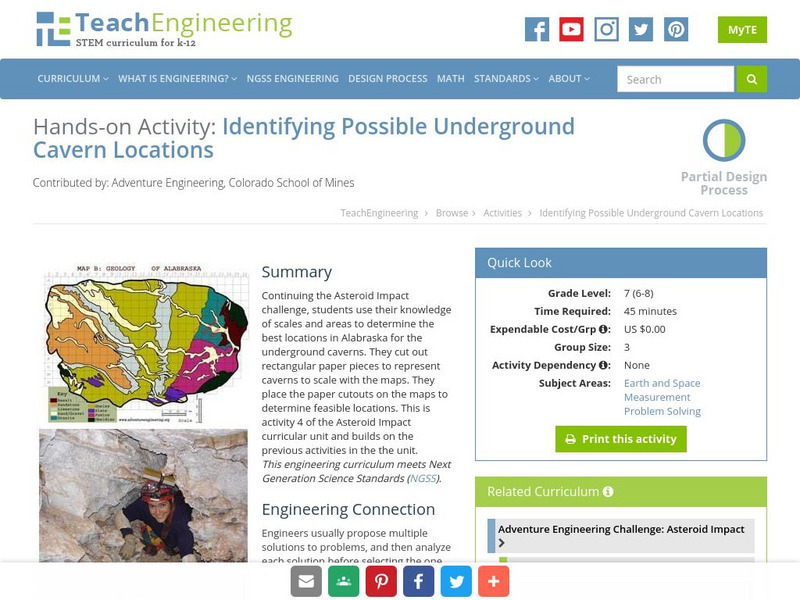
Teach Engineering: Possible Locations
Students use their knowledge of scales and areas to determine the best locations in Alabraska for the underground caverns. They cut out rectangular paper pieces to represent caverns to scale with the maps and place the cut-outs on the...
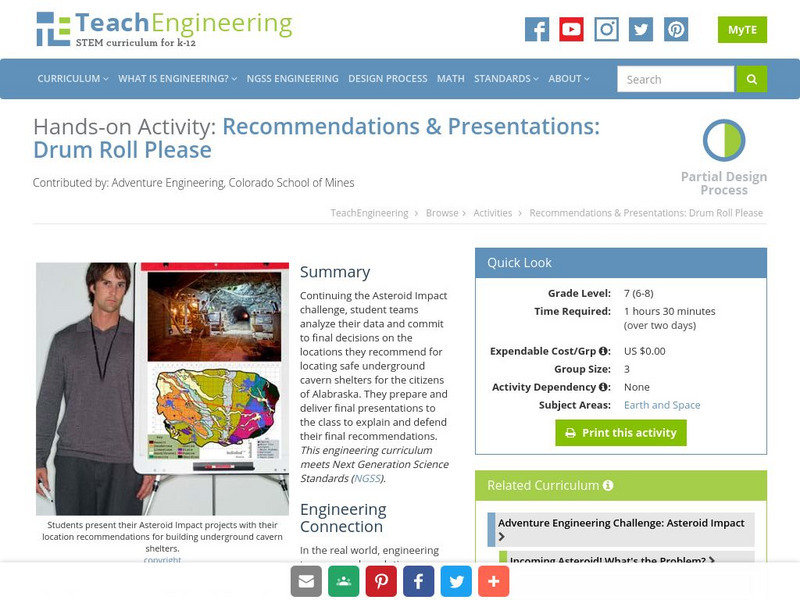
TeachEngineering
Teach Engineering: Drum Roll Please
Student teams commit to a final decision on the location they recommend for safe underground cavern shelter for the citizens of Alabraska. They prepare and deliver final presentations to defend their final decisions to the class.
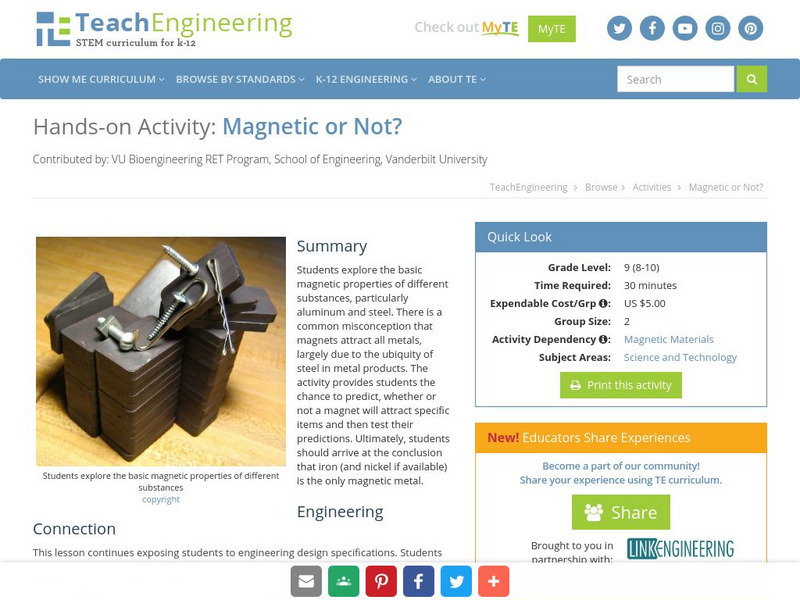
TeachEngineering
Teach Engineering: Magnetic or Not?
Students explore the basic magnetic properties of different substances, particularly aluminum and steel. There is a common misconception that magnets attract all metals, largely due to the ubiquity of steel in metal products. The...
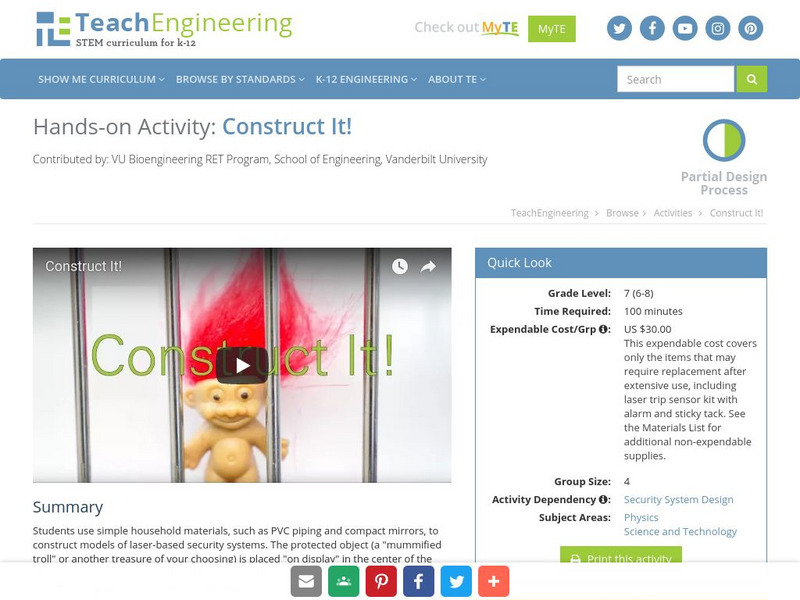
TeachEngineering
Teach Engineering: Construct It!
Students use simple household materials, such as PVC piping and compact mirrors, to construct models of laser-based security systems. The protected object (a "mummified troll" or another treasure of your choosing) is placed "on display"...
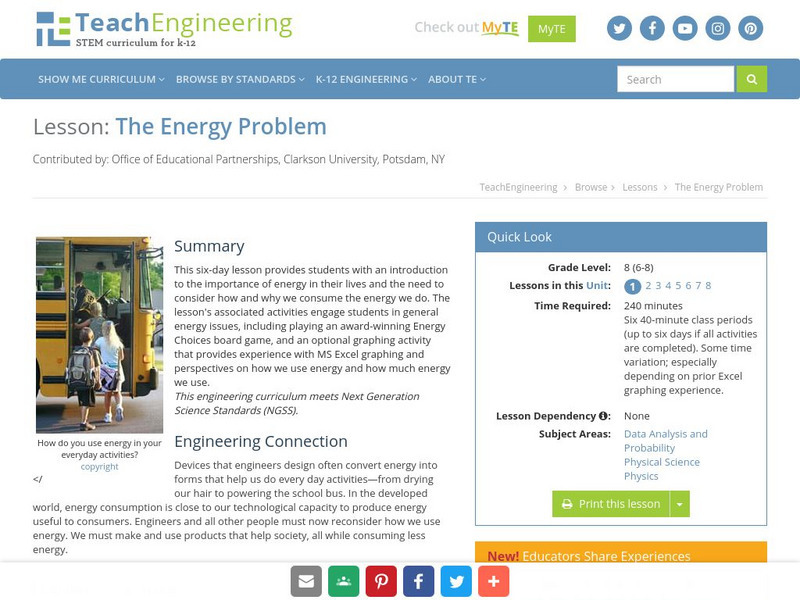
TeachEngineering
Teach Engineering: The Energy Problem
This six-day lesson provides students with an introduction to the importance of energy in their lives and the need to consider how and why we consume the energy we do. The lesson includes activities to engage students in general energy...
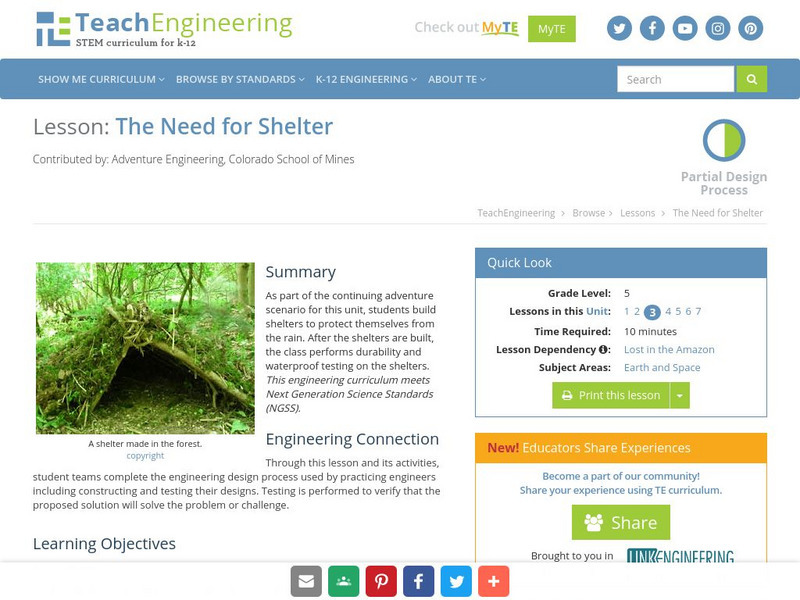
TeachEngineering
Teach Engineering: The Need for Shelter
In this lesson, the students will build a shelter in order to protect themselves from the rain. After the shelters are built, the class will perform durability and water proof testing on the shelters.
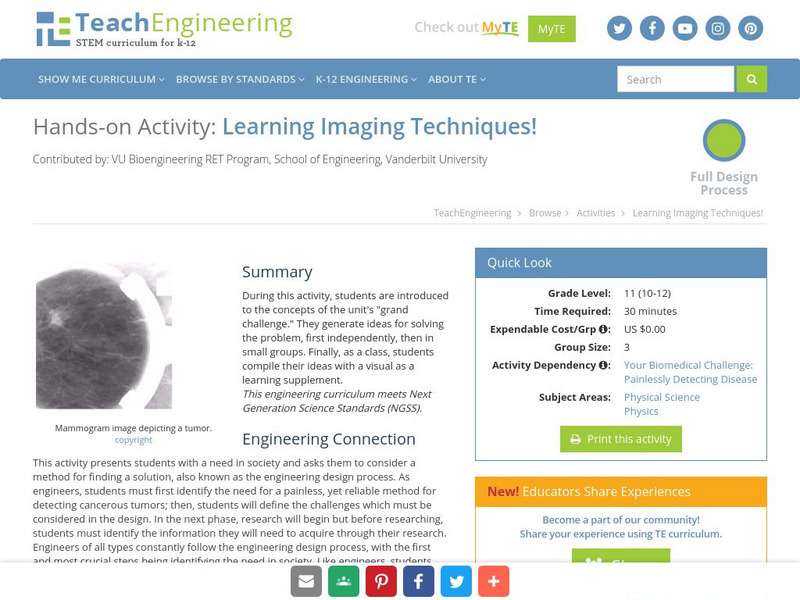
TeachEngineering
Teach Engineering: Learning Imaging Techniques!
During this activity, students will be introduced to the concepts of the challenge. They will generate ideas for solving the grand challenge first independently, then in small groups. Finally, as a class, students will compile their...
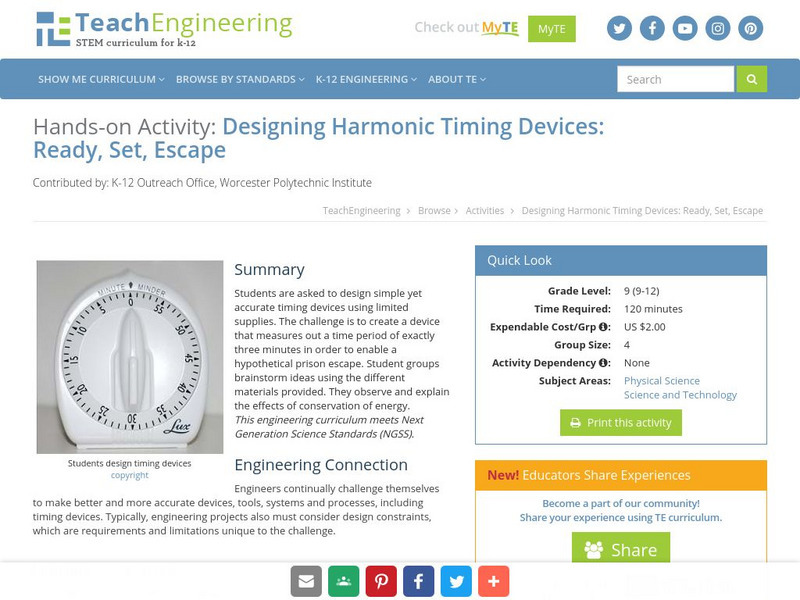
TeachEngineering
Teach Engineering: Ready, Set, Escape
During this project, students will be asked to design a device that will measure out a time period of exactly 3 minutes. They will be asked to brainstorm ideas using the different materials provided. Students will observe and explain the...
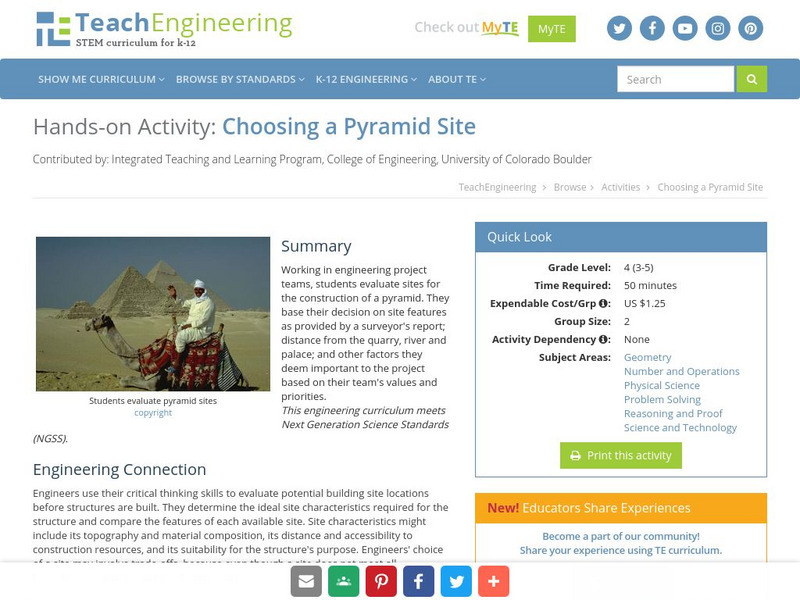
TeachEngineering
Teach Engineering: Choosing a Pyramid Site
Working in engineering project teams, students evaluate sites for the construction of a pyramid. They base their decision on site features as provided by a surveyor's report; distance from the quarry, river and palace; and other factors...
TryEngineering
Try Engineering: Program Your Own Game
Teams of students learn about the work of software engineers as they design a simple computer game using free software available in multiple languages.
TeachEngineering
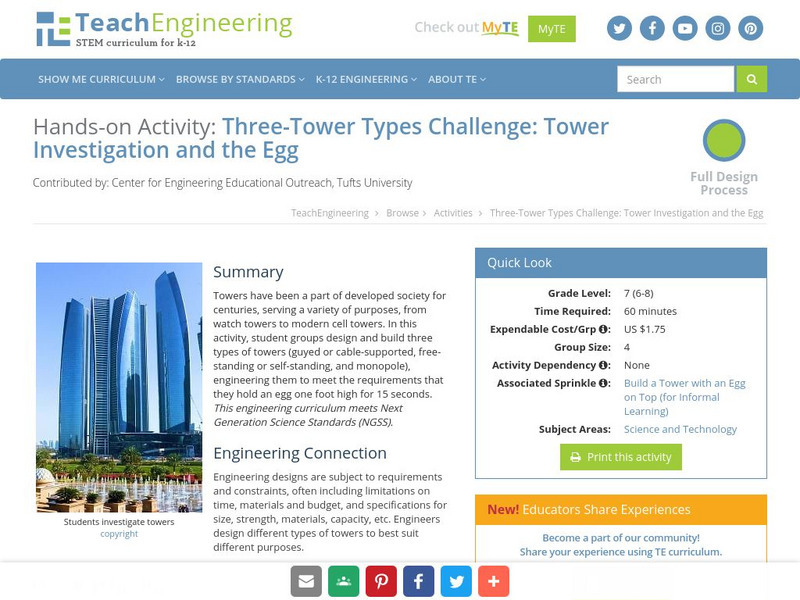
Teach Engineering: Tower Investigation and the Egg
Towers have been a part of developed society for centuries. Towers serve a variety of purposes, from lookouts to cellular towers. In this activity student groups will build three types of towers, engineering them to hold an egg one foot...
TeachEngineering
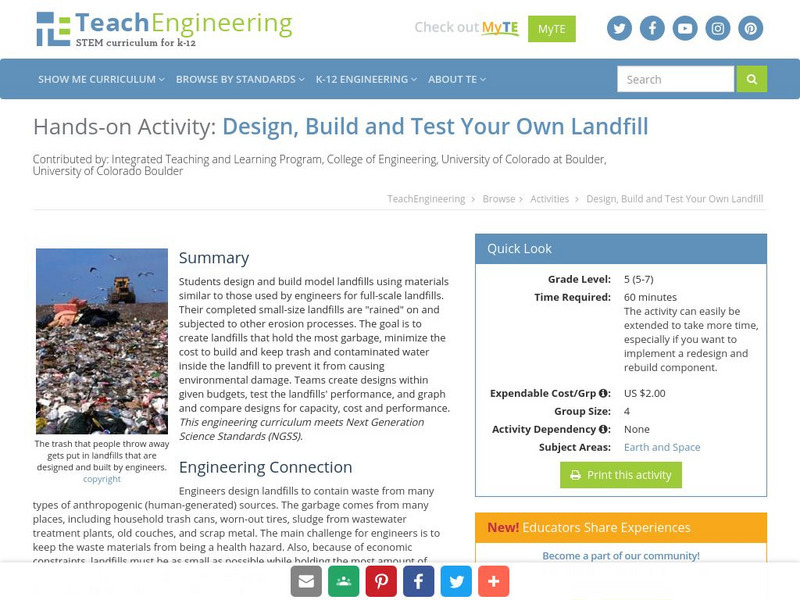
Teach Engineering: Design, Build and Test Your Own Landfill
Students design and build model landfills using materials similar to those used by engineers for full-scale landfills. Their completed small-size landfills are "rained" on and subjected to other erosion processes. The goal is to create...
Other
National Renewable Energy Laboratory: Junior Solar Car Competition
A design challenge through which young scholars design and construct a solar-powered model car to compete in a road race. Students work in teams using the engineering design process to select the optimal gear ratio and components.
Exploratorium
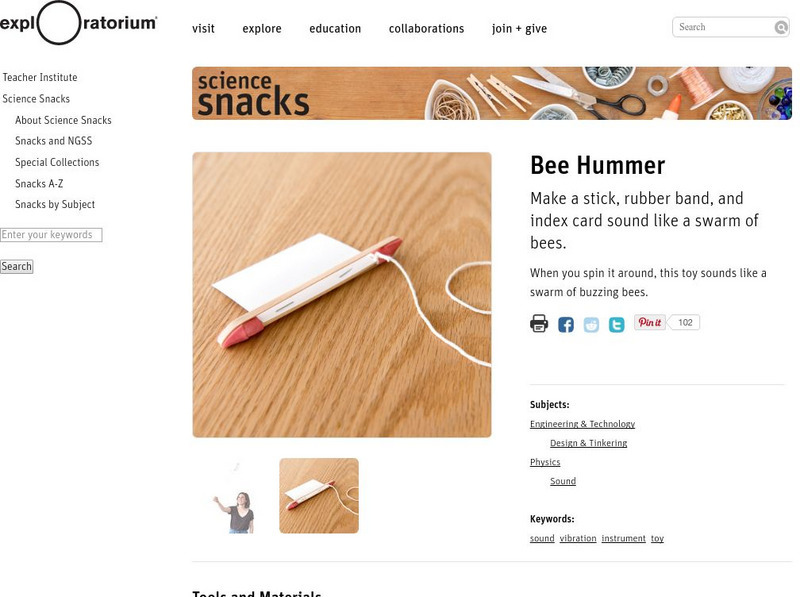
Exploratorium: Science Snacks: Bee Hummer
An engineering design project to use simple materials to make an instrument to mimic the sound of a swarm of bees.
Practical Action
Practical Action: Plastics Challenge
This is a challenge for students to develop solutions to the problems caused by plastic waste globally. They will learn about how plastic waste impacts people around the world, the different types of plastic, how they are each used, how...