Hi, what do you want to do?





TeachEngineering
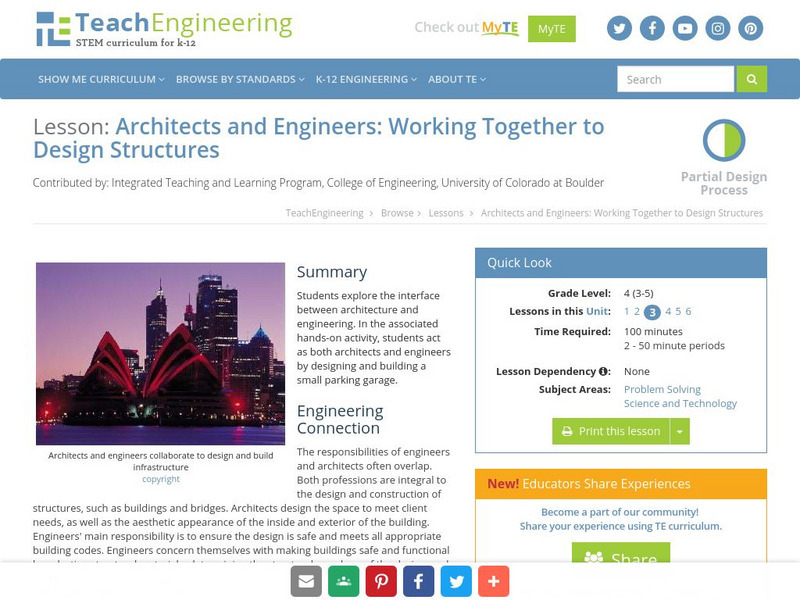
Teach Engineering: Architects and Engineers
Young scholars explore the interface between architecture and engineering. In the associated hands-on activity, students act as both architects and engineers by designing and building a small parking garage.
TeachEngineering
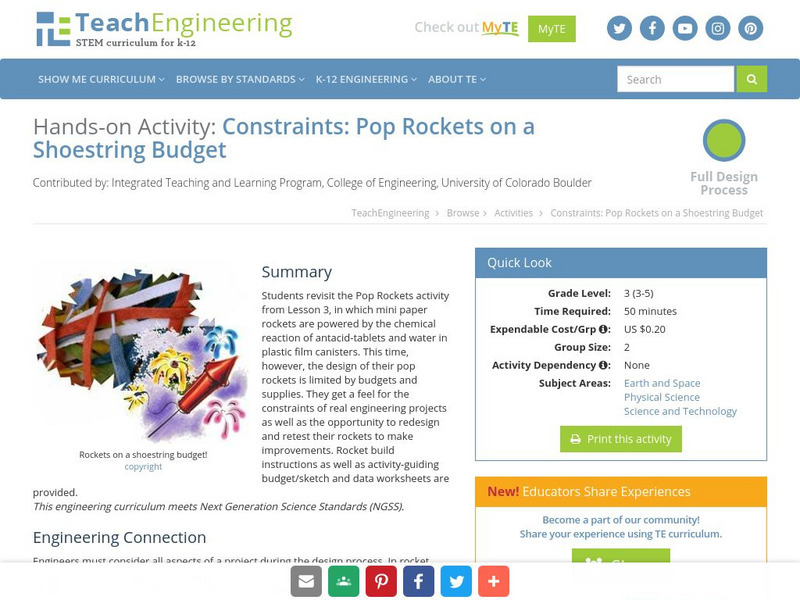
Teach Engineering: Rockets on a Shoestring Budget
In this activity, students revisit the Pop Rockets activity from Lesson 3. This time, however, the design of their pop-rockets will be limited by budgets and supplies. They will get a feel for the limitations of a real engineering...
TeachEngineering
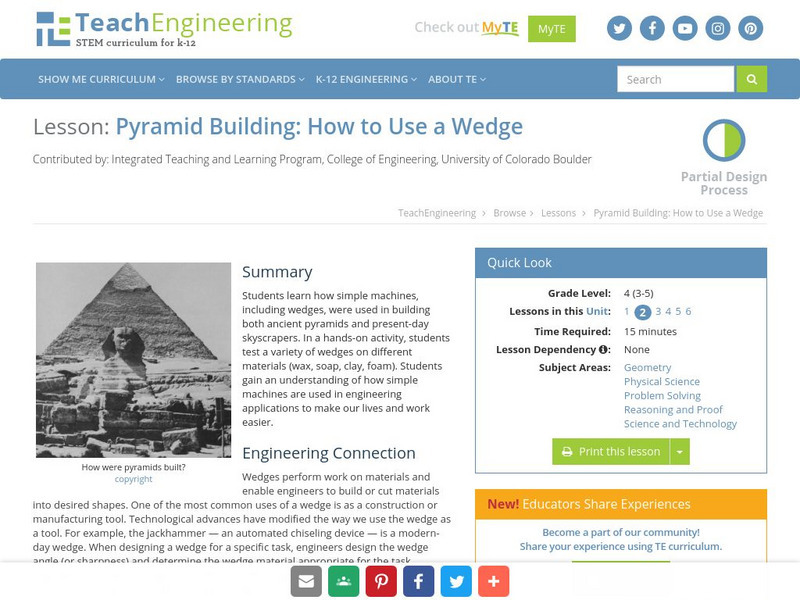
Teach Engineering: Pyramid Building: How to Use a Wedge
Young scholars learn how simple machines, including wedges, were used in building both ancient pyramids and present-day skyscrapers. In a hands-on activity, students test a variety of wedges on different materials (wax, soap, clay,...
TeachEngineering
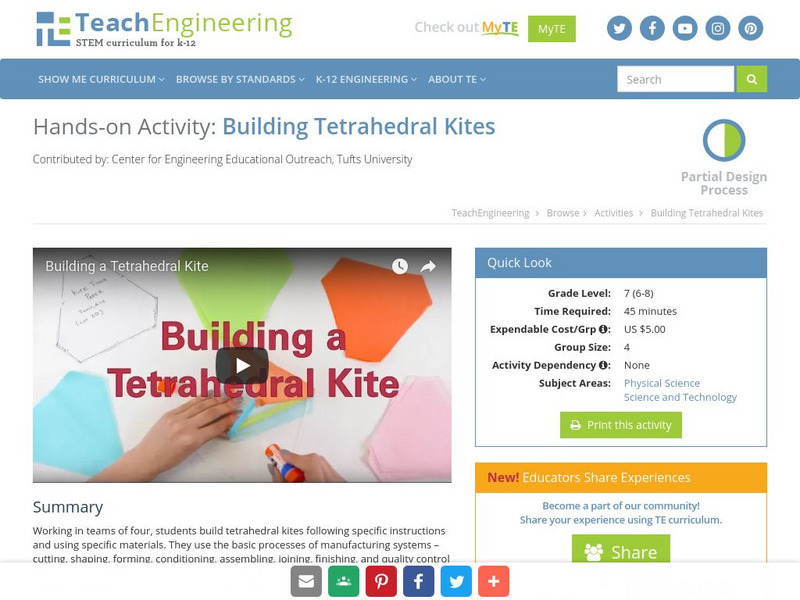
Teach Engineering: Building Tetrahedral Kites
Students build a tetrahedral kite and test it out. While building they are learning about flight and the manufacturing process
TeachEngineering
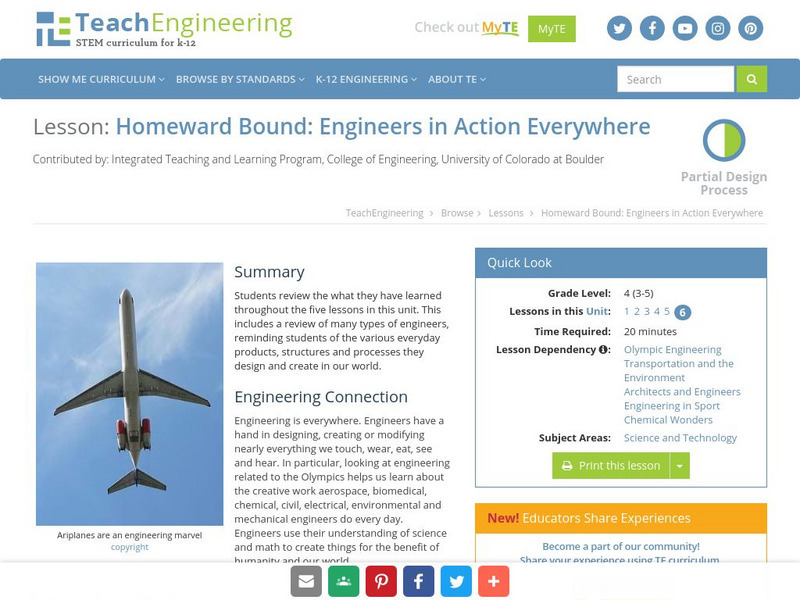
Teach Engineering: Homeward Bound
Learners review the what they have learned throughout the five lessons in this unit. This includes a review of many types of engineers, reminding students of the various everyday products, structures and processes they design and create...
TeachEngineering
Teach Engineering: Protect That Pill
Students reinforce their knowledge of the different parts of the digestive system and explore the concept of simulation by developing a pill coating that can withstand the churning actions and acidic environment found in the stomach....
TeachEngineering
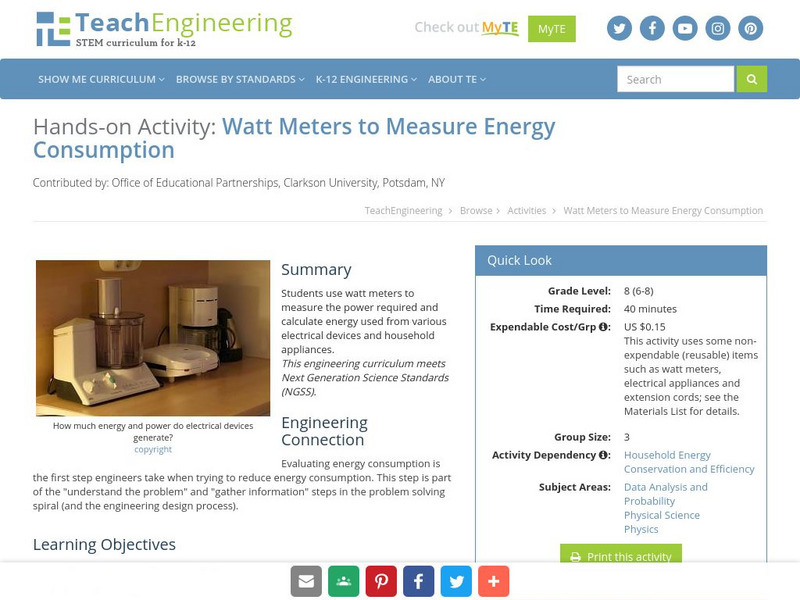
Teach Engineering: Watt Meters to Measure Energy Consumption
Students use watt meters to measure the power required and calculate energy used from various electrical devices and household appliances.
TeachEngineering
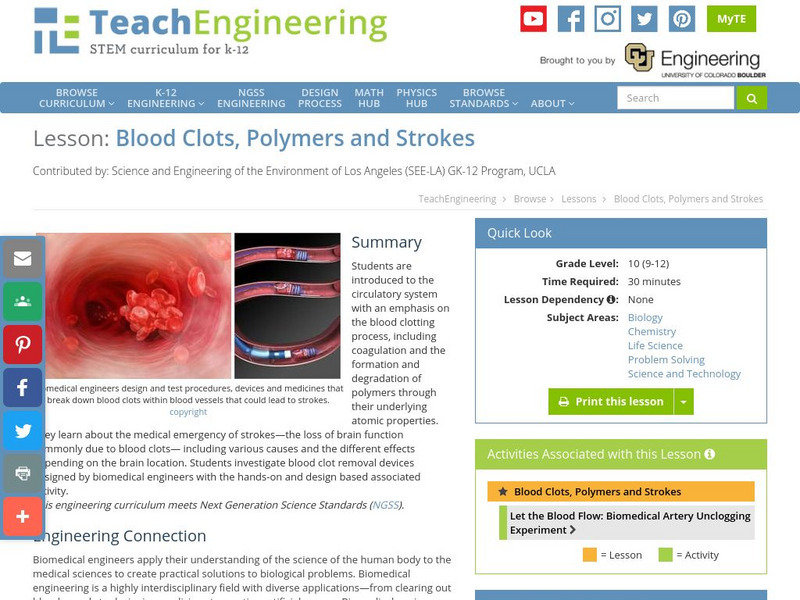
Teach Engineering: Blood Clots, Polymers and Strokes
Students are introduced to the circulatory system with an emphasis on the blood clotting process, including coagulation and the formation and degradation of polymers through their underlying atomic properties. They learn about the...
![Design Build: Exploring the Fundamental Requirements of Structural Design [Pdf] Lesson Plan](https://static.lp.lexp.cloud/images/attachment_defaults/resource/large/FPO-knovation.png "Design Build: Exploring the Fundamental Requirements of Structural Design [Pdf] Lesson Plan")
Other
Design Build: Exploring the Fundamental Requirements of Structural Design [Pdf]
For this lesson unit from the Science Teachers' Association of Ontario (STAO), learners fold paper to explore the properties and shapes of materials that give structures their stability and strength. They record their ideas as they...
TryEngineering
Try Engineering: Find It With Gps!
Using a GPS handheld device and online resources, learners work in teams to explore the technology behind GPS, current GPS applications, and brainstorm new applications for future global use to solve society's issues.
TeachEngineering
Teach Engineering: Energy Sources Research
Fact sheets are provided for several different energy resources as a starting point for students to conduct literature research on the way these systems work and their various pros and cons. Students complete a worksheet for homework or...
TeachEngineering
Teach Engineering: Energy Perspectives
Students utilize data tables culled from the US DOE Energy Information Agency to create graphs that illustrate what types of energy we use and how we use it. An MS Excel workbook with several spreadsheets of data is provided. Students...
TeachEngineering
Teach Engineering: Solving Energy Problems
The culminating energy project is introduced and the technical problem solving process is applied to get students started on the project. By the end of the class, students should have a good perspective on what they have already learned...
TeachEngineering
Teach Engineering: Home, Sweet Home!
In this activity, the students will use wax paper shaped as leaves and kite string to build a shelter to protect them from the rain. The students will then test the shelters for durability and water resistance.
TeachEngineering
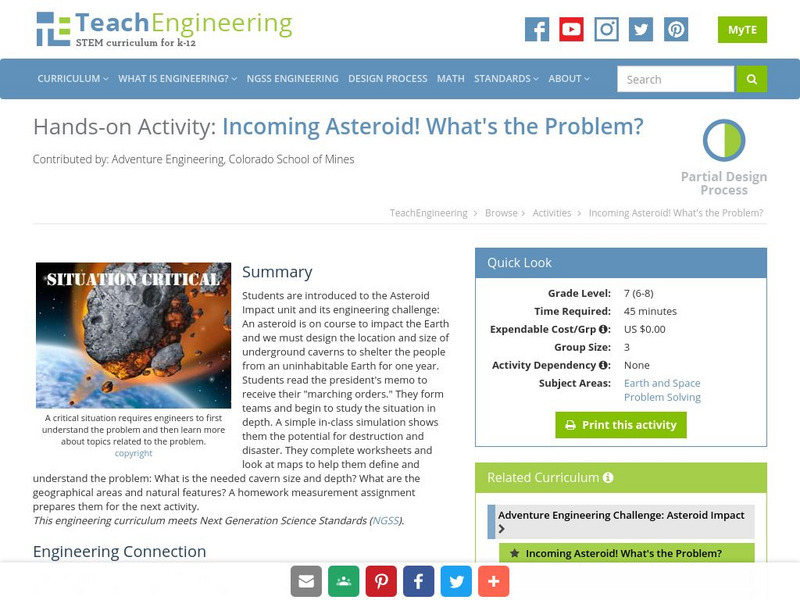
Teach Engineering: What's the Problem?
Students learn of the impending asteroid impact scenario, form teams and begin to study the situation in depth. A simple in-class simulation shows them the potential for destruction and disaster. They complete worksheets and look at maps...
TeachEngineering
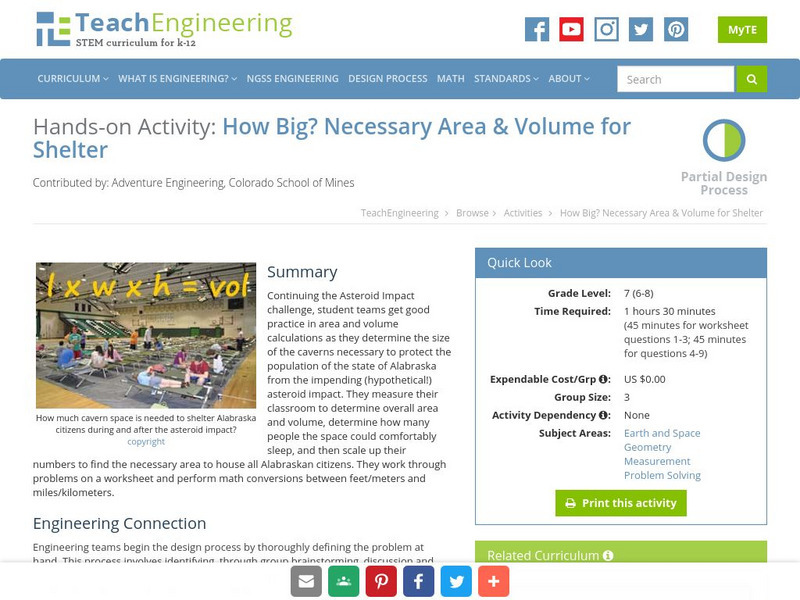
Teach Engineering: How Big?
Students teams determine the size of the caverns necessary to house the population of the state of Alabraska from the impending asteroid impact. They measure their classroom to determine area and volume, determine how many people the...
TeachEngineering
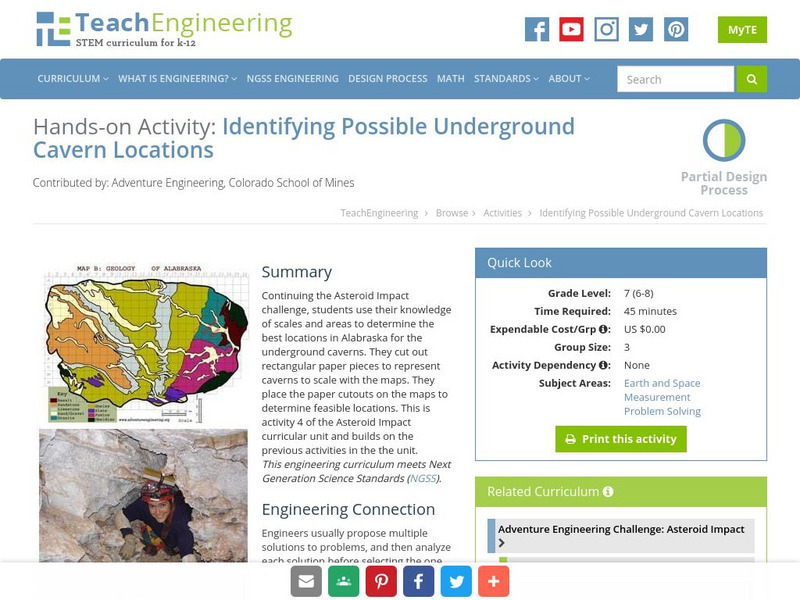
Teach Engineering: Possible Locations
Students use their knowledge of scales and areas to determine the best locations in Alabraska for the underground caverns. They cut out rectangular paper pieces to represent caverns to scale with the maps and place the cut-outs on the...
TeachEngineering
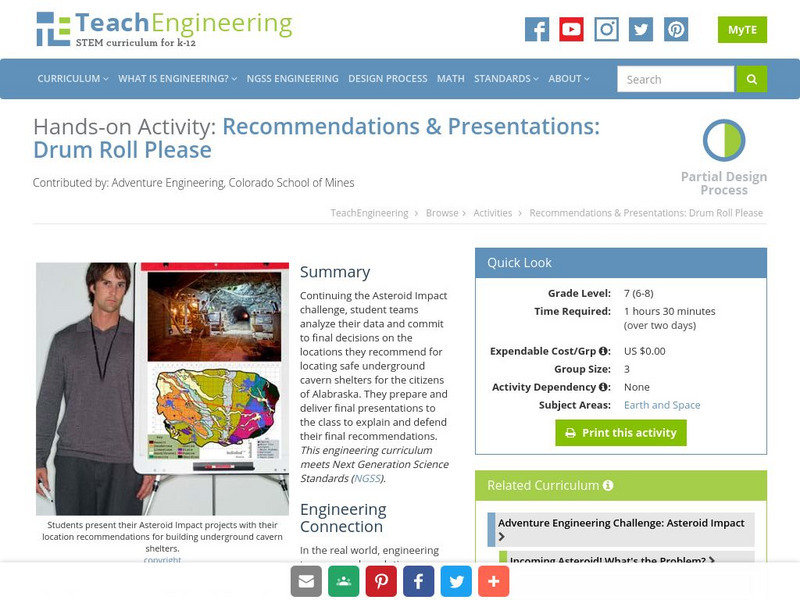
Teach Engineering: Drum Roll Please
Student teams commit to a final decision on the location they recommend for safe underground cavern shelter for the citizens of Alabraska. They prepare and deliver final presentations to defend their final decisions to the class.
TeachEngineering
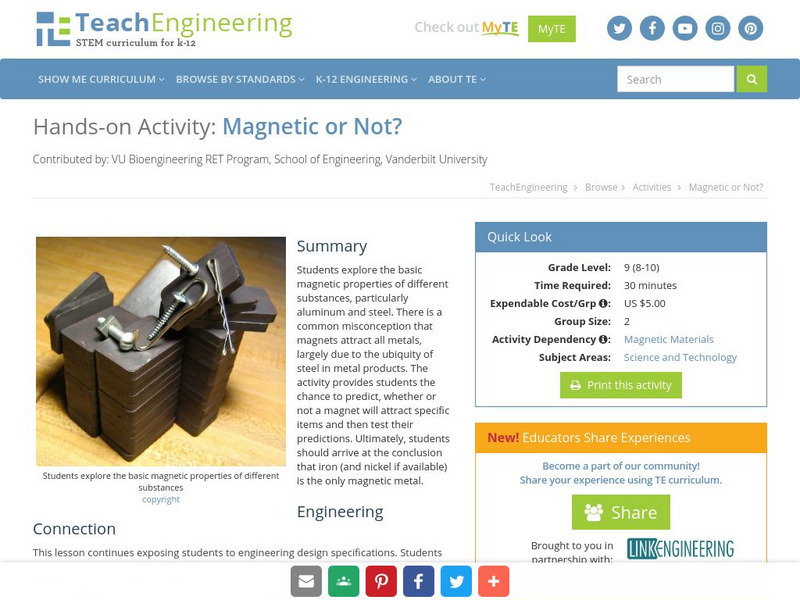
Teach Engineering: Magnetic or Not?
Students explore the basic magnetic properties of different substances, particularly aluminum and steel. There is a common misconception that magnets attract all metals, largely due to the ubiquity of steel in metal products. The...
TeachEngineering
Teach Engineering: Keepers of the Gate Journal and Brainstorm
Students journal their thoughts and responses to the questions associated with the grand challenge question presented in the associated lesson. For the Generate Ideas" step, they answer the questions: "What are your initial ideas about...
TeachEngineering
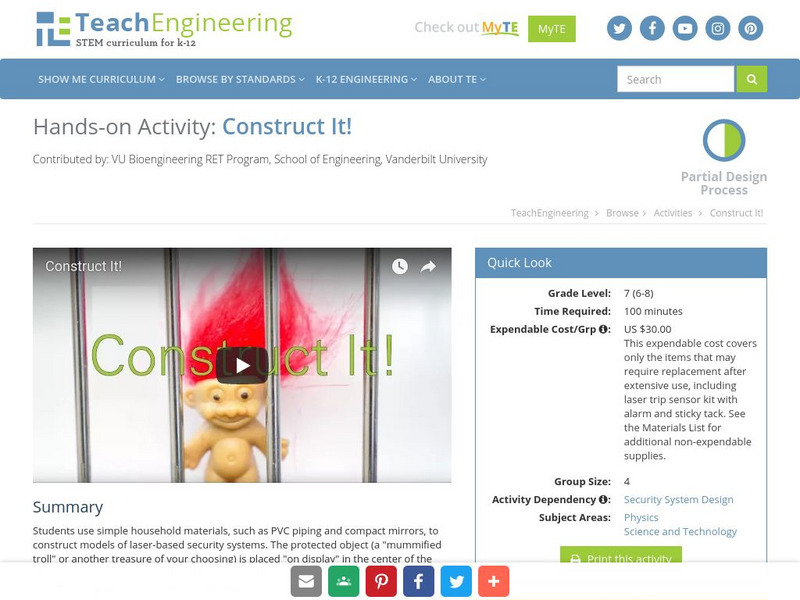
Teach Engineering: Construct It!
Students use simple household materials, such as PVC piping and compact mirrors, to construct models of laser-based security systems. The protected object (a "mummified troll" or another treasure of your choosing) is placed "on display"...
TeachEngineering
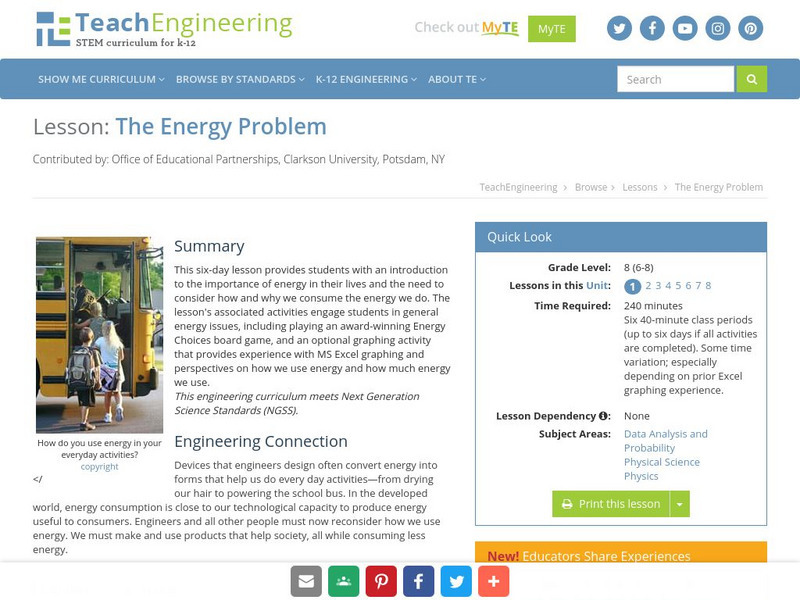
Teach Engineering: The Energy Problem
This six-day lesson provides students with an introduction to the importance of energy in their lives and the need to consider how and why we consume the energy we do. The lesson includes activities to engage students in general energy...
TeachEngineering
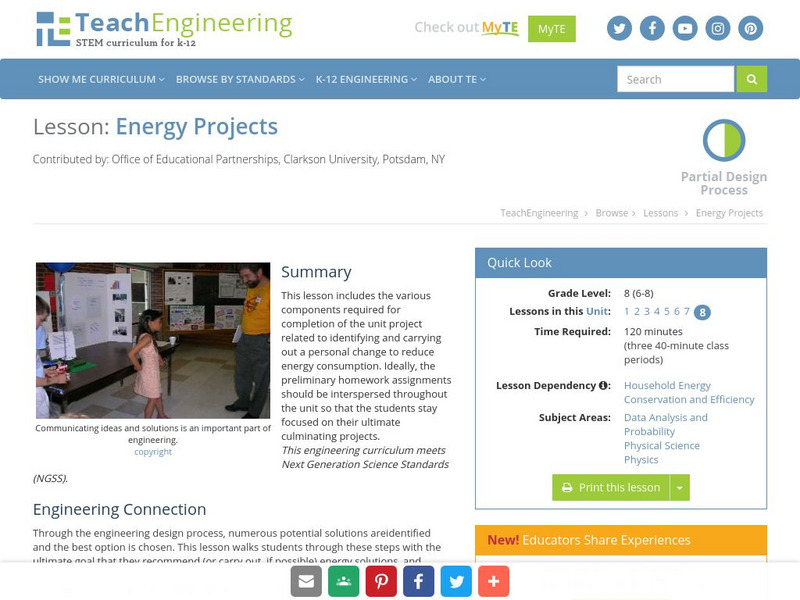
Teach Engineering: Energy Projects
This lesson includes the various components required for completion of the unit project related to identifying and carrying out a personal change to reduce energy consumption. Ideally, the preliminary homework assignments should be...
TeachEngineering
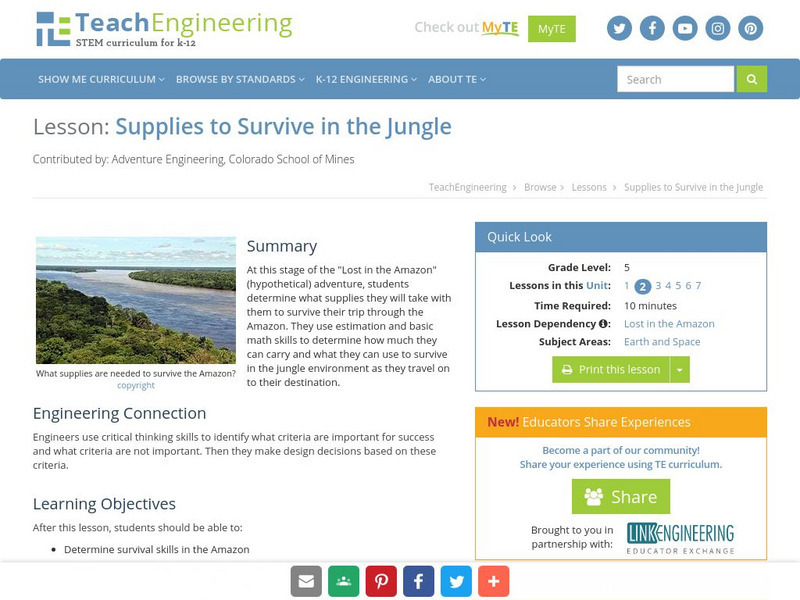
Teach Engineering: Supplies
In this lesson, 5th graders will determine what supplies they will take with them to survive their trip through the Amazon. Students will use estimation and basic math skills to determine how much they can carry and what they can use to...