Hi, what do you want to do?





Science Buddies
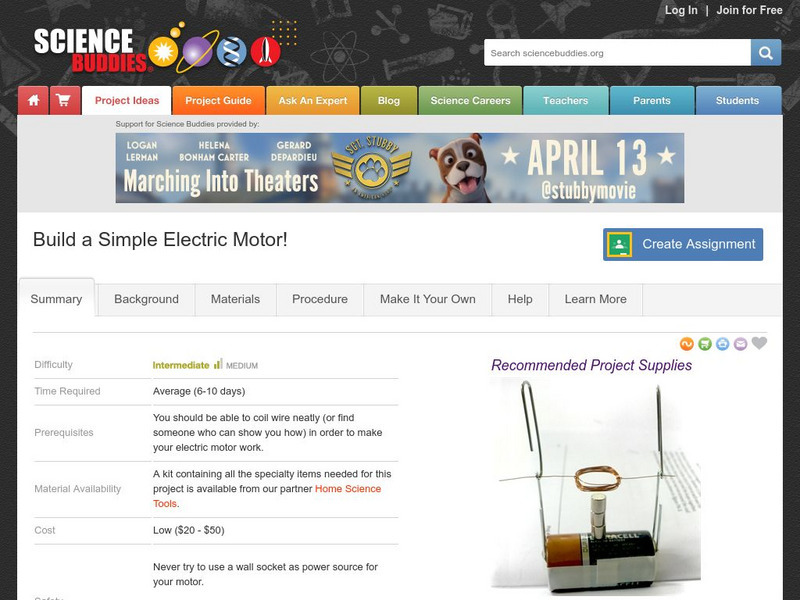
Science Buddies: Spin Right 'Round With This Simple Electric Motor
If you put on clothes that were washed in a washing machine, rode in a car, ate food from a fridge, warmed up lunch in a microwave, or played a video game, you used an electric motor. Try this science fair project and you'll learn how to...
TeachEngineering
Teach Engineering: Potato Power
Students use potatoes to light an LED clock (or light bulb) as they learn how a battery works in a simple circuit and how chemical energy changes to electrical energy. As they learn more about electrical energy, they better understand...
Center for Innovation in Engineering and Science Education, Stevens Institute of Technology
Ciese: Reverse Engineering of a Common Product
A telecollaborative project where students communicate engineering concepts across the globe. Student tasks are to deconstruct a common device, then design reassembly instructions for others worldwide to follow to attempt to reconstruct...
TeachEngineering
Teach Engineering: Will It Conduct?
Students build their own simple conductivity tester and explore whether given solid materials and solutions are good conductors of electricity.
TeachEngineering
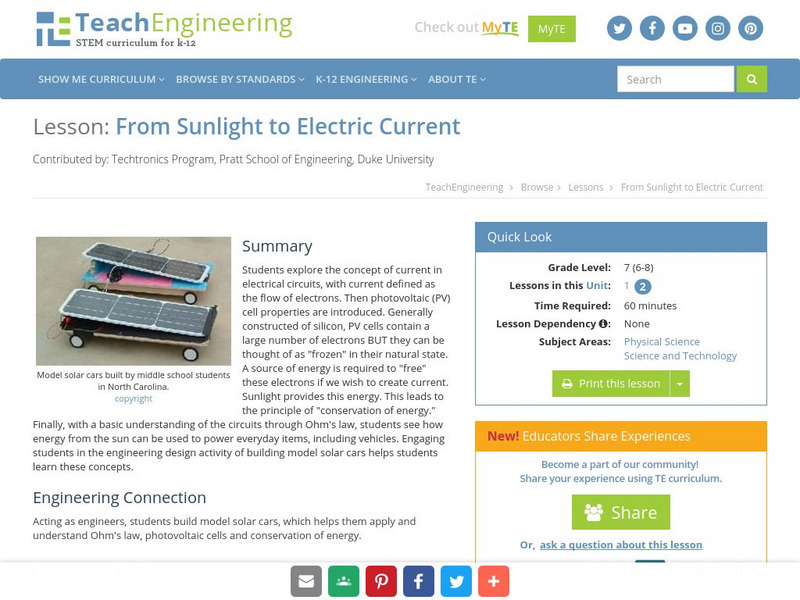
Teach Engineering: From Sunlight to Electric Current
The lesson will first explore the concept of current in electrical circuits. Current will be defined as the flow of electrons. Photovoltaic (PV) cell properties will then be introduced. This will lead to the principle of "Conservation of...
TeachEngineering
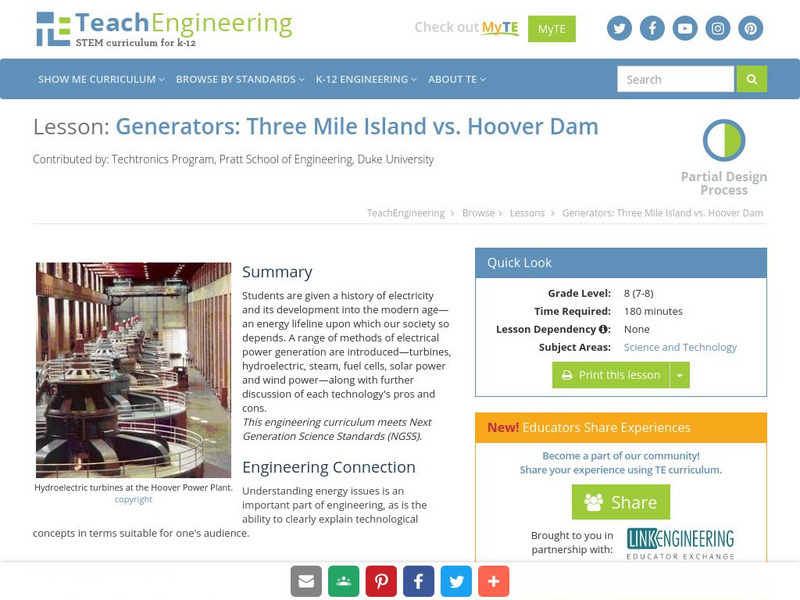
Teach Engineering: Generators: Three Mile Island vs. Hoover Dam
Students are given a history of electricity and its development into the modern age lifeline upon which we so depend. The methods of power generation are introduced, and further discussion of each technology's pros and cons follows.
TeachEngineering
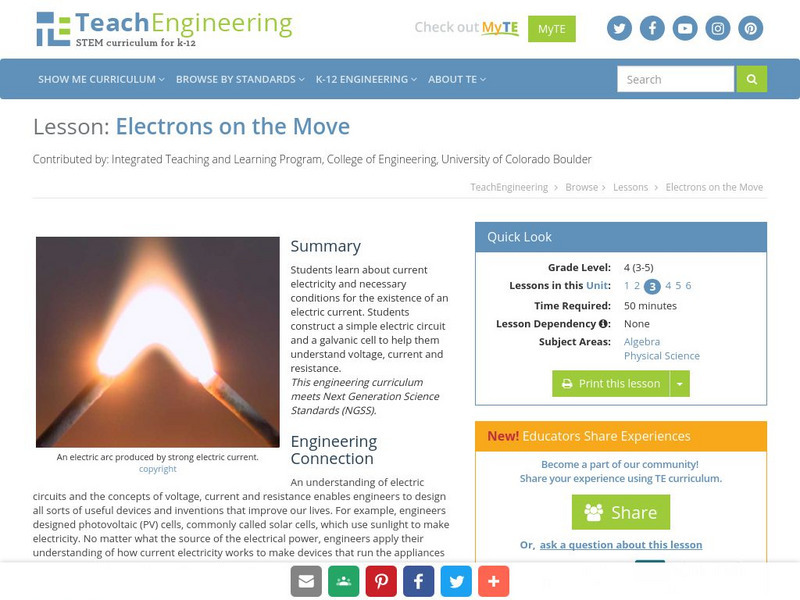
Teach Engineering: Electrons on the Move
Students learn about current electricity and necessary conditions for the existence of an electric current. Students construct a simple electric circuit and a galvanic cell to help them understand voltage, current and resistance.
TeachEngineering
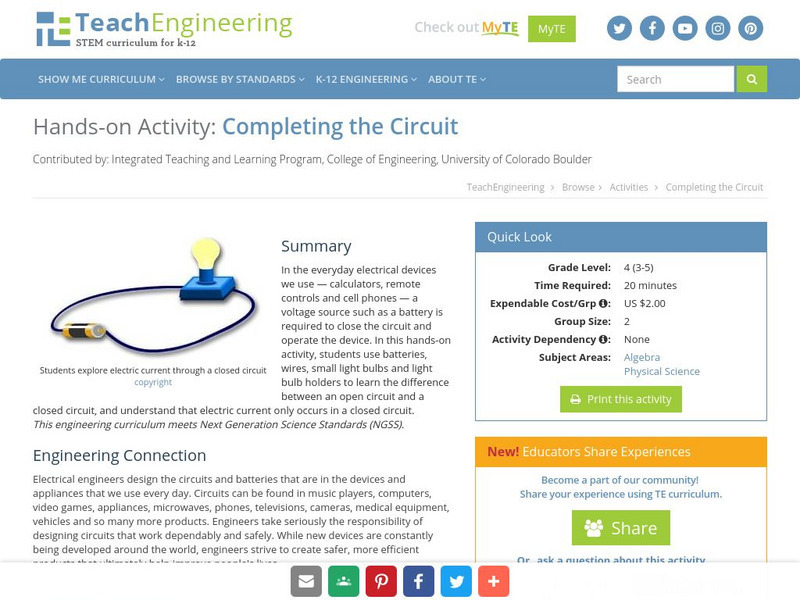
Teach Engineering: Completing the Circuit
In the everyday electrical devices we use - calculators, remote controls and cell phones - a voltage source such as a battery is required to close the circuit and operate the device. In this hands-on activity, students use a battery,...
TeachEngineering
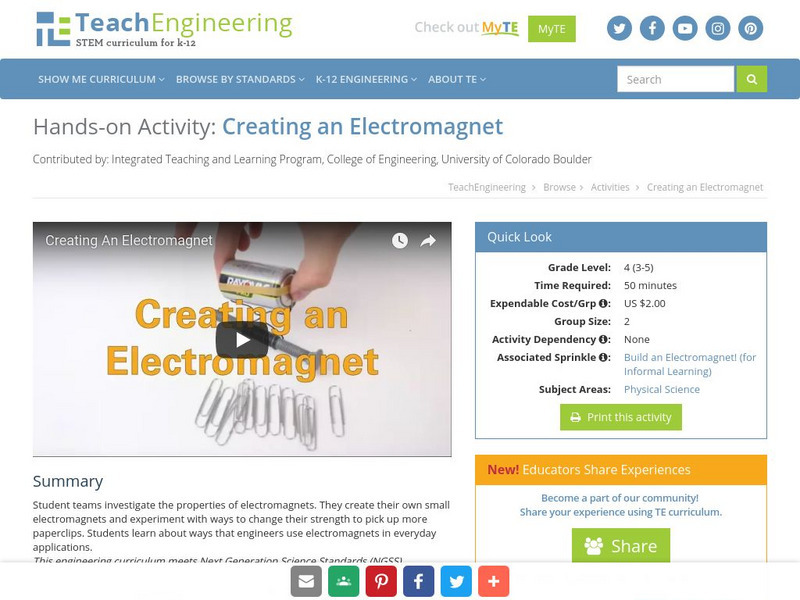
Teach Engineering: Building an Electromagnet
Student teams investigate the properties of electromagnets. They create their own small electromagnet and experiment with ways to change its strength to pick up more paper clips. Students learn about ways that engineers use...
TeachEngineering
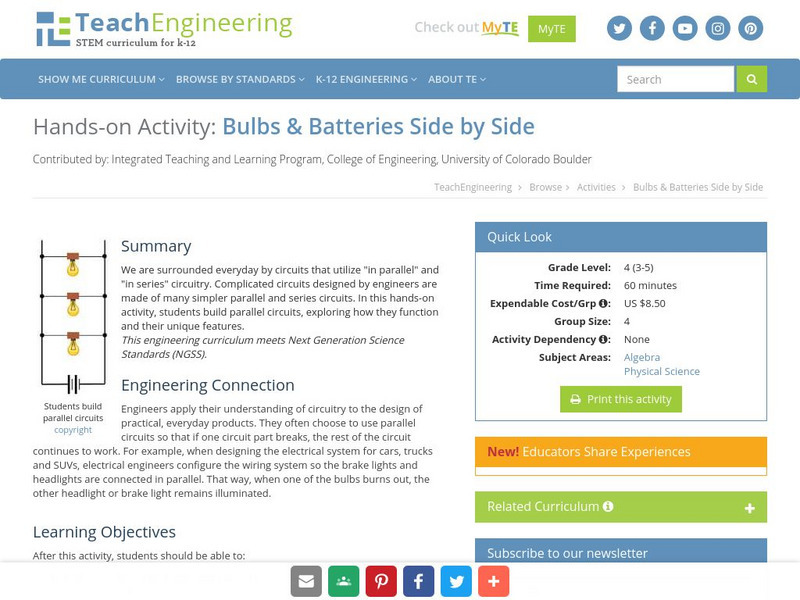
Teach Engineering: Bulbs & Batteries Side by Side
We are surrounded everyday by circuits that utilize "in parallel" and "in series" circuitry. Complicated circuits designed by engineers are made of many simpler parallel and series circuits. In this hands-on activity, students build...
TeachEngineering
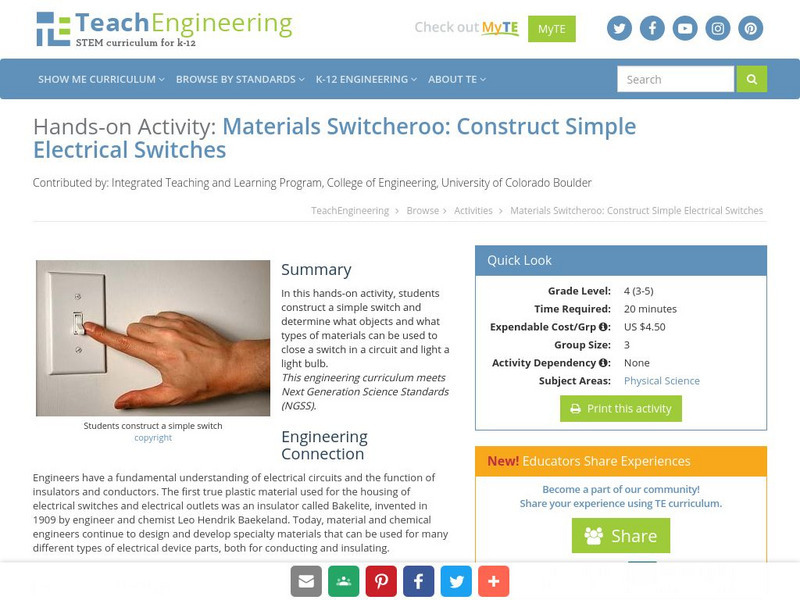
Teach Engineering: Switcheroo
In this hands-on activity, students construct a simple switch and determine what objects and what types of materials can be used to close a switch in a circuit and light a light bulb.

TryEngineering
Try Engineering: Electric Switches
Lesson focuses on how switches control the flow of electricity. Students are posed with the challenge of designing and building a simple switch into an electric circuit.
TeachEngineering
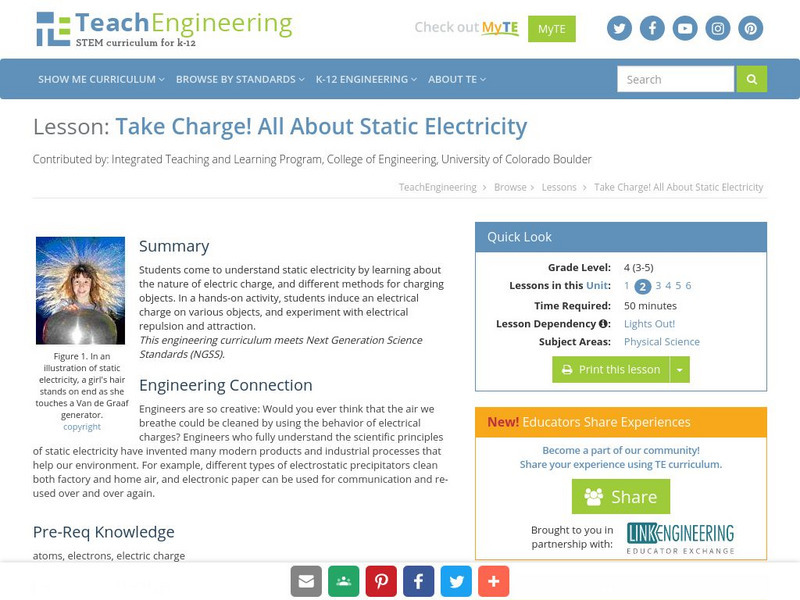
Teach Engineering: Take Charge!
Students come to understand static electricity by learning about the nature of electric charge, and different methods for charging objects. In a hands-on activity, students induce an electrical charge on various objects, and experiment...
TeachEngineering
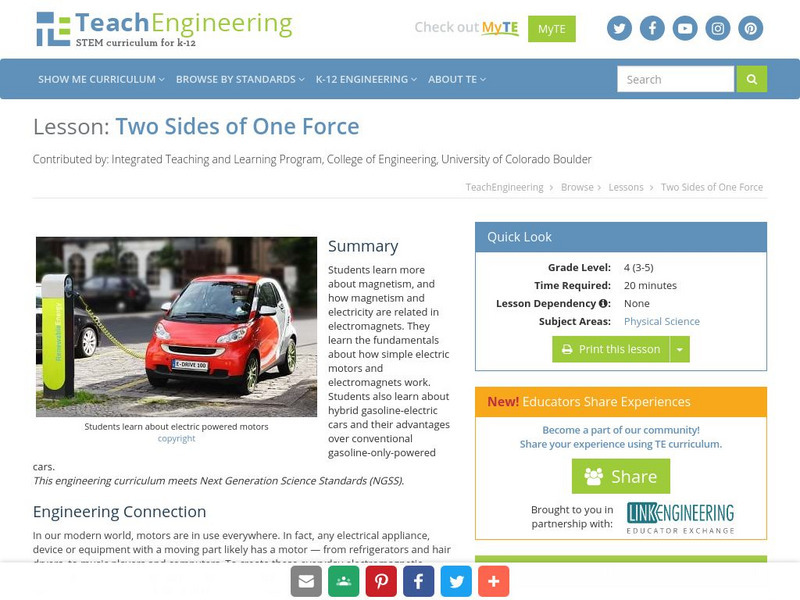
Teach Engineering: Two Sides of One Force
Students learn more about magnetism, and how magnetism and electricity are related in electromagnets. They learn the fundamentals about how simple electric motors and electromagnets work. Students also learn about hybrid...
TeachEngineering
Teach Engineering: Get Your Motor Running
Students investigate motors and electromagnets as they construct their own simple electric motors using batteries, magnets, paper clips and wire.
TeachEngineering
Teach Engineering: Let the Sun Shine!
Young scholars learn how the sun can be used for energy. They learn about passive solar heating, lighting and cooking, and active solar engineering technologies (such as photovoltaic arrays and concentrating mirrors) that generate...
TeachEngineering
Teach Engineering: Yogurt Cup Speakers
This lesson introduces students to the role of electricity and magnetism as they build a speaker. In addition, students explore properties of magnets, create an electromagnet, and determine the direction of a magnetic filed. They conduct...
TeachEngineering
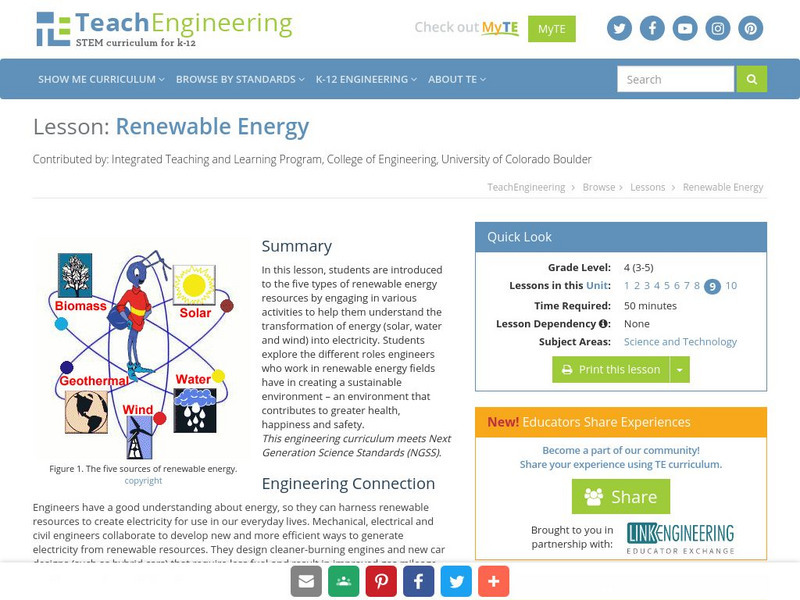
Teach Engineering: Renewable Energy
In this lesson, learners are introduced to the types of renewable energy resources. They are involved in activities to help them understand the transformation of energy (solar, water and wind) into electricity. Students explore the...

Learn Engineering
Learn Engineering: How Does an Induction Motor Work?
An article and video about the most commonly used electrical machine called an induction motor. Learn about the parts of the motors that allow the motor to function. [4:43]
TeachEngineering
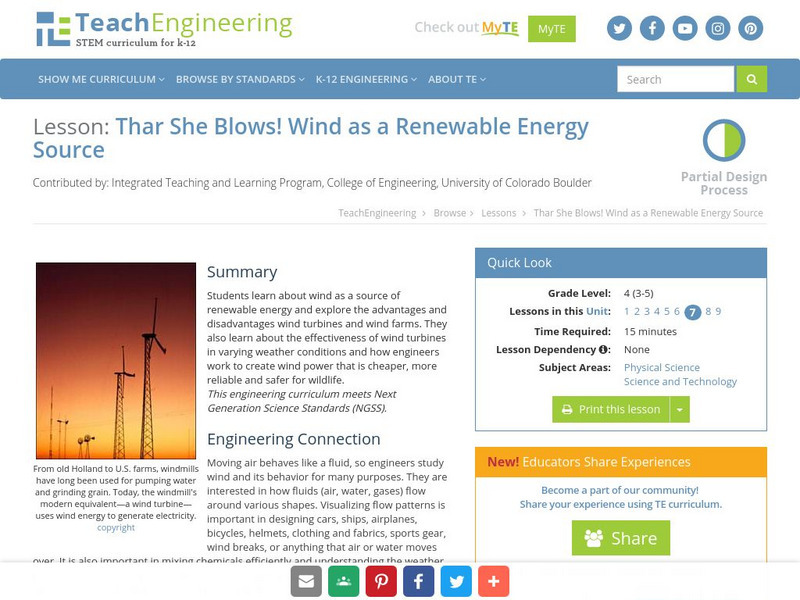
Teach Engineering: Thar She Blows!
Students learn about wind as a source of renewable energy and explore the advantages and disadvantages wind turbines and wind farms. They also learn about the effectiveness of wind turbines in varying weather conditions and how engineers...
TeachEngineering
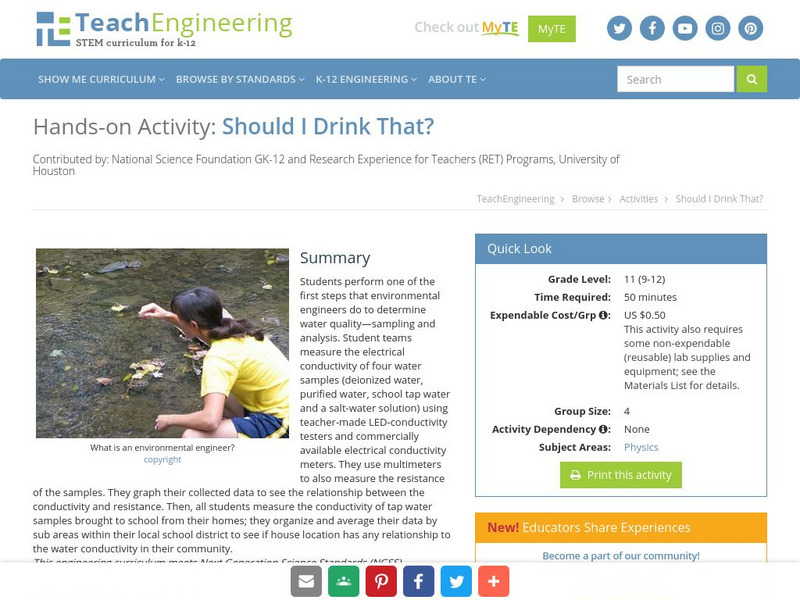
Teach Engineering: Should I Drink That?
Students perform the first steps that environmental engineers do to determine water quality - sampling and analysis. Student teams measure the electrical conductivity of four water samples using teacher-made LED conductivity testers and...
TeachEngineering
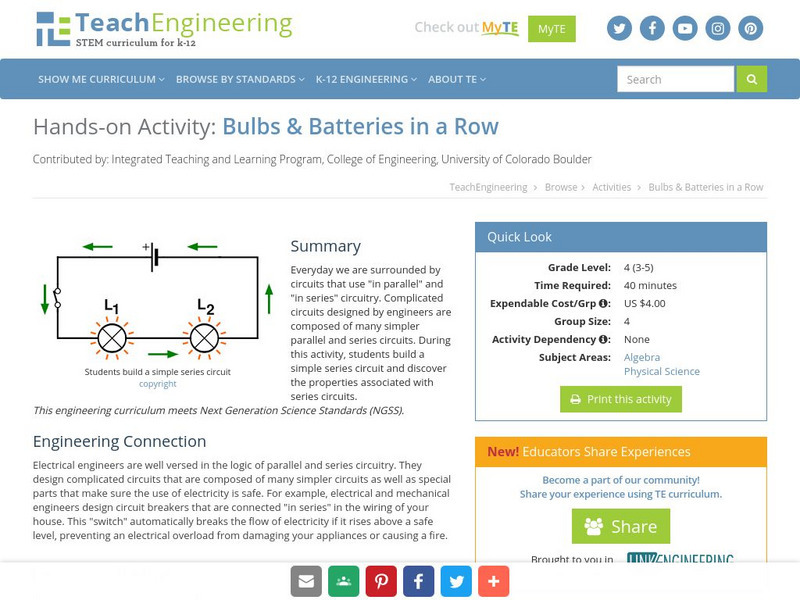
Teach Engineering: Bulbs & Batteries in a Row
Everyday we are surrounded by circuits that use "in parallel" and "in series" circuitry. Complicated circuits designed by engineers are composed of many simpler parallel and series circuits. During this activity, students build a simple...
TeachEngineering
Teach Engineering: Static Cling
This hands-on activity explores the concept of static electricity. Students attract an O-shaped piece of cereal to a charged comb and watch the cereal jump away when it touches the comb. Students also observe Styrofoam pellets pulling...
TeachEngineering
Teach Engineering: Build a Charge Detector
In this hands-on activity, students explore the electrical force that takes place between two objects. Each student builds an electroscope and uses the device to draw conclusions about objects' charge intensity. Students also determine...