Hi, what do you want to do?





iCivics
I Civics: History of Ohio's Constitution
Learn about the history of the Ohio Constitution with this before and after instructional activity that looks at the original 1802 state constitution and the major changes made in the 1851 version. Students will explore the two documents...

US National Archives
National Archives: Teaching Six Big Ideas in the Constitution
The Constitution can be broken down into 6 main themes: Limited Government, Federalism, Republicanism, Separation of Powers, Checks and Balances, and Popular Sovereignty. Young scholars will study background on the Founding Fathers and...
University of California
History Project: Debate Over the California Constitutional Convention, 1878 1879
Lesson on immigration, conflict and nativism in which young scholars examine primary source documents to evaluate public policy and attitudes towards Chinese immigrants in California, 1878-1879.
Other
First Amendment Schools: Lesson Plans: Religious Liberty
A series of lessons examining freedom of religion. A few of the lessons are off-site and the links no longer work.
The Dirksen Congressional Center
Congress Link: Lesson Plans
The Dirksen Congressional Center provides abundant lesson plans on all aspects of the US Congress and the US Constitution. All lessons contain time frames, objectives, and links to material, and are built around Bloom's taxonomy.
US National Archives
National Archives: Constitutional Issues: Watergate and the Constitution
This lesson plan deals with the constitutional issue of indictment and impeachment of a U.S. President. Includes original documents and related teaching activities.
National Endowment for the Humanities
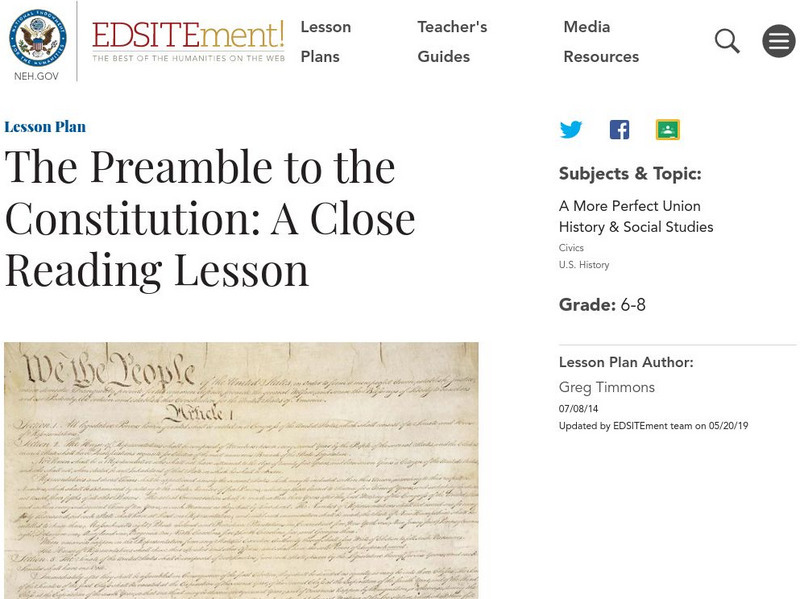
Neh: Edsit Ement: The Preamble to the Constitution: A Close Reading Lesson
In this lesson plan, middle schoolers will consider "The Preamble to the Constitution: A Close Reading Lesson." The plan includes worksheets and other student materials that can be found under the resource tab.
Shmoop University
Shmoop: Making the Constitution Terms
Read about Checks and Balances, Balance of Power, the Electoral College, and much more in this informative lesson about the making of the Constitution.

Constitutional Rights Foundation
Constitutional Rights Foundation: Bill of Rights in Action: Welfare
Lesson in which students read the history of welfare in the United States, answer questions for discussion and writing, and debate who should be responsible for the welfare of others. Small group, individual and whole class work.
Constitutional Rights Foundation
Constitutional Rights Foundation: Welfare to Work: The States Take Charge
Lesson on public policy, history and public debate over welfare and the Welfare Reform Act. Includes informative text with background and historical information, questions for writing and discussion, and guidelines for class debate.
Center For Civic Education
Center for Civic Education: Presidents' Day Lessons
Presidents' Day lessons for Grades 10-12 on the constitutional legacies of George Washington, James Madison, Abraham Lincoln, and Ronald Reagan, and how they shaped the history and Constitution of our nation. Each lesson was written and...
Constitutional Rights Foundation
Constitutional Rights Foundation: The Alien and Sedition Acts: Defining American Freedom
Lesson with activity in which students study and analyze the challenges surrounding constitutional rights and national security by focussing on the Alien and Sedition Act, 1798 and definitions of American freedom. Links to primary...
Constitutional Rights Foundation
Constitutional Rights Foundation: The United States and the Barbary Pirates
Lesson and activity in which students analyze foreign policy challenges on paying ransom. Students study U.S. response to the Barbary pirates and apply their knowledge to modern day terrorism and foreign policy examples.
Constitutional Rights Foundation
Constitutional Rights Foundation: This Great Enterprise: Theodore Roosevelt and the Panama Canal
Lesson and activity on American enterprise and intervention with a focus on Theodore Roosevelt and the Pananma Canal. Includes class activity and questions for discussion and writing.

Constitutional Rights Foundation
Constitutional Rights Foundation: The u.s. Supreme Court: Fdr Tries to "Pack" the Supreme Court
Lesson and activity in which students learn about the importance of the Supreme Court, balance of power, and judicial reform.

Constitutional Rights Foundation
Constitutional Rights Foundation: Rules of War: Choices: Truman, Hirohito, and the Atomic Bomb
Lesson and activity on rules of war and the decision to drop the atomic bomb during WWII.
Bill of Rights Institute
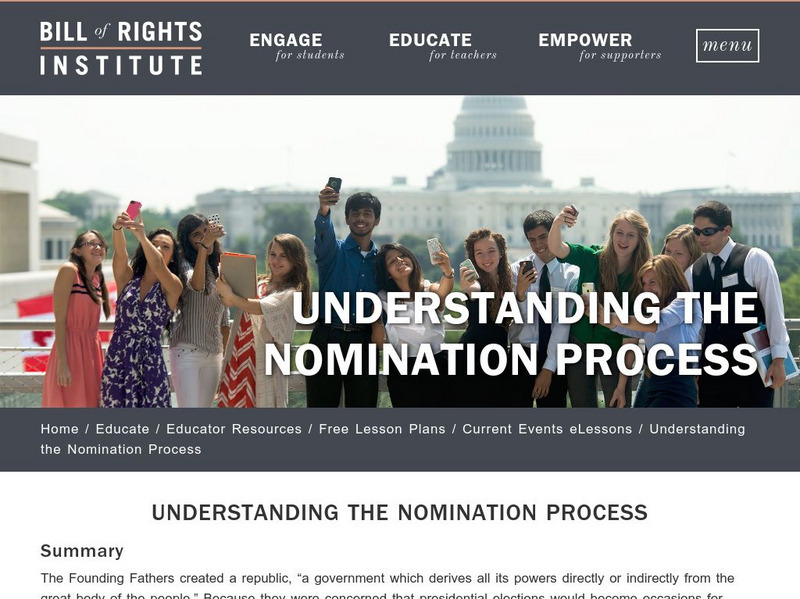
Bill of Rights Institute: Understanding the Nomination Process
From its conception in the United States Constitution, to necessary adjustments in the 12th Amendment, students will understand the nomination process and role of political parties in establishing a president with the aid of this lesson.
iCivics
I Civics: You've Got Rights!
Learners learn about the rights guaranteed by the Bill of Rights and other important constitutional amendments.
Bill of Rights Institute
Bill of Rights Institute: Religious Freedom and the Affordable Healthcare Act
Summary, resources, and activities addressing the constitutionality with regard to the first amendment which surfaced with the Affordable Healthcare Act.
National Endowment for the Humanities
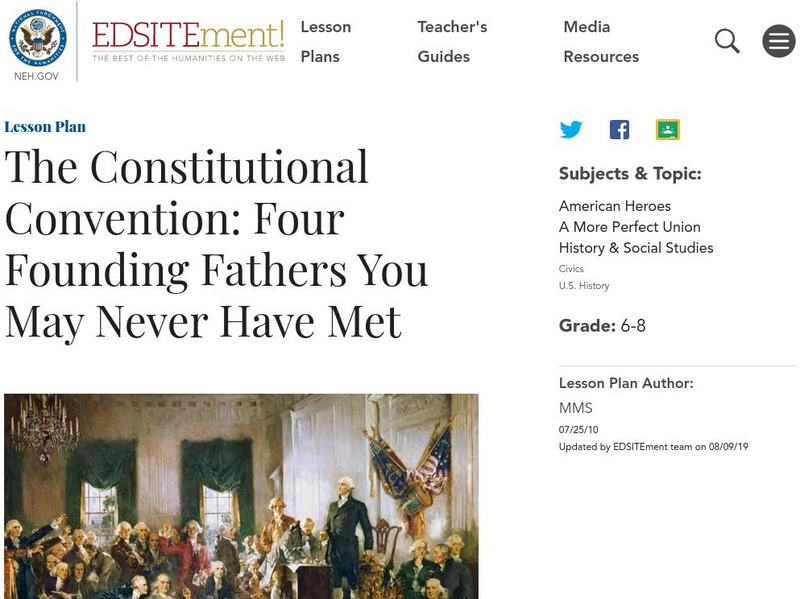
Neh: Edsit Ement: Four Founding Fathers
The lesson plan provides varies information and links to help teach about the Constitutional Convention and learn about the Founding Fathers.

ReadWriteThink
Read Write Think: The Pros and Cons of Discussion
Contains plans for four lessons that use "Harrison Bergeron" by Kurt Vonnegut, Jr. to engage students in a discussion about what constitutes equality. Lessons use re-writes, persuasive essays, computer activities, and informal class...
National Endowment for the Humanities
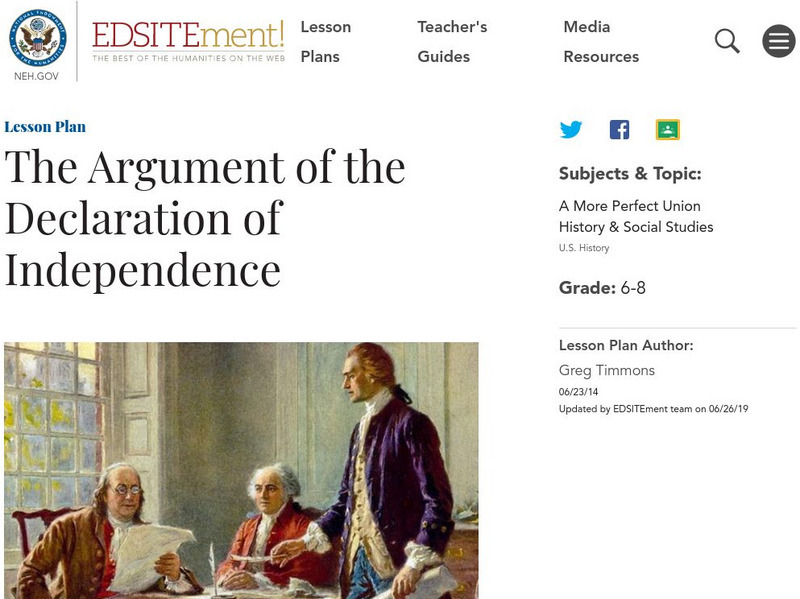
Neh: Edsit Ement: The Argument of the Declaration of Independence
In this lesson plan, middle schoolers will consider "The Argument of the Declaration of Independence." The plan includes worksheets and other student materials that can be found under the resource tab.
National Endowment for the Humanities
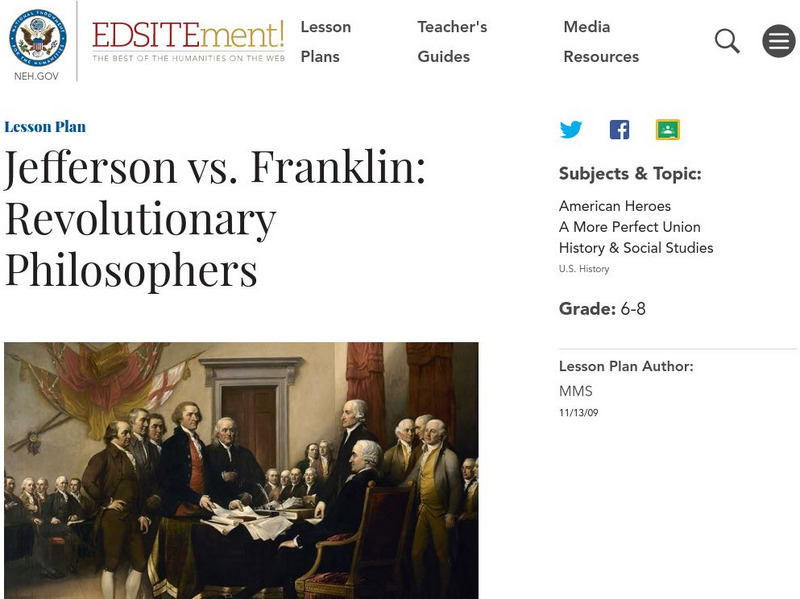
Neh: Edsit Ement: Jefferson vs. Franklin: Revolutionary Philosophers
In this lesson plan, middle schoolers will consider "Jefferson vs. Franklin: Revolutionary Philosophers." The plan includes worksheets and other student materials that can be found under the resource tab.
Center For Civic Education
Center for Civic Education: James Madison and Executive Power
James Madison has been called the "Father of the Constitution". His ideas have shaped the role of our government, the role of political parties, the Bill of Rights and more. This lesson offers extensive background, critical thinking...
Other popular searches
- Us Constitution Lessons
- Texas Constitution Lessons
- Constitution Lessons Grade 3
- U S Constitution Lessons
- U.s Constitution Lessons
- The Constitution Lessons