Hi, what do you want to do?





eSchool Today
E School Today: Your Cool Basics on Natural Resources
Looks at the two categories of natural resources, what they are used for, their distribution around the world, threats to natural resources, recycling and composting, and conservation.
Georgia Department of Education
Ga Virtual Learning: Ap Environmental Science: Plate Tectonics,natural Resources
Through interactive activities and readings, students learn that natural resources can be renewable or nonrenewable, but sustainable use and management must be applied to ensure they are available for the long term.
Other
Toronto Zoo: Adopt a Pond Wetland Conservation Programme
This is a large website from the Toronto Zoo with information on environmental conservation. There are explanations about habitats and species, and teacher resources for a variety of grade levels and subjects.

Alabama Learning Exchange
Alex: Conserve It to Preserve It
In this instructional activity from "The Friends of Auntie Litter", (http://www.auntielitter.org/), conservation and describing ways to sustain natural resources will be explored. Students will also recycle a paper plate to create a...

Alabama Learning Exchange
Alex: Conserve It to Preserve It
In this lesson from "The Friends of Auntie Litter", (www.auntielitter.org), conservation and describing ways to sustain energy will be explored. Students will also create a web diagram of ways to conserve energy. This lesson is one from...
Other
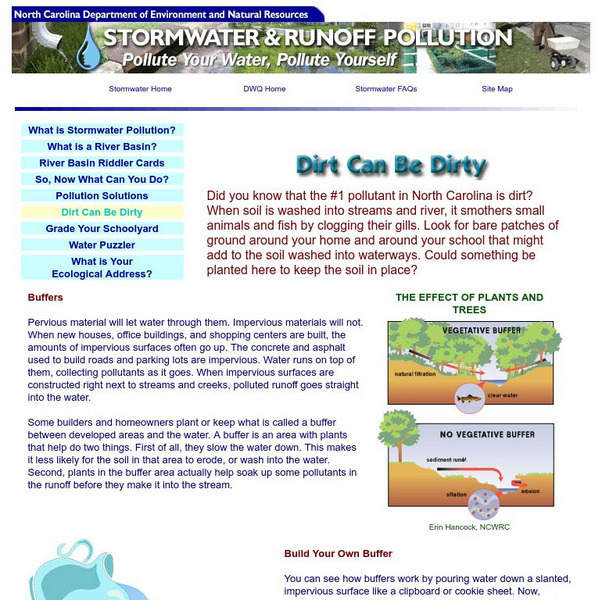
North Carolina Department of Energy and Natural Resources: Dirt Can Be Dirty
Did you know that the #1 pollutant in North Carolina is dirt? When soil is washed into streams and river, it smothers small animals and fish by clogging their gills. Look for bare patches of ground around your home and around your school...
PBS
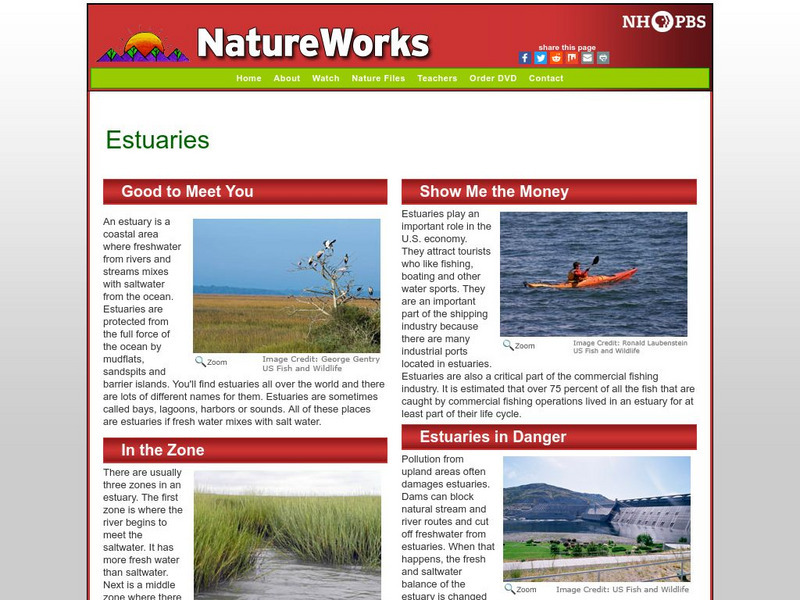
Nh Pbs: Nature Works: Estuaries
Learn more about estuaries when you visit this informative site. This resource provides locations of and weblinks to estuaries in the United States.
PBS
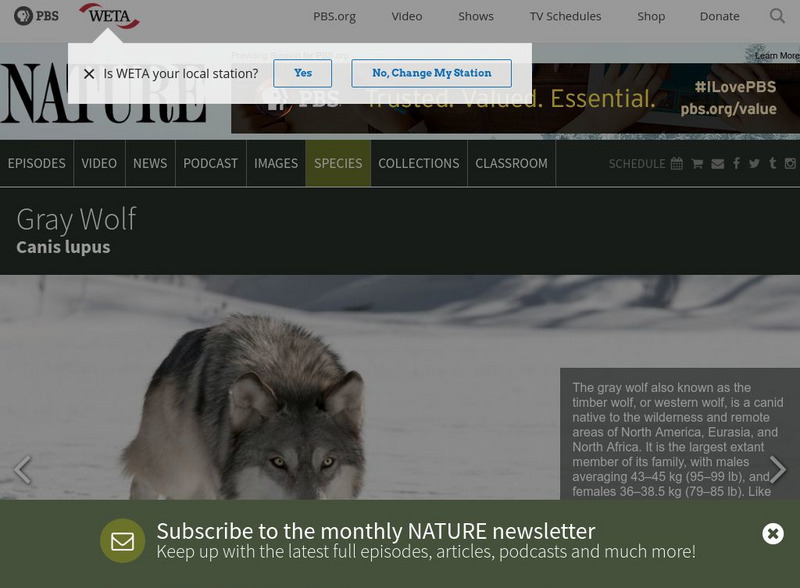
Pbs Nature: Gray Wolf
Gray wolves were a frequent sight on the American plains, however, they are now an endangered species despite attempts to reintroduce them to their former habitats in the continental United States. Learn about their natural history in...
PBS
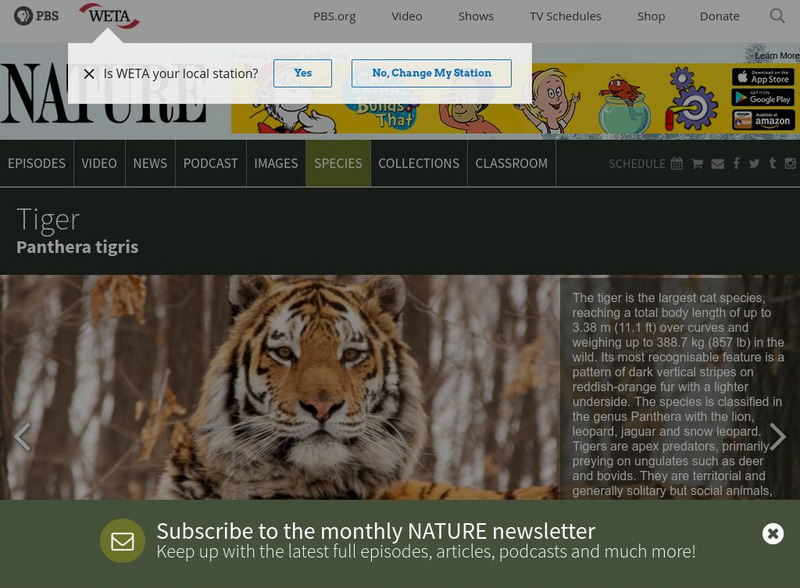
Pbs Nature: Tiger
Learn about how and where tigers live when you explore this resource. You can also investigate how tigers communicate with each other, enemies, friends, and humans through this site.
PBS
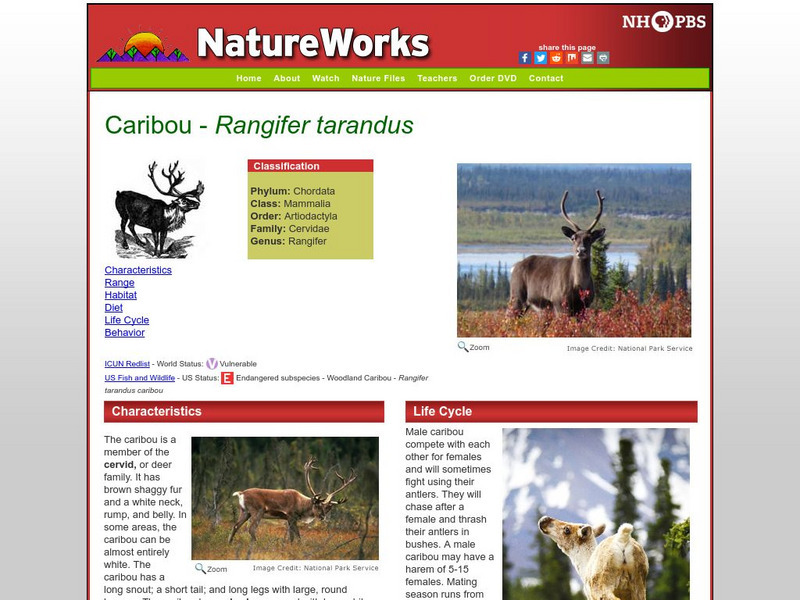
Nh Pbs: Nature Works: Caribou
The focus of this NatureWorks resource is the Caribou. The content includes a look at this species' characteristics, range, habitat, food, reproduction, and behavior.
Nature Conservancy
The Nature Conservancy: The Value of Ecotourism
In this lesson, learners role-play as cattle ranchers. They explore traditional culture and predicted economic outcomes to determine if they will sell or keep their land. They learn how raising cattle, combined with ecotourism, can be an...

CK-12 Foundation
Ck 12: Earth Science: Obtaining Energy Resources Study Guide
[Free Registration/Login may be required to access all resource tools.] This study guide summarizes key points about the important role of net energy in obtaining energy resources. Includes a few questions to check for understanding.
PBS
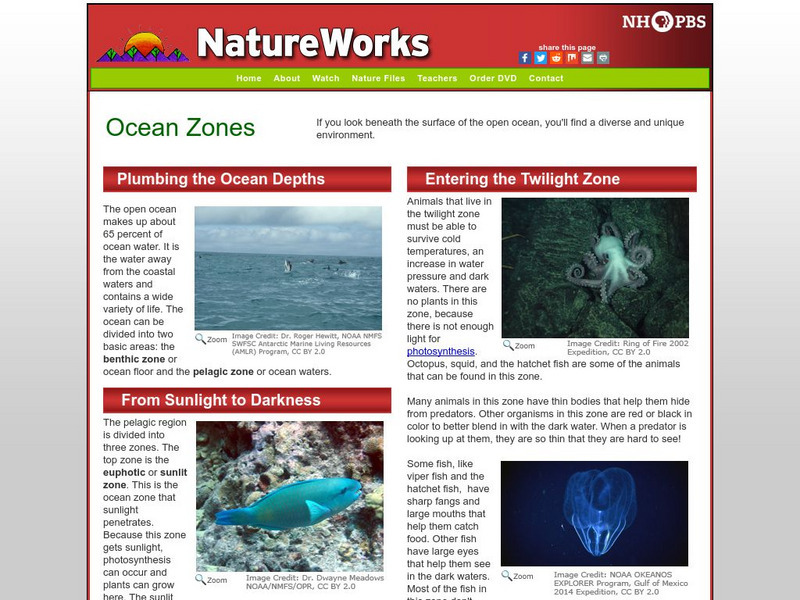
Nh Pbs: Nature Works: Ocean Zones
Discover more about the underocean environment at this site that surveys animals, environmental factors such as light and temperature, currents, animals, plants, and the like.
CK-12 Foundation
Ck 12: Earth Science: Introduction to Energy Resources Study Guide
This comprehensive study guide covers the main terms and concepts needed for an earth science unit on energy resources. Review questions are included at the bottom of the study guide.
Nature Conservancy
The Nature Conservancy: The Importance of Biological Interactions
Organisms have a variety of relationships. In this activity, students learn to categorize relationships according to their impact on organisms and the terminology for these biological interactions.
American Geosciences Institute
American Geosciences Institute: Earth Science Week: Mapping Your Soil
Use the Web Soil Survey developed by the USDA-Natural Resources Conservation Service to determine what soil is around your school and how it can be used.

Alabama Learning Exchange
Alex: Save the Forest
President Theodore Roosevelt believed in the need for conservation and was called America's first environmental president. What steps did he take to help preserve the environment and its natural resources? Today we can enjoy the beauty...
US Geological Survey
Usgs: Water Science for Schools Activities Center
This website offers three activity centers: Questionnaires, Opinion Surveys, and Challenge Questions. Take a look at these interesting water research activities from the US Geological Survey. Click Home to access the site in Spanish.