Hi, what do you want to do?






TeachEngineering
Teach Engineering: Means, Modes, and Medians
Students experience data collection, analysis and inquiry in this LEGO MINDSTORMS NXT -based activity. They measure the position of an oscillating platform using a ultrasonic sensor and perform statistical analysis to determine the mean,...
TeachEngineering
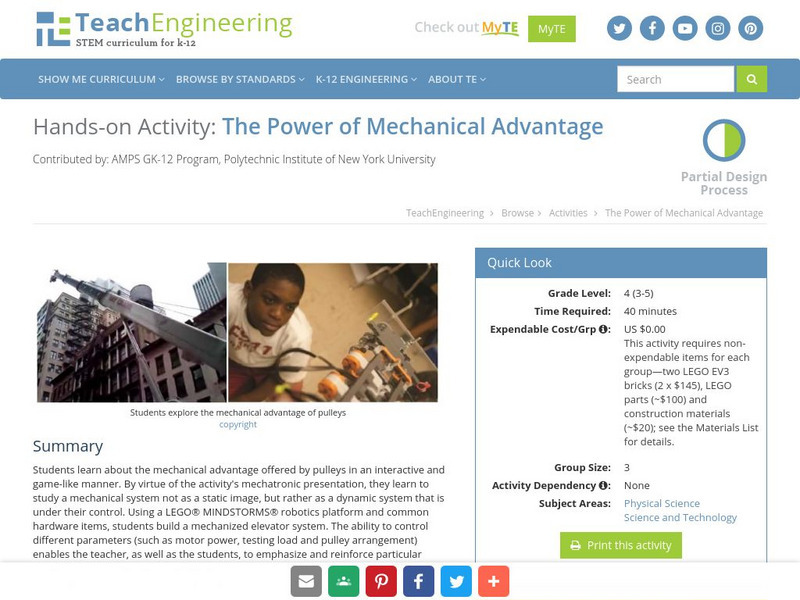
Teach Engineering: The Power of Mechanical Advantage
Students learn about the mechanical advantage offered by pulleys in an interactive and game-like manner. By virtue of the activity's mechatronic presentation, they learn to study a mechanical system not as a static image, but rather as a...
TeachEngineering
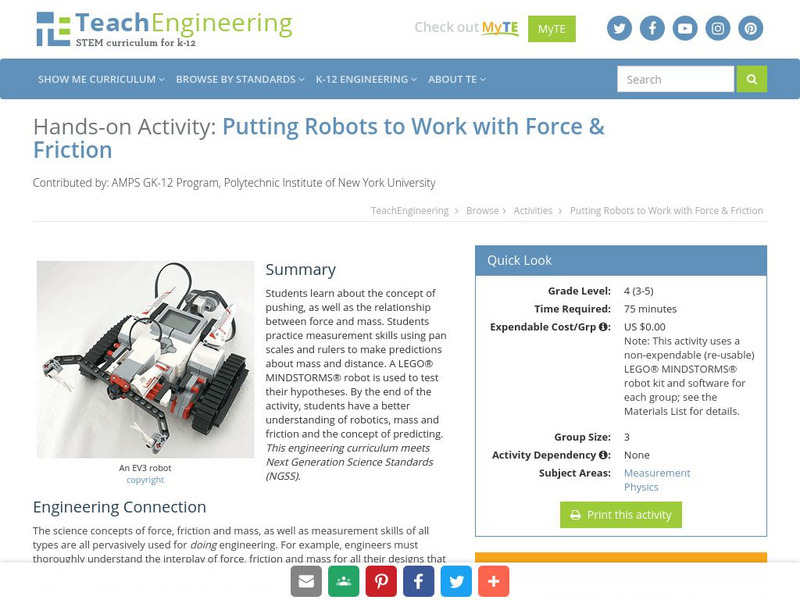
Teach Engineering: Putting Robots to Work With Force & Friction
Students learn about the concept of pushing, as well as the relationship between force and mass. Students practice measurement skills using pan scales and rulers to make predictions about mass and distance. A LEGO MINDSTORMS NXT robot is...
TeachEngineering
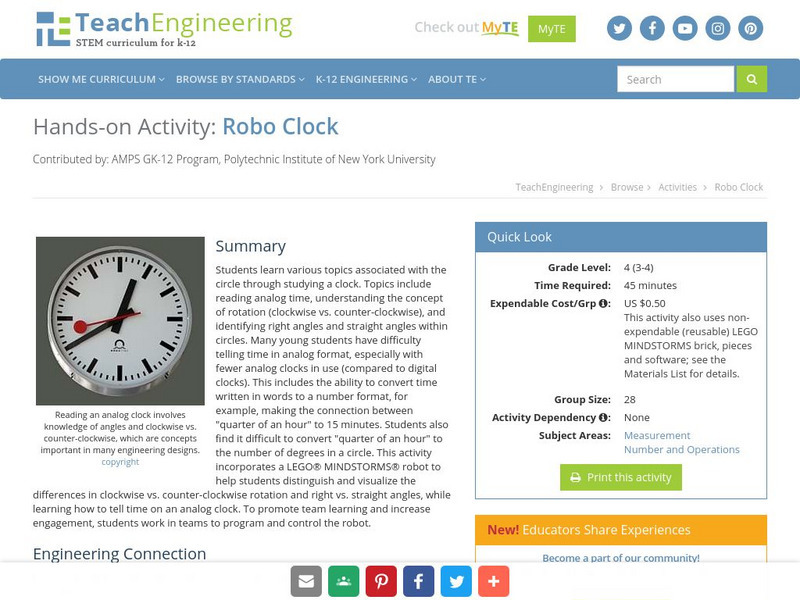
Teach Engineering: Robo Clock
Students learn various topics associated with the circle through studying a clock. Topics include reading analog time, understanding the concept of rotation (clockwise vs. counter-clockwise), and identifying right angles and straight...
TeachEngineering
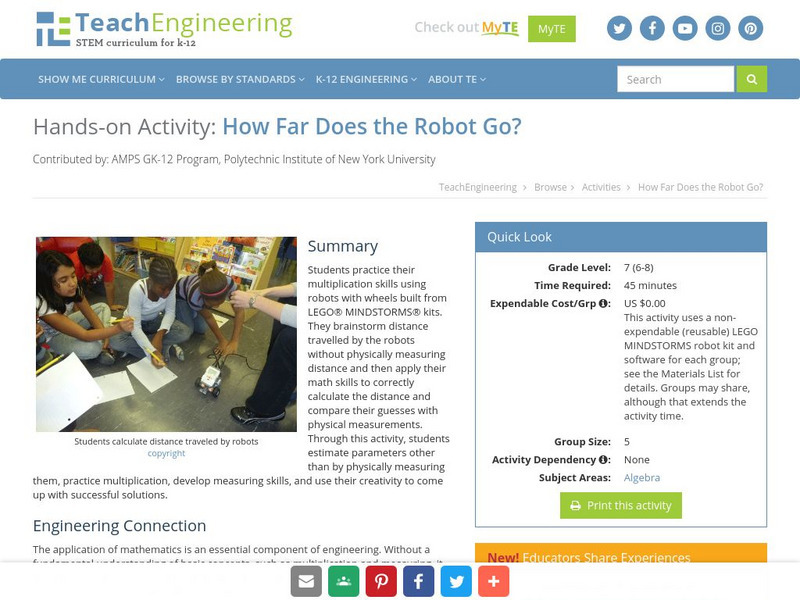
Teach Engineering: How Far Does the Robot Go?
Students practice their multiplication skills using robots with wheels built from LEGO MINDSTORMS NXT kits. They brainstorm distance travelled by the robots without physically measuring distance and then apply their math skills to...
TeachEngineering
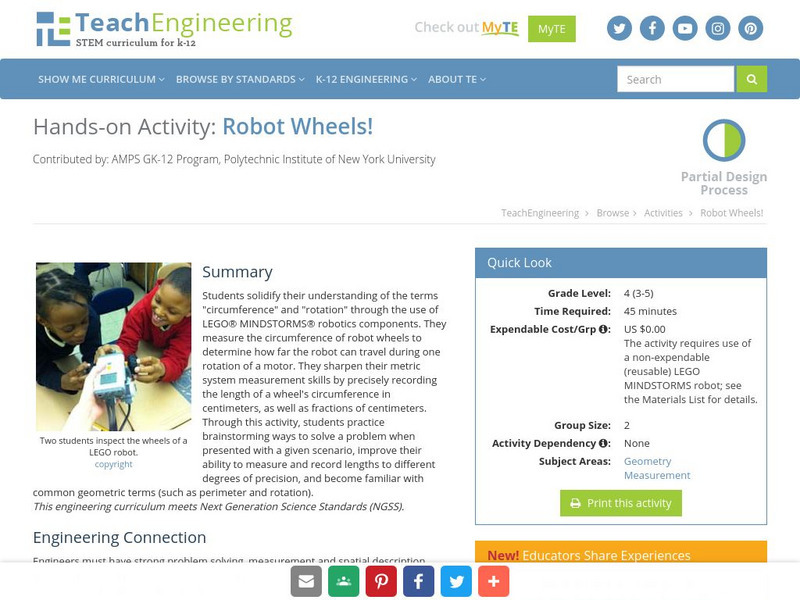
Teach Engineering: Robot Wheels!
Students solidify their understanding of the terms "circumference" and "rotation" through the use of LEGO MINDSTORMS NXT robotics components. They measure the circumference of robot wheels to determine how far the robot can travel during...
TeachEngineering
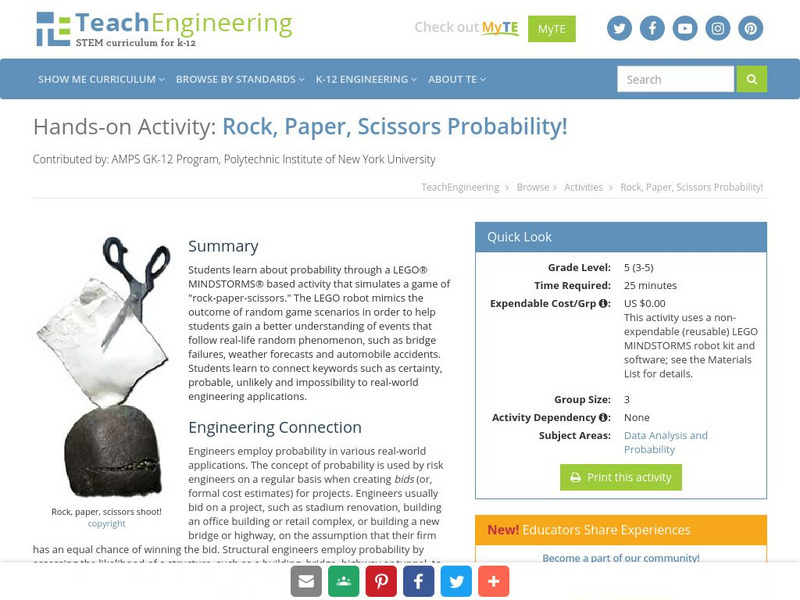
Teach Engineering: Rock, Paper, Scissors Probability!
Students learn about probability through a LEGO MINDSTORMS NTX-based activity that simulates a game of "rock-paper-scissors." The LEGO robot mimics the outcome of random game scenarios in order to help students gain a better...
TeachEngineering
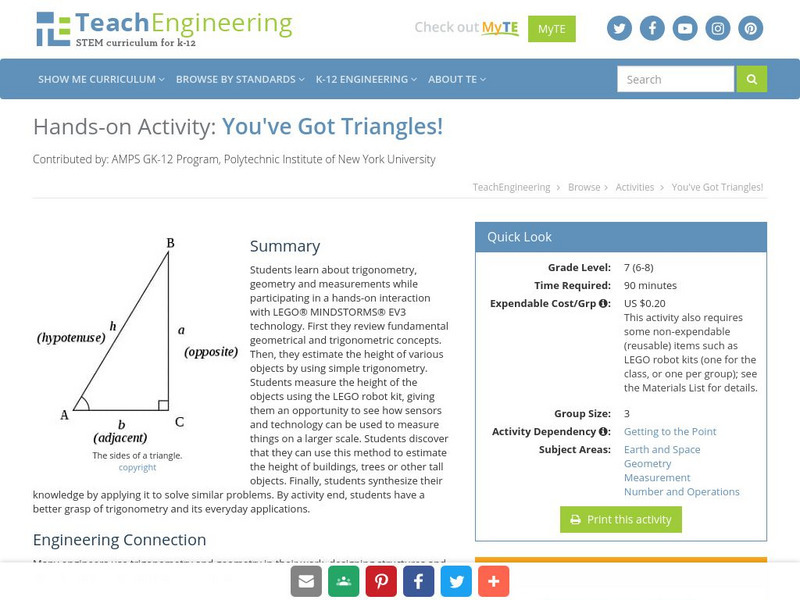
Teach Engineering: You've Got Triangles!
Students learn about trigonometry, geometry and measurements while participating in a hands-on interaction with LEGO MINDSTORMS NXT technology. First they review fundamental geometrical and trigonometric concepts. Then, they estimate the...
TeachEngineering
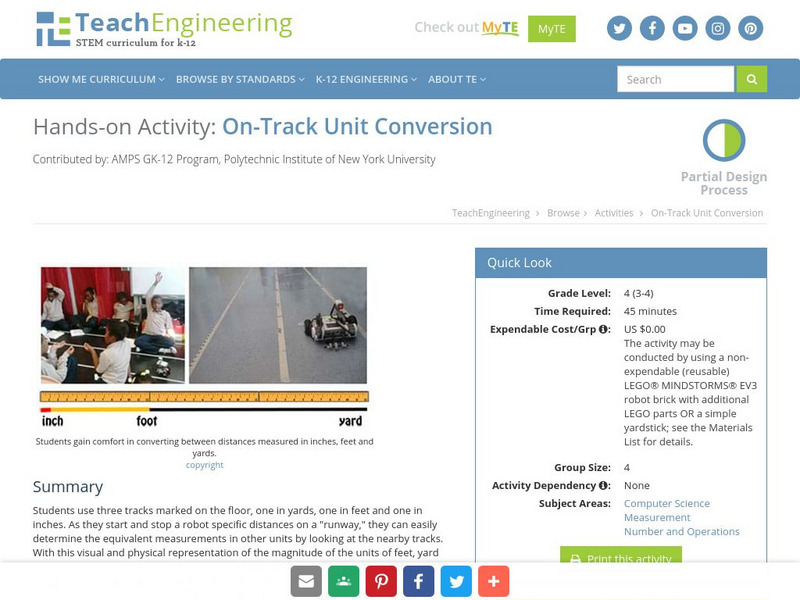
Teach Engineering: On Track Unit Conversion
Students use three tracks marked on the floor, one in yards, one in feet and one in inches. As they start and stop a robot specific distances on a "runway," they can easily determine the equivalent measurements in other units by looking...
TeachEngineering
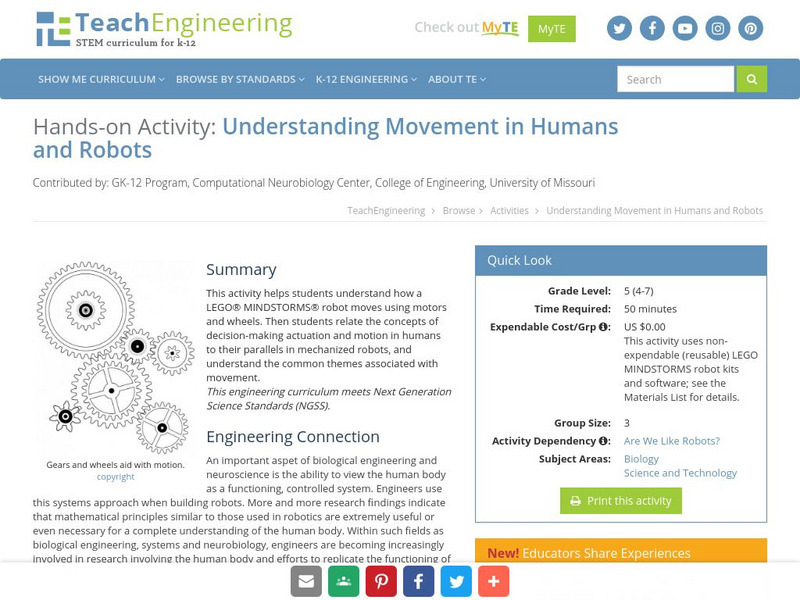
Teach Engineering: Understanding Movement in Humans and Robots
This activity helps students understand how a LEGO MINDSTORMS NXT robot moves using motors and wheels. Then students relate the concepts of decision-making actuation and motion in humans to their parallels in mechanized robots, and...
TeachEngineering
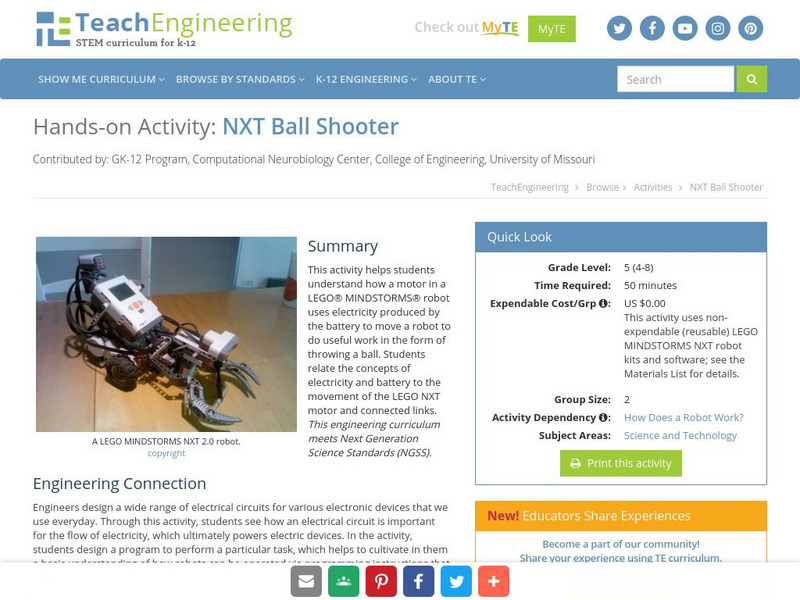
Teach Engineering: Nxt Ball Shooter
This activity helps students understand how a motor in a LEGO MINDSTORMS NXT robot uses electricity produced by the battery to move a robot to do useful work in the form of throwing a ball. Students relate the concepts of electricity and...
TeachEngineering
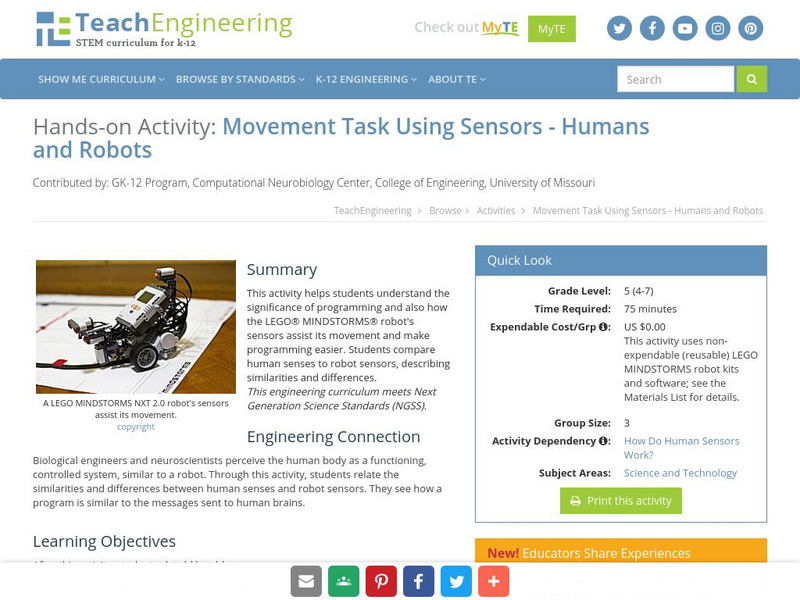
Teach Engineering: Movement Task Using Sensors Humans and Robots
This activity helps students understand the significance of programming and also how the LEGO MINDSTORMS NXT robot's sensors assist its movement and make programming easier. Students compare human senses to robot sensors, describing...
TeachEngineering
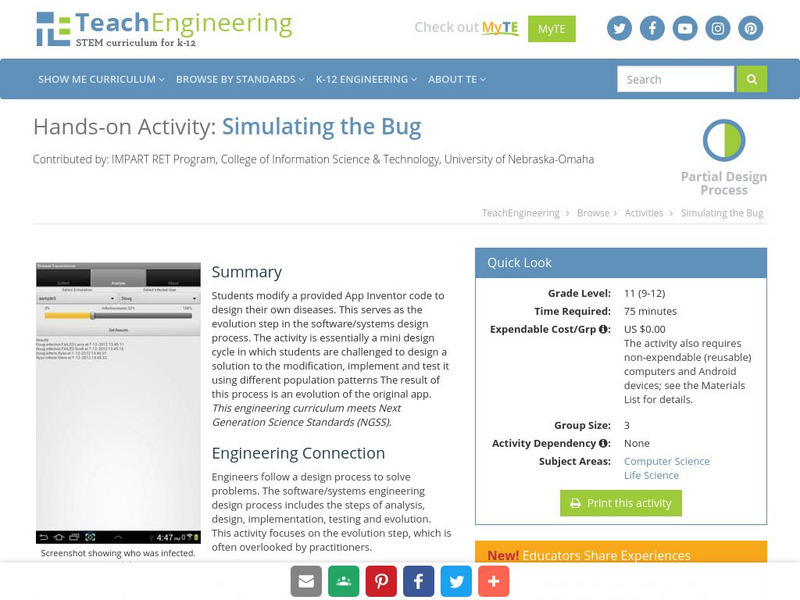
Teach Engineering: Simulating the Bug
Students modify a provided App Inventor code to design their own diseases. This serves as the evolution step in the software/systems design process. The activity is essentially a mini design cycle in which students are challenged to...
TeachEngineering
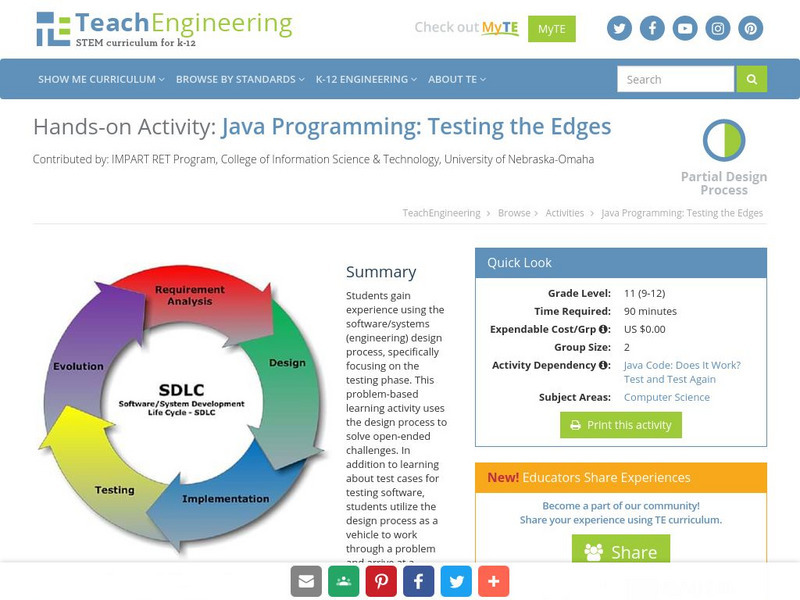
Teach Engineering: Testing the Edges
Students gain experience using the software/systems (engineering) design process, specifically focusing on the testing phase. This problem-based learning activity uses the design process to solve open-ended challenges. In addition to...
TeachEngineering
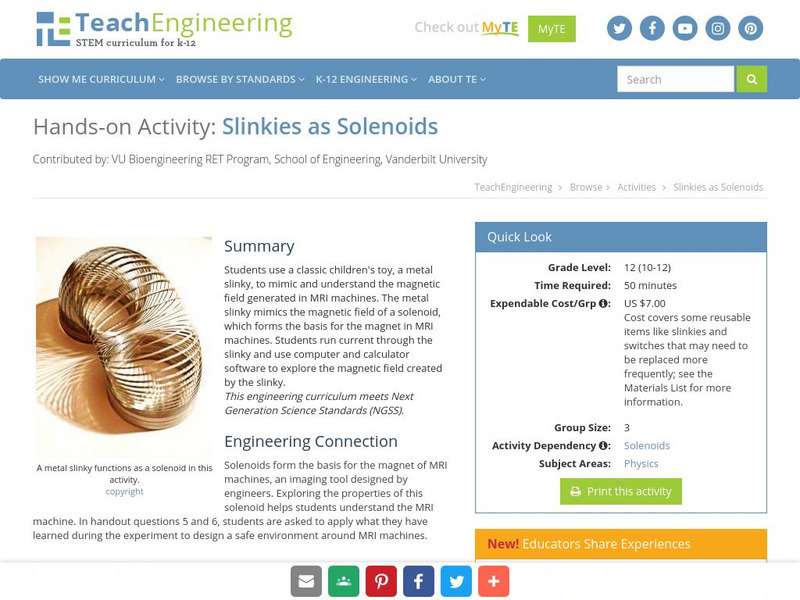
Teach Engineering: Slinkies as Solenoids
In this activity, students use an old fashion children's toy, a metal slinky, to mimic and understand the magnetic field generated in an MRI machine. The metal slinky mimics the magnetic field of a solenoid, which forms the basis for the...

TeachEngineering
Teach Engineering: Design a Net Zero Energy Classroom
Students create a concept design of their very own net-zero energy classroom by pasting renewable energy and energy-efficiency items into and around a pretend classroom on a sheet of paper. They learn how these items (such as solar...
TeachEngineering
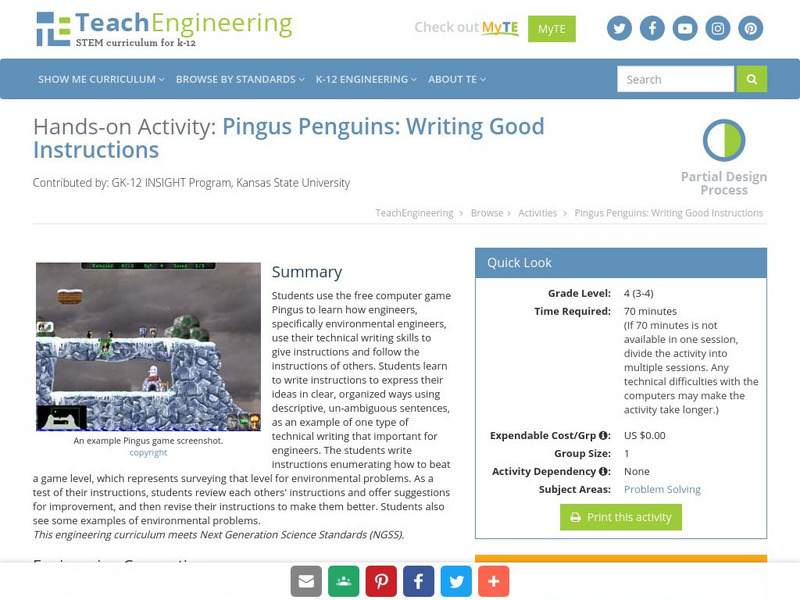
Teach Engineering: Pingus Penguins: Writing Good Instructions
Students use the free computer game Pingus to learn how engineers, specifically environmental engineers, use their technical writing skills to give instructions and follow the instructions of others. Students learn to write instructions...
TeachEngineering
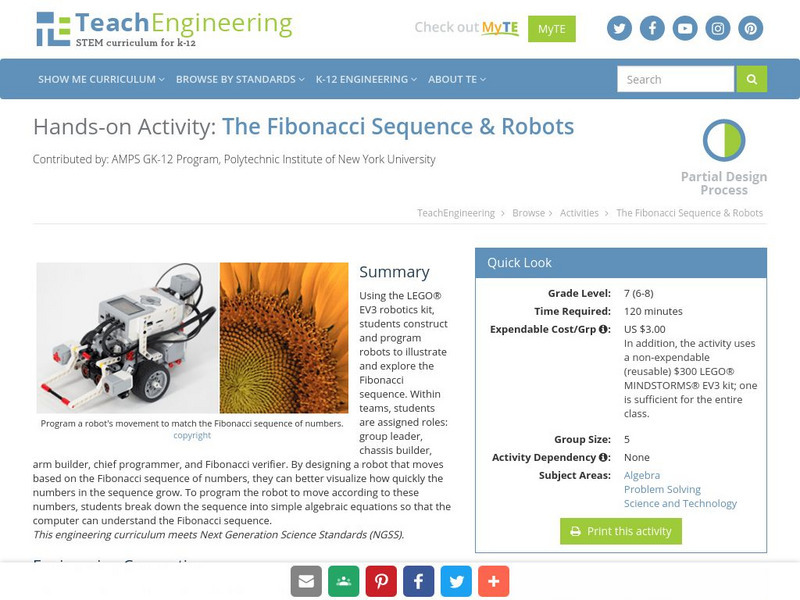
Teach Engineering: The Fibonacci Sequence & Robots
Using the LEGO NXT robotics kit, students construct and program robots to illustrate and explore the Fibonacci sequence. Within teams, students are assigned roles: group leader, chassis builder, arm builder, chief programmer, and...
Other
Ed Web: Homepage
EdWeb explores educational reform and information technology. "With EdWeb, you can hunt down on-line educational resources around the world, learn about trends in education policy and information infrastructure development, examine...
Other
Ed Web: Homepage
EdWeb explores educational reform and information technology. "With EdWeb, you can hunt down on-line educational resources around the world, learn about trends in education policy and information infrastructure development, examine...
Other
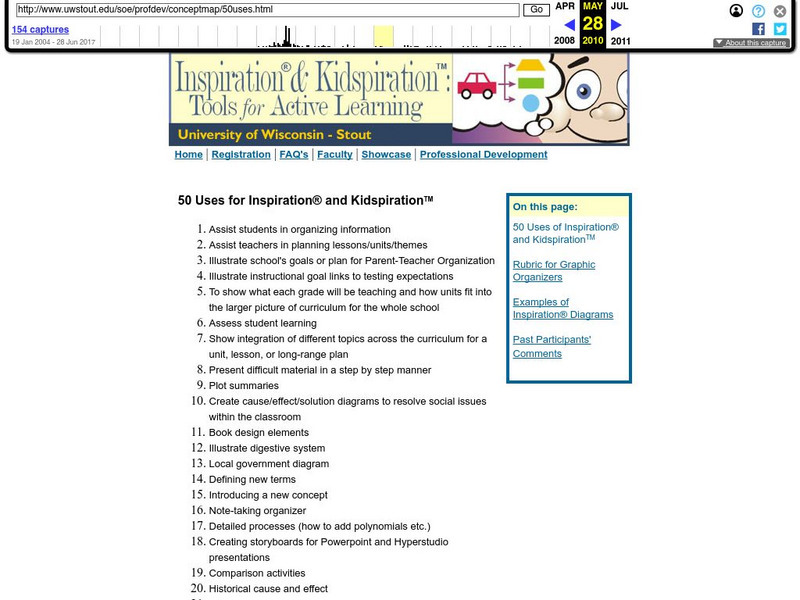
Inspiration and Kidspiration: University of Wisconsin
This site features Kidspiration and Inspiration tools for active learning. Students and teachers will benefit from this comprehensive list of 50 different ways to use inspiration and kidspiration in the classroom and beyond.
TeachEngineering
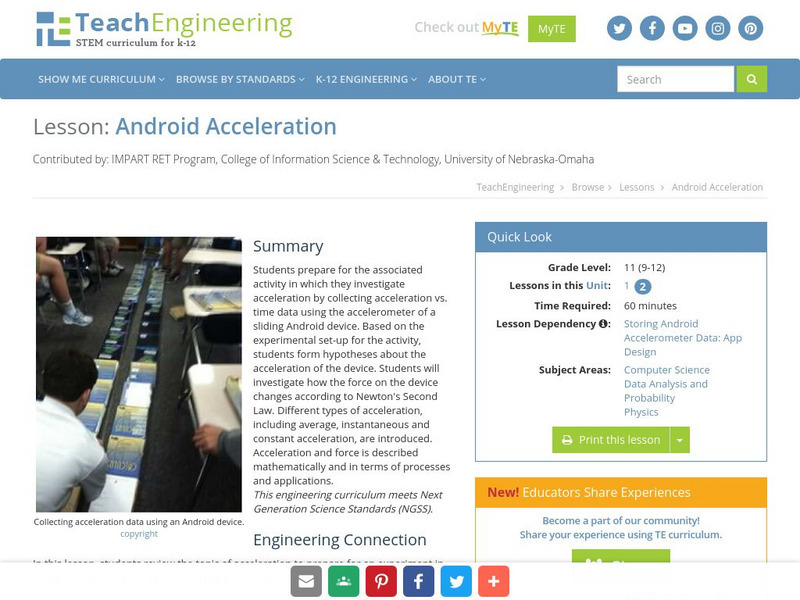
Teach Engineering: Android Acceleration
Learners prepare for the associated activity in which they investigate acceleration by collecting acceleration vs. time data using the accelerometer of a sliding Android device. Based on the experimental set-up for the activity, students...
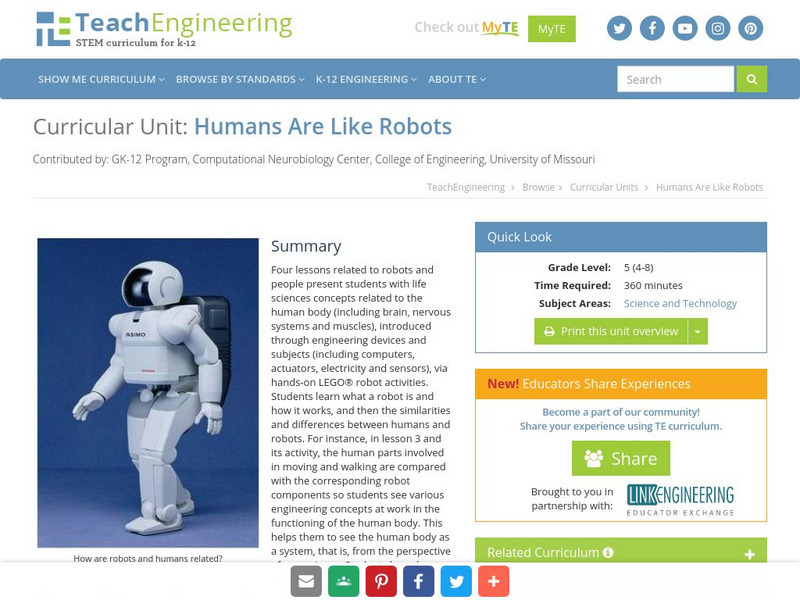
TeachEngineering
Teach Engineering: Humans Are Like Robots
Four lessons related to robots and people present students with life sciences concepts related to the human body (including brain, nervous systems and muscles), introduced through engineering devices and subjects (including computers,...

TeachEngineering
Teach Engineering: Teaching the Engineering Design Process
Students follow the steps of the engineering design process (EDP) while learning about assistive devices and biomedical engineering. They first go through a design-build-test activity to learn the steps of the cyclical engineering design...