TeachEngineering
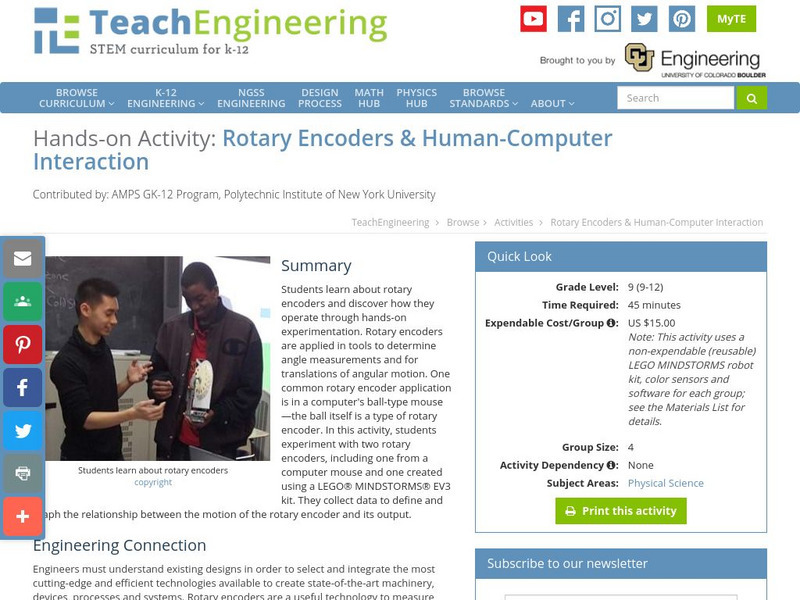
Teach Engineering: Rotary Encoders & Human Computer Interaction
Students learn about rotary encoders and discover how they operate through hands-on experimentation. Rotary encoders are applied in tools to determine angle measurements and for translations of angular motion. One common rotary encoder...
TeachEngineering
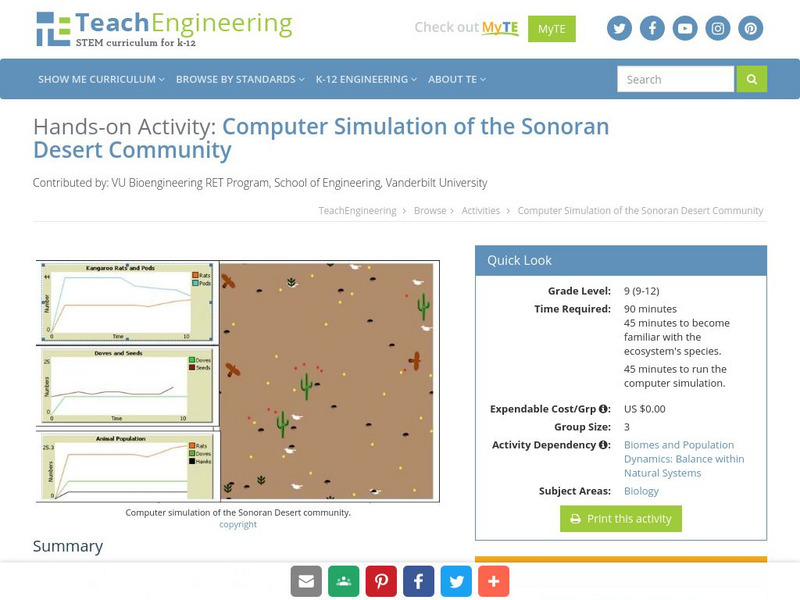
Teach Engineering: Computer Simulation of the Sonoran Desert Community
The computer program's simulation of a Sonoran desert community should ultimately strengthen the student's comprehension of what is required for a natural ecosystem to sustain itself (remain in balance). This computer simulation program...
TeachEngineering
Teach Engineering: What Is a Program?
Using a few blindfolds and a simple taped floor maze exercise, students come to understand that computers rely completely upon instructions given in programs and thus programs must be comprehensive and thorough. Then students learn to...
TeachEngineering
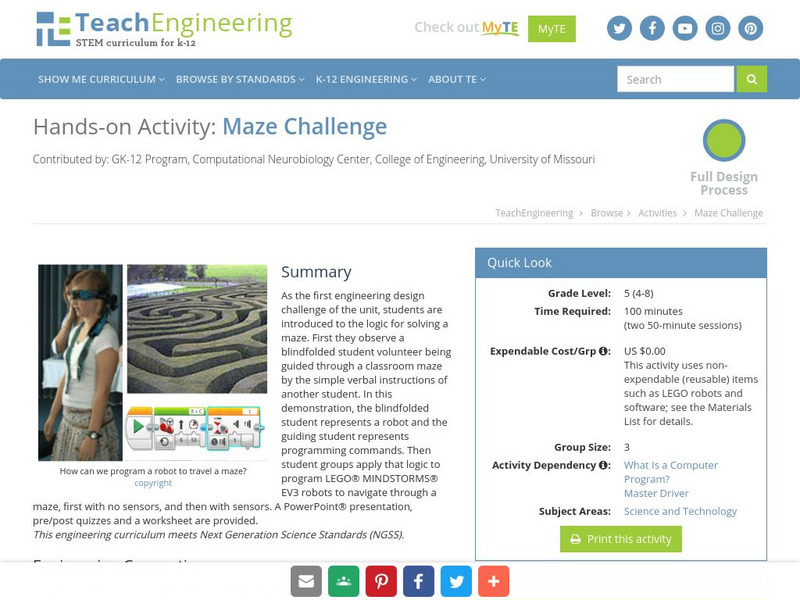
Teach Engineering: Maze Challenge
As the first engineering design challenge of the unit, students are introduced to the logic for solving a maze. student groups apply that logic to program LEGO MINDSTORMS NXT robots to navigate through a maze, first with no sensors, and...
TeachEngineering
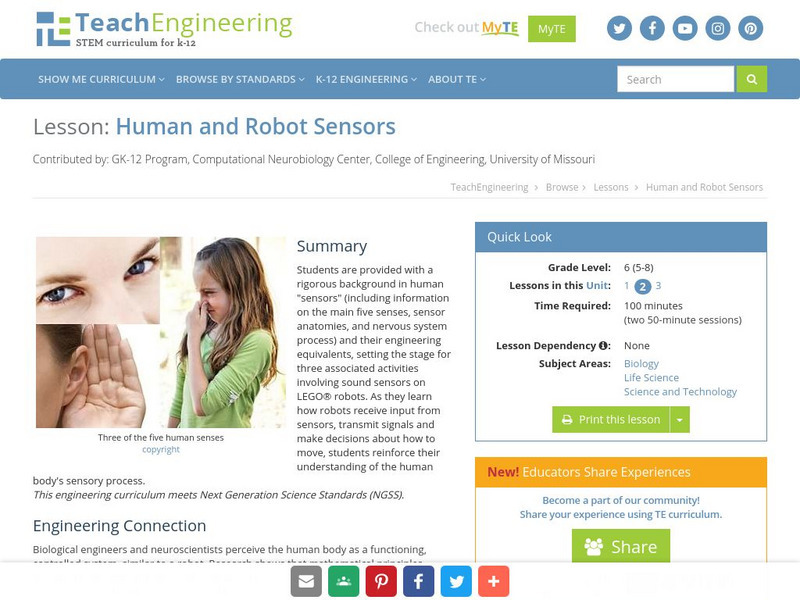
Teach Engineering: Human and Robot Sensors
Students are provided with a rigorous background in human "sensors" (including information on the main five senses, sensor anatomies, and nervous system process) and their engineering equivalents, setting the stage for three associated...
TeachEngineering
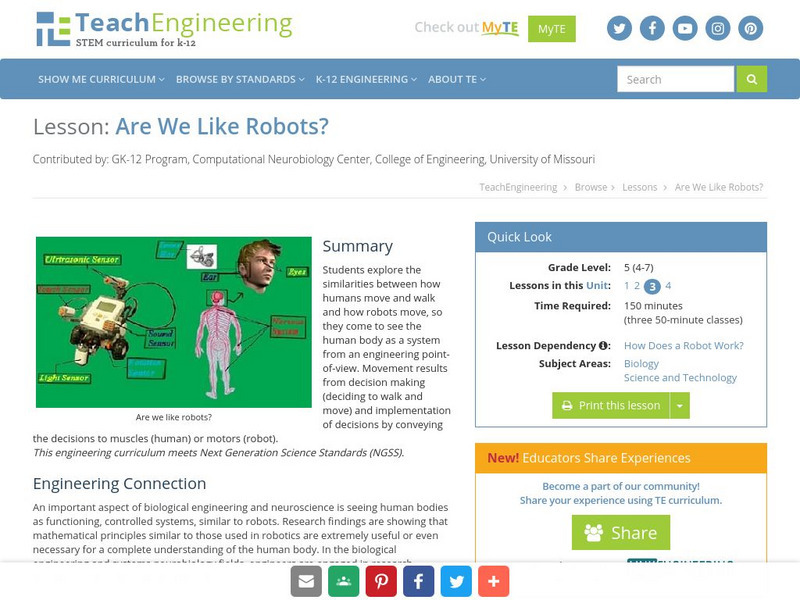
Teach Engineering: Are We Like Robots?
Students explore the similarities between how humans move and walk and how robots move, so they come to see the human body as a system from an engineering point-of-view. Movement results from decision making (deciding to walk and move)...
TeachEngineering
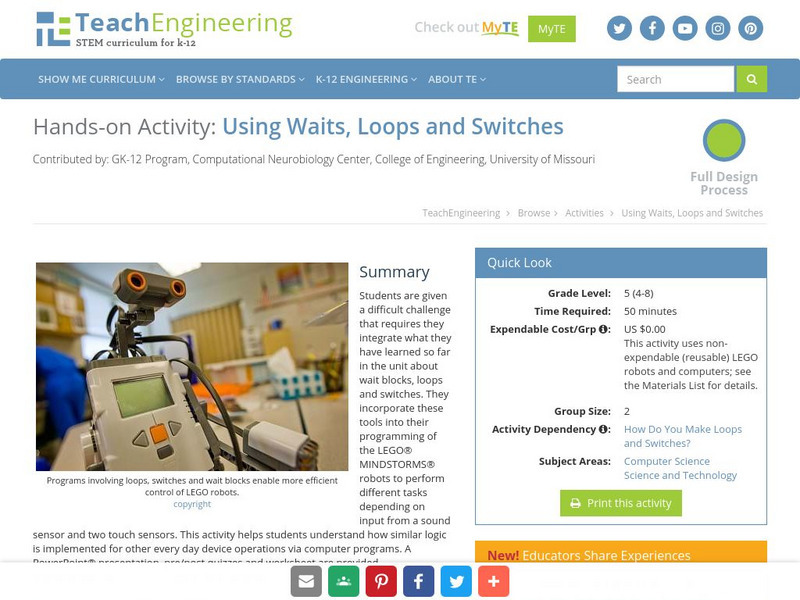
Teach Engineering: Using Waits, Loops and Switches
Students incorporate their knowledge of wait blocks, loops, and switches into their programming of the LEGO MINDSTORMS NXT robots to perform different tasks depending on input from a sound sensor and two touch sensors. This activity...
TeachEngineering
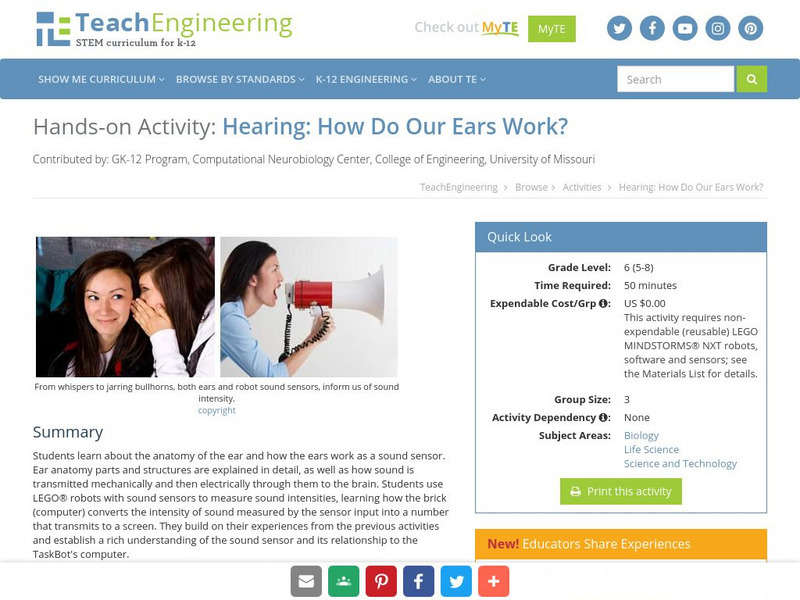
Teach Engineering: Hearing: How Do Our Ears Work?
Students learn about the anatomy of the ear and how the ears work as a sound sensor. Ear anatomy parts and structures are explained in detail, as well as how sound is transmitted mechanically and then electrically through them to the...
TeachEngineering
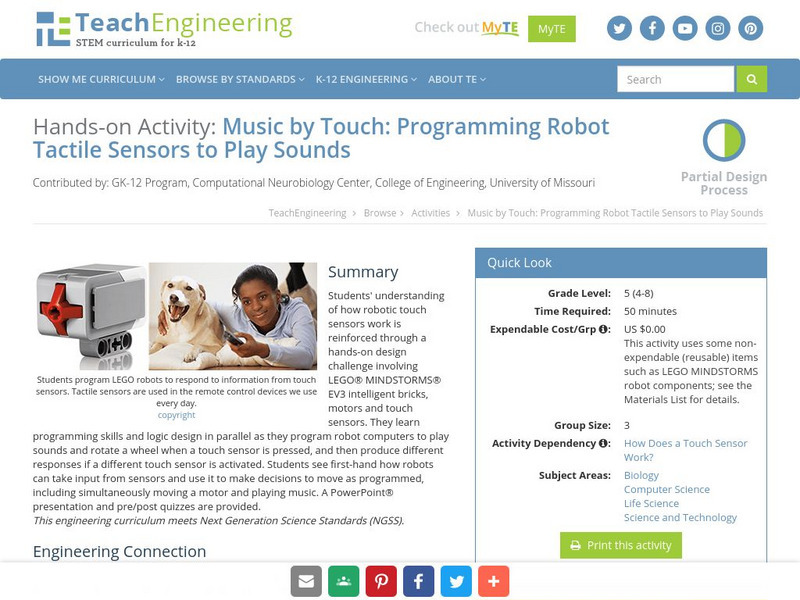
Teach Engineering: Music by Touch
Through a hands-on design challenge involving LEGO MINDSTORMS NXT robots, students learn programming skills and logic design as they program robot computers to play sounds and rotate a wheel when a touch sensor is pressed, and then...
TeachEngineering
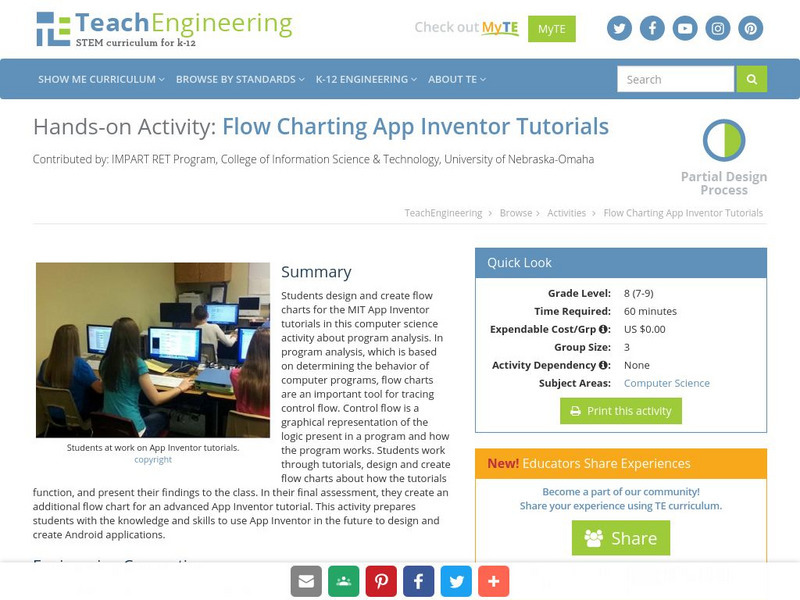
Teach Engineering: Flow Charting App Inventor Tutorials
Students design and create flow charts for the MIT App Inventor tutorials in this computer science activity about program analysis. In program analysis, which is based on determining the behavior of computer programs, flow charts are an...
TeachEngineering
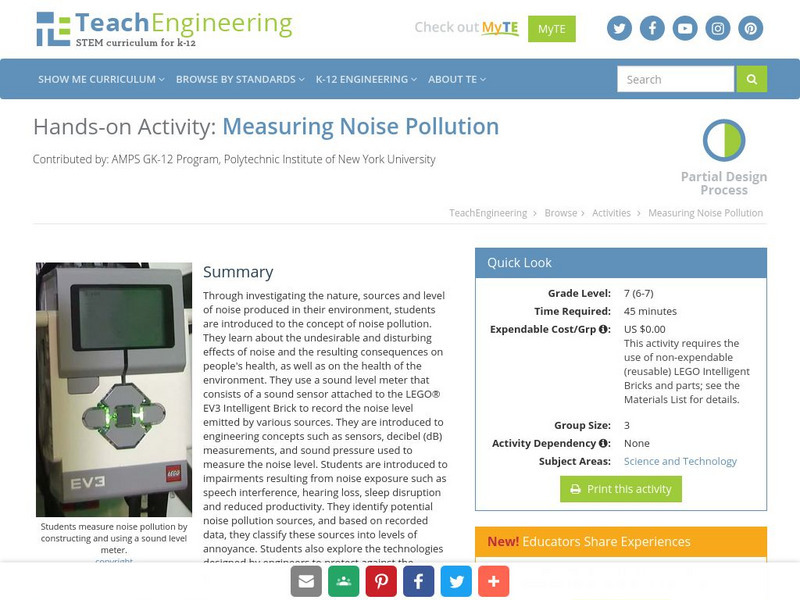
Teach Engineering: Measuring Noise Pollution
Through investigating the nature, sources and level of noise produced in their environment, students are introduced to the concept of noise pollution. They learn about the undesirable and disturbing effects of noise and the resulting...
TeachEngineering
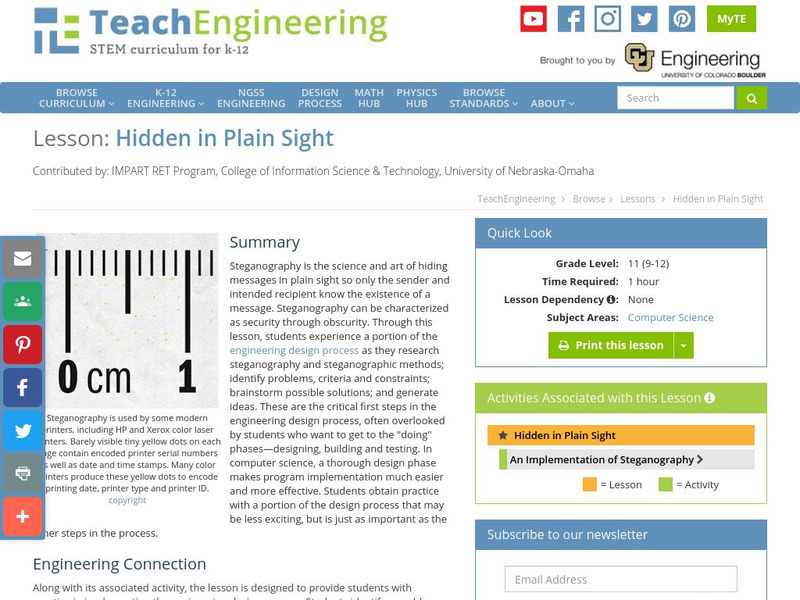
Teach Engineering: Hidden in Plain Sight
Steganography is the science and art of hiding messages in plain sight so only the sender and intended recipient know the existence of a message. Steganography can be characterized as security through obscurity. Through this lesson,...
TeachEngineering
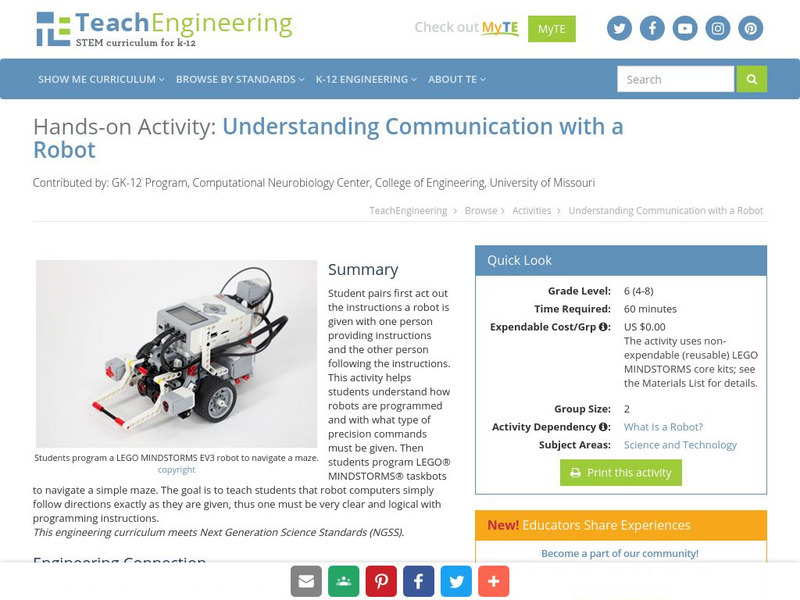
Teach Engineering: Understanding Communication With a Robot
Student pairs first act out the instructions a robot is given with one person providing instructions and the other person following the instructions. This activity helps students understand how a robot is programmed and with what type of...
TeachEngineering
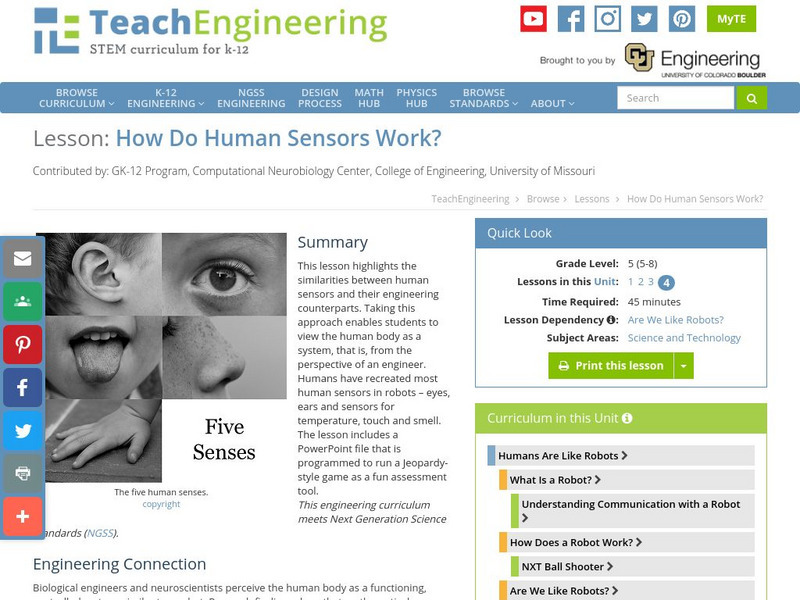
Teach Engineering: How Do Human Sensors Work?
This lesson highlights the similarities between human sensors and their engineering counterparts. Taking this approach enables students to view the human body as a system, that is, from the perspective of an engineer. Humans have...
TeachEngineering
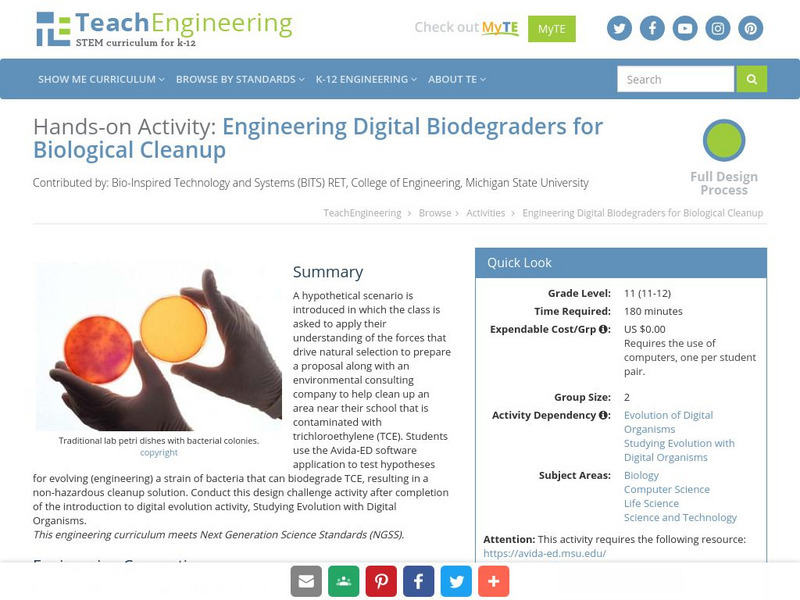
Teach Engineering: Evolving Tce Biodegraders
A hypothetical scenario is introduced in which the class is asked to apply their understanding of the forces that drive natural selection to prepare a proposal along with an environmental consulting company to help clean up an area near...
TeachEngineering
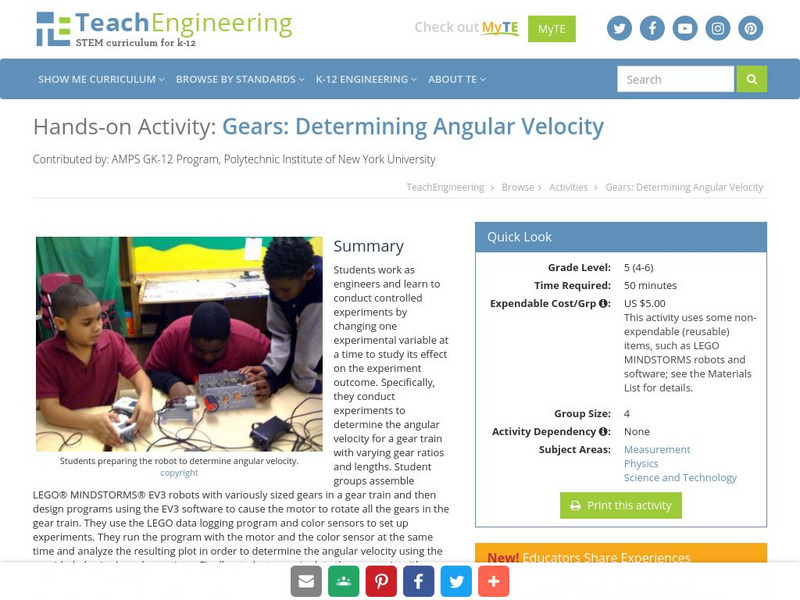
Teach Engineering: Gears: Determining Angular Velocity
Students work as engineers and learn to conduct controlled experiments by changing one experimental variable at a time to study its effect on the experiment outcome. Specifically, they conduct experiments to determine the angular...
TeachEngineering
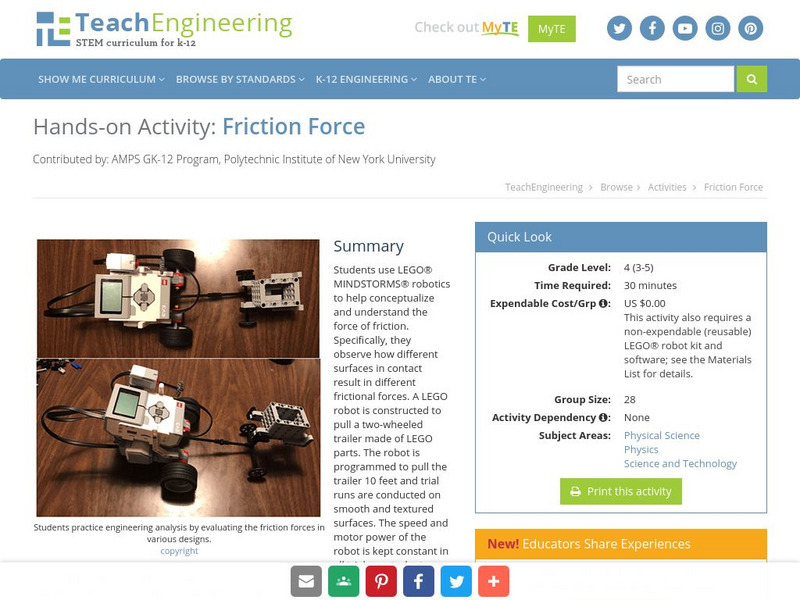
Teach Engineering: Friction Force
Students use LEGO MINDSTORMS robotics to help conceptualize and understand the force of friction. Specifically, they observe how different surfaces in contact result in different frictional forces. A LEGO robot is constructed to pull a...
TeachEngineering
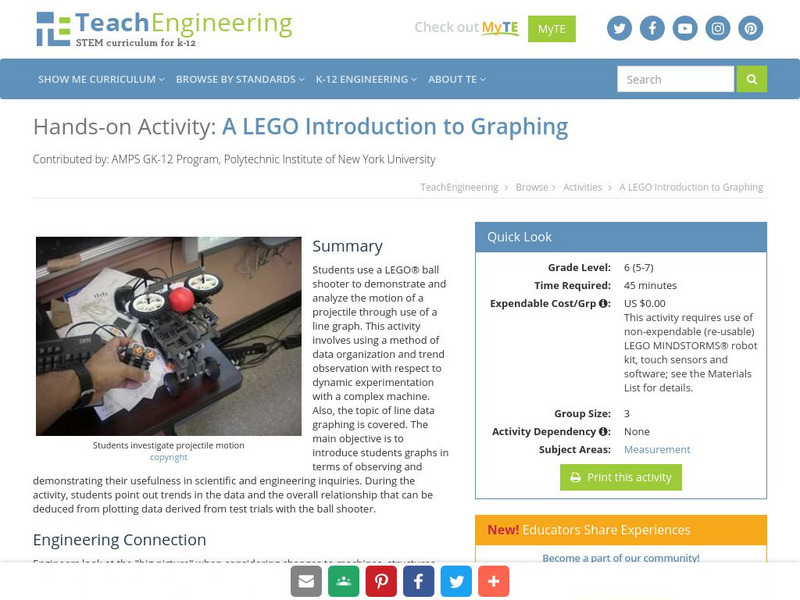
Teach Engineering: A Lego Introduction to Graphing
Students use a LEGO ball shooter to demonstrate and analyze the motion of a projectile through use of a line graph. This activity involves using a method of data organization and trend observation with respect to dynamic experimentation...
TeachEngineering
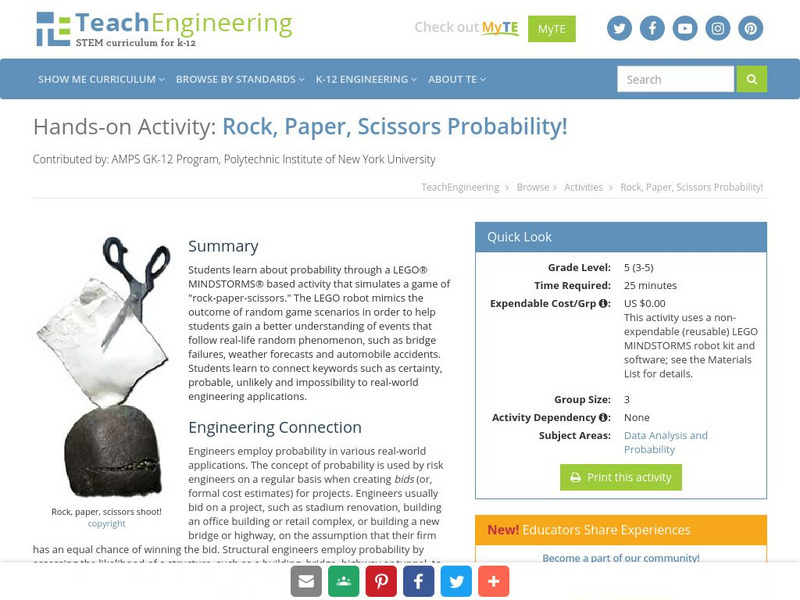
Teach Engineering: Rock, Paper, Scissors Probability!
Students learn about probability through a LEGO MINDSTORMS NTX-based activity that simulates a game of "rock-paper-scissors." The LEGO robot mimics the outcome of random game scenarios in order to help students gain a better...
TeachEngineering
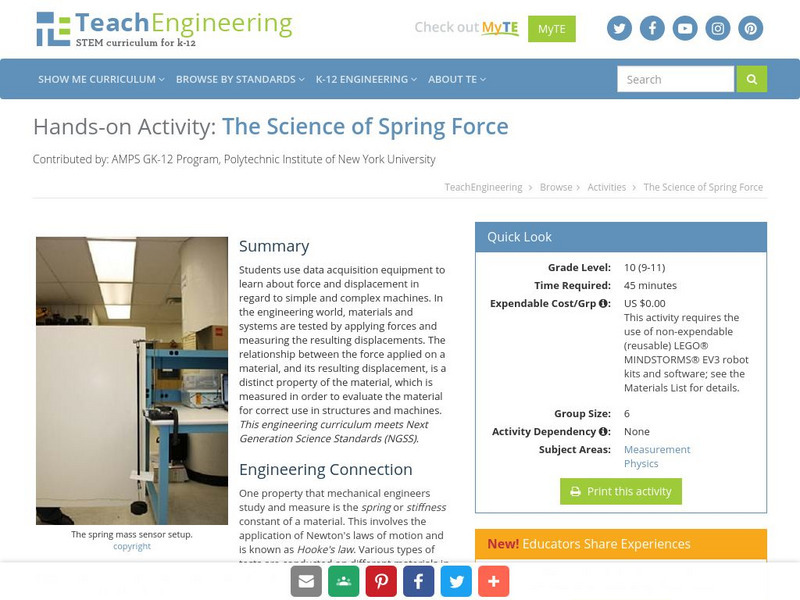
Teach Engineering: The Science of Spring Force
Students use data acquisition equipment to learn about force and displacement in regard to simple and complex machines. In the engineering world, materials and systems are tested by applying forces and measuring the resulting...
TeachEngineering
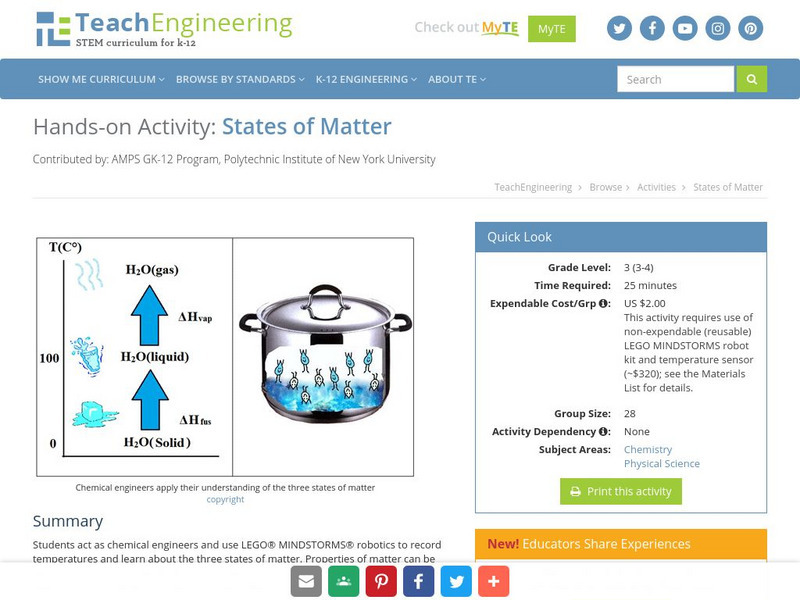
Teach Engineering: States of Matter
Students act as chemical engineers and use LEGO MINDSTORMS NXT robotics to record temperatures and learn about the three states of matter. Properties of matter can be measured in various ways, including volume, mass, density and...
TeachEngineering
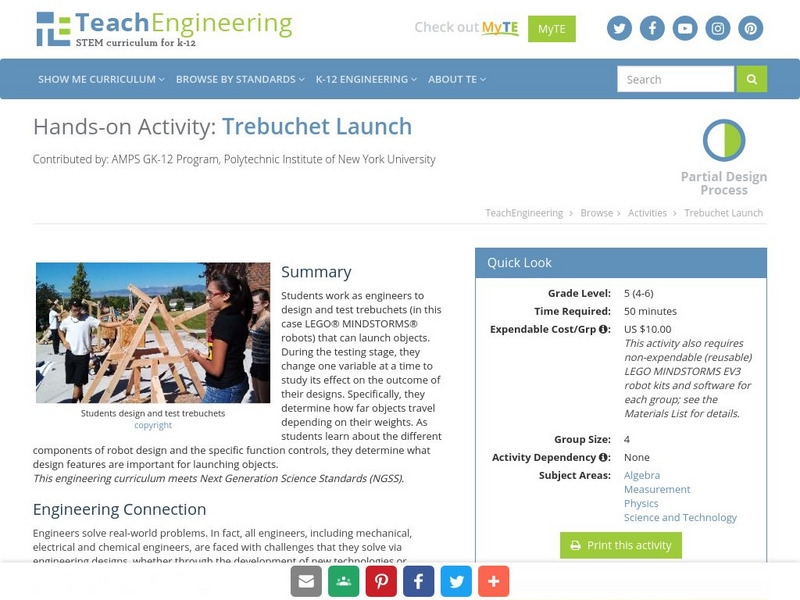
Teach Engineering: Trebuchet Launch
Students work as engineers to design and test trebuchets (in this case LEGO MINDSTORMS robots) that can launch objects. During the testing stage, they change one variable at a time to study its effect on the outcome of their designs....
TeachEngineering
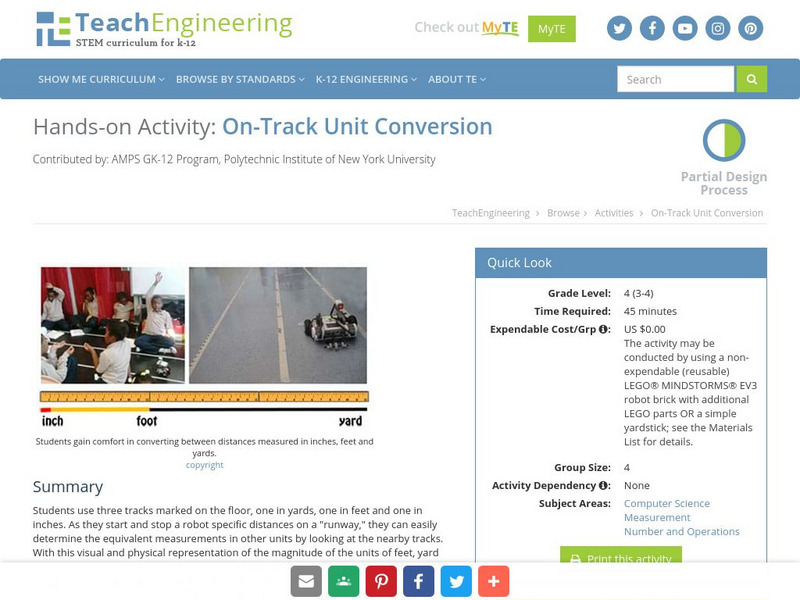
Teach Engineering: On Track Unit Conversion
Students use three tracks marked on the floor, one in yards, one in feet and one in inches. As they start and stop a robot specific distances on a "runway," they can easily determine the equivalent measurements in other units by looking...
TeachEngineering
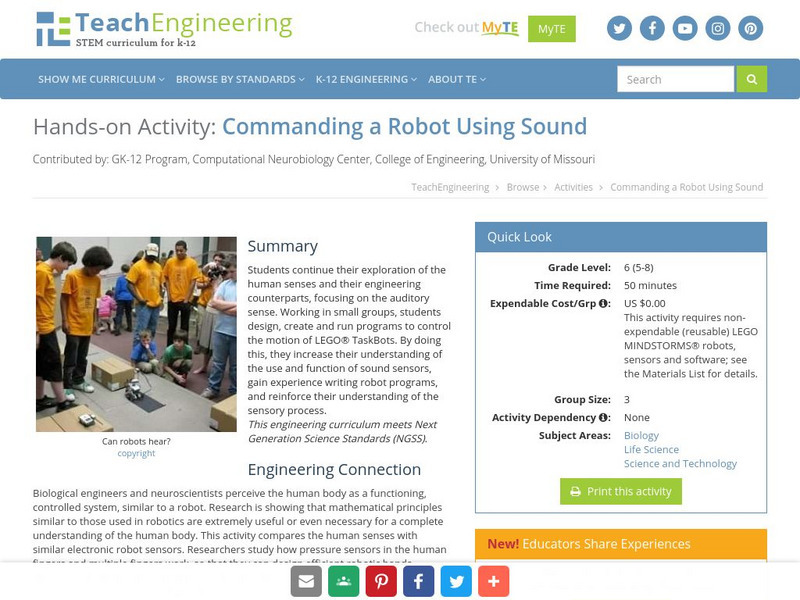
Teach Engineering: Commanding a Robot Using Sound
Students continue their exploration of the human senses and their engineering counterparts, focusing on the auditory sense. Working in small groups, students design, create and run programs to control the motion of LEGO TaskBots. By...