Hi, what do you want to do?






National Endowment for the Humanities
Common Sense: The Rhetoric of Popular Democracy
Students identify important arguments for independence made in Thomas Paine's Common Sense. They explain why these arguments helped persuade American colonists that independence was necessary. Students describe the importance of Common...

Curated OER
Lesson 2: Using Common Sense
Tenth graders explore the impact of Thomas Paine on the American Revolution. In this colonial America lesson, 10th graders analyze Common Sense and then paraphrase selected excerpts of the pamphlet. Students also respond to discussion...

Curated OER
The Beginnings of Constitutional Government
Students examine excerpts of Thomas Paine's Common Sense. In this early American history lesson, students read Paine's pamphlet and analyze the information according the rubric provided.

Curated OER
Moving Toward Independence
Eighth graders identify the reasons why colonists were fed up enough to want to break free of colonial rule and create their own government. They complete an in-dept analysis of the pamphlet Common Sense and it's role in fueling the...

Curated OER
The Road to Democracy
Eleventh graders examine the road to the American Revolution. In this American Revolution lesson plan, 11th graders read Thomas Paine's works and identify the issues that the colonists had with the British government.

Curated OER
Aquarium Bill of Rights
Students review the Bill of Rights on Aquademics and list the rights that are guaranteed to United States citizens. In groups, they role play the role of important leaders whose rules would make a difference for the lives of fish in...

American Psychological Association
A Silent National Crisis: Violence Against Teachers
School violence is becoming an epidemic in America. How can schools protect their teachers—and teach them how to protect their students? Read an important brochure about how violence affects teachers personally, emotionally, financially,...

Curated OER
Mapp v. Ohio (1961)
Students examine warrantless searches and due process. In this Supreme Court instructional activity, students examine primary documents from Mapp v. Ohio and discuss the implications of the decision.

Curated OER
My Brother Sam is Dead: A study of the Revolutionary War
Fifth graders complete an analysis of the Revolutionary War through literature. After "My Brother Sam Is Dead," students create a time capsule containing items that would be relevant during the Revolutionary War. They identify key...

Curated OER
Hold Your Own Ice Cream Election!
Use ice cream to represent Presidential candidates in this mock election.

Curated OER
American Revolution: Who Am I
In this American Revolution learning exercise, students read 5 paragraphs, each giving clues about a famous person in the Revolutionary War. Students use a word bank to find the answer.

Curated OER
The Problem with Prejudice
Third graders read and discuss "The Hangman" by Maurice Ogden and answer questions about the poem. They list things they can do to combat prejudice using each of the letters in the word and create a small poster with a slogan against...

Curated OER
Feudalism
Students have tournaments in teams after learning information about The Middle Ages. In this Middle Ages lesson plan, students learn that tournaments are mock battles, but that they will have these battles by answering questions in teams...

Curated OER
Comparing Chinese And Japanese Ceramics
Learners discuss the conception of beauty by considering and contrasting the
appearance and use of Chinese and Japanese ceramics in this lesson for the middle or high school classroom.
OpenStax
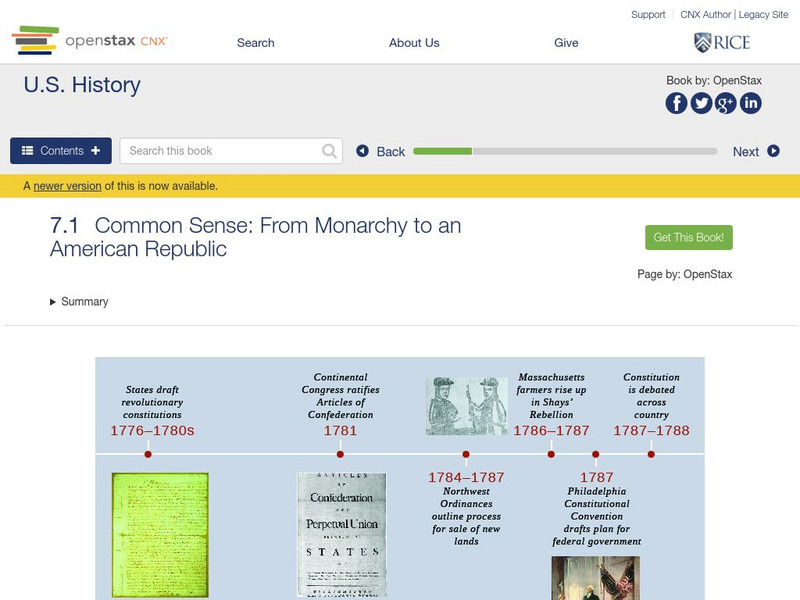
Open Stax: Common Sense: From Monarchy to an American Republic
After reading this section from a chapter on "Creating Republican Governments," students will be able to compare and contrast monarchy and republican government and describe the tenets of republicanism.

iCivics
I Civics: Colonial Influences
Where did the American colonists get their ideas that lead to a revolution and a whole new kind of government? This lesson plan explores the Magna Carta, Mayflower Compact, English Bill of Rights, Cato's Letters, and Common Sense.
Steven Kreis, PhD
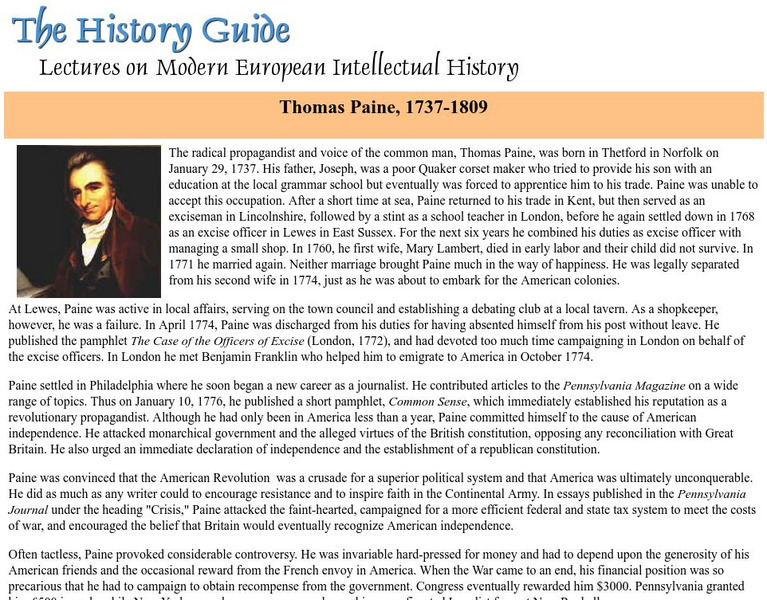
The History Guide: Thomas Paine, 1737 1809
An in-depth profile of Thomas Paine and discussion of his literary works. Includes links to e-texts of his writings.
Other
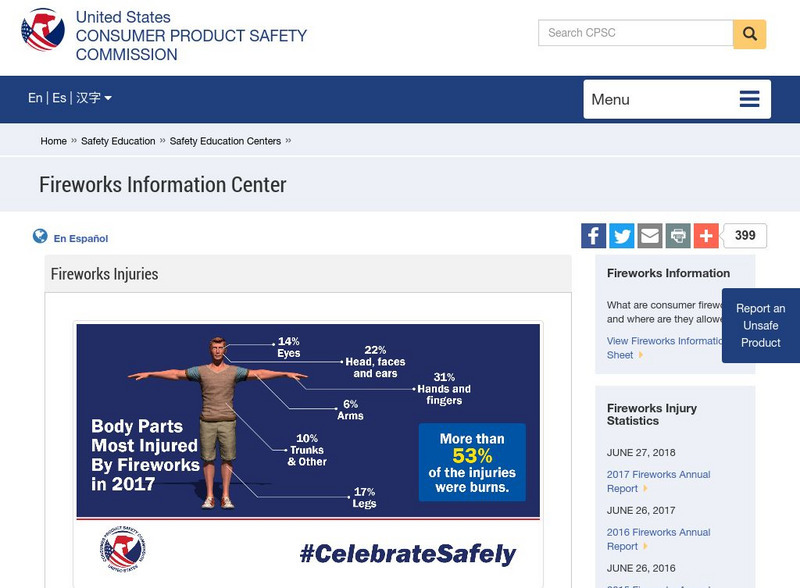
Consumer Product Safety Commission: Fireworks Information Center
Find an infographic showing firworks injuries, data about injuries by types of fireworks, age, and gender of user. Safety tips about using fireworks give good, common sense recommendations aobut the use of fireworks.