Hi, what do you want to do?





CK-12 Foundation
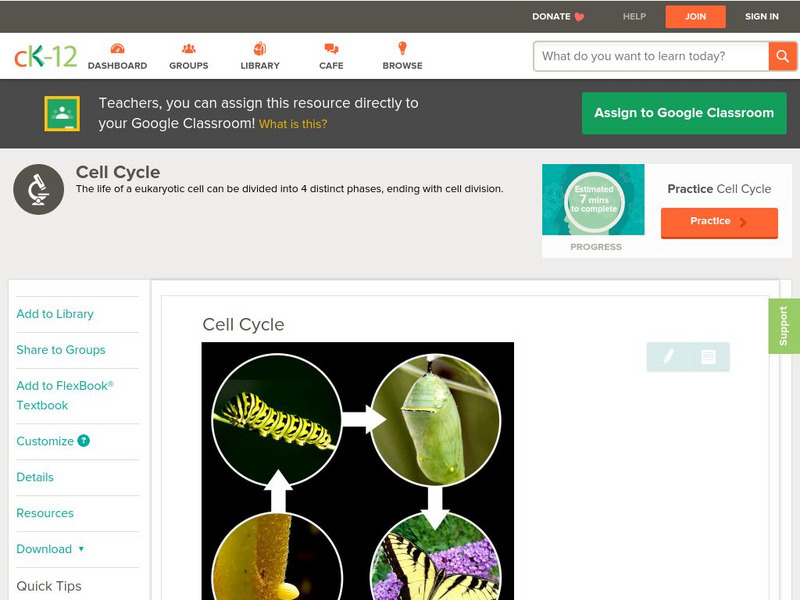
Ck 12: Life Science: Cell Cycle
[Free Registration/Login may be required to access all resource tools.] The process of cell division in eukaryotic cells is carefully controlled. The cell cycle is the life cycle of a cell, with cell division at the end of the cycle....
CK-12 Foundation
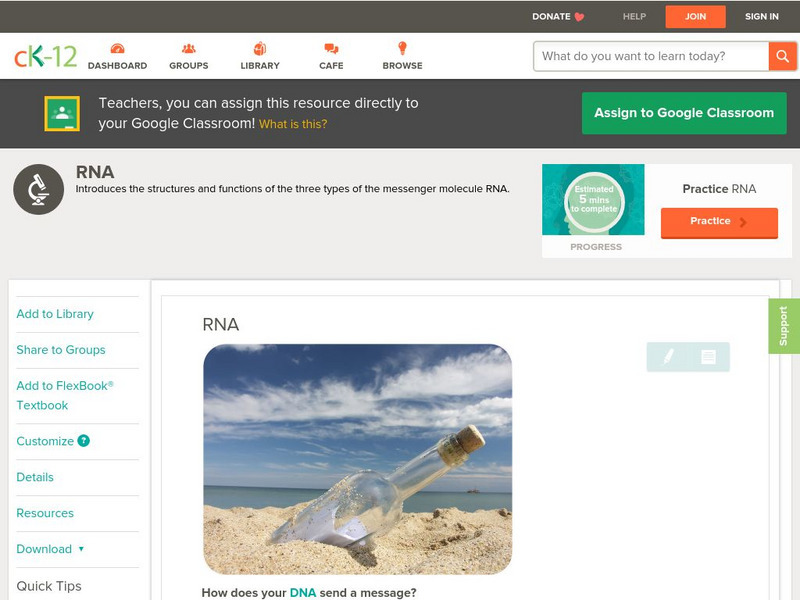
Ck 12: Life Science: Rna
[Free Registration/Login may be required to access all resource tools.] DNA contains the instructions to create proteins, but it does not make proteins itself. DNA is located in the nucleus, which it never leaves, while proteins are made...

CK-12 Foundation
Ck 12: Life Science: Predation
[Free Registration/Login may be required to access all resource tools.] Predation is another mechanism in which species interact with each other. Predation is when a predator organism feeds on another living organism or organisms, known...
CK-12 Foundation
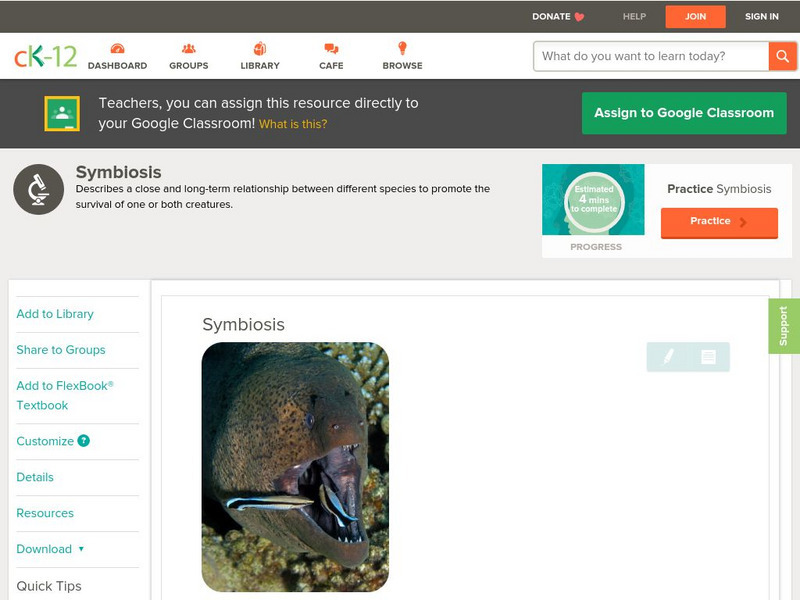
Ck 12: Life Science: Symbiosis
[Free Registration/Login may be required to access all resource tools.] Symbiosis describes a close and long-term relationship between different species. At least one species will benefit in a symbiotic relationship. There are three...
CK-12 Foundation
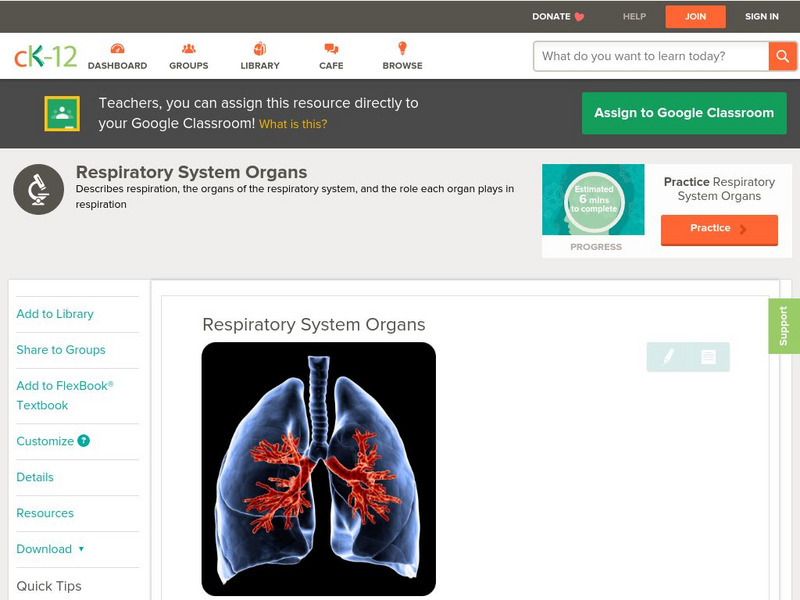
Ck 12: Life Science: Respiratory System Organs
[Free Registration/Login may be required to access all resource tools.] When you think of the processes of breathing, the lungs probably come to mind. The lungs are the main organ of the respiratory system. However, many other organs are...
CK-12 Foundation
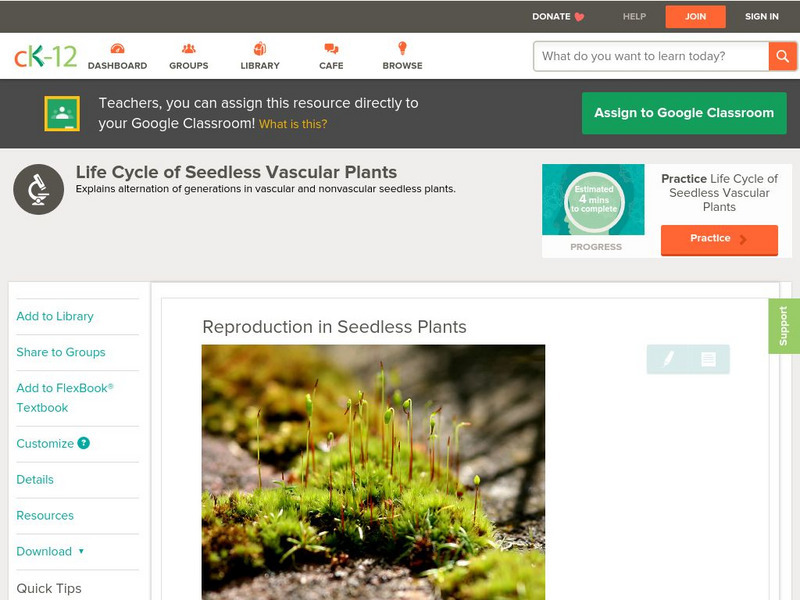
Ck 12: Life Science: Reproduction in Seedless Plants
[Free Registration/Login may be required to access all resource tools.] Seedless plants can reproduce asexually or sexually. Some seedless plants, like hornworts and liverworts, can reproduce asexually through fragmentation. When a small...
CK-12 Foundation
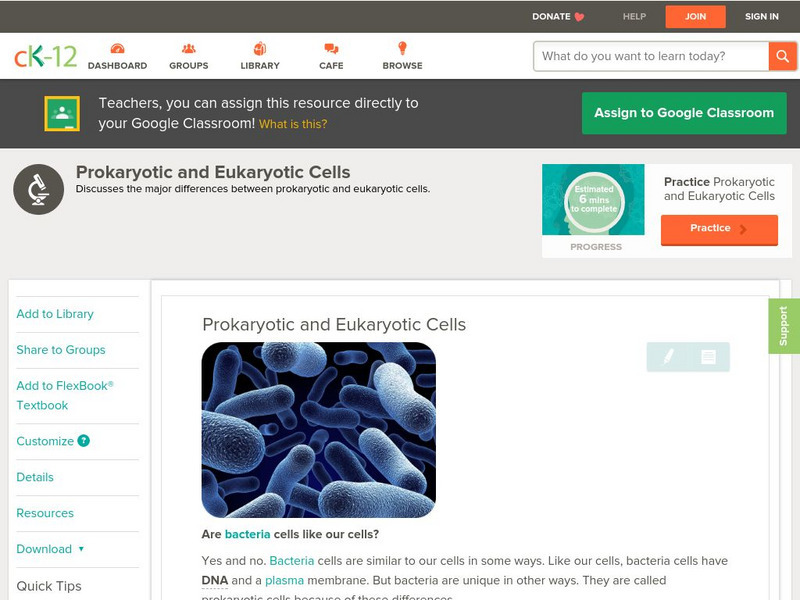
Ck 12: Life Science: Prokaryotic and Eukaryotic Cells
[Free Registration/Login may be required to access all resource tools.] There are two basic types of cells, prokaryotic cells and eukaryotic cells. The main difference between eukaryotic and prokaryotic cells is that eukaryotic cells...
CK-12 Foundation
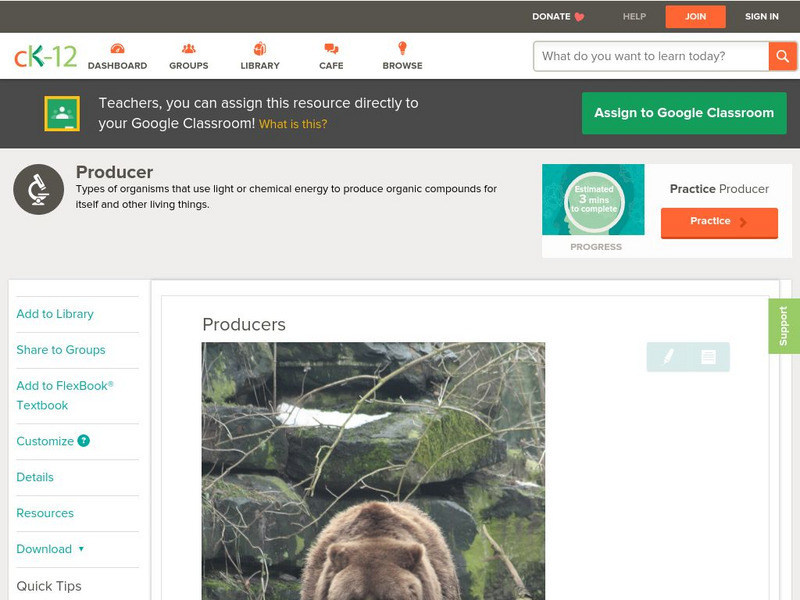
Ck 12: Life Science: Producers
[Free Registration/Login may be required to access all resource tools.] Energy is the ability to do work. In organisms, this can be physical work, like walking or jumping, or it can be the work used to carry out the chemical processes in...
CK-12 Foundation
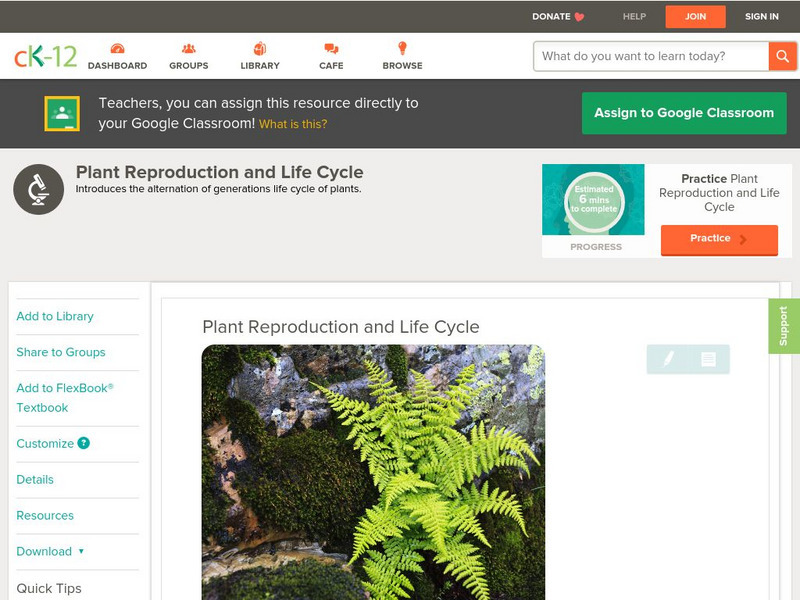
Ck 12: Life Science: Plant Reproduction and Life Cycle
[Free Registration/Login may be required to access all resource tools.] The life cycle of a plant is very different from the life cycle of an animal. Humans are made entirely of diploid cells (cells with two sets of chromosomes). Our...
CK-12 Foundation
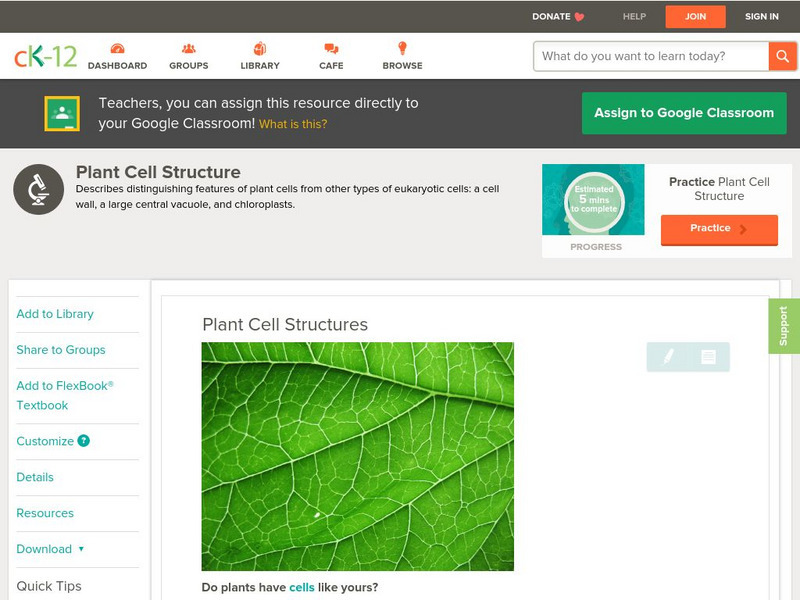
Ck 12: Life Science: Plant Cell Structures
[Free Registration/Login may be required to access all resource tools.] Even though plants and animals are both eukaryotes, plant cells differ in some ways from animal cells. Plant cells have a large central vacuole, are surrounded by a...

CK-12 Foundation
Ck 12: Life Science: Photosynthesis
[Free Registration/Login may be required to access all resource tools.] Plants are producers, which means they are able to make their own food, as well as "food" for other organisms. Plants are also autotrophs - they collect energy from...
CK-12 Foundation
Ck 12: Life Science: Peripheral Nervous System
[Free Registration/Login may be required to access all resource tools.] The peripheral nervous system (PNS) contains all the nerves in the body that are found outside of the central nervous system. They include nerves of the hands, arms,...
CK-12 Foundation
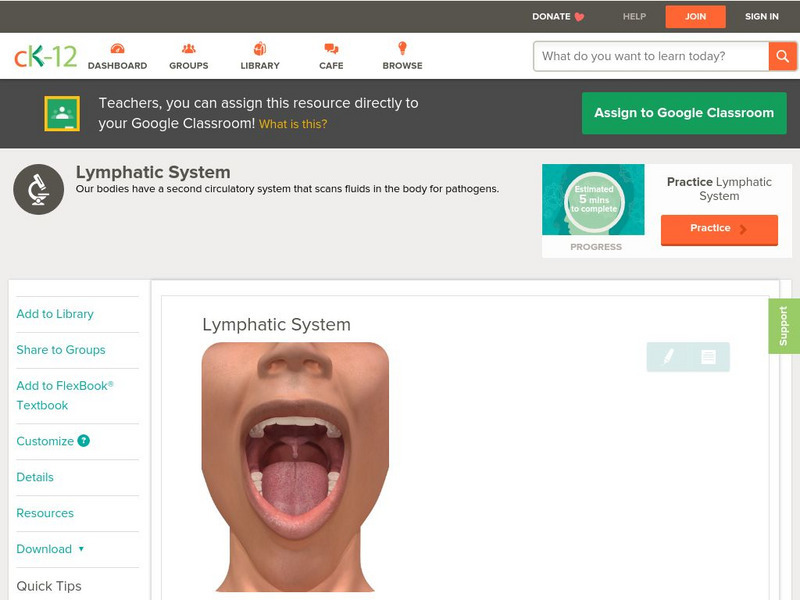
Ck 12: Life Science: Lymphatic System
[Free Registration/Login may be required to access all resource tools.] If pathogens get through the body's first two lines of defense, a third line of defense takes over. This third line of defense involves the immune system. The immune...
CK-12 Foundation
Ck 12: Life Science: Population Growth Patterns
[Free Registration/Login may be required to access all resource tools.] What does population growth mean? You can probably guess that it means the number of individuals in a population is increasing. The population growth rate tells you...
CK-12 Foundation
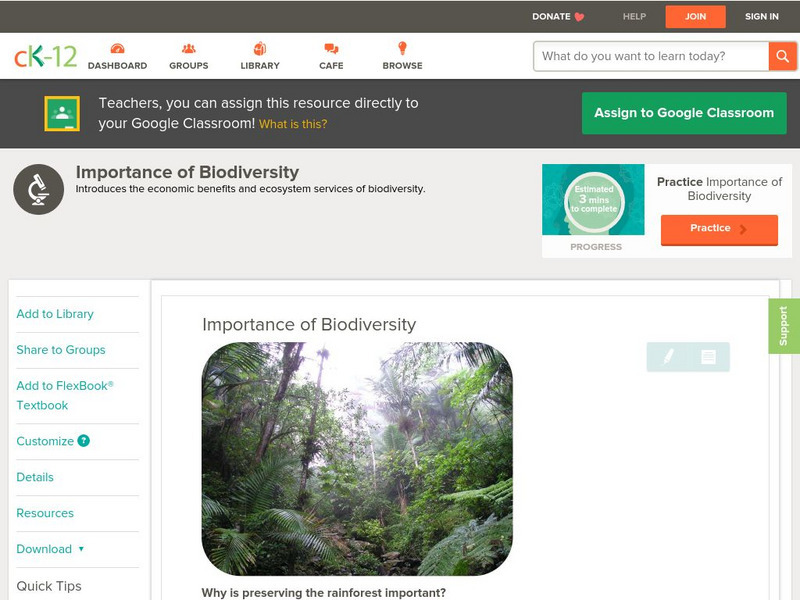
Ck 12: Life Science: Importance of Biodiversity
[Free Registration/Login may be required to access all resource tools.] Biodiversity is a measurement of the amount of variation of the species in a given area. More specifically, biodiversity can be defined as the variety of life and...
CK-12 Foundation
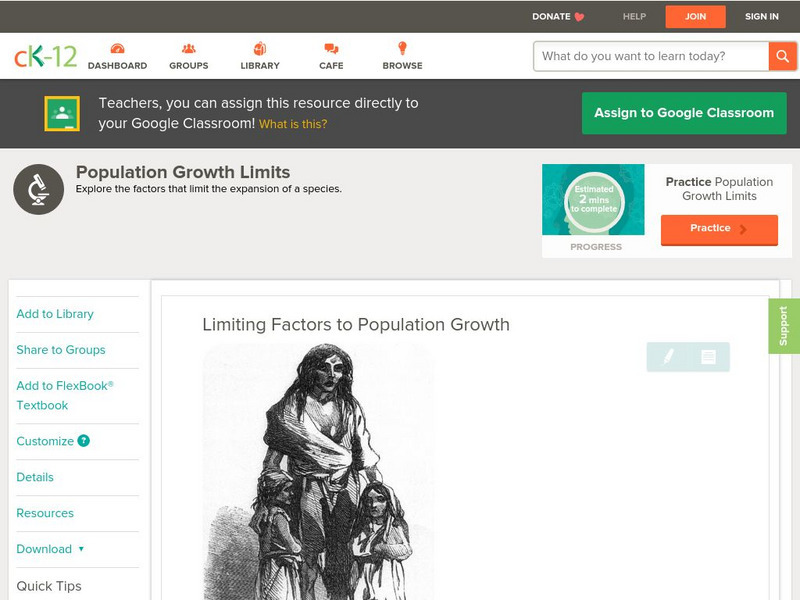
Ck 12: Life Science: Limiting Factors to Population Growth
[Free Registration/Login may be required to access all resource tools.] For a population to be healthy, factors such as food, nutrients, water and space, must be available. Limiting factors are resources or other factors in the...
CK-12 Foundation
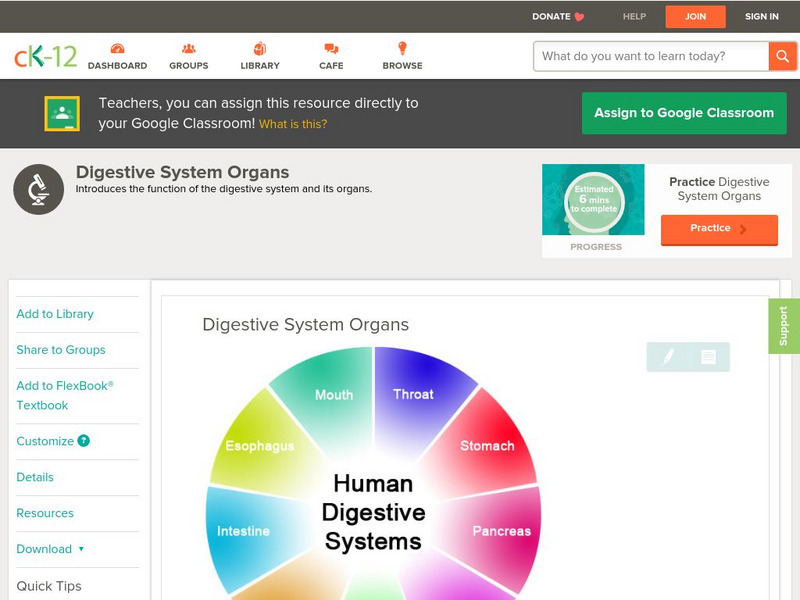
Ck 12: Life Science: Digestive System Organs
[Free Registration/Login may be required to access all resource tools.] The mouth and stomach are just two of the organs of the digestive system. Other digestive system organs are the esophagus, small intestine, and large intestine....
CK-12 Foundation
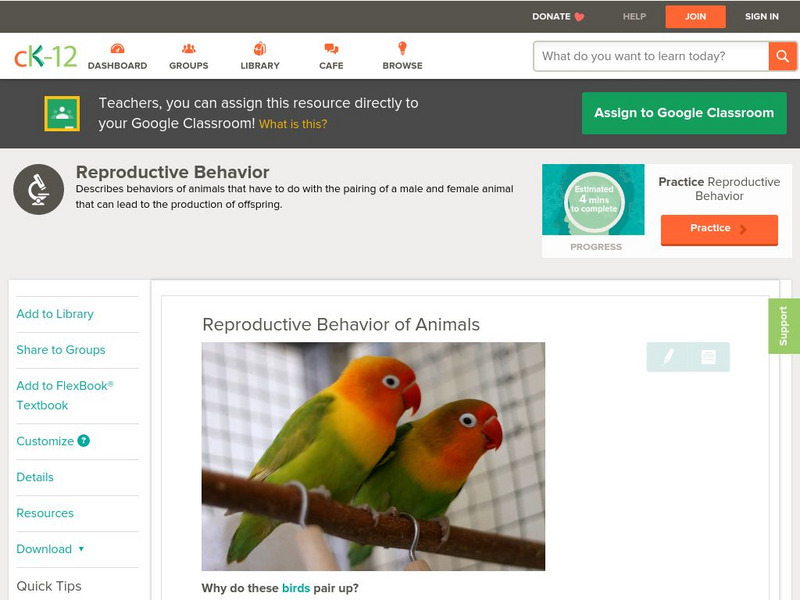
Ck 12: Life Science: Reproductive Behavior of Animals
[Free Registration/Login may be required to access all resource tools.] Some of the most important animal behaviors involve mating. Mating is the pairing of an adult male and female to produce young. Adults that are most successful at...
CK-12 Foundation
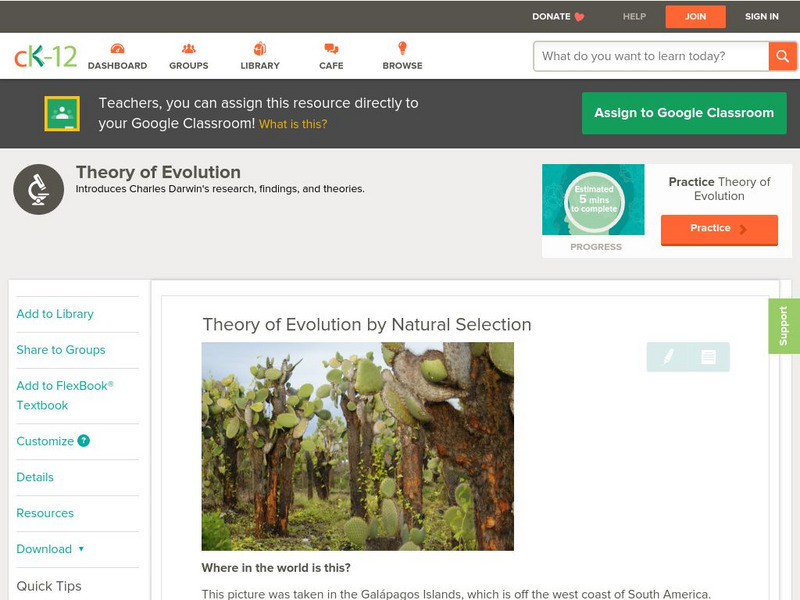
Ck 12: Life Science: Theory of Evolution by Natural Selection
[Free Registration/Login may be required to access all resource tools.] Do you ever wonder why some birds are big like ostriches and some birds are small like robins? Or why a lion has a mane while a leopard has spots? In the 19th...
CK-12 Foundation
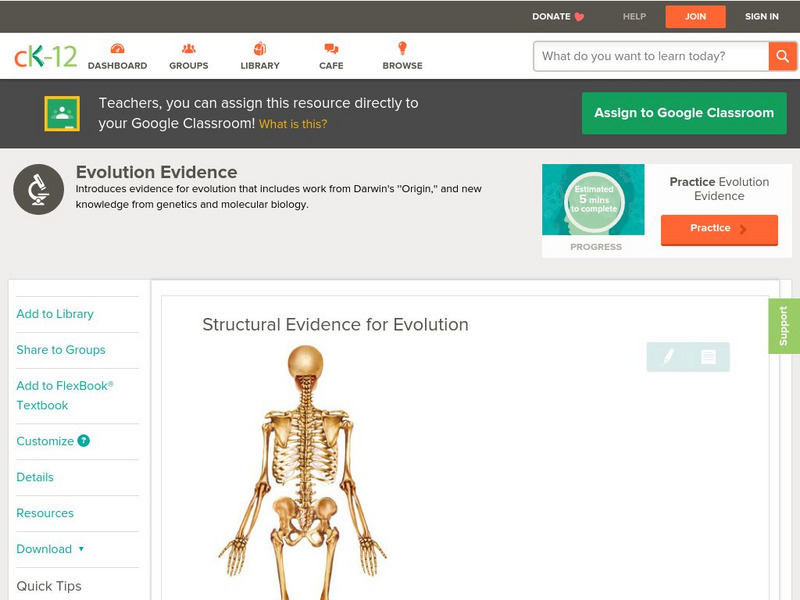
Ck 12: Life Science: Structural Evidence for Evolution
[Free Registration/Login may be required to access all resource tools.] Even though two different species may not look similar, they may have similar internal structures that suggest they have a common ancestor. That means both evolved...
CK-12 Foundation
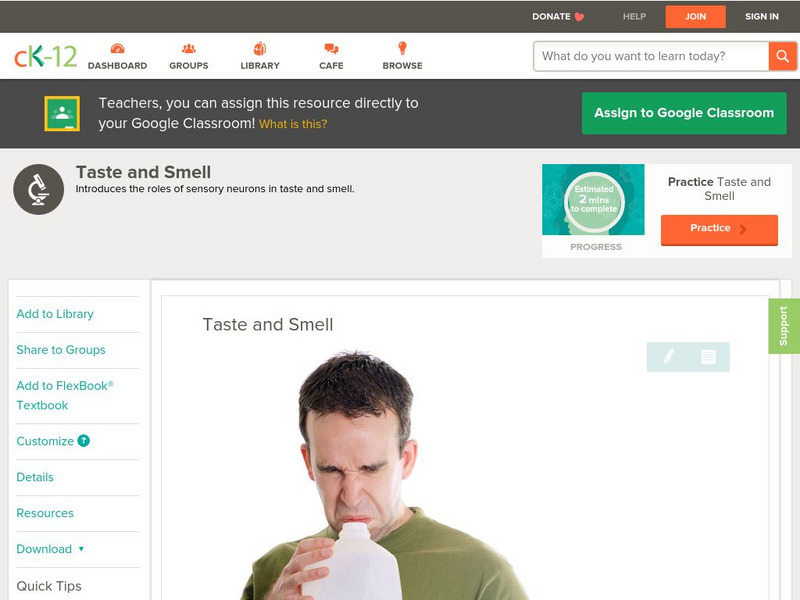
Ck 12: Life Science: Taste and Smell
[Free Registration/Login may be required to access all resource tools.] Imagine you open a gallon of milk, and you suddenly smell a foul odor. Your sense of smell has informed you that the milk has spoiled. So you pour the spoiled milk...
CK-12 Foundation
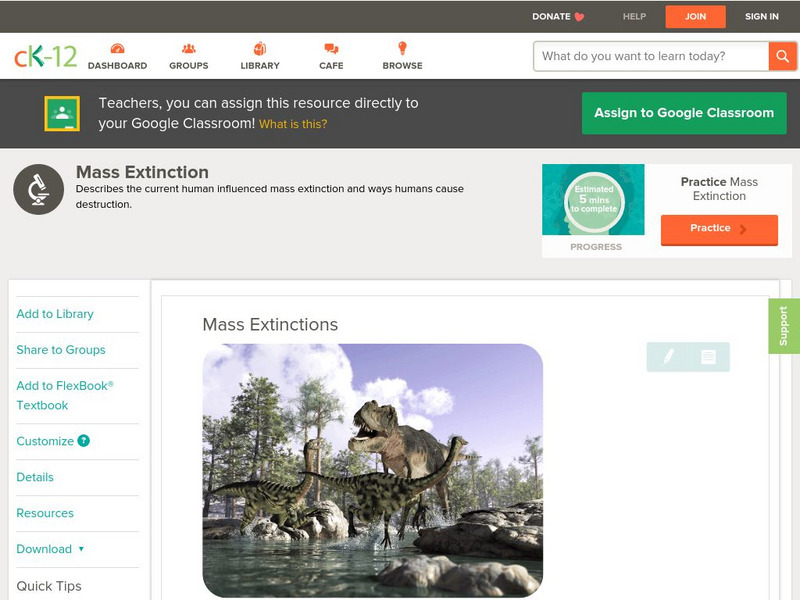
Ck 12: Life Science: Mass Extinctions
[Free Registration/Login may be required to access all resource tools.] An organism goes extinct when all of the members of a species die out and no more members remain. Extinctions are part of natural selection. Species often go extinct...
CK-12 Foundation
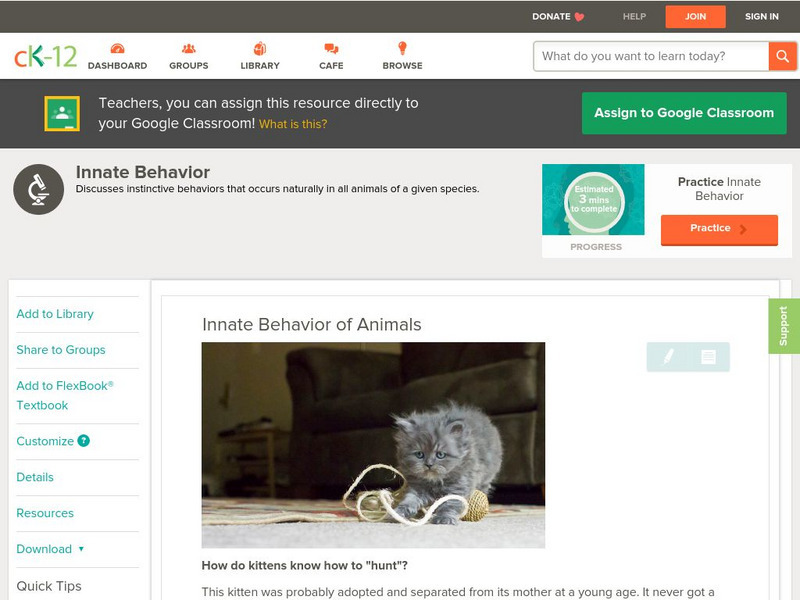
Ck 12: Life Science: Innate Behavior of Animals
[Free Registration/Login may be required to access all resource tools.] Many animal behaviors are ways that animals act naturally. They are not learned behaviors. Cats are natural-born hunters. They don't need to learn how to hunt....
CK-12 Foundation
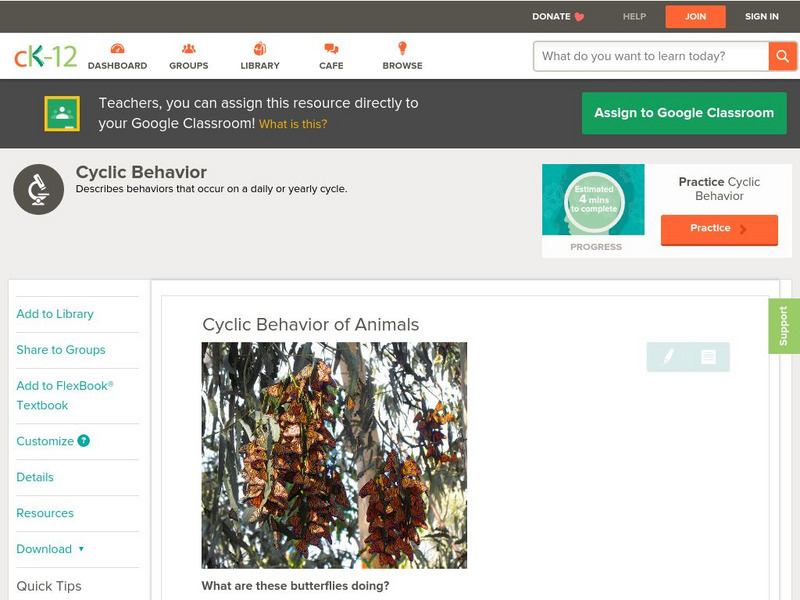
Ck 12: Life Science: Cyclic Behavior of Animals
[Free Registration/Login may be required to access all resource tools.] Many animal behaviors change in a regular way. They go through cycles. Some cycles of behavior repeat each year. Other cycles of behavior repeat every day. Learn...