Hi, what do you want to do?






DocsTeach
Lewis Hine Shedding Light on Child Labor through Photographs
The Industrial Revolution: long hours, low pay, and unsafe conditions. An eye-opening activity explores the darker side of industry and exposes the realities of child labor with photos. Scholars view four photos from the famous...

Curated OER
Three Centuries of Child Labor In America
Fifth graders investigate the history of child labor that is found in America. They use a variety of resources to conduct research. Students create cause and effect arguments using the information that is found. They also compare and...

Roy Rosenzweig Center for History and New Media
Labor Unions in an Industrializing U.S.
Have class members eager to enter the workforce? They'll be glad to learn that things aren't how they used to be. Have your young historians examine then discuss four primary source images related to the negative effects of...

Curated OER
Work, Lyddie! Work!
Students research links concerning early factory labor, child labor in today's world, and diseases on young laborers. They work on a loom, analyze a mill bell schedule, read a mill girl's diary, and write a poem or song exhibiting empathy.

Core Knowledge Foundation
Volume 2 - A History of the United States: Modern Times—Late 1800s to the 2000s
The second volume of the Core Knowledge History of the United States ebook begins by asking young scholars to consider the impact immigration, industrialization, and urbanization had on the United States in the late 1800s. The text ends...

Curated OER
Early Industrialization
Eighth graders analyze primary source documents emphasizing young people in factory labor (mill workers during 1840-1860). They study hours of labor, ages of laborers, reasons for working, and working conditions. They write a poem or song.

Curated OER
What Were Social Effects of the Industrial Revolution?
Attempting to address Standard 10.3 (the effects of the Industrial Revolution), this presentation falls short and isn't a helpful resource. It contains some good information about the emergence of a middle class during this time, but...

EngageNY
Introducing Module 2: Working Conditions—Then and Now
Let's get visual! Scholars embark on a gallery walk around the classroom to view quotes, images, and videos about historical and modern working conditions in various professions. They consider how working conditions have changed over...

Advocates for Human Rights
The Right to Workers in United States
To raise awareness and understanding of modern-day slavery, class groups research the various forms of slavery, including human trafficking, read and reflect on case studies, and design a plan of action for their community.

Curated OER
The Most Dangerous Woman in America: Mary Harris "Mother" Jones
Students discover labor issues of the 1800's. For this Pennsylvanian history lesson, students research the case of Mary Harris Jones and discover her work as a labor activist. Students discuss the case together in class.

Curated OER
Lesson Five: Newsflash: CBS Evening News
Learners observe a CBS Evening News clip which they request in advance. They investigate the four major types of modern-slavery. They present a visual image and identify personal elements in the life of a modern day slave.

Curated OER
Lesson Four: Understanding the Personal Reality of Slavery
Students investigate the four types of modern-day slavery: forced, debt bondage, chattel and child labor. They create a piece of art depicting their feelings after reading a case study about slavery.

Curated OER
Legal Definitions of Childhood
Students examine how various cultures define childhood. Using the internet, they research how countries around the world determine who is a child. They identify the sources they most relate with as a child.

Curated OER
The Worldly Philosophers by Robert Louis Heilbroner
CliffsNotes provides a list of study questions to help your high schoolers grapple with The Worldly Philosophers. Some of them are simple and straight forward, while others offer an opportunity to dig in deeper! Consider printing this...

Curated OER
A Changing Society: Industrialization and Urbanization
Students participate in activities that teach them about the Gilded Age of industrialization and urbanization. In this social changing lesson plan, students answer questions, watch videos, have discussions, read texts, and more to teach...

Curated OER
WWI and Twenties & Thirties
Students study economics and timelines of events to understand changes in America. In this Twenties and Thirties lesson, students navigate Internet sites to research famous reformers. Students recognize the economic changes...

Curated OER
Mother Jones
In this online interactive history worksheet, learners respond to 8 essay and short answer questions about Mother Jones and her contributions to the Progressive Movement.

Curated OER
Food Systems Feed the World
Sixth graders consider the source of their nutrition. In this food systems lesson plan, 6th graders discuss how food gets to the table and the process it goes through. Students reflect on world hunger issues, farming, and consumerism...
Other
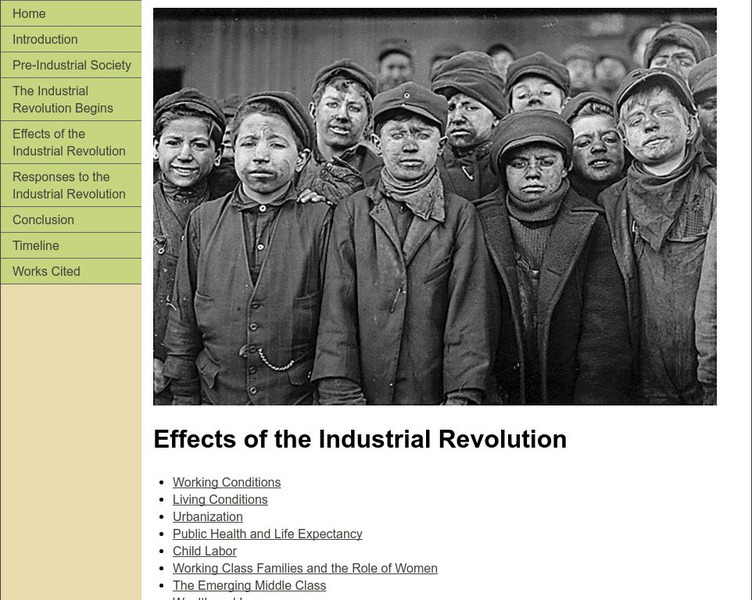
Modern World History: Effects of the Industrial Revolution
In this textbook unit, students learn about working and living conditions during the Industrial Revolution, the growth of cities, public health issues that emerged, child labor, the impact of factory work on families and on women, the...
Other
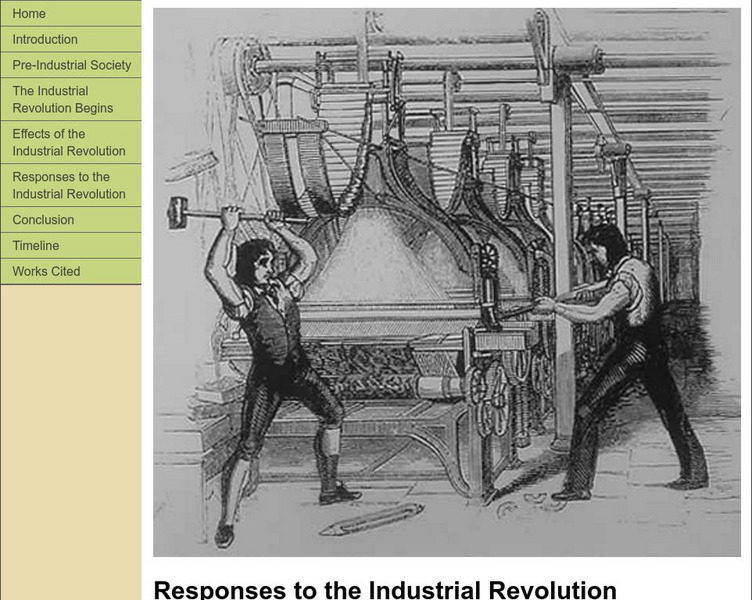
Modern World History: Responses to the Industrial Revolution
This section of the text looks at how workers, owners, and the government responded differently to the negative effects of the Industrial Revolution. The Luddites rebelled against industrialization. Robert Owen, a wealthy socialist,...

George Eastman Museum
Lewis Hine: Immigration and the Progressive Era
Lewis Hine documented the conditions of life during the industrial development of America. His photographs show the impact of both child labor and immigration.
Science Museum, London
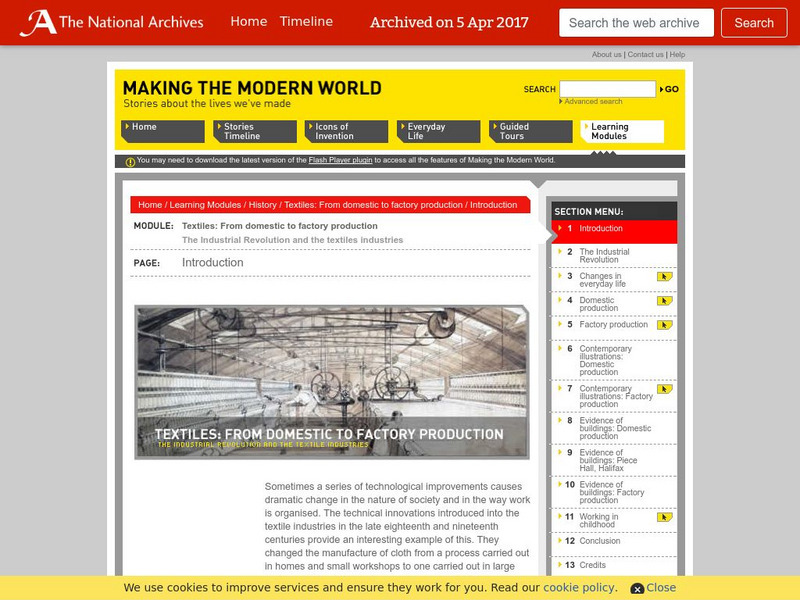
Science Museum: Making the Modern World: Textiles: Domestic v Factory Production
Twelve-part learning module uses text-based overviews and rich media cut-away scenes to explain the role of the textile industry in driving the Industrial Revolution forward in Britain.

Khan Academy
Khan Academy: Ap Us History: 1865 1898: After the Civil War: The New South
After the Civil War, there was some impetus to modernize the South's economy to make it more industrialized and less agrarian. It never gained traction while sharecropping and tenant farming did, ensuring the persistence of rural...
Internet FAQ Archive
Faq Archives: Encyclopedia of Children and Childhood in History and Society: Family Patterns
The structure of families in medieval and modern times, and the patterns they follow are examined. These include topics such as household composition, age of marriage, life expectancy, inheritance customs, financial resources, disruptive...