Hi, what do you want to do?






Character Lab
Character Lab: Emotional Intelligence: A Beginner's Guide to Feelings
Emotional intelligence is understanding your feelings and using them wisely. This article discusses the importance of having emotional intelligence and ways to foster it in young people.
Live Wire Media
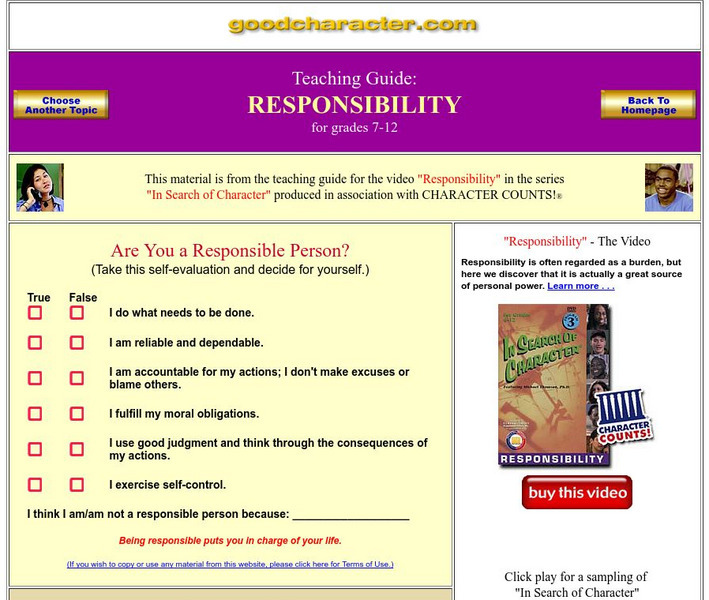
Good Character: Responsibility
Learn about the importance of being responsible at home, at school, and in your community. This website, meant to accompany a video on responsibility and good character, provides several discussion questions, writing prompts, and more.
Alabama Learning Exchange
Alex: Character Expression Using the Three Little Pigs
Students will use the character lineup strategy in collaborative groups to retell the story of the Three Little Pigs. Each group will be assigned a different character or emotion and then compare the differences between each group....
Live Wire Media
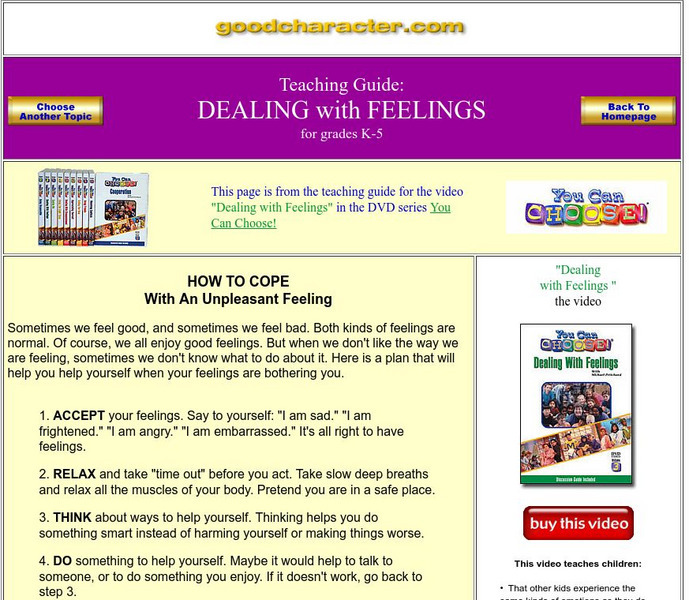
Good Character: Dealing With Feelings
Learn how to cope with unpleasant feelings, and to teach young young scholars how to deal with their emotions.
Live Wire Media
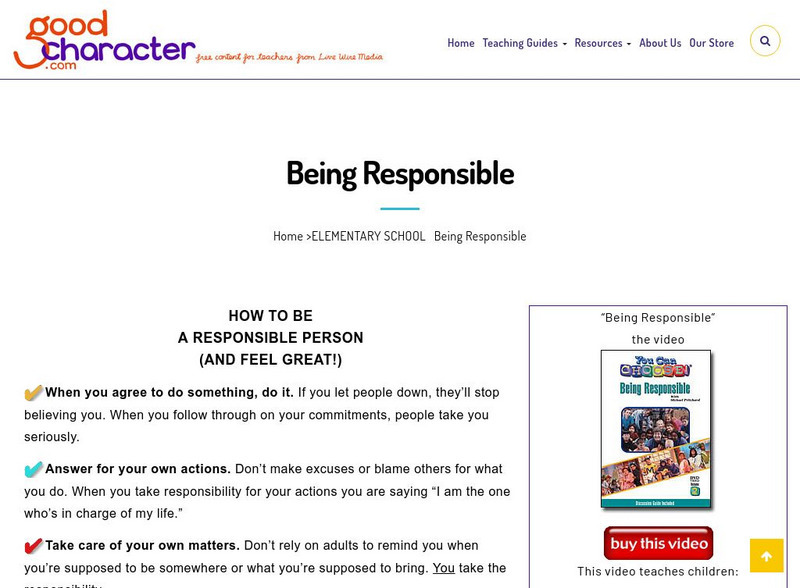
Good Character: Being Responsible
How can you be a responsible person? Discuss this question with friends, classmates, and your parents with the help of useful questions and writing prompt at this website. Includes "Educational goals" and tips on "How to be a responsible...
Character Lab
Character Lab: Lost in Translation: The Art and Science of Communication
Communication isn't just the transmission of information. It's also sending and receiving emotions. This article discusses why human interaction cannot be left solely to a keyboard.
Character Lab
Character Lab: Imagine That: How Reading a Book Can Make You a Better Person
This blog explains how reading and empathy are related.
Character Lab
Character Lab: Great Expectations: Ask for What You Want
This author cites an example from her own life that proves why communicating exactly what you want is so important in all aspects of life.
Character Lab
Character Lab: Social Intelligence
This article discusses the importance of social intelligence and how to encourage it in others.
Character Lab
Character Lab: The Soul of Empathy: Getting, Not Taking, Perspective
We have all learned how to imagine how someone else is feeling - empathy. However, maybe there is a better way to "walk in someone else's shoes". This blog explains why we shouldn't guess how people are doing and just simply ask.
Character Lab
Character Lab: Social Blind Spots: Feedback to Develop Social Intelligence
How do we know when we are being rude? Research shows we can be quite blind to our social blunders. Read about why social intelligence is in the eye of the beholder.
Character Lab
Character Lab: Naive Realism: Even the Left Think They're Right
Whether we lean left or right, it's common to think we see the world accurately but our opponents don't. It's easy to confuse opinion with fact. This article discusses how to cultivate intellectual humility - recognizing the limitations...
Character Lab
Character Lab: Proactivity
This article discusses the importance of proactivity and three ways to foster it in children.
Character Lab
Character Lab: Purpose
This article discusses the importance of having a sense of purpose and ways to foster it in young people.
Character Lab
Character Lab: My Values: Grit, Purpose
In this activity, you will choose 2 to 3 values then write about why they are important to you. Printables and an example of a completed activity are included.
Live Wire Media
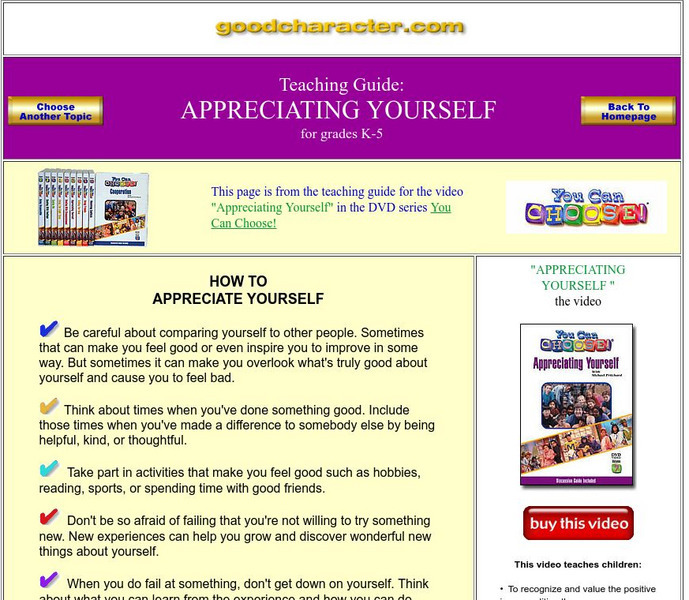
Good Character: Appreciating Yourself
Learn how to teach children to appreciate themselves through activities, writing prompts, and discussion questions about self worth.
Live Wire Media
Good Character: Teaching Guide: Controlling Anger
A collection of activities and discussion questions to assist young students in learning to control their anger.

Alabama Learning Exchange
Alex: Who Do You Think You Are?
Learners will demonstrate an understanding of character through improvisation. Students will imagine and clearly describe their characters through performance. They will relate a character's actions and emotions and create a setting.
Texas Education Agency
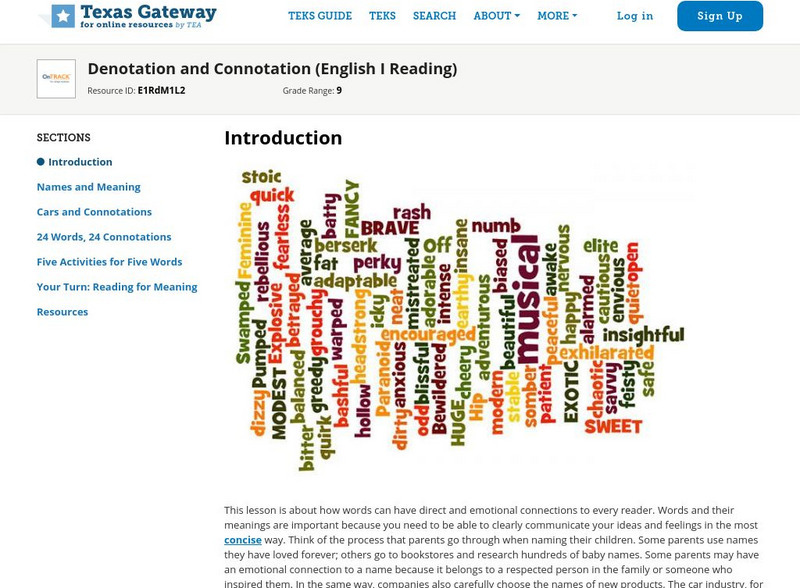
Texas Gateway: Denotation and Connotation (English I Reading)
This lesson focuses on denotation and connotation including the abilty to distinguish words according to their emotional or cultural meaning. Your ability to do so can help you understand the author's purpose or more about a character in...