Hi, what do you want to do?





BBC
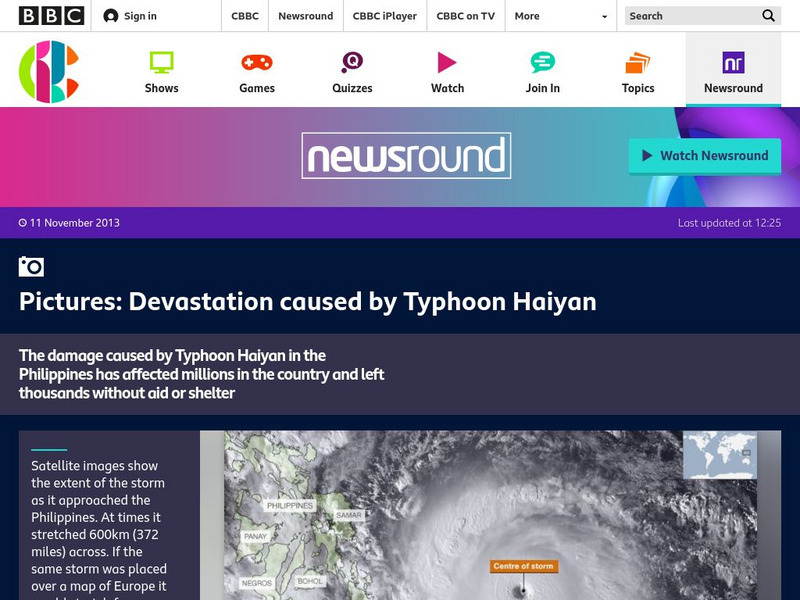
Bbc Newsround: Devastation Caused by Typhoon Haiyan
View images of the devastation caused by typhoon Haiyan as it hit the Philippines.
BBC
Bbc: Week of 9 1 14: Iceland Issues New Volcano Alert
Iceland has been on the watch for potential disaster caused by volcanic explosions. Read about the current risks and view video of the eruptions from the Bardarbunga volcano.

Science Struck
Science Struck: Famous Hurricanes of the World
Describes famous hurricanes that have struck in the Northern Hemisphere since 1900, the regions affected, the intensity of the storms, and the extent of damage each caused. The hurricanes are organized in sequential order.
Science Struck
Science Struck: Causes and Effects of Hurricanes
Discusses the causes of hurricanes and their effects on a region, including storm surges, heavy winds, precipitation, and possible tornadoes.
Discovery Education
Discovery Education: Understanding Tsunamis
Come and learn more about the devastating effects of tsunamis. This site features video segments revealing the devastation tsunamis can cause and how tsunamis are formed.
NOAA
Noaa: Tornadoes, Nature's Most Violent Storms
This page, put out by the National Weather Service, thoroughly explains the causes and types of tornadoes. Tornado safety is covered in the form of warning signs and what you can do to stay safe both in school and at home. The full...
US Geological Survey
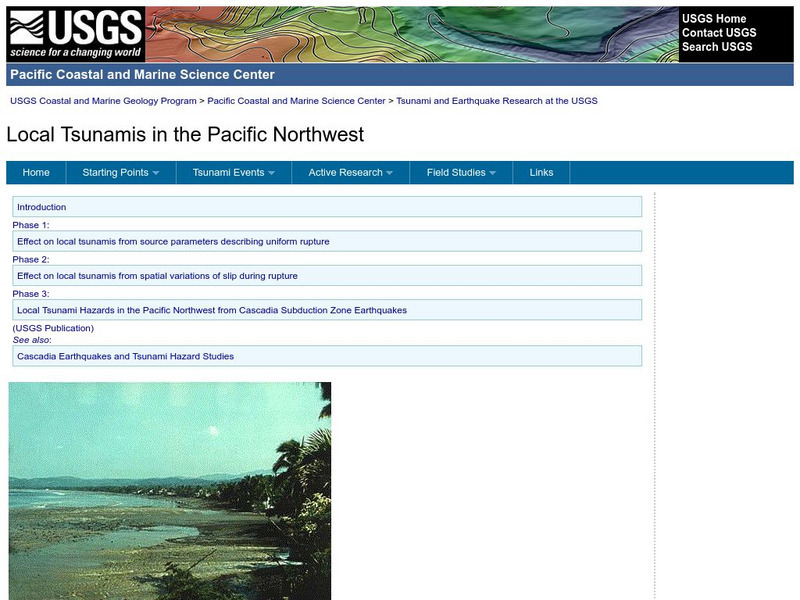
Usgs: Tsunamis in the Pacific Northwest
This page from the U.S. Geological Survey is devoted to Tsunamis in the Pacific Northwest. View some animations of tsunamis.

Library of Congress
Loc: America's Story: Johnstown Flood
Read about the terrible destruction caused by the Johnstown Flood in May 1889.
University Corporation for Atmospheric Research
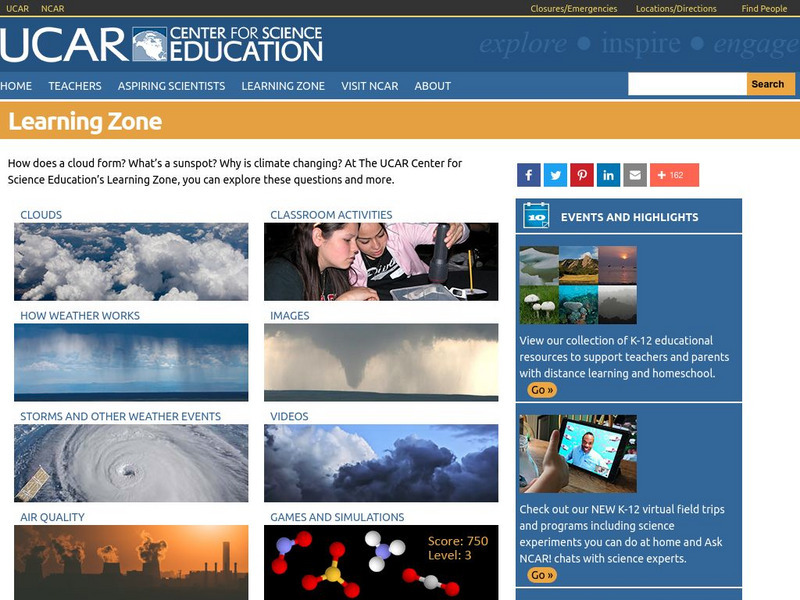
Ucar: Learning Zone
This comprehensive, interactive site is loaded with information, activities, and stories about thunderstorms, lightning, and tornadoes. Find out how these weather systems are formed, how they impact our lives, and how they cause chaos.
PBS
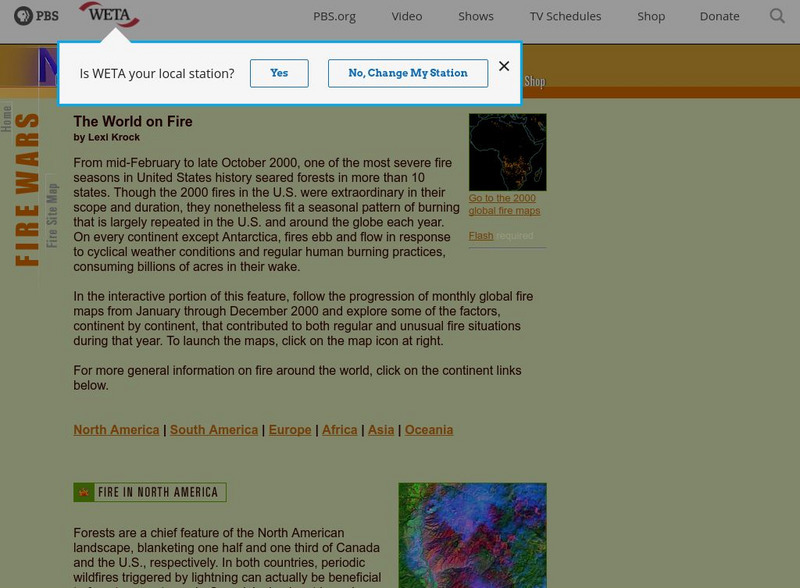
Nova: The World on Fire
During 200 the United States experienced one of the worst years for forest fires. The seasonal nature of this disaster is also typical of other countries. This interactive resource provides an overview of worldwide fires during 2000....
University of Wisconsin
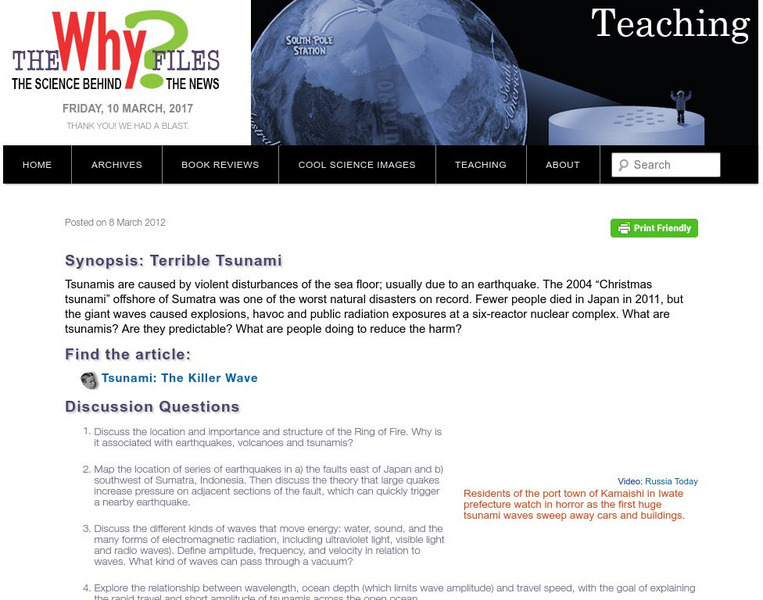
The Why Files: Terrible Tsunami
Explore the cause of tsunamis and their devastating effects.
Annenberg Foundation
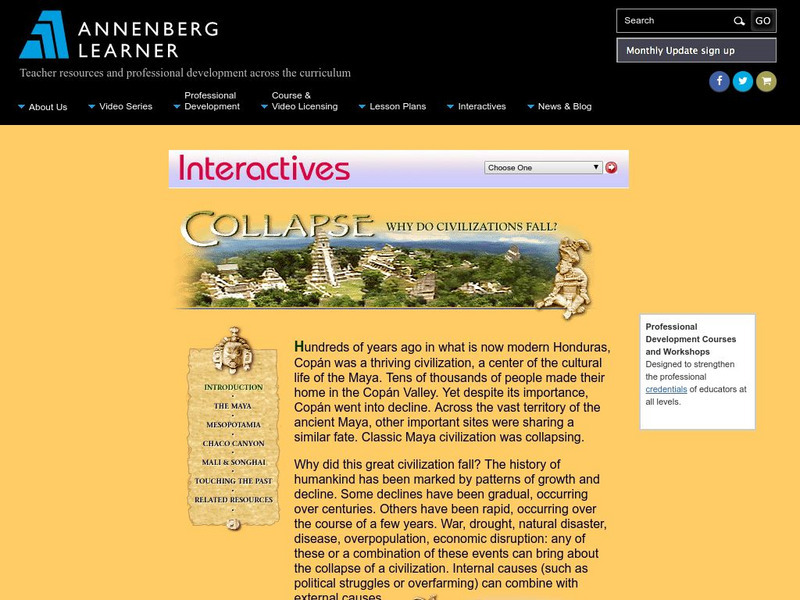
Annenberg Learner: Collapse: Why Do Civilizations Fall?
Why did great civilizations fall? War, disease, overpopulation or natural disasters? Interactive content and activities allow you, by sifting through archaeological evidence, to investigate the collapse of the Mayan civilization, the...
NOAA
Noaa: International Tsunami Information Center: Tsunami, the Great Waves
National Oceanic and Atmospheric Administration defines a tsunami and links to related pages about what causes tsunamis and how lives can be saved from their devastation.
Other
Rising From Ruin
This interactive feature reports on devastation caused after Hurricane Katrina. It includes diaries, towns that were affected and virtual tours. This is a great source for learning how this disaster affected residents of the southern U.S.
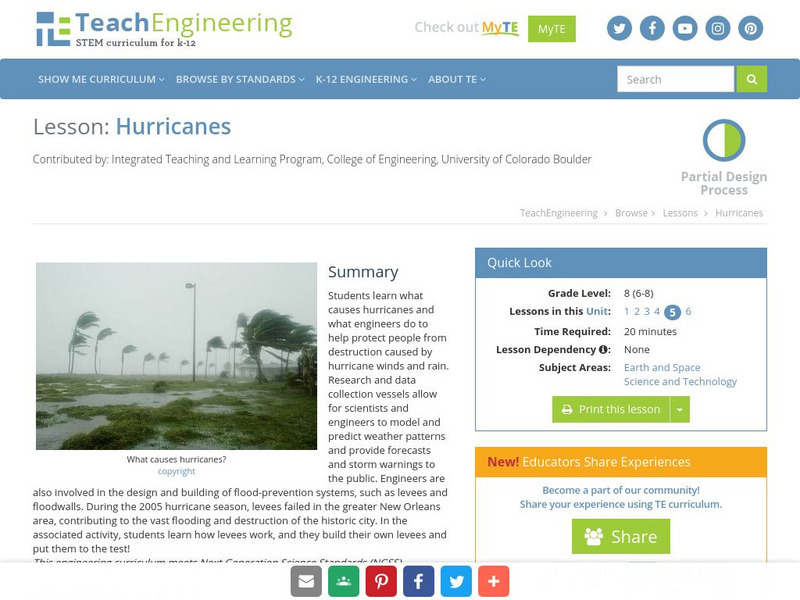
TeachEngineering
Teach Engineering: Hurricanes
Students learn what causes hurricanes and what engineers do to help protect people from destruction caused by hurricane winds and rain. Research and data collection vessels allow for scientists and engineers to model and predict weather...
eSchool Today
E School Today: Your Cool Facts and Tips on Earthquakes
Explains what earthquakes are, what causes them, the different types, tsunamis that can be caused by them, and how to prepare if living in an earthquake-prone area.
US Geological Survey
Us Geological Survey: Earthquake Hazards
Find out about earthquake hazards and damage. Some of the topics are an introduction to hazards, hazard maps, soil types and damage, and recent damage caused by earthquakes.
Other
Marshall University: 1937 Flood: Huntington, West Virginia
Photo collection of 1937 flood in Huntington, West Virginia.
Columbia University
Scientific Background on the Indian Ocean Earthquake and Tsunami
This site features information and related links that can be used by students and scientists to understand the events that led to the December 2004 Indian Ocean tsunami.
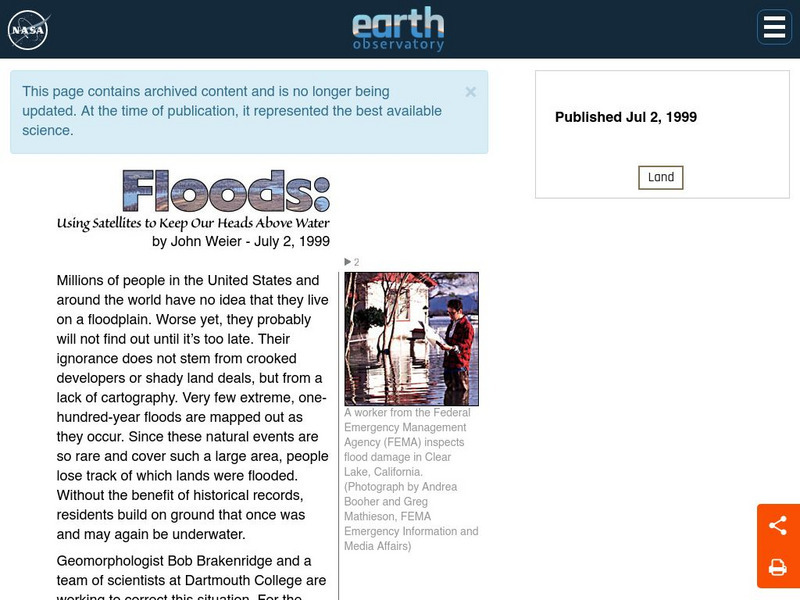
NASA
Floods: Using Satellites to Keep Our Heads Above Water
This article describes how scientists use satellite images to try and spot extreme floods. These satellites keep information stored, such as data on hundred-year floods, and try to identify likely flood plains based on that data.
PBS
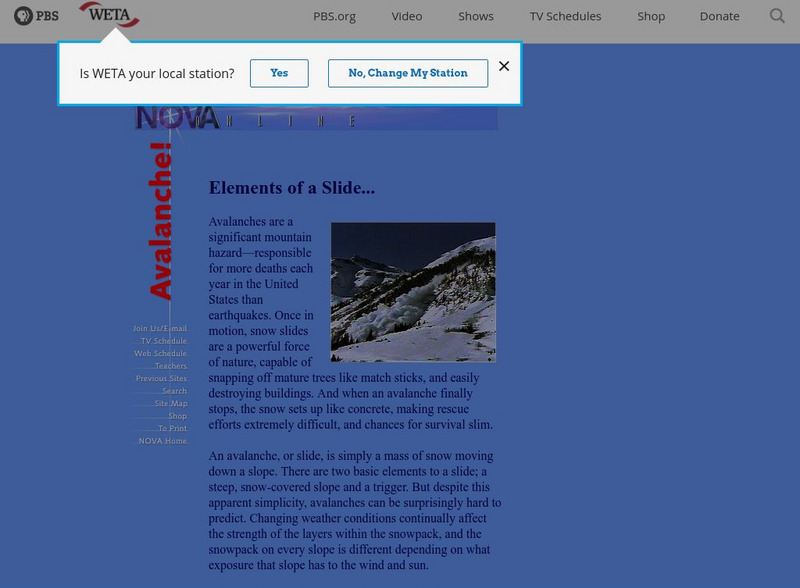
Pbs: Nova: Avalanche! Elements of a Slide
Avalanches are a dangerous phenomenon that cause more deaths in the United States each year than earthquakes. Explore the anatomy of avalanches and their causes.

PBS
Pbs Teachers: Science of Tsunamis: Seeking Understanding in the Wake of Tragedy
Conduct a demonstration to learn about how waves function in water. Create a poster that shows the physics of waves, how tsunamis work, the devastation caused by the 2004 tsunami or information about relief efforts for the 2004 tsunami.
Other
National Resources Canada: Landslides and Snow Avalanches
Defines a landslide, avalanche, and a rockslide and provides examples. Describes the causes and effects of these events.
BBC
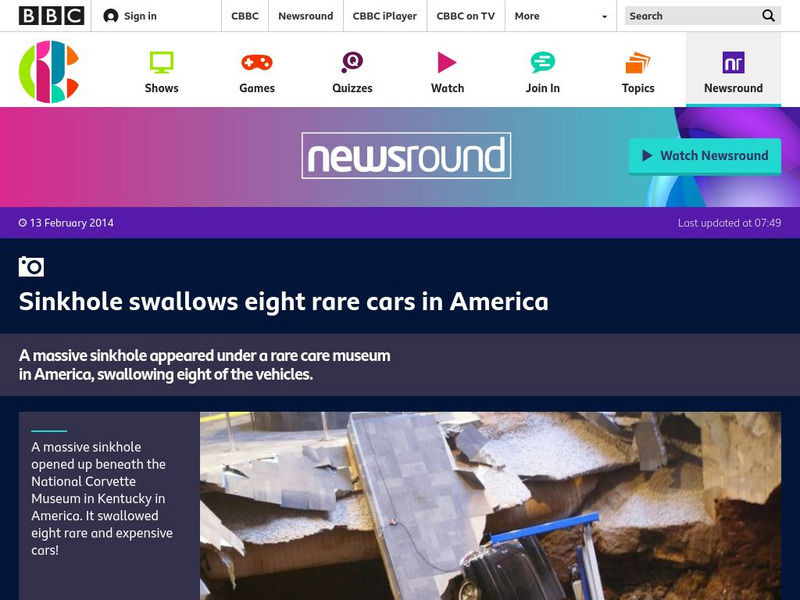
Bbc Newsround: Sinkhole Swallows Eight Rare Cars
A slideshow of images shows the destruction caused when a sinkhold emerged, swalling eight Corvettes from a museum.