Hi, what do you want to do?





University of Washington
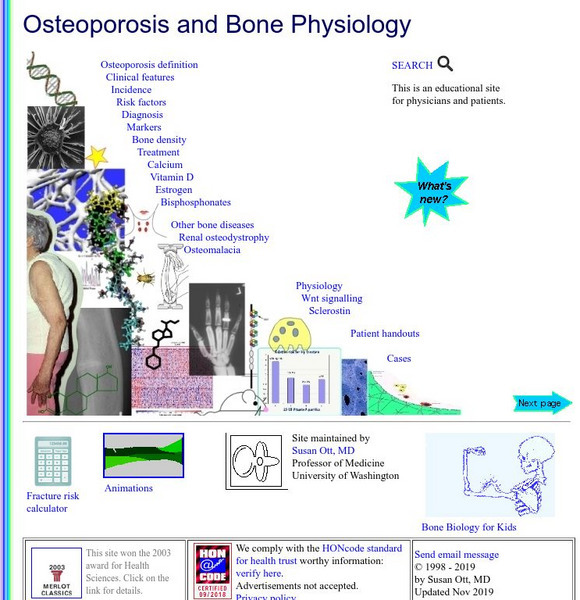
University of Washington: Osteoporosis and Bone Physiology
This site, from the University of Washington, is designed to educate physicians and patients about osteoporosis and bone physiology.
BioEd Online
Bio Ed Online: Muscles and Bones
Do you know which foods have lots of calcium for your bones? How do your bones and muscles work together? What are you doing to keep your muscles strong? Students are exposed to 10 activities that will help them address the...
Other
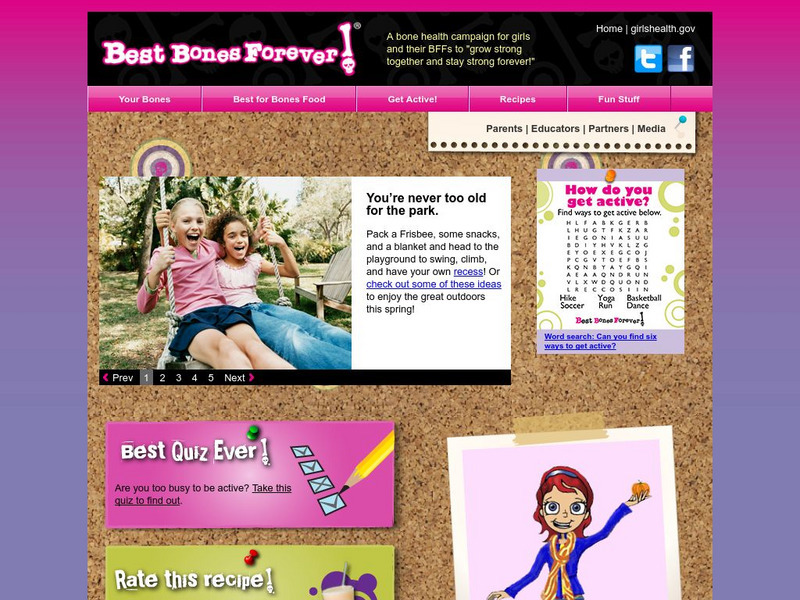
U.s. Department of Health and Human Services: Best Bones Forever
Information, advice, activities, stories, and games about the importance of healthy bones for women and girls.
Other
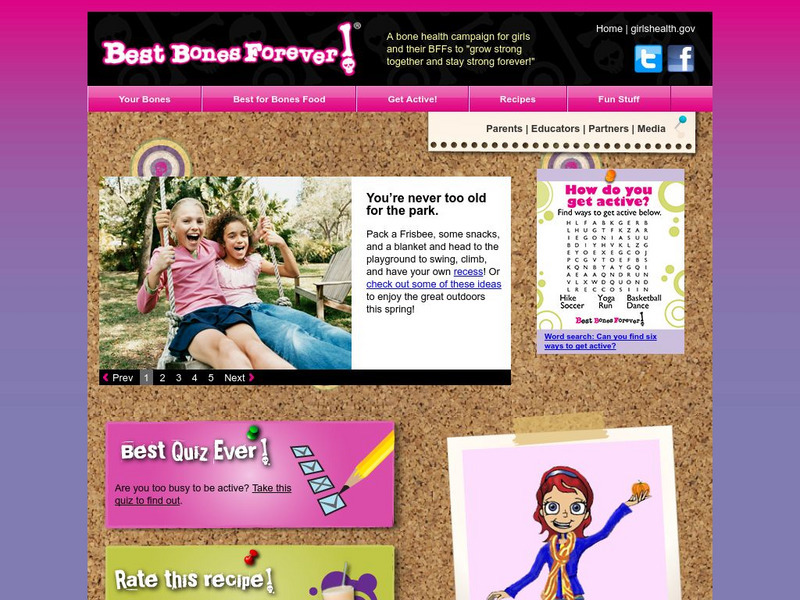
U.s. Department of Health and Human Services: Best Bones Forever!
Lesson plans and activities to encourage girls to get physically active and to snack on foods that make healthy bones. Gives basic facts about bones and relates how eating foods with calcium and vitamin D gives a person strong bones....
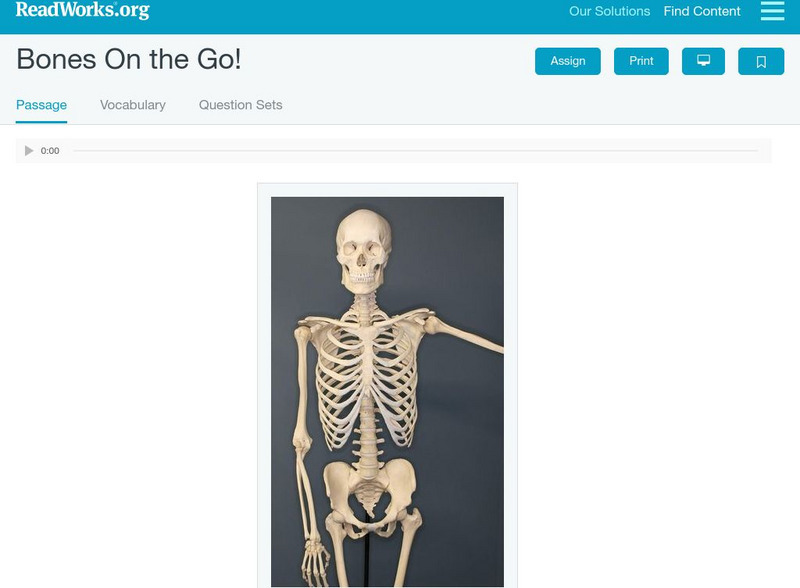
Read Works
Read Works: Bones on the Go!
[Free Registration/Login Required] An informational text about the human skeleton and some of its stronger bones. A question sheet is available to help students build skills in reading comprehension.
National Institutes of Health
The Nih Osteoporosis and Related Bone Diseases: National Resource Center
The NIH Osteoporosis and Related Bone Diseases ~ National Resource Center provide patients, health professionals, and the public with an important link to resources and information on metabolic bone diseases. The mission of NIH ORBD~NRC...
TeachEngineering
Teach Engineering: What Makes Our Bones Strong?
Students will use this activity to determine what keeps our bones strong. Soaking the bones in vinegar will remove the calcium from the bones causing them to become soft and rubbery. Students will find that when we age, calcium is...

Science Bob Pflugfelder
Science Bob: Body Zone: The Skeleton
An introduction to the function of the skeletal system, including blood cell production and the importance of calcium.