Hi, what do you want to do?






Curated OER
Diversity in Media: Looking Critically at What We See
This learning experience fosters awareness of representations we see, and don't see, in the media. Learners list TV programs, games, and films they enjoy, identify characters' ethnic, religious, (dis)ability, and sexual orientation...

Newseum
Use ‘War of the Worlds’ to Teach Media Literacy
Orson Welles' 1938 radio broadcast of "War of the Worlds" is the focus of a lesson plan that looks at the importance of clarity in broadcasting. After listening to the radio broadcast, class members discuss the ethical obligations to...

Council for Economic Education
Satisfaction Please! (Part 2)
Simply understanding consumer rights may not help people solve their problems. Understanding who to turn to becomes key in many different scenarios. Teach the value of various organizations that fight for consumer rights through...

Pulitzer Center
Food Insecurity
Food insecurity, whether as a result of food scarcity or a lack of nutritious food, is a growing and serious problem in the world today. After discussing the concept of food insecurity, learners listen to an NPR radio broadcast on the...

Media Smarts
Definitions and Comments about the News
Enable your class to construct a definition of the word "news" and compare it those provided from other sources. The activity, worksheet, and discussion that ensues would make a strong introduction to any media study you undertake.

Curated OER
To Be or Not to Be
Students gather information about setting goals through a variety of activities. In this setting goals lesson, students view a PowerPoint that explains the outcomes of the project, take notes, interview a local business person, write a...

Newseum
Media Ethics: Fairness Formula Starts With Accuracy
As part of a study of media ethics, young journalists apply a fairness formula to news reports. They look at accuracy, balance, completeness, detachment, and ethics to determine if the reporting is fair.

Curated OER
Live From Your Kitchen!
Students identify cooking sounds and share opinions about their associations. After reading an article, they discover the growth of radio cooking shows. They prepare an outline and script for a cooking program and present their...

Curated OER
Agriculture in Motion
Sixth graders research machines used in agriculture. In this agriculture lesson, 6th graders complete a variety of activities that involve farming and crops. Some examples include: answering questions, creating a storyboard, poetry, and...

Curated OER
Fracking: Positive or Negative Impact?
Your teenagers may have heard of fracking, but do they really know what it is? And could they debate the benefits and risks? Educate your environmental science class with a lesson about hydraulic fracturing, non-renewable energy...

PBS
Blow the Roof Off!
Blow the minds of young scientists with this collection of inquiry-based investigations. Based on a series of eight videos, these "hands-on, minds-on" science lessons engage young learners in exploring a wide range of topics...

Kenan Fellows
Renewable vs. Nonrenewable Energy Resources
Is one type of energy inherently good or bad? Young scientists explore energy resources in a week-long unit. After extensive research, groups create powerful position statements and presentations supporting their energy resource of choice.

Curated OER
Agriculture in Motion
Students discuss agriculture. In this farming lesson, students compare farming practices from the past compared to when machines were introduced. They discuss this concept as a class and participate in multiple activities. This lesson...

Curated OER
Expanding Your Horizons
In this career categories activity, students complete a chart the requires them to add specific jobs titles under the appropriate headings. Students also research career options and fields they are interested in.

PBS
The Impact of Genetically Modified Seeds
What is all the fuss about genetically modified foods? PBS provides this resource designed to supplement the documentary Food, Inc. to help learners investigate the benefits and controversies of genetically modified foods...

Curated OER
The "Reading Rainbow" Series
Second graders watch a show to gather information about a career. In this careers lesson, 2nd graders watch Reading Rainbow and participate in a class discussion about the occupation presented in the show. Lesson includes extension ideas.

Curated OER
Skills You Need to Succeed
Students identify basic skills needed to succeed in the world of work, including communication skills, computation skills, problem solving skills, and interpersonal skills.
Other
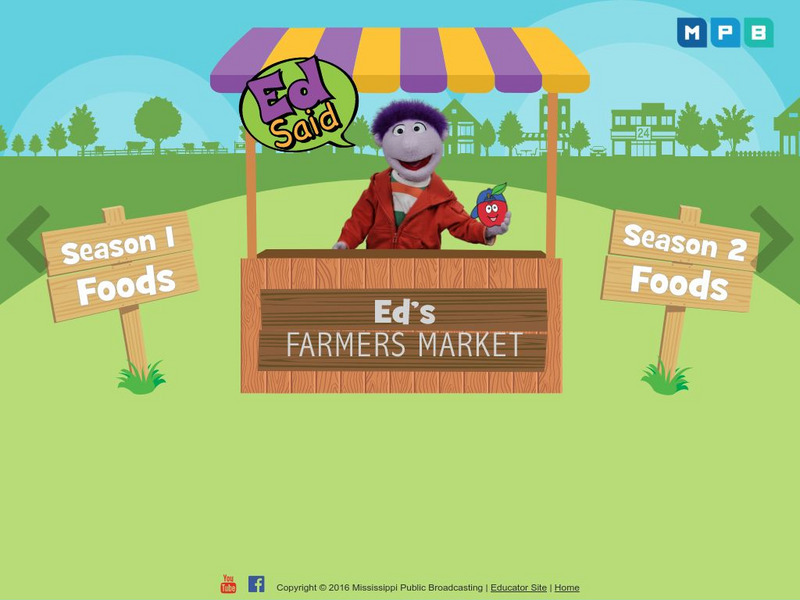
Mississippi Public Broadcasting: Ed Said
Meet Ed Said, a nine-year-old purple-haired hard-core fruit-and-veggie rapper. Learn nutrition facts from Ed by watching and playing his videos and songs. Includes many print-and-color activities about eating healthy fruit- and...