Hi, what do you want to do?





PBS
Pbs: Rough Science: A Brief History of Science
PBS site outlines the history of science and explains the origin of Modern Science. A brief timeline can also be found on this site.

TED Talks
Ted: Ted Ed: A Brief History of Video Games (Part I)
Video games are everywhere these days, but where did they actually come from? The history of video games is a complicated story that involves giant computers in science labs, the founder of Chuck E. Cheese and billions of dollars in...
Other
Internet Learning Tree: A Brief History of the Internet
An anecdotal history of the people and communities that brought about the internet.

Science Museum, London
Science Museum: Ada Lovelace
Some say that Ada Lovelace was the first programmer because she wrote instructions for a computing device designed by Charles Babbage. This site presents a brief history of Ada's life and the important role she played in the history of...
Other
The Canadian Beaver: A Brief History of the Beaver
Beaver facts, trivia, history and stamps are all covered within this "The Canadian Beaver" website. Science-based information, such as reproduction, habitat, diet and predators has also been provided.
The Franklin Institute
Resources for Science Learning: The Wright 1911 Model B Flyer in Flight
See film footage and read brief descriptions of Grover Cleveland Bergdoll's 1911 Model B flyer flight in 1934.
History of Computing Science
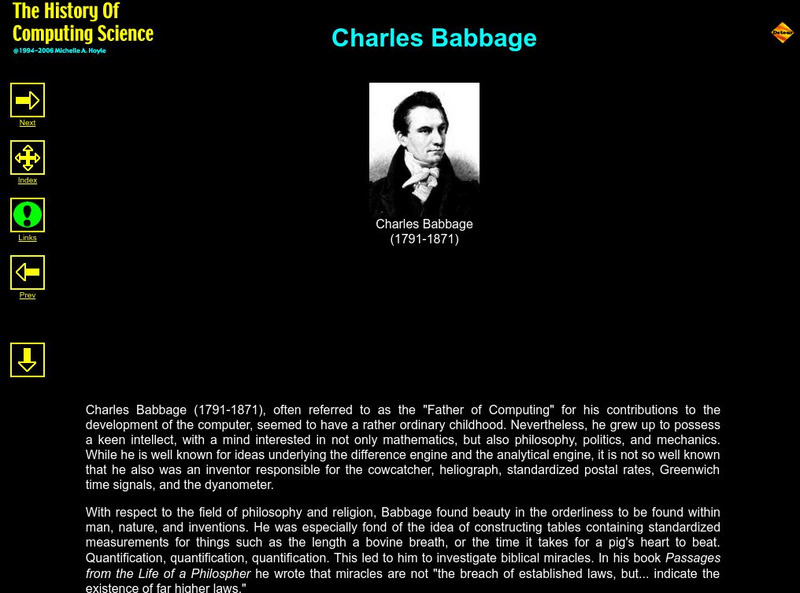
History of Computing Science: Charles Babbage
This is a brief biography of Charles Babbage, also known as the "Father of Computing".
Other
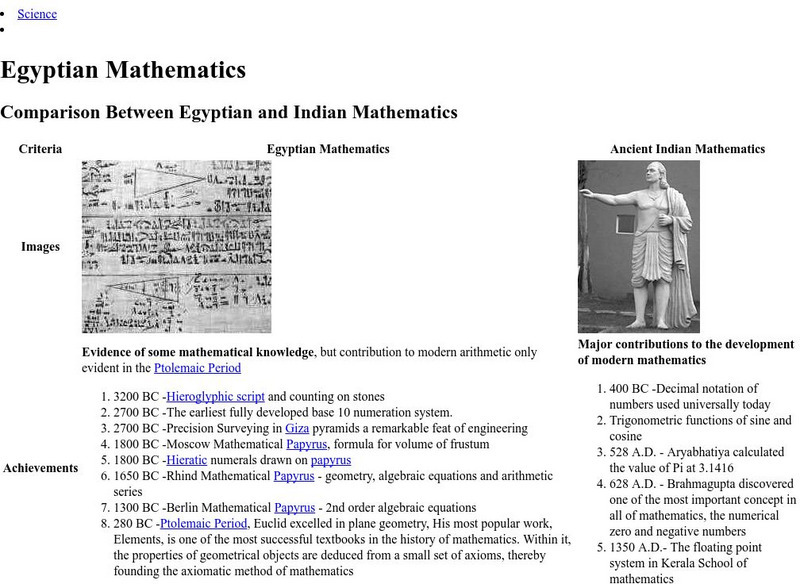
Aldokkan: Ancient Egyptian Mathematics
This site presents a brief history of ancient Egyptian mathematics.
Science Museum, London
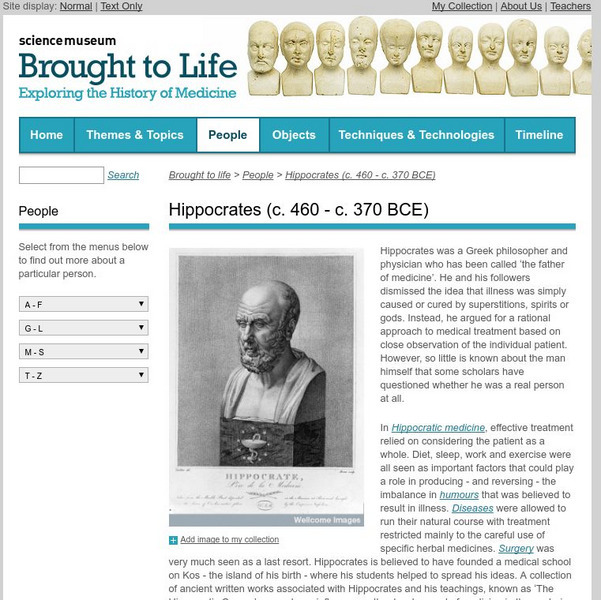
Science Museum: Brought to Life: Hippocrates (C. 460 C. 370 Bce)
A brief overview of Hippocrates and his ideas about effective medicine.
University of Georgia
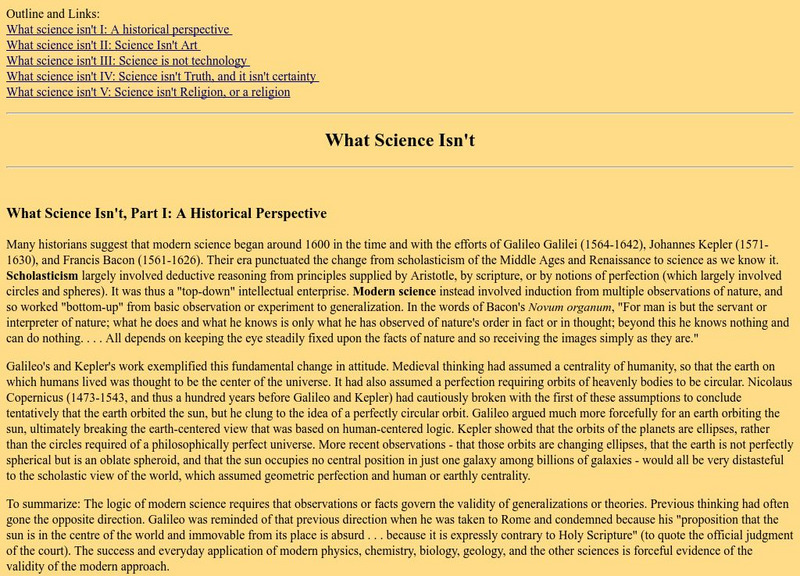
University of Georgia: Geology: What Science Isn't
A portion of a paper titled "What is Science?" provides a very brief historical summary.
History of Computing Science
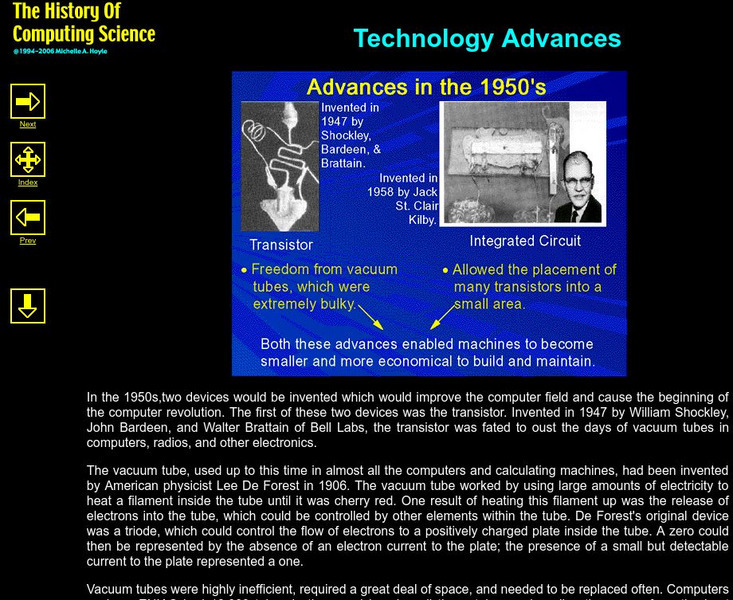
History of Computing Science: Technology Advances
The transistor and the integrated circuit were two inventions that fueled the technology explosion. This lecture presents a brief discussion of these two inventions.
History of Computing Science
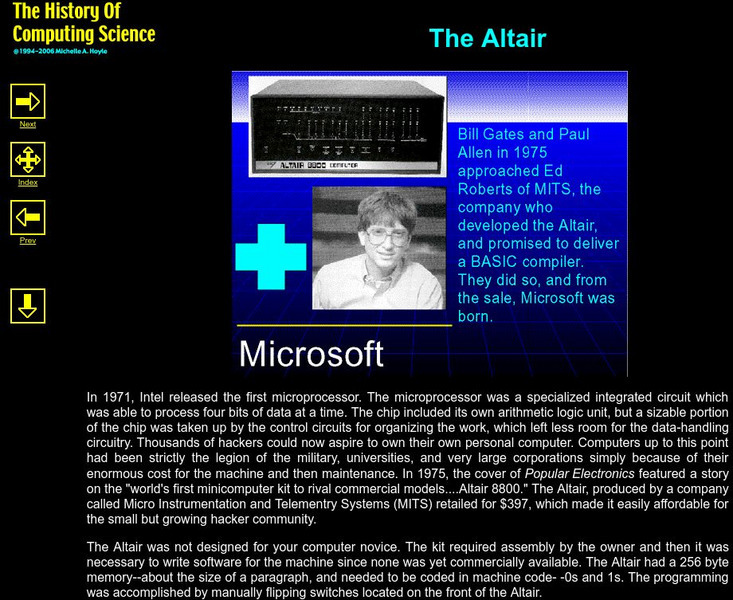
History of Computing Science: The Altair
The Altair 8800 was the first personal computer. This lecture series gives a brief description of the Altair 8800 and the impact it had on the computer industry.

History of Computing Science
History of Computing Science: Edvac
EDVAC (Electronic Discrete Variable Automatic Computer) was an early computer that was one of the first to use the binary number system to represent information. This lecture is a brief presentation of the EDVAC.
TeachEngineering
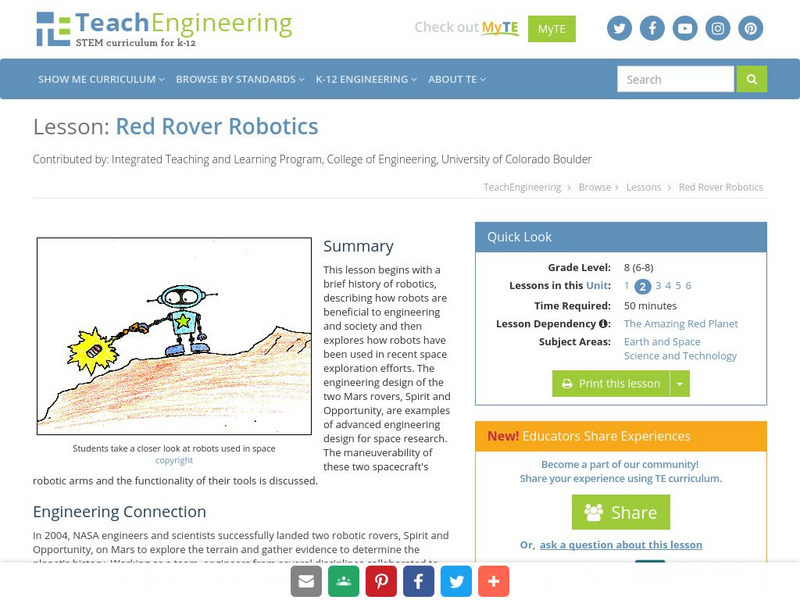
Teach Engineering: Red Rover Robotics
This lesson will start with a brief history of robotics and explain how robots are beneficial to science and society. The lesson then will explore how robots have been used in recent space exploration efforts. The engineering design of...
History of Computing Science
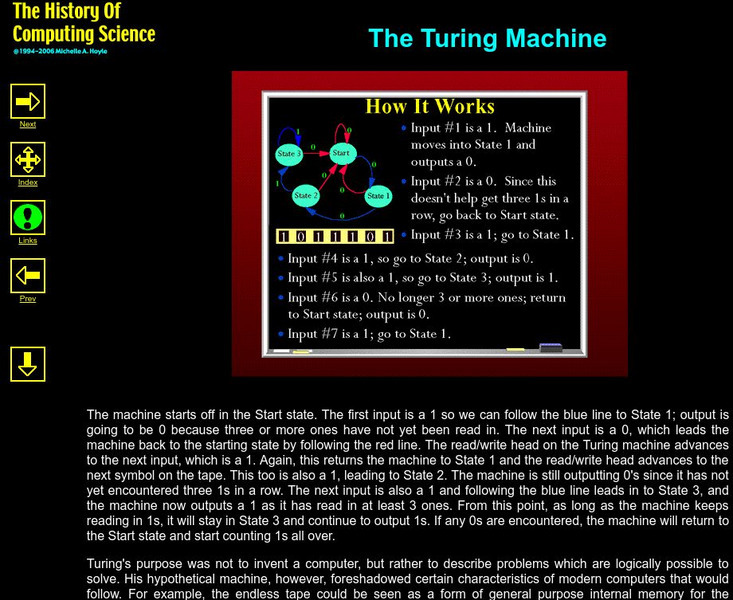
History of Computing Science: The Turing Machine
A Turing Machine is not an actual machine, but rather a symbolic system that can be used to represent any algorithm used to solve a problem. This lecture series gives a very brief description of the Turing Machine.
History of Computing Science
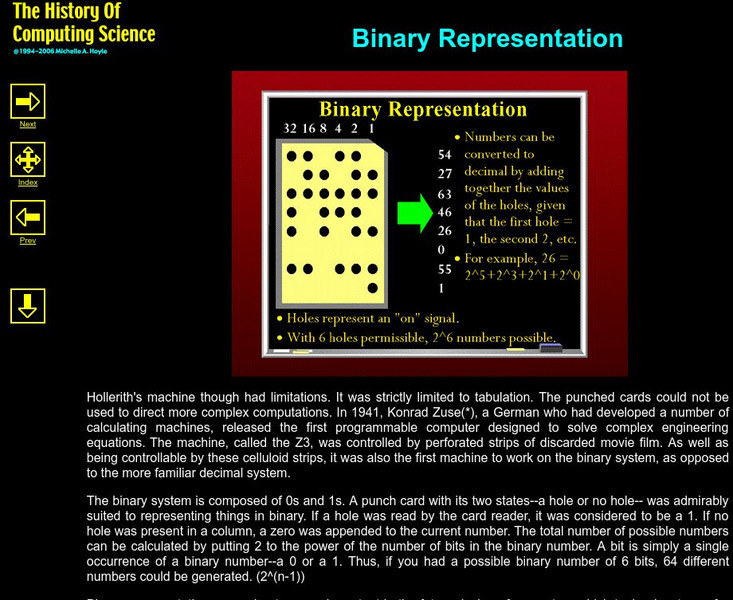
History of Computing Science: Binary Representation
The binary number system is a perfect fit for the dual-state technologies used in digital computing devices. This lecture series presents a brief description of how the two fit together.
NASA
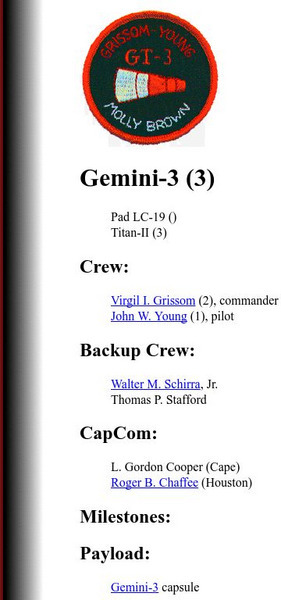
Nasa: Virgil "Gus" Grissom Gemini 3 Summary
A brief outline of the Gemini 3 mission. Links to other NASA websites are available.
NASA
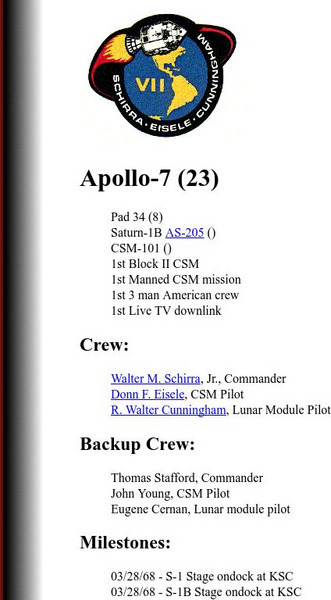
Nasa: Wally Schirra Apollo 7 Summary
A brief outline of the Apollo 7 mission. Links to other NASA websites are available.
NASA
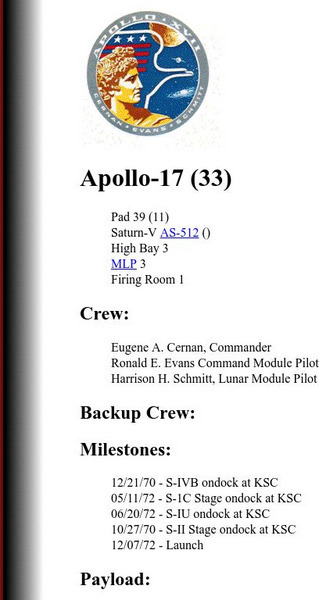
Nasa: Harrison Schmitt Apollo 17 Mission Summary
This site from NASA provides a brief outline of the last Apollo mission to the moon, Apollo 17. Links to other NASA websites are available.
Institute and Museum of the History of Science
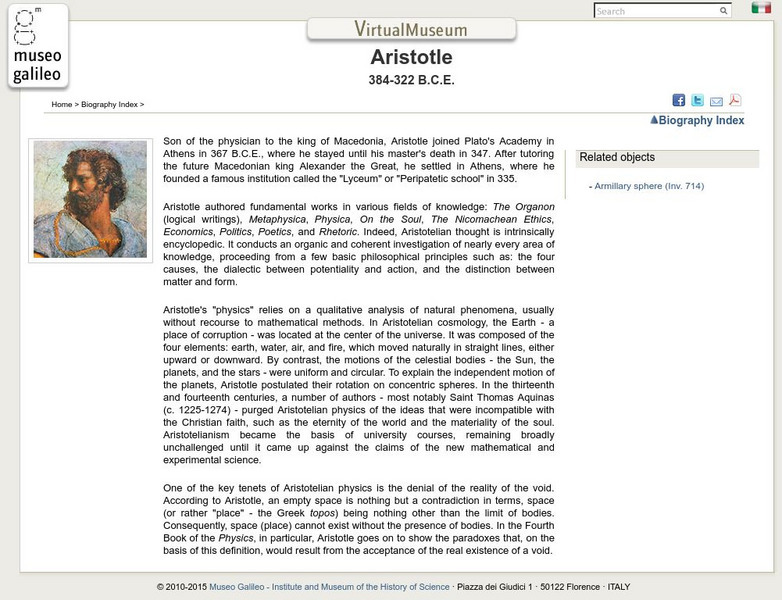
Museo Galileo: Aristotle 384 322 b.c.e.
A brief look at the life of Aristotle followed by a short discussion of his ideas about physics.