Hi, what do you want to do?





TeachEngineering
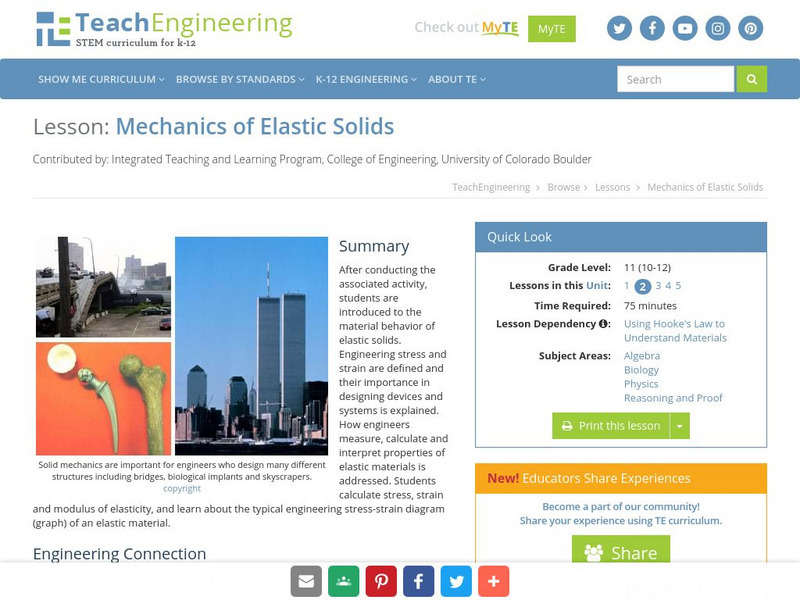
Teach Engineering: Mechanics of Elastic Solids
After conducting the associated activity, students are introduced to the material behavior of elastic solids. Engineering stress and strain are defined and their importance in designing devices and systems is explained. How engineers...
TeachEngineering
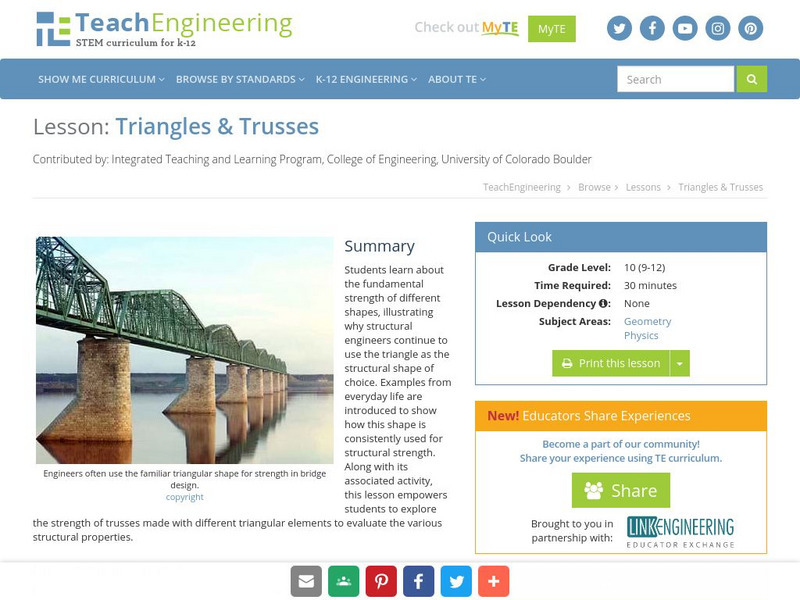
Teach Engineering: Triangles & Trusses
Students learn about the fundamental strength of different shapes, illustrating why structural engineers continue to use the triangle as the structural shape of choice. Examples from everyday life are introduced to show how this shape is...
TeachEngineering
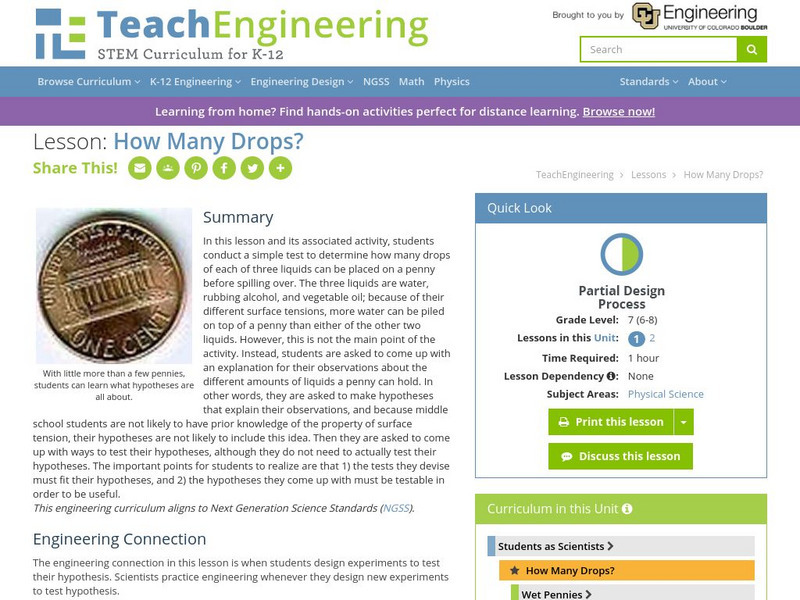
Teach Engineering: How Many Drops?
In this lesson and its associated activity, students conduct a simple test to determine how many drops of each of three liquids can be placed on a penny before spilling over. The three liquids are water, rubbing alcohol, and vegetable...
TeachEngineering
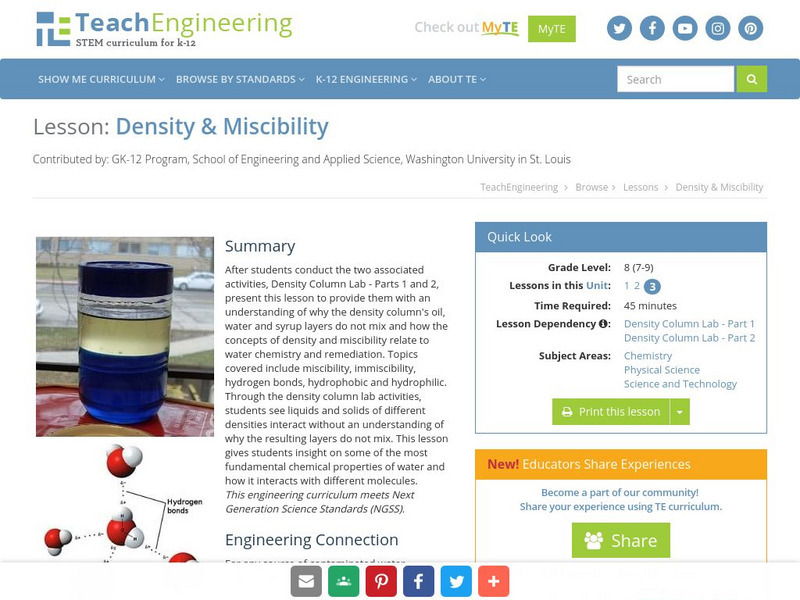
Teach Engineering: Density & Miscibility
After students conduct the two associated activities, Density Column Lab - Parts 1 and 2, present this lesson to provide them with an understanding of why the density column's oil, water and syrup layers do not mix and how the concepts...
TeachEngineering
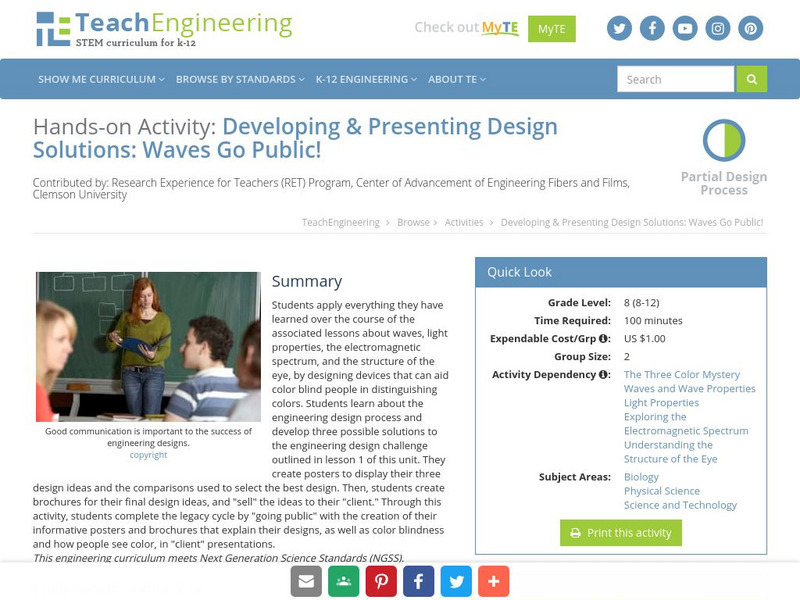
Teach Engineering: Waves Go Public!
Students apply everything they have learned over the course of the associated lessons about waves, light properties, the electromagnetic spectrum, and the structure of the eye, by designing devices that can aid color blind people in...
TeachEngineering
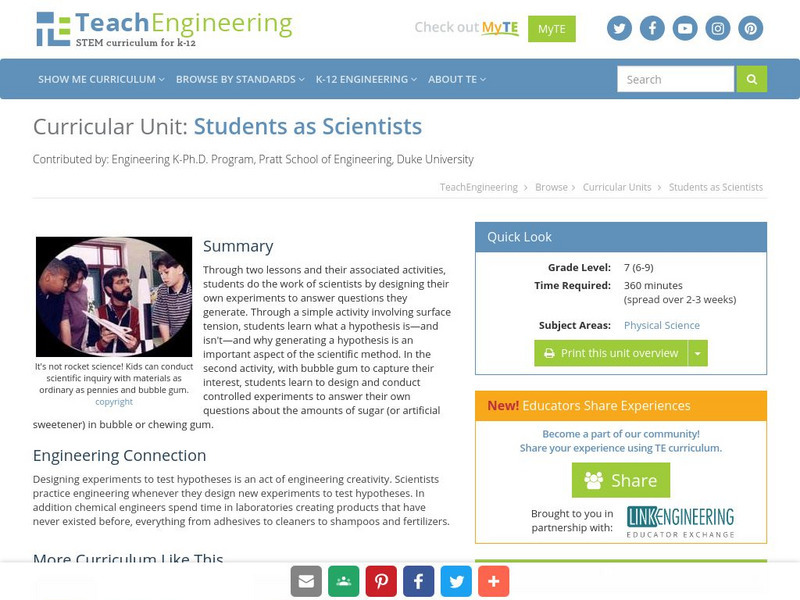
Teach Engineering: Students as Scientists
This curricular unit contains two lessons that let students actually do the work of scientists as they design their own experiments to answer questions they generate. In the first lesson and its associated activity, students conduct a...
TeachEngineering
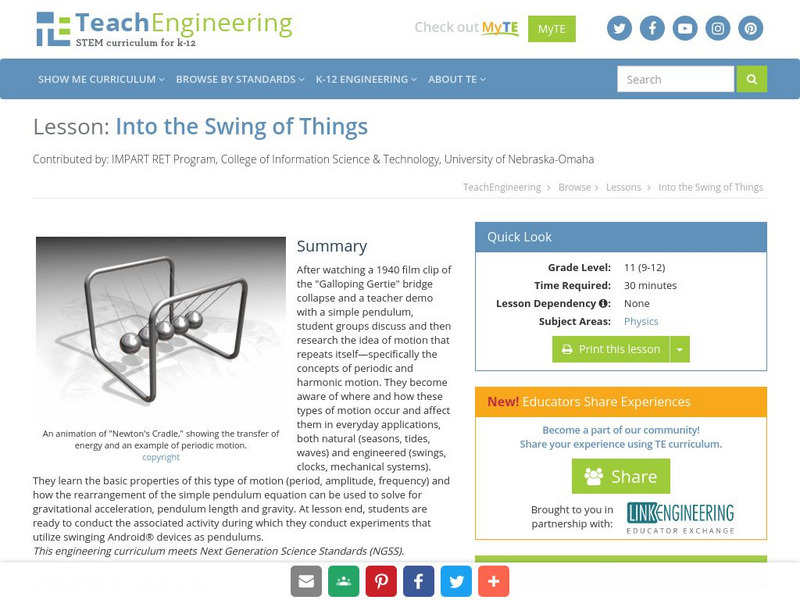
Teach Engineering: Into the Swing of Things
Students learn the basic properties of periodic and harmonic motion, and how the rearrangement of the simple pendulum equation can be used to solve for gravitational acceleration, pendulum length, and gravity. At lesson end, students are...
Science Education Resource Center at Carleton College
Serc: The Evolution of Pearson's Correlation Coefficient
For this activity, students explore nine scatter plots to develop their understanding of how two quantitative variables are related. Through an exploration of the properties of this association, they come to understand the standard...
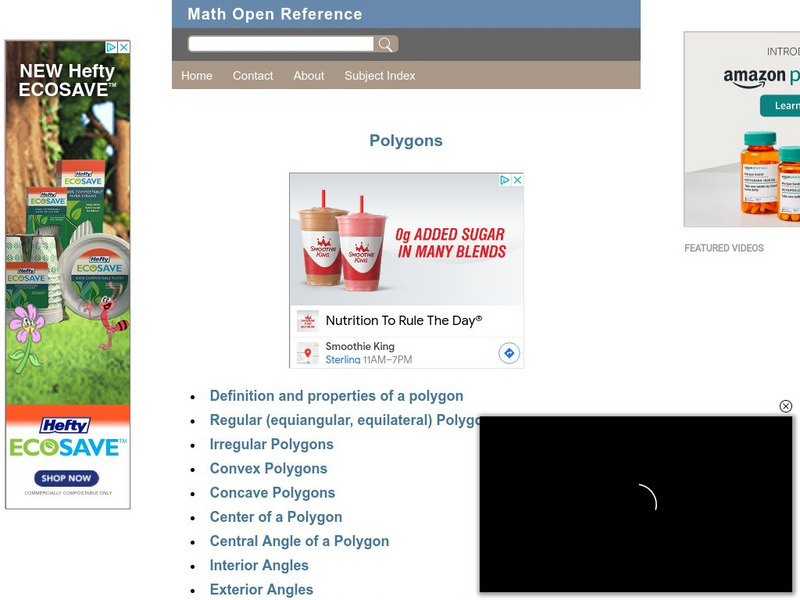
Math Open Reference
Math Open Reference: Polygons
Get the definition and properties of a polygon. Then explore such topics as: 1) types of polygon 2) area 3) Perimeter 4) angles associated with polygons and 5) names of polygons.
![Design Build: Exploring the Fundamental Requirements of Structural Design [Pdf] Lesson Plan](https://static.lp.lexp.cloud/images/attachment_defaults/resource/large/FPO-knovation.png "Design Build: Exploring the Fundamental Requirements of Structural Design [Pdf] Lesson Plan")
Other
Design Build: Exploring the Fundamental Requirements of Structural Design [Pdf]
In this lesson unit from the Science Teachers' Association of Ontario (STAO), students fold paper to explore the properties and shapes of materials that give structures their stability and strength. They record their ideas as they...
Curated OER
Research Pages: Circle Inversion Fractals
This site introduces the iteration of circle inversions and describes the associated properties.
Curated OER
Research Pages: Circle Inversion Fractals
This site introduces the iteration of circle inversions and describes the associated properties.
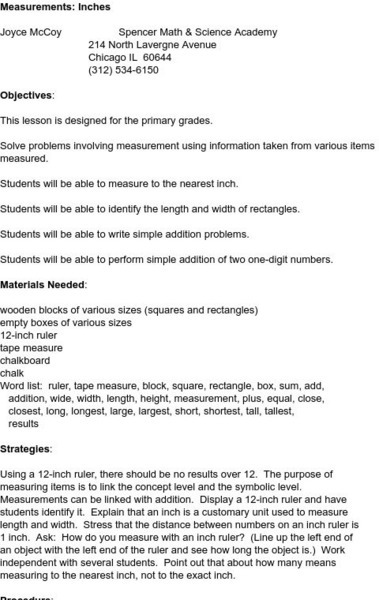
Science and Mathematics Initiative for Learning Enhancement (SMILE)
Smile: Measurement Inches
This lesson plan for primary students gives students hands-on practice in using a ruler and understanding customary measurements, length and width in inches. Students also create simple one and two digit addition problems related to the...
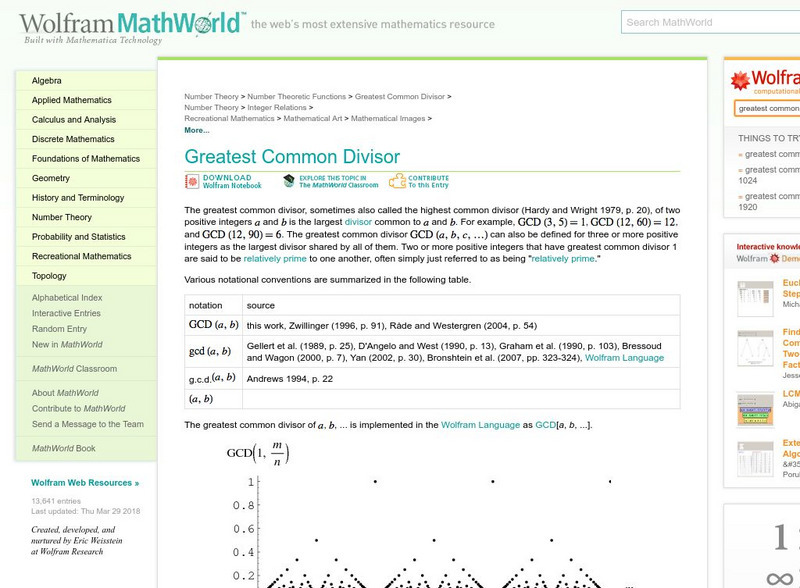
Wolfram Research
Wolfram Math World: Greatest Common Divisors
An advanced investigation of Greatest Common Factors (Divisors) and a look at related algorithms and properties) comutative, associative, and more). Contains links to relevant topics.
Texas Instruments
Texas Instruments: Numb3 Rs: A Group of Symmetries
Based off of the hit television show NUMB3RS, this lesson has students examine a set of transformations to determine if certain properties (such as associativity and closure) exist for equilateral triangles. Students create tables of...
Other
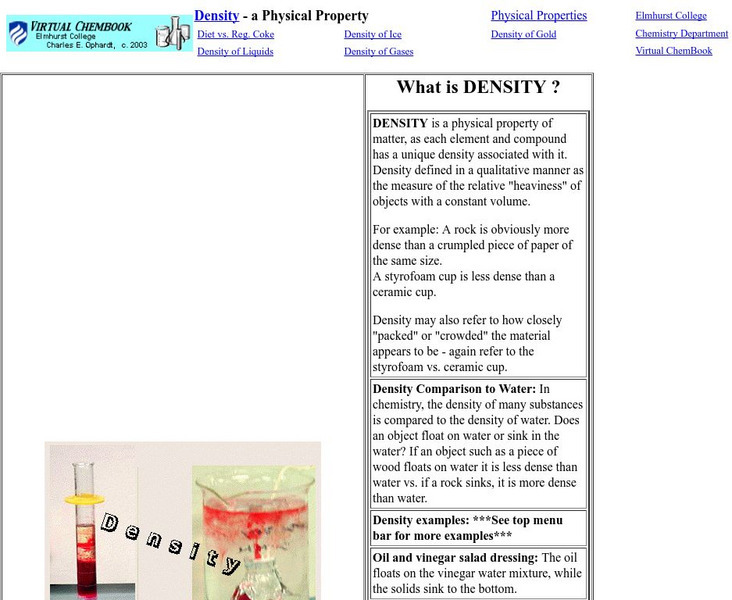
Virtual Chembook: Density Applications With Gases
DENSITY is a physical property of matter, as each element and compound has a unique density associated with it. Density defined in a qualitative manner as the measure of the relative "heaviness" of objects with a constant volume. For...

Exploratorium
Exploratorium: Science Snacks: Magnetic Fruit: Push Me a Grape
An online activity which illustrates the magnetic property of diamagnetism associated with water. Contains a simple procedure and then a good explanation of the magnetic interactions that were displayed by the grapes.
TeachEngineering
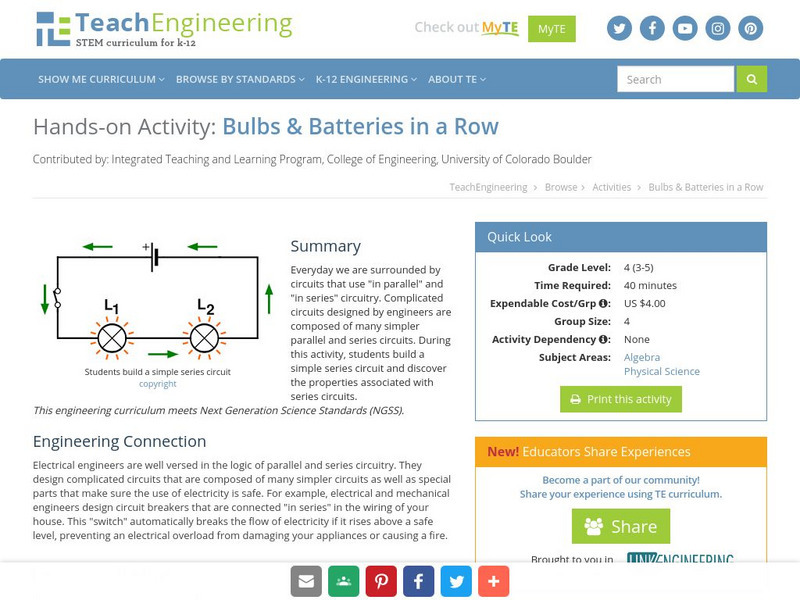
Teach Engineering: Bulbs & Batteries in a Row
Everyday we are surrounded by circuits that use "in parallel" and "in series" circuitry. Complicated circuits designed by engineers are composed of many simpler parallel and series circuits. During this activity, students build a simple...
TeachEngineering
Teach Engineering: What's Air Got to Do With It?
Students are introduced to the concepts of air pollution and air quality. The three lesson parts focus on the prerequisites for understanding air pollution. First, students use M&Ms to create a pie graph that expresses their...
Illustrative Mathematics
Illustrative Mathematics: G Co Origami Equilateral Triangle
The purpose of this task is to explore reflections in the context of paper folding. Each fold is associated with a line of reflection and understanding each step in the construction requires careful analysis of angles and of the...

Alabama Learning Exchange
Alex: "Tan"
The Chinese character mark formerly known as "Tan" is the first of two lessons to introduce first grade students to geometry using tangrams. This lesson incorporates history, math, and language arts. In this lesson students will be able...

Khan Academy
Khan Academy: The Buddha Shakyamuni
How do we recognize this figure as Shakyamuni Buddha? This is the traditional representation of the Shakyamuni Buddha or the historical Buddha. The statue shows the moment of his enlightenment at a place called Bodh Gaya in India, which...
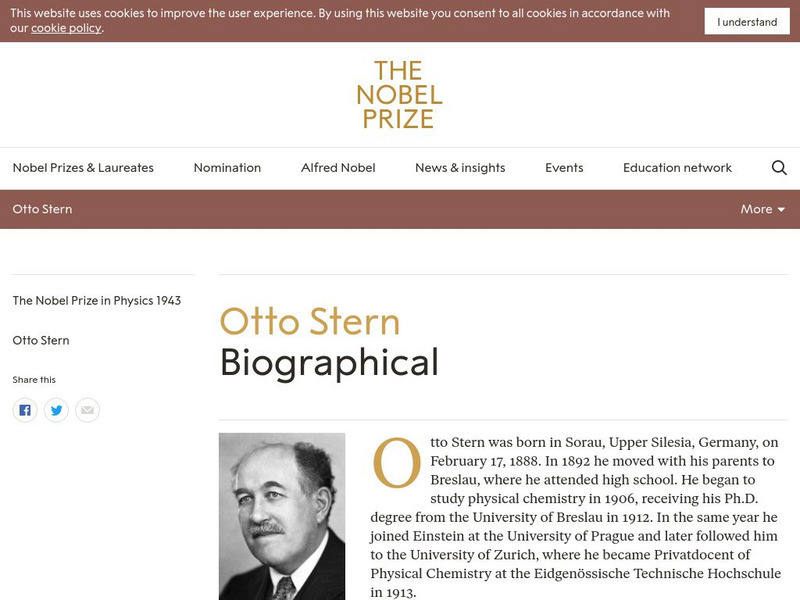
Nobel Media AB
The Nobel Prize: Otto Stern Biographical
This is a brief biography on the life and scientific work of Otto Stern, a physicist honored with the Nobel Prize in physics for his "development of the molecular ray method and his discovery of the magnetic moment of the proton."
Chemicool
Chemicool: Silver
This site provides a chart of properties associated with silver, ranging from silver's melting point to conductivity.
Other popular searches
- Math Associative Property
- Associative Property of Math
- Associative Property in Math
- Associative Property Lessons
- Associative Property Addition