Hi, what do you want to do?






American Museum of Natural History
American Museum of Natural History: Optical Illusions and How They Work
What you see and what you think you see are different things. Find out what your brain doing behind-the-scenes!
American Museum of Natural History
American Museum of Natural History: See the Light
Take a look at light with these three easy experiments
American Museum of Natural History
American Museum of Natural History: Trip Up Your Brain
Try this trippy experiment to fool your brain.
American Museum of Natural History
American Museum of Natural History: Crazy Camouflage
Create a flounder fish that's hard to spot. In this hands-on activity, students gather evidence to explore how camouflage helps animals survive.
American Museum of Natural History
American Museum of Natural History: Five Tools and Processes for Translating the Ngss Into Instruction and Classroom
The Five Tools and Processes for Translating the NGSS are designed to help professional development leaders work with teachers on curriculum, instruction, and assessment as they achieve this vision. Click the link for each tool for an...
American Museum of Natural History
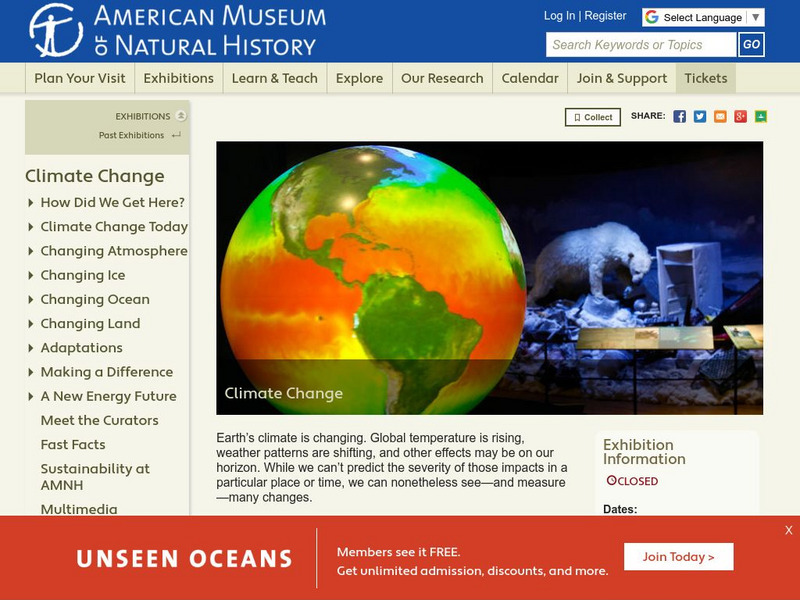
American Museum of Natural History: Climate Change
A complete guide to the planet's climate change, including evidence, causes, effects, and conservation efforts.
American Museum of Natural History
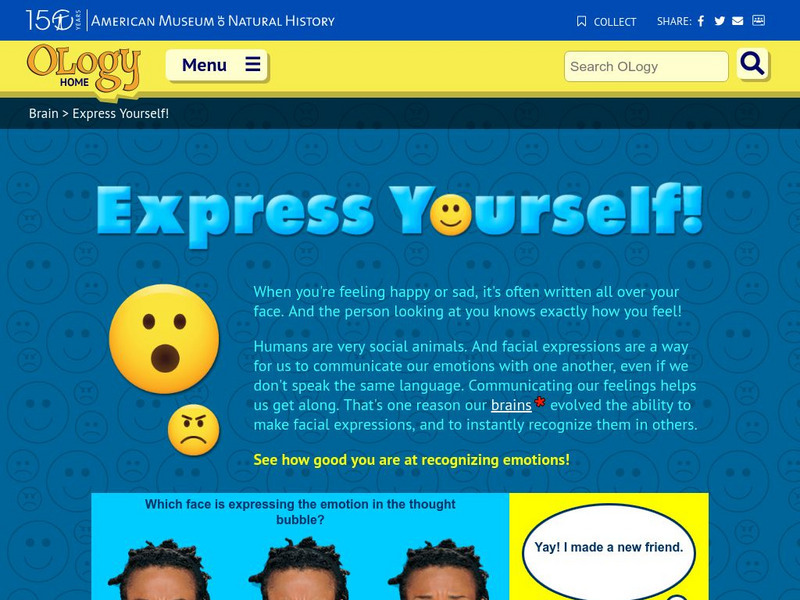
American Museum of Natural History: Ology: Express Yourself
Test your skill at reading the emotion expressed in a face in these two matching games.
American Museum of Natural History
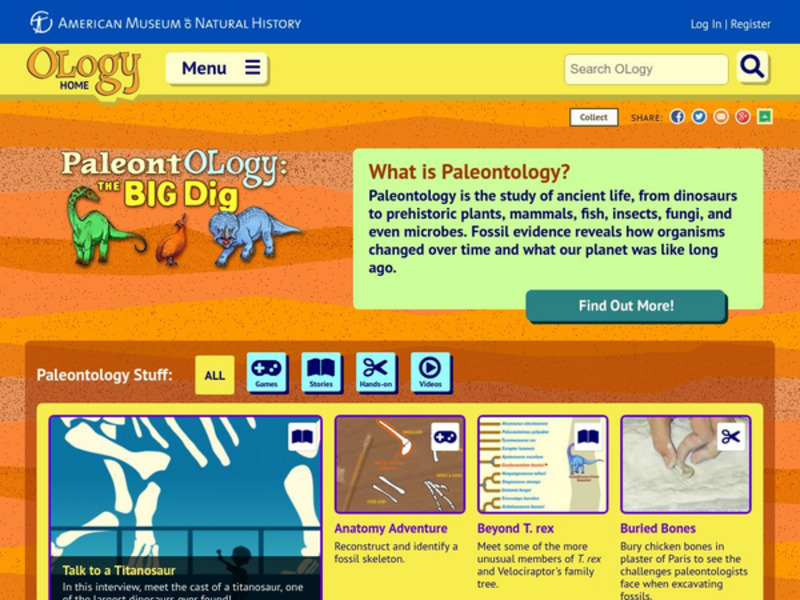
American Museum of Natural History: O Logy: Paleontology: The Big Dig
On this site, you will learn all about Paleontology, the study of ancient life. It defines paleontology and provides links to games, stories, videos, and hands-on activities.

Read Works
Read Works: Passages: "The Rise of Oxygen in the Earth's Atmosphere"
[Free Registration/Login Required] The article "The Rise of Oxygen in the Earth's Atmosphere" from the American Museum of Natural History focuses on when the rise of oxygen in the earth's atmosphere began. A Step Read, a question set,...
American Museum of Natural History
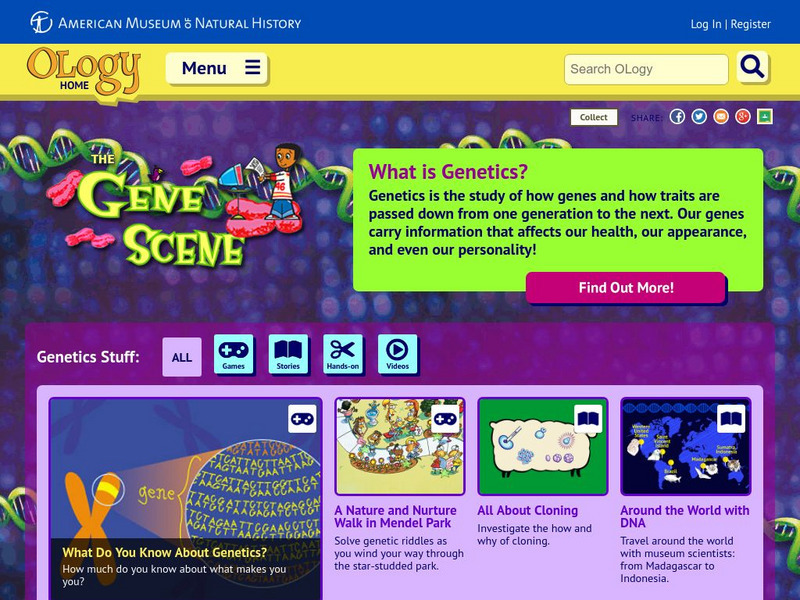
American Museum of Natural History: O Logy: Genetics
This site from American Museum of Natural History focuses on Genetics. It defines genetics and provides links to games, stories, videos, and hands-on activities on the topic.
American Museum of Natural History
American Museum of Natural History: O Logy: Saving Species
Learn why fieldwork is an important component of any scientist's career, especially among those who are actively working to preserve the Earth's biodiversity. Three American Museum of Natural History biologists tell you about their...
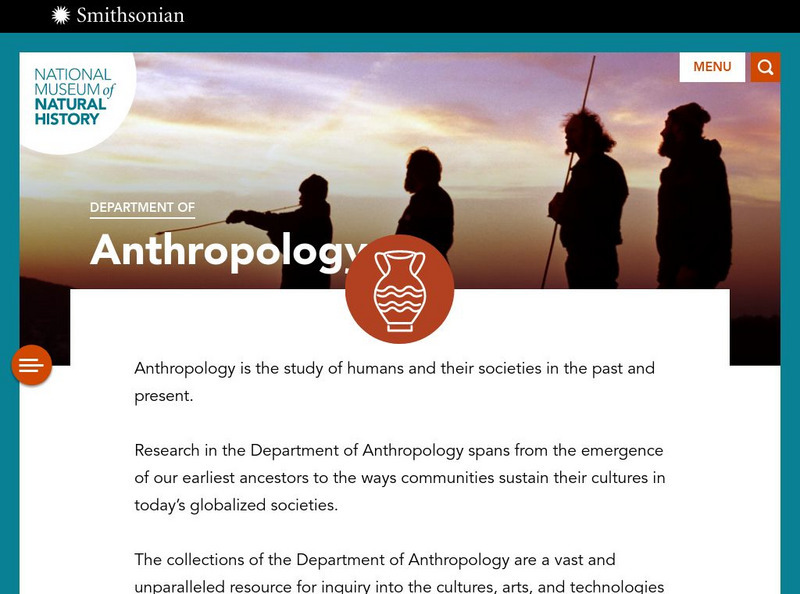
Smithsonian Institution
National Museum of Natural History: Northwest Coast American Indian Bibliography
The National Museum of Natural History of the Smithsonian presents an extensive annotated bibliography of works on Native Americans for grades K-12.
American Museum of Natural History
American Museum of Natural History: O Logy: If Rocks Could Talk
Learn about metamorphic, igneous, and sedimentary rocks and see many examples of each type.

American Museum of Natural History
American Museum of Natural History: O Logy: Arctic Story Puzzles
Construct a story about the Inuit or the polar bear from a series of pictures that can be put together in a sequence.
Smithsonian Institution
National Museum of Natural History: American Mammals: Hooded Skunk
The Smithsonian National Museum of Natural History, in a section titled "North American Mammals," offers a general overview of the hooded skunk. Content includes detailed drawings, photographs, specimens, and a map showing the skunk's...
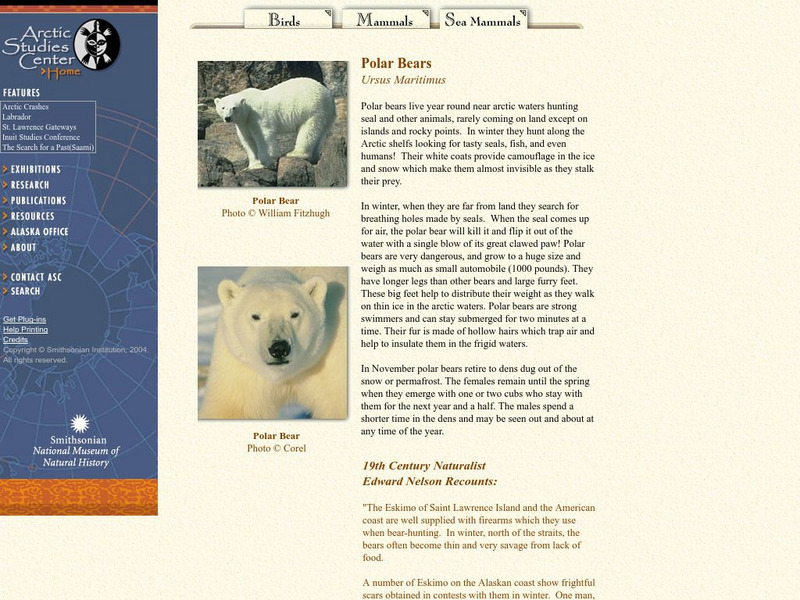
Smithsonian Institution
National Museum of Natural History: Arctic Studies Center: Polar Bear
The Smithsonian National Museum of Natural History, in a section titled "North American Mammals," offers a general overview of the polar bear. Additional content includes detailed drawings, photographs, and a map showing the polar bear's...

American Museum of Natural History
American Museum of Natural History: O Logy: Stuff to Do: Start a Rock Collection
Step-by-step details for building a rock collection, beginning with collecting specimens, moving on to observing and sorting rocks, and finishing with displaying the collection. Includes a data table for keeping track of all your...
American Museum of Natural History
American Museum of Natural History: Dinosaurs: Display or Defense?
Are plates of armor, horns, exceptionally large heads, and bony plates examples of dinosaur display or defense? Visitors to this resource will learn what scientists have concluded about the purpose of these peculiar dinosaur features.
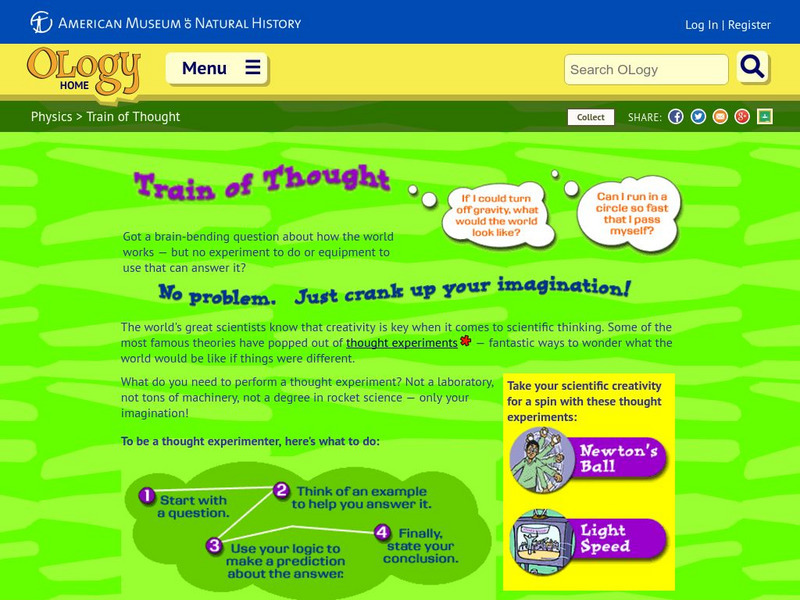
American Museum of Natural History
American Museum of Natural History: O Logy: Train of Thought
Try out your ability to think like Einstein by working through two thought experiments that help explain how satellites stay in orbit and how the speed of light affects the universe.
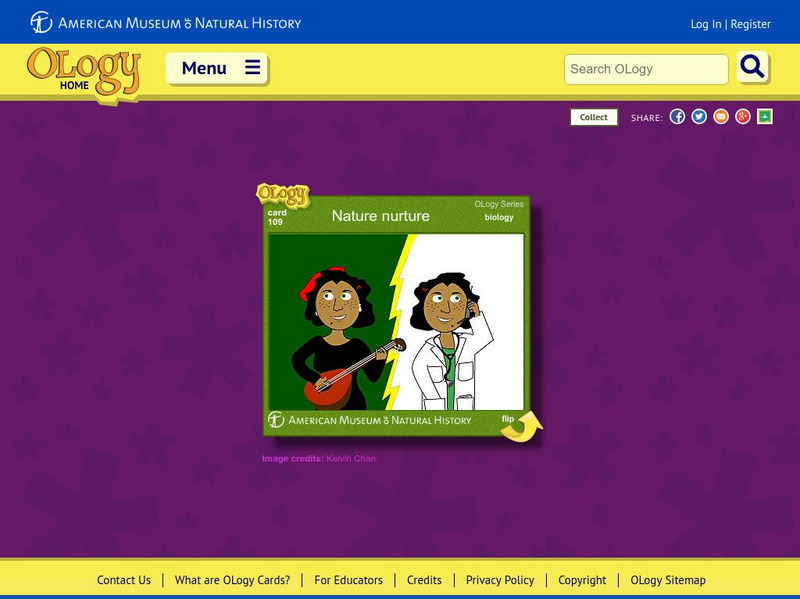
American Museum of Natural History
American Museum of Natural History: Nature Versus Nurture O Logy Card
Flip this interactive OLogy card to find questions and answers, fast facts, and other bite-size pieces of information to help you understand the nature-versus-nurture debate.

American Museum of Natural History
American Museum of Natural History: Ring of Fire O Logy Card
Flip over this interactive OLogy flash card to read about the Ring of Fire, a series of volcanoes in the Pacific Ocean along the Pacific Plate.
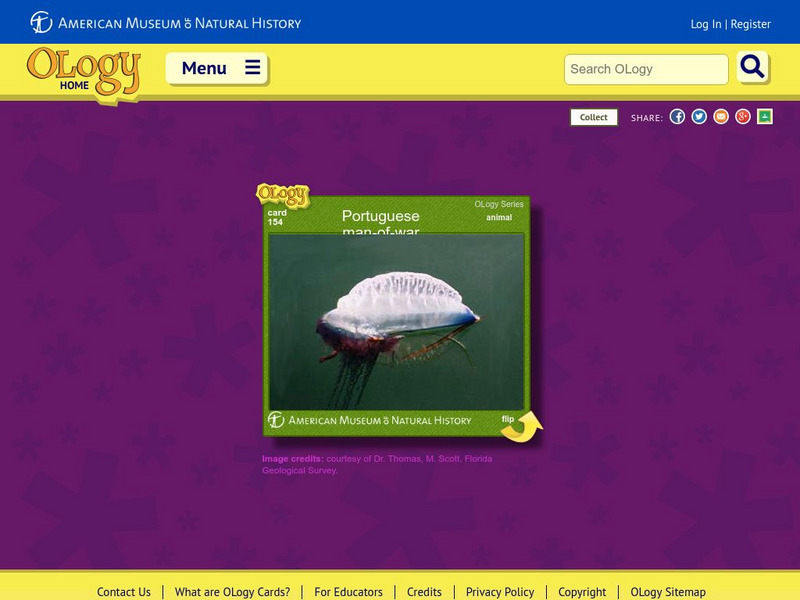
American Museum of Natural History
American Museum of Natural History: Portuguese Man of War O Logy Card
Turn over this interactive card and start learning bite-size pieces of useful information about the Portuguese man-of-war, such as its diet, habitat, and physical characteristics.
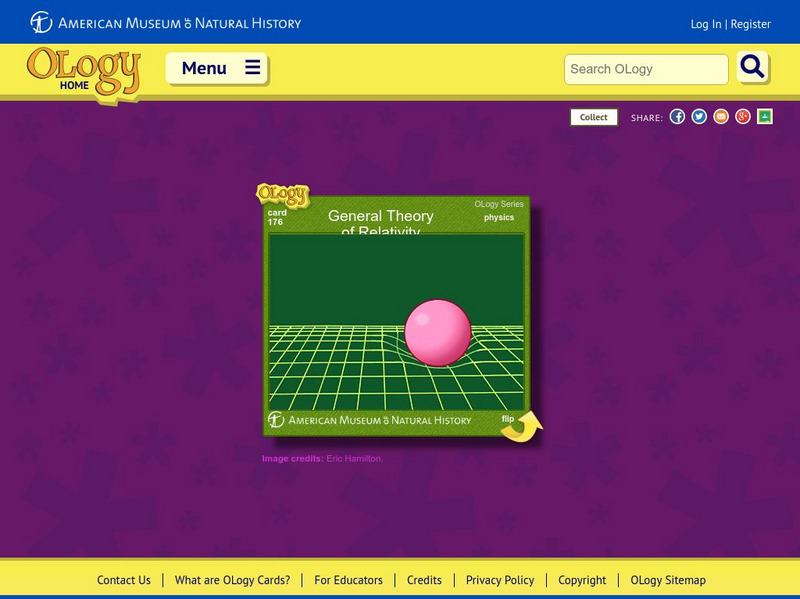
American Museum of Natural History
American Museum of Natural History: General Theory of Relativity O Logy Card
Einstein's general theory of relativity is the subject of this interactive OLogy card. Turn it over to find fast facts, questions and answers, and other bite-size pieces of information about the theory.
American Museum of Natural History
American Museum of Natural History: Dinosaurs: Theropod Biomechanics
How fast could a Tyrannosaurus rex really run? Visitors to this resource will see how scientists use theropod biomechanics to simulate the movement of these large dinosaurs.