Hi, what do you want to do?





Smithsonian Institution
National Museum of Natural History: American Mammals: Hubbs's Beaked Whale
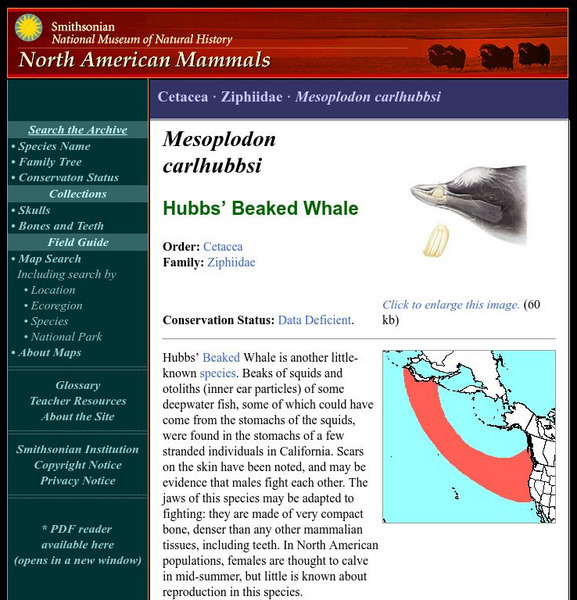
Hubbs's beaked whale is another little-known species. Beaks of squids and otoliths (inner ear particles) of some deepwater fish, some of which could have come from the stomachs of the squids, were found in the stomachs of a few stranded...
Smithsonian Institution
National Museum of Natural History: American Mammals: Lodgepole Chipmunk
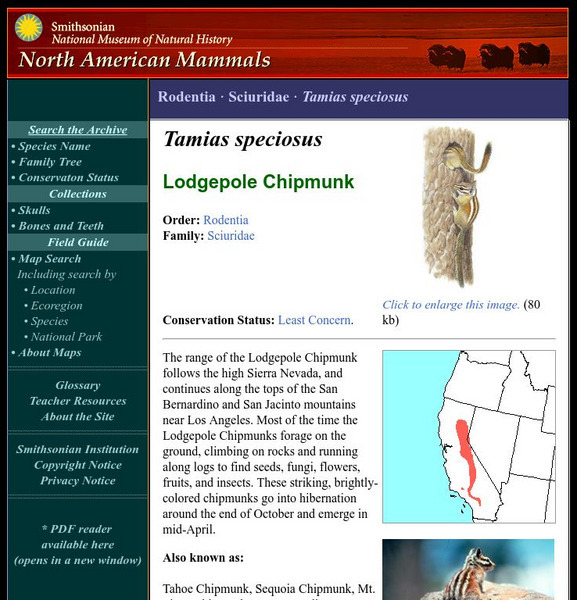
The range of the Lodgepole Chipmunk follows the high Sierra Nevada, and continues along the tops of the San Bernardino and San Jacinto mountains near Los Angeles. Most of the time the Lodgepole Chipmunks forage on the ground, climbing on...
Smithsonian Institution
National Museum of Natural History: American Mammals: Llano Pocket Gopher
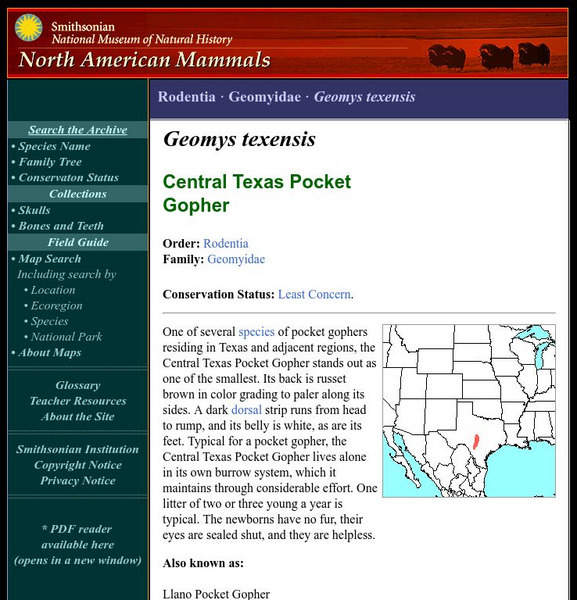
One of several species of pocket gophers residing in Texas and adjacent regions, the Llano Pocket Gopher stands out as one of the smallest. Its back is russet brown in color grading to paler along its sides. Learn more about the Geomys...
Smithsonian Institution
National Museum of Natural History: American Mammals: Little Brown Bat
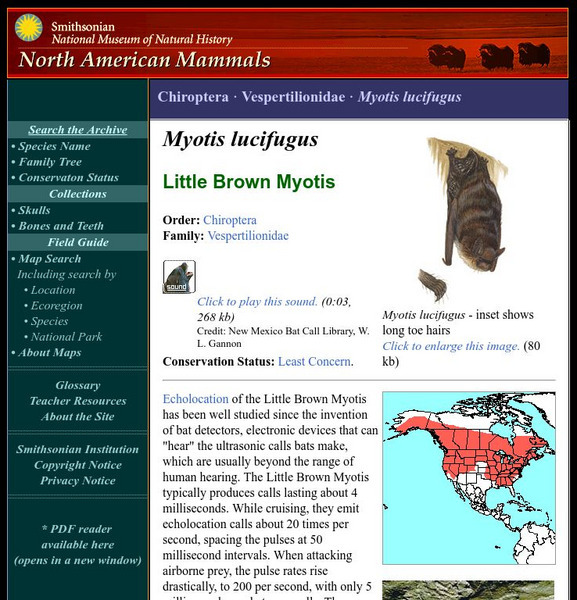
Echolocation of little brown bats has been well studied since the invention of bat detectors, electronic devices that can "hear" the ultrasonic calls bats make, which are usually beyond the range of human hearing. Little brown bats...
Smithsonian Institution
National Museum of Natural History: American Mammals: Western Pocket Gopher
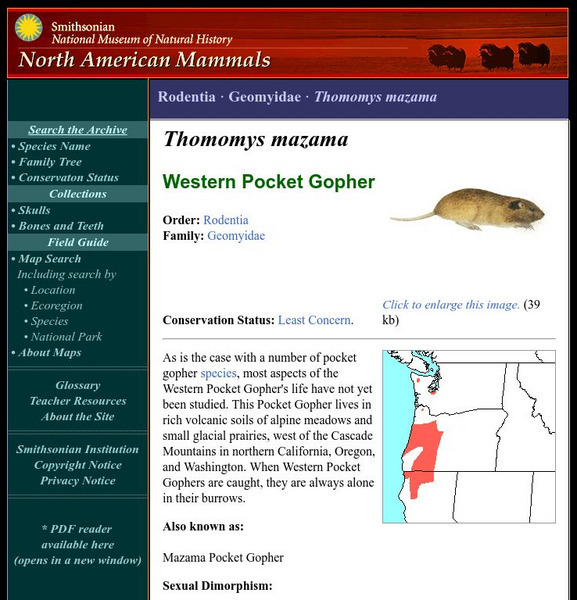
As is the case with a number of pocket gopher species, most aspects of the Western Pocket Gopher's life have not yet been studied. This Pocket Gopher lives in rich volcanic soils of alpine meadows and small glacial prairies, west of the...
Smithsonian Institution
National Museum of Natural History: American Mammals: Utah Prairie Dog
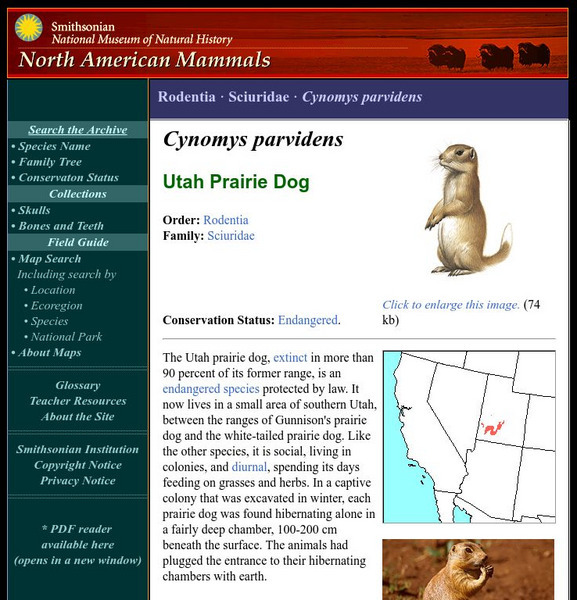
The Utah prairie dog, extinct in more than 90 percent of its former range, is an endangered species protected by law. It now lives in a small area of southern Utah, between the ranges of Gunnison's prairie dog and the white-tailed...
Smithsonian Institution
National Museum of Natural History: American Mammals: White Tailed Prairie Dog
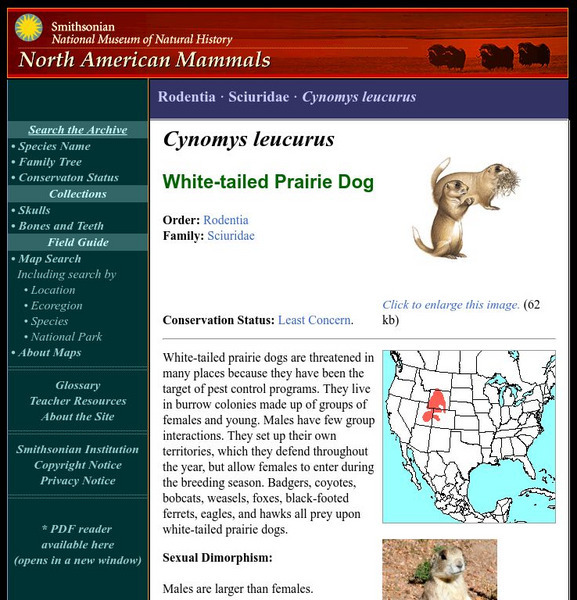
White-tailed prairie dogs are threatened in many places because they have been the target of pest control programs. They live in burrow colonies made up of groups of females and young. Learn more about the Cynomys leucurus, more commonly...
Smithsonian Institution
National Museum of Natural History: American Mammals: Allen's Big Eared Bat
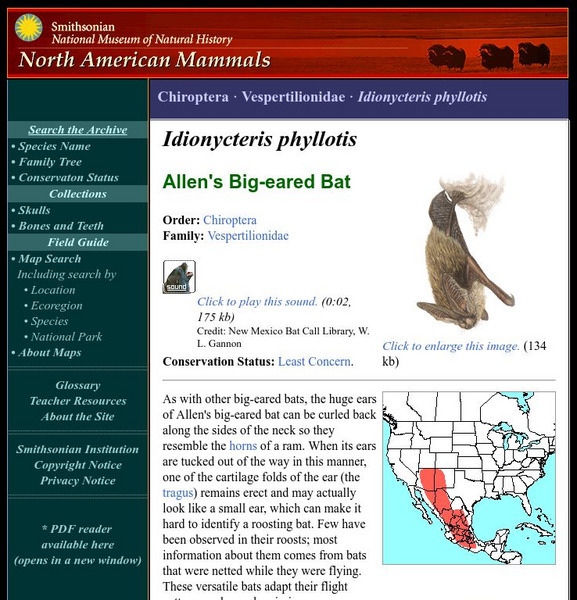
As with other big-eared bats, the huge ears of Allen's big-eared bat can be curled back along the sides of the neck so they resemble the horns of a ram. When its ears are tucked out of the way in this manner, one of the cartilage folds...
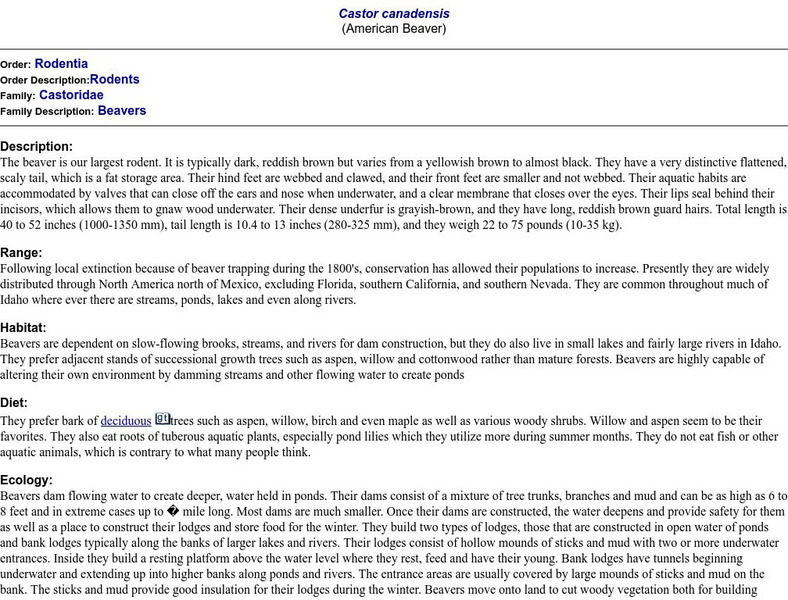
Idaho State University
Idaho Museum of Natural History: Beaver
This competent site delves into the physical characteristics, range, habitat, diet, ecology, reproduction, and conservation status of the American beaver.

Other
Museum of Western Colorado
This site contains information/links to artifacts, photographs, Native Americans, the Old West, facts about the 20th century, and dinosaur-rich geography.
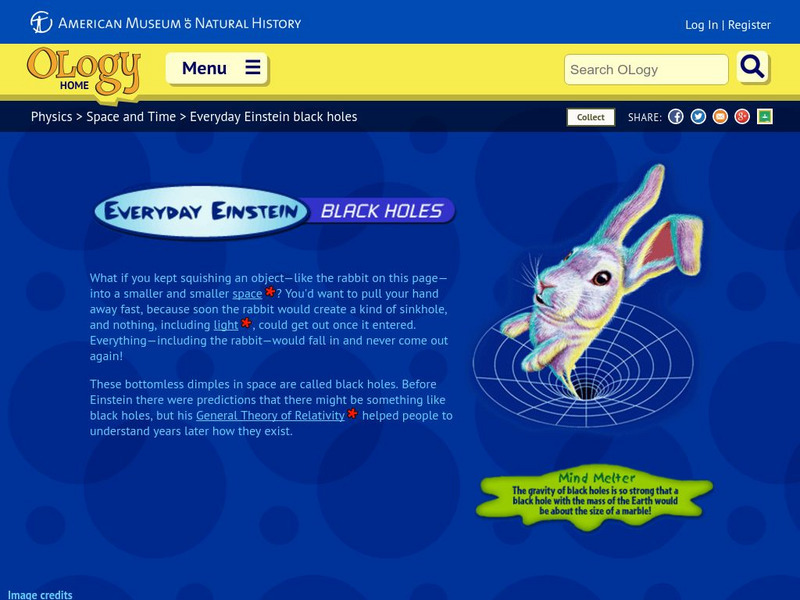
American Museum of Natural History
American Museum of Natural History: O Logy: Black Holes
This is a brief explanation of black holes. Click the starred words to see interactive flashcards with more information.
American Museum of Natural History
American Museum of Natural History: Annelida
Basic facts about segmented worms: their size, number of species, where they typically live, ecological roles, and human uses.
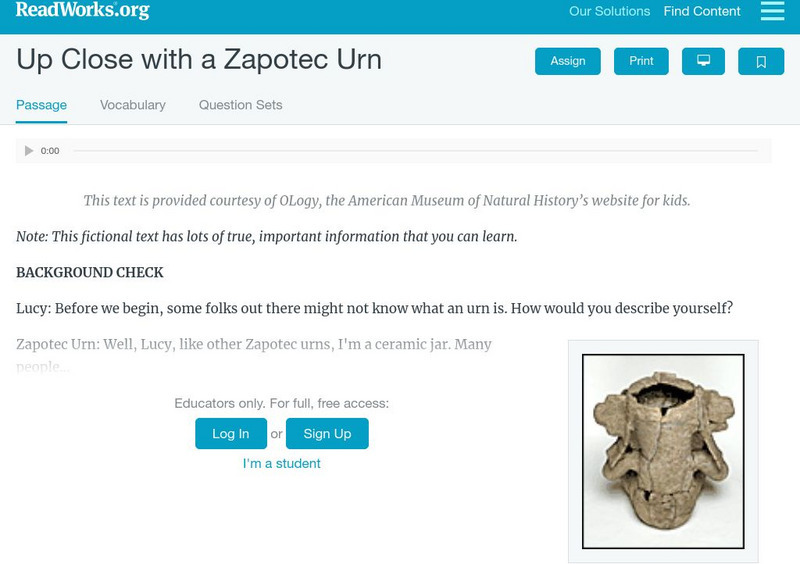
Read Works
Read Works: Up Close With a Zapotec Urn
[Free Registration/Login Required] This ReadWorks reading from the American Museum of Natural Anthropology's website called OLogy provides a curator's interview with an Zapotec urn. Visual cues are provided to support the passage, and...
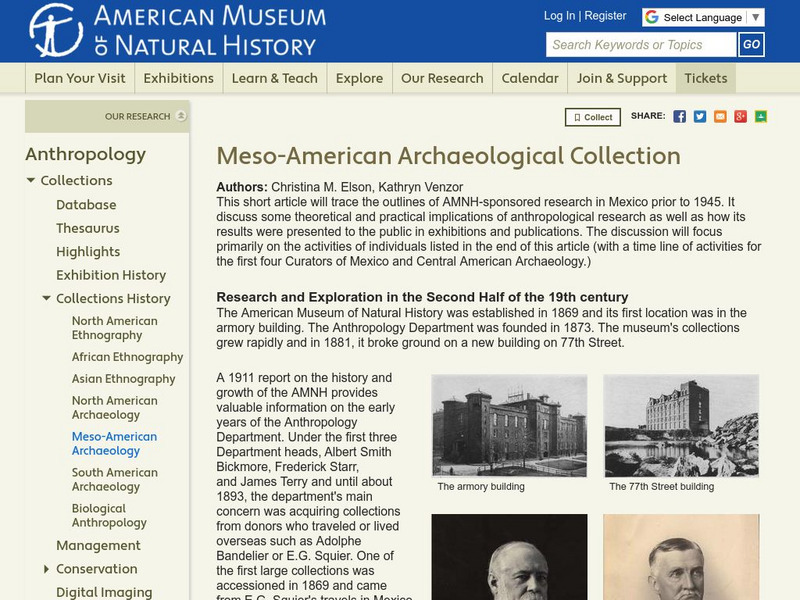
American Museum of Natural History
American Museum of Natural History: Meso American Archaeology
This short article will trace the outlines of AMNH-sponsored research in Mexico prior to 1945. It discuss some theoretical and practical implications of anthropological research as well as how its results were presented to the public in...
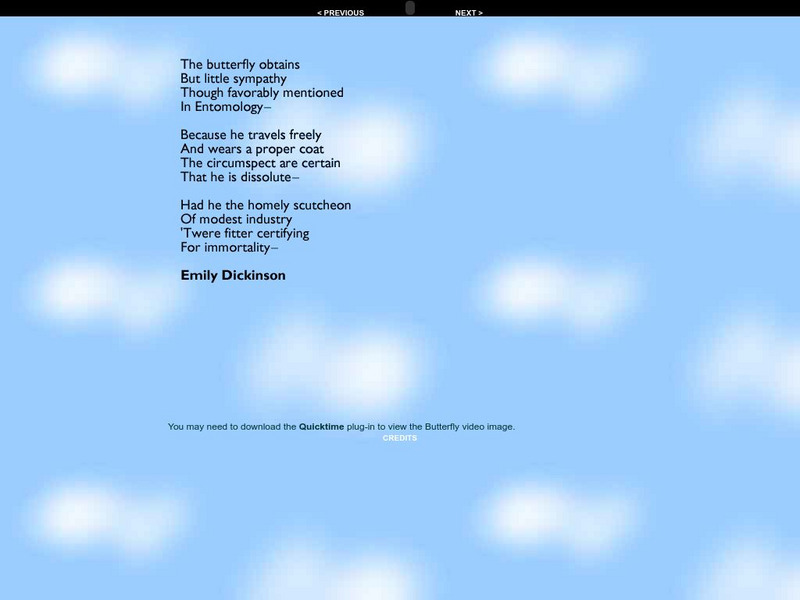
American Museum of Natural History
American Museum of Natural History: Imagine Nature: Dickinson: "The Butterfly"
Text of Dickinson's poem about butterflies illustrated with a film clip of a butterfly in close-up detail.
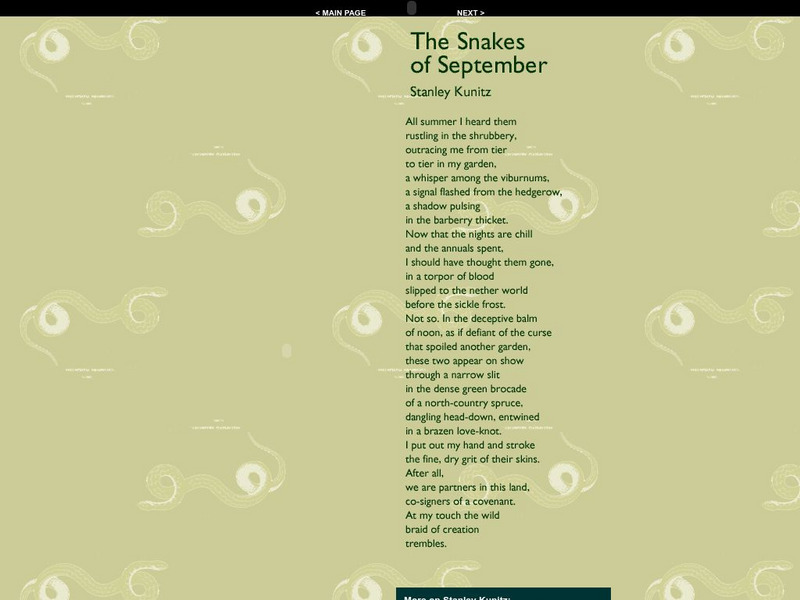
American Museum of Natural History
American Museum of Natural History: Imagine Nature: Kunitz: Snakes of September
Text of Stanley Kunitz's "The Snakes of September" with links to an audio recording of the poem read by the author and to an interview with the poet about his experience as America's poet laureate, among other things.
American Museum of Natural History
American Museum of Natural History: Amazing Albedo
This instructional activity is a lab in which students use thermometers, white and dark paper, and lamps to measure differences in albedo between the light and dark materials. Connections are made to albedo in Antarctica.
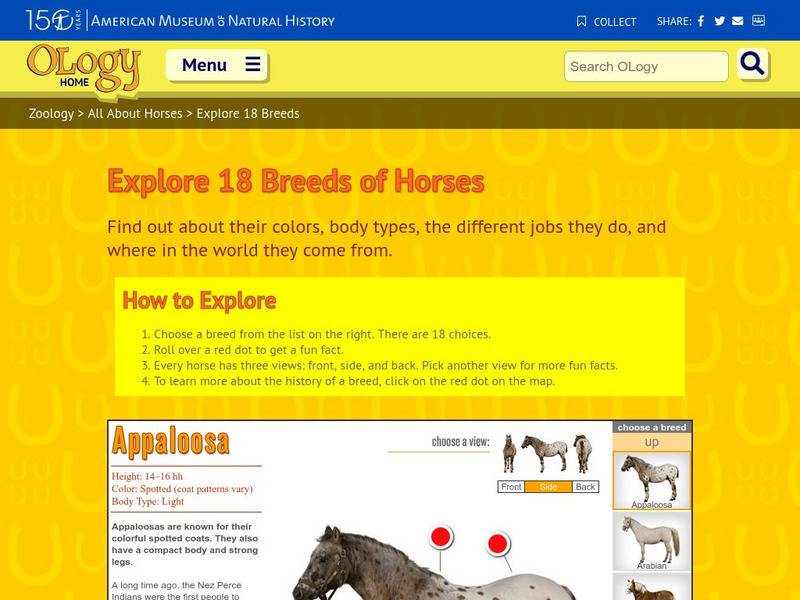
American Museum of Natural History
American Museum of Natural History: O Logy: Beautiful Breeds: Morgan
A domestic horse breed from New England, the Morgan, is identified. Get the facts on this beautiful breed. Choose Morgan from the list on the right.

American Museum of Natural History
American Museum of Natural History: O Logy: A Sea of Questions About Mangroves
An engaging piece featuring questions that scientists ask when they are researching the seas. Click on the red asterisks and discover even more information!

Smithsonian Institution
National Museum of American History: Separate Is Not Equal: The Quest for Education
Part of a larger piece on Segregated America, this section focus is on the commitment and perseverance of African Americans in the post-Civil War South to overcome the obstacles standing in the way of an education. Offers teachers and...
Other
Natural History Museums of Los Angeles County
This site provides information on the three Natural History Museums of Los Angeles County.
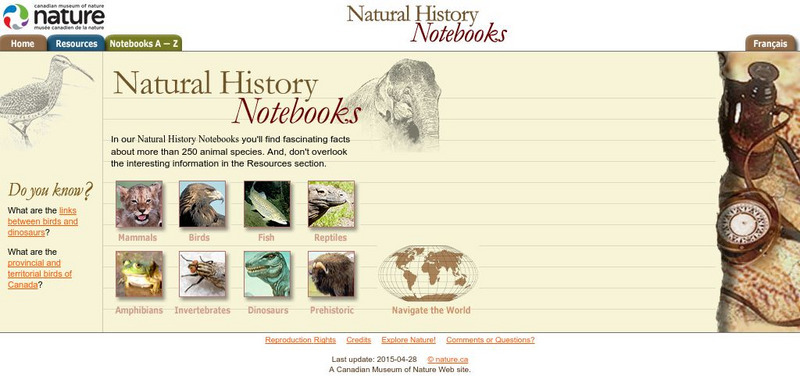
Canadian Museum of Nature
Canadian Museum of Nature: Natural History Notebooks
This site from the Canadian Museum of Nature, a natural history museum, provides short information blurbs and fun facts on over 240 different common animals categorized by type (mammals, fish, reptiles, invertebrates, amphibians,...
Smithsonian Institution
National Museum of American History: Jamestown, Quebec, Santa Fe: Three North American Beginnings
Explore the origins of Canada and the United States as Jamestown, Quebec, and Santa Fe celebrate their 400th anniversary.
Smithsonian Institution
National Museum of American History: Three Mile Island the Inside Story
This Web site was created to provide more information about the Three Mile Island nuclear power plant; about the course of the accident there; about the steps?extending over almost 15 years?through which the nature and extent of the...