Hi, what do you want to do?





Smithsonian Institution
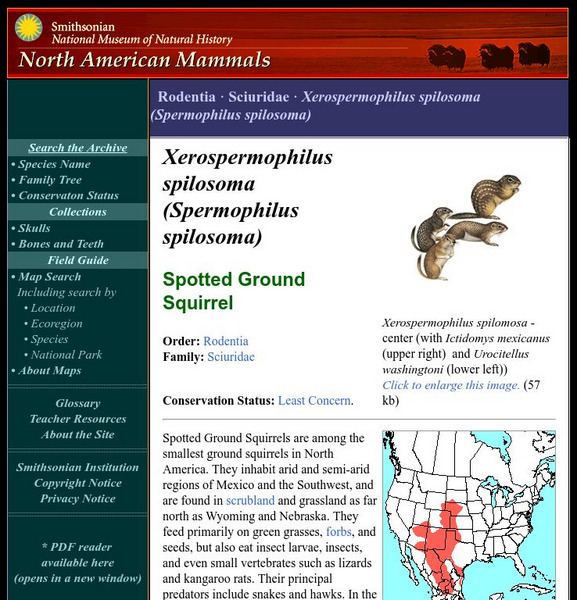
National Museum of Natural History: American Mammals: Spotted Ground Squirrel
Spotted Ground Squirrels are among the smallest ground squirrels in North America. They inhabit arid and semi-arid regions of Mexico and the Southwest and are found in scrubland and grassland as far north as Wyoming and Nebraska. Learn...
Smithsonian Institution
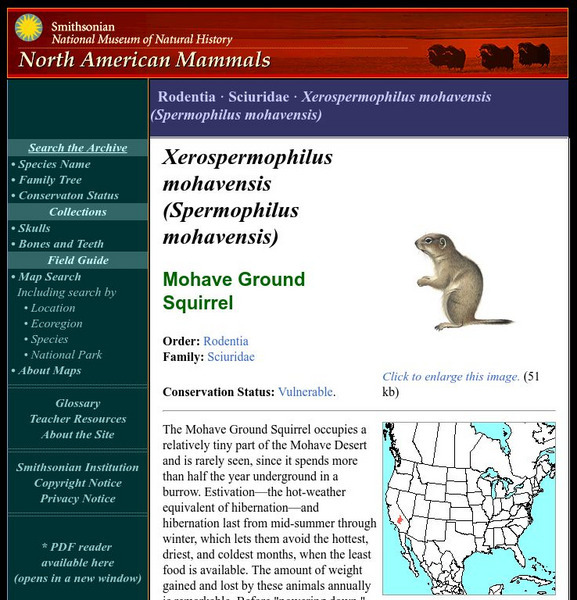
National Museum of Natural History: American Mammals: Mohave Ground Squirrel
The Mohave Ground Squirrel occupies a relatively tiny part of the Mohave Desert and is rarely seen since it spends more than half the year underground in a burrow. Estivation, the hot-weather equivalent of hibernation, and hibernation...
Smithsonian Institution
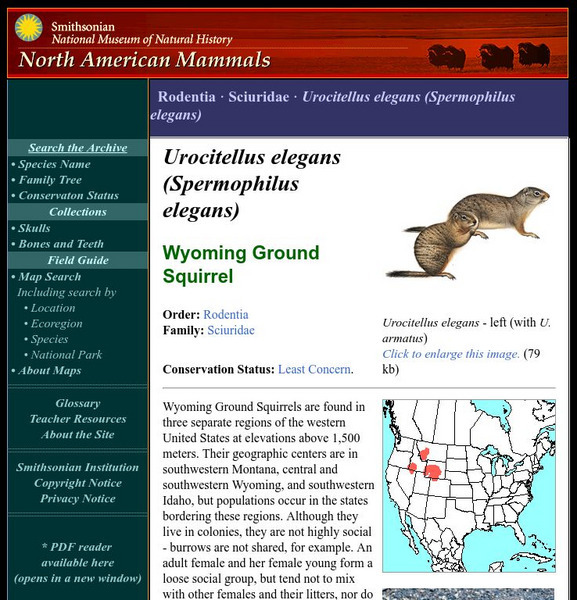
National Museum of Natural History: American Mammals: Wyoming Ground Squirrel
Wyoming Ground Squirrels are found in three separate regions of the western United States at elevations above 1,500 meters. Their geographic centers are in southwestern Montana, central and southwestern Wyoming, and southwestern Idaho,...
Smithsonian Institution
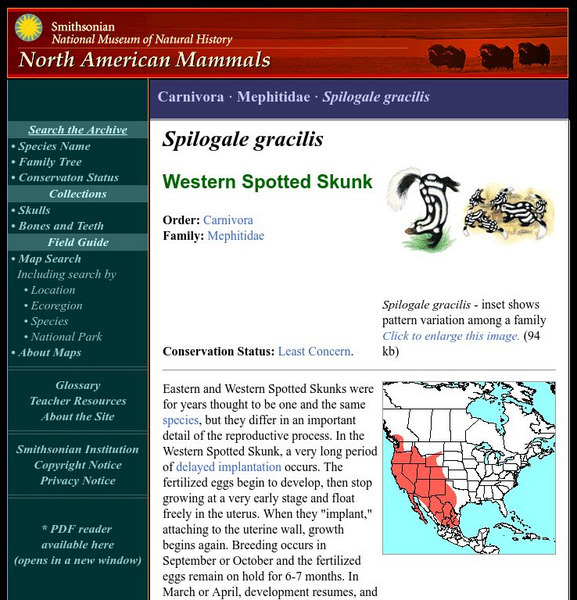
National Museum of Natural History: American Mammals: Western Spotted Skunk
Eastern and Western Spotted Skunks were for years thought to be one and the same species, but they differ in an important detail of the reproductive process. In the Western Spotted Skunk, a very long period of delayed implantation...
Smithsonian Institution
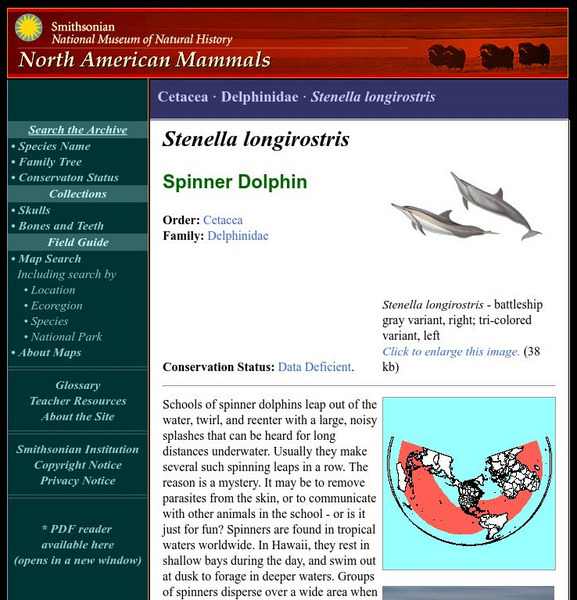
National Museum of Natural History: American Mammals: Spinner Dolphin
Schools of spinner dolphins leap out of the water, twirl, and reenter with large, noisy splashes that can be heard for long distances underwater. Usually they make several such spinning leaps in a row. Learn more about the Stenella...
Smithsonian Institution
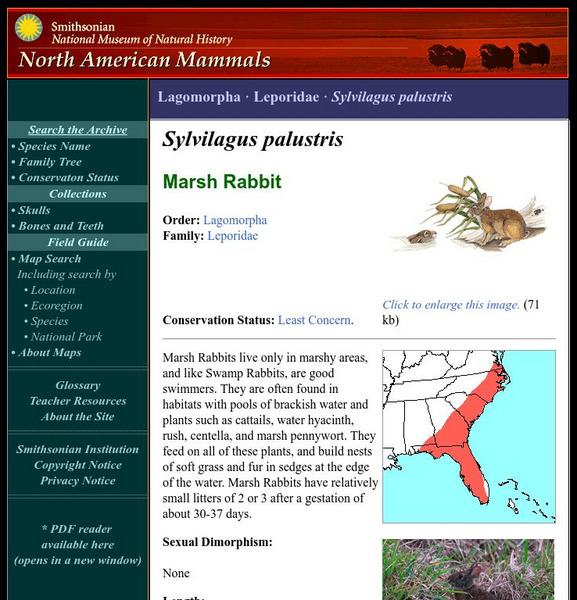
National Museum of Natural History: American Mammals: Marsh Rabbit
Marsh Rabbits live only in marshy areas, and like Swamp Rabbits, are good swimmers. They are often found in habitats with pools of brackish water and plants such as cattails, water hyacinth, rush, centella, and marsh pennywort. Learn...
Smithsonian Institution
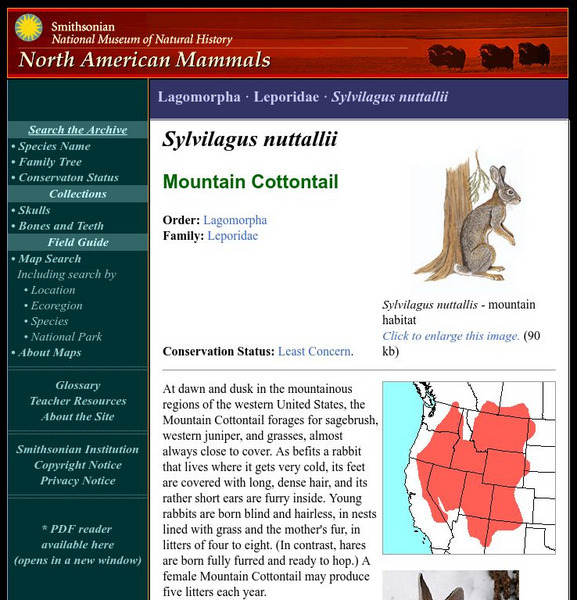
National Museum of Natural History: American Mammals: Mountain Cottontail
At dawn and dusk in the mountainous regions of the western United States, the Mountain Cottontail forages for sagebrush, western juniper, and grasses, almost always close to cover. As befits a rabbit that lives where it gets very cold,...
Smithsonian Institution
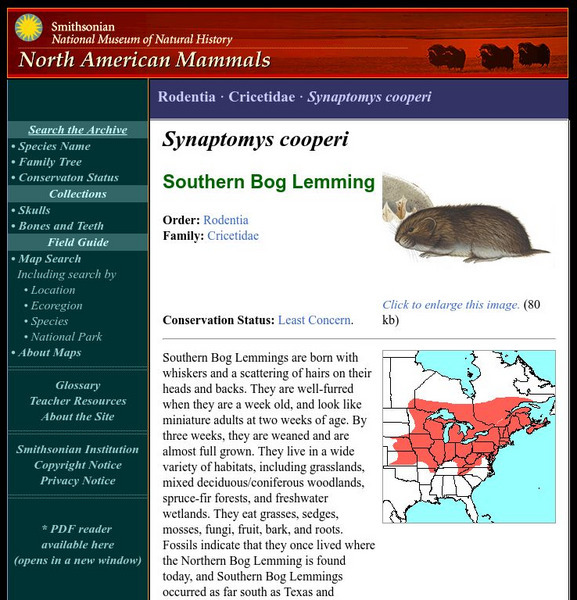
National Museum of Natural History: American Mammals: Southern Bog Lemming
Southern Bog Lemmings are born with whiskers and a scattering of hairs on their heads and backs. They are well-furred when they are a week old, and look like miniature adults at two weeks of age. Learn more about the Synaptomys cooperi,...
Smithsonian Institution
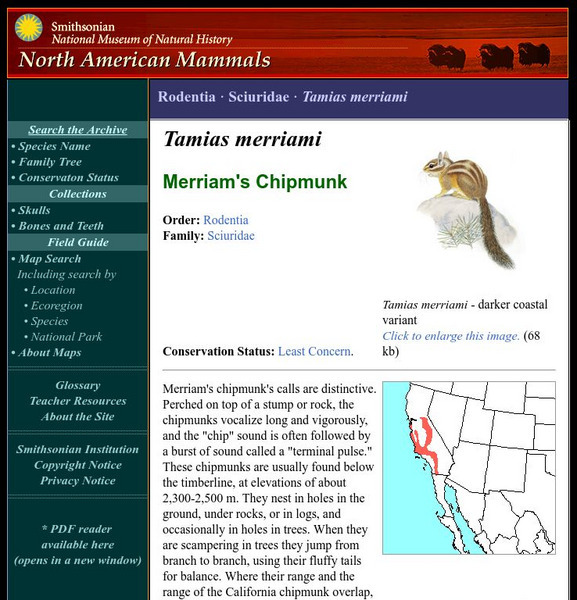
National Museum of Natural History: American Mammals: Merriam's Chipmunk
Merriam's chipmunk's calls are distinctive. Perched on top of a stump or rock, the chipmunks vocalize long and vigorously, and the "chip" sound is often followed by a burst of sound called a "terminal pulse. Learn more about the Tamias...
Smithsonian Institution
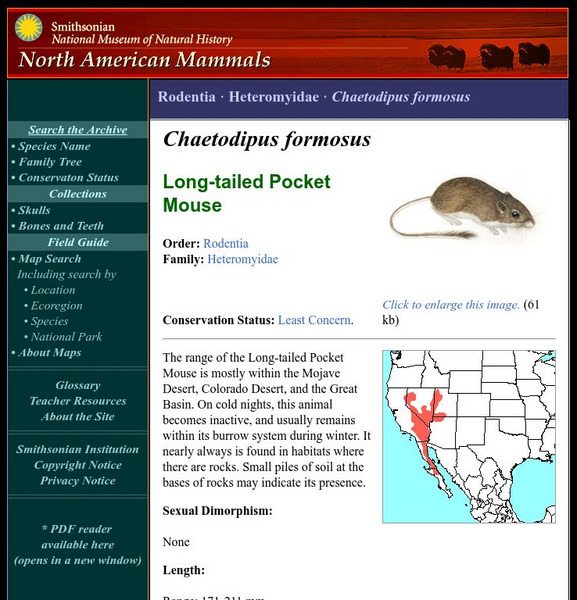
National Museum of Natural History: American Mammals: Long Tailed Pocket Mouse
The range of the Long-tailed Pocket Mouse is mostly within the Mojave Desert, Colorado Desert, and the Great Basin. On cold nights, this animal becomes inactive and usually remains within its burrow system during winter. Learn more about...
Smithsonian Institution
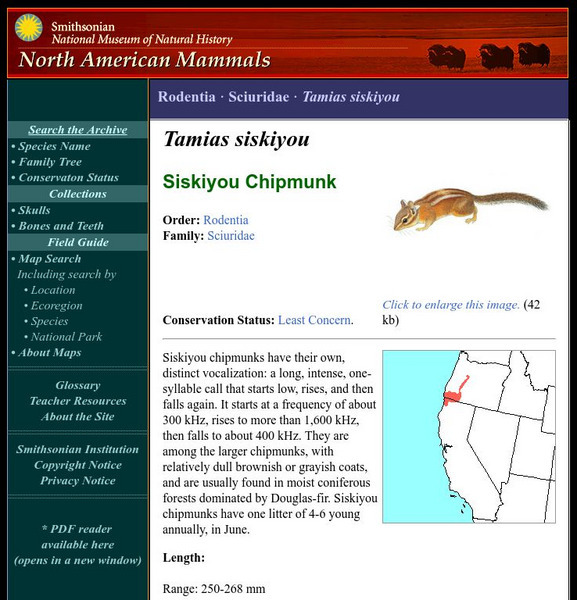
National Museum of Natural History: American Mammals: Siskiyou Chipmunk
Siskiyou chipmunks have their own, distinct vocalization: a long, intense, one-syllable call that starts low, rises, and then falls again. It starts at a frequency of about 300 kHz, rises to more than 1,600 kHz, then falls to about 400...
Smithsonian Institution
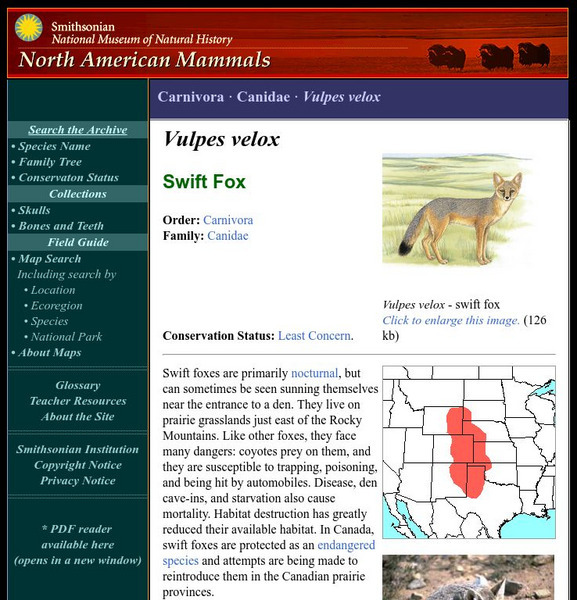
National Museum of Natural History: American Mammals: Swift Fox
Swift foxes are primarily nocturnal, but can sometimes be seen sunning themselves near the entrance to a den. They live on prairie grasslands just east of the Rocky Mountains. Learn more about the Vulpes velox, more commonly known as a...
Smithsonian Institution
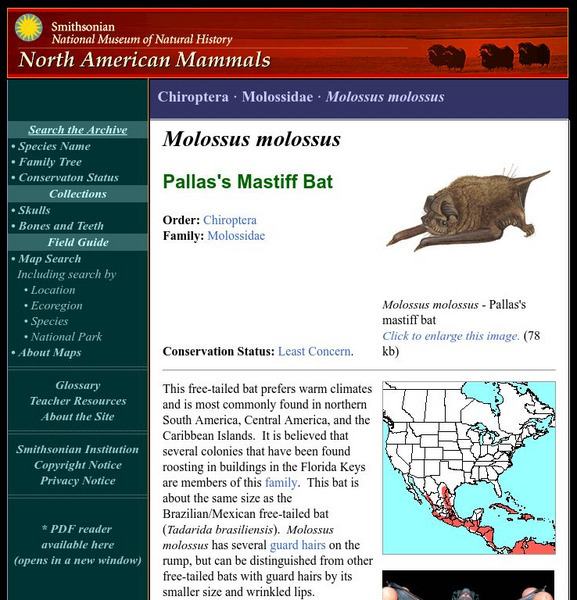
National Museum of Natural History: American Mammals: Pallas's Mastiff Bat
This free-tailed bat prefers warm climates and is most commonly found in northern South America, Central America, and the Caribbean Islands. It is believed that several colonies that have been found roosting in buildings in the Florida...

Smithsonian Institution
National Museum of Natural History: American Mammals: North Pacific Right Whale
The right whales have been driven nearly to extinction as the species preferred by commercial whalers and have been hunted in spite of international bans. There are perhaps several hundred in the western Pacific, and perhaps only a...
Smithsonian Institution
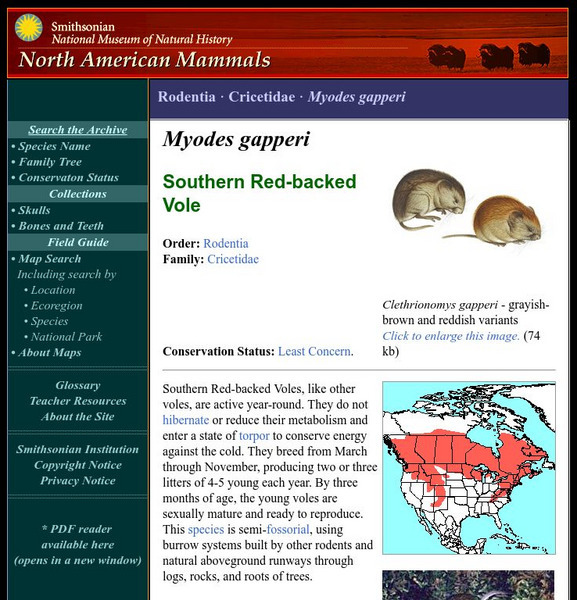
National Museum of Natural History: American Mammals: Southern Red Backed Vole
Southern Red-backed Voles, like other voles, are active year-round. They do not hibernate or reduce their metabolism and enter a state of torpor to conserve energy against the cold. Learn more about the Clethrionomys gapperi, more...
Smithsonian Institution
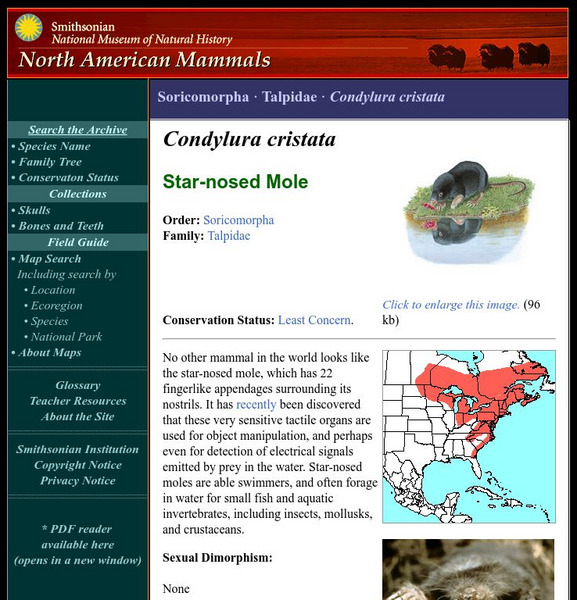
National Museum of Natural History: American Mammals: Star Nosed Mole
No other mammal in the world looks like the star-nosed mole, which has 22 fingerlike appendages surrounding its nostrils. It has recently been discovered that these very sensitive tactile organs are used for object manipulation, and...
Smithsonian Institution
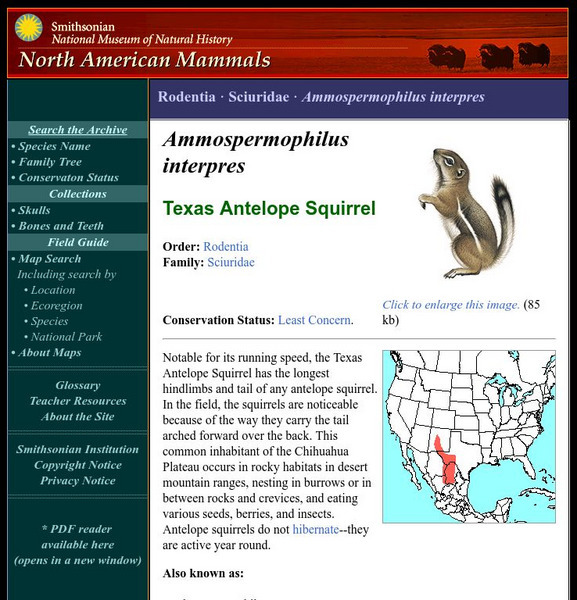
National Museum of Natural History: American Mammals: Texas Antelope Squirrel
Notable for its running speed, the Texas Antelope Squirrel has the longest hindlimbs and tail of any antelope squirrel. In the field, the squirrels are noticeable because of the way they carry the tail arched forward over the back. Learn...
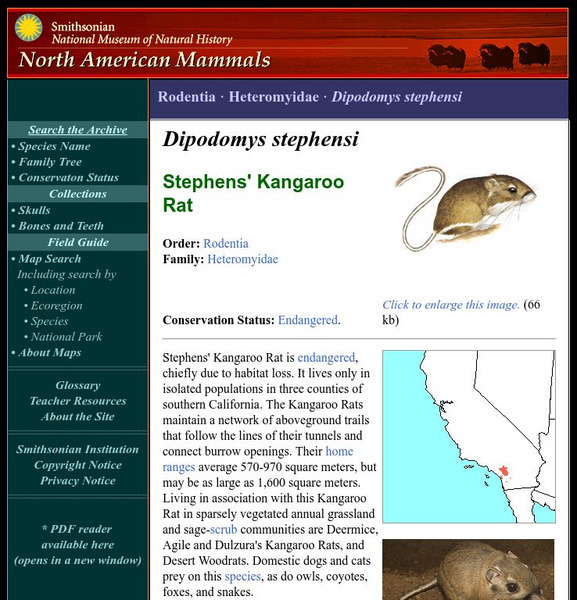
Smithsonian Institution
National Museum of Natural History: American Mammals: Stephen's Kangaroo Rat
Stephen's Kangaroo Rat is endangered, chiefly due to habitat loss. It lives only in isolated populations in three counties of southern California. Learn more about the Dipodomys stephensi, more commonly known as a Stephen's Kangaroo Rat,...
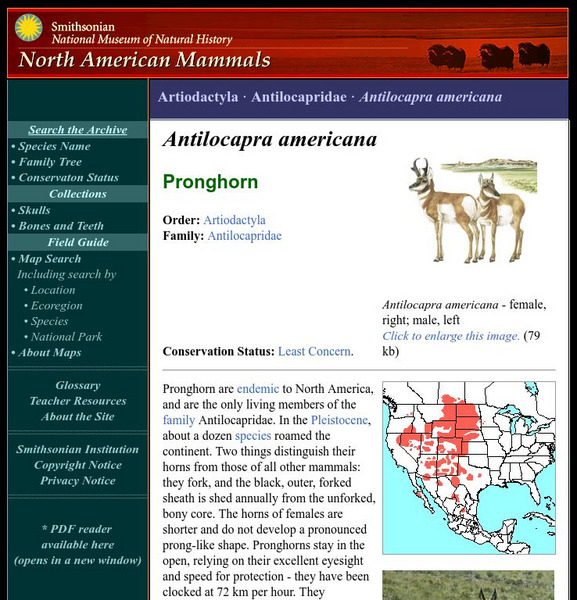
Smithsonian Institution
National Museum of Natural History: American Mammals: Pronghorn
Pronghorn are endemic to North America and are the only living members of the family Antilocapridae. In the Pleistocene, about a dozen species roamed the continent. Learn more about the Antilocapra americana, more commonly known as a...
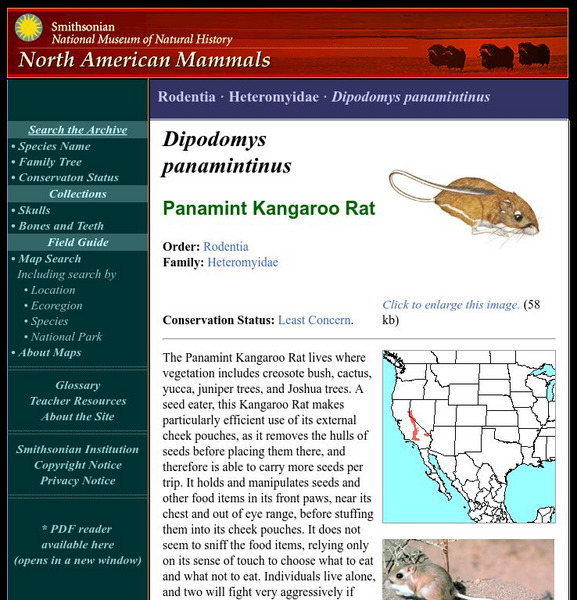
Smithsonian Institution
National Museum of Natural History: American Mammals: Panamint Kangaroo Rat
The Panamint Kangaroo Rat lives where vegetation includes creosote bush, cactus, yucca, juniper trees, and Joshua trees. A seed eater, this Kangaroo Rat makes particularly efficient use of its external cheek pouches, as it removes the...
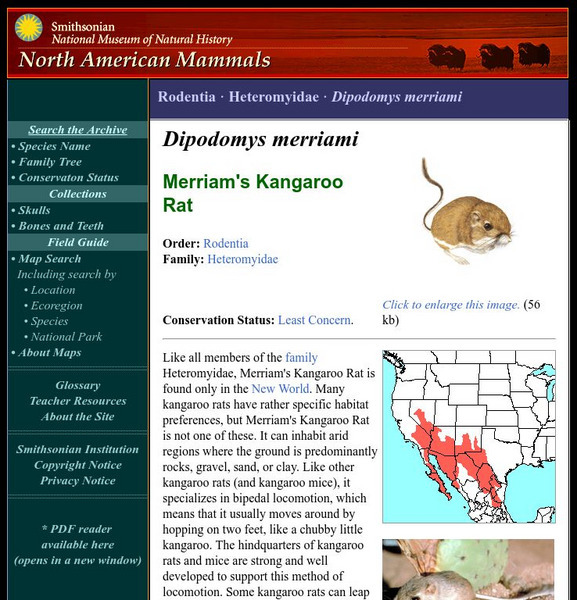
Smithsonian Institution
National Museum of Natural History: American Mammals: Merriam's Kangaroo Rat
Like all members of the family Heteromyidae, Merriam's Kangaroo Rat is found only in the New World. Many kangaroo rats have rather specific habitat preferences, but Merriam's Kangaroo Rat is not one of these. Learn more about the...

Smithsonian Institution
National Museum of Natural History: American Mammals: Ord's Kangaroo Rat
By occupying the short grass prairie of the Great Plains, and a variety of habitats where there are fine-textured, sandy soils, Ord's Kangaroo Rat has managed a truly enormous geographic distribution. The varied habitats that it occupies...

Smithsonian Institution
National Museum of Natural History: American Mammals: Texas Kangaroo Rat
Texas Kangaroo Rats live in only a few counties of north-central Texas, although the species was once also present in Oklahoma. They prefer to live where soils have a high percentage of clay. Learn more about the Dipodomys elator, more...
Smithsonian Institution
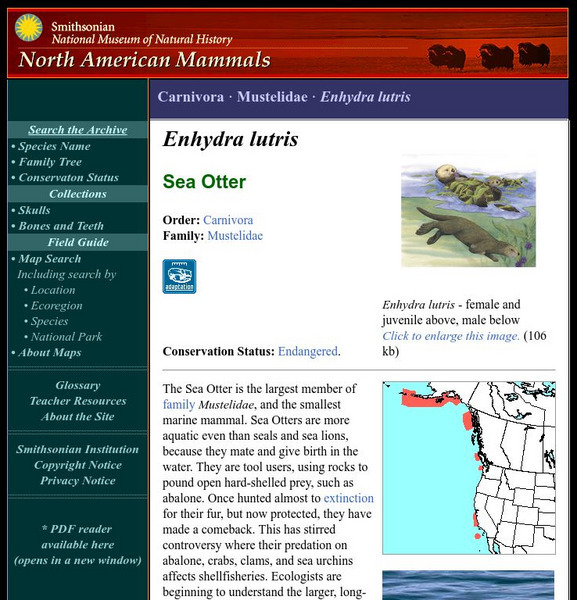
National Museum of Natural History: American Mammals: Sea Otter
The Sea Otter is the largest member of family Mustelidae, and the smallest marine mammal. Sea Otters are more aquatic even than seals and sea lions, because they mate and give birth in the water. Learn more about the Enhydra lutris, more...