Hi, what do you want to do?





Smithsonian Institution
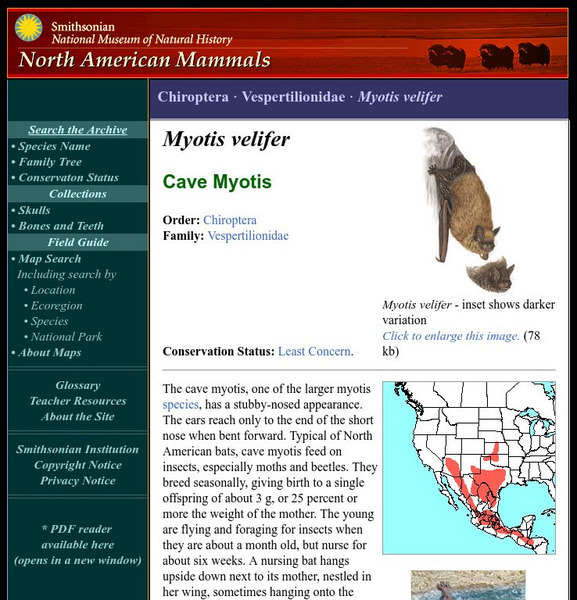
National Museum of Natural History: American Mammals: Cave Myotis
The cave myotis, one of the larger myotis species, has a stubby-nosed appearance. The ears reach only to the end of the short nose when bent forward. Learn more about the Myotis velifer, more commonly known as a Cave Myotis, in this...
Smithsonian Institution
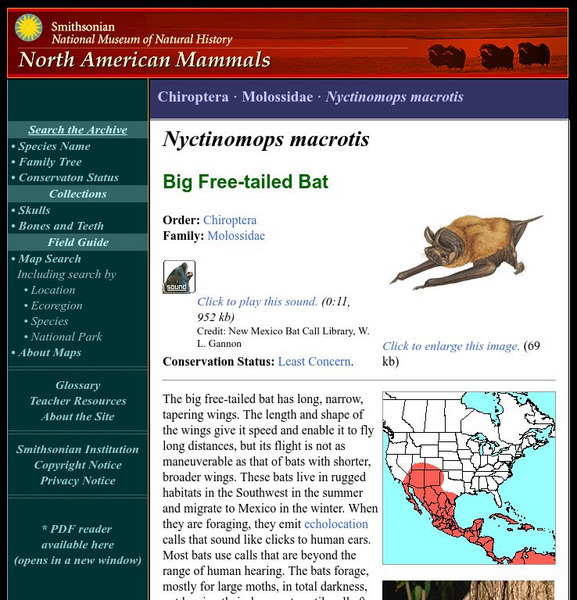
National Museum of Natural History: American Mammals: Big Free Tailed Bat
The big free-tailed bat has long, narrow, tapering wings. The length and shape of the wings give it speed and enable it to fly long distances, but its flight is not as maneuverable as that of bats with shorter, broader wings. Learn more...
Smithsonian Institution
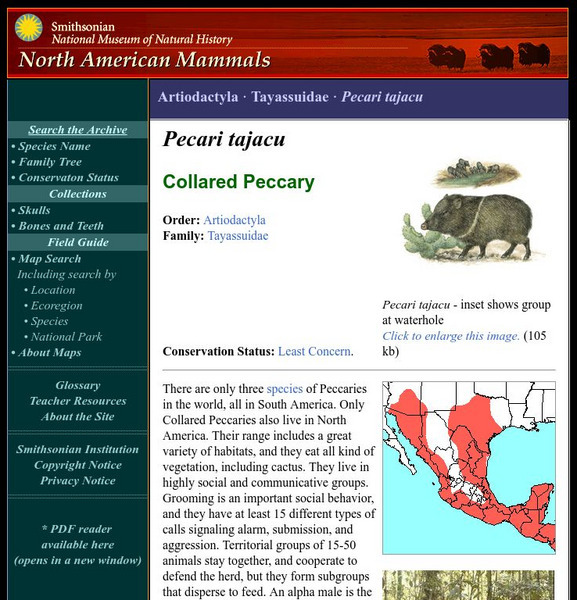
National Museum of Natural History: American Mammals: Collared Peccary
There are only three species of Peccaries in the world, all in South America. Only Collared Peccaries also live in North America. Learn more about the Pecari tajacu, more commonly known as a Collared Peccary, in this easy-to-read species...
Smithsonian Institution
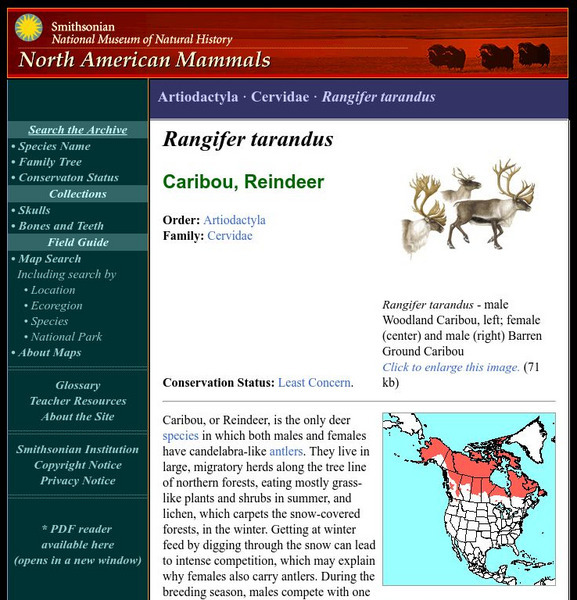
National Museum of Natural History: American Mammals: Caribou
Caribou, or Reindeer, is the only deer species in which both males and females have candelabra-like antlers. They live in large, migratory herds along the tree line of northern forests, eating mostly grass-like plants and shrubs in...
Smithsonian Institution
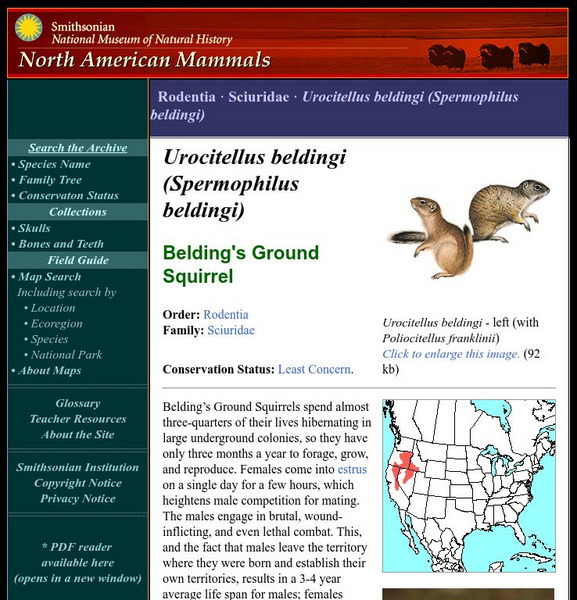
National Museum of Natural History: American Mammals: Belding's Ground Squirrel
Belding's Ground Squirrels spend almost three-quarters of their lives hibernating in large underground colonies, so they have only three months a year to forage, grow, and reproduce. Females come into estrus on a single day for a few...
Smithsonian Institution
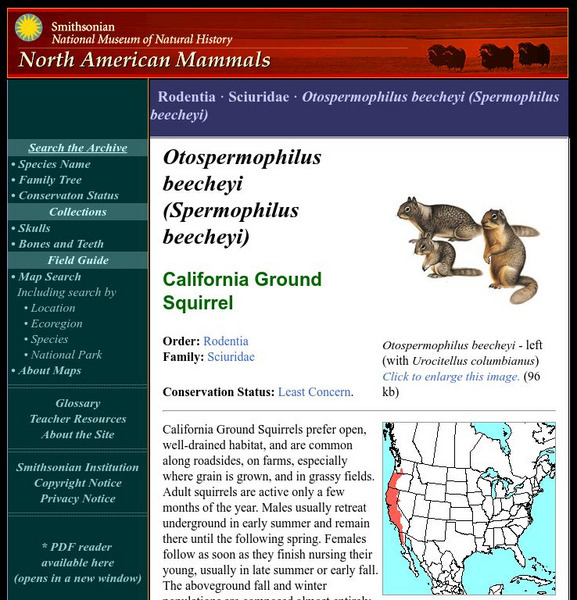
National Museum of Natural History: American Mammals: California Ground Squirrel
California Ground Squirrels prefer open, well-drained habitat, and are common along roadsides, on farms, especially where grain is grown, and in grassy fields. Adult squirrels are active only a few months of the year. Learn more about...
Smithsonian Institution
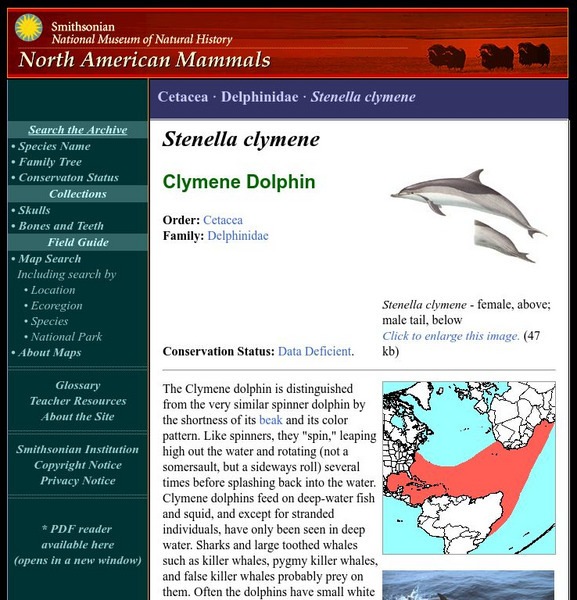
National Museum of Natural History: American Mammals: Clymene Dolphin
The Clymene dolphin is distinguished from the very similar spinner dolphin by the shortness of its beak and its color pattern. Like spinners, they "spin," leaping high out the water and rotating (not a somersault, but a sideways roll)...
Smithsonian Institution
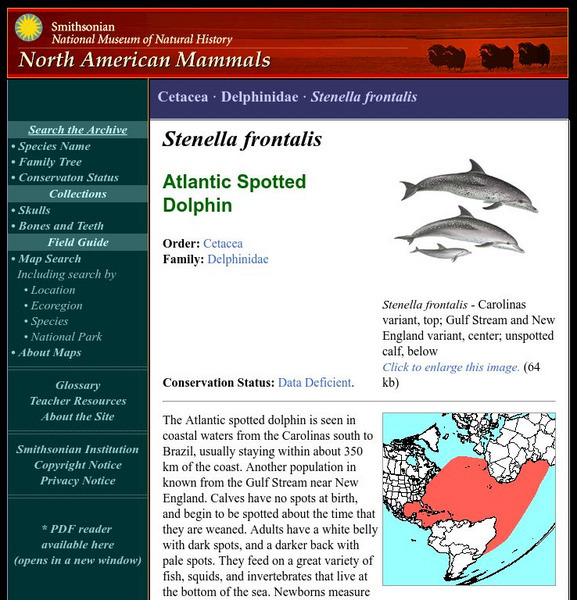
National Museum of Natural History: American Mammals: Atlantic Spotted Dolphin
The Atlantic spotted dolphin is seen in coastal waters from the Carolinas south to Brazil, usually staying within about 350 km of the coast. Another population is known from the Gulf Stream near New England. Learn more about the Stenella...
Smithsonian Institution
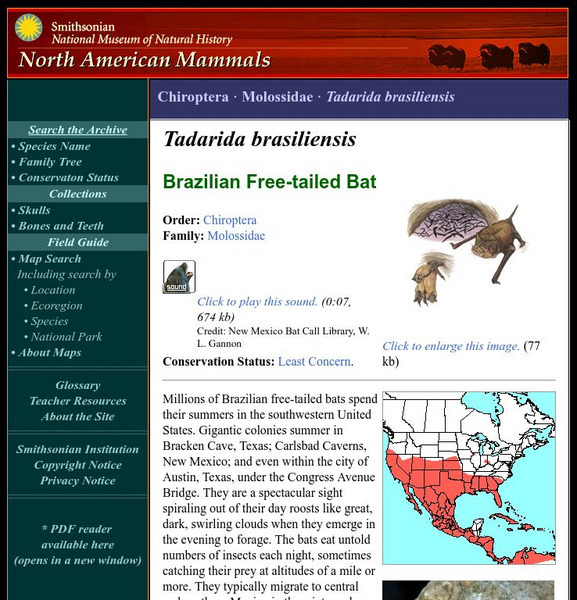
National Museum of Natural History: American Mammals: Brazilian Free Tailed Bat
Millions of Brazilian free-tailed bats spend their summers in the southwestern United States. Gigantic colonies summer in Bracken Cave, Texas; Carlsbad Caverns, New Mexico; and even within the city of Austin, Texas, under the Congress...
Smithsonian Institution
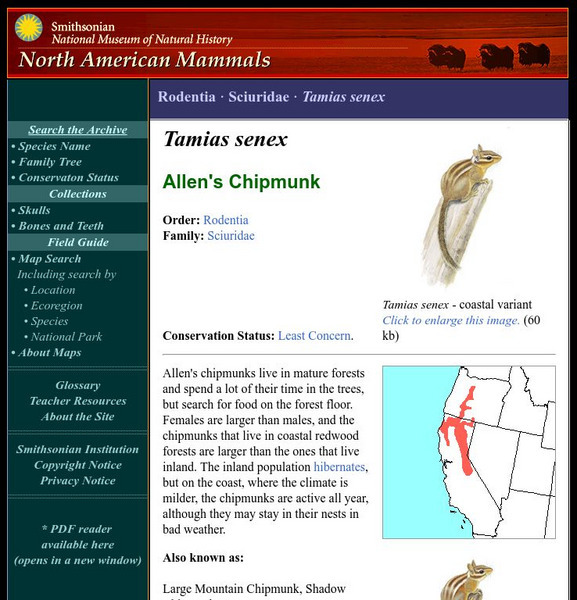
National Museum of Natural History: American Mammals: Allen's Chipmunk
Allen's chipmunks live in mature forests and spend a lot of their time in the trees, but search for food on the forest floor. Females are larger than males, and the chipmunks that live in coastal redwood forests are larger than the ones...
Smithsonian Institution
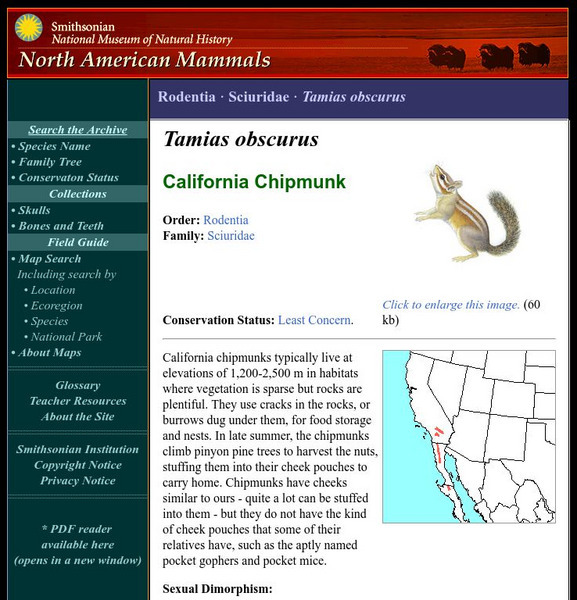
National Museum of Natural History: American Mammals: California Chipmunk
California chipmunks typically live at elevations of 1,200-2,500 m in habitats where vegetation is sparse but rocks are plentiful. They use cracks in the rocks, or burrows dug under them, for food storage and nests. Learn more about the...
Smithsonian Institution
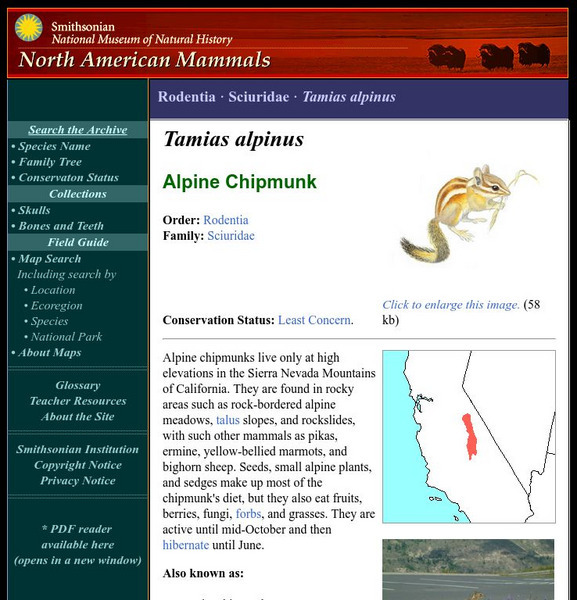
National Museum of Natural History: American Mammals: Alpine Chipmunk
Alpine chipmunks live only at high elevations in the Sierra Nevada Mountains of California. They are found in rocky areas such as rock-bordered alpine meadows, talus slopes, and rockslides, with such other mammals as pikas, ermine,...
Smithsonian Institution
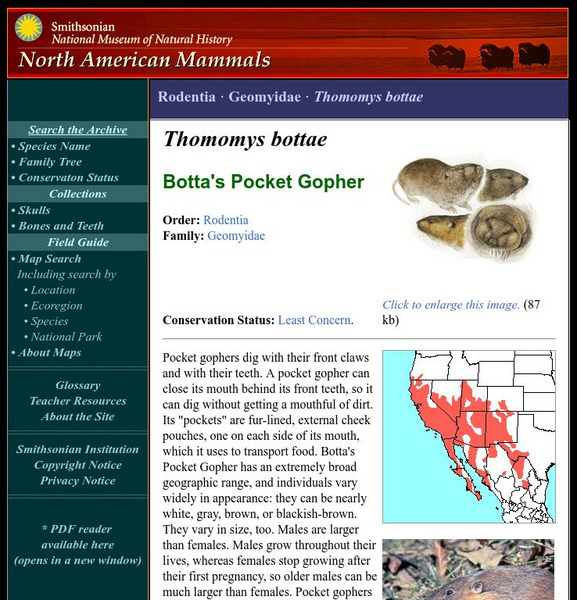
National Museum of Natural History: American Mammals: Botta's Pocket Gopher
Pocket gophers dig with their front claws and with their teeth. A pocket gopher can close its mouth behind its front teeth, so it can dig without getting a mouthful of dirt. Learn more about the Thomomys bottae, more commonly known as a...
Smithsonian Institution
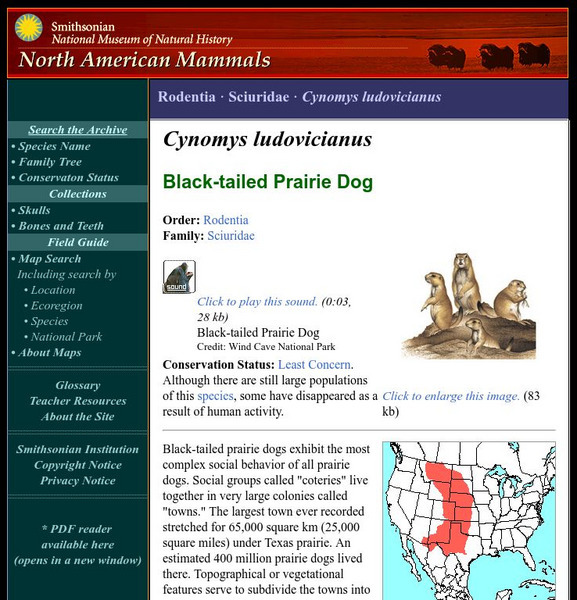
National Museum of Natural History: American Mammals: Black Tailed Prairie Dog
Black-tailed prairie dogs exhibit the most complex social behavior of all prairie dogs. Social groups called "coteries" live together in very large colonies called "towns. Learn more about the Cynomys ludovicianus, more commonly known as...
Smithsonian Institution
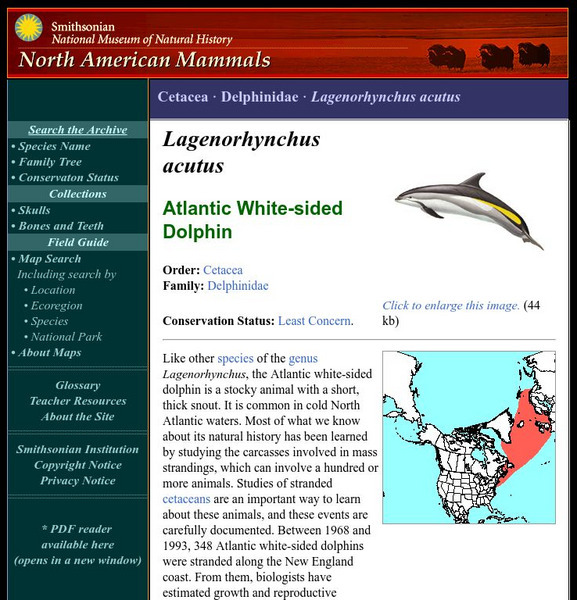
National Museum of Natural History: American Mammals: Atlantic White Sided Dolphin
Like other species of the genus Lagenorhynchus, the Atlantic white-sided dolphin is a stocky animal with a short, thick snout. It is common in cold North Atlantic waters. Learn more about the Lagenorhynchus acutus, more commonly known as...

Smithsonian Institution
National Museum of Natural History: American Mammals: Pacific White Sided Dolphin
Before the United Nations established a moratorium on the use of high seas drift nets in 1993, Pacific white-sided dolphins were frequently caught in the nets of Japanese and Korean squid fisheries. Today the species is better protected,...
Smithsonian Institution
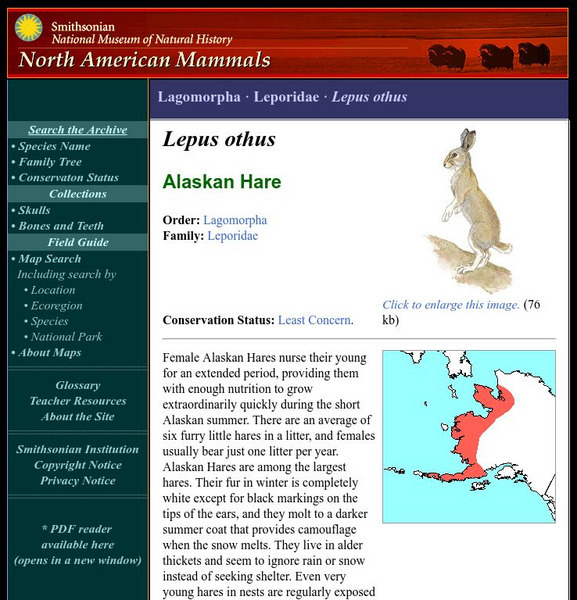
National Museum of Natural History: American Mammals: Alaskan Hare
Female Alaskan Hares nurse their young for an extended period, providing them with enough nutrition to grow extraordinarily quickly during the short Alaskan summer. There is an average of six furry little hares in a litter, and females...
Smithsonian Institution
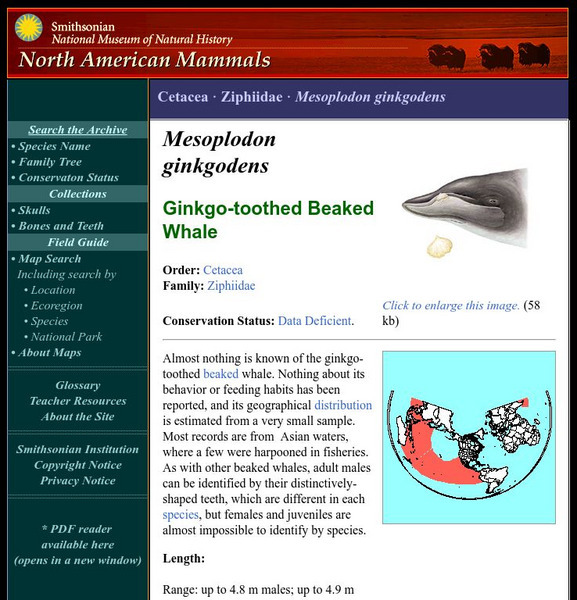
National Museum of Natural History: American Mammals: Ginkgo Toothed Beaked Whale
Almost nothing is known of the ginkgo-toothed beaked whale. Nothing about its behavior or feeding habits has been reported, and its geographical distribution is estimated from a very small sample. Learn more about the Mesoplodon...
Smithsonian Institution
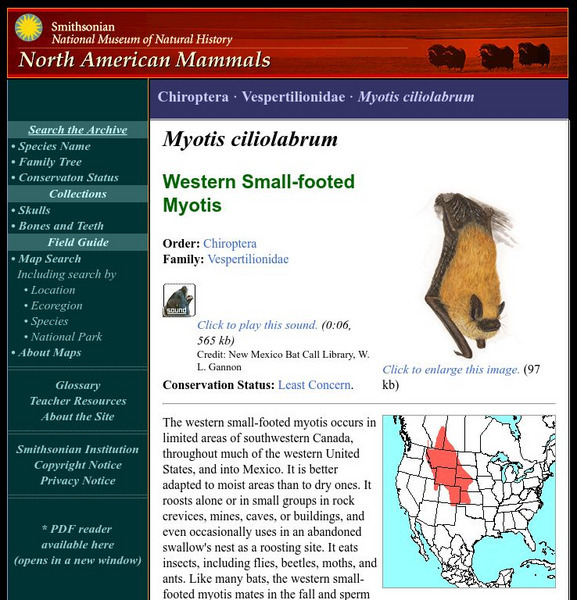
National Museum of Natural History: American Mammals: Western Small Footed Myotis
The western small-footed myotis occurs in limited areas of southwestern Canada, throughout much of the western United States, and into Mexico. It is better adapted to moist areas than to dry ones. Learn more about the Myotis ciliolabrum,...
Smithsonian Institution
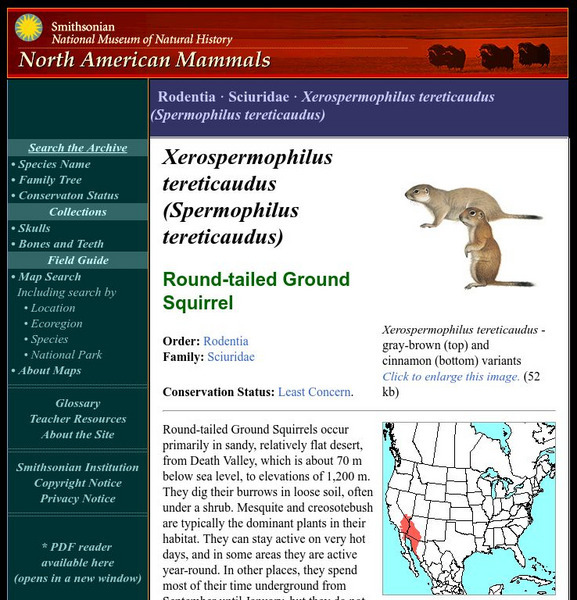
National Museum of Natural History: American Mammals: Round Tailed Ground Squirrel
Round-tailed Ground Squirrels occur primarily in sandy, relatively flat desert, from Death Valley, which is about 70 m below sea level, to elevations of 1,200 m. They dig their burrows in loose soil, often under a shrub. Learn more about...
Smithsonian Institution
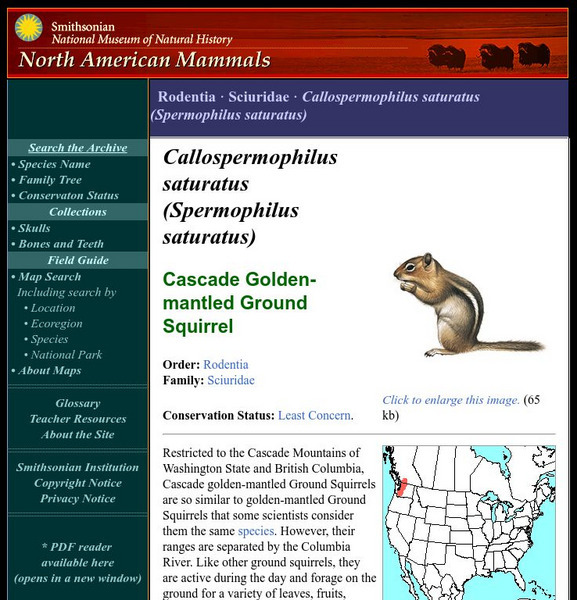
National Museum of Natural History: American Mammals: Golden Mantled Ground Squirrel
Restricted to the Cascade Mountains of Washington State and British Columbia, Cascade golden-mantled Ground Squirrels are so similar to golden-mantled Ground Squirrels that some scientists consider them the same species. However, their...
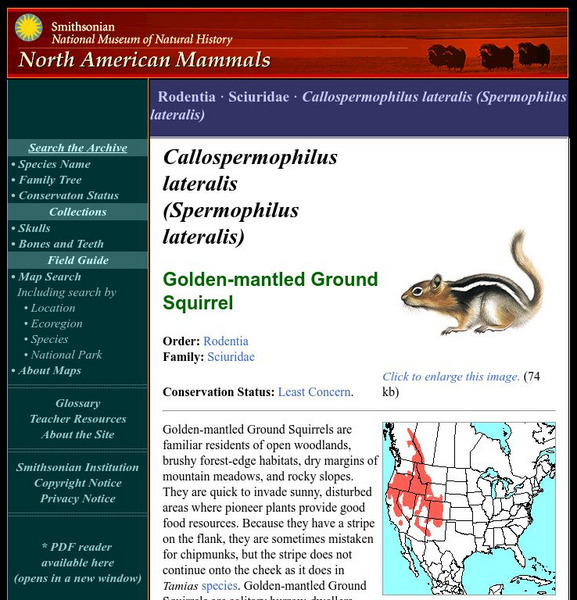
Smithsonian Institution
National Museum of Natural History: American Mammals: Golden Mantled Ground Squirrel
Golden-mantled Ground Squirrels are familiar residents of open woodlands, brushy forest-edge habitats, dry margins of mountain meadows, and rocky slopes. They are quick to invade sunny, disturbed areas where pioneer plants provide good...
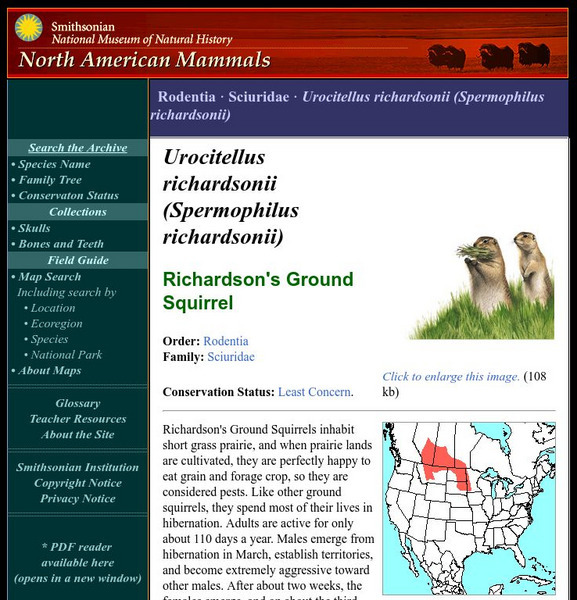
Smithsonian Institution
National Museum of Natural History: American Mammals: Richardson's Ground Squirrel
Richardson's Ground Squirrels inhabit short grass prairie, and when prairie lands are cultivated, they are perfectly happy to eat grain and forage crop, so they are considered pests. Like other ground squirrels, they spend most of their...
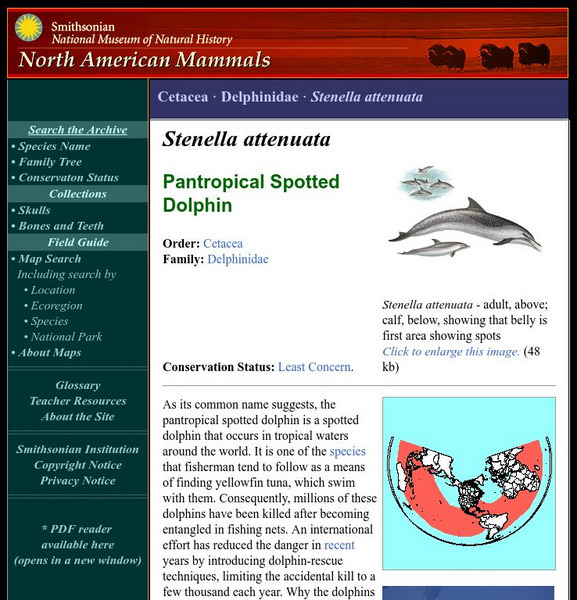
Smithsonian Institution
National Museum of Natural History: American Mammals: Pantropical Spotted Dolphin
As its common name suggests, the pantropical spotted dolphin is a spotted dolphin that occurs in tropical waters around the world. It is one of the species that fisherman tend to follow as a means of finding yellowfin tuna, which swim...