Hi, what do you want to do?





Smithsonian Institution
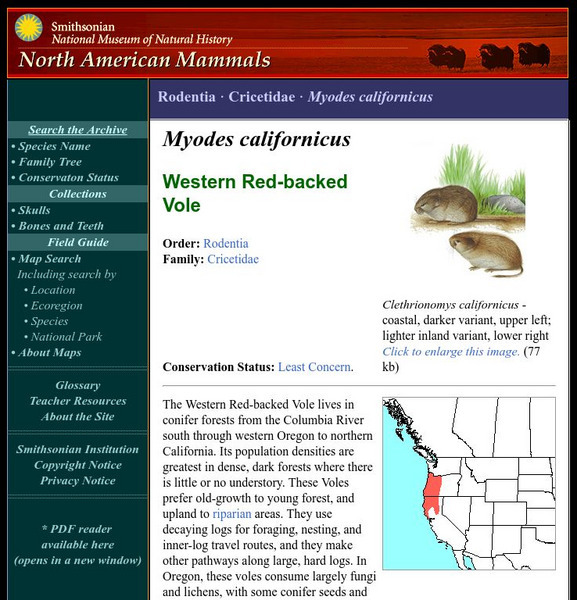
National Museum of Natural History: American Mammals: Western Red Backed Vole
The Western Red-backed Vole lives in conifer forests from the Columbia River south through western Oregon to northern California. Its population densities are greatest in dense, dark forests where there is little or no understory. Learn...
Smithsonian Institution
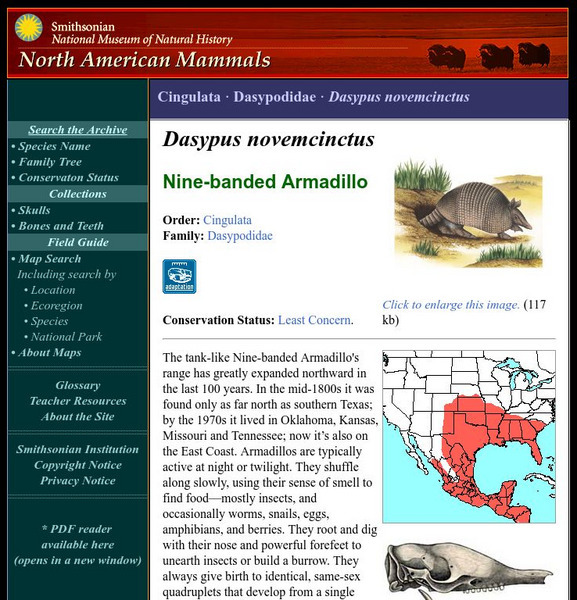
National Museum of Natural History: American Mammals: Nine Banded Armadillo
The tank-like Nine-banded Armadillo's range has greatly expanded northward in the last 100 years. In the mid-1800s it was found only as far north as southern Texas; by the 1970s it lived in Oklahoma, Kansas, Missouri, and Tennessee; now...
Smithsonian Institution
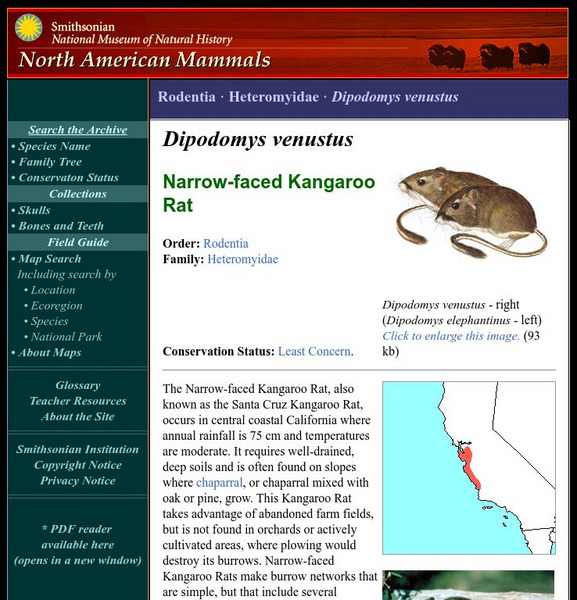
National Museum of Natural History: American Mammals: Narrow Faced Kangaroo Rat
The Narrow-faced Kangaroo Rat, also known as the Santa Cruz Kangaroo Rat, occurs in central coastal California where annual rainfall is 75 cm and temperatures are moderate. It requires well-drained, deep soils and is often found on...

Smithsonian Institution
National Museum of Natural History: American Mammals: North Atlantic Right Whale
Northern right whales were hunted for at least 800 years until they became so rare that it was no longer commercially viable to hunt them. Biology made them and southern right whales the "right" whales to hunt, especially when whaling...
Smithsonian Institution
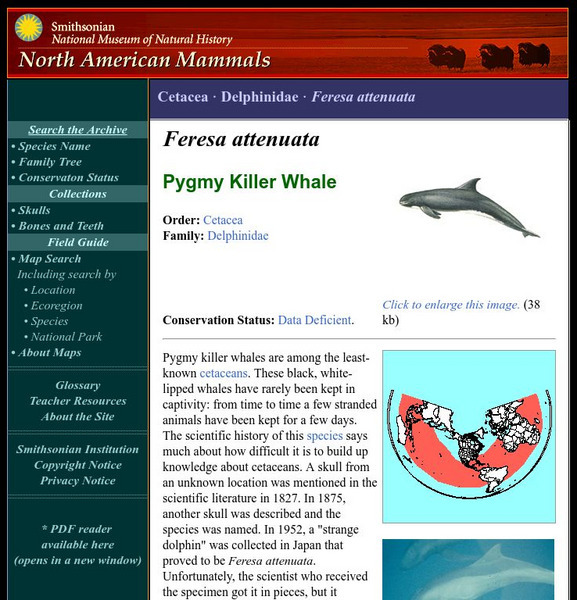
National Museum of Natural History: American Mammals: Pygmy Killer Whale
Pygmy killer whales are among the least-known cetaceans. These black, white-lipped whales have rarely been kept in captivity: from time to time a few stranded animals have been kept for a few days. Learn more about the Feresa attenuata,...
Smithsonian Institution
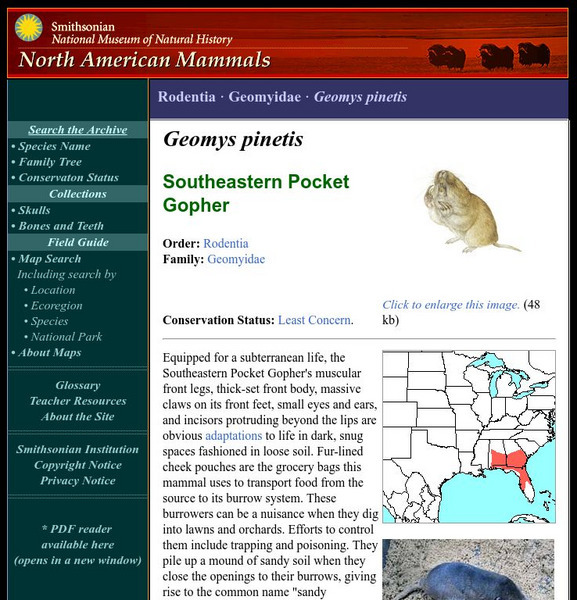
National Museum of Natural History: American Mammals: Southeastern Pocket Gopher
Equipped for a subterranean life, the Southeastern Pocket Gopher's muscular front legs, thick-set front body, massive claws on its front feet, small eyes and ears, and incisors protruding beyond the lips are obvious adaptations to life...
Smithsonian Institution
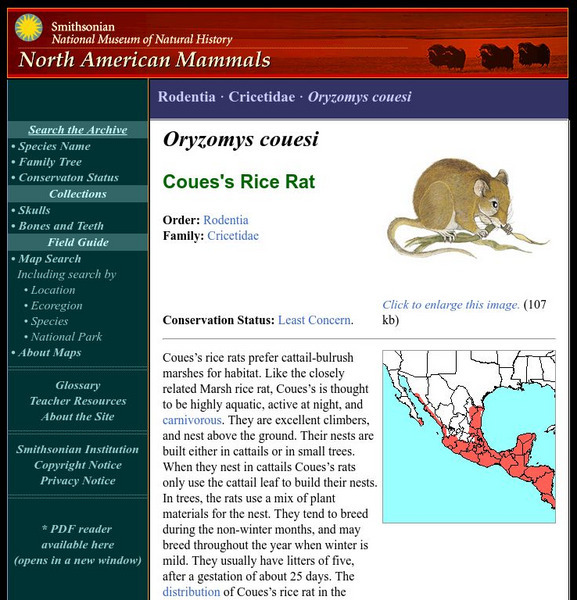
National Museum of Natural History: American Mammals: Coues's Rice Rat
Coues's rice rats prefer cattail-bulrush marshes for habitat. Like the closely related Marsh rice rat, Coues is thought to be highly aquatic, active at night, and carnivorous. Learn more about the Oryzomys couesi, more commonly known as...
Smithsonian Institution
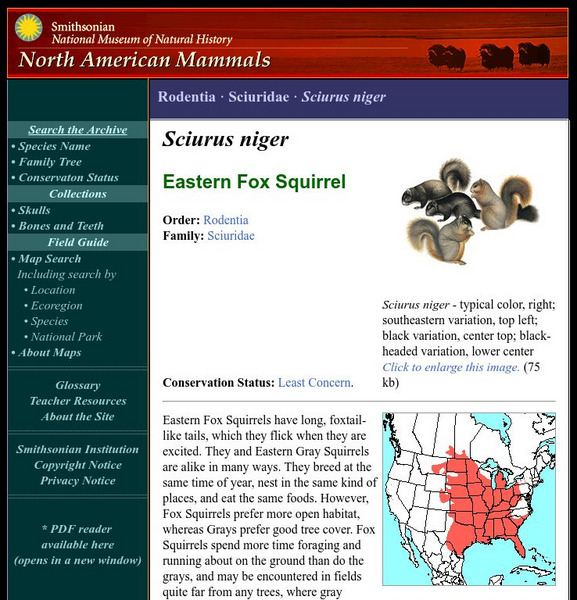
National Museum of Natural History: American Mammals: Eastern Fox Squirrel
Eastern Fox Squirrels have long, foxtail-like tails, which they flick when they are excited. They and Eastern Gray Squirrels are alike in many ways. Learn more about the Sciurus niger, more commonly known as an Eastern Fox Squirrel, in...
Smithsonian Institution
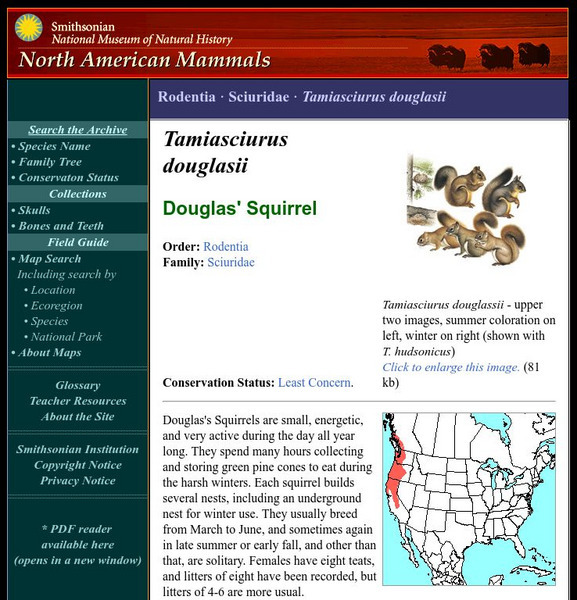
National Museum of Natural History: American Mammals: Douglas' Squirrel
Douglas's Squirrels are small, energetic, and very active during the day all year long. They spend many hours collecting and storing green pine cones to eat during the harsh winters. Learn more about the Tamiasciurus douglasii, more...
Smithsonian Institution
National Museum of Natural History: American Mammals: Dulzura Kangaroo Rat
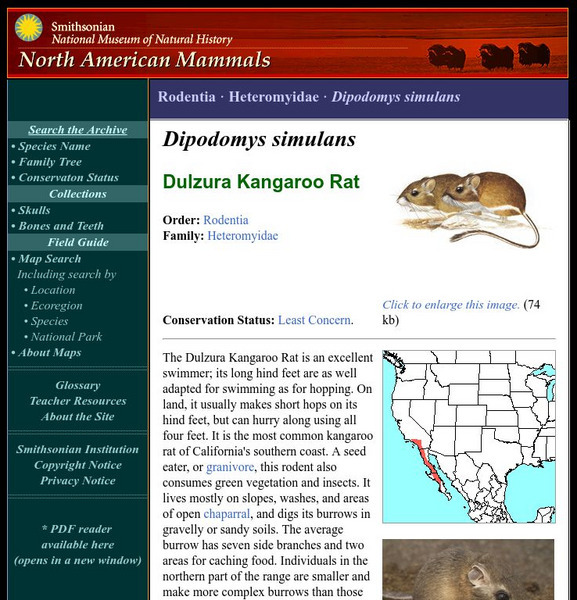
The Dulzura Kangaroo Rat is an excellent swimmer; its long hind feet are as well adapted for swimming as for hopping. On land, it usually makes short hops on its hind feet, but can hurry along using all four feet. Learn more about the...

Smithsonian Institution
National Museum of Natural History: American Mammals: Hispid Cotton Rat
The Hispid Cotton Rat's fur is sprinkled or streaked with blackish or dark brownish and grayish hairs. The Rats molt, losing and getting a new coat, three times in three months as they move through juvenile and subadult stages and into...
Smithsonian Institution
National Museum of Natural History: American Mammals: Crawford's Gray Shrew
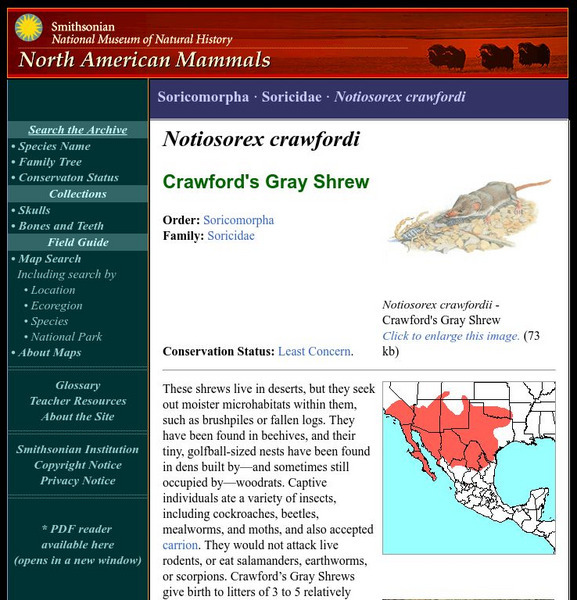
These shrews live in deserts, but they seek out moister microhabitats within them, such as brush piles or fallen logs. They have been found in beehives, and their tiny, golfball-sized nests have been found in dens built by and sometimes...
Smithsonian Institution
National Museum of Natural History: American Mammals: Coyote
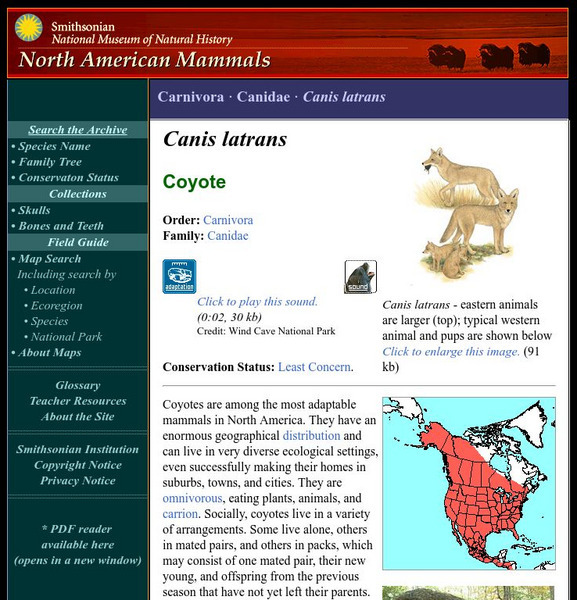
Coyotes are among the most adaptable mammals in North America. They have an enormous geographical distribution and can live in very diverse ecological settings, even successfully making their homes in suburbs, towns, and cities. Learn...

Smithsonian Institution
National Museum of Natural History: American Mammals: Keen's Myotis
Keen's myotis is a medium-sized bat with a long tail. It does not demonstrate narrowly specialized habitat needs. Learn more about the Myotis keenii, more commonly known as a Keen's Myotis, in this easy-to-read species overview by the...
Smithsonian Institution
National Museum of Natural History: American Mammals: Florida Mouse
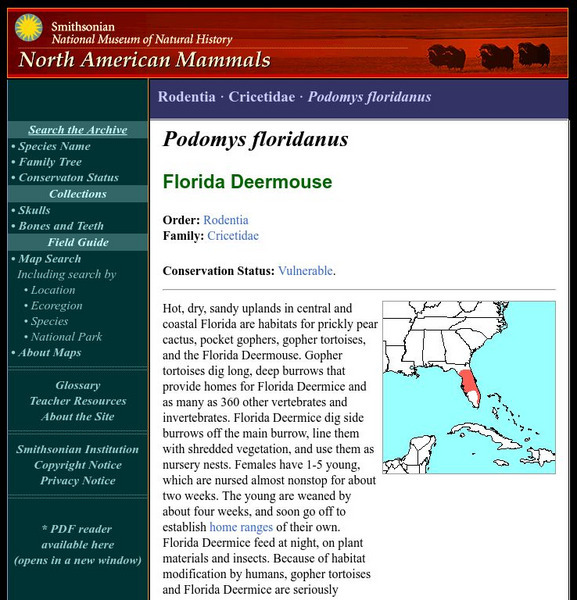
Hot, dry, sandy uplands in central and coastal Florida are habitats for prickly pear cactus, pocket gophers, gopher tortoises, and the Florida Mouse. Gopher tortoises dig long, deep burrows that provide homes for Florida Mice and as many...
Smithsonian Institution
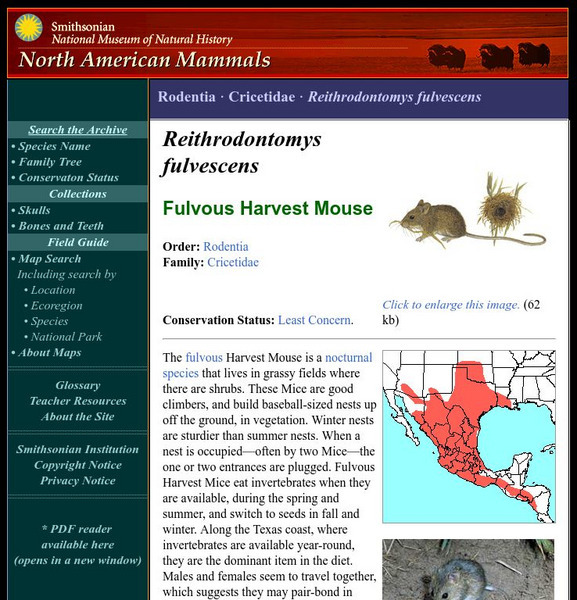
National Museum of Natural History: American Mammals: Fulvous Harvest Mouse
The fulvous Harvest Mouse is a nocturnal species that lives in grassy fields where there are shrubs. These Mice are good climbers, and build baseball-sized nests up off the ground, in vegetation. Learn more about the Reithrodontomys...
Smithsonian Institution
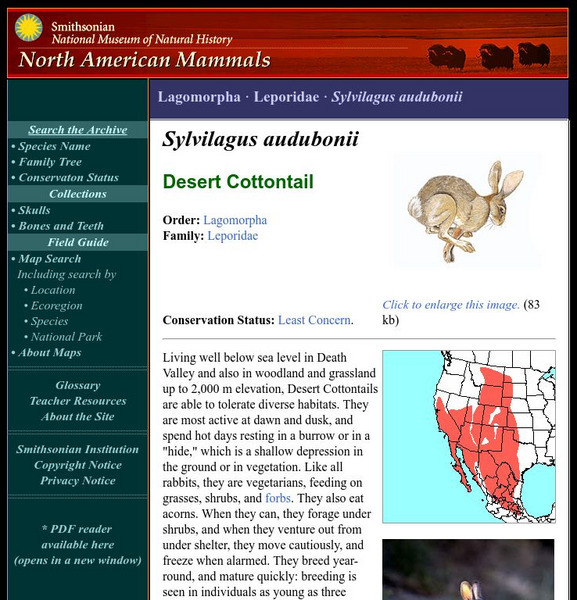
National Museum of Natural History: American Mammals: Desert Cottontail
Living well below sea level in Death Valley and also in woodland and grassland up to 2,000 m elevation, Desert Cottontails are able to tolerate diverse habitats. They are most active at dawn and dusk and spend hot days resting in a...
Smithsonian Institution
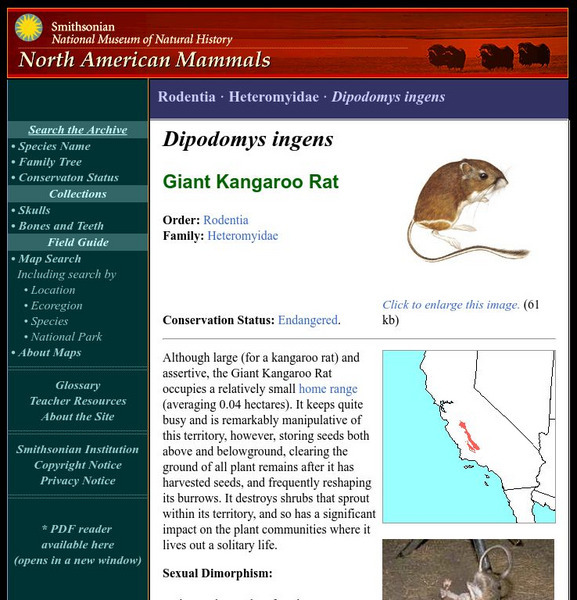
National Museum of Natural History: American Mammals: Giant Kangaroo Rat
Although large (for a kangaroo rat) and assertive, the Giant Kangaroo Rat occupies a relatively small home range (averaging 0.04 hectares). Learn more about the Dipodomys ingens, more commonly known as a Giant Kangaroo Rat, in this...
Smithsonian Institution
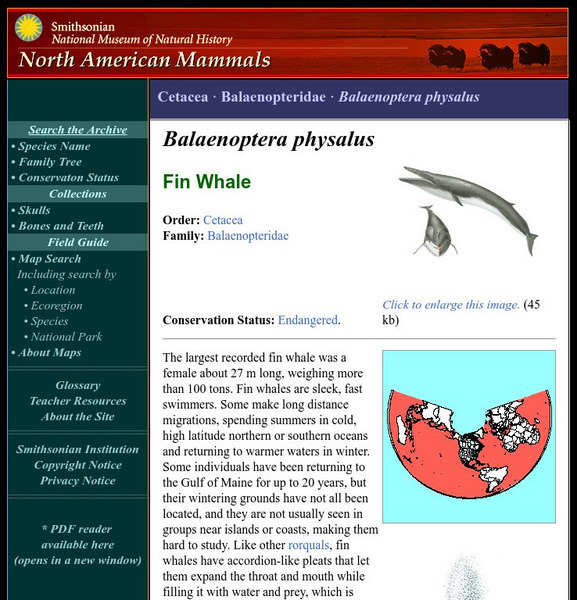
National Museum of Natural History: American Mammals: Fin Whale
The largest recorded fin whale was a female about 27 m long, weighing more than 100 tons. Fin whales are sleek, fast swimmers. Learn more about the Balaenoptera physalus, more commonly known as a Fin Whale, in this easy-to-read species...
Smithsonian Institution
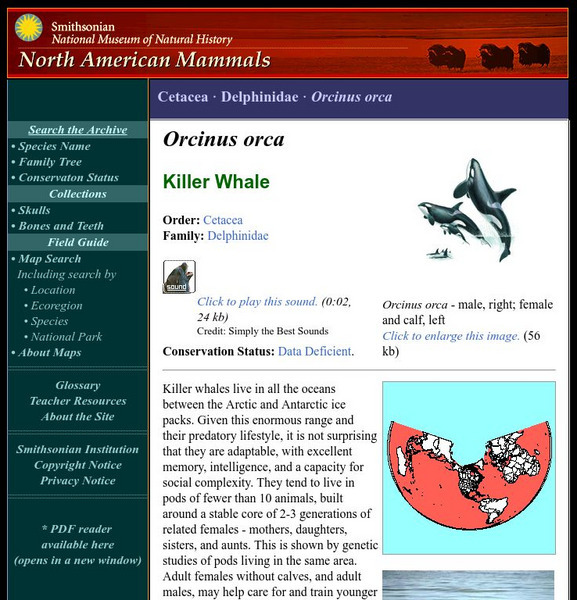
National Museum of Natural History: American Mammals: Killer Whale
Killer whales live in all the oceans between the Arctic and Antarctic ice packs. Given this enormous range and their predatory lifestyle, it is not surprising that they are adaptable, with an excellent memory, intelligence, and a...
Smithsonian Institution
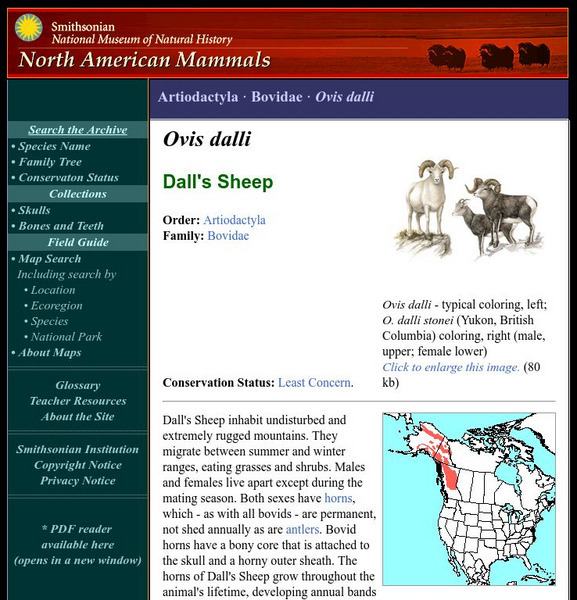
National Museum of Natural History: American Mammals: Dall's Sheep
Dall's Sheep inhabit undisturbed and extremely rugged mountains. They migrate between summer and winter ranges, eating grasses and shrubs. Learn more about the Ovis dalli, more commonly known as a Dall's Sheep, in this easy-to-read...

Smithsonian Institution
National Museum of Natural History: American Mammals: Eastern Spotted Skunk
Spotted skunks are smaller than Striped skunks and more weasel-like in appearance. Like all skunks, they have anal scent glands and can emit a foul-smelling spray to protect themselves. Learn more about the Spilogale putorius, more...
Smithsonian Institution
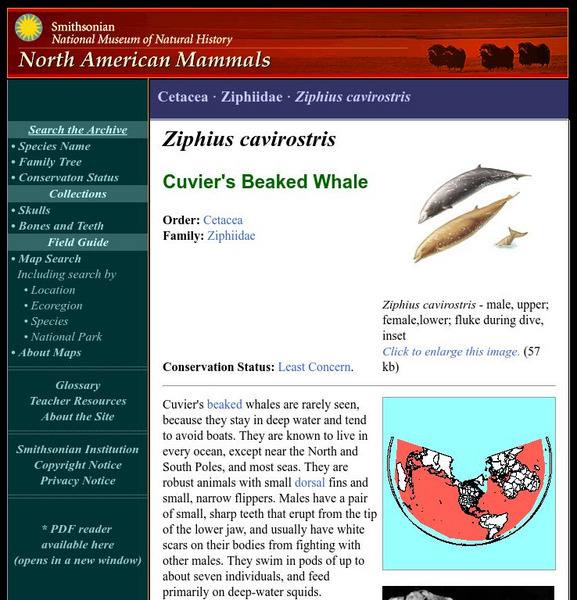
National Museum of Natural History: American Mammals: Cuvier's Beaked Whale
Cuvier's beaked whales are rarely seen because they stay in deep water and tend to avoid boats. They are known to live in every ocean, except near the North and South Poles, and most seas. Learn more about the Ziphius cavirostris, more...
Smithsonian Institution
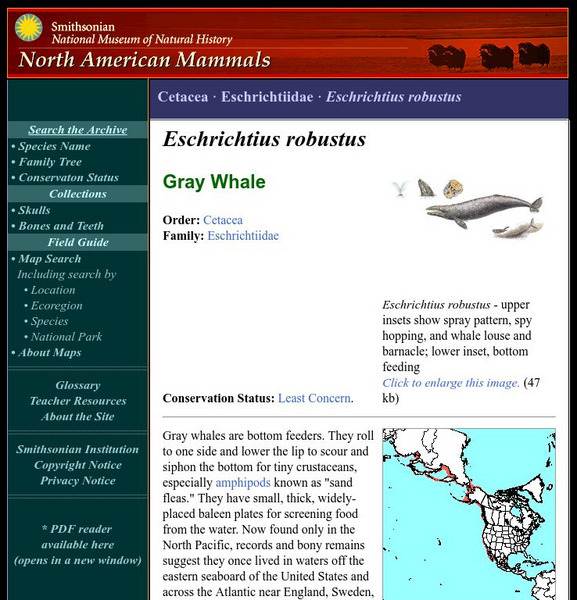
National Museum of Natural History: American Mammals: Gray Whale
Gray whales are bottom feeders. They roll to one side and lower the lip to scour and siphon the bottom for tiny crustaceans, especially amphipods which are known as "sand fleas." Learn more about the Eschrichtius robustus, more commonly...