Hi, what do you want to do?





Smithsonian Institution
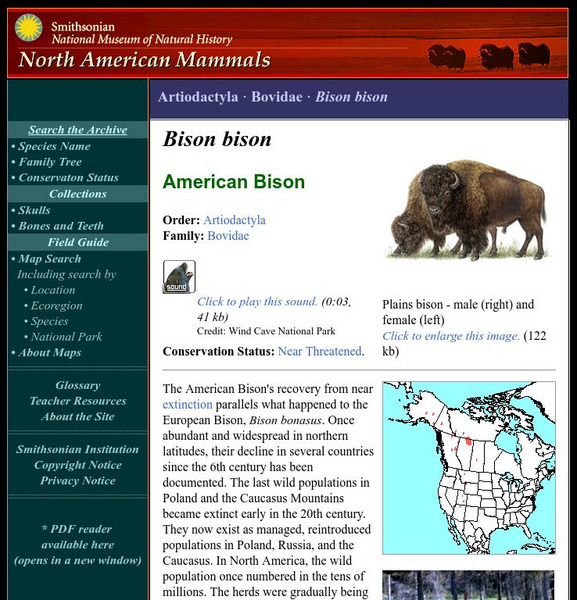
National Museum of Natural History: American Mammals: American Bison
The American Bison's recovery from near extinction parallels what happened to the European Bison, Bison bonasus. Once abundant and widespread in northern latitudes, their decline in several countries since the 6th century has been...
Smithsonian Institution
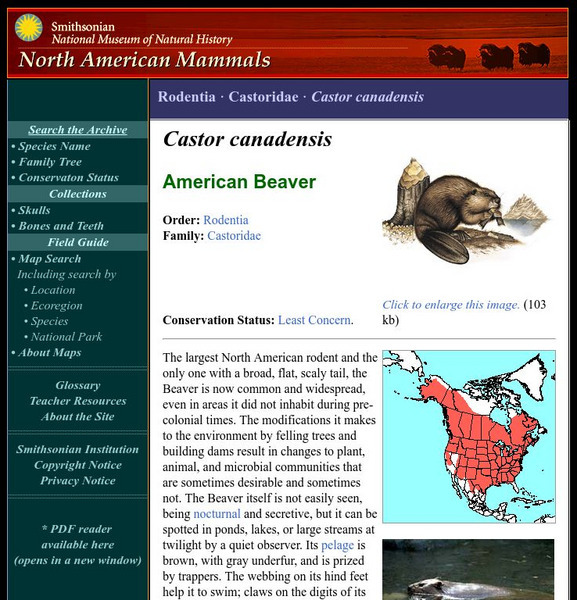
National Museum of Natural History: American Mammals: American Beaver
The largest North American rodent and the only one with a broad, flat, scaly tail, the Beaver is now common and widespread, even in areas it did not inhabit during pre-colonial times. The modifications it makes to the environment by...
Smithsonian Institution
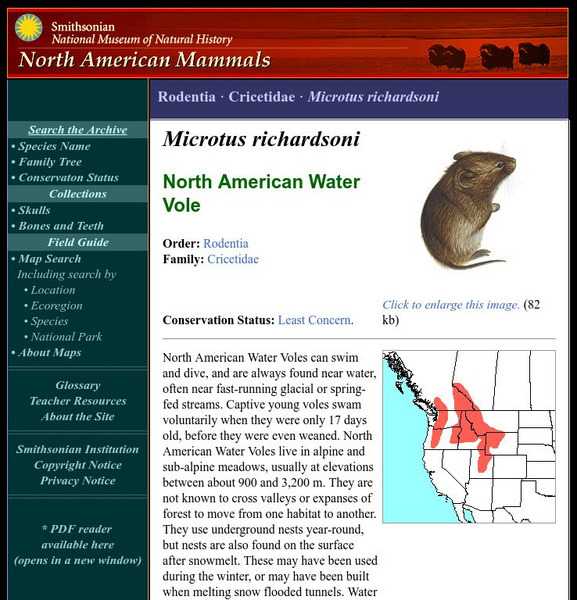
National Museum of Natural History: American Mammals: North American Water Vole
North American Water Voles can swim and dive, and are always found near water, often near fast-running glacial or spring-fed streams. Captive young Voles swam voluntarily when they were only 17 days old, before they were even weaned....
Smithsonian Institution
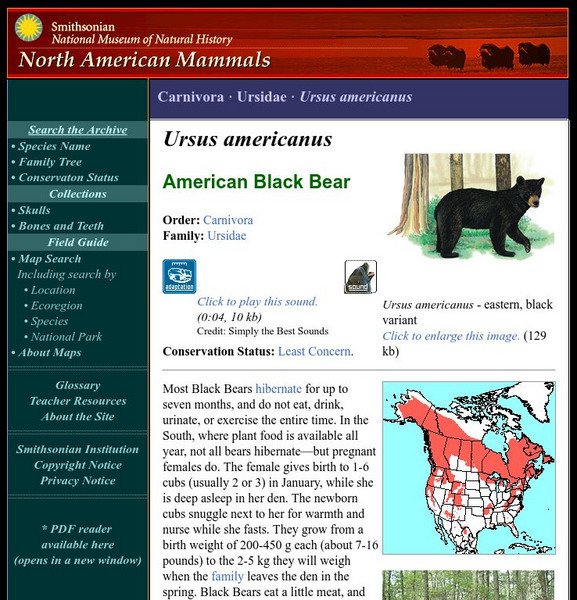
National Museum of Natural History: American Mammals: American Black Bear
Most Black Bears hibernate for up to seven months, and do not eat, drink, urinate, or exercise the entire time. In the South, where plant food is available all year, not all bears hibernate, but pregnant females do. Learn more about the...
Smithsonian Institution
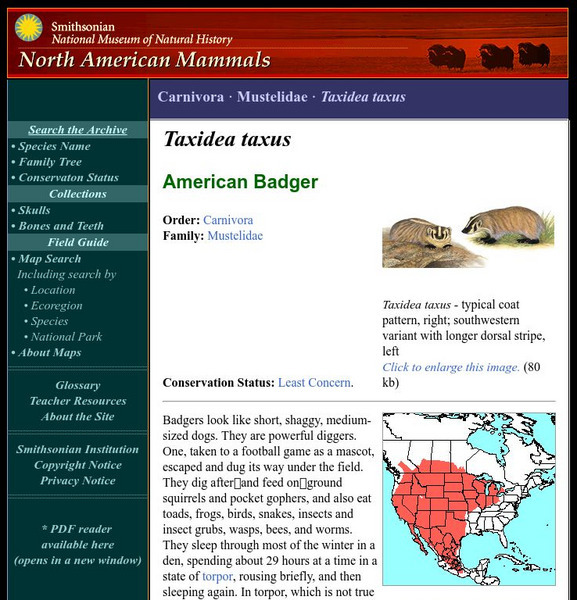
National Museum of Natural History: American Mammals: American Badger
Badgers look like short, shaggy, medium-sized dogs. They are powerful diggers. Learn more about the Taxidea taxus, more commonly known as an American Badger, in this easy-to-read species overview by the Smithsonian's National Museum of...
Smithsonian Institution
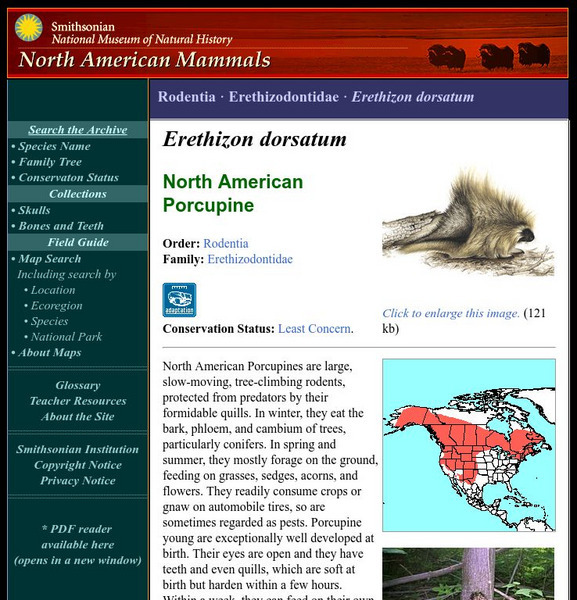
National Museum of Natural History: American Mammals: North American Porcupine
North American Porcupines are large, slow-moving, tree-climbing rodents, protected from predators by their formidable quills. In winter, they eat the bark, phloem, and cambium of trees, particularly conifers. Learn more about the...
Smithsonian Institution
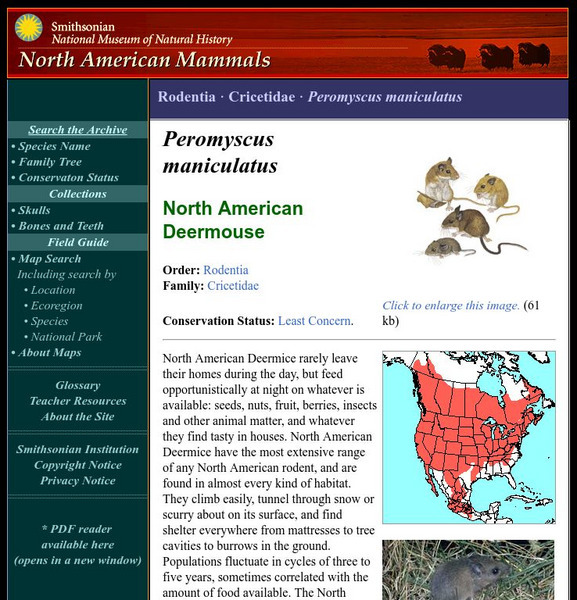
National Museum of Natural History: American Mammals: North American Deermouse
North American Deermice rarely leave their homes during the day, but feed opportunistically at night on whatever is available: seeds, nuts, fruit, berries, insects and other animal matter, and whatever they find tasty in houses. Deermice...
Smithsonian Institution
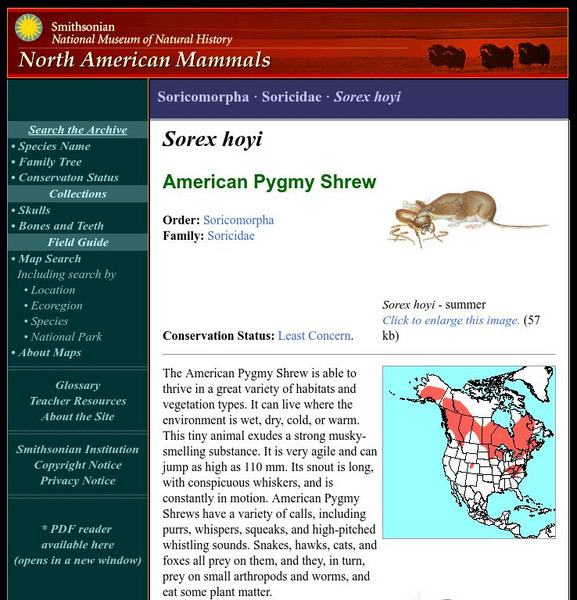
National Museum of Natural History: American Mammals: American Pygmy Shrew
The American Pygmy Shrew is able to thrive in a great variety of habitats and vegetation types. It can live where the environment is wet, dry, cold, or warm. Learn more about the Sorex hoyi, more commonly known as a Pygmy Shrew, in this...
Smithsonian Institution
National Museum of Natural History: American Mammals: North American Least Shrew
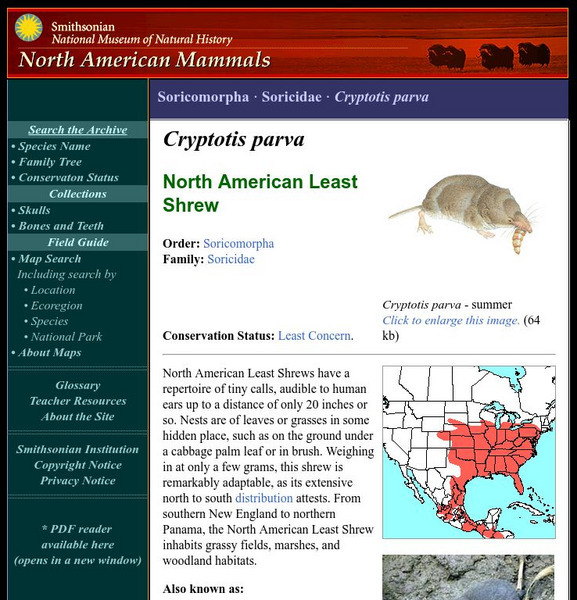
North American Least Shrews have a repertoire of tiny calls, audible to human ears up to a distance of only 20 inches or so. Nests are of leaves or grasses in some hidden place, such as on the ground under a cabbage palm leaf or in...

Smithsonian Institution
National Museum of Natural History: American Mammals: Guadalupe Fur Seal
The history of the Guadalupe fur seal during the past century is well documented. The seals were nearly extinguished by hunters seeking their dense, luxurious underfur in the 1800s. Learn more about the Arctocephalus townsendi, more...
Smithsonian Institution
National Museum of Natural History: American Mammals: Long Eared Myotis
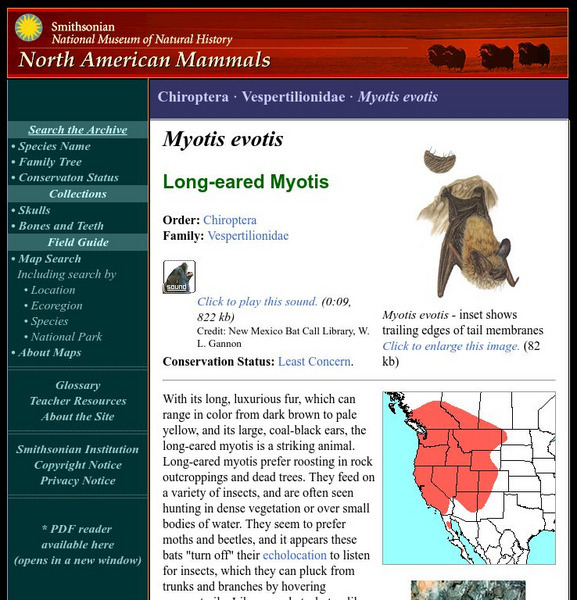
With its long, luxurious fur, which can range in color from dark brown to pale yellow, and its large, coal-black ears, the long-eared myotis is a striking animal. Long-eared myotis prefer roosting in rock outcroppings and dead trees....
Smithsonian Institution
National Museum of Natural History: American Mammals: Mexican Ground Squirrel
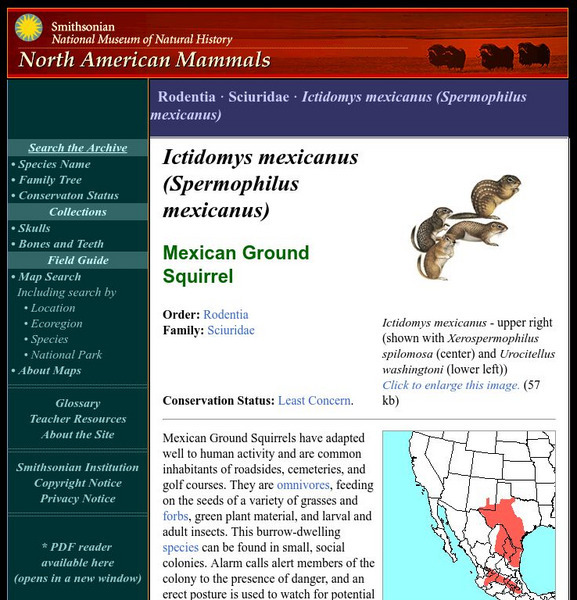
Mexican Ground Squirrels have adapted well to human activity and are common inhabitants of roadsides, cemeteries, and golf courses. They are omnivores, feeding on the seeds of a variety of grasses and forbs, green plant material, and...

Smithsonian Institution
National Museum of Natural History: Red Cloud: Photographs of an Oglala Sioux Chief
A great slideshow of pictures of Red Cloud and his Uncle's Shirt courtesy of Smithsonian Institution.
American Museum of Natural History
American Museum of Natural History: Asian Ethnography
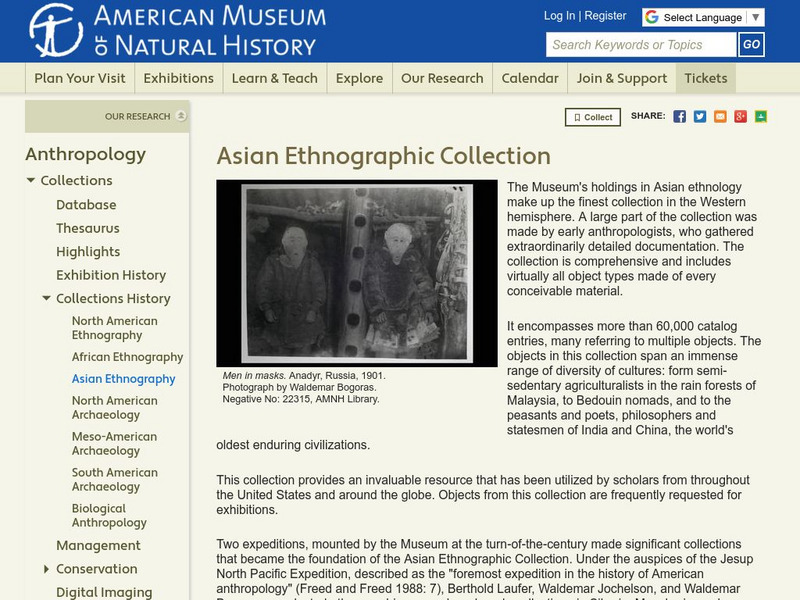
The Museum's holdings in Asian ethnology make up the finest collection in the Western hemisphere. A large part of the collection was made by early anthropologists, who gathered extraordinarily detailed documentation. The collection is...
American Museum of Natural History
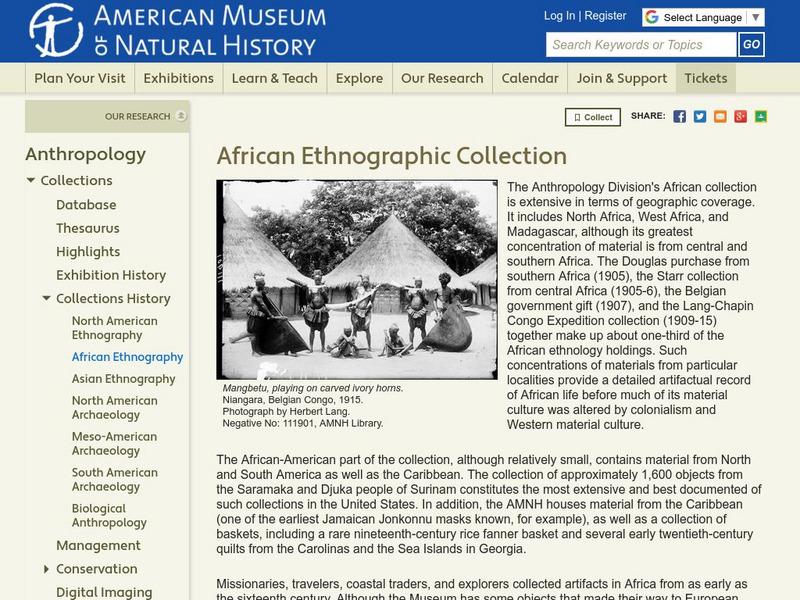
American Museum of Natural History: African Ethnography
The Anthropology Division's African collection is extensive in terms of geographic coverage. It includes North Africa, West Africa, and Madagascar, although its greatest concentration of material is from central and southern Africa. The...

Read Works
Read Works: Meet the Ologist Chuck Spencer
[Free Registration/Login Required] This ReadWorks reading from the American Museum of Natural Anthropology's website called OLogy provides an interview with the archaeologist named Chuck Spencer. A paired passage entitled "Up Close with...

Read Works
Read Works:what's the Big Idea About Archaeology?
[Free Registration/Login Required] This ReadWorks reading from the American Museum of Natural Anthropology's website called OLogy explains what archaeologists do. A paired passage entitled "Meet the Ologist-Chuck Spencer" is provided in...
American Museum of Natural History
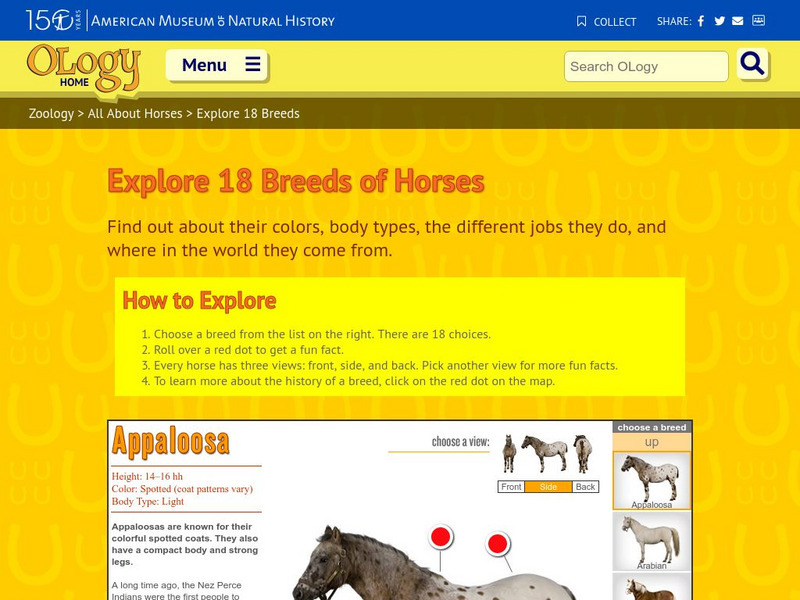
American Museum of Natural History: O Logy: Beautiful Breeds: Miniature Horse
American horse breed, miniture horses, are illustrated and facts about these mammals are provided. Choose Miniature Horse from the list on the right.
American Museum of Natural History
American Museum of Natural History: Carl Sagan and the Quest for Life in the Universe
A brief biography of American astronomer and science advocate Carl Sagan.

American Museum of Natural History
American Museum of Natural History: O Logy: Beautiful Breeds
There are many breeds of horses around the world. Eighteen breeds are featured in this reference resource. Understand how horses are measured, their coat colors, and body types.
American Museum of Natural History
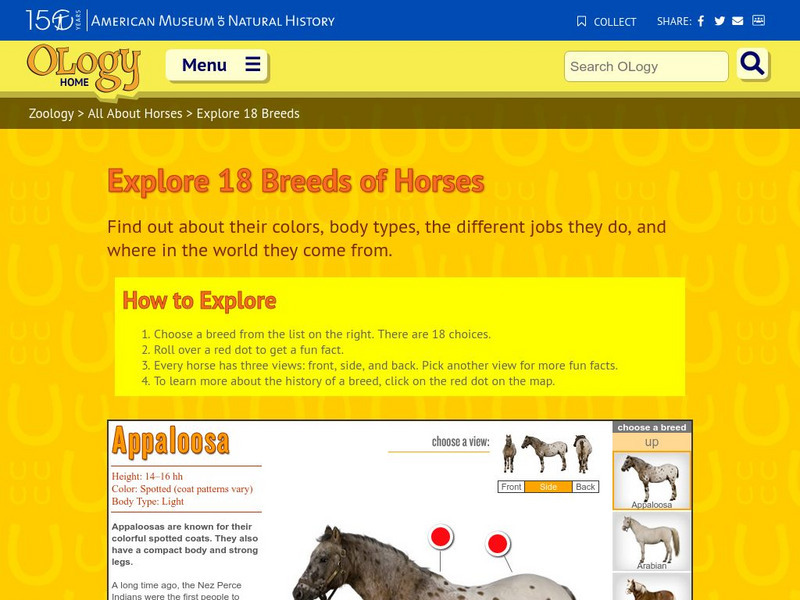
American Museum of Natural History: O Logy: Beautiful Breeds: Lusitano
Facts and images of the Portuguese Lusitano horse breed. Choose Lusitano from the list on the right.
American Museum of Natural History
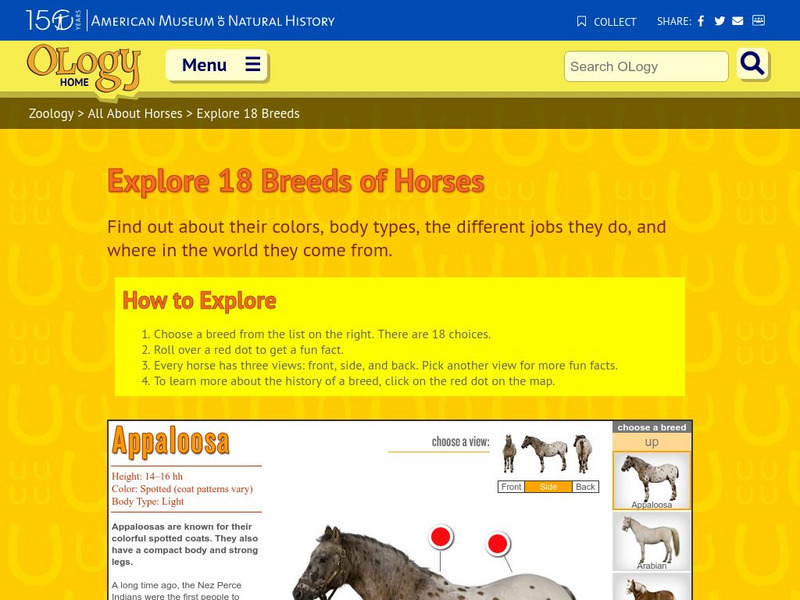
American Museum of Natural History: O Logy: Beautiful Breeds: Hanoverian
Get facts and images of a German breed of horse, the Hanoverian. Choose Hanoverian from the list on the right.

Smithsonian Institution
National Museum of Natural History: Our Way of Making Prayer
The native Yup'ik people of Alaska, like many other Native American tribes, once used decorative masks for ceremonial purposes. Here you can read a short introductory piece about the masks, view the masks, and watch several short video...
Smithsonian Institution
National Museum of Natural History: Hall of Mammals: Jaguar
Brief overview of the jaguar and accompanying photos demonstrate the physical adaptations that allow this animal to hunt for its prey.