Hi, what do you want to do?






American Museum of Natural History
American Museum of Natural History: O Logy: The Tree of Life: True Bacteria
Visit the tree of life and discover characteristics, habitats, and examples of the world's true bacteria.
American Museum of Natural History
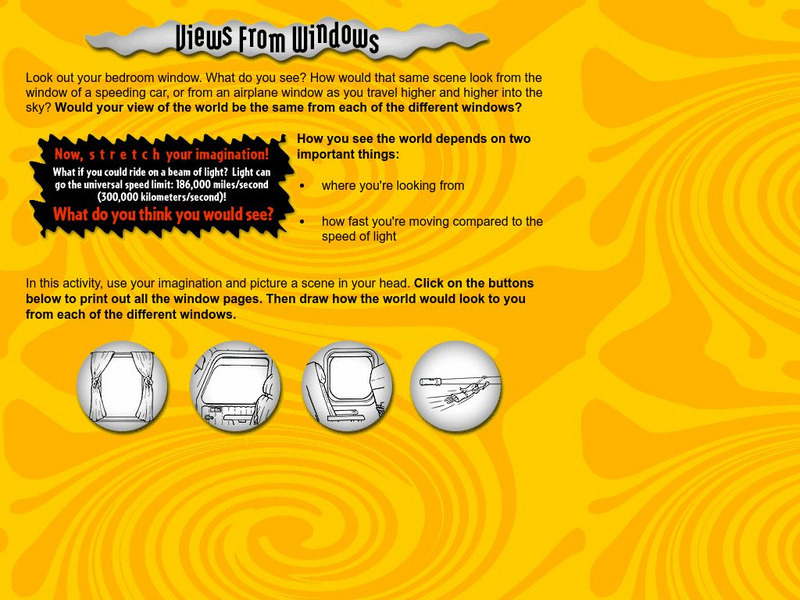
American Museum of Natural History: O Logy: Stuff to Do: Views From Windows
Instructions that take you through an Einstein-like thought experiment by having you imagine and record what you see when stationary and when moving at the speed of light.
American Museum of Natural History
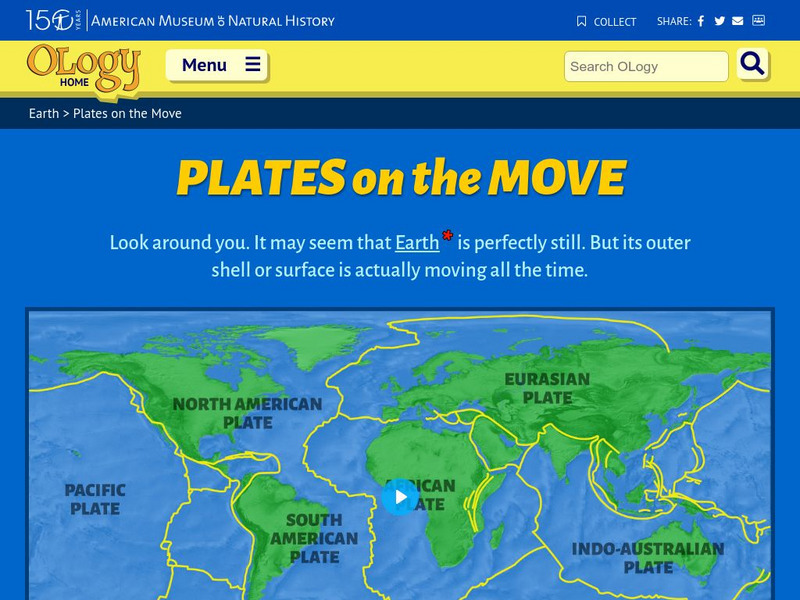
American Museum of Natural History: O Logy: Plates on the Move
Find an interrelated set of tools--maps, animations, diagrams, photographs, and text--to help you understand tectonic plates and how they move.
American Museum of Natural History
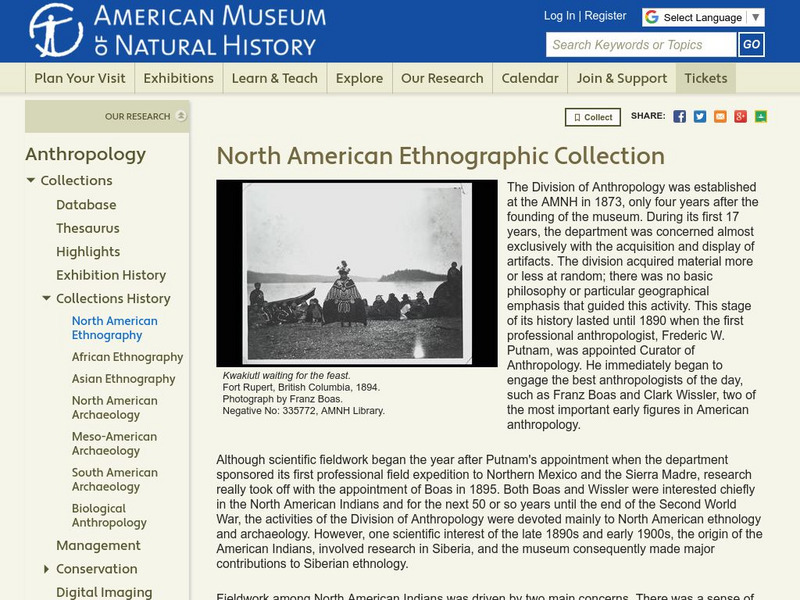
American Museum of Natural History: North American Ethnographic Collection
The Division of Anthropology was established at the AMNH in 1873, only four years after the founding of the museum. During its first 17 years, the department was concerned almost exclusively with the acquisition and display of artifacts....
American Museum of Natural History
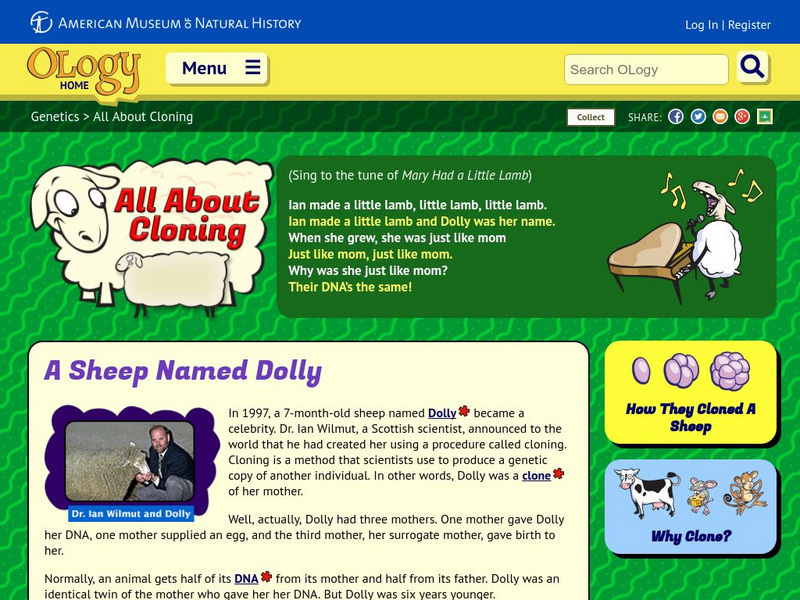
American Museum of Natural History: O Logy: All About Cloning
Learn what cloning is, how it works, what animals have been cloned, and about Dolly, the first mammal (a sheep) to be cloned from an adult cell. Click on the links to see flash cards on the topics.
American Museum of Natural History
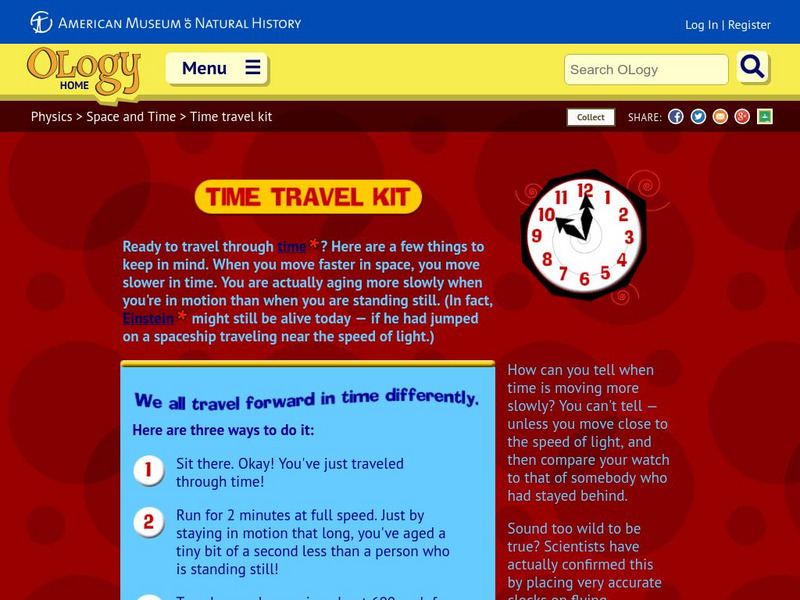
American Museum of Natural History: O Logy: Time Travel Kit
Would you like to travel forward in time? Use this time travel kit to help you think through different ways to experience time travel. Click on the starred words to learn more about the topic.
American Museum of Natural History
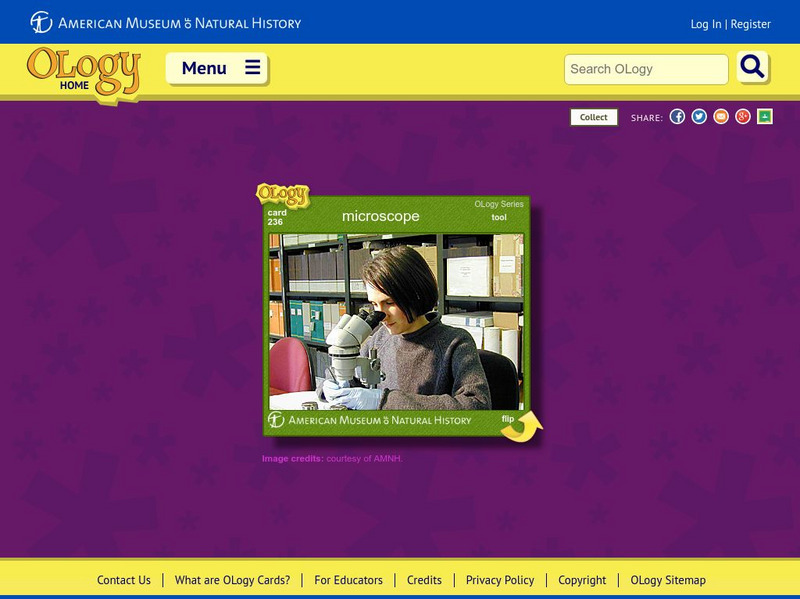
American Museum of Natural History: Microscope O Logy Card
Flip this interactive OLogy card to learn simple facts about the microscope and how it is used.
American Museum of Natural History
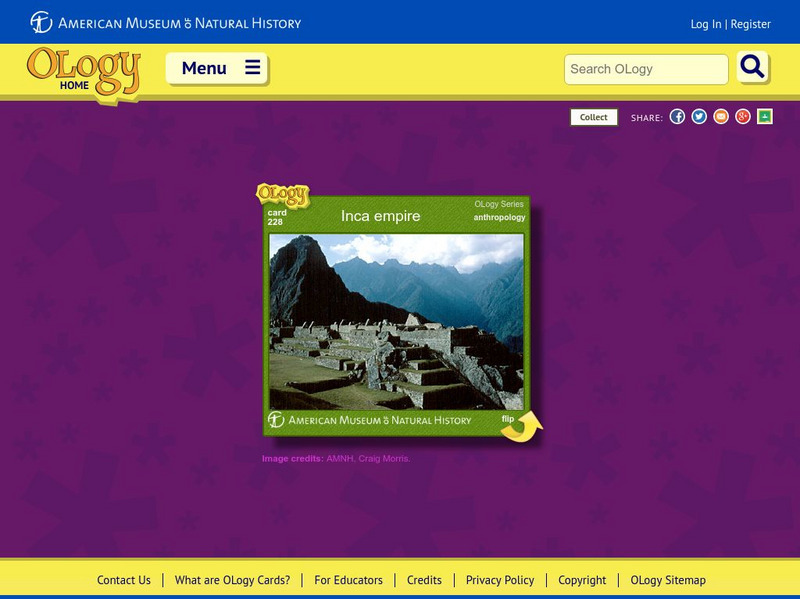
American Museum of Natural History: Inca Empire O Logy Card
Grab quick facts and answer quiz questions to test your knowledge about the Inca empire by flipping over this interactive OLogy card.
American Museum of Natural History
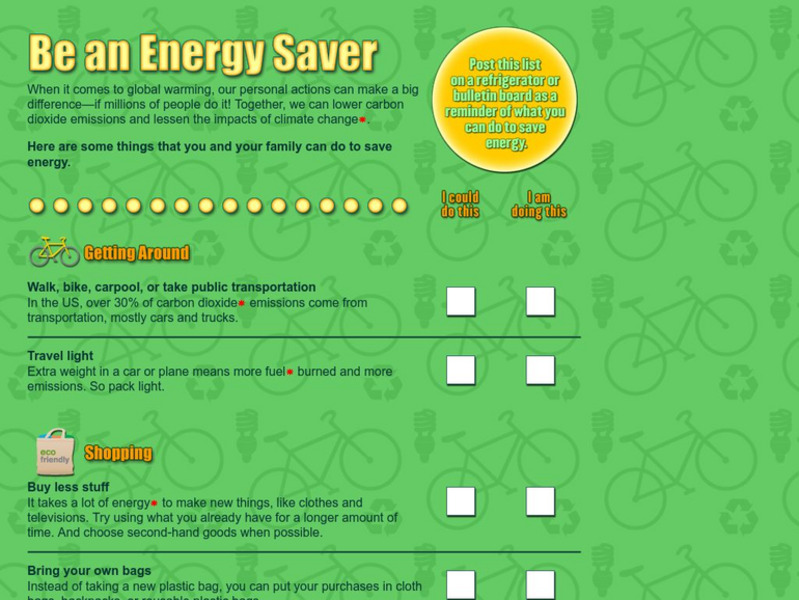
American Museum of Natural History: O Logy: Stuff to Do: Be an Energy Saver
Find out what you can do to be an energy saver and help slow global warming.
American Museum of Natural History
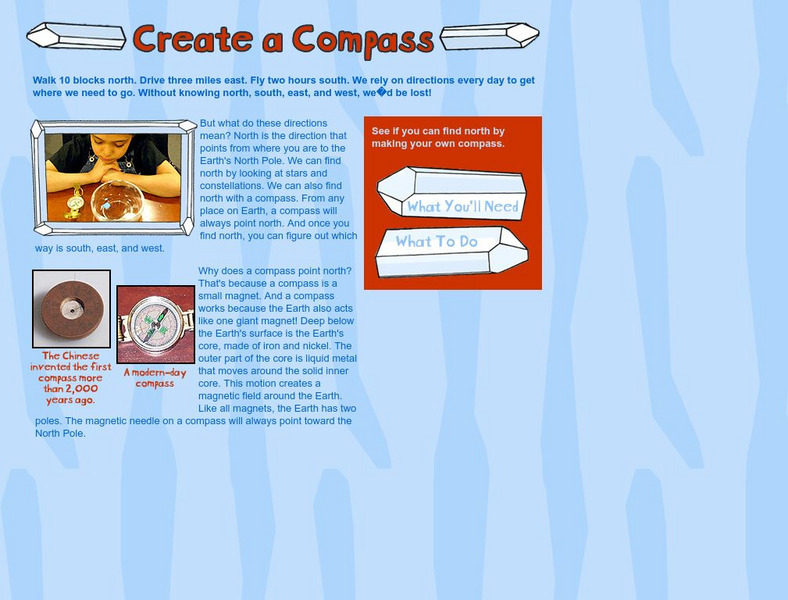
American Museum of Natural History: O Logy: Stuff to Do: Create a Compass
Step-by-step illustrated instructions for building a compass and testing its accuracy.
American Museum of Natural History
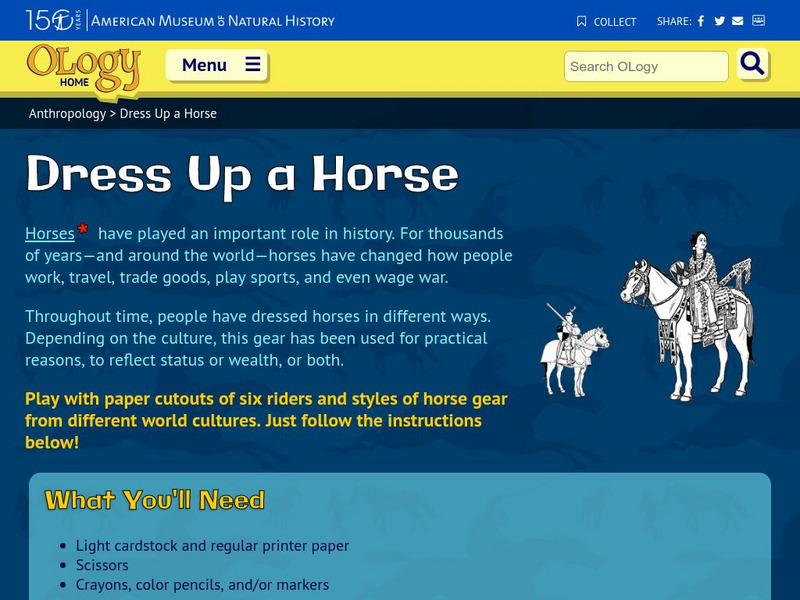
American Museum of Natural History: O Logy: Stuff to Do: Dress Up a Horse
For this activity, students dress a horse and rider in gear from six cultures. They then answer questions about their features and about similarities and differences between styles from different cultures. The horse, rider, and gear...

American Museum of Natural History
American Museum of Natural History: Rising Carbon Dioxide! What Can We Do?
Energy is used everyday coming from burning fossil fuels which releases carbon dioxide into the air. Discover what this has to do with global warming and how we can do our part to slow it down.
American Museum of Natural History
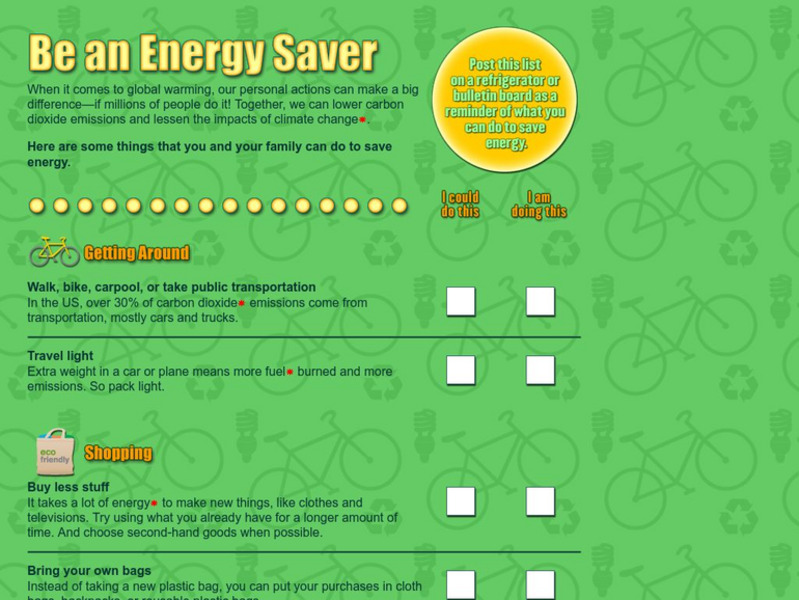
American Museum of Natural History: O Logy: Stuff to Do: Be an Energy Saver
Find out what you can do to be an energy saver and help slow global warming.
American Museum of Natural History
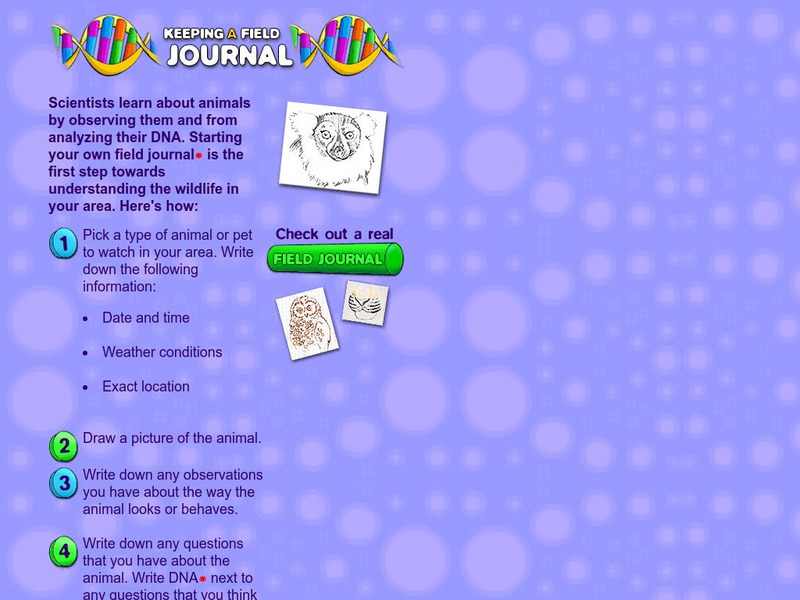
American Museum of Natural History: O Logy: Stuff to Do: Keeping a Field Journal
Learn how to record observations about the wildlife in your community by constructing a field journal.
American Museum of Natural History
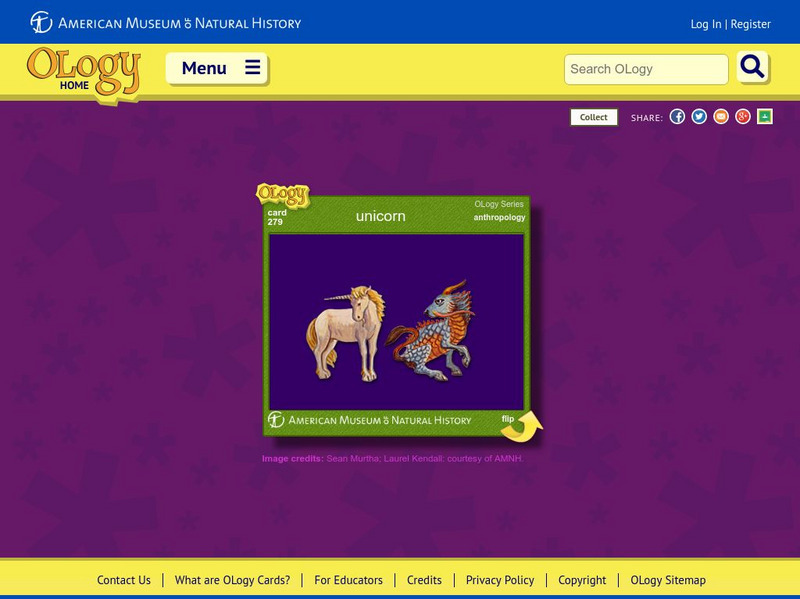
American Museum of Natural History: O Logy: Unicorn
The unicorn appears in both European and Asian mythologies. Read about the differences in appearance and behavior. Take the quiz on the back to learn more about unicorns. Flashcard format.
American Museum of Natural History
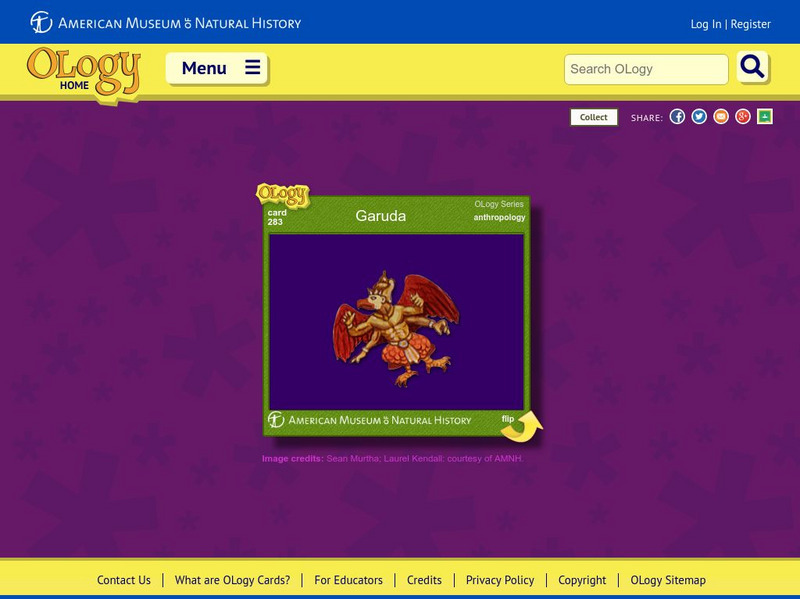
American Museum of Natural History: O Logy: Garuda
Garuda, a mythic bird-like creature, is an important figure in Hindu mythology, but you can find out what other cultures have adopted this mythological bird. Flashcard format.
American Museum of Natural History
American Museum of Natural History: O Logy: Stuff to Do: Build the Big Dipper
Illustrated instructions for building a Big Dipper mobile.

Smithsonian Institution
National Museum of Natural History: Written in Bone: Forensic Files of the 17th Century Chesapeake
This very thorough site will fascinate those interested in forensic anthropology. You will learn what you can read from bones, how a face can be reconstructed from a skull, clues you can read from a burial, and about forensic cases both...
PBS
Pbs Learning Media: Frames of Reference
Explore how different frames of reference affect your perception of motion in this interactive activity from the American Museum of Natural History.

Smithsonian Institution
National Museum of American History: Preparing for the Oath: u.s. History and Civics for Citizenship
This site from the National Museum of American History, part of the Smithsonian Institution, is a great site for citizens and those learning to become citizens alike. Review the fifteen themes that deal with U.S. history and civics,...
Smithsonian Institution
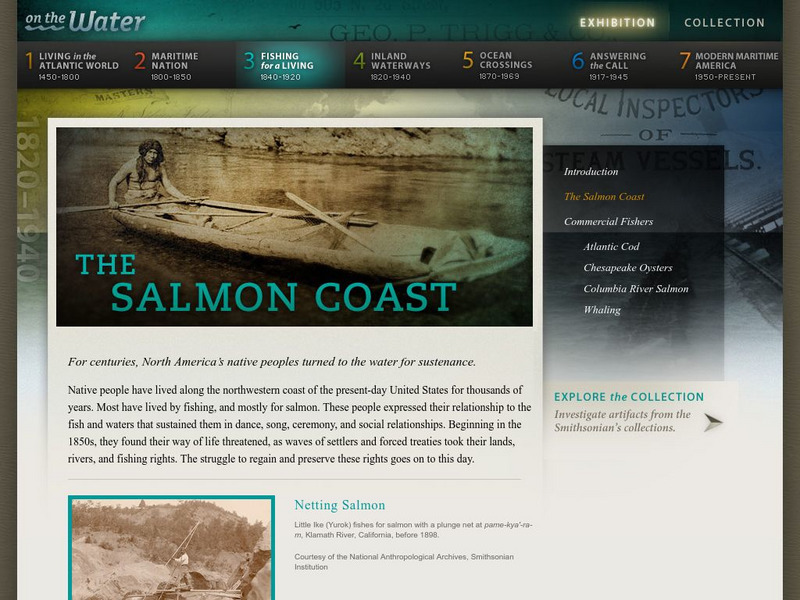
National Museum of American History: Fishing for a Living: The Salmon Coast
This resource provides information about the Pacific Northwest and the cultures of people who inhabited the area.
Smithsonian Institution
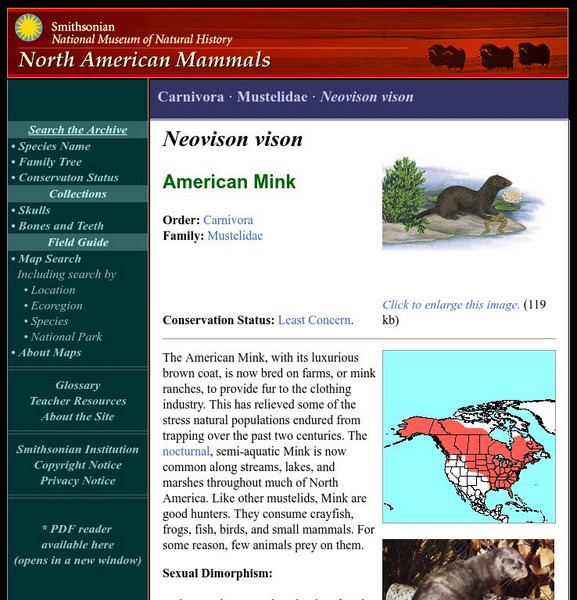
National Museum of Natural History: American Mammals: American Mink
The American Mink, with its luxurious brown coat, is now bred on farms, or mink ranches, to provide fur to the clothing industry. This has relieved some of the stress natural populations endured from trapping over the past two centuries....
Smithsonian Institution
National Museum of Natural History: American Mammals: American Pika
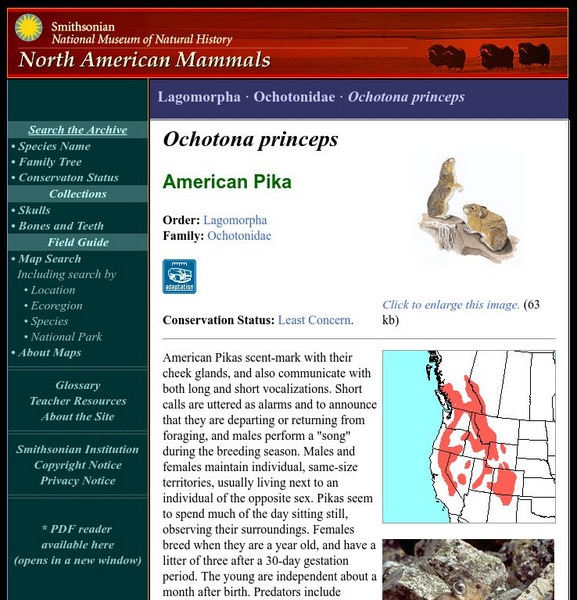
American Pikas scent-mark with their cheek glands, and also communicate with both long and short vocalizations. Short calls are uttered as alarms and to announce that they are departing or returning from foraging, and males perform a...
Smithsonian Institution
National Museum of Natural History: American Mammals: American Marten
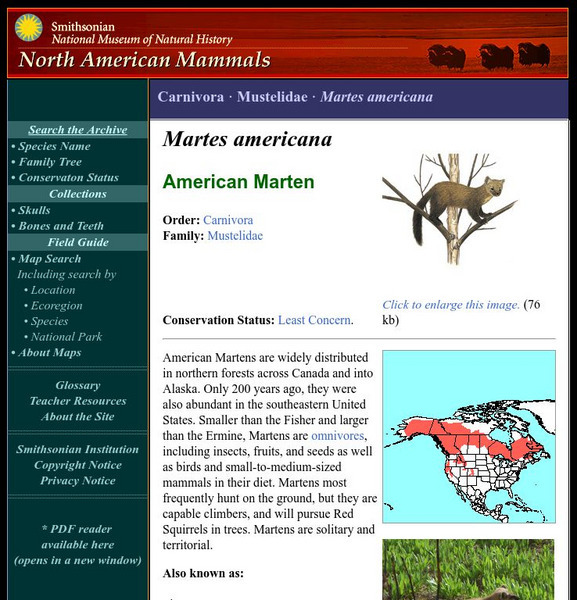
American Martens are widely distributed in northern forests across Canada and into Alaska. Only 200 years ago, they were also abundant in the southeastern United States. Learn more about the Martes americana, more commonly known as an...