Hi, what do you want to do?






American Museum of Natural History
American Museum of Natural History: Picturing the Museum
Archive of historical photographs of the museum's dioramas and exhibits from the early twentieth century offers a glimpse into the work of exhibition designers from eras past.
American Museum of Natural History
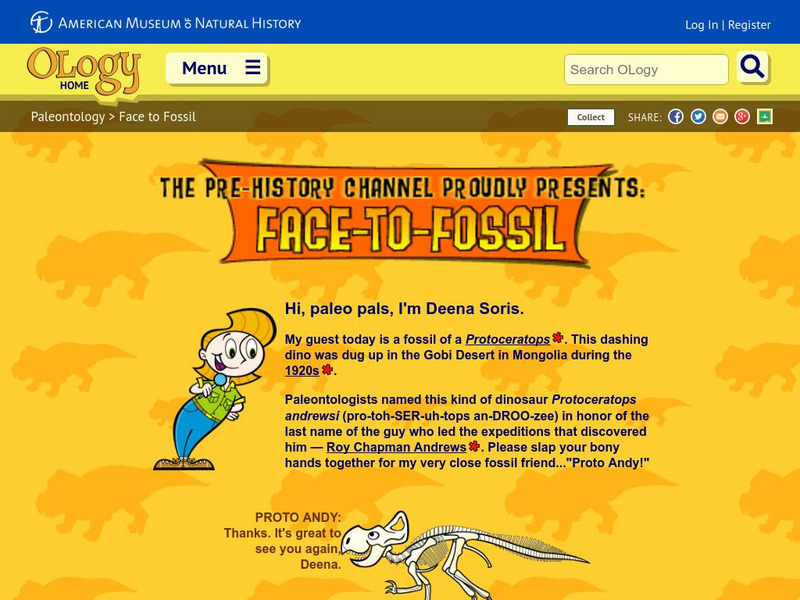
American Museum of Natural History: O Logy: Face to Fossil: Protoceratops
Questions and answers about Protoceratops andrewsi, presented as an "interview" with a museum's fossil. Learn about the dinosaur, the age of the fossil, and how the museum had it transported.
American Museum of Natural History
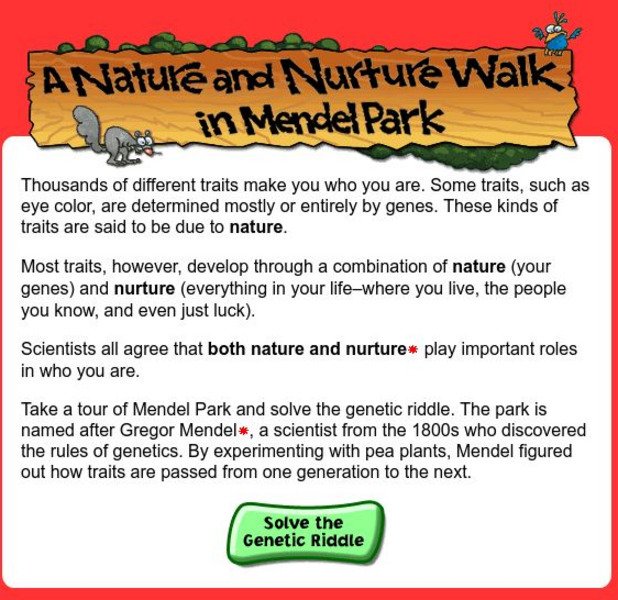
American Museum of Natural History: A Nature and Nurture Walk in Mendel Park
Take a walk in the animated "Mendel Park" to discover which traits are genetic and which are a combination of genetics and upbringing.
American Museum of Natural History
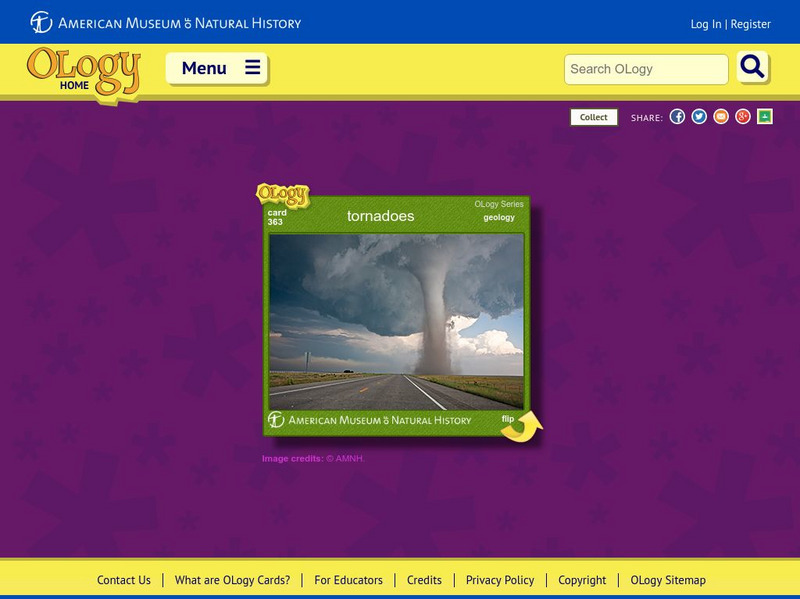
American Museum of Natural History: Tornadoes O Logy Card
Flip this interactive card to start learning about tornadoes, nature's most powerful storms. Answer multiple-choice and fact-or-fiction questions and review some fast facts about tornadoes.
American Museum of Natural History
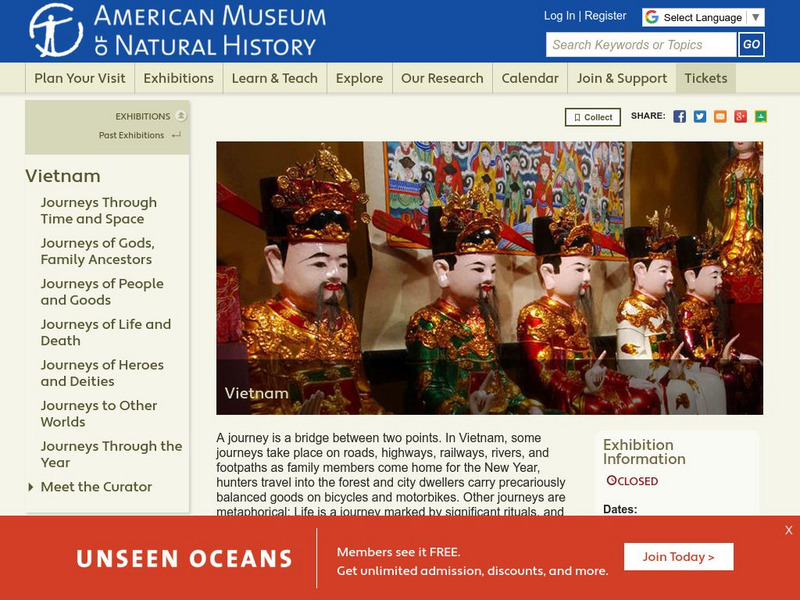
American Museum of Natural History: Vietnam: Journeys of Body, Mind, and Spirit
Vietnamese life and culture captured in a museum-mounted exhibition (2003-04) that takes journeys through time, space, the seasons, and rites of life as themes. Learn about the history, culture, traditions, and everyday life of Vietnam.
American Museum of Natural History
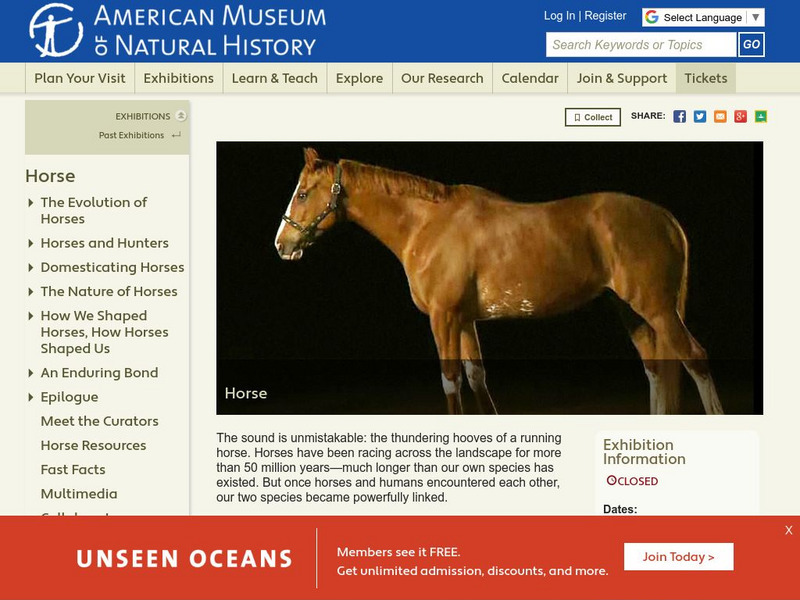
American Museum of Natural History: The Horse
This resource presents illustrated essays about horses, developed in conjunction with museum-mounted exhibition, cover a wide range of topics, including the evolution of horses, the domestication of horses, the nature of horses, and the...

American Museum of Natural History
American Museum of Natural History: Inca Investigation
Be an archaeologist and examine maps and ancient artifacts relating to the Inca empire.
American Museum of Natural History
American Museum of Natural History: Resources for Learning: The Path to El Nino
Through this resource, students explore the history, causes, effects, and patterns of El Nino.

American Museum of Natural History
American Museum of Natural History: Traveling the Silk Road: Take a Journey
Learn about some of the ancient Asian and Middle Eastern cities along the Silk Road between AD 600 and 1200. Highlights Xian, Turfan, Samarkand, and Baghdad, as well as those who traveled by sea.
American Museum of Natural History
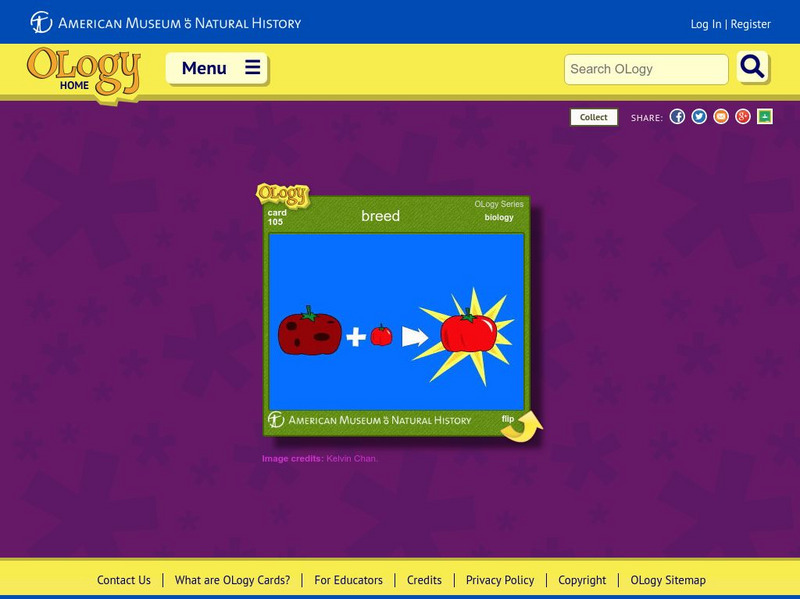
American Museum of Natural History: Breed O Logy Card
Flip this interactive OLogy card to find questions and answers, fast facts, and other bite-size pieces of information to help you understand the breeding process of plants and animals. Also learn about teosinte, a grass that Native...
American Museum of Natural History
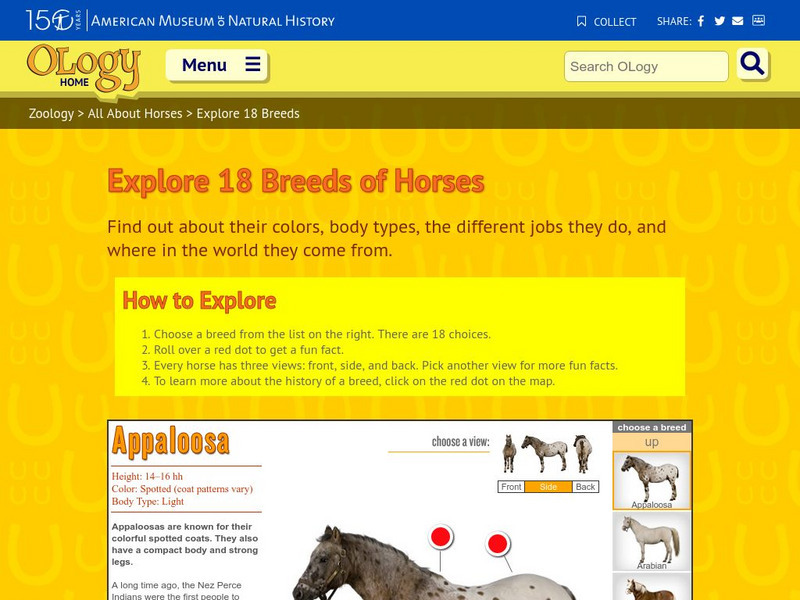
American Museum of Natural History: O Logy: Beautiful Breeds: Arabian
Detailed illustrations and description of the Arabian, a horse prized throughout history for its power and speed. Choose Arabian from the list on the right.
American Museum of Natural History
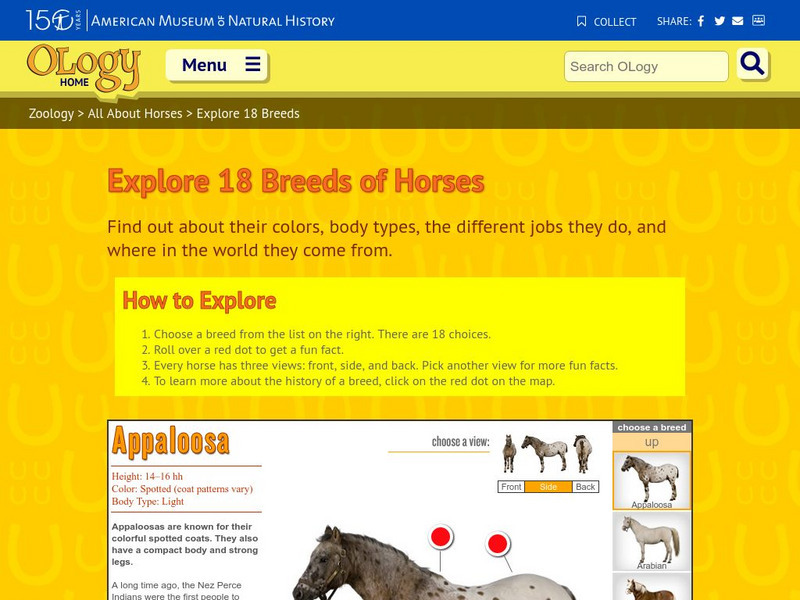
American Museum of Natural History: O Logy: Beautiful Breeds: Paint
Detailed illustrations and description of the paint horse, an American stock horse. Choose Paint from the list on the right.
American Museum of Natural History
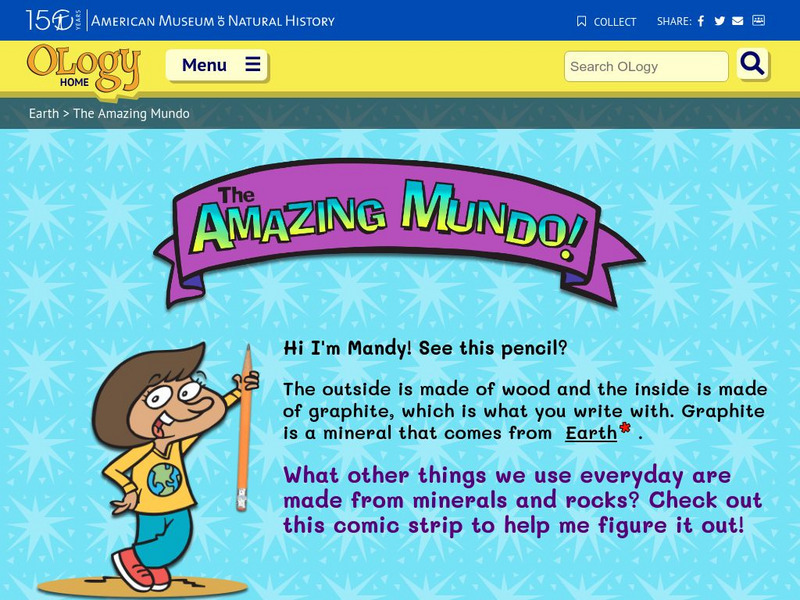
American Museum of Natural History: O Logy: The Amazing Mundo
Introduction, in comic strip format, to a selection of minerals and rocks that are used to make everyday objects, such as glass, aluminum foil, coins, and computer chips.
American Museum of Natural History
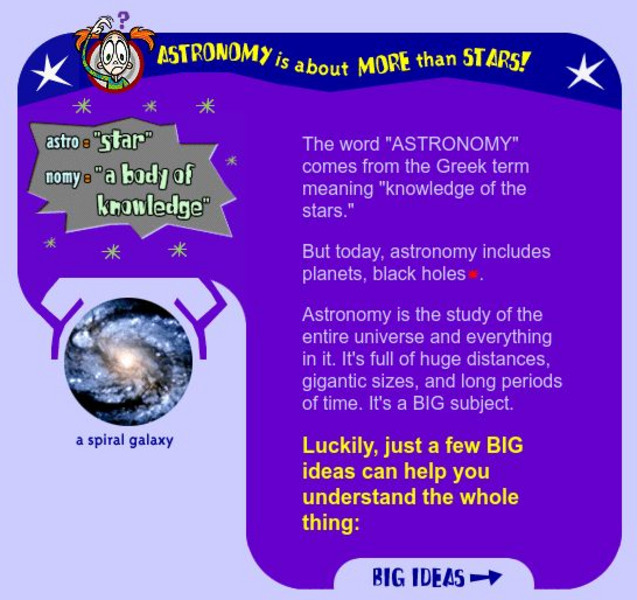
American Museum of Natural History: O Logy: What's the Big Idea? Astronomy
An introduction to key concepts about the science of astronomy. With interactive flash cards that open in new windows to help you learn more.
American Museum of Natural History
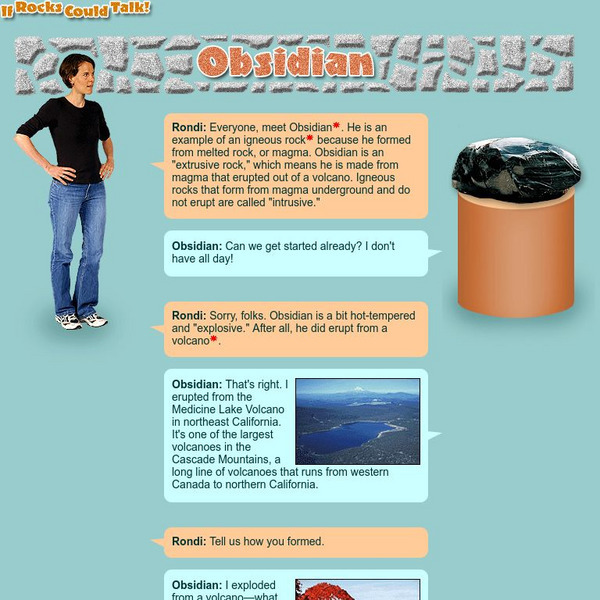
American Museum of Natural History: O Logy: If Rocks Could Talk: Obsidian
A simple explanation of how obsidian rock is formed.
American Museum of Natural History
American Museum of Natural History: O Logy: If Rocks Could Talk: Granite
A simple explanation of how granite rock is formed.
American Museum of Natural History
American Museum of Natural History: O Logy: If Rocks Could Talk: Limestone
A simple explanation of how limestone rock is formed.
American Museum of Natural History
American Museum of Natural History: O Logy: If Rocks Could Talk: Sandstone
A simple explanation of how sandstone rock is formed.
American Museum of Natural History
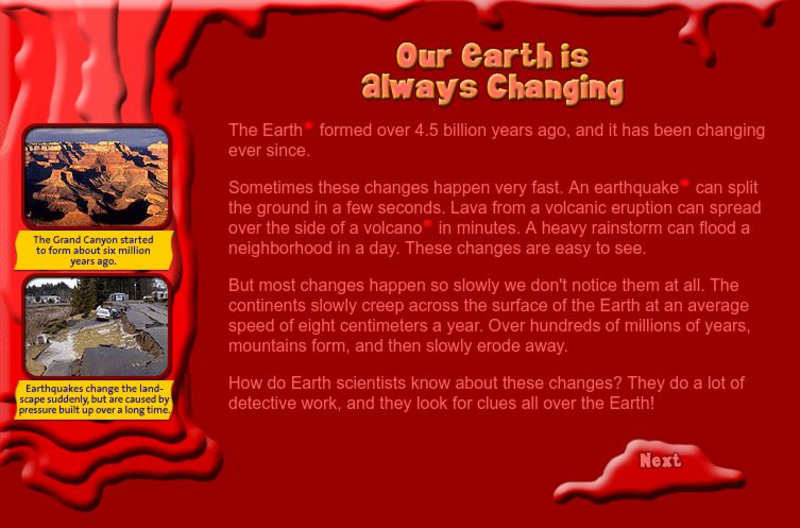
American Museum of Natural History: O Logy: What's the Big Idea? Earth
Find an overview of the Earth and some of the approaches scientists take in studying it, in this click-through series of short perspectives on the topic.
American Museum of Natural History
American Museum of Natural History: Ology: Astronomy: In Pictures: Beyond Planet Earth
What would it be like to travel across the solar system and explore space? Take a look at some of the places that humans might go to someday, and the questions that scientists are asking.

American Museum of Natural History
American Museum of Natural History: Ology: Brain: Boost Your Brain Power!
Test how good and how quick your visual memory is in these games of recall.
American Museum of Natural History
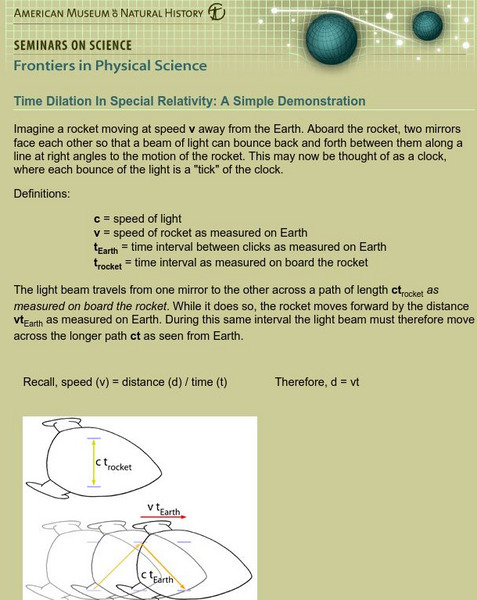
American Museum of Natural History: Resources: Time Dilation Equation
Using an example of light bouncing back and forth between two mirrors in a rocket, time dilation is explained in this resource. Step-by-step calculations using Einstein's time dilation equation are shown.
American Museum of Natural History
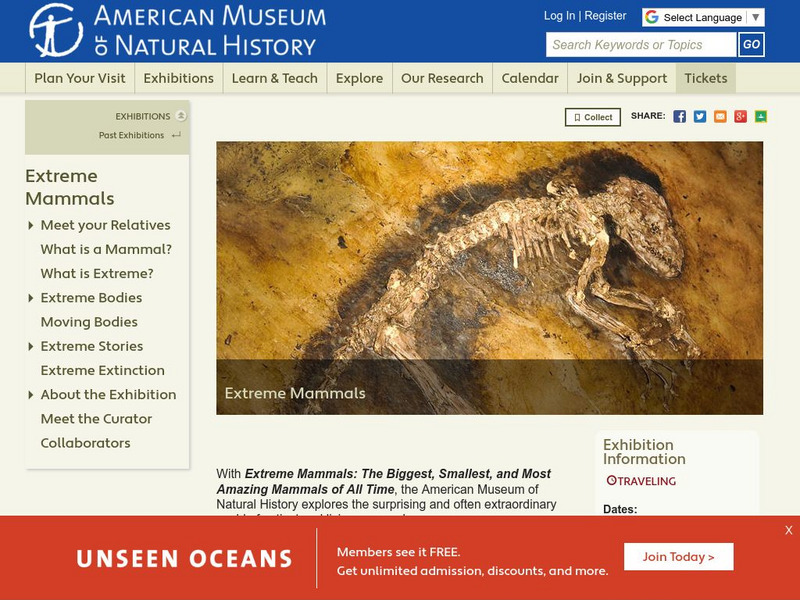
American Museum of Natural History: Exhibition: Extreme Mammals
Learn about the body structure, habitat, reproduction, movement, and evolution of extreme mammals, both extinct and living, through interative animation and short videos.
American Museum of Natural History
American Museum of Natural History: It Takes All Kinds to Make a World
Learn about the biodiversity found in the ocean by looking at examples of marine life.