Hi, what do you want to do?





Smithsonian Institution
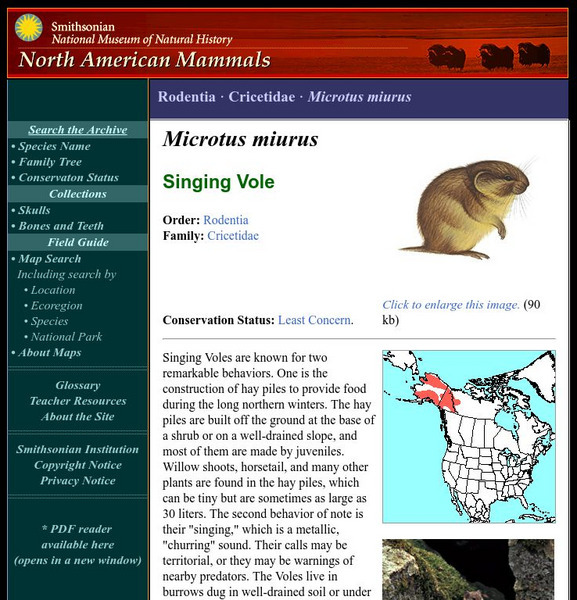
National Museum of Natural History: American Mammals: Singing Vole
Singing Voles are known for two remarkable behaviors. One is the construction of hay piles to provide food during the long northern winters. Learn more about the Microtus miurus, more commonly known as a Singing Vole, in this...
Smithsonian Institution
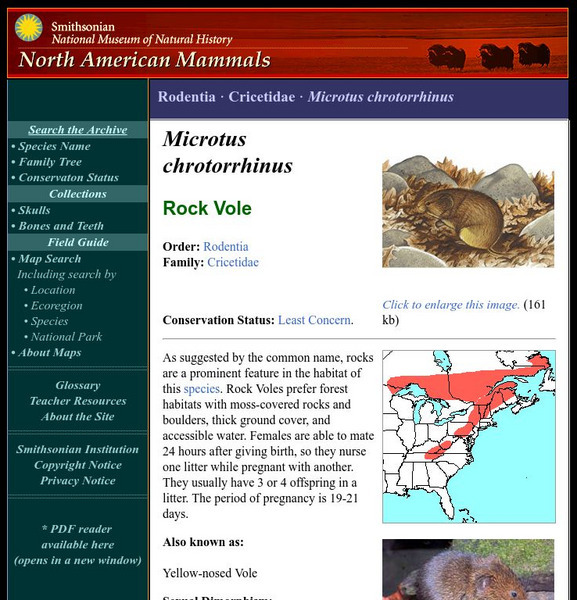
National Museum of Natural History: American Mammals: Rock Vole
As suggested by the common name, rocks are a prominent feature in the habitat of this species. Rock Voles prefer forest habitats with moss-covered rocks and boulders, thick ground cover, and accessible water. Learn more about the...

Smithsonian Institution
National Museum of Natural History: American Mammals: Long Tailed Vole
Long-tailed Voles need cool, moist habitats, so they are found mostly near the peaks of mountain ranges. Fruits and seeds make up the bulk of their diet, but they also eat fungi, bark, and leaves if necessary. Learn more about the...
Smithsonian Institution
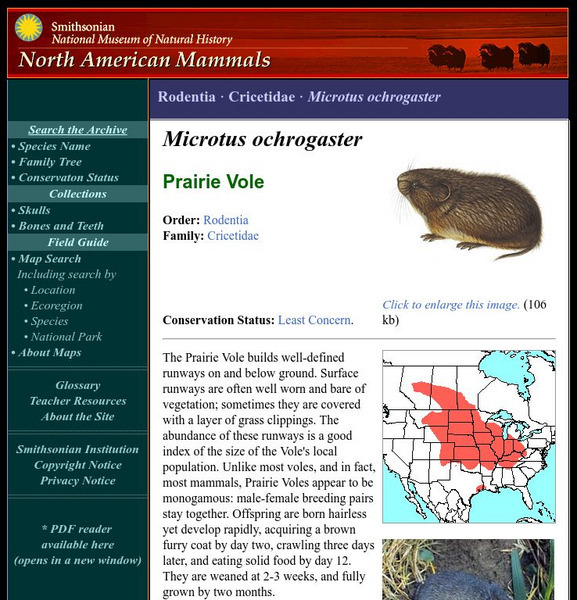
National Museum of Natural History: American Mammals: Prairie Vole
The Prairie Vole builds well-defined runways on and below ground. Surface runways are often well worn and bare of vegetation; sometimes they are covered with a layer of grass clippings. Learn more about the Microtus ochrogaster, more...
Smithsonian Institution
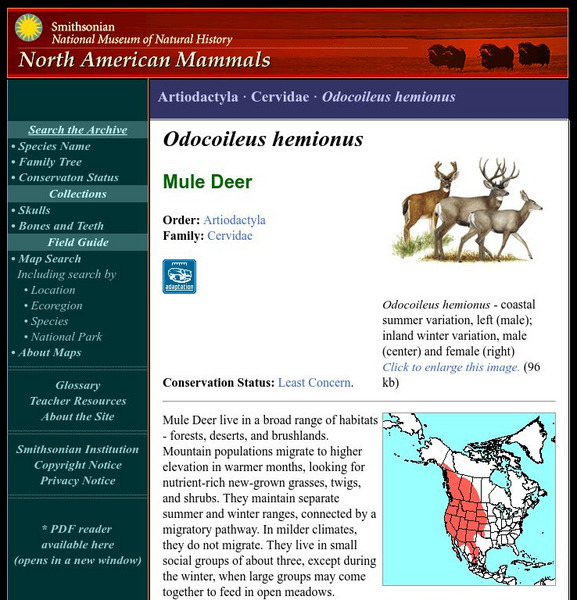
National Museum of Natural History: American Mammals: Mule Deer
Mule Deer live in a broad range of habitats - forests, deserts, and brushlands. Mountain populations migrate to higher elevation in warmer months, looking for nutrient-rich new-grown grasses, twigs, and shrubs. Learn more about the...
Smithsonian Institution
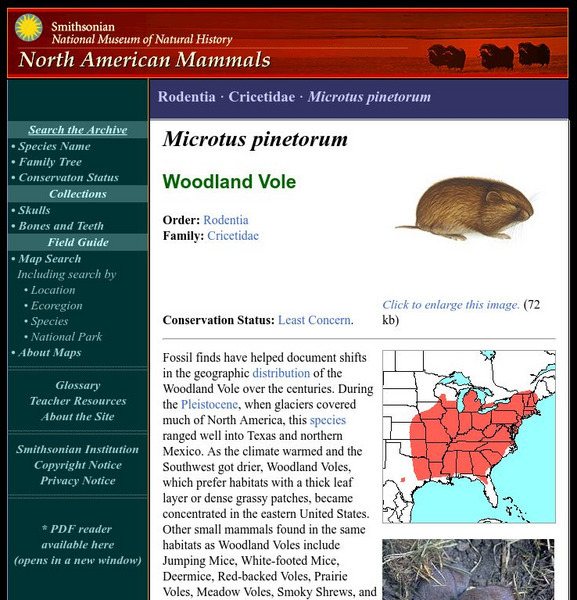
National Museum of Natural History: American Mammals: Woodland Vole
Fossil finds have helped document shifts in the geographic distribution of the Woodland Vole over the centuries. During the Pleistocene, when glaciers covered much of North America, this species ranged well into Texas and northern...

Smithsonian Institution
National Museum of Natural History: American Mammals: Southeastern Myotis
The southeastern myotis occurs as far west as northeastern Texas and southwestern Oklahoma. Its preferred daytime roosts are caves with pools of water. Learn more about the Myotis austroriparius, more commonly known as a Southeastern...
Smithsonian Institution
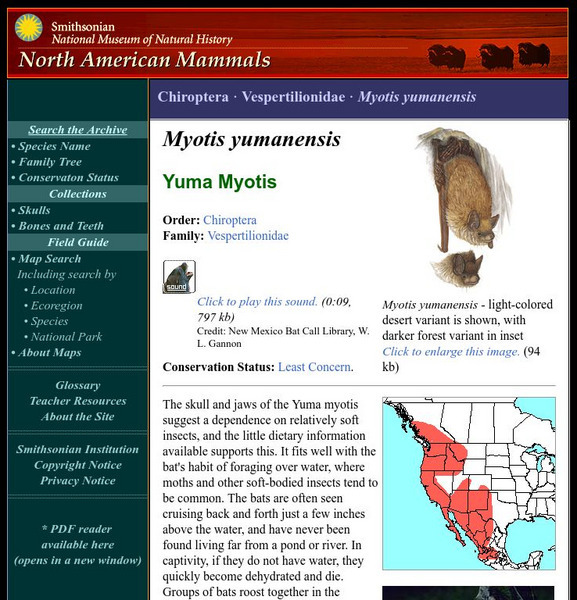
National Museum of Natural History: American Mammals: Yuma Myotis
The skull and jaws of the Yuma myotis suggest a dependence on relatively soft insects, and the little dietary information available supports this. It fits well with the bat's habit of foraging over water, where moths and other...
Smithsonian Institution
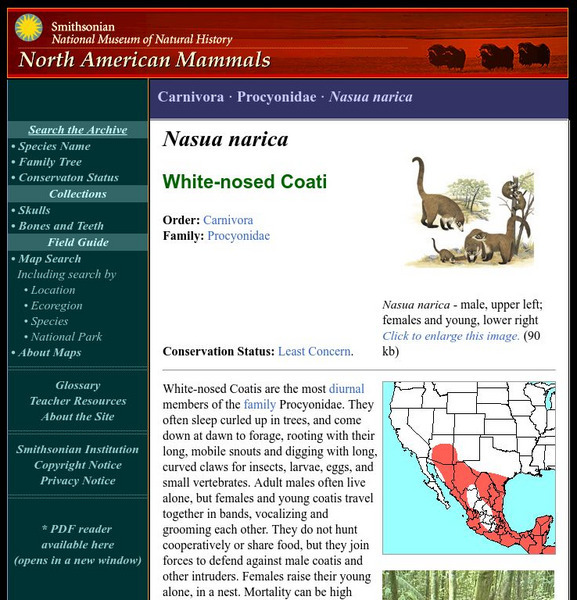
National Museum of Natural History: American Mammals: White Nosed Coati
White-nosed Coatis are the most diurnal members of the family Procyonidae. They often sleep curled up in trees, and come down at dawn to forage, rooting with their long, mobile snouts and digging with long, curved claws for insects,...
Smithsonian Institution
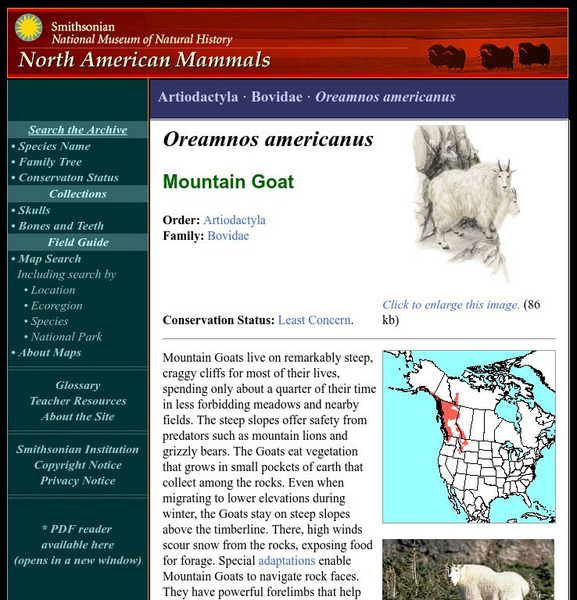
National Museum of Natural History: American Mammals: Mountain Goat
Mountain Goats live on remarkably steep, craggy cliffs for most of their lives, spending only about a quarter of their time in less forbidding meadows and nearby fields. The steep slopes offer safety from predators such as mountain lions...
Smithsonian Institution
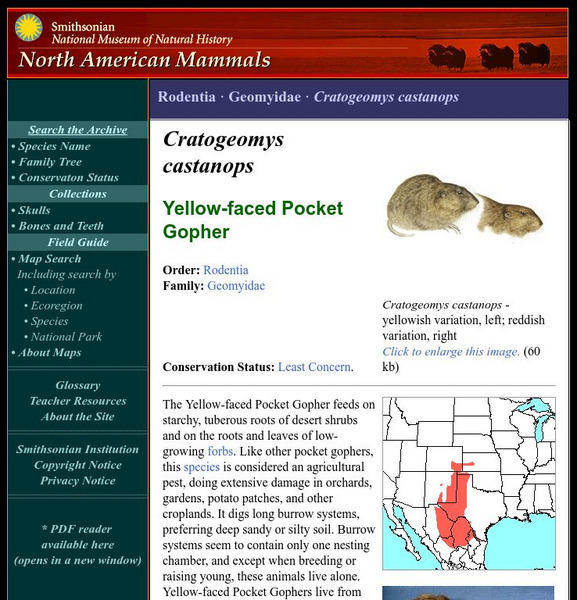
National Museum of Natural History: American Mammals: Yellow Faced Pocket Gopher
The Yellow-faced Pocket Gopher feeds on starchy, tuberous roots of desert shrubs and on the roots and leaves of low-growing forbs. Like other pocket gophers, this species is considered an agricultural pest, doing extensive damage in...
Smithsonian Institution
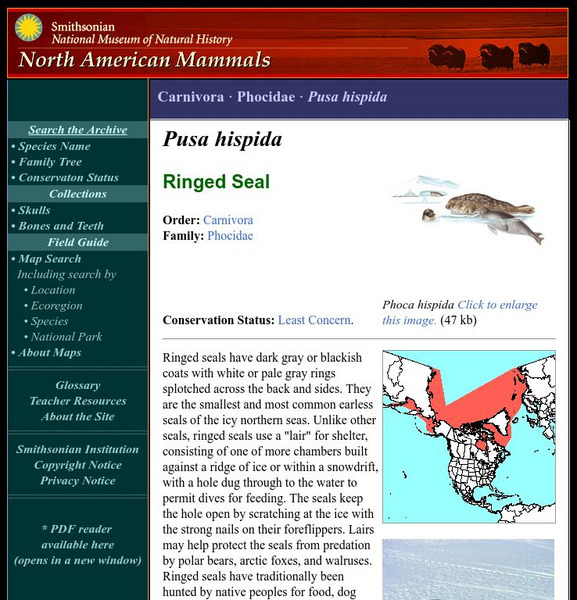
National Museum of Natural History: American Mammals: Ringed Seal
Ringed Seals have dark gray or blackish coats with white or pale gray rings splotched across the back and sides. They are the smallest and most common earless seals of the icy northern seas. Learn more about the Phoca hispida, more...
Smithsonian Institution
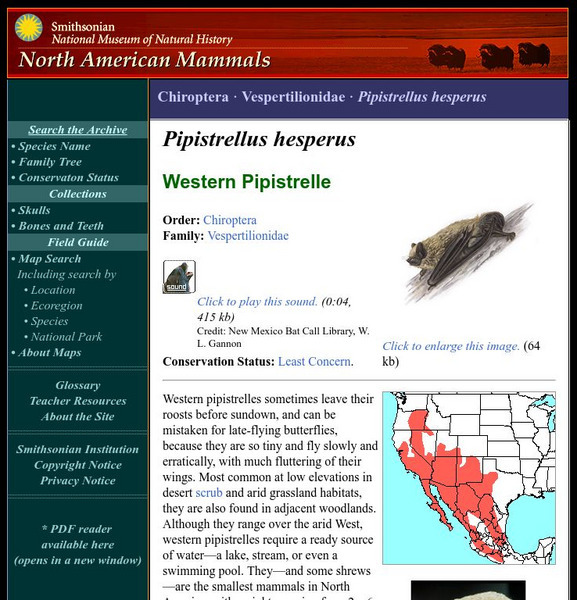
National Museum of Natural History: American Mammals: Western Pipistrelle
Western pipistrelles sometimes leave their roosts before sundown and can be mistaken for late-flying butterflies, because they are so tiny and fly slowly and erratically, with much fluttering of their wings. Most common at low elevations...
Smithsonian Institution
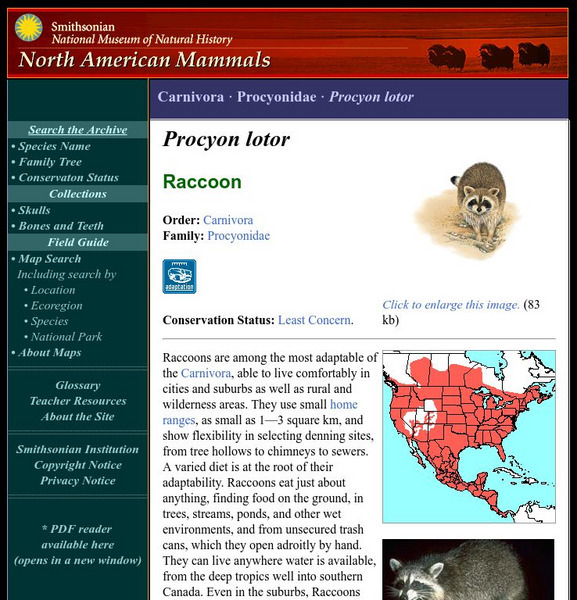
National Museum of Natural History: American Mammals: Northern Raccoon
Raccoons are among the most adaptable of the Carnivora, able to live comfortably in cities and suburbs as well as rural and wilderness areas. They use small home ranges, as small as 1x3 square km, and show flexibility in selecting...
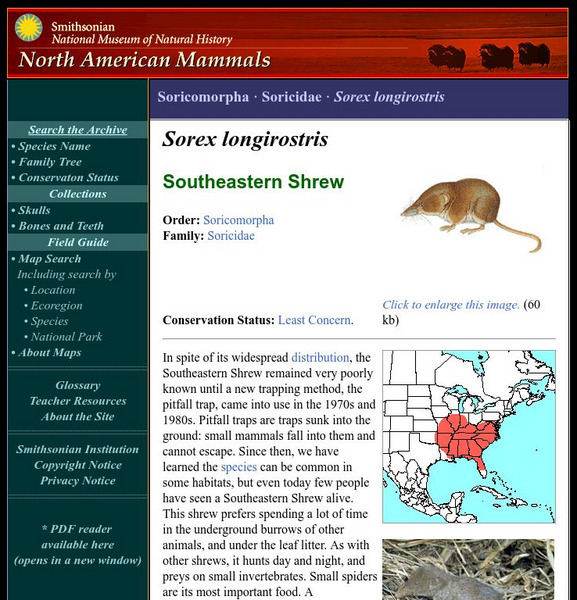
Smithsonian Institution
National Museum of Natural History: American Mammals: Southeastern Shrew
In spite of its widespread distribution, the Southeastern Shrew remained very poorly known until a new trapping method, the pitfall trap, came into use in the 1970s and 1980s. Pitfall traps are traps sunk into the ground: small mammals...
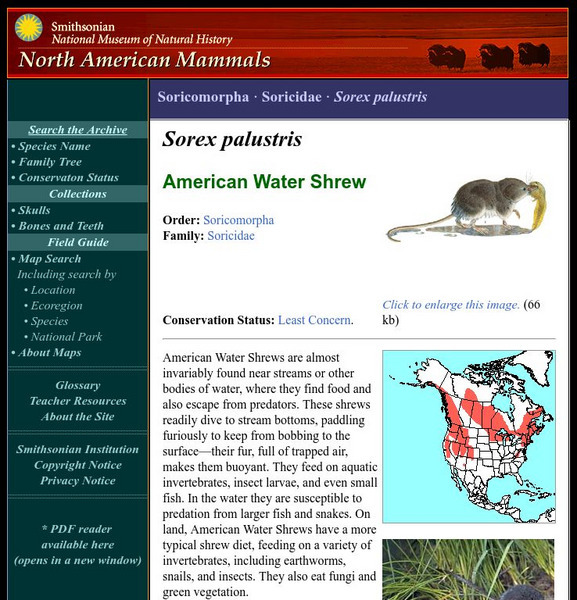
Smithsonian Institution
National Museum of Natural History: American Mammals: Water Shrew
Water Shrews are almost invariably found near streams or other bodies of water, where they find food and also escape from predators. These shrews readily dive to stream bottoms, paddling furiously to keep from bobbing to the surface,...
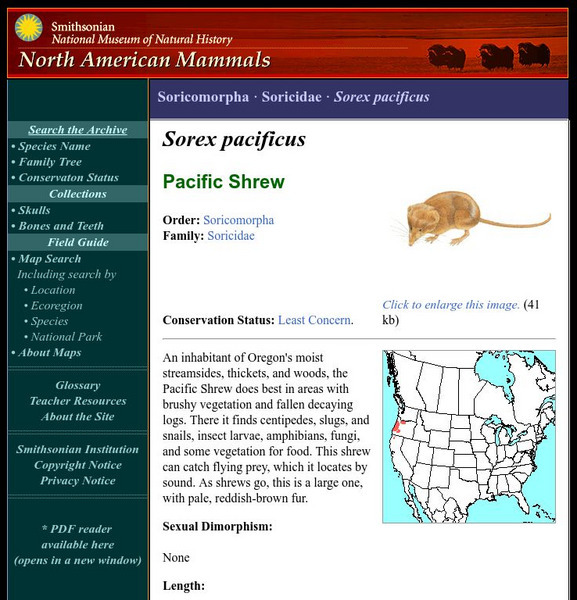
Smithsonian Institution
National Museum of Natural History: American Mammals: Pacific Shrew
An inhabitant of Oregon's moist streamsides, thickets, and woods, the Pacific Shrew does best in areas with brushy vegetation and fallen decaying logs. There it finds centipedes, slugs, and snails, insect larvae, amphibians, fungi, and...
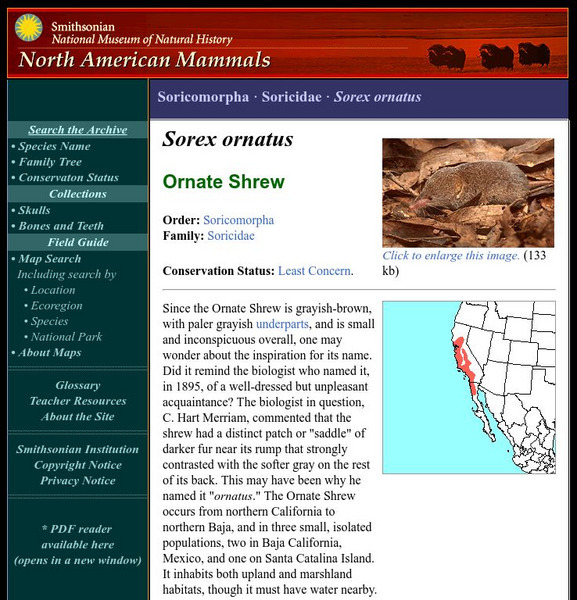
Smithsonian Institution
National Museum of Natural History: American Mammals: Ornate Shrew
Since the Ornate Shrew is grayish-brown, with paler grayish underparts, and is small and inconspicuous overall, one may wonder about the inspiration for its name. Did it remind the biologist who named it, in 1895, of a well-dressed but...
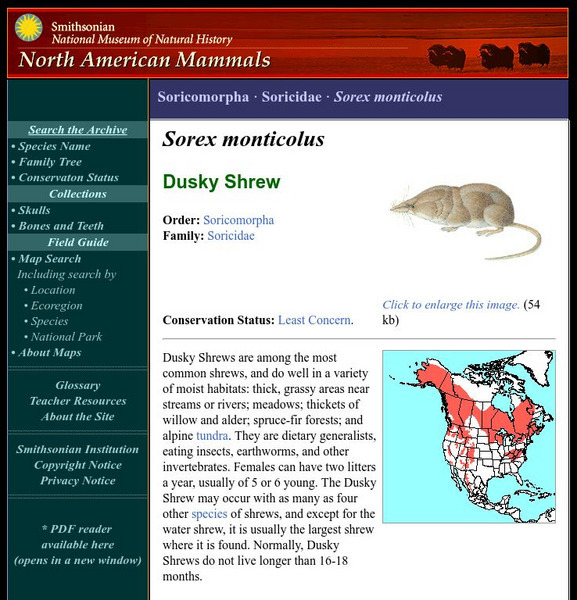
Smithsonian Institution
National Museum of Natural History: American Mammals: Montane Shrew
Montane Shrews are among the most common shrews, and do well in a variety of moist habitats: thick, grassy areas near streams or rivers; meadows; thickets of willow and alder; spruce-fir forests; and alpine tundra. They are dietary...
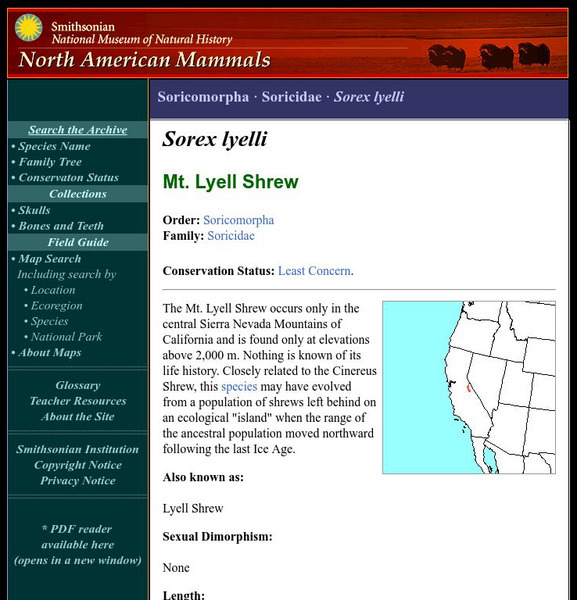
Smithsonian Institution
National Museum of Natural History: American Mammals: Mt. Lyell Shrew
The Mt. Lyell Shrew occurs only in the central Sierra Nevada Mountains of California and is found only at elevations above 2,000 m. Learn more about the Sorex lyelli, more commonly known as a Mt. Lyell Shrew, in this easy-to-read species...
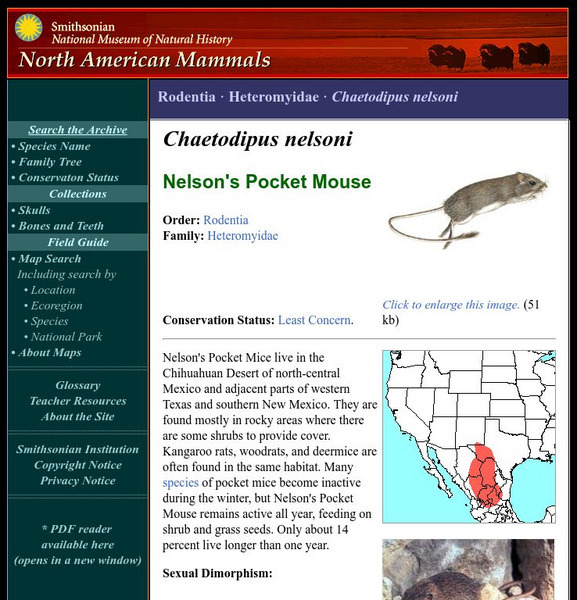
Smithsonian Institution
National Museum of Natural History: American Mammals: Nelson's Pocket Mouse
Nelson's Pocket Mice live in the Chihuahuan Desert of north-central Mexico and adjacent parts of western Texas and southern New Mexico. They are found mostly in rocky areas where there are some shrubs to provide cover. Learn more about...
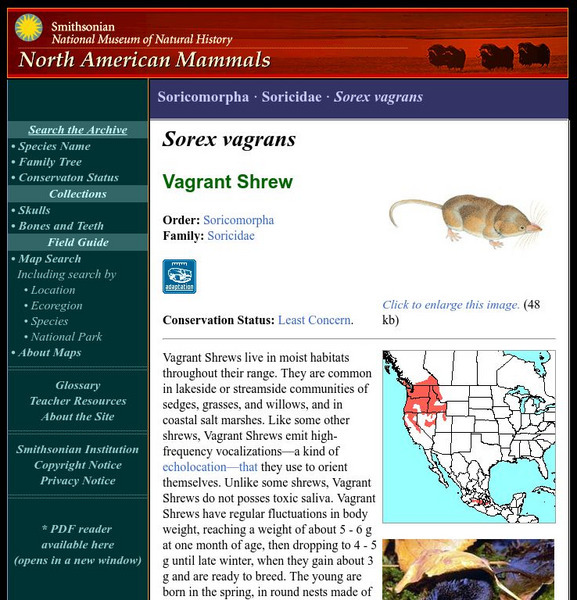
Smithsonian Institution
National Museum of Natural History: American Mammals: Vagrant Shrew
Vagrant Shrews live in moist habitats throughout their range. They are common in lakeside or streamside communities of sedges, grasses, and willows, and in coastal salt marshes. Learn more about the Sorex vagrans, more commonly known as...
Smithsonian Institution
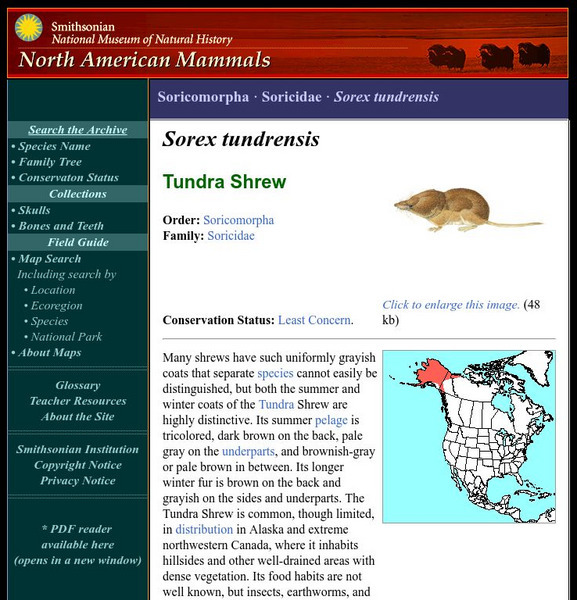
National Museum of Natural History: American Mammals: Tundra Shrew
Many shrews have such uniformly grayish coats that separate species cannot easily be distinguished, but both the summer and winter coats of the Tundra Shrew are highly distinctive. Its summer pelage is tricolored, dark brown on the back,...
Smithsonian Institution
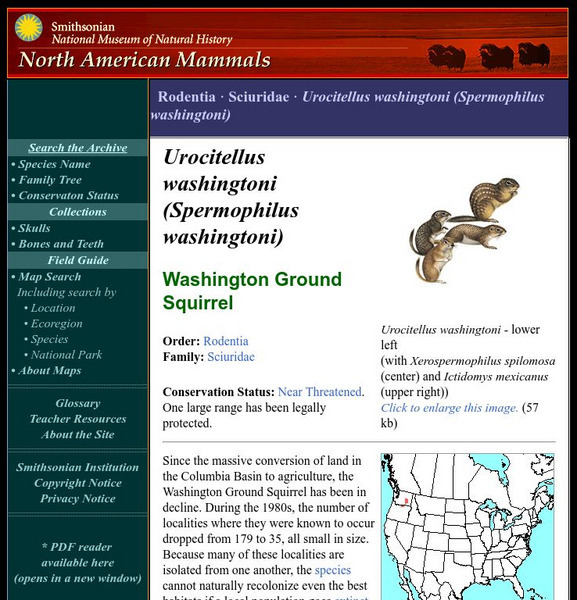
National Museum of Natural History: American Mammals: Washington Ground Squirrel
Since the massive conversion of land in the Columbia Basin to agriculture, the Washington Ground Squirrel has been in decline. During the 1980s, the number of localities where they were known to occur dropped from 179 to 35, all small in...