Hi, what do you want to do?





Smithsonian Institution
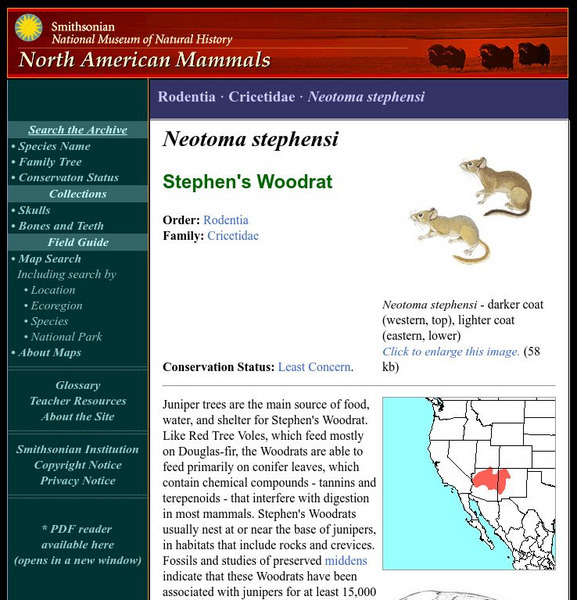
National Museum of Natural History: American Mammals: Stephen's Woodrat
Juniper trees are the main source of food, water, and shelter for Stephen's Woodrat. Like Red Tree Voles, which feed mostly on Douglas-fir, the Woodrats are able to feed primarily on conifer leaves, which contain chemical compounds -...
Smithsonian Institution
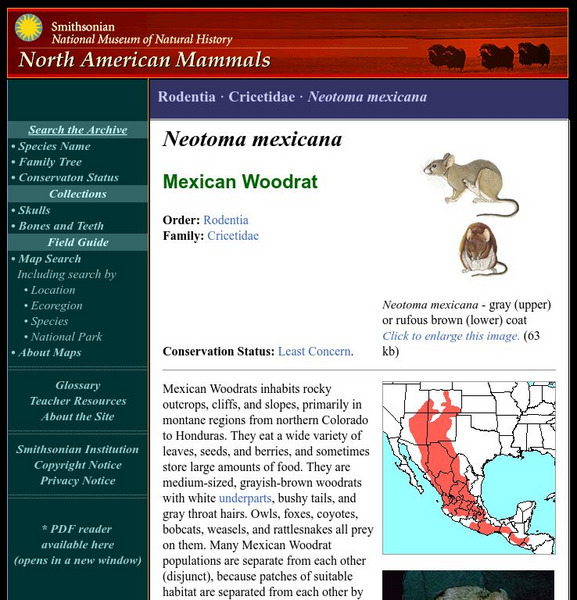
National Museum of Natural History: American Mammals: Mexican Woodrat
Mexican Woodrats inhabits rocky outcrops, cliffs, and slopes, primarily in montane regions from northern Colorado to Honduras. They eat a wide variety of leaves, seeds, and berries, and sometimes store large amounts of food. Learn more...
Smithsonian Institution
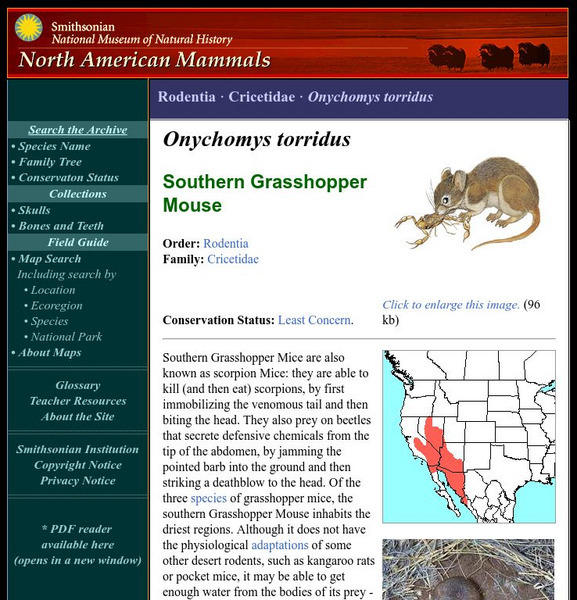
National Museum of Natural History: American Mammals: Southern Grasshopper Mouse
Southern Grasshopper Mice are also known as scorpion Mice: they are able to kill (and then eat) scorpions, by first immobilizing the venomous tail and then biting the head. They also prey on beetles that secrete defensive chemicals from...
Smithsonian Institution
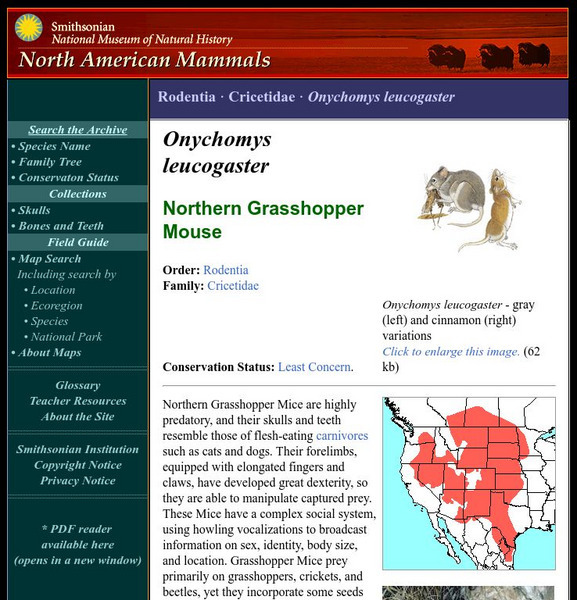
National Museum of Natural History: American Mammals: Northern Grasshopper Mouse
Northern Grasshopper Mice are highly predatory, and their skulls and teeth resemble those of flesh-eating carnivores such as cats and dogs. Their forelimbs, equipped with elongated fingers and claws, have developed great dexterity, so...
Smithsonian Institution
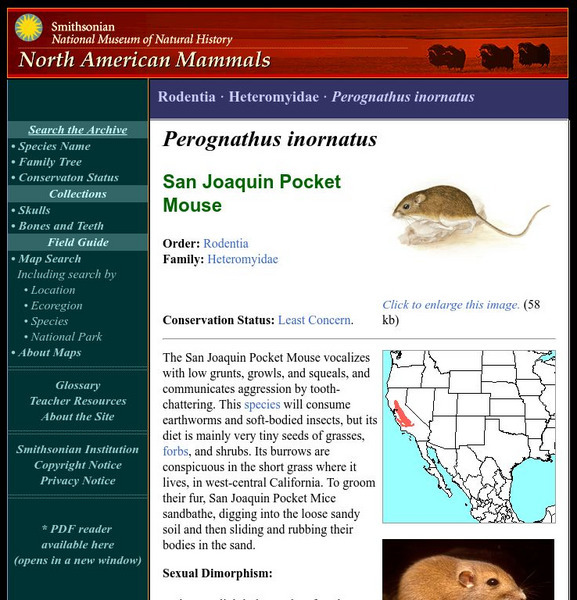
National Museum of Natural History: American Mammals: San Joaquin Pocket Mouse
The San Joaquin Pocket Mouse vocalizes with low grunts, growls, and squeals, and communicates aggression by tooth-chattering. This species will consume earthworms and soft-bodied insects, but its diet is mainly very tiny seeds of...
Smithsonian Institution
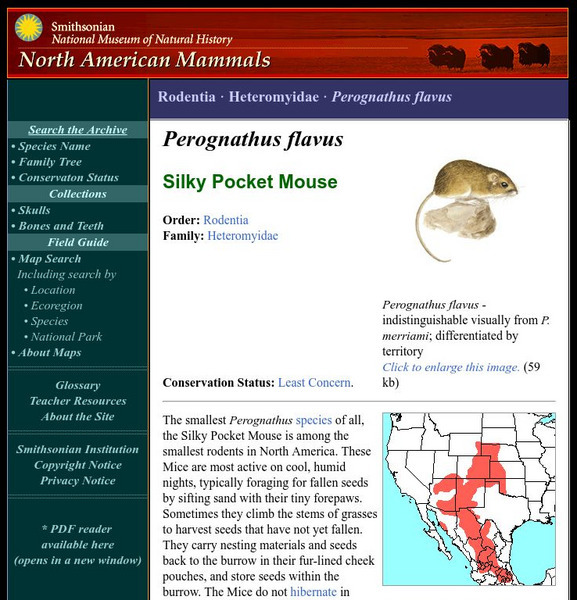
National Museum of Natural History: American Mammals: Silky Pocket Mouse
The smallest Perognathus species of all, the Silky Pocket Mouse is among the smallest rodents in North America. These Mice are most active on cool, humid nights, typically foraging for fallen seeds by sifting sand with their tiny...
Smithsonian Institution
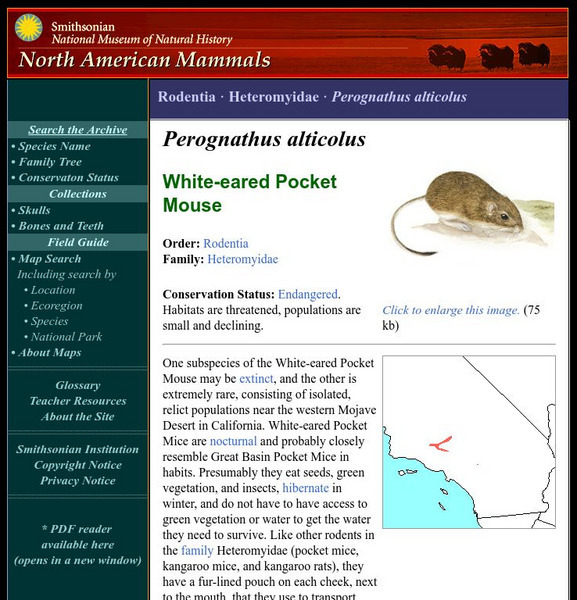
National Museum of Natural History: American Mammals: White Eared Pocket Mouse
One subspecies of the White-eared Pocket Mouse may be extinct, and the other is extremely rare, consisting of isolated, relict populations near the western Mojave Desert in California. White-eared Pocket Mice are nocturnal and probably...
Smithsonian Institution
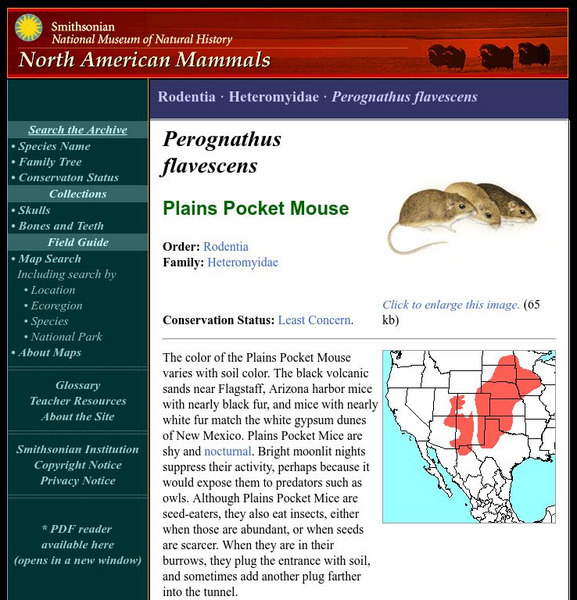
National Museum of Natural History: American Mammals: Plains Pocket Mouse
The color of the Plains Pocket Mouse varies with soil color. The black volcanic sands near Flagstaff, Arizona harbor mice with nearly black fur, and mice with nearly white fur match the white gypsum dunes of New Mexico. Learn more about...
Smithsonian Institution
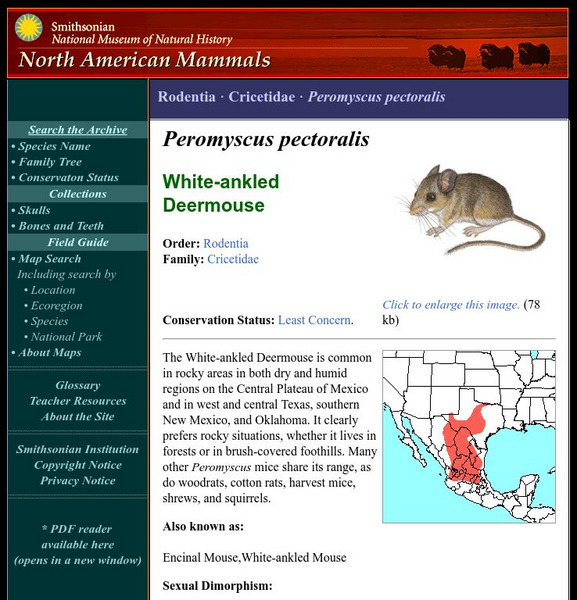
National Museum of Natural History: American Mammals: White Ankled Mouse
The White-ankled Mouse is common in rocky areas in both dry and humid regions on the Central Plateau of Mexico and in west and central Texas, southern New Mexico, and Oklahoma. It clearly prefers rocky situations, whether it lives in...
Smithsonian Institution
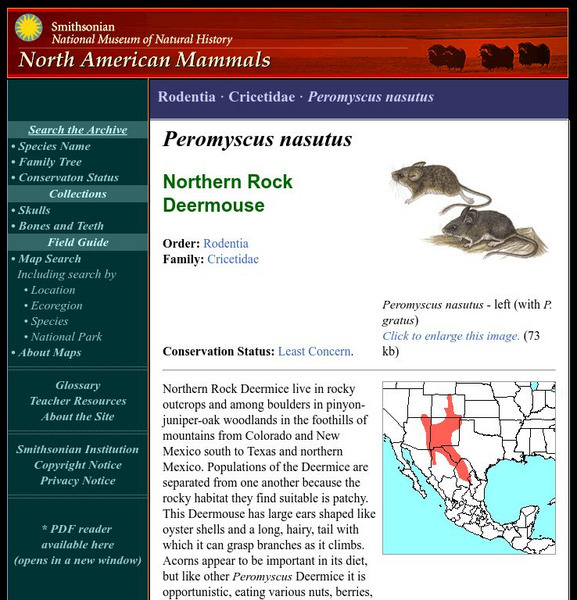
National Museum of Natural History: American Mammals: Northern Rock Deermouse
Northern Rock Deermice live in rocky outcrops and among boulders in pinyon-juniper-oak woodlands in the foothills of mountains from Colorado and New Mexico south to Texas and northern Mexico. Populations of the Mice are separated from...
Smithsonian Institution
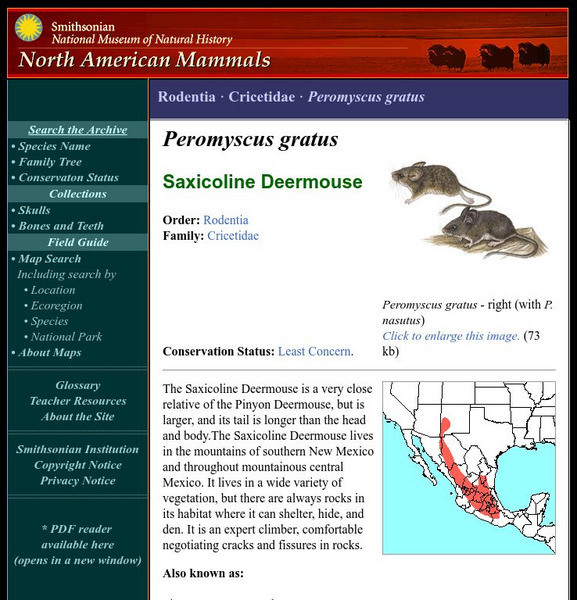
National Museum of Natural History: American Mammals: Osgood's Mouse
Osgood's Mouse is a very close relative of the Pinyon Mouse but is larger, and its tail is longer than the head and body. Osgood's Mouse lives in the mountains of southern New Mexico and throughout mountainous central Mexico. Learn more...
Smithsonian Institution
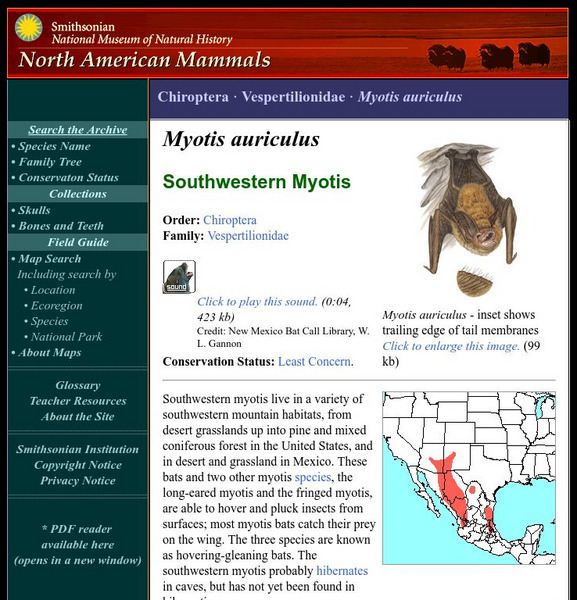
National Museum of Natural History: American Mammals: Southwestern Myotis
Southwestern myotis live in a variety of southwestern mountain habitats, from desert grasslands up into pine and mixed coniferous forest in the United States, and in desert and grassland in Mexico. These bats and two other myotis...
Smithsonian Institution
National Museum of Natural History: American Mammals: Pocketed Free Tailed Bat
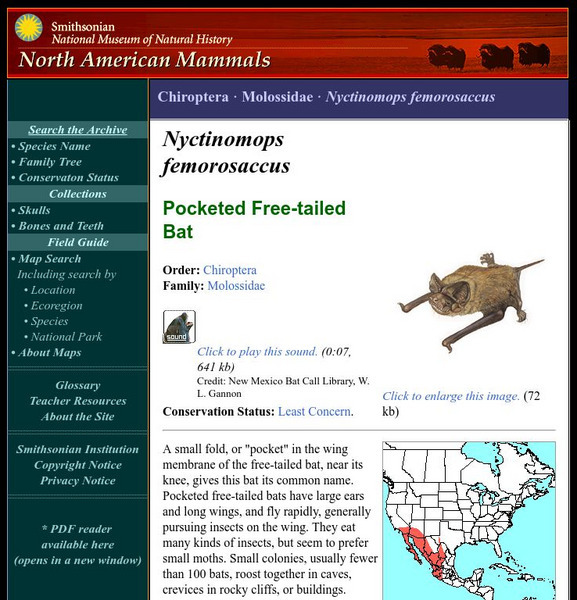
A small fold, or "pocket" in the wing membrane of the free-tailed bat, near its knee, gives this bat its common name. Pocketed free-tailed bats have large ears and long wings, and fly rapidly, generally pursuing insects on the wing....
Smithsonian Institution
National Museum of Natural History: American Mammals: Marsh Rice Rat
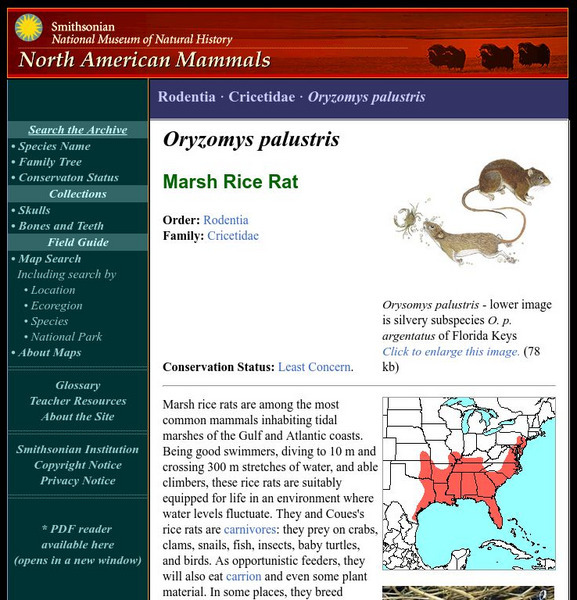
Marsh rice rats are among the most common mammals inhabiting tidal marshes of the Gulf and Atlantic coasts. Being good swimmers, diving to 10 m and crossing 300 m stretches of water, and able climbers, these rice rats are suitably...
Smithsonian Institution
National Museum of Natural History: American Mammals: Pinyon Deermouse
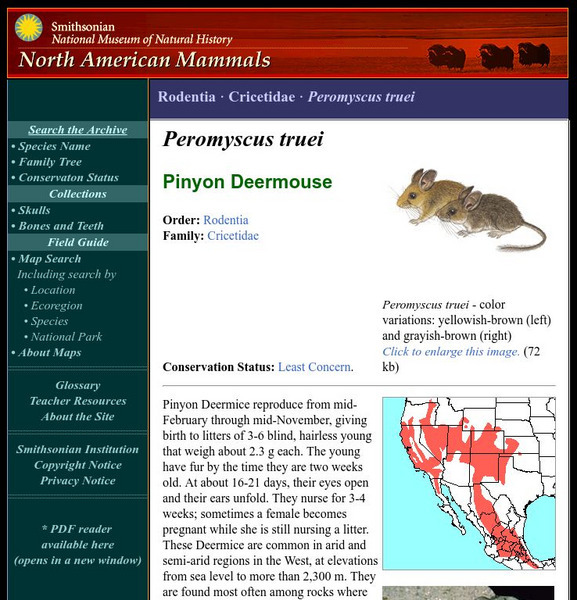
Pinyon Deermice reproduce from mid-February through mid-November, giving birth to litters of 3-6 blind, hairless young that weigh about 2.3 g each. Learn more about the Peromyscus truei, more commonly known as a Pinyon Mouse, in this...
Smithsonian Institution
National Museum of Natural History: American Mammals: Pygmy Rabbit
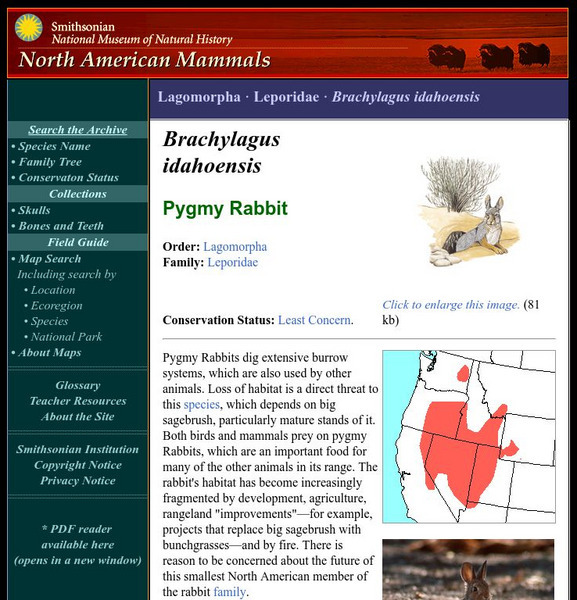
Pygmy Rabbits dig extensive burrow systems, which are also used by other animals. Loss of habitat is a direct threat to this species, which depends on big sagebrush, particularly mature stands of it. Learn more about the Brachylagus...
Smithsonian Institution
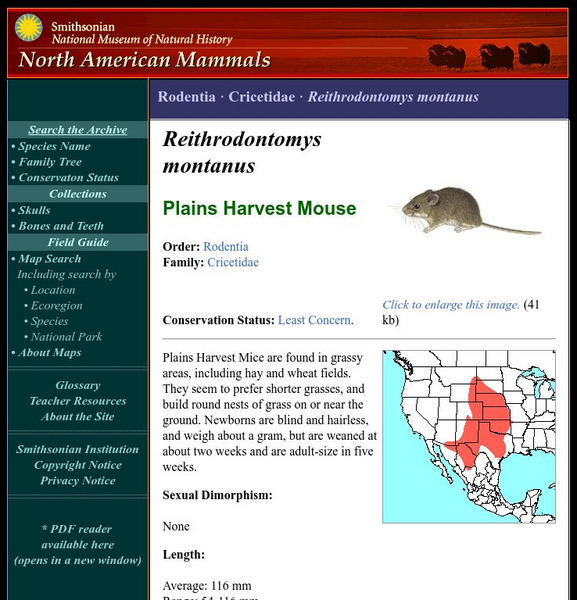
National Museum of Natural History: American Mammals: Plains Harvest Mouse
Plains Harvest Mice are found in grassy areas, including hay and wheat fields. They seem to prefer shorter grasses, and build round nests of grass on or near the ground. Learn more about the Reithrodontomys montanus, more commonly known...
Smithsonian Institution
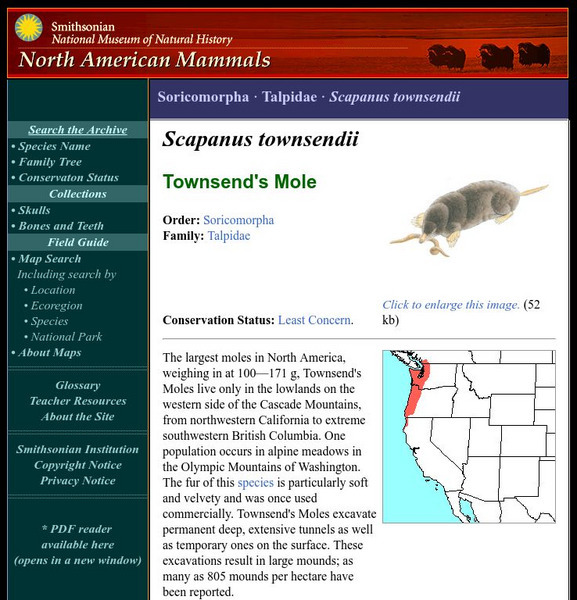
National Museum of Natural History: American Mammals: Townsend's Mole
The largest moles in North America, weighing in at 100 - 171 grams, Townsend's Moles live only in the lowlands on the western side of the Cascade Mountains, from northwestern California to extreme southwestern British Columbia. One...
Smithsonian Institution
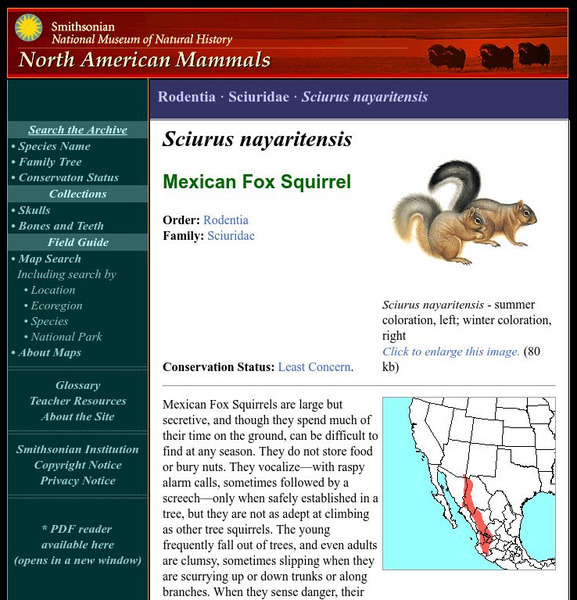
National Museum of Natural History: American Mammals: Mexican Fox Squirrel
Mexican Fox Squirrels are large but secretive, and though they spend much of their time on the ground, can be difficult to find at any season. They do not store food or bury nuts. Learn more about the Sciurus nayaritensis, more commonly...
Smithsonian Institution
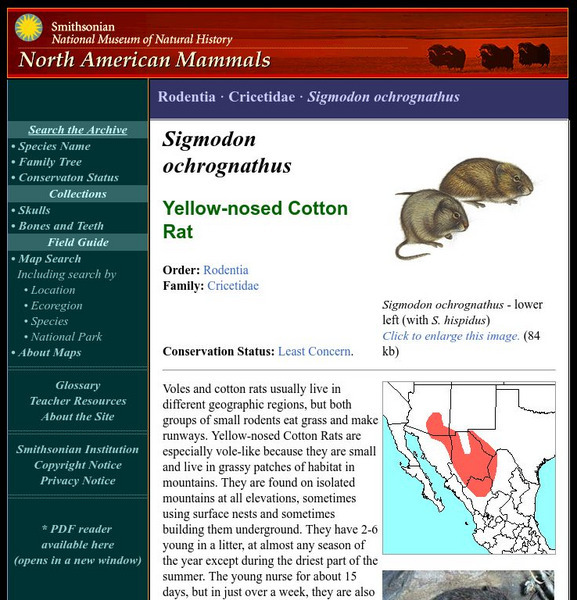
National Museum of Natural History: American Mammals: Yellow Nosed Cotton Rat
Voles and cotton rats usually live in different geographic regions, but both groups of small rodents eat grass and make runways. Yellow-nosed Cotton Rats are especially vole-like because they are small and live in grassy patches of...
Smithsonian Institution
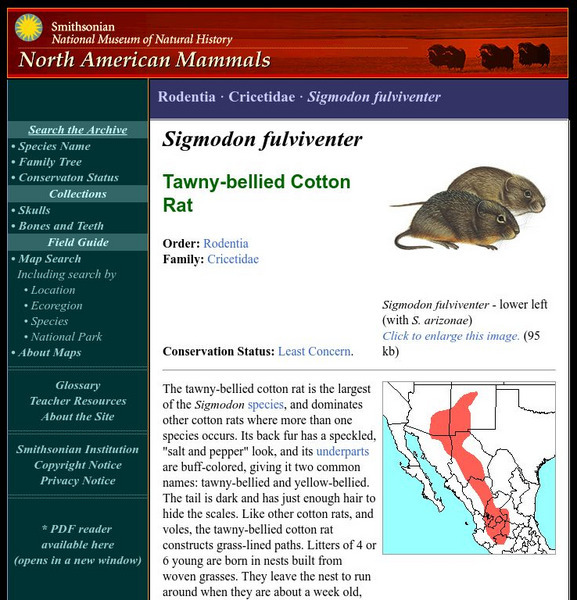
National Museum of Natural History: American Mammals: Tawny Bellied Cotton Rat
The tawny-bellied cotton rat is the largest of the Sigmodon species, and dominates other cotton rats where more than one species occurs. Its back fur has a speckled, "salt and pepper" look, and its underparts are buff-colored, giving it...
Smithsonian Institution
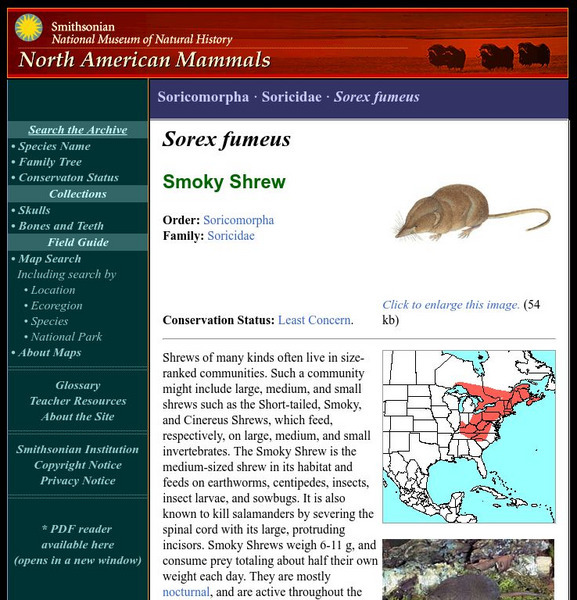
National Museum of Natural History: American Mammals: Smoky Shrew
Shrews of many kinds often live in size-ranked communities. Such a community might include large, medium, and small shrews such as the Short-tailed, Smoky, and Cinereus Shrews, which feed, respectively, on large, medium, and small...
Smithsonian Institution
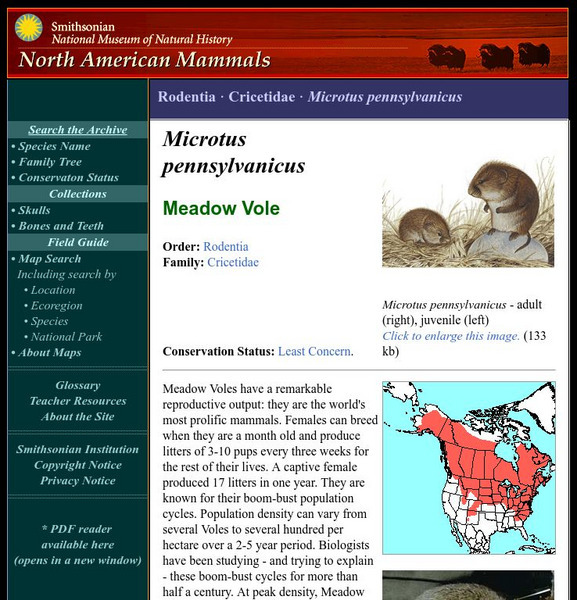
National Museum of Natural History: American Mammals: Meadow Vole
Meadow Voles have a remarkable reproductive output: they are the world's most prolific mammals. Females can breed when they are a month old and produce litters of 3-10 pups every three weeks for the rest of their lives. Learn more about...
Smithsonian Institution
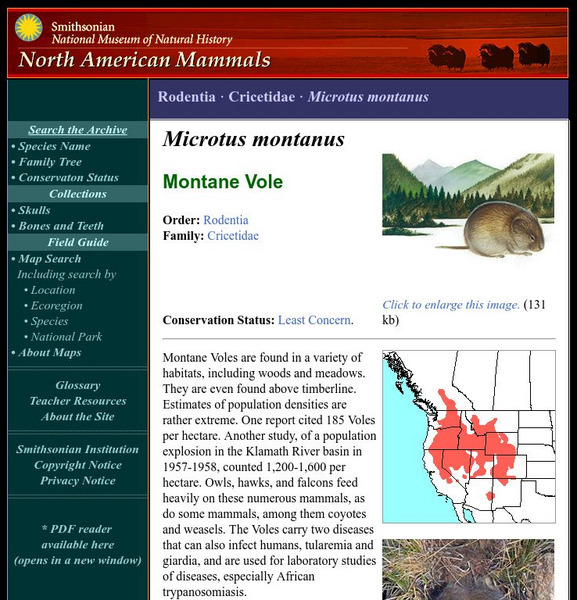
National Museum of Natural History: American Mammals: Montane Vole
Montane Voles are found in a variety of habitats, including woods and meadows. They are even found above timberline. Learn more about the Microtus montanus, more commonly known as a Montane Vole, in this easy-to-read species overview by...