Hi, what do you want to do?





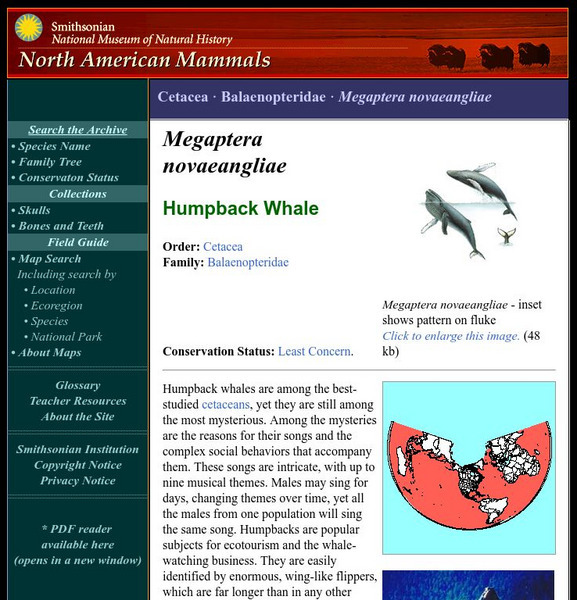
Smithsonian Institution
National Museum of Natural History: American Mammals: Humpback Whale
Humpback whales are among the best-studied cetaceans, yet they are still among the most mysterious. Among the mysteries are the reasons for their songs and the complex social behaviors that accompany them. Learn more about the Megaptera...
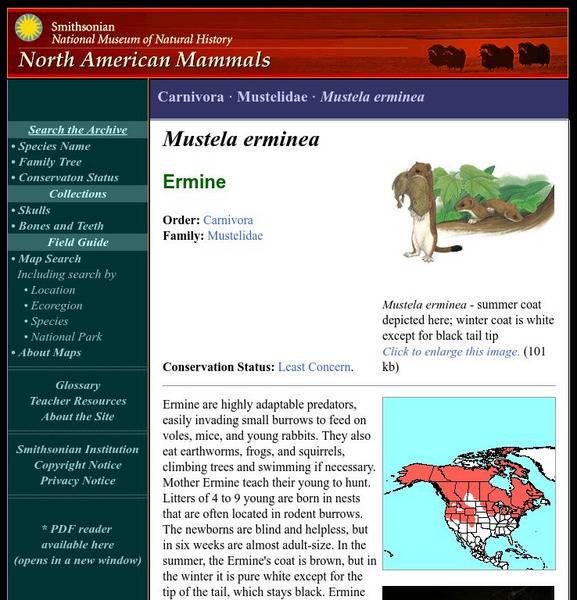
Smithsonian Institution
National Museum of Natural History: American Mammals: Ermine
Ermine are highly adaptable predators, easily invading small burrows to feed on voles, mice, and young rabbits. They also eat earthworms, frogs, and squirrels, climbing trees and swimming if necessary. Learn more about the Mustela...
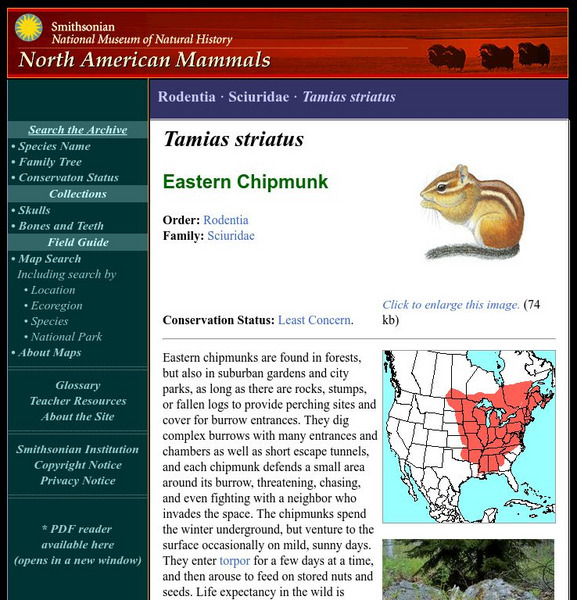
Smithsonian Institution
National Museum of Natural History: American Mammals: Eastern Chipmunk
Eastern chipmunks are found in forests, but also in suburban gardens and city parks, as long as there are rocks, stumps, or fallen logs to provide perching sites and cover for burrow entrances. They dig complex burrows with many...
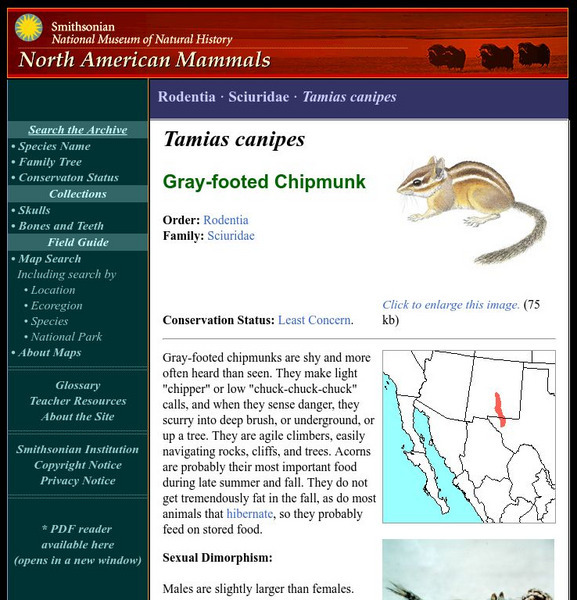
Smithsonian Institution
National Museum of Natural History: American Mammals: Gray Footed Chipmunk
Gray-footed chipmunks are shy and more often heard than seen. They make light "chipper" or low "chuck-chuck-chuck" calls, and when they sense danger, they scurry into deep brush, underground, or up a tree. Learn more about the Tamias...
Smithsonian Institution
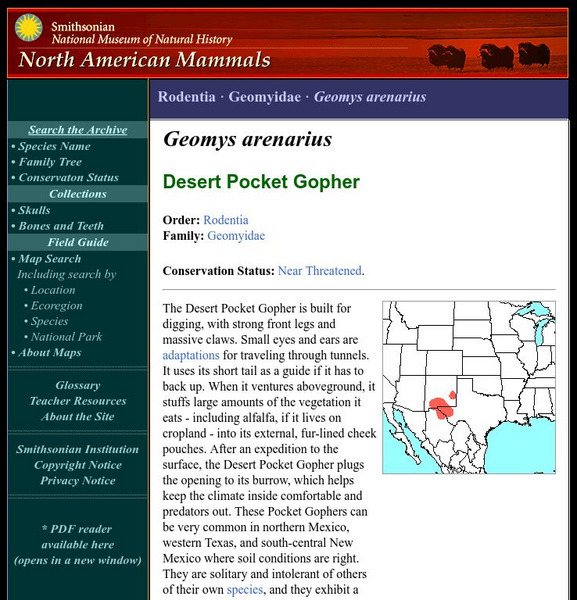
National Museum of Natural History: American Mammals: Desert Pocket Gopher
The Desert Pocket Gopher is built for digging, with strong front legs and massive claws. Small eyes and ears are adaptations for traveling through tunnels. Learn more about the Geomys arenarius, more commonly known as a Desert Pocket...
Smithsonian Institution
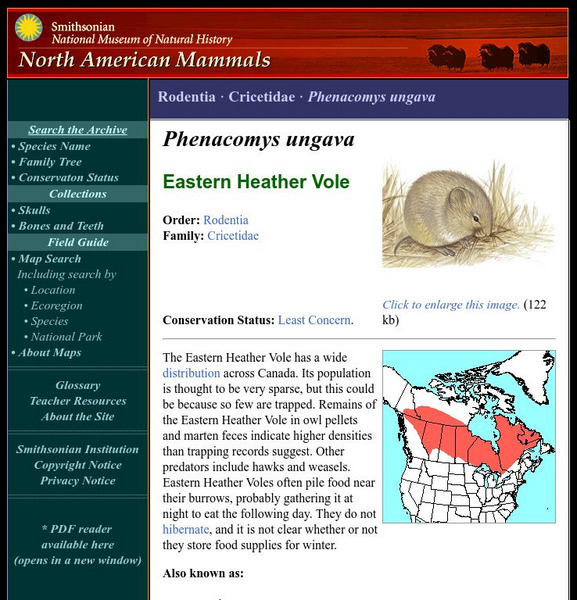
National Museum of Natural History: American Mammals: Eastern Heather Vole
The Eastern Heather Vole has a wide distribution across Canada. Its population is thought to be very sparse, but this could be because so few are trapped. Learn more about the Phenacomys ungava, more commonly known as an Eastern Heather...
Smithsonian Institution
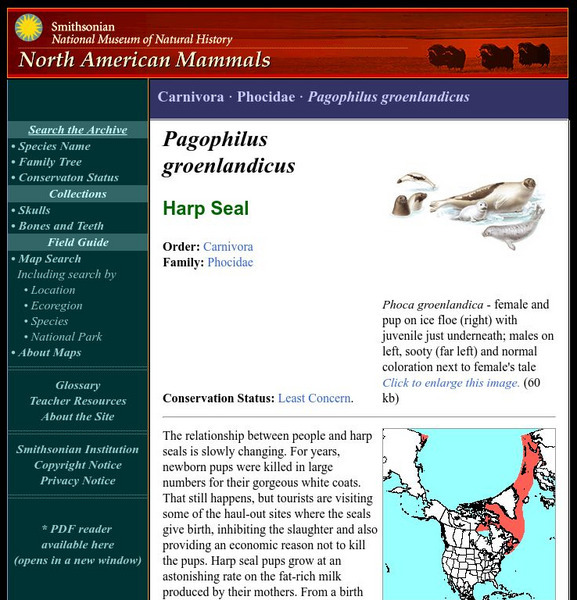
National Museum of Natural History: American Mammals: Harp Seal
The relationship between people and harp seals is slowly changing. For years, newborn pups were killed in large numbers for their gorgeous white coats. Learn more about the Phoca groenlandica, more commonly known as a Harp Seal, in this...
Smithsonian Institution
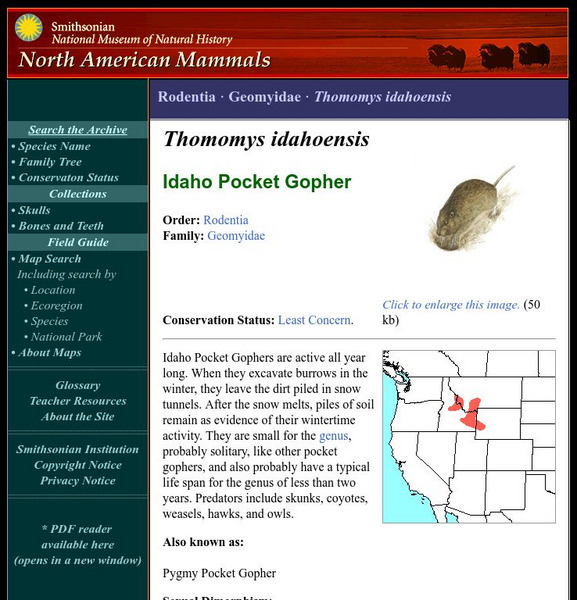
National Museum of Natural History: American Mammals: Idaho Pocket Gopher
Idaho Pocket Gophers are active all year long. When they excavate burrows in the winter, they leave the dirt piled in snow tunnels. Learn more about the Thomomys idahoensis, more commonly known as an Idaho Pocket Gopher, in this...
Smithsonian Institution
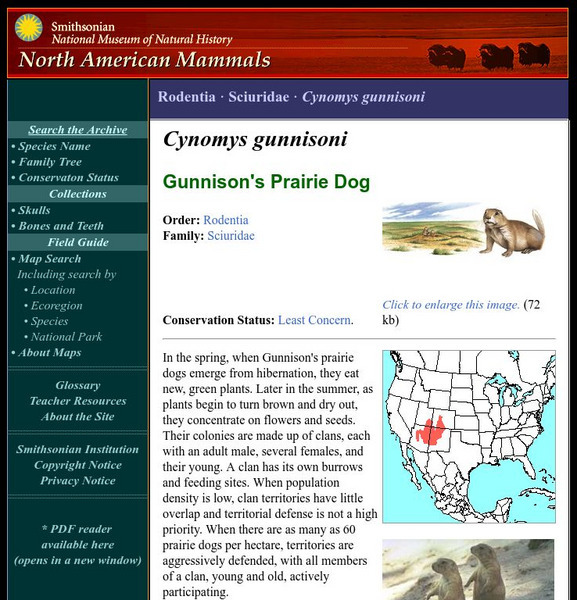
National Museum of Natural History: American Mammals: Gunnison's Prairie Dog
In the spring, when Gunnison's prairie dogs emerge from hibernation, they eat new, green plants. Later in the summer, as plants begin to turn brown and dry out, they concentrate on flowers and seeds. Learn more about the Cynomys...

Smithsonian Institution
National Museum of Natural History: American Mammals: Hooded Seal
Male hooded seals have a fleshy sac above the nostrils that they can inflate. It grows as the animal gets older, and looks a lot like a hood over the nose, thus the name "hooded seal. Learn more about the Cystophora cristata, more...
Smithsonian Institution
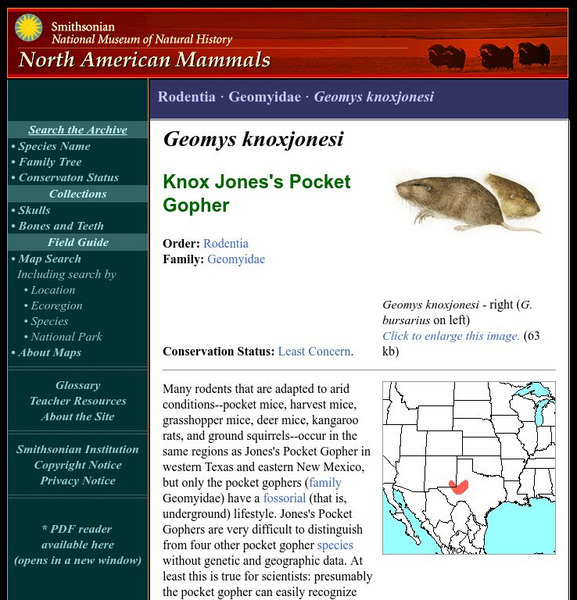
National Museum of Natural History: American Mammals: Jones's Pocket Gopher
Many rodents that are adapted to arid conditions--pocket mice, harvest mice, grasshopper mice, deer mice, kangaroo rats, and ground squirrels--occur in the same regions as Jones's Pocket Gopher in western Texas and eastern New Mexico,...
Smithsonian Institution
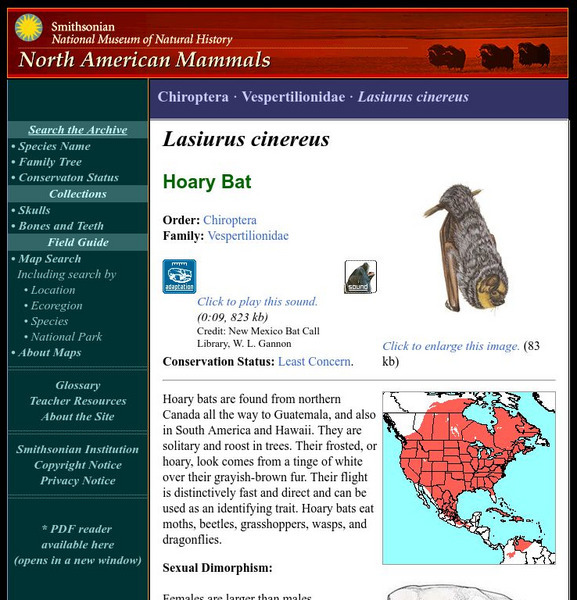
National Museum of Natural History: American Mammals: Hoary Bat
Hoary bats are found from northern Canada all the way to Guatemala, and also in South America and Hawaii. They are solitary and roost in trees. Learn more about the Lasiurus cinereus, more commonly known as a Hoary Bat, in this...
Smithsonian Institution
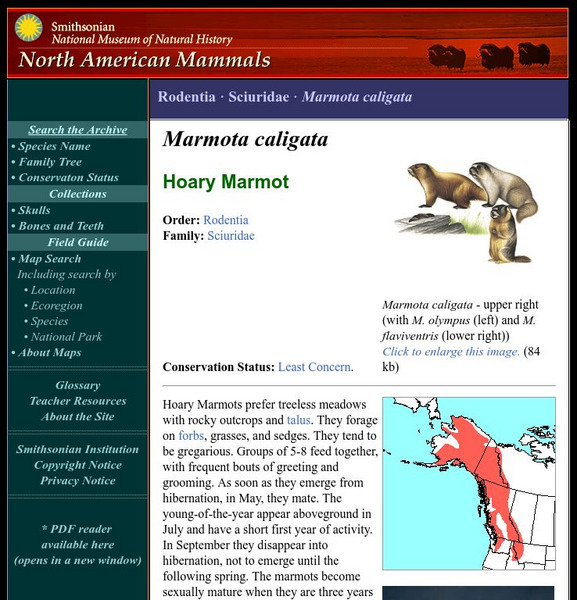
National Museum of Natural History: American Mammals: Hoary Marmot
Hoary Marmots prefer treeless meadows with rocky outcrops and talus. They forage on forbs, grasses, and sedges. Learn more about the Marmota caligata, more commonly known as a Hoary Marmot, in this easy-to-read species overview by the...

Smithsonian Institution
National Museum of Natural History: American Mammals: Fisher
The Fisher is a forest-loving predator that eats anything it can catch, usually small-to-medium-sized rodents, rabbits, hares, and birds. It also eats carrion. Learn more about the Martes pennanti, more commonly known as a Fisher, in...
Smithsonian Institution
National Museum of Natural History: American Mammals: Ghost Faced Bat
Ghost-faced bats forage exclusively on large-bodied moths, and are strong, fast fliers. They spend their days in caves or abandoned mine shafts, and emerge soon after dark to fly to the arroyos and canyons where they forage. Learn more...
Smithsonian Institution
National Museum of Natural History: American Mammals: Eastern Pipistrelle
Not as small as its western cousin, the eastern pipistrelle weighs in at 6 to10 g and is comparable in size to many bats in the family Vespertilionidae. Eastern pipistrelles are stronger fliers than western pipistrelles, and some migrate...
Smithsonian Institution
National Museum of Natural History: American Mammals: Franklin's Ground Squirrel
Franklin's Ground Squirrels live in closed habitats such as tall grass in disturbed areas, shrubland, and woodland edges. Their bushy tails, generally gray coloration, and occurrence in wooded areas can lead one to confuse them with a...
Smithsonian Institution
National Museum of Natural History: American Mammals: Desert Woodrat
Desert Woodrats inhabit scrublands in desert and semi-desert areas. Unlike some other rodents living in regions with limited water resources, the Desert Woodrat does not have water-conserving physiological adaptations. Learn more about...
Smithsonian Institution
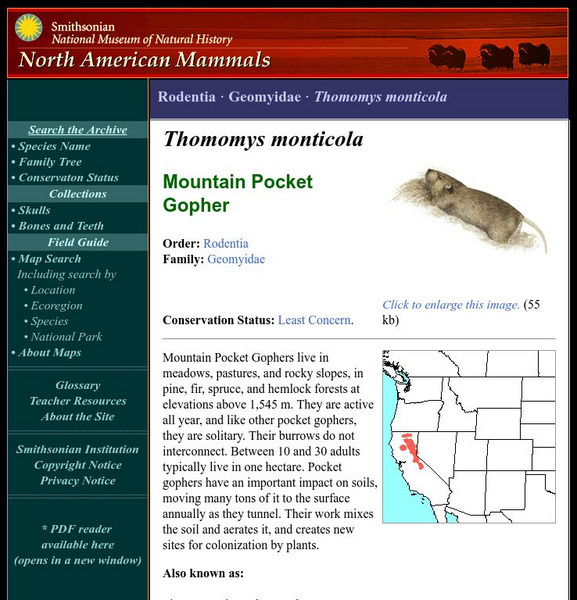
National Museum of Natural History: American Mammals: Mountain Pocket Gopher
Mountain Pocket Gophers live in meadows, pastures, and rocky slopes, in pine, fir, spruce, and hemlock forests at elevations above 1,545 m. They are active all year, and like other pocket gophers, they are solitary. Learn more about the...
Smithsonian Institution
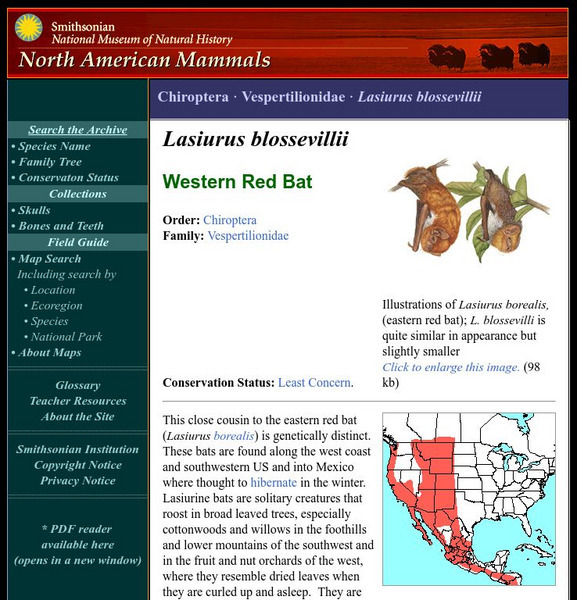
National Museum of Natural History: American Mammals: Western Red Bat
This close cousin to the eastern red bat (Lasiurus borealis) is genetically distinct. These bats are found along the west coast and the southwestern US and into Mexico where they are thought to hibernate in the winter. Learn more about...
Smithsonian Institution
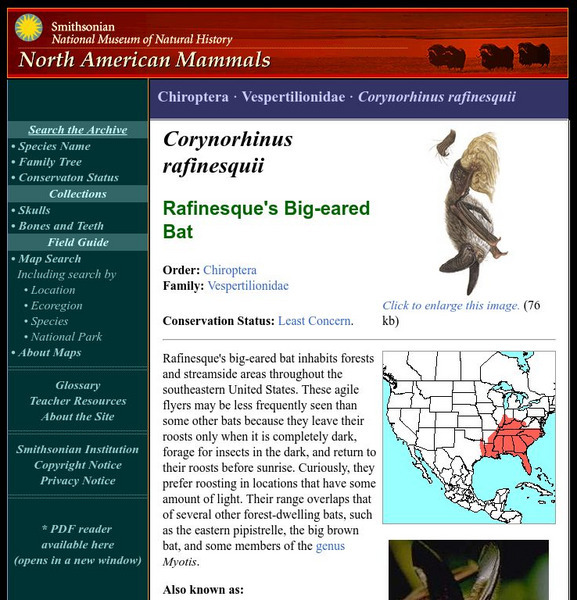
National Museum of Natural History: American Mammals: Rafinesque's Big Eared Bat
Rafinesque's big-eared bat inhabits forests and streamside areas throughout the southeastern United States. These agile flyers may be less frequently seen than some other bats because they leave their roosts only when it is completely...
Smithsonian Institution
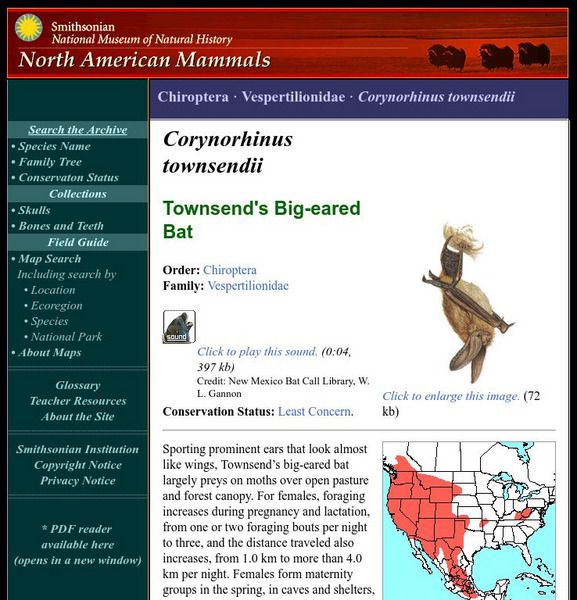
National Museum of Natural History: American Mammals: Townsend's Big Eared Bat
Sporting prominent ears that look almost like wings, Townsend's big-eared bat largely preys on moths over open pasture and forest canopy. For females, foraging increases during pregnancy and lactation, from one or two foraging bouts per...
Smithsonian Institution
National Museum of Natural History: American Mammals: Pallid Bat
Common throughout its range, the pallid bat occurs in arid and semi-arid regions throughout northern Mexico and the western United States. Pallid bats eat beetles, grasshoppers, and moths, and they forage for slow-moving prey, such as...
Smithsonian Institution
National Museum of Natural History: American Mammals: Steller Sea Lion
Steller sea lions are divided into two groups for conservation purposes. Those that live around Alaska and Russia are classified as endangered. Learn more about the Eumetopias jubatus, more commonly known as a Steller Sea Lion, in this...