Hi, what do you want to do?





Smithsonian Institution
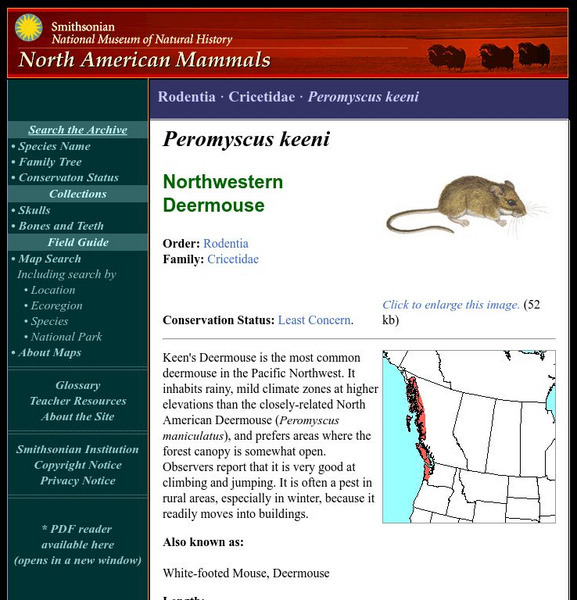
National Museum of Natural History: American Mammals: Northwestern Deermouse
Keen's Deermouse is the most common deermouse in the Pacific Northwest. It inhabits rainy, mild climate zones at higher elevations than the closely-related Deermouse (Peromyscus maniculatus), and prefers areas where the forest canopy is...

Smithsonian Institution
National Museum of Natural History: American Mammals: Northern Long Eared Myotis
Although the northern long-eared myotis is common and widespread, much remains to be learned about its roosting habits, reproduction, and longevity. This bat is known to hibernate in caves and mines and to roost under tree bark. Learn...
Smithsonian Institution
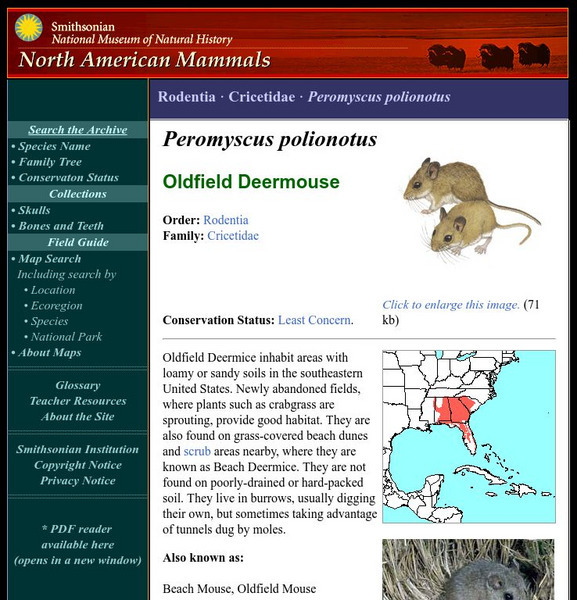
National Museum of Natural History: American Mammals: Oldfield Mouse
Oldfield Mice inhabit areas with loamy or sandy soils in the southeastern United States. Newly abandoned fields, where plants such as crabgrass are sprouting, provide good habitat. Learn more about the Peromyscus polionotus, more...
Smithsonian Institution
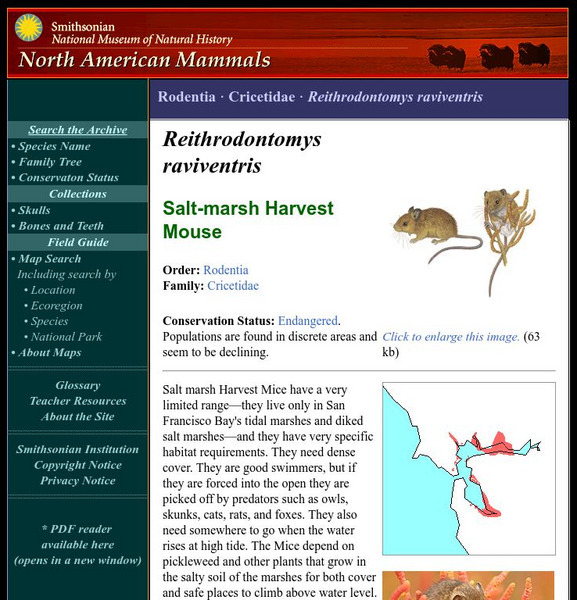
National Museum of Natural History: American Mammals: Salt Marsh Harvest Mouse
Salt-marsh Harvest Mice have a very limited range, they live only in San Francisco Bay's tidal marshes and diked salt marshes and they have very specific habitat requirements. They need dense cover. Learn more about the Reithrodontomys...
Smithsonian Institution
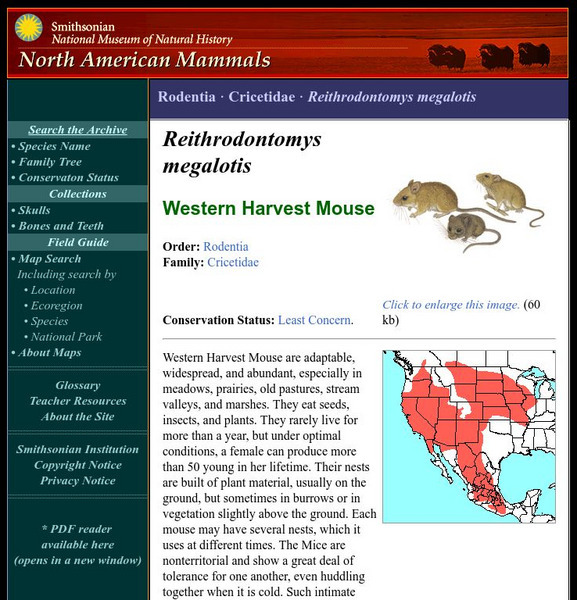
National Museum of Natural History: American Mammals: Western Harvest Mouse
Western Harvest Mice are adaptable, widespread, and abundant, especially in meadows, prairies, old pastures, stream valleys, and marshes. They eat seeds, insects, and plants. Learn more about the Reithrodontomys megalotis, more commonly...
Smithsonian Institution
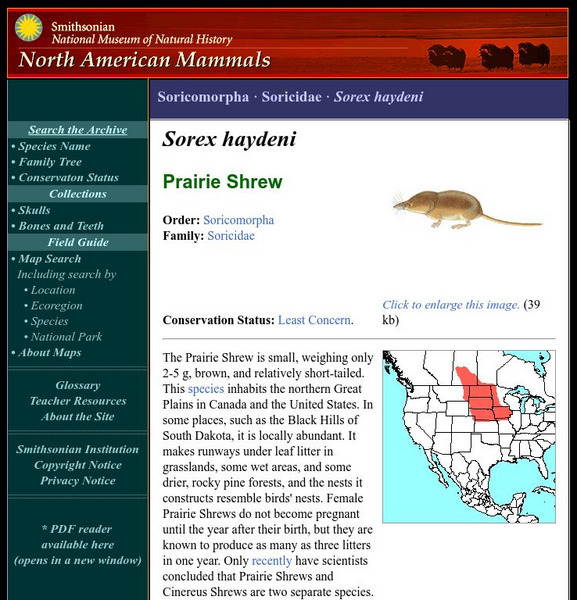
National Museum of Natural History: American Mammals: Prairie Shrew
The Prairie Shrew is small, weighing only 2-5 g, brown, and relatively short-tailed. This species inhabits the northern Great Plains in Canada and the United States. Learn more about the Sorex haydeni, more commonly known as a Prairie...
Smithsonian Institution
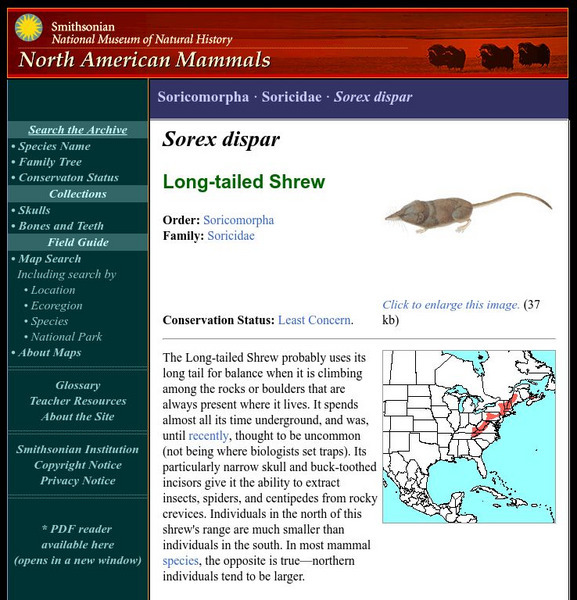
National Museum of Natural History: American Mammals: Long Tailed Shrew
The Long-tailed Shrew probably uses its long tail for balance when it is climbing among the rocks or boulders that are always present where it lives. It spends almost all its time underground, and was, until recently, thought to be...
Smithsonian Institution
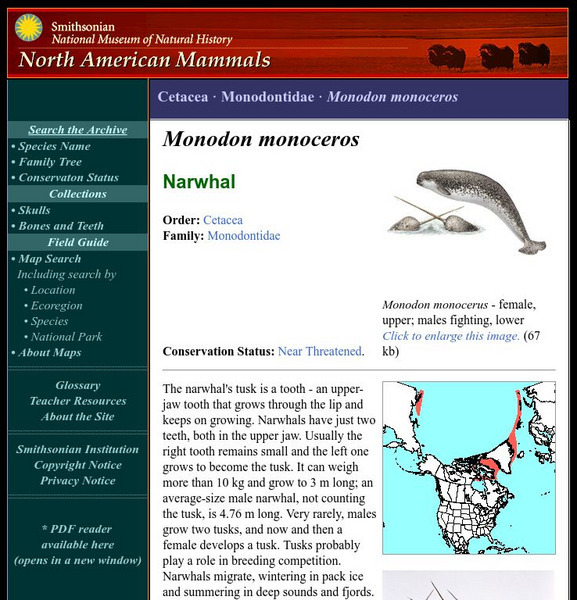
National Museum of Natural History: American Mammals: Narwhal
The narwhal's tusk is a tooth - an upper-jaw tooth that grows through the lip and keeps on growing. Narwhals have just two teeth, both in the upper jaw. Learn more about the Monodon monocerus, more commonly known as a Narwhal, in this...
Smithsonian Institution
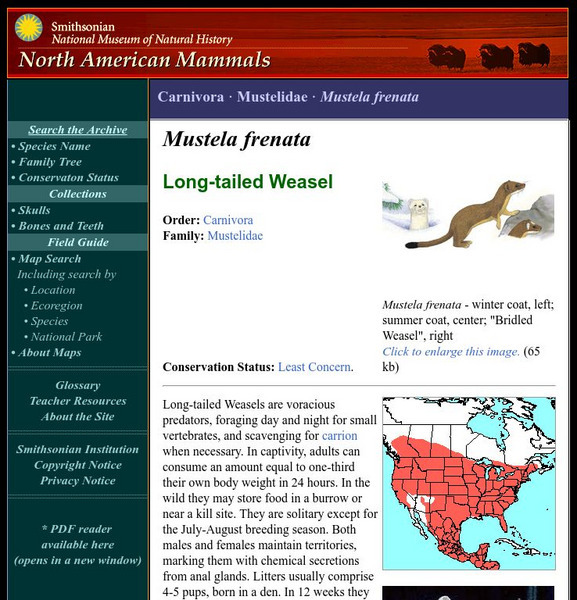
National Museum of Natural History: American Mammals: Long Tailed Weasel
Long-tailed Weasels are voracious predators, foraging day and night for small vertebrates, and scavenging for carrion when necessary. In captivity, adults can consume an amount equal to one-third their own body weight in 24 hours. Learn...
Smithsonian Institution
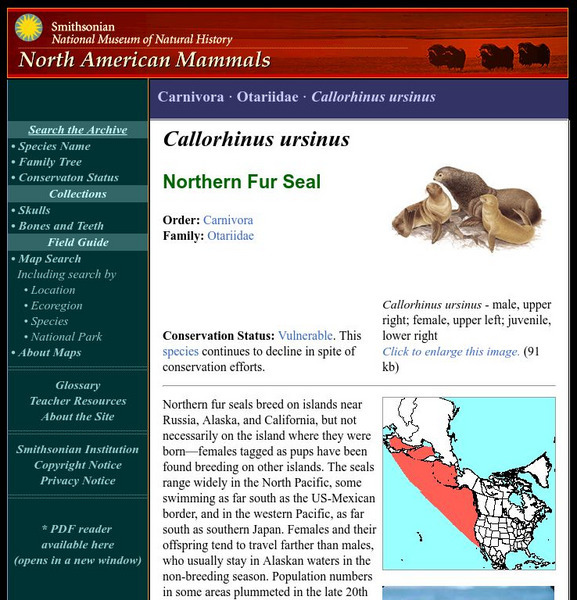
National Museum of Natural History: American Mammals: Northern Fur Seal
Northern fur seals breed on islands near Russia, Alaska, and California, but not necessarily on the island where they were born females tagged as pups have been found breeding on other islands. The seals range widely in the North...
Smithsonian Institution
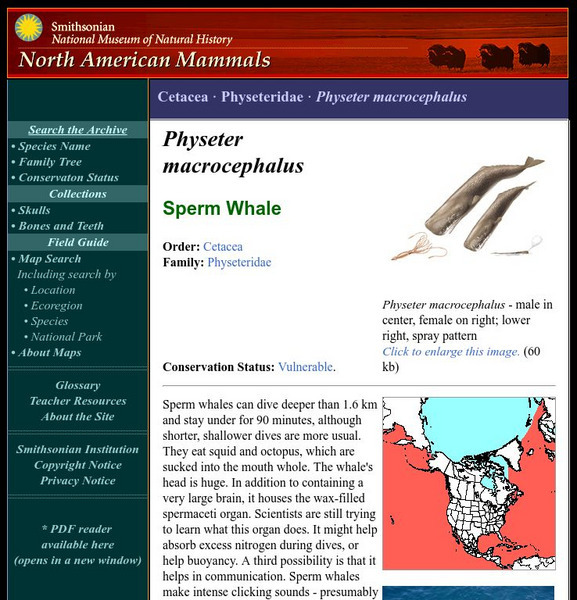
National Museum of Natural History: American Mammals: Sperm Whale
Sperm whales can dive deeper than 1.6 km and stay under for 90 minutes, although shorter, shallower dives are more usual. Learn more about the Physeter catodon (Physeter macrocephalus), more commonly known as a Sperm Whale, in this...
Smithsonian Institution
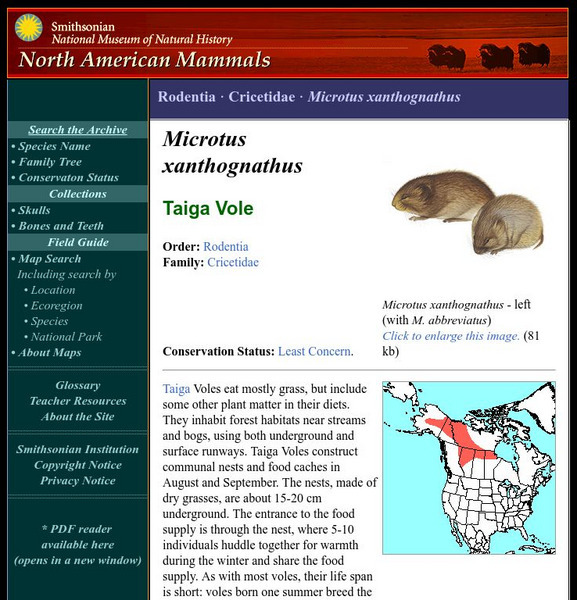
National Museum of Natural History: American Mammals: Taiga Vole
Taiga Voles eat mostly grass, but include some other plant matter in their diets. They inhabit forest habitats near streams and bogs, using both underground and surface runways. Learn more about the Microtus xanthognathus, more commonly...

Smithsonian Institution
National Museum of Natural History: American Mammals: Northern Elephant Seal
As is often the case in species where males compete to mate with as many females as possible, northern elephant seal males are much larger than females (1,800 kg versus 650 kg on average). Competitions can be battles, but more often...
Smithsonian Institution
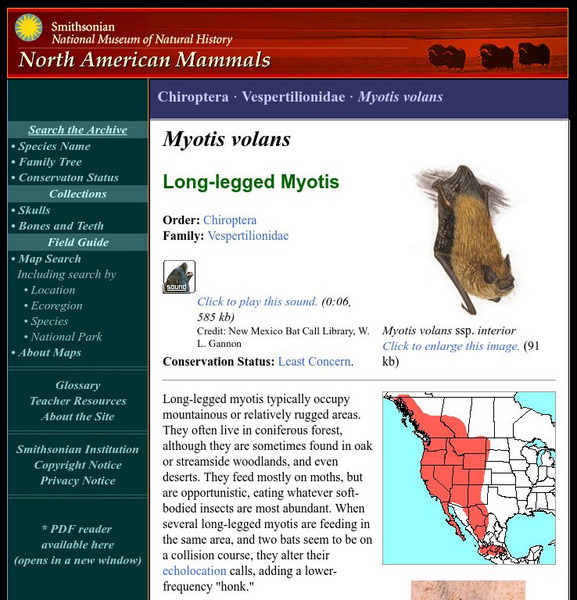
National Museum of Natural History: American Mammals: Long Legged Myotis
Long-legged myotis typically occupy mountainous or relatively rugged areas. They often live in coniferous forests, although they are sometimes found in oak or streamside woodlands, and even deserts. Learn more about the Myotis volans,...
Smithsonian Institution
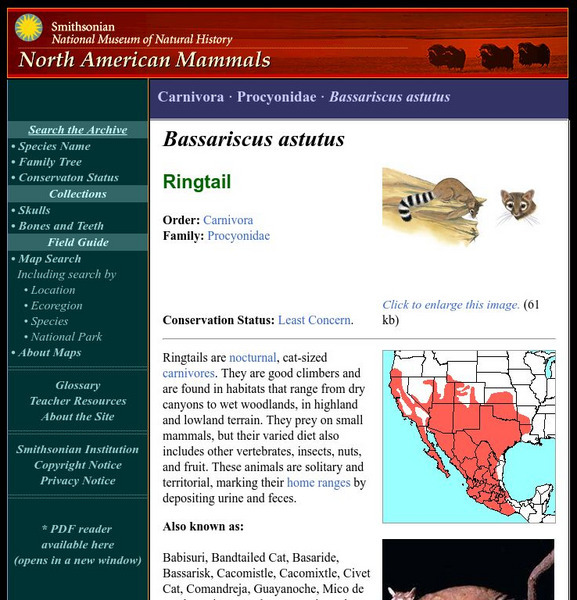
National Museum of Natural History: American Mammals: Ringtail
Ringtails are nocturnal, cat-sized carnivores. They are good climbers and are found in habitats that range from dry canyons to wet woodlands, in highland and lowland terrain. Learn more about the Bassariscus astutus, more commonly known...
Smithsonian Institution
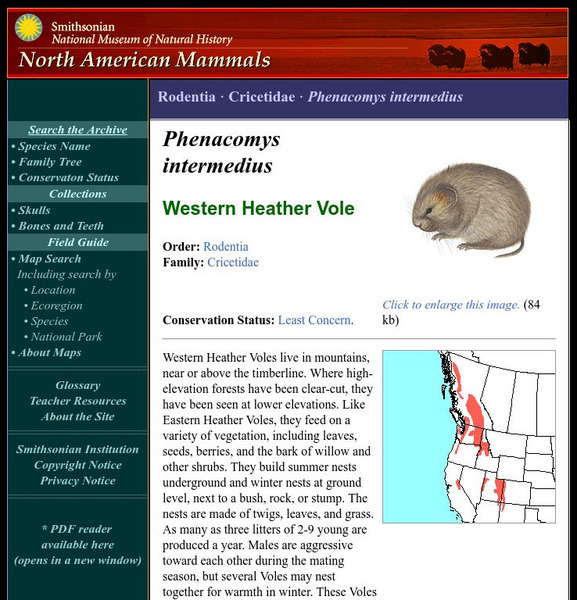
National Museum of Natural History: American Mammals: Western Heather Vole
Western Heather Voles live in mountains, near or above the timberline. Where high-elevation forests have been clear-cut, they have been seen at lower elevations. Learn more about the Phenacomys intermedius, more commonly known as a...
Smithsonian Institution
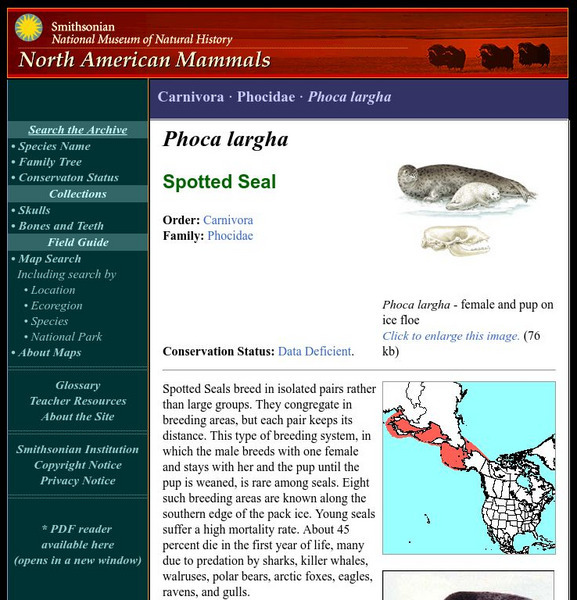
National Museum of Natural History: American Mammals: Spotted Seal
Spotted Seals breed in isolated pairs rather than large groups. They congregate in breeding areas, but each pair keeps its distance. Learn more about the Phoca largha, more commonly known as a Spotted Seal, in this easy-to-read species...
Smithsonian Institution
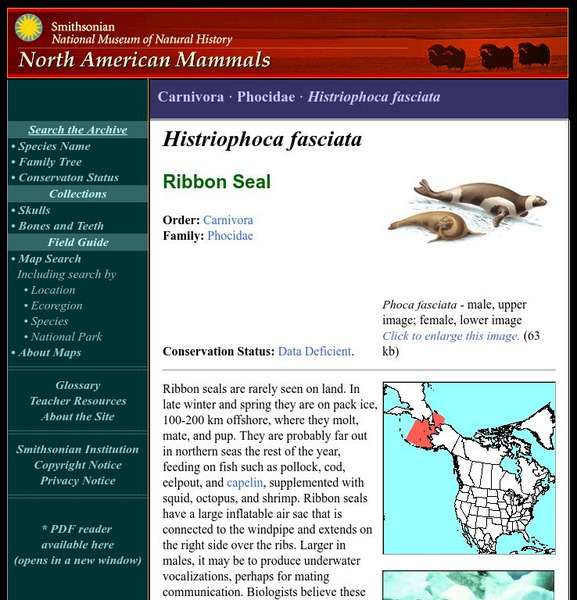
National Museum of Natural History: American Mammals: Ribbon Seal
Ribbon Seals are rarely seen on land. In late winter and spring they are on pack ice, 100-200 km offshore, where they molt, mate, and pup. Learn more about the Phoca fasciata, more commonly known as a Ribbon Seal, in this easy-to-read...
Smithsonian Institution
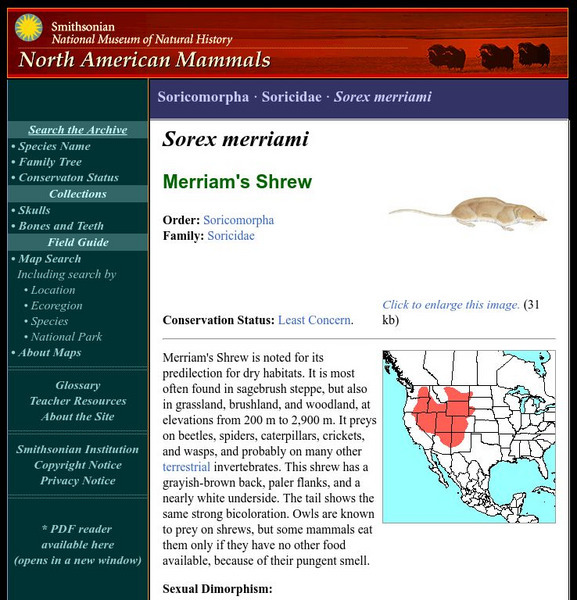
National Museum of Natural History: American Mammals: Merriam's Shrew
Merriam's Shrew is noted for its predilection for dry habitats. It is most often found in sagebrush steppe, but also in grassland, brushland, and woodland, at elevations from 200 m to 2,900 m. Learn more about the Sorex merriami, more...
Smithsonian Institution
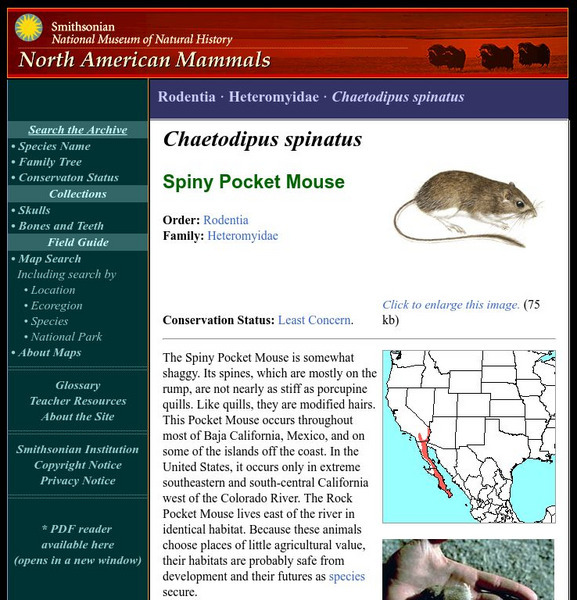
National Museum of Natural History: American Mammals: Spiny Pocket Mouse
The Spiny Pocket Mouse is somewhat shaggy. Its spines, which are mostly on the rump, are not nearly as stiff as porcupine quills. Learn more about the Chaetodipus spinatus, more commonly known as a Spiny Pocket Mouse, in this...
Smithsonian Institution
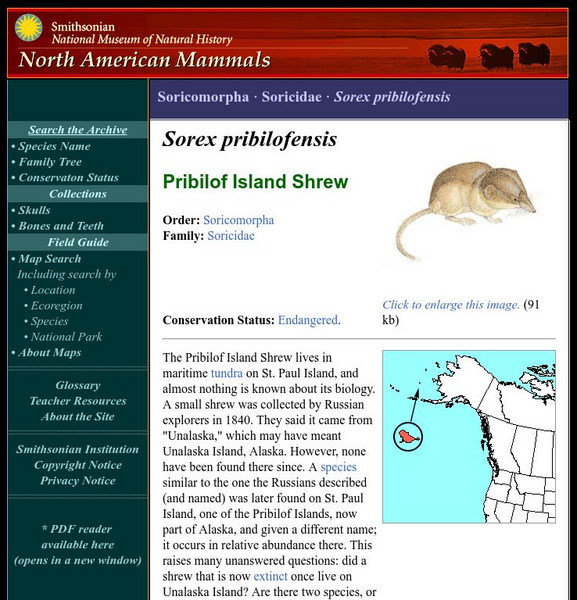
National Museum of Natural History: American Mammals: Pribilof Island Shrew
The Pribilof Island Shrew lives in maritime tundra on St. Paul Island, and almost nothing is known about its biology. Learn more about the Sorex pribilofensis, more commonly known as a Pribilof Island Shrew, in this easy-to-read species...
Smithsonian Institution
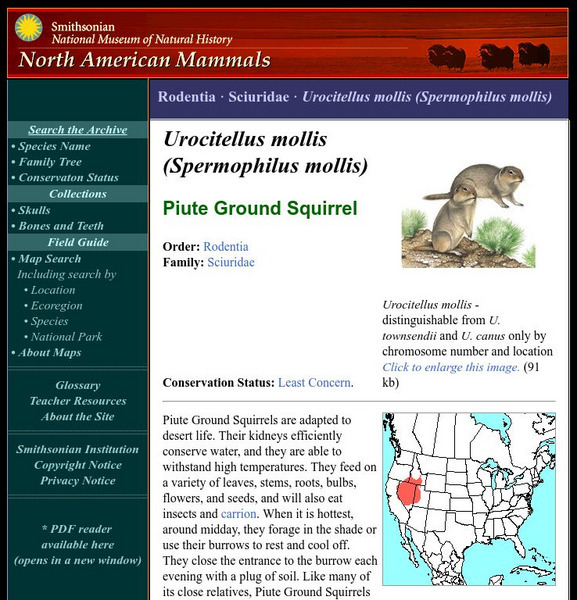
National Museum of Natural History: American Mammals: Piute Ground Squirrel
Piute Ground Squirrels are adapted to desert life. Their kidneys efficiently conserve water, and they are able to withstand high temperatures. Learn more about the Spermophilus mollis, more commonly known as a Piute Ground Squirrel, in...
Smithsonian Institution
National Museum of Natural History: American Mammals: Rock Squirrel
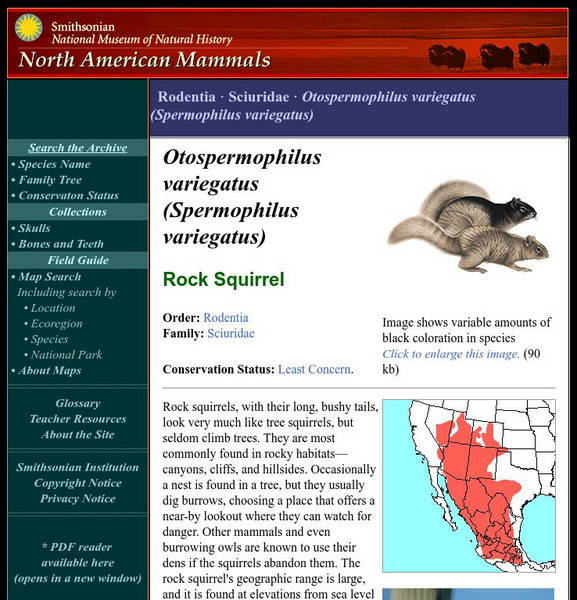
Rock squirrels, with their long, bushy tails, look very much like tree squirrels, but seldom climb trees. They are most commonly found in rocky habitats: canyons, cliffs, and hillsides. Learn more about the Spermophilus variegatus, more...
Smithsonian Institution
National Museum of Natural History: American Mammals: Thirteen Lined Ground Squirrel
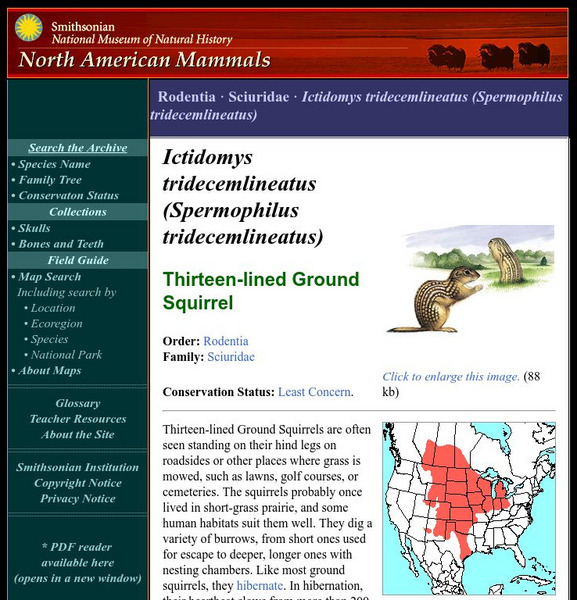
Thirteen-lined Ground Squirrels are often seen standing on their hind legs on roadsides or other places where grass is mowed, such as lawns, golf courses, or cemeteries. The squirrels probably once lived in short-grass prairie, and some...