Hi, what do you want to do?





Smithsonian Institution
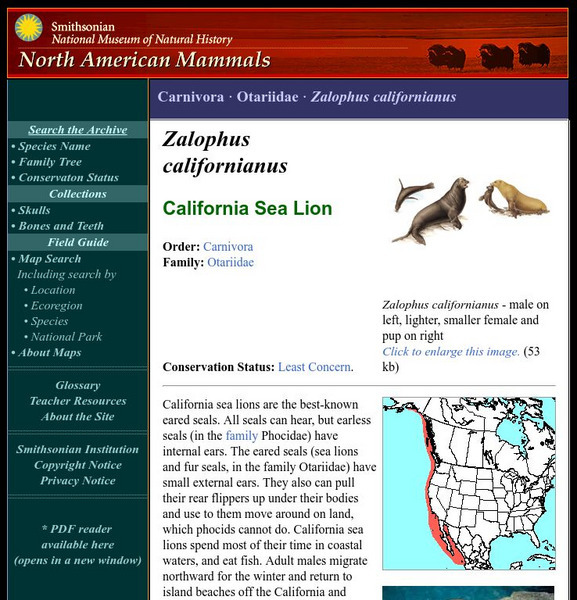
National Museum of Natural History: American Mammals: California Sea Lion
California sea lions are the best-known eared seals. All seals can hear, but earless seals (in the family Phocidae) have internal ears. Learn more about the Zalophus californianus, more commonly known as a California Sea Lion, in this...
Smithsonian Institution
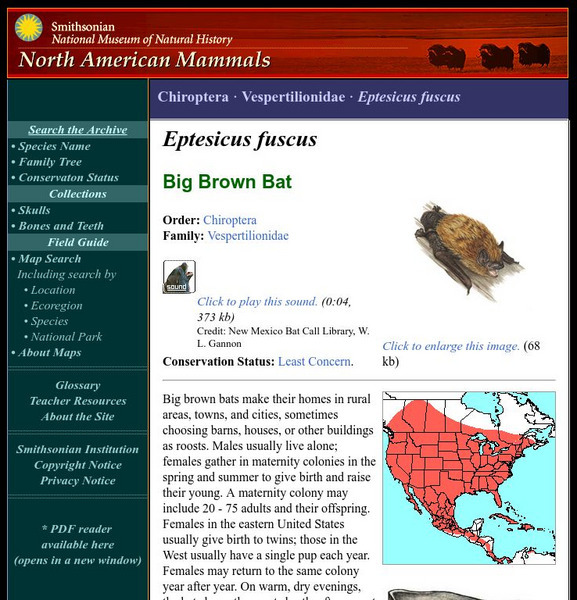
National Museum of Natural History: American Mammals: Big Brown Bat
Big brown bats make their homes in rural areas, towns, and cities, sometimes choosing barns, houses, or other buildings as roosts. Males usually live alone; females gather in maternity colonies in the spring and summer to give birth and...
Smithsonian Institution
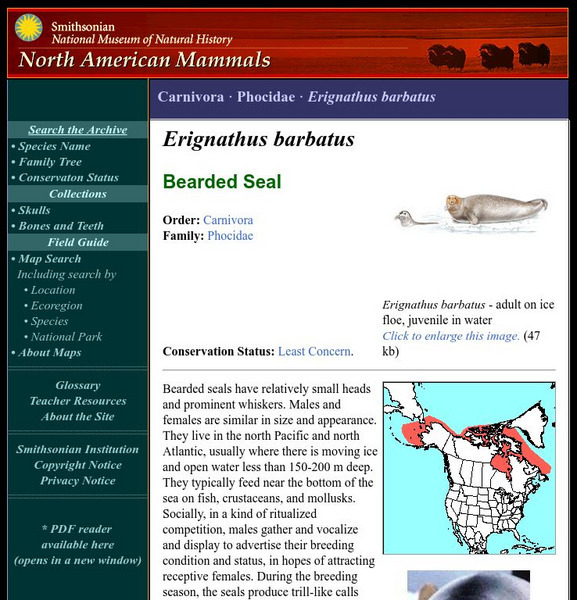
National Museum of Natural History: American Mammals: Bearded Seal
Bearded seals have relatively small heads and prominent whiskers. Males and females are similar in size and appearance. Learn more about the Erignathus barbatus, more commonly known as a Bearded Seal, in this easy-to-read species...

Smithsonian Institution
National Museum of Natural History: American Mammals: Northern Right Whale Dolphin
With no dorsal fin, a slender body shape that tapers steadily toward the tail, and small flippers and flukes, the northern right whale dolphin appears to be built for speed. It has been clocked at 34 km per hour and can dive as deep as...
Smithsonian Institution
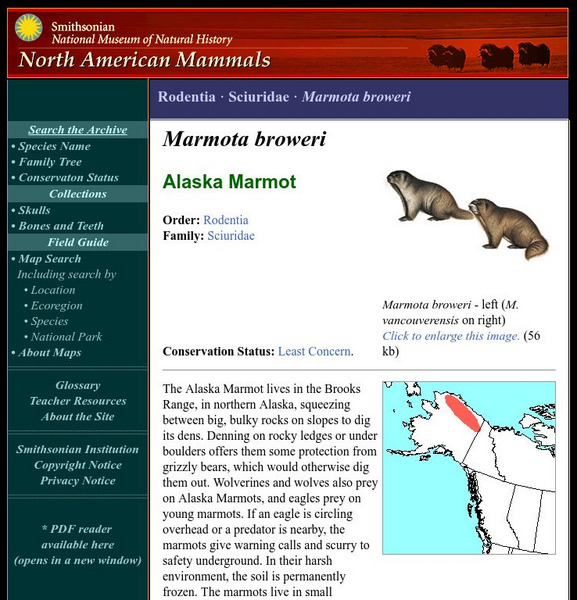
National Museum of Natural History: American Mammals: Alaska Marmot
The Alaska Marmot lives in the Brooks Range, in northern Alaska, squeezing between big, bulky rocks on slopes to dig its dens. Denning on rocky ledges or under boulders offers them some protection from grizzly bears, which would...
Smithsonian Institution
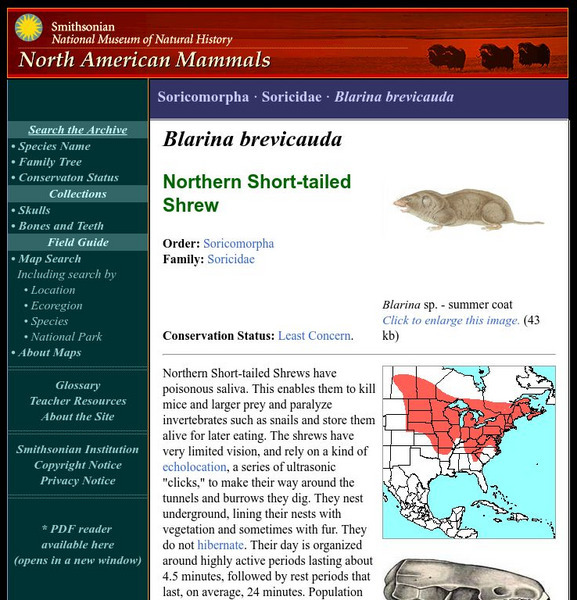
National Museum of Natural History: American Mammals: Northern Short Tailed Shrew
Northern Short-tailed Shrews have poisonous saliva. This enables them to kill mice and larger prey and paralyze invertebrates such as snails and store them alive for later eating. Learn more about the Blarina brevicauda, more commonly...
Smithsonian Institution
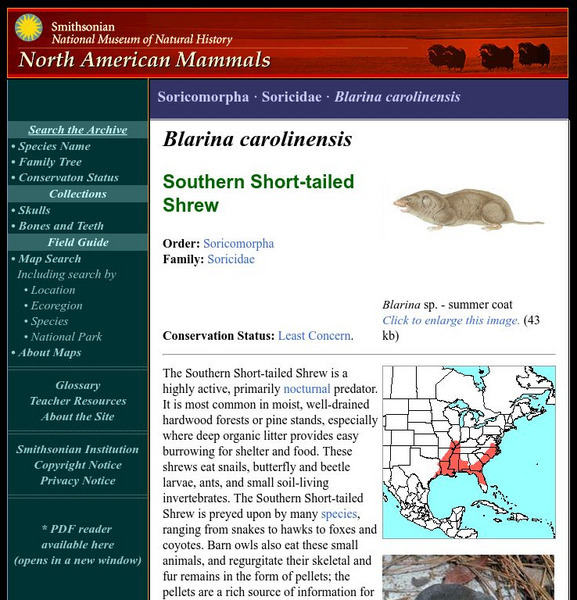
National Museum of Natural History: American Mammals: Southern Short Tailed Shrew
The Southern Short-tailed Shrew is a highly active, primarily nocturnal predator. It is most common in moist, well-drained hardwood forests or pine stands, especially where deep organic litter provides easy burrowing for shelter and...
Smithsonian Institution
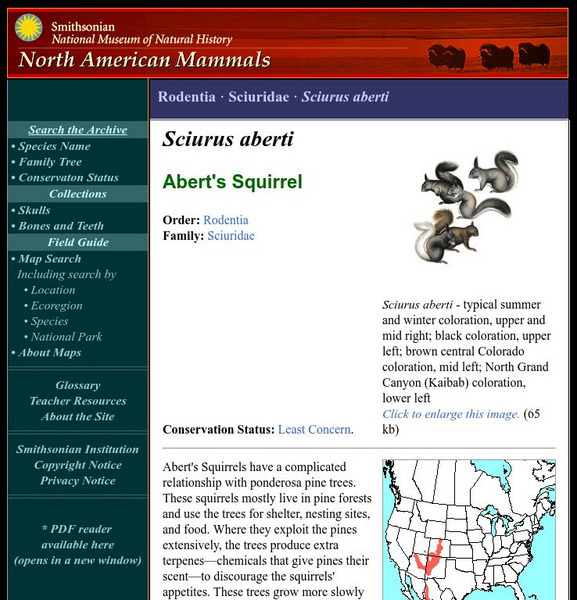
National Museum of Natural History: American Mammals: Abert's Squirrel
Abert's Squirrels have a complicated relationship with ponderosa pine trees. These squirrels mostly live in pine forests and use the trees for shelter, nesting sites, and food. Learn more about the Sciurus aberti, more commonly known as...
Smithsonian Institution
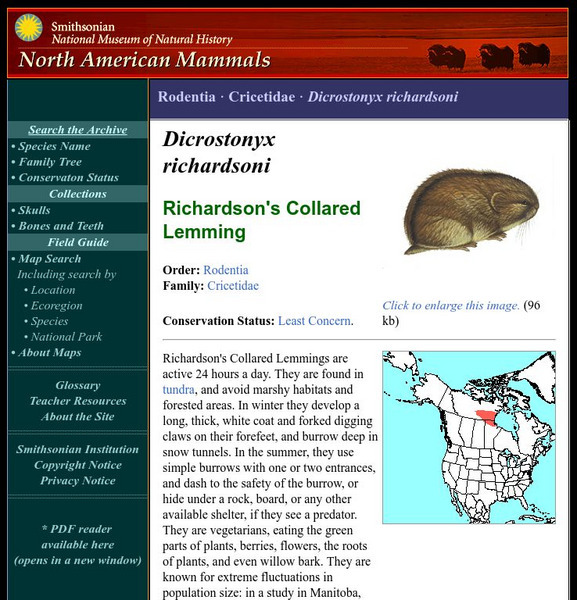
National Museum of Natural History: American Mammals: Richardson's Collared Lemming
Richardson's Collared Lemmings are active 24 hours a day. They are found in tundra, and avoid marshy habitats and forested areas. Learn more about the Dicrostonyx richardsoni, more commonly known as a Richardson's Collared Lemming, in...
Smithsonian Institution
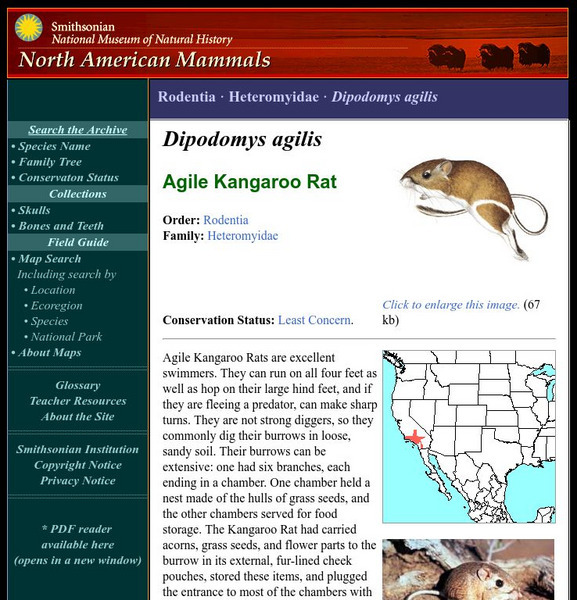
National Museum of Natural History: American Mammals: Agile Kangaroo Rat
Agile Kangaroo Rats are excellent swimmers. They can run on all four feet as well as hop on their large hind feet, and if they are fleeing a predator, can make sharp turns. Learn more about the Dipodomys agilis, more commonly known as an...
Smithsonian Institution
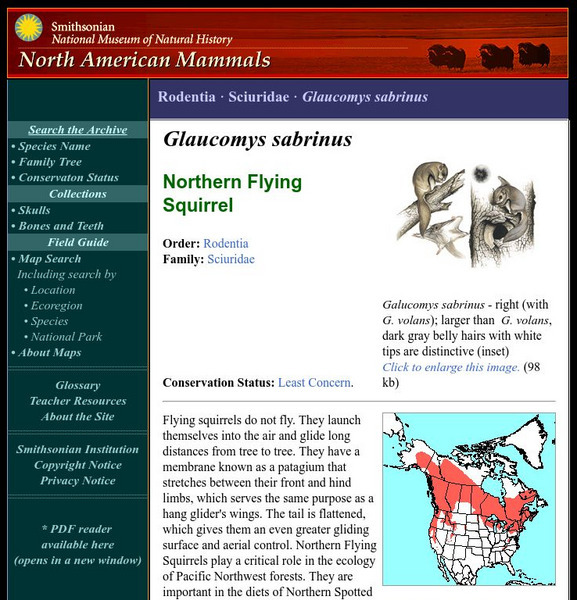
National Museum of Natural History: American Mammals: Northern Flying Squirrel
Flying squirrels do not fly. They launch themselves into the air and glide long distances from tree to tree. Learn more about the Glaucomys sabrinus, more commonly known as a Northern Flying Squirrel, in this easy-to-read species...
Smithsonian Institution
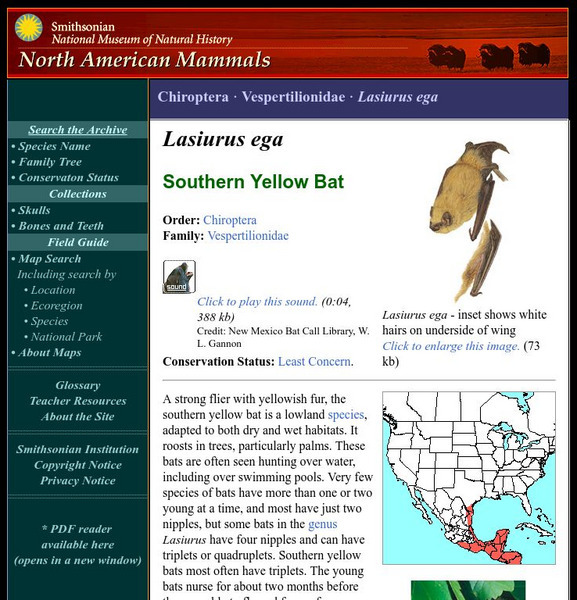
National Museum of Natural History: American Mammals: Southern Yellow Bat
A strong flier with yellowish fur, the southern yellow bat is a lowland species, adapted to both dry and wet habitats. It roosts in trees, particularly palms. Learn more about the Lasiurus ega, more commonly known as a Southern Yellow...
Smithsonian Institution
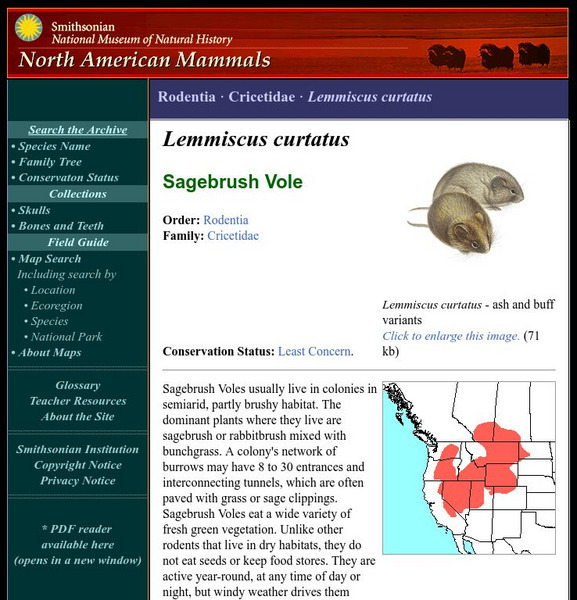
National Museum of Natural History: American Mammals: Sagebrush Vole
Sagebrush Voles usually live in colonies in semiarid, partly brushy habitat. The dominant plants where they live are sagebrush or rabbitbrush mixed with bunchgrass. Learn more about the Lemmiscus curtatus, more commonly known as a...
Smithsonian Institution
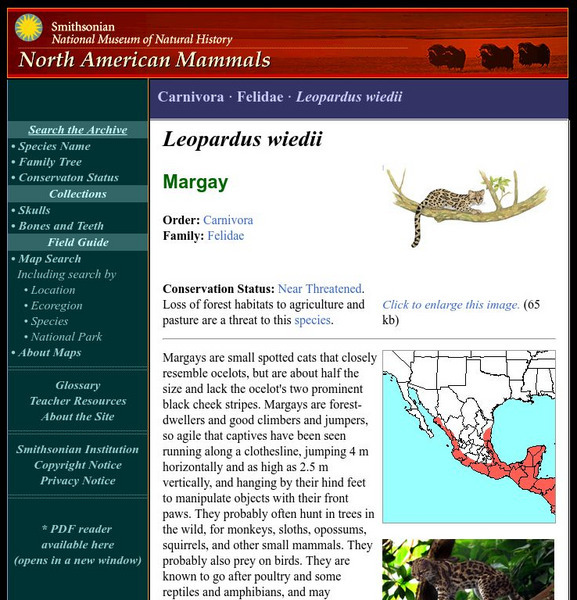
National Museum of Natural History: American Mammals: Margay
Margays are small spotted cats that closely resemble ocelots, but are about half the size and lack the ocelot's two prominent black cheek stripes. Margays are forest-dwellers and good climbers and jumpers, so agile that captives have...
Smithsonian Institution
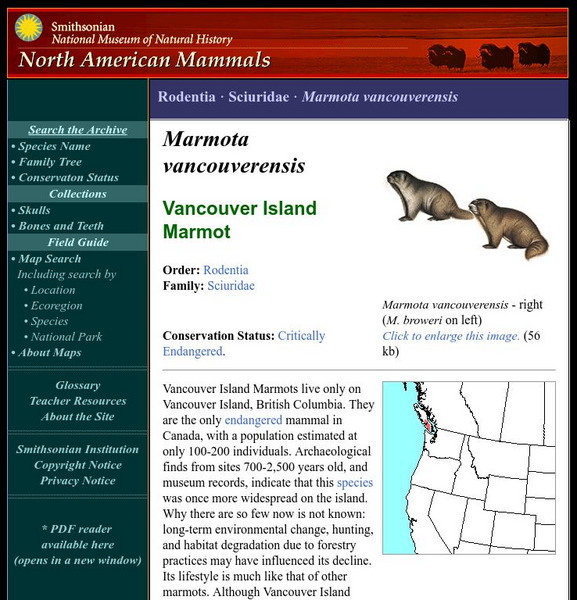
National Museum of Natural History: American Mammals: Vancouver Marmot
Vancouver Marmots live only on Vancouver Island, British Columbia. They are the only endangered mammal in Canada, with a population estimated at only 100-200 individuals. Learn more about the Marmota vancouverensis, more commonly known...
Smithsonian Institution
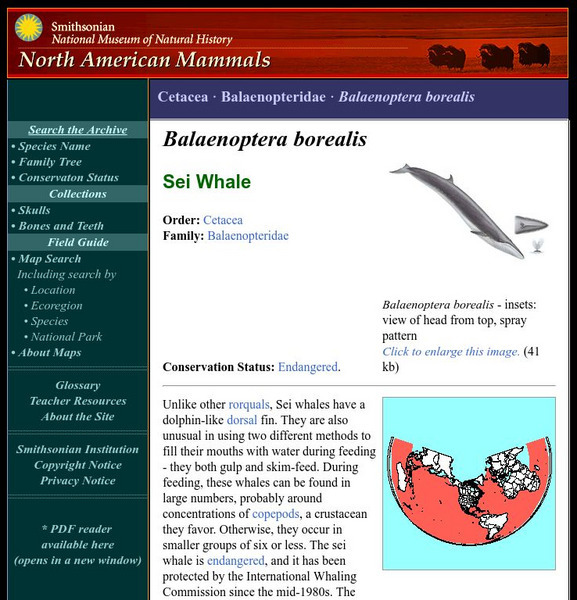
National Museum of Natural History: American Mammals: Sei Whale
Unlike other rorquals, Sei whales have a dolphin-like dorsal fin. They are also unusual in using two different methods to fill their mouths with water during feeding - they both gulp and skim-feed. Learn more about the Balaenoptera...
Smithsonian Institution
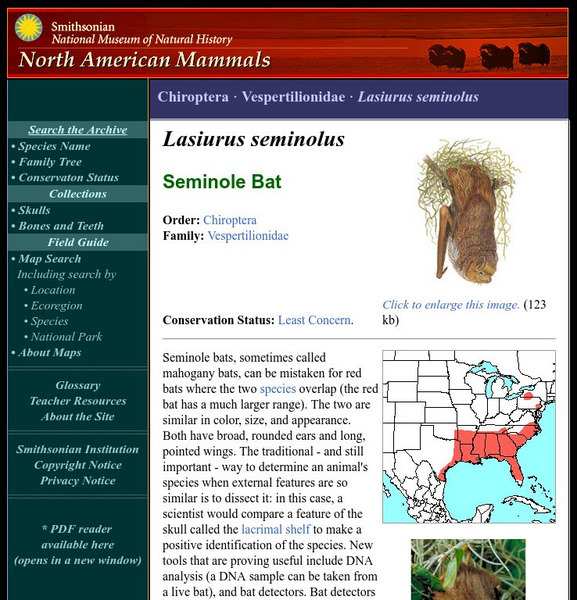
National Museum of Natural History: American Mammals: Seminole Bat
Seminole bats, sometimes called mahogany bats, can be mistaken for red bats where the two species overlap (the red bat has a much larger range). The two are similar in color, size, and appearance. Learn more about the Lasiurus seminolus,...
Smithsonian Institution
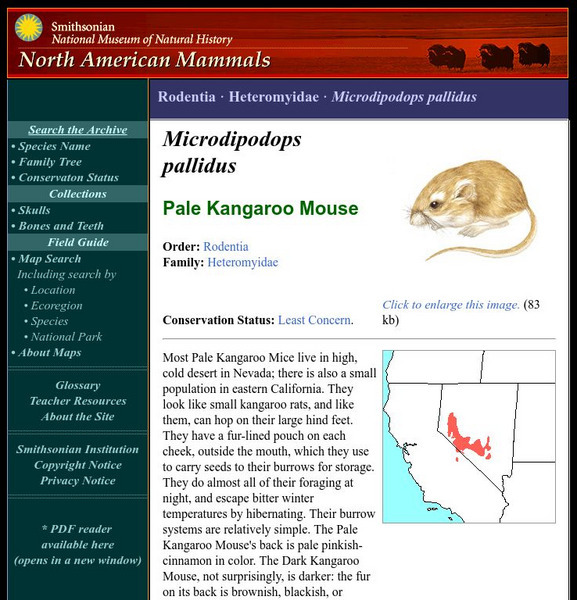
National Museum of Natural History: American Mammals: Pale Kangaroo Mouse
Most Pale Kangaroo Mice live in high, cold desert in Nevada; there is also a small population in eastern California. They look like small kangaroo rats, and like them, can hop on their large hind feet. Learn more about the Microdipodops...
Smithsonian Institution
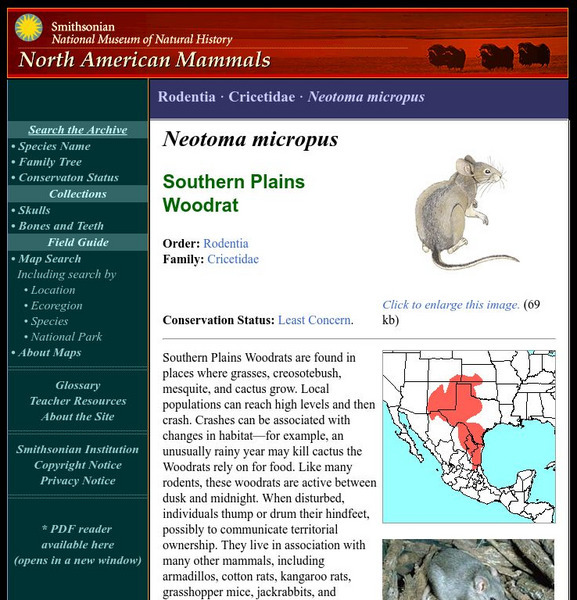
National Museum of Natural History: American Mammals: Southern Plains Woodrat
Southern Plains Woodrats are found in places where grasses, creosotebush, mesquite, and cactus grow. Local populations can reach high levels and then crash. Learn more about the Neotoma micropus, more commonly known as a Southern Plains...
Smithsonian Institution
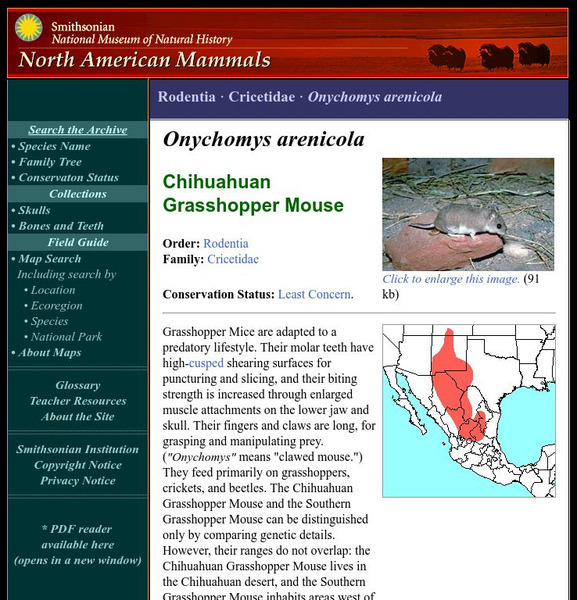
National Museum of Natural History: American Mammals: Mearn's Grasshopper Mouse
Grasshopper Mice are adapted to a predatory lifestyle. Their molar teeth have high-cusped shearing surfaces for puncturing and slicing, and their biting strength is increased through enlarged muscle attachments on the lower jaw and...
Smithsonian Institution
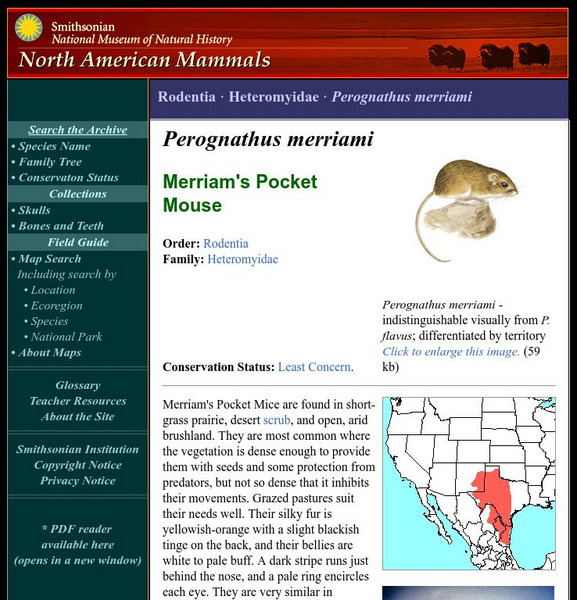
National Museum of Natural History: American Mammals: Merriam's Pocket Mouse
Merriam's Pocket Mice are found in short-grass prairie, desert scrub, and open, arid brushland. They are most common where the vegetation is dense enough to provide them with seeds and some protection from predators, but not so dense...
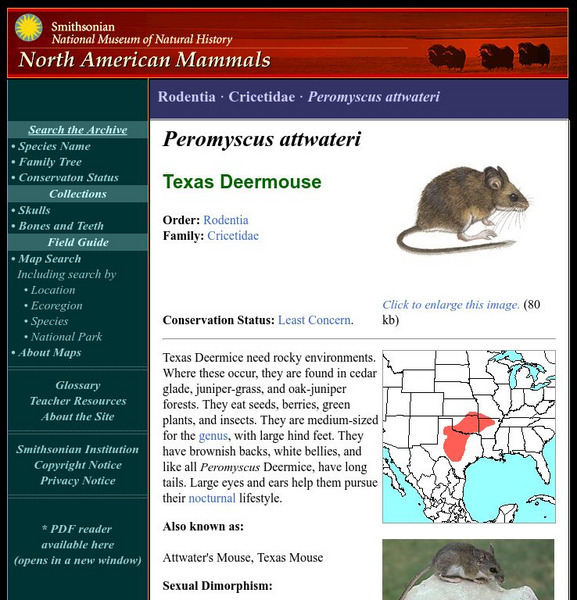
Smithsonian Institution
National Museum of Natural History: American Mammals: Texas Mouse
Texas Mice need rocky environments. Where these occur, they are found in cedar glade, juniper-grass, and oak-juniper forests. Learn more about the Peromyscus attwateri, more commonly known as a Texas Mouse, in this easy-to-read species...
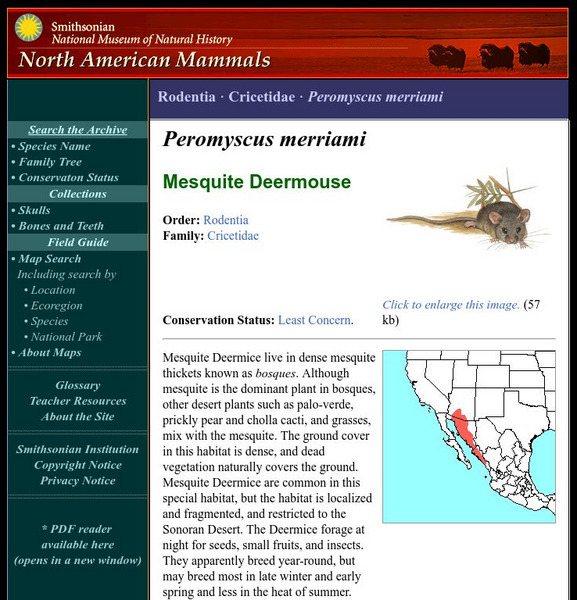
Smithsonian Institution
National Museum of Natural History: American Mammals: Mesquite Mouse
Mesquite Mice live in dense mesquite thickets known as bosques. Although mesquite is the dominant plant in bosques, other desert plants such as palo-verde, prickly pear, and cholla cacti, and grasses, mix with the mesquite. Learn more...
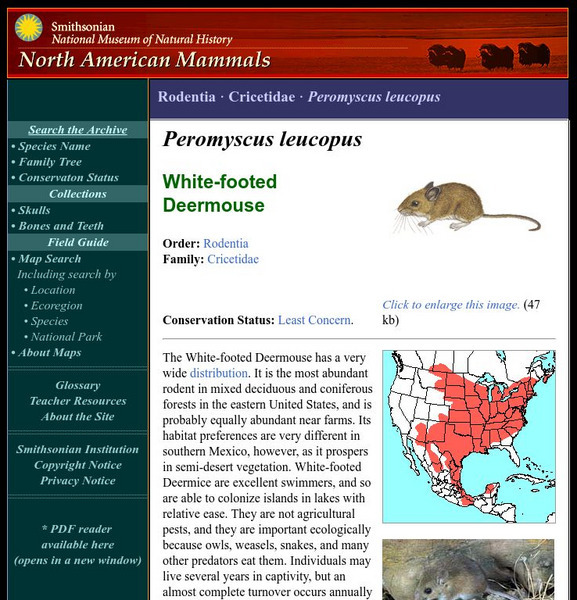
Smithsonian Institution
National Museum of Natural History: American Mammals: White Footed Mouse
The White-footed Mouse has a very wide distribution. It is the most abundant rodent in mixed deciduous and coniferous forests in the eastern United States, and is probably equally abundant near farms. Learn more about the Peromyscus...