Hi, what do you want to do?





Smithsonian Institution
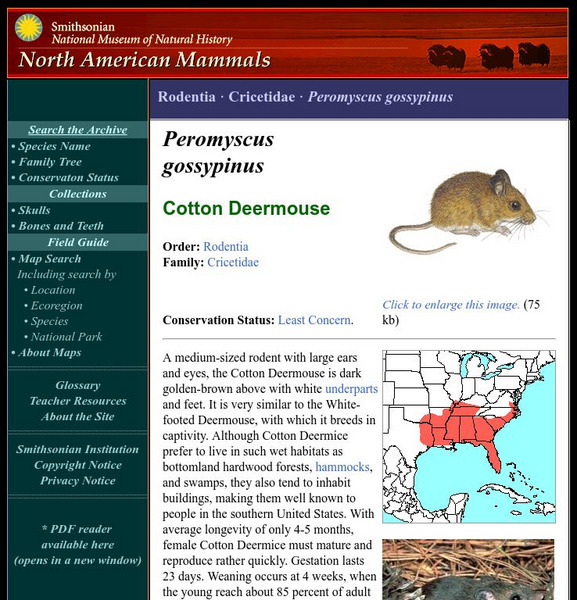
National Museum of Natural History: American Mammals: Cotton Deermouse
A medium-sized rodent with large ears and eyes, the Cotton Deermouse is dark golden-brown above with white underparts and feet. It is very similar to the white-footed Mouse, with which it breeds in captivity. Learn more about the...
Smithsonian Institution
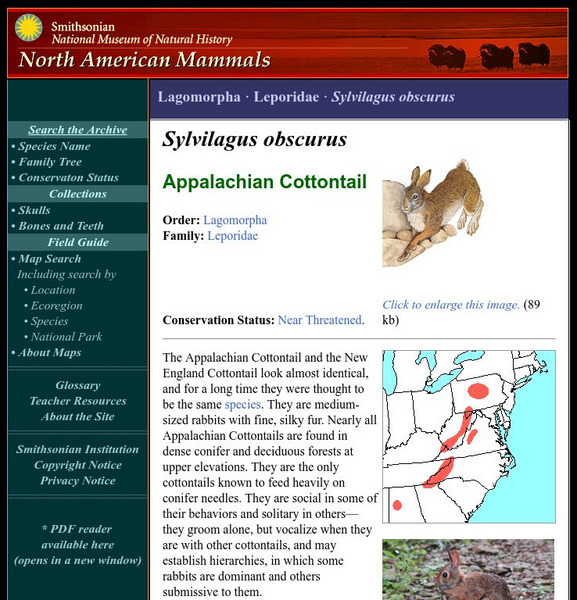
National Museum of Natural History: American Mammals: Appalachian Cottontail
The Appalachian Cottontail and the New England Cottontail look almost identical, and for a long time they were thought to be the same species. They are medium-sized rabbits with fine, silky fur. Learn more about the Sylvilagus obscurus,...
Smithsonian Institution
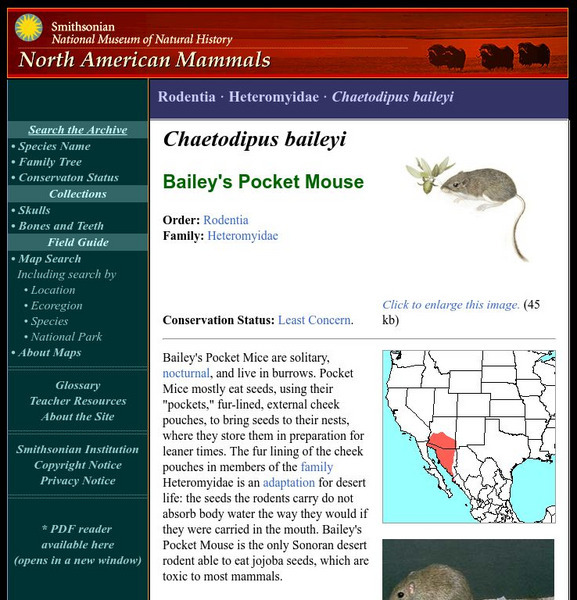
National Museum of Natural History: American Mammals: Bailey's Pocket Mouse
Bailey's Pocket Mice are solitary, nocturnal, and live in burrows. Pocket Mice mostly eat seeds, using their "pockets," fur-lined, external cheek pouches, to bring seeds to their nests, where they store them in preparation for leaner...
Smithsonian Institution
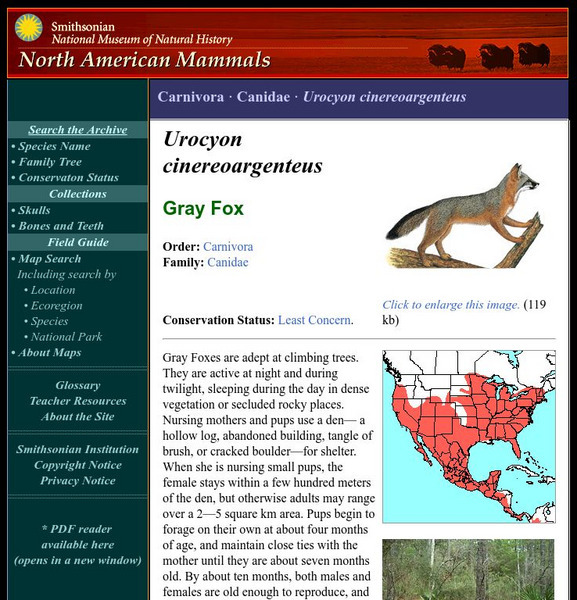
National Museum of Natural History: American Mammals: Common Gray Fox
Gray foxes are adept at climbing trees. They are active at night and during twilight, sleeping during the day in dense vegetation or secluded rocky places. Learn more about the Urocyon cinereoargenteus, more commonly known as a Common...
Smithsonian Institution
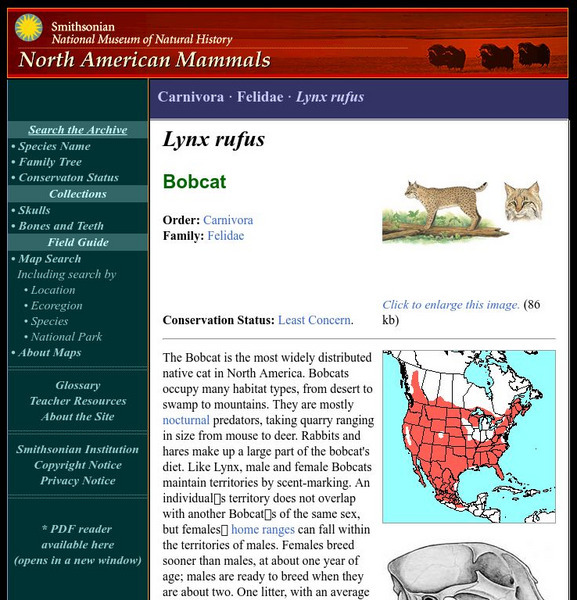
National Museum of Natural History: American Mammals: Bobcat
The Bobcat is the most widely distributed native cat in North America. Bobcats occupy many habitat types, from desert to swamp to mountains. Learn more about the Lynx rufus, more commonly known as a Bobcat, in this easy-to-read species...
Smithsonian Institution
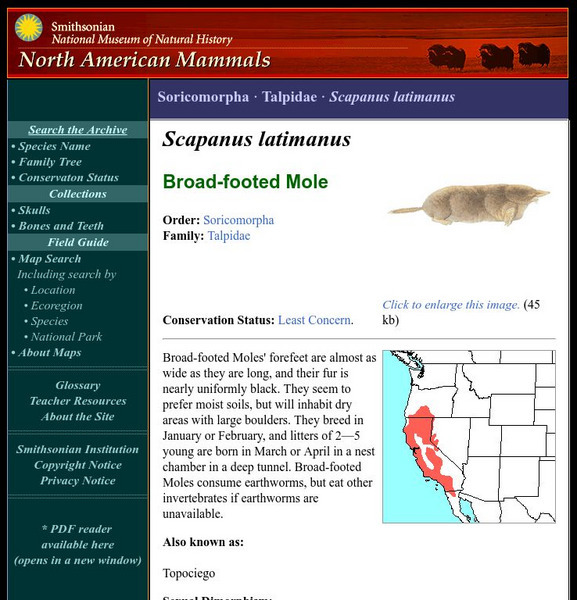
National Museum of Natural History: American Mammals: Broad Footed Mole
Broad-footed Moles' forefeet are almost as wide as they are long, and their fur is nearly uniformly black. They seem to prefer moist soils, but will inhabit dry areas with large boulders. Learn more about the Scapanus latimanus, more...
Smithsonian Institution
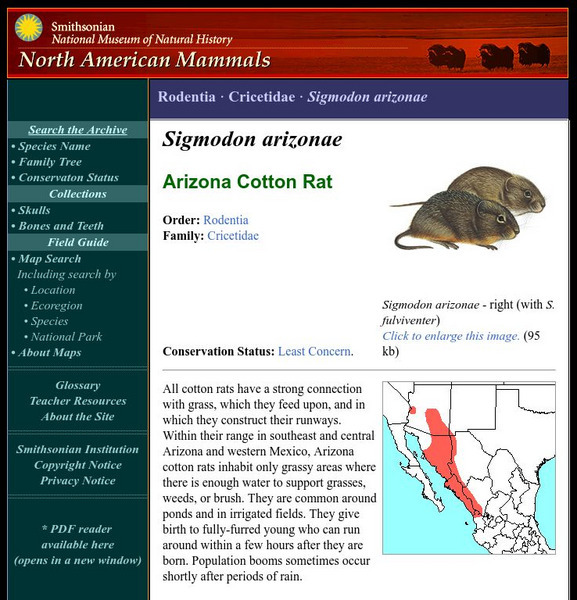
National Museum of Natural History: American Mammals: Arizona Cotton Rat
All cotton rats have a strong connection with grass, which they feed upon, and in which they construct their runways. Within their range in southeast and central Arizona and western Mexico, Arizona cotton rats inhabit only grassy areas...
Smithsonian Institution
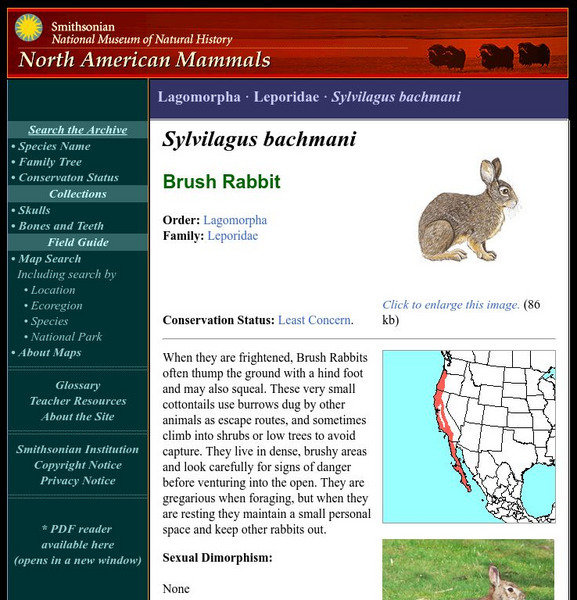
National Museum of Natural History: American Mammals: Brush Rabbit
When they are frightened, Brush Rabbits often thump the ground with a hind foot and may also squeal. These very small cottontails use burrows dug by other animals as escape routes, and sometimes climb into shrubs or low trees to avoid...
Smithsonian Institution
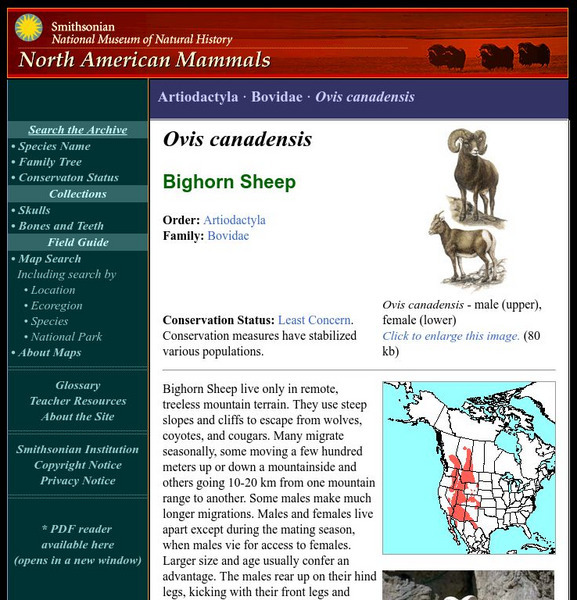
National Museum of Natural History: American Mammals: Bighorn Sheep
Bighorn Sheep live only in remote, treeless mountain terrain. They use steep slopes and cliffs to escape from wolves, coyotes, and cougars. Learn more about the Ovis canadensis, more commonly known as a Bighorn Sheep, in this...

Smithsonian Institution
National Museum of Natural History: American Mammals: Coast Mole
Coast Moles are difficult to distinguish from Townsend's Moles where their ranges overlap in the Pacific Northwest. Both have velvety, dark-gray fur and tiny eyes and ears that are hidden under their fur. Learn more about the Scapanus...
Smithsonian Institution
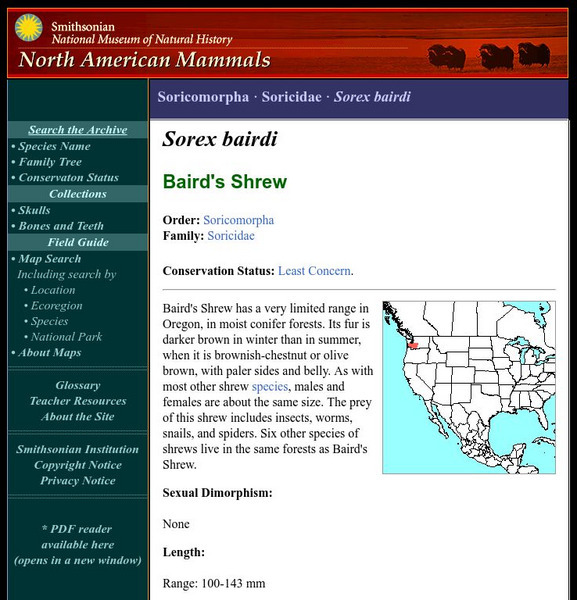
National Museum of Natural History: American Mammals: Baird's Shrew
Baird's Shrew has a very limited range in Oregon, in moist conifer forests. Its fur is darker brown in winter than in summer, when it is brownish-chestnut or olive-brown, with paler sides and belly. Learn more about the Sorex bairdi,...
Smithsonian Institution
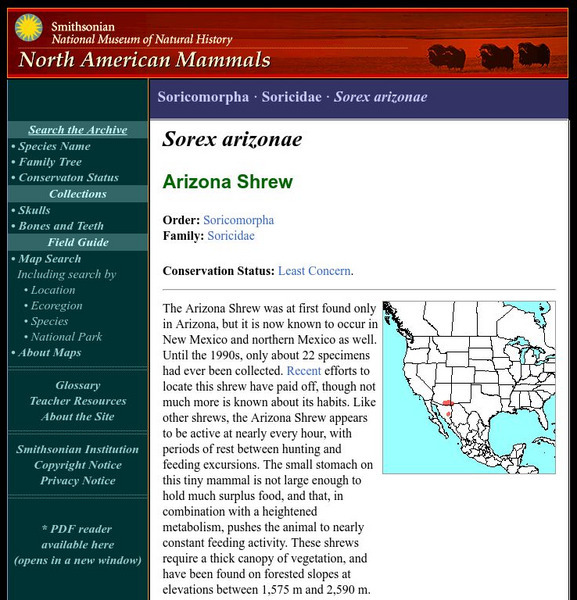
National Museum of Natural History: American Mammals: Arizona Shrew
The Arizona Shrew was at first found only in Arizona, but it is now known to occur in New Mexico and northern Mexico as well. Until the 1990s, only about 22 specimens had ever been collected. Learn more about the Sorex arizonae, more...
Smithsonian Institution
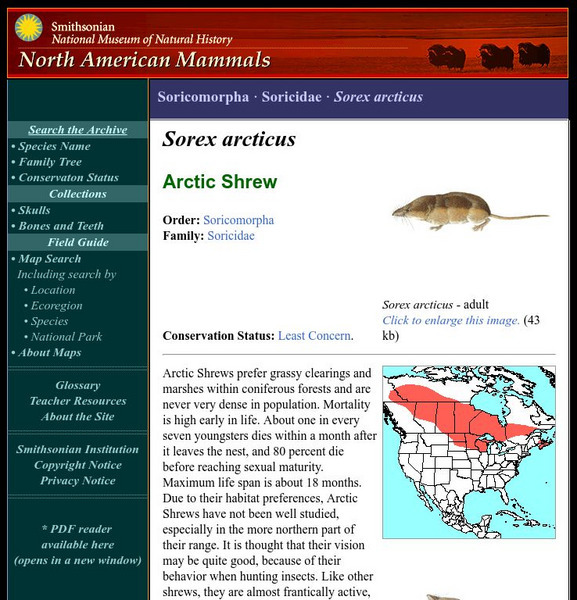
National Museum of Natural History: American Mammals: Arctic Shrew
Arctic Shrews prefer grassy clearings and marshes within coniferous forests and are never very dense in population. Mortality is high early in life. Learn more about the Sorex arcticus, more commonly known as an Arctic Shrew, in this...
Smithsonian Institution
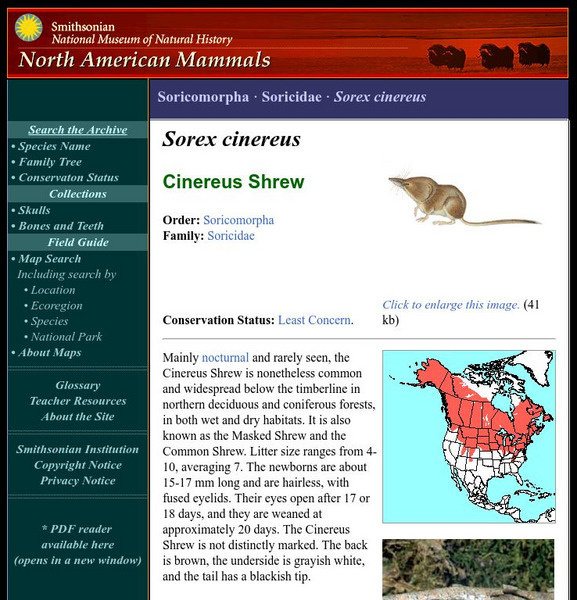
National Museum of Natural History: American Mammals: Cinereus Shrew
Mainly nocturnal and rarely seen, the Cinereus Shrew is nonetheless common and widespread below the timberline in northern deciduous and coniferous forests, in both wet and dry habitats. It is also known as the Masked Shrew and the...
Smithsonian Institution
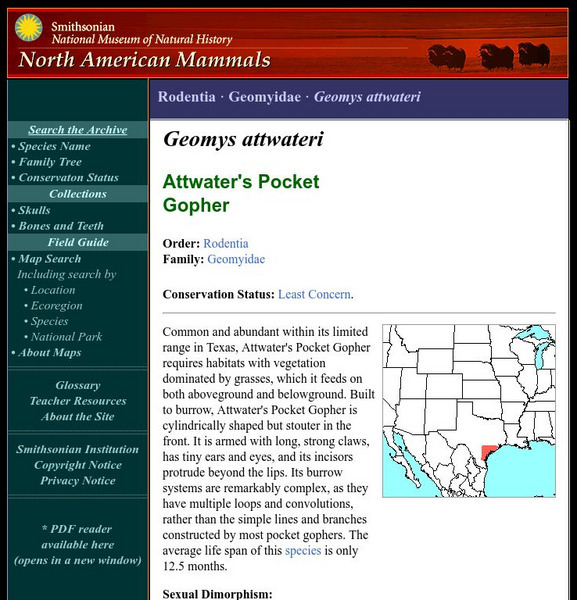
National Museum of Natural History: American Mammals: Attwater's Pocket Gopher
Common and abundant within its limited range in Texas, Attwater's Pocket Gopher requires habitats with vegetation dominated by grasses, which it feeds on both aboveground and belowground. Built to burrow, Attwater's Pocket Gopher is...
Smithsonian Institution
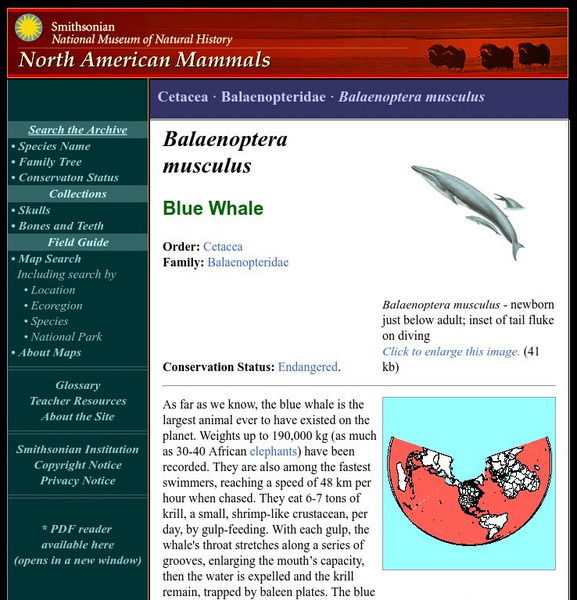
National Museum of Natural History: American Mammals: Blue Whale
As far as we know, the blue whale is the largest animal ever to have existed on the planet. Weights up to 190,000 kg (as much as 30-40 African elephants) have been recorded. Learn more about the Balaenoptera musculus, more commonly known...
Smithsonian Institution
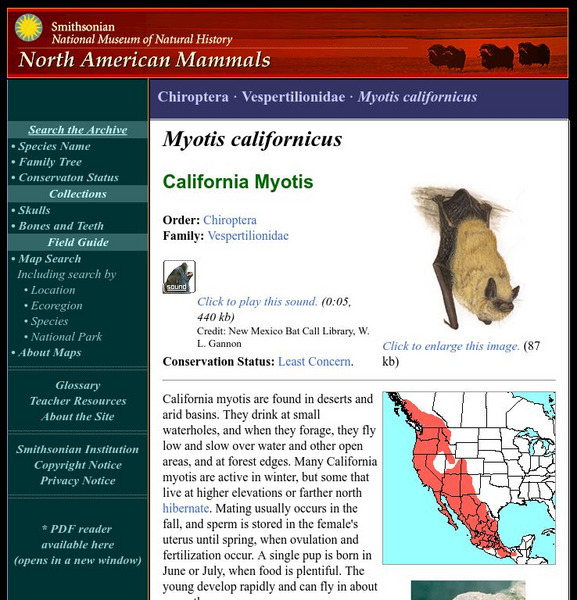
National Museum of Natural History: American Mammals: California Myotis
California myotis are found in deserts and arid basins. They drink at small waterholes, and when they forage, they fly low and slow over water and other open areas, and at forest edges. Learn more about the Myotis californicus, more...
Smithsonian Institution
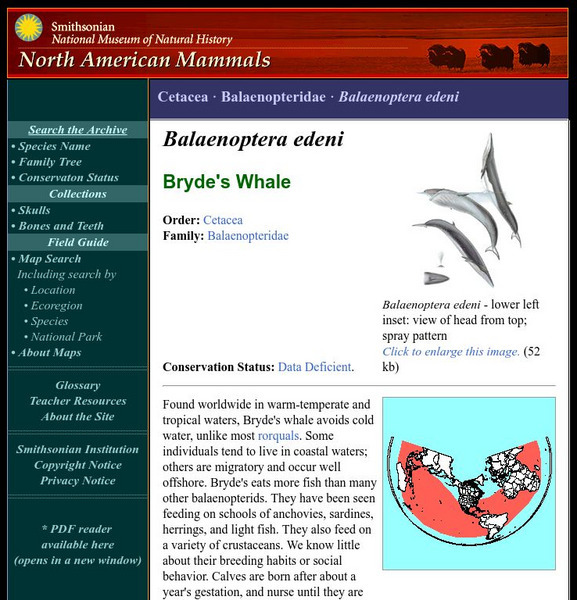
National Museum of Natural History: American Mammals: Bryde's Whale
Found worldwide in warm-temperate and tropical waters, Bryde's whale avoids cold water, unlike most rorquals. Some individuals tend to live in coastal waters; others are migratory and occur well offshore. Learn more about the...
Smithsonian Institution
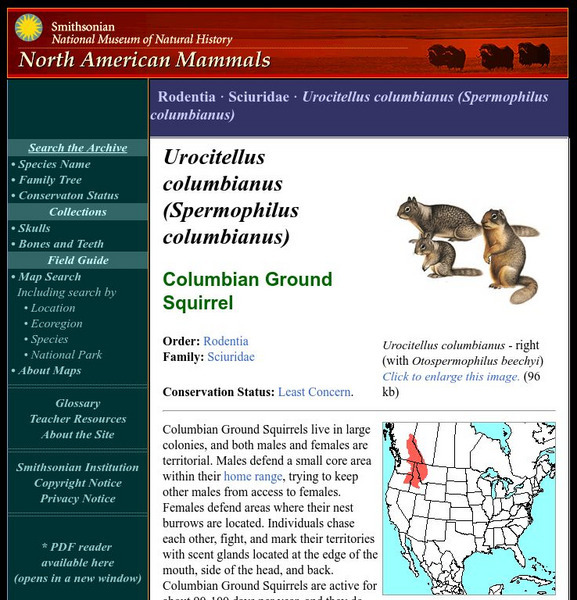
National Museum of Natural History: American Mammals: Columbian Ground Squirrel
Columbian Ground Squirrels live in large colonies, and both males and females are territorial. Males defend a small core area within their home range, trying to keep other males from access to females. Learn more about the Spermophilus...
Smithsonian Institution
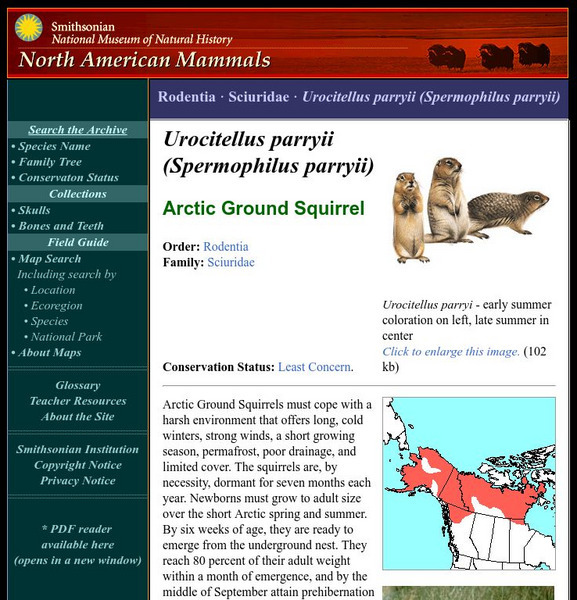
National Museum of Natural History: American Mammals: Arctic Ground Squirrel
Arctic Ground Squirrels must cope with a harsh environment that offers long, cold winters, strong winds, a short growing season, permafrost, poor drainage, and limited cover. The squirrels are, by necessity, dormant for seven months each...
Smithsonian Institution
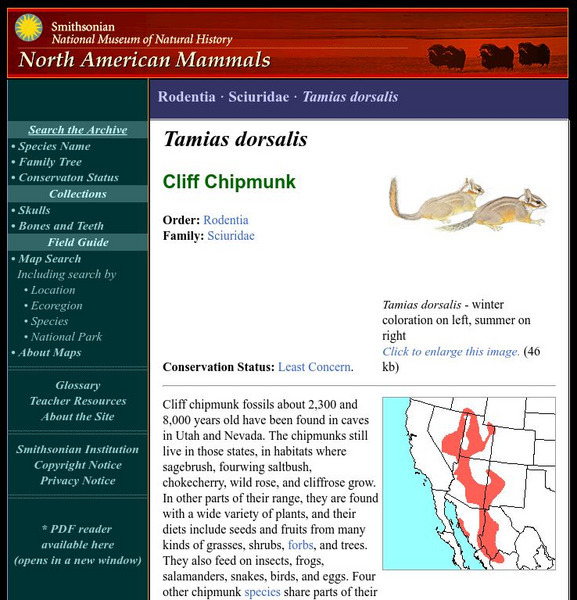
National Museum of Natural History: American Mammals: Cliff Chipmunk
Cliff chipmunk fossils about 2,300 and 8,000 years old have been found in caves in Utah and Nevada. The chipmunks still live in those states, in habitats where sagebrush, fourwing saltbush, chokecherry, wild rose, and cliffrose grow....
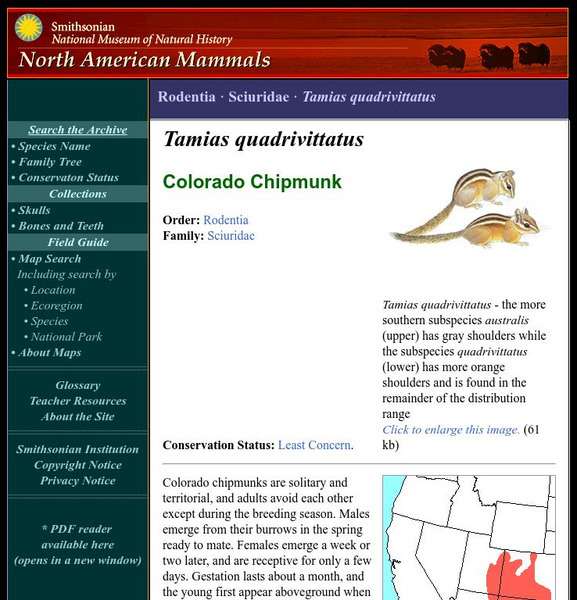
Smithsonian Institution
National Museum of Natural History: American Mammals: Colorado Chipmunk
Colorado chipmunks are solitary and territorial, and adults avoid each other except during the breeding season. Males emerge from their burrows in the spring ready to mate. Learn more about the Tamias quadrivittatus, more commonly known...
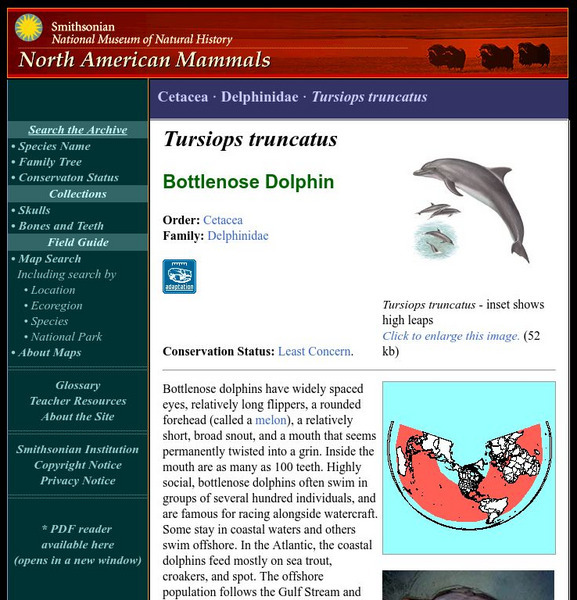
Smithsonian Institution
National Museum of Natural History: American Mammals: Bottlenose Dolphin
Bottlenose dolphins have widely spaced eyes, relatively long flippers, a rounded forehead (called a melon), a relatively short, broad snout, and a mouth that seems permanently twisted into a grin. Inside the mouth are as many as 100...
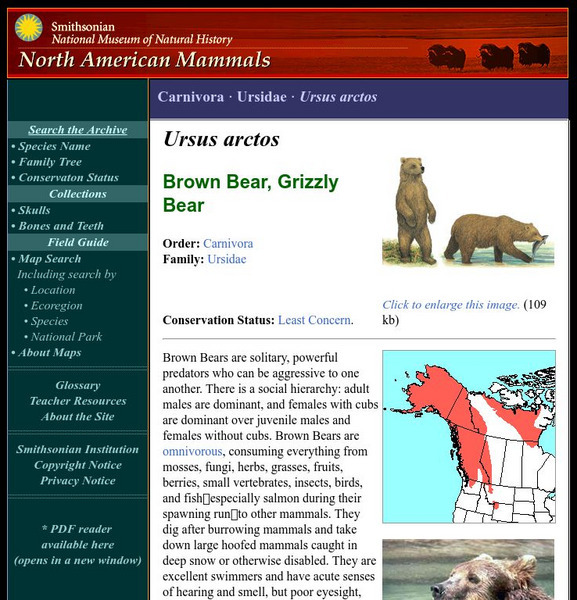
Smithsonian Institution
National Museum of Natural History: American Mammals: Brown Bear, Grizzly Bear
Brown Bears are solitary, powerful predators who can be aggressive to one another. There is a social hierarchy: adult males are dominant, and females with cubs are dominant over juvenile males and females without cubs. Learn more about...