Hi, what do you want to do?





Gilder Lehrman Institute of American History
Gilder Lehrman Institute: History Now: Wilberforce, Lincoln, and the Abolition of Slavery
[Free Registration/Login Required] Tour the online original documents that tell a story about the abolition of slavery in both the United States and England. Click on the tiny "next" above the text to go through the interactive.
Teaching American History
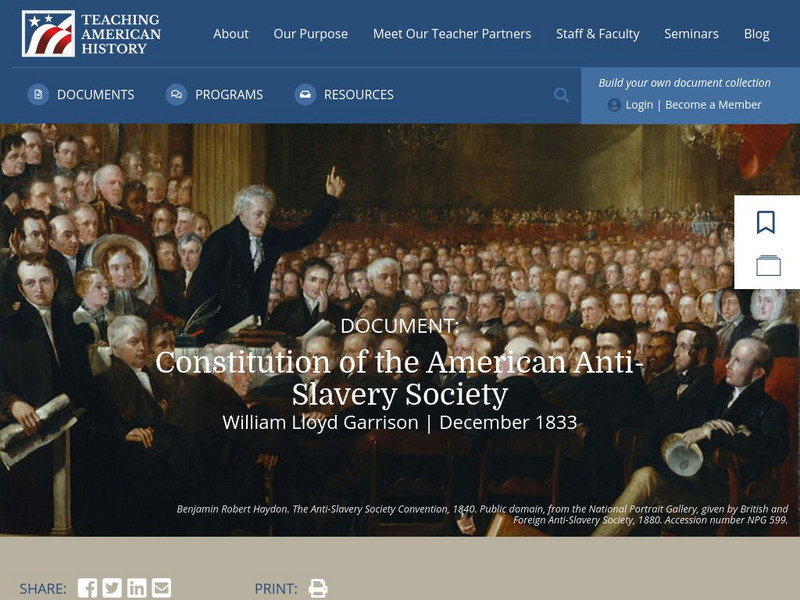
Teaching American History: Manifesto: American Anti Slavery Society
Find the goals of the American Anti-Slavery Society, founded in 1833 by abolitionists in Philadelphia. The object of the group was the immediate abolition of slavery.
Harp Week
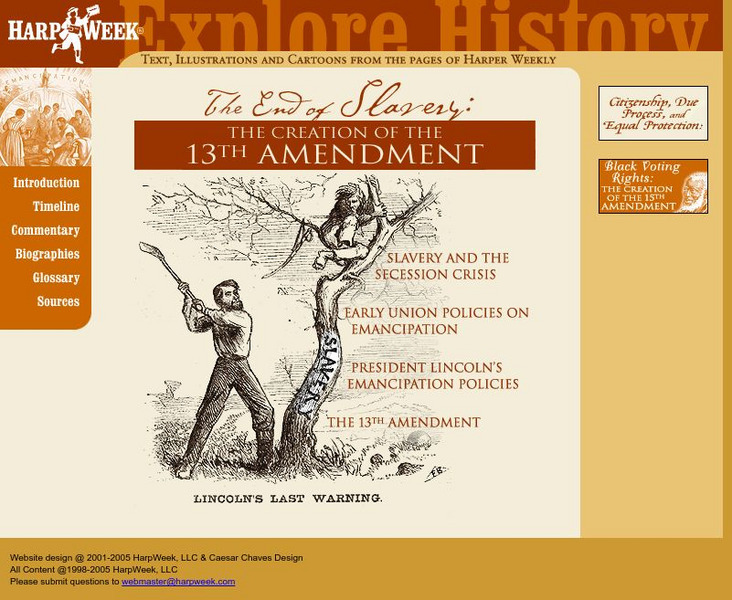
The End of Slavery: The Creation of the 13th Amendment
What a wonderful resource for researching the attempts to solve the issue of slavery prior to the Civil War, and the eventual ratification of the 13th Amendment. Find a timeline of legislation limiting the spread of slavery from 1787...
A&E Television
History.com: Black History Milestones
A detailed account of the history of African Americans is presented in this article. Divided by main topics or periods of time, the coming of slavery to America is the first focus. Followed by plantation life and escapes to freedom and...
Thomson Reuters
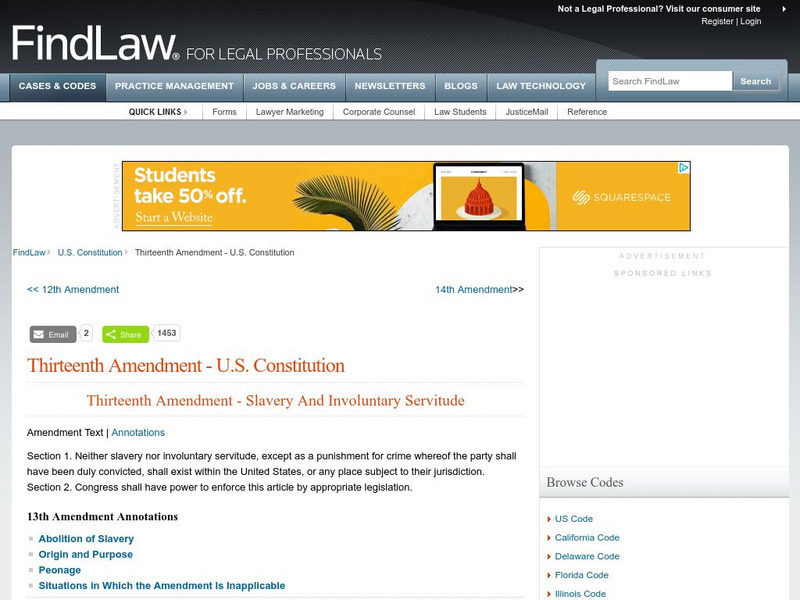
Find Law: u.s. Constitution: Thirteenth Amendment
This source provides the Thirteenth Amendment as it is worded in the U.S. Constitution. At the bottom of the page are annotations with links to information about the abolition of slavery, origin and purpose of the amendment, peonage, and...
![Dbq Theme: Slavery in the United States [Pdf] Activity](https://static.lp.lexp.cloud/images/attachment_defaults/resource/large/FPO-knovation.png "Dbq Theme: Slavery in the United States [Pdf] Activity")
Other
Dbq Theme: Slavery in the United States [Pdf]
A Grade 8 writing assignment on slavery. Students examine nine different primary source documents and answer questions about each. After completion, they would be asked to write an essay. This task uses the method called DBQ or...

Independence Hall Association
U.s. History: Mount Vernon and the Dilemma of a Revolutionary Slave Holder
Read about George Washington's dependence on slaves to increase his wealth, and his private views on slavery. What were the possibilites had he expressed these views in public?
Other
Basd: Reconstruction [Pdf]
A very clear document outlining the various reconstruction plans, the problems for both whites and blacks during Reconstruction, and the amendments added concerning the abolition of slavery, civil rights, and suffrage. Requires Adobe...
Other
Al Islam: Slavery in Ancient Times
This resource gives a history of slavery from pre-Islamic Times and its continuation under Islam.
Mariners' Museum and Park
Mariners' Museum: Captive Passage: The Transatlantic Slave Trade
Online exhibition from the Mariners' Museum chronicles the plight of African slaves from the beginning of their journey when they are torn from their homeland all the way to the shores of the Americas. Caught up in the lucrative...
US National Archives
Our Documents: A National Initiative on American History, Civics, and Service
Our Documents is home to one hundred milestone documents that influenced that course of American history and American democracy. Includes full-page scans of each document, transcriptions, background information on their significance, and...

US National Archives
Nara: Treasures of Congress: Struggles Over Slavery the "Gag" Rule
This National Archives and Records Administration site contains John Quincy Adams' response to the "gag" rule in the House of Representatives, May 25, 1836, which restricted discussion about slavery in Congress . Also included are images...
University of Wisconsin
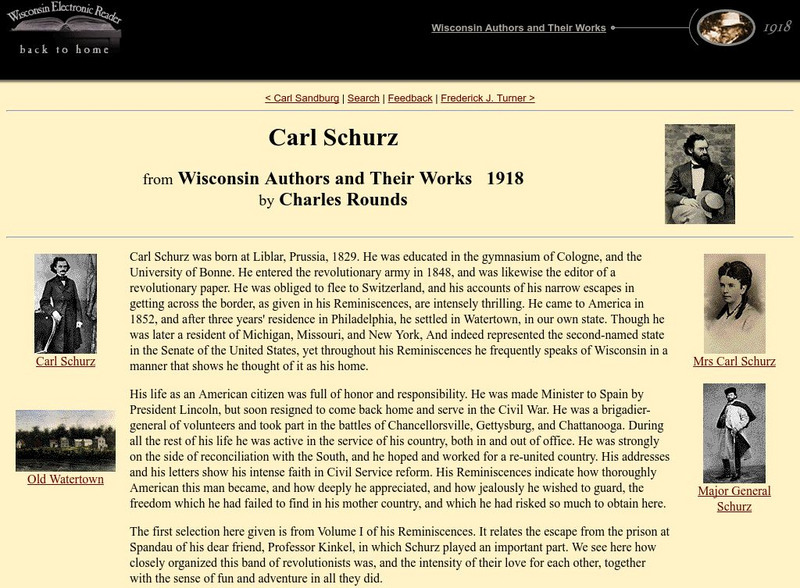
University of Wisconsin: Carl Schurz
A selection of German-American statesman and military leader Carl Schurz' writings on his life and "True Americanism".
Other
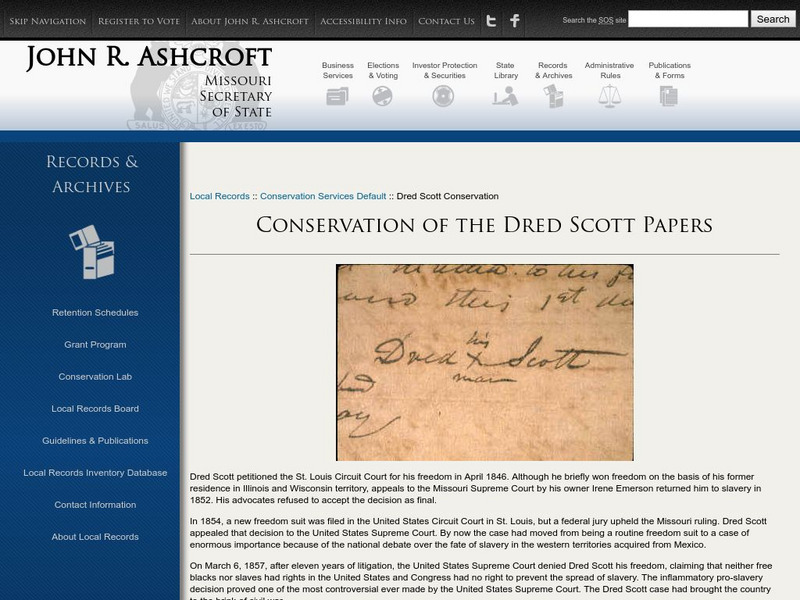
Missouri Secretary of State: Conservation of the Dred Scott Papers
Offers a description of the conservation of papers from the famous 1846 Supreme Court case in which a slave named Dred Scott asked the court for his freedom and was denied.
National Constitution Center
National Constitution Center: Thirteenth Amendment [Pdf]
Primary source document, informational text and questions for discussion included for students studying issues surrounding the abolition of slavery and the 13th Amendment to the Constitution.

Khan Academy
Khan Academy: Us History: 1844 1877: Failure of Reconstruction
The abolition movement sought to end the practice of slavery in the United States.
Read Works
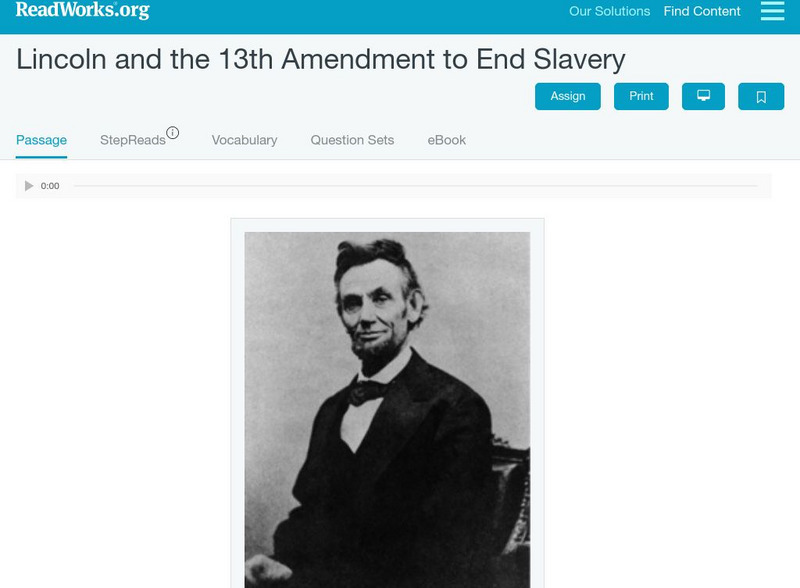
Read Works: Lincoln and the 13th Amendment to End Slavery
[Free Registration/Login Required] Students read about President Abraham Lincoln and his struggle to get the 13th Amendment passed in order to end slavery. A question sheet is available to help students build skills in reading...
Cornell University
Cornell University: Library: I Will Be Heard: The 13th Amendment
Read the text of the 13th Amendment, adopted in January, 1865, even before the end of the Civil War, which ended slavery in the United States. Click on the image to see a larger picture of the document itself.
US Government Publishing Office
Ben's Guide to u.s. Government: Emancipation Proclamation 1863
Ben's Guide is a fun way to present U.S. Government to students grades K-12. This site presents a brief overview of the Emancipation Proclamation. Includes the transcript of the document. Links to related sites are available.
Thomson Reuters
Find Law: u.s. Constitution: Thirteenth Amendment
Presents the Thirteenth Amendment - Slavery and Involuntary Servitude, which abolished slavery and forced servitude in the United States. Includes four annotations to the Amendment.
Cornell University
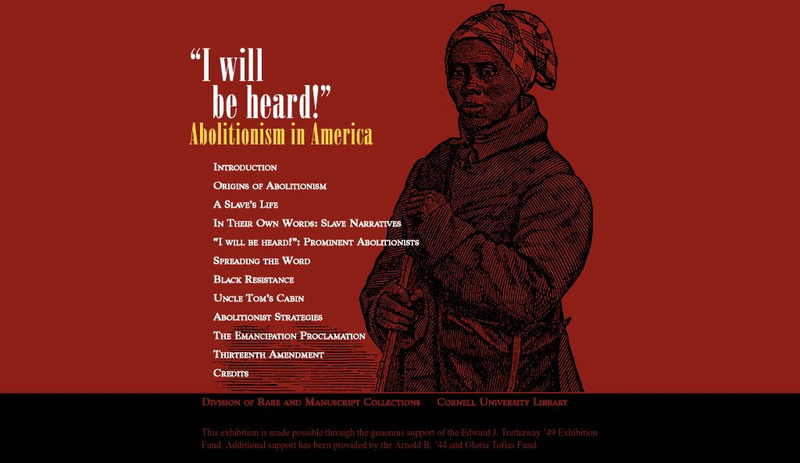
Cornell University: Library: I Will Be Heard! Abolitionism in America
A collection of original manuscripts, letters, photographs, rare books, and other materials on abolitionism from the 1700s through 1865.

Library of Congress
Loc: From Slavery to Civil Rights
This interactive timeline lets students select an era in the history of blacks in United States. Text tells the highlights of the time and primary source materials are linked that pertain as well.
Other
The Abolitionist: History and Geography of the Underground Railroad
Read a comprehensive account of the Underground Railroad, how it was organized, and the routes that were used. Be sure to read all three parts.