Hi, what do you want to do?





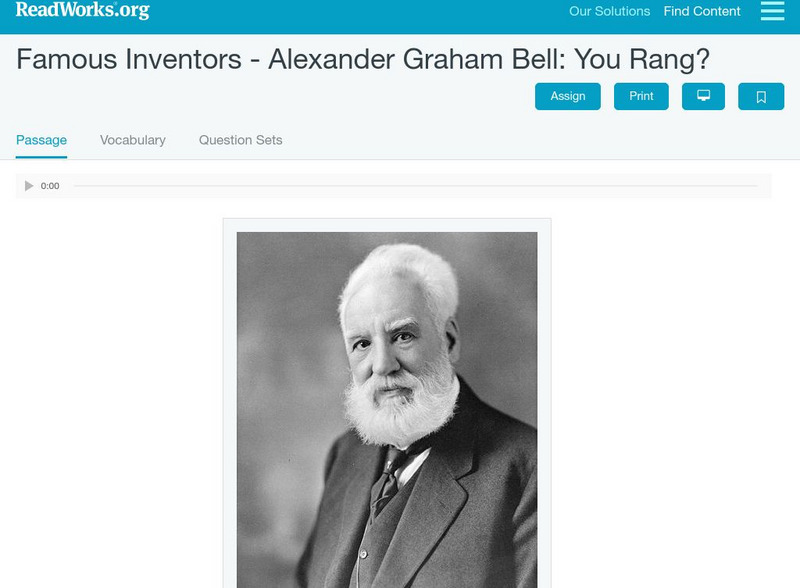
Read Works
Read Works: Famous Inventors Alexander Graham Bell: You Rang?
[Free Registration/Login Required] This passage shares brief biographical information about Alexander Graham Bell and his role in inventing the telephone. This passage is a stand-alone curricular piece that reinforces essential reading...

Enchanted Learning
Enchanted Learning: Inventors & Inventions 1801 1850
This site from Enchanted Learning presents several brief overviews of major early nineteenth century inventors and their inventions. The information is accessible by clicking on the corresponding link.
abcteach
Abcteach: Inventors and Inventions
[Free Registration/Login Required] Find several scientific inventors and inventions with activities for learners in primary grades through middle school. One lesson in particular integrates technology by focusing on the invention of the...
Massachusetts Institute of Technology
Mit: Inventor of the Week: Gilbert Lewis
At this site from the Massachusetts Institute of Technology, you can read about the inventor of "Heavy Water," Gilbert Newton Lewis, who is "one of the most influential and admired scientists of the twentieth century."
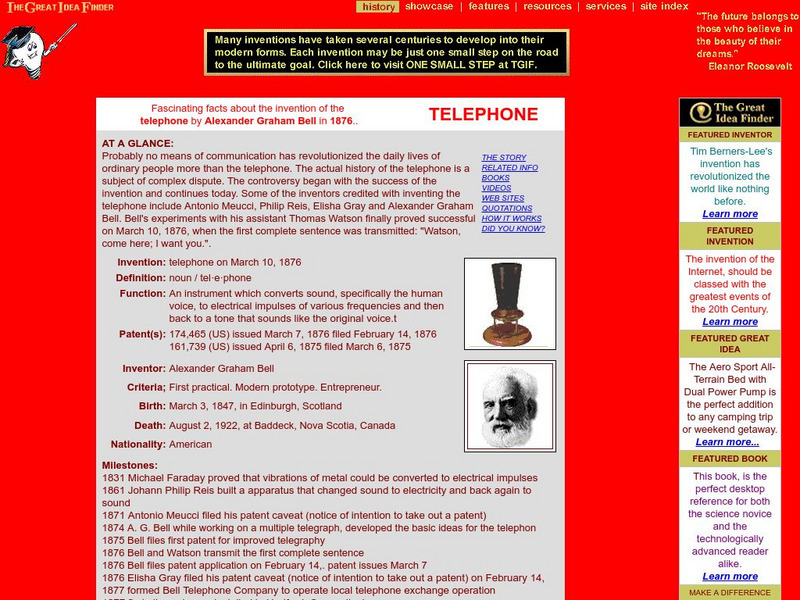
Great Idea Finder
The Great Idea Finder: Invention of the Telephone
The Great Idea Finder provides information on the invention of the telephone by Alexander Graham Bell and its history throughout the years. Links to other sites with information are provided.

Project Britain
Primary Homework Help: The Victorians: Inventions Timeline
An organized timeline featuring major developments and inventions that made travel, communications, and trade easier for many people during Queen Victoria's reign.
Independence Hall Association
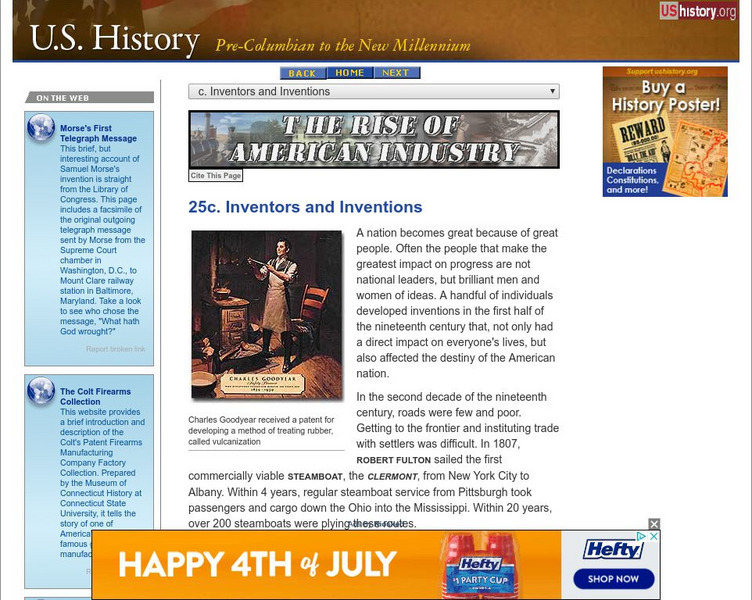
U.s. History: Inventors and Inventions
The industrial revolution in America spawned the inventions of many inventors, who improved technology in many different areas. See how transportation, agriculture, and communications were transformed because of these inventions.
University of Houston
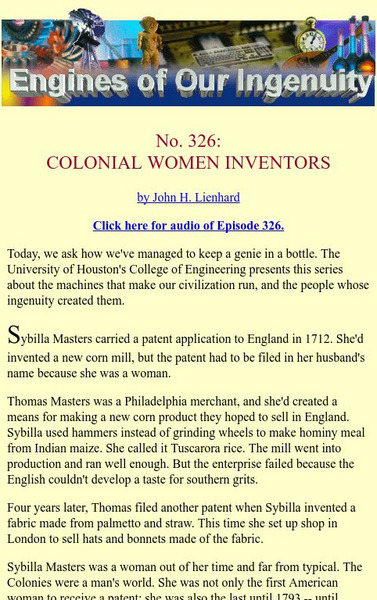
University of Houston: Engines of Our Ingenuity: No. 326: Colonial Women Inventors
Provides information on two Colonial women inventors. This is a transcript of an accompanying radio broadcast.

PBS
Pbs Kids: How to Be an Inventor
Part of the Real Stories series from "Martha Speaks," this read-along story teaches young children how easy it is to be an inventor.
University of Florida
Baldwin Library: A History of Wonderful Inventions by Henry G. Bohn
This is an online photocopy of the original text of the children's book A History of Wonderful Inventions by Henry G. Bohn(1861), a history of inventors and inventions such as the compass, gunpowder, clocks, printing, and more.

PBS
Pbs Kids: Martha Speaks: Super Inventions
In this interactive story, learn how animal abilities have inspired inventions over the years.
![Text Project: Fyi for Kids: Young Inventors: Chester Greenwood [Pdf] Article](https://statictemp.lp.lexp.cloud/images/attachment_defaults/resource/large/FPO-knovation.png "Text Project: Fyi for Kids: Young Inventors: Chester Greenwood [Pdf] Article")
Text Project
Text Project: Fyi for Kids: Young Inventors: Chester Greenwood [Pdf]
This magazine article explains how Chester Greenwood invented ear warmers when he was 15 years old.

University of California
University of California: Otis Boykin: Inventor
Otis Boykin (1920-1982 CE) is attributed with developing twenty-six electronic inventions, including devices for guided missiles, IBM computers and a control unit for an artificial heart stimulator.
University of Virginia
University of Virginia: Jefferson as an Inventor
This section of a larger site on Thomas Jefferson discusses his involvement in the development of the patent system. Here, read about Jefferson's committment to science and his role as an inventor.

TED Talks
Ted: Ted Ed: How Super Glue Was Invented: Moments of Vision 8
Today, super glue is a nearly indispensable household item - but its incredibly sticky nature almost caused it to be abandoned in the development phase - twice. Jessica Oreck shares the wartime origins of this sticky substance. [1:53]
Other
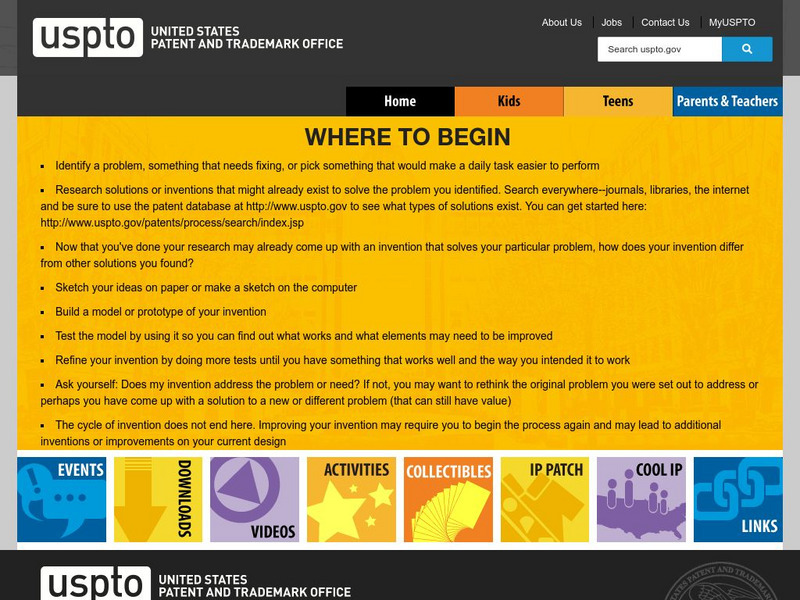
United States Patent and Trademark Office: The Cycle of Invention
Read about the cycle of invention where one invention inspires someone to create another one.
Other
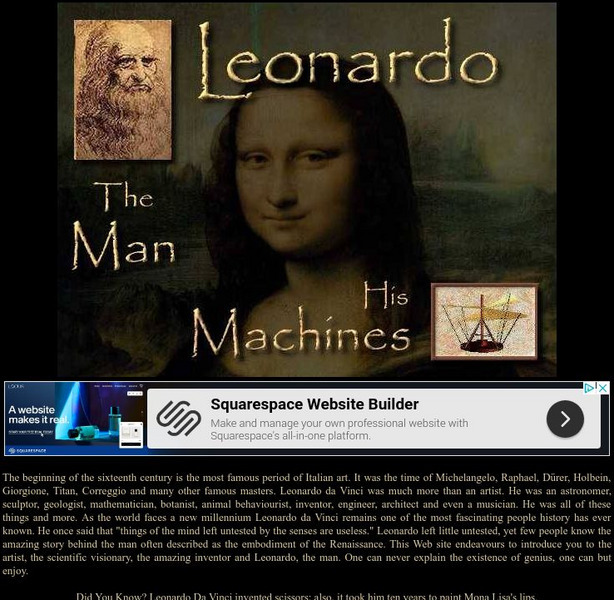
Leonardo Da Vinci the Man & the Inventor
An award winning site containing fantastic information on Leonardo as a man, an artist, and an inventor. You will find detailed analysis of his paintings, a section containing his drawings, articles on his life, designs for many machines...
University of Illinois
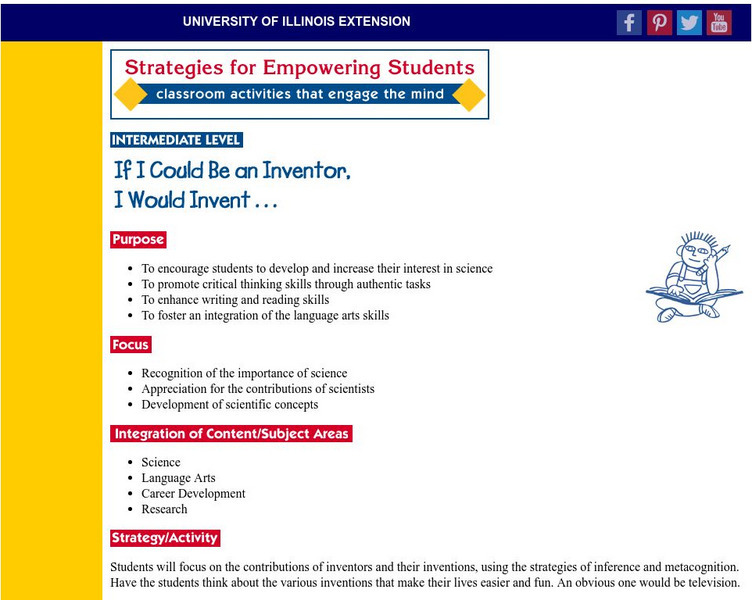
University of Illinois Extension: Character Education "I Would Invent"
Excellent resource for empowering students to become better learners. This lesson includes encouraging students to develop an interest in science, to promote critical thinking skills, and to enhance reading and writing skills.

Georgia Humanities Council and the University of Georgia Press.
New Georgia Encyclopedia: History and Archaeology: Eli Whitney in Georgia
Although Eli Whitney was born in Massachusetts, it was in Georgia that he invented the cotton gin in 1793.
Other
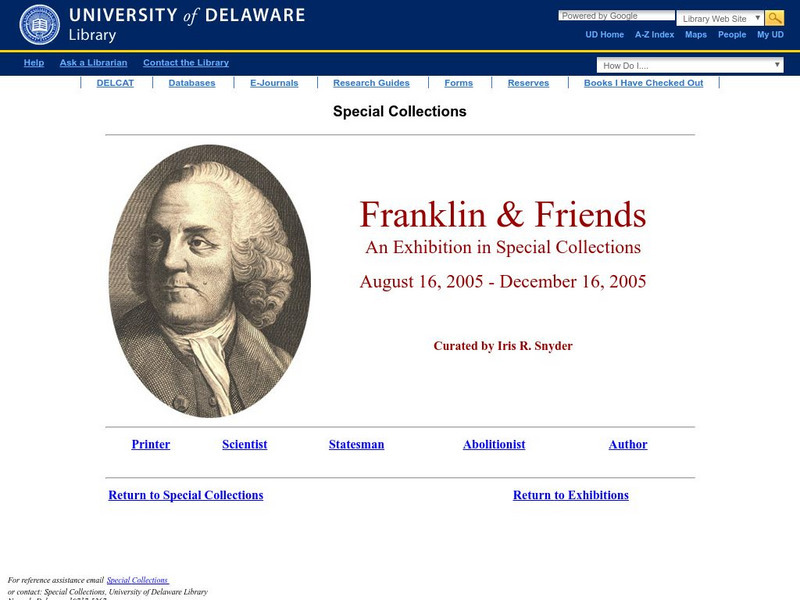
University of Delware: Franklin and Friends
Using historically significant documents and photos from its collection, this exhibit probes the various interests of Franklin and the influential friends that shared his interests.
Council for Economic Education
Econ Ed Link: Inventors and Innovators Improve on the Original
This lesson plan focuses on discussion of inventions, brainstorming new products or improvements, and identifying the protection, production, and marketing processes.
Council for Economic Education
Econ Ed Link: Peanuts, Pecans, and Peas, Please
George Washington Carver, a great scientist, changed the economy of the South with his agricultural knowledge. This lesson will investigate how the lowly peanut kept the cotton farmers from losing everything.
Calisphere: University of California Libraries
University of California: Calisphere: 1900 1940s: The Rise of Technology
Primary source photographs depicting new technologies and communications at the turn of the 20th century and how lives changed as a result.

National Humanities Center
National Humanities Center: America in Class: Becoming Modern: America in the 1920s: Machine
Primary resource material on the way innovatons and machines have modernized and changed America in the 1920s and beyond.