Hi, what do you want to do?






NASA
Nasa: Solar System Exploration
Enter our solar system to interact with the planets, moons, asteroids, meteors, and more. Investigate with NASA scientists and explore missions related to space exploration. Read facts, compare statistics, look through resources, and...
Annenberg Foundation
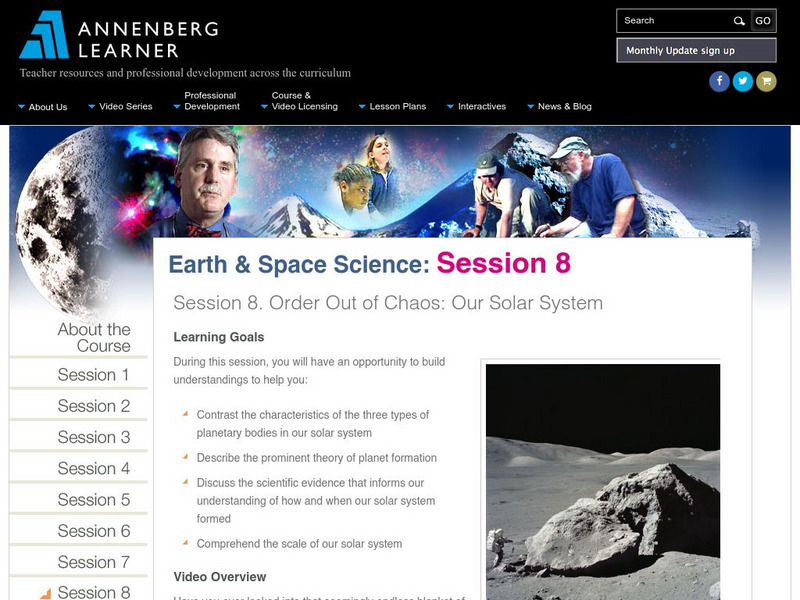
Annenberg Learner: Earth and Space Science: Order Out of Chaos: Solar System
Material to begin an exploration of the Solar System: the characteristics of the planets, theories about planet formation, and more. An hour-long video is accompanied by learning goals, an outline and overview, details on star formation,...
NASA
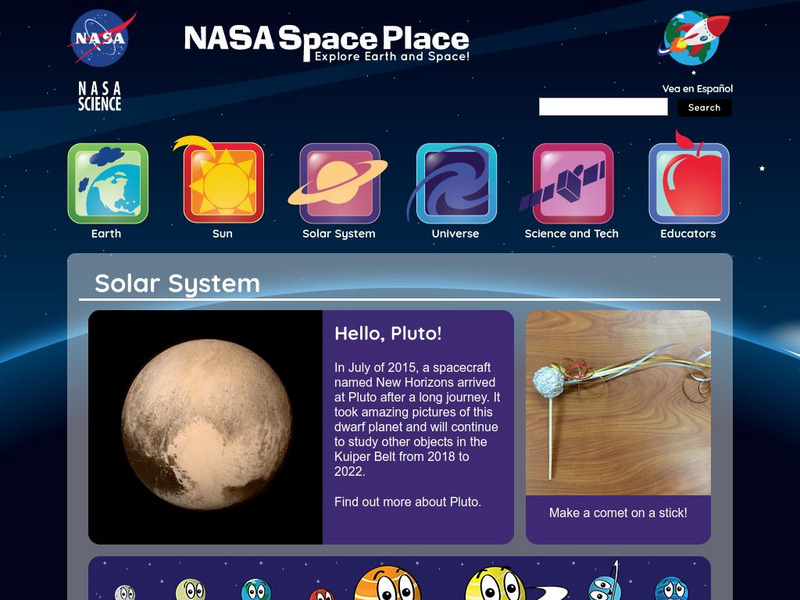
Nasa Science: For Kids: Solar System Fun
Test your knowledge about the solar system with games and activities designed to help explore what you know about the sun, the planets and their moons, space rocks, the Milky Way, and related topics.
Smithsonian Institution
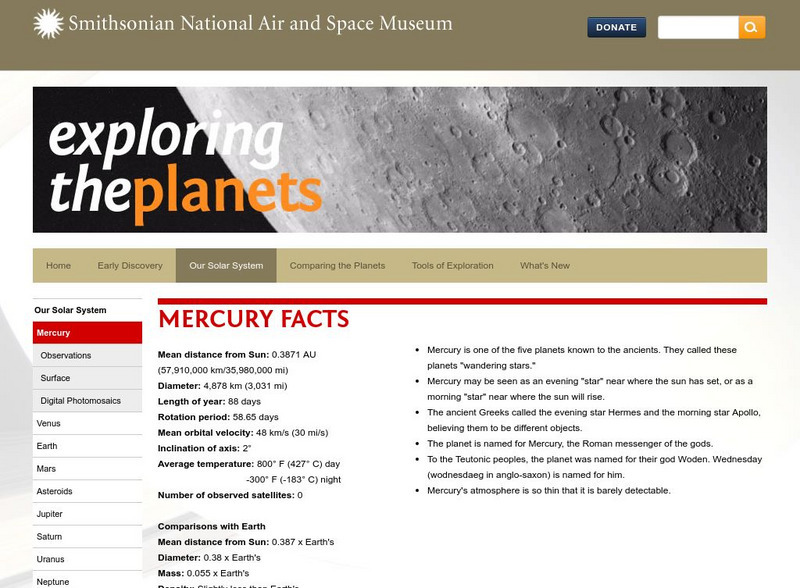
National Air and Space Museum: Exploring the Planets: Mercury
This is a useful resource for facts and images pertaining to the planet Mercury.
Smithsonian Institution
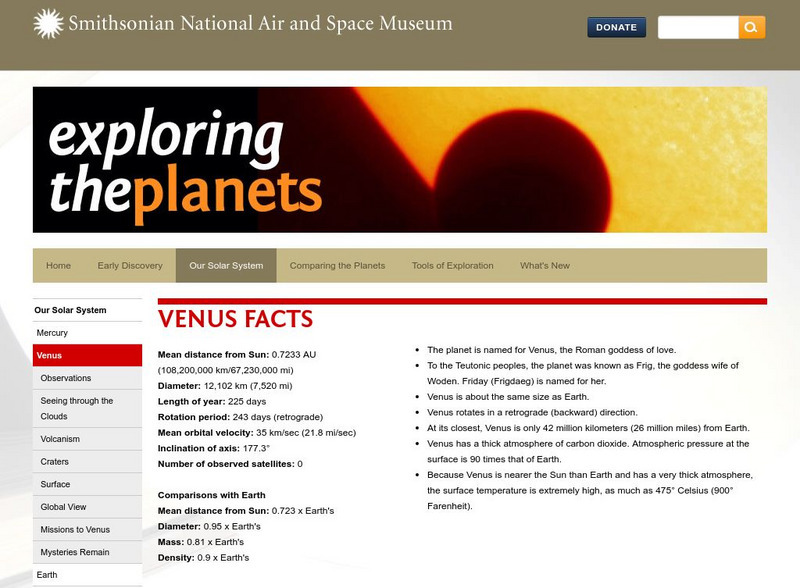
National Air and Space Museum: Exploring the Planets: Venus
Get the facts on Venus. Resource offers a variety of satellite images and facts about the structure and features of Venus.

Smithsonian Institution
National Air and Space Museum: Exploring the Planets: Ancient Times & the Greeks
In ancient times only five planets were known: Mercury, Venus, Mars, Jupiter, and Saturn. Learn about Greek astronomer Ptolemy's theory for the solar system that was to survive for fourteen centuries.
Space Telescope Science Institute
Amazing Science: Solar System Trading Cards
Amazing Science looks at the Solar System with this FAQ site and lesson plan.
Smithsonian Institution
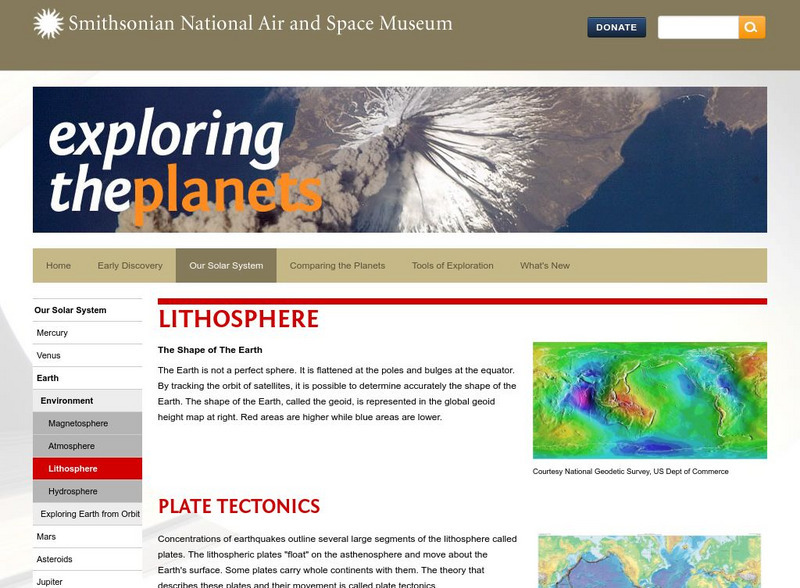
National Air and Space Museum: Exploring the Planets: Earth's Lithosphere
The plate tectonics and other features of the Earth's lithosphere are explained and illustrated. Has links to definitions of the magnetosphere, atmosphere, and hydrosphere.
Enchanted Learning
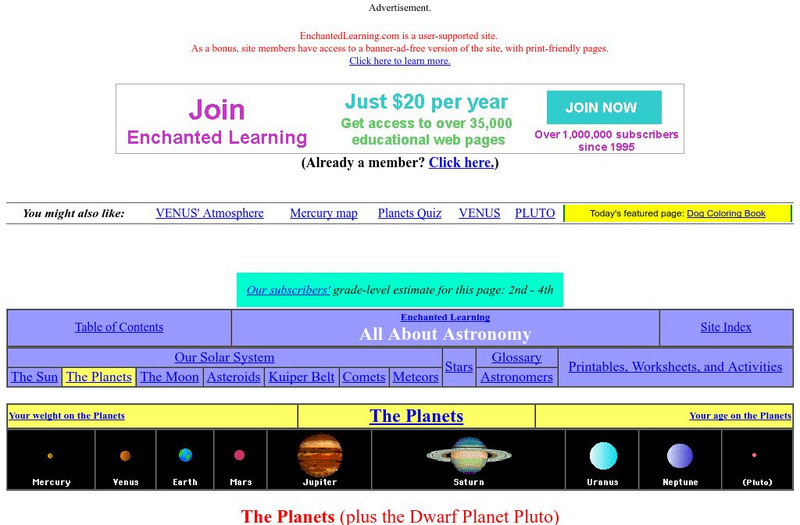
Enchanted Learning: The Planets
This survey of the planets includes all the basics, size, mass, atmosphere, length of day, and the like. It features interactive activities and learning exercises and compares all of the planets in colorful tables.
Cosmos 4 kids
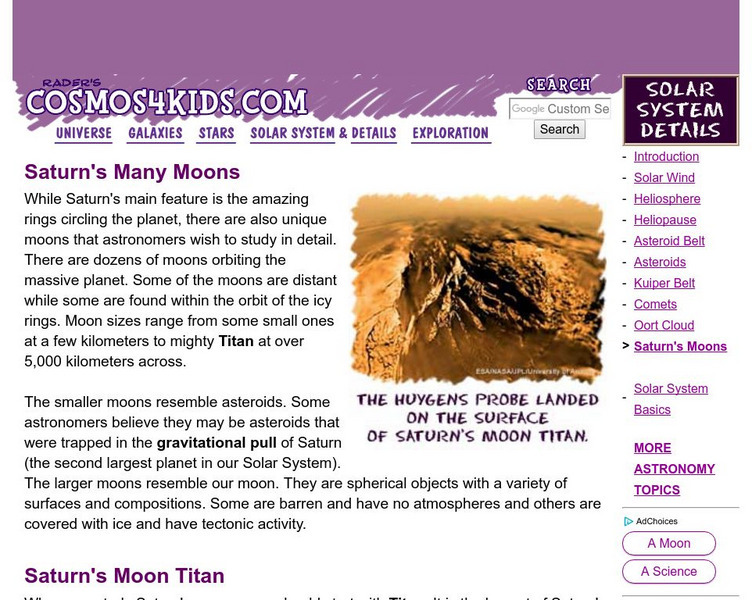
Cosmos4 Kids: Solar System Details: Moons of Saturn
Explore the dozens of Saturn's moons orbiting the second largest planet of our solar system. Find out about the Cassini space mission which explored Saturn's largest moon, Titan.

Cosmos 4 kids
Cosmos4 Kids: Solar System Details: Oort Cloud
Explore the huge spherical region surrounding our solar system. Find out what the Oort Cloud contains and how comets originate there.
NASA
Nasa: The Space Place
This site from the National Aeronautics and Space Administration allows students to explore topics related to planet earth and outer space. A number of games and interactive features are available.
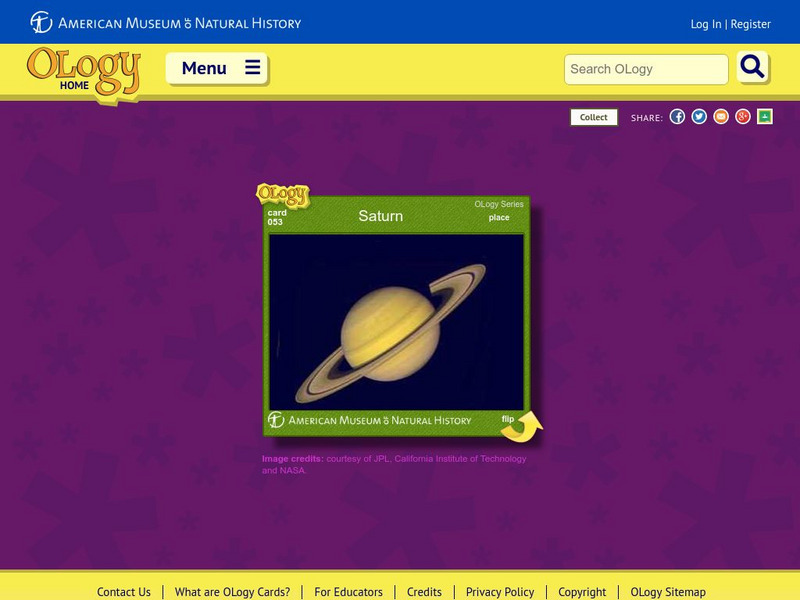
American Museum of Natural History
American Museum of Natural History: Saturn O Logy Card
Flip this interactive card to start learning about the planet Saturn. Answer multiple-choice and fact-or-fiction questions and review some fast facts about the second largest planet in our solar system.
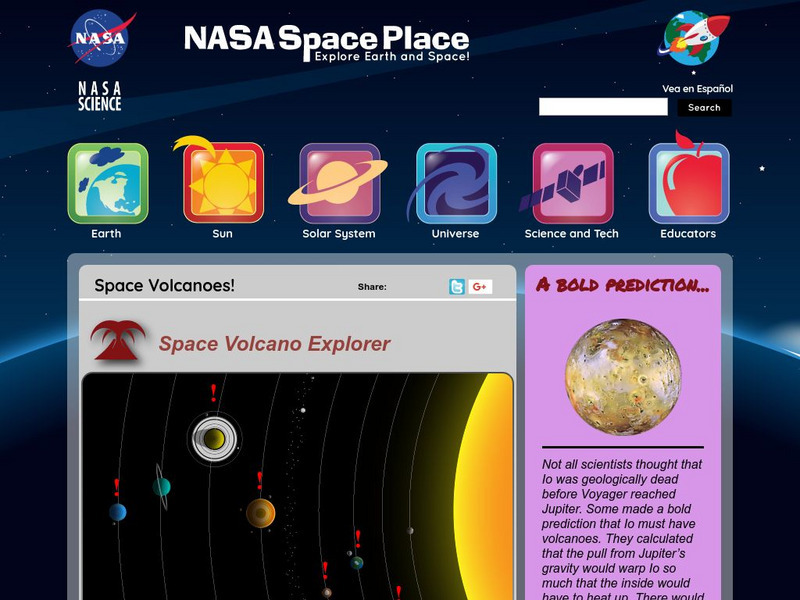
NASA
Nasa: Space Place: Space Volcanoes!
Click and explore the solar system to discover where volcanoes can be found, on planets and moons.
Science Education Resource Center at Carleton College
Serc: Activity: Is There Really Life on Mars?
This Public Broadcasting Service (PBS) activity explores the controversy over whether or not there is life on Mars. Part of the Mysteries of Deep Space Program that originally aired in April 1997, the activity includes instructional...
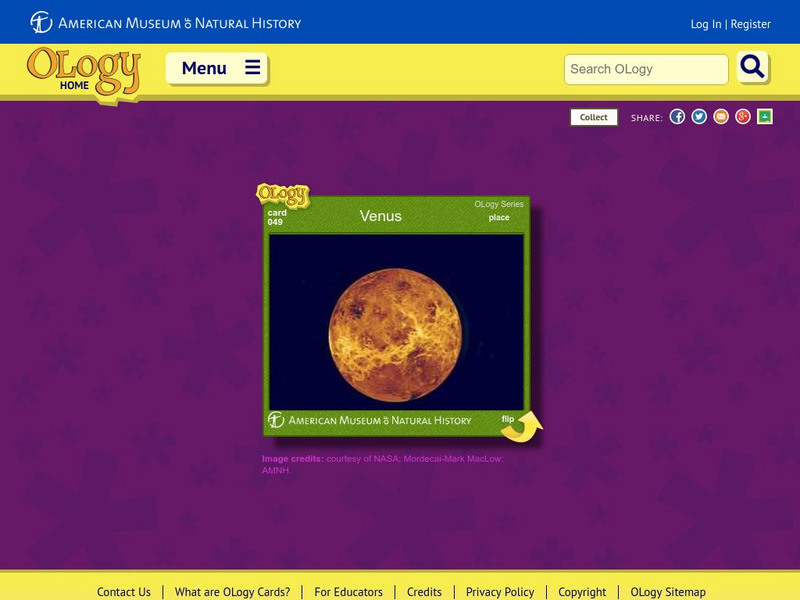
American Museum of Natural History
American Museum of Natural History: Venus O Logy Card
Flip this interactive card to start learning about the planet Venus. Answer multiple-choice and fact-or-fiction questions and review some fast facts about Venus.
Other
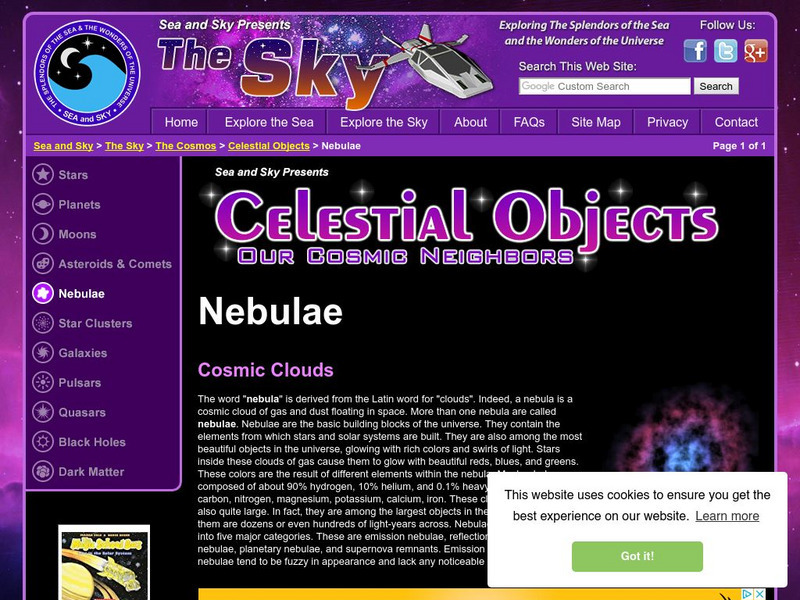
Cosmic Wonders: Nebulae
Various different types of nebulae can be explored on this site. View and learn about this stellar phenomena and how they contribute to the growth of the solar system.

Alabama Learning Exchange
Alex: Comets
During this lesson plan, students have the opportunity to explore comets. By navigating the Internet, viewing a slideshow, and participating in a videoconference with NASA, students will discover what comets are all about.
PBS
Pbs Teachers: Life's Really Big Questions: Planetary Problem Solving
Explore the possibility of life on planets outside our solar system. Create an extrasolar planet, then make the necessary adaptations for it to be capable of supporting human life.