Hi, what do you want to do?





Read Works
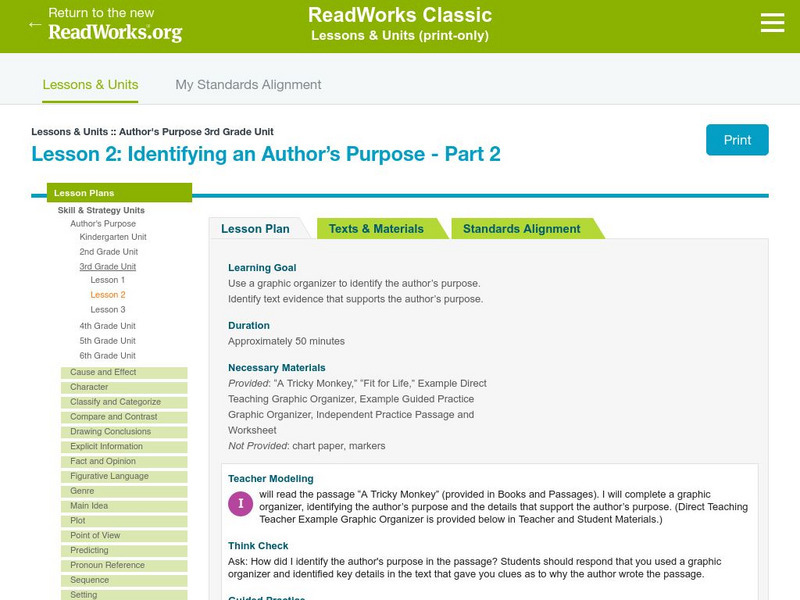
Read Works: 3rd Grade: Author's Purpose: Lesson 2
[Free Registration/Login Required] This lesson plan helps students learn to identify an author's purpose.
Read Works
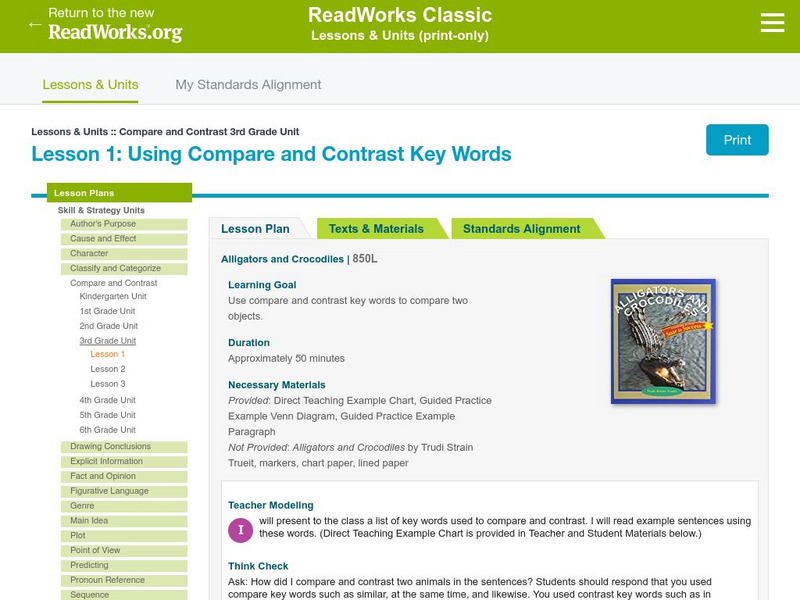
Read Works: 3rd Grade: Using Compare and Contrast Keywords: Lesson 1
[Free Registration/Login Required] With this lesson plan, teachers can help students increase their understanding of what they read through the use of key words that compare and contrast.
Better Lesson
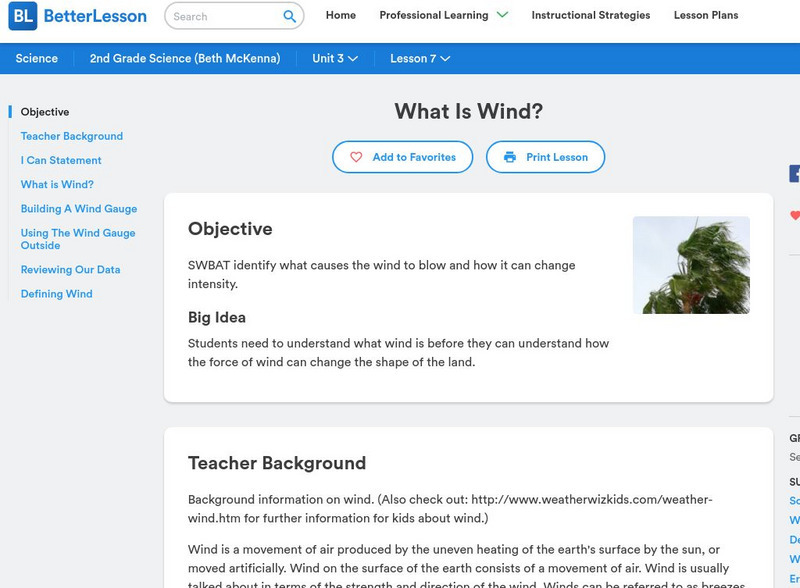
Better Lesson: What Is Wind?
The purpose of the lesson is to introduce students to what causes wind and how it can be measured. Students will create a wind gauge and collect data on "wind speed". Detailed instructions are included as well as examples of the lesson...

Better Lesson
Better Lesson: Where Is Water Found on Earth?
Water on Earth comes in many different forms. Students will collaborate as a team to locate forms of water on Earth. This in-depth lesson utilizes technology, specifically QR codes, to go on a hunt for where water is located on Earth...
Better Lesson
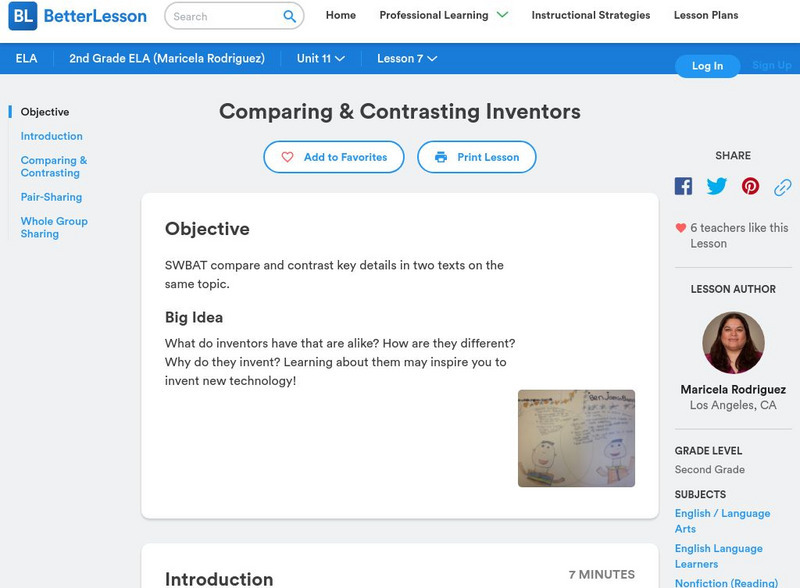
Better Lesson: Comparing & Contrasting Inventors
What do inventors have that are alike? How are they different? Why do they invent? Learning about them may inspire you to invent new technology! In this instructional activity, students will compare and contrast key details in two texts...
Better Lesson
Better Lesson: Who's at the Door? Use Images to Find Out!
Students will use words acquired through reading to describe images (with adjectives) that demonstrate an understanding of characters in a story. The teacher will read Miss Nelson is Back which has great descriptors and will hold a class...
Other
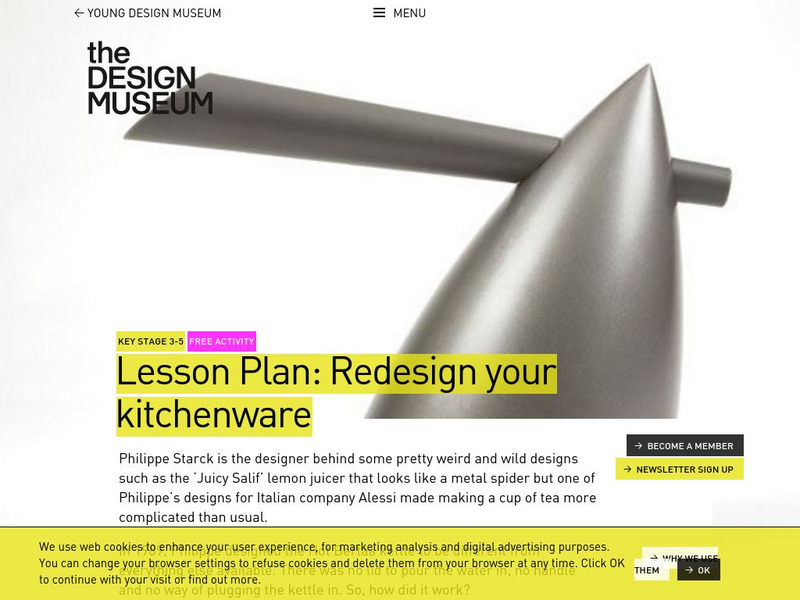
The Design Museum: Lesson Plan: Redesign Your Kitchenware
Students will learn about the unique kettle invented by designer Philippe Starck. He designed the Hot Bertaa kettle to be different from everything else available. There was no lid to pour the water in, no handle, and no way of plugging...
Better Lesson
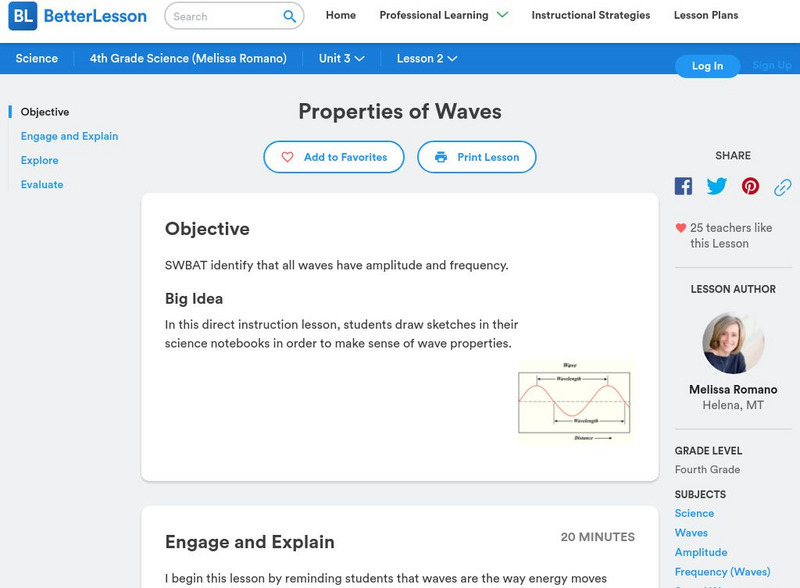
Better Lesson: Properties of Waves
In this direct instruction lesson plan, students draw sketches in their science notebooks in order to make sense of wave properties. Resources include a slideshow presentation on the properties of waves and multiple examples of student...

Other
American Coal Foundation: Lesson Plan: Conserving Electric Energy
Lesson plan focuses on electricity use and energy consumption, while engaging young scholars in a hands-on activity that helps them comprehend the effects of regulation and conserving energy resources.

Other
American Coal Foundation:lesson Plan:how Much Does It Cost to Light the School?
Lesson explores where electricity comes from, how much it costs, and the amount of coal that is used. Students will relate these concepts to how much coal is needed to light their school/classroom for one hour.

Better Lesson
Better Lesson: Goody Goody Gumdrop! Building Structures Are Fun!
In this lesson, the children will be building a physical model to illustrate how the shape of an object, such as triangles, helps it function. At the end, the children will test their gumdrop structures and the class will collectively...
Better Lesson
Better Lesson: Quick or Slow? I've Got to Know!
Earth changes can happen quickly or slowly. The students will work in teams to stake a claim about these changes and then use texts to find evidence to prove their claims. Included in this instructional activity are video clips of the...
Better Lesson
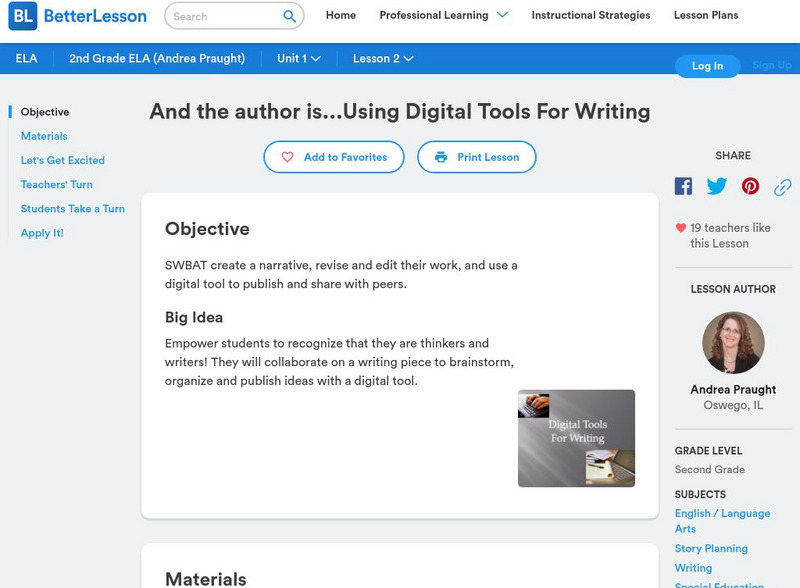
Better Lesson: And the Author Is...using Digital Tools for Writing
Empower students to recognize that they are thinkers and writers! They will collaborate on a writing piece to brainstorm, organize and publish ideas with a digital tool. This lesson highlights different website creations as examples of...
Better Lesson
Better Lesson: Researching a Topic: Teaching Students to Research Information
Students will conduct a short research project about a topic. This lesson focuses on how to find the information needed on their chosen topic.

CPALMS
Cpalms: The Lesson Formerly Known as "Wassssuuup"
[Free Registration/Login Required] In this lesson, young scholars are actively engaged in learning how formal and informal language are used in written and oral communications. Downloadable handouts are provided.

Other
Bscs: Forces Lesson 1: What Makes Something Start to Move?
Through hands-on activities, this lesson will show students that a force is a push or a pull and forces cause changes in motion. Included are a minute-by-minute lesson plan, activities, and teacher discussion points and questions.
Other
Bscs: Earth's Changing Surface Lesson 1: Our Land
This hands-on lesson plan focuses on the land and its many different types of landforms and bodies of water. Included are a minute-by-minute lesson plan, activities, and teacher discussion points and questions.
Writing Fix
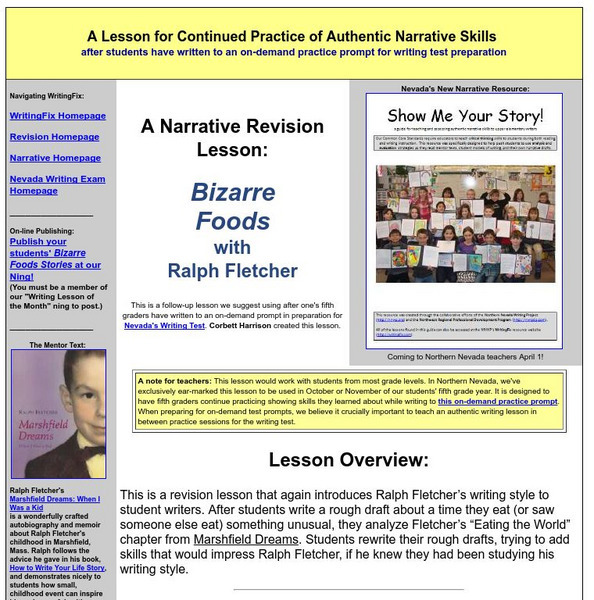
Writing Fix: Bizarre Foods With Ralph Fletcher: A Narrative Revision Lesson
In this lesson, Ralph Fletcher's writing style is introduced to student writers. Students will write a rough draft about a time they ate, or a time when they saw someone else eat, something unusual. Then students will read and analyze...
PBS
Pbs Mathline: Magic Box Lesson Plan [Pdf]
As a teacher jumps rope, learners determine the arithmetic pattern. Printable lesson.

TeachEngineering
Teach Engineering: Biodomes Engineering Design Project: Lessons 2 6
In this lesson students learn about biodomesand how engineers use them. Students then create their own biodomes.
Other
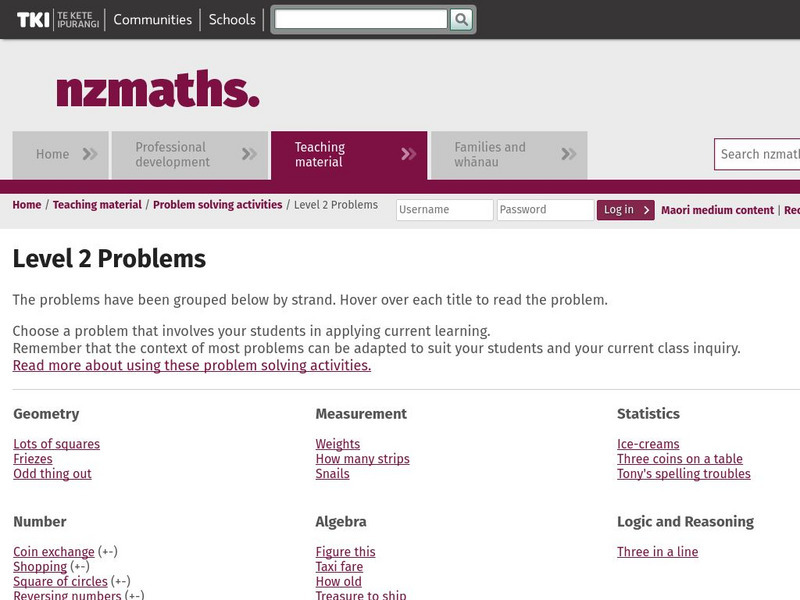
Nz Maths Problem Solving Lesson Plans: Level 2
NZMaths is a New Zealand teacher resource that provides lesson plans for students in algebra, geometry, measurement, numbers, statistics, logic and reasoning.
Other
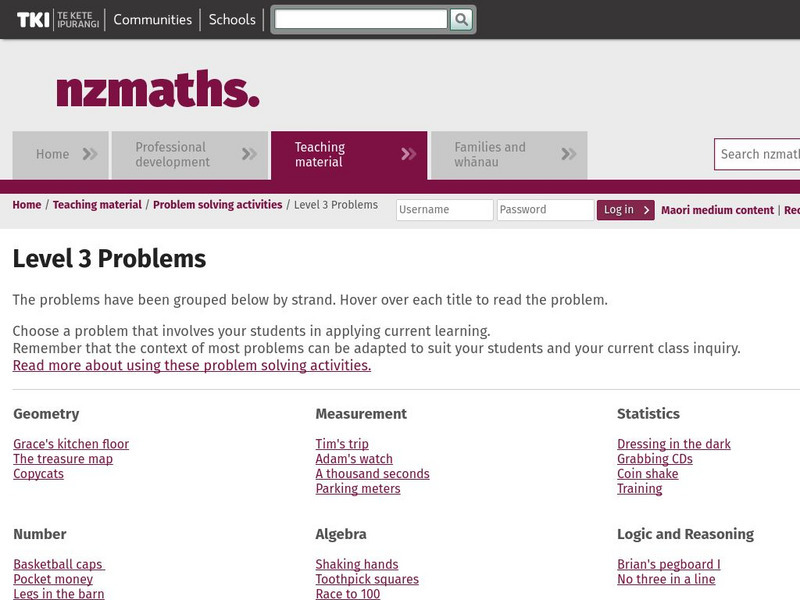
Nz Maths: Problem Solving Lesson Plans: Level 3 Problems
This New Zealand Problems website is an excellent resource for lesson plans in problem-solving. They are organized into the following categories: algebra, geometry, measurement, numbers, statistics, and logic and reasoning.
Code.org
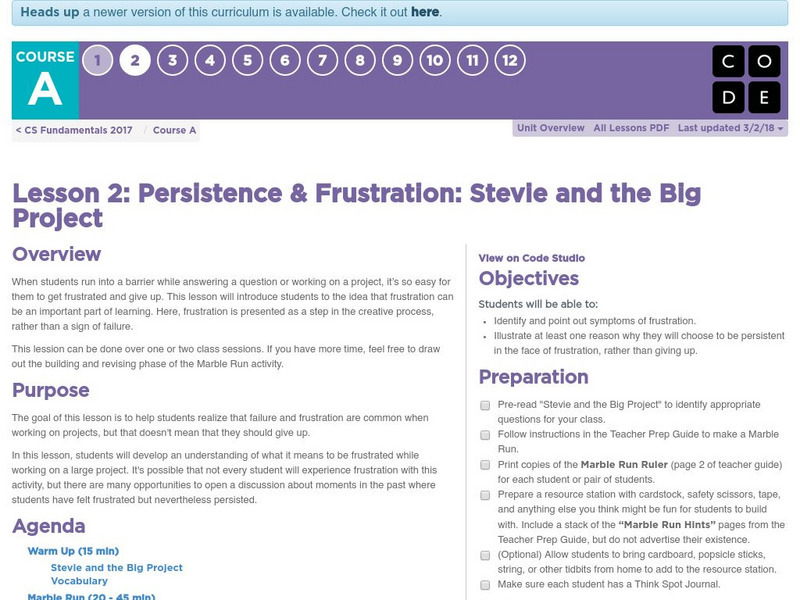
Code.org: Lesson 2: Persistence & Frustration: Stevie and the Big Project
In this instructional activity, students will develop an understanding of what it means to be frustrated while working on a large project. It's possible that not every student will experience frustration with this activity, but there are...
Common Sense Media
Common Sense Media: Education: Lesson: Talking Safely Online (Grades 3 5)
During the course of this lesson students learn that while people can develop rewarding friendships online, they should be cautious with online-only friends and never reveal private information without asking a parent or trusted adult...
Other popular searches
- Esl Lessons
- Elementary Lessons
- Math Lessons
- Art Lessons
- Money Lessons
- Preschool Lessons
- 2nd Grade Lessons
- Art Lessons Primary
- Esl Lessons Grammar
- High School Lessons
- 3rd Grade Lessons
- Middle School Lessons