Hi, what do you want to do?






College Board
The Departure
Scholars learn about the Hero's Journey as they read Ray Bradbury's "The Drummer Boy of Shiloh." They analyze the story's structure and narrative techniques. Finally, they write summaries of the text's central idea and use their...
Smithsonian Institution
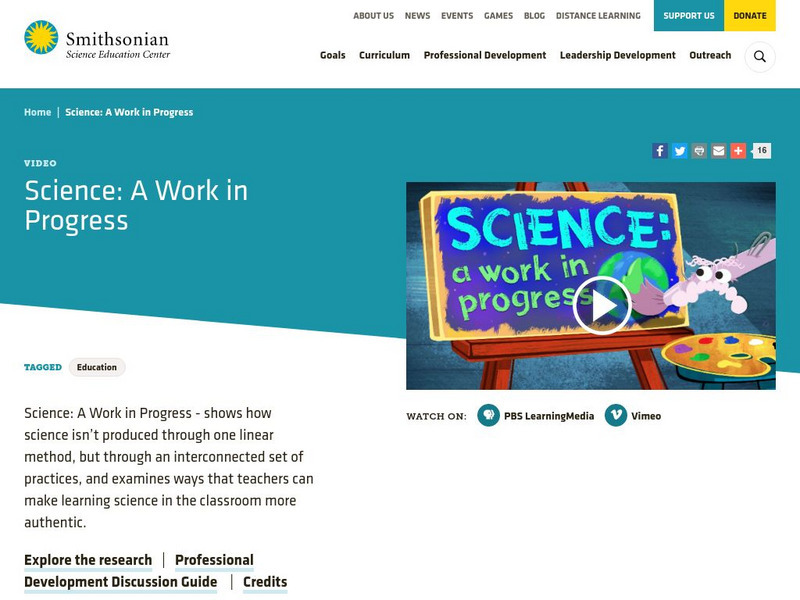
Smithsonian Science Education Center: Science: A Work in Progress
The scientific method is more than just a series of steps to be followed like a recipe. It is a fluid, ever-changing process. This video discusses student's perception of the scientific method and how to make learning science in the...
Science Buddies
Science Buddies: The Science of Making Cheese!
Oooey gooey cheese - yum. Who doesn't like a slice of warm pizza straight from the oven? There's nothing quite like a slice of pizza and a glass of milk, so what makes pizza so great? The cheese. But did you know that making cheese is...
Science Buddies
Science Buddies: Home Sweet Biome: How Do Plants Grow in Different Environments?
In this science fair project you will learn about biomes and how different climatic conditions affect plant growth. This can explain why some plants and animals are similar in different areas of the country, and in other parts they are not.
US Department of Education
U.s. Department of Education: Helping Your Child Learn Science
There are many activities available for families to promote science education in the community. This sites lists opportunities to do just that!
Georgia Department of Education
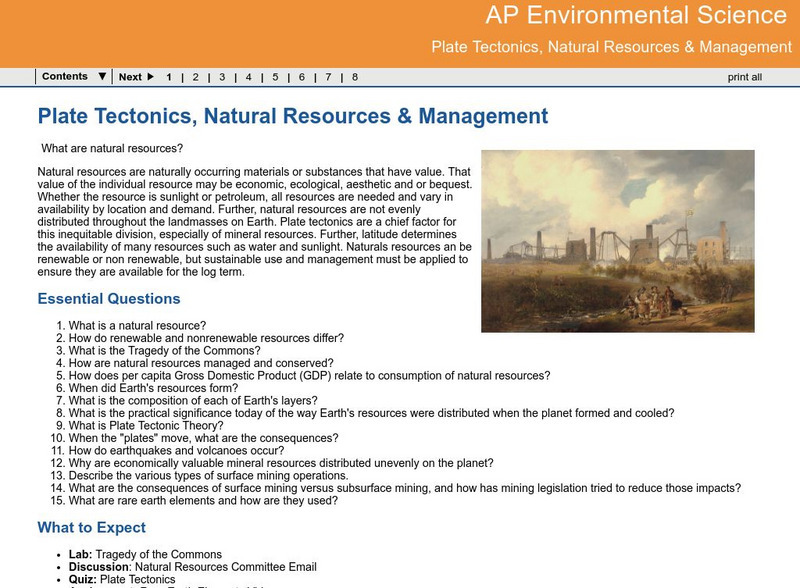
Ga Virtual Learning: Ap Environmental Science: Plate Tectonics,natural Resources
Through interactive activities and readings, students learn that natural resources can be renewable or nonrenewable, but sustainable use and management must be applied to ensure they are available for the long term.
Science Buddies
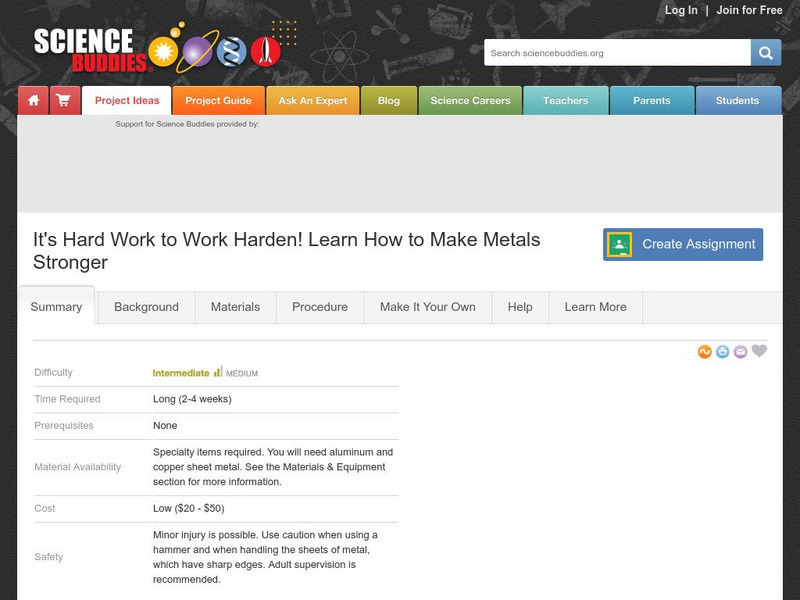
Science Buddies: It's Hard Work to Work Harden! How to Make Metals Stronger
Metals are a part of our lives in so many ways that we hardly notice them. Cars, bikes, and planes are all composed of metals. Some people even have metal in the dental work in their mouths. Therefore the strength and dependence of metal...
University of Utah
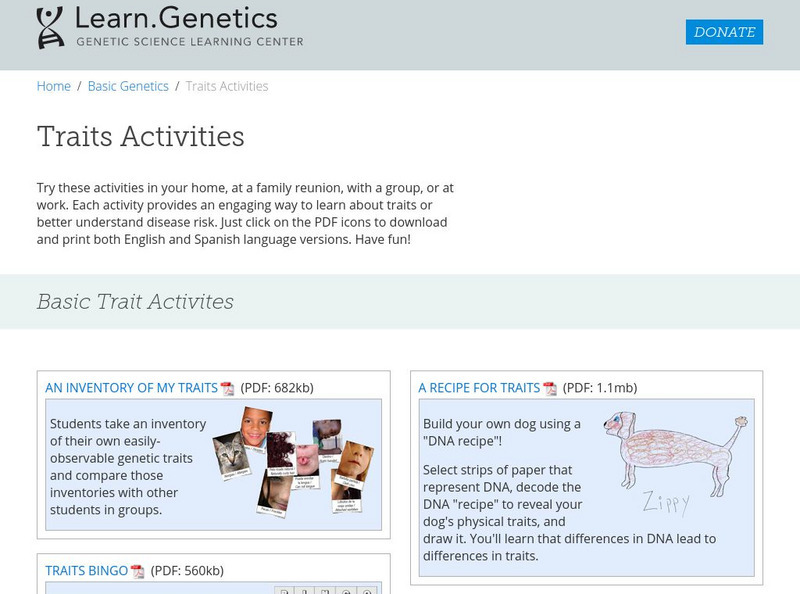
University of Utah: Genetic Science Learning Center: Traits Activities
A collection of genetic learning activities provides an engaging way to learn about traits, or better understand disease risk.
E-learning for Kids
E Learning for Kids: Science: Nova Zembla: Why Do We Need Plants?
This module explores how plants help animals survive. Bobby is a scientist on Antarctica. He discovers many amazing uses of plants. Join him and help him learn.
E-learning for Kids
E Learning for Kids: Science: Atlantic Ocean: Day and Night
This module explores day and night. Learn about what we see during the day and night and why we see what we see.
Science Buddies
Science Buddies: Project Ideas: The Biomechanics of Pitching
The goal of this sports science fair project is to learn more about the biomechanics of baseball pitching. The student will investigate if stepping forward and the length of the step affects the speed of the pitch. The Science Buddies...
Science Buddies
Science Buddies: Attack of the Killer Cabbage Clones
Do you like to watch outdated science fiction and cheesy horror movies? Many fictional tales of cloned organisms have been created based upon the scientific method for cloning animals or plants. In the real world, the cloning of plants...

Science Buddies
Science Buddies: Color Saturation
Lively, vivid colors can add pizzazz and turn a dull photo into a work of art. Learn how changing the saturation levels of the colors in your photo can really make it pop.
Science Buddies
Science Buddies: Color Profiles
Did you know that the same digital photo you see on a computer monitor may not look as good in print? When it comes to color profiles, there are a lot of options: RGB, CMYK, grayscale and indexed color are just a few. Learn how to choose...
Science Buddies
Science Buddies: Waste Not, Want Not: Use the Microbial Fuel Cell to Create Elec
Gross. What is that in the toilet? But maybe it's not just gross. Did you know there are bacteria that digest organic waste and create electrons? What if there was a way to collect those electrons to power a circuit? In this science fair...
Science Buddies
Science Buddies: Jack and Jill Went Up a Hill and Came Biking Down After
Are you a budding Lance Armstrong or Greg LeMond? Are you into cycling and speed? Then this is the science fair project for you. In this science fair project, you will determine the best gear ratio for your bike, to get the highest speed...
Science Buddies
Science Buddies: Abracadabra! Levitating With Eddy Currents!
Did you know that not all trains run on tracks? Some of the world's fastest trains are magnetic levitation trains (maglev). This means that the carriage of the train is suspended over the rails with no support, but only with magnetic...
Science Buddies
Science Buddies: How Do Different Materials React to Static Electricity?
Polyester clothing was generally accepted as a popular trend in fashion at one point in history. Now everybody wears cotton, which doesn't get static cling nearly as much. Why are some materials more susceptible to static cling than...
Science Buddies
Science Buddies: Mixing Light to Make Colors
You know how to make new colors by mixing paint or crayons. For example, you get green by mixing yellow and blue, or orange by mixing red and yellow. With paint, blue, yellow, and red are primary colors, which you can use to make other...
Science Buddies
Science Buddies: Where There Is Charge, There Can Be Sparks!
In this short science project you will learn how to build a capacitor using common household items. By testing different charge cycles, you will work to discover how much charge is stored in a Leyden jar capacitor.
Science Buddies
Science Buddies: Memory Mnemonics
Though lists can be full of interesting facts, they can be hard to remember, especially for tests. In this human behavior science fair project, you will learn about a memory technique called mnemonics (pronounced nuh-MAH-nicks). See if...
Science Buddies
Science Buddies: Blowing Bottletops: Making Music With Glass Bottles
This is a musical project about the resonance of closed-end air columns. Organ pipes, flutes, and brass instruments are examples of musical instruments of this type. In this project, you'll learn how the pitch of the note produced...

Science Buddies
Science Buddies: How Sweet It Is: Hummingbird Food Preferences
Do you like to watch hummingbirds? Have you ever wondered why there is specialty hummingbird food? What is it about the food that makes it so appealing? In this zoology science fair project, you will observe these remarkable creatures...
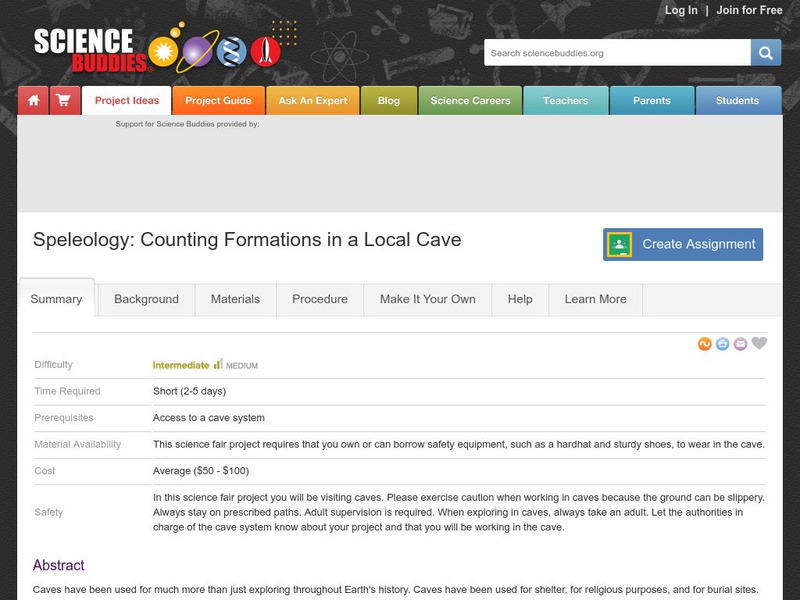
Science Buddies
Science Buddies: Speleology: Counting Formations in a Local Cave
In the past caves have been used for shelter, for religious purposes, and for burial sites. They were even used for food storage before refrigeration, because they are cool and have constant high humidity. Get ready for an adventure as...
Other popular searches
- Project Based Learning Science
- Science Cooperative Learning
- Science Learning Contracts
- Science Learning Centers
- Science Learning Cycle
- Science Problem Based Learning
- Mastery Learning Science
- Inquiry Based Learning Science
- Independent Learning Science
- Learning Cycle Science Earth
- Science Learning Games
- Inductive Learning Science