Hi, what do you want to do?






Curated OER
Constitution Lectures 1: The Non-Consent of the Governed
A lot of interesting questions are posed in this video series on the Constitution. While the narrator informs listeners about the laws and intricacies of the US Constitution, he also pushes them to consider the tyranny of the US...
Annenberg Foundation
Annenberg Classroom: The Constitution Project
Video [16:00] provides an overview of The Constitution Project which is a series of inspiring documentaries on landmark Supreme Court cases.
Yossarian the Grammarian
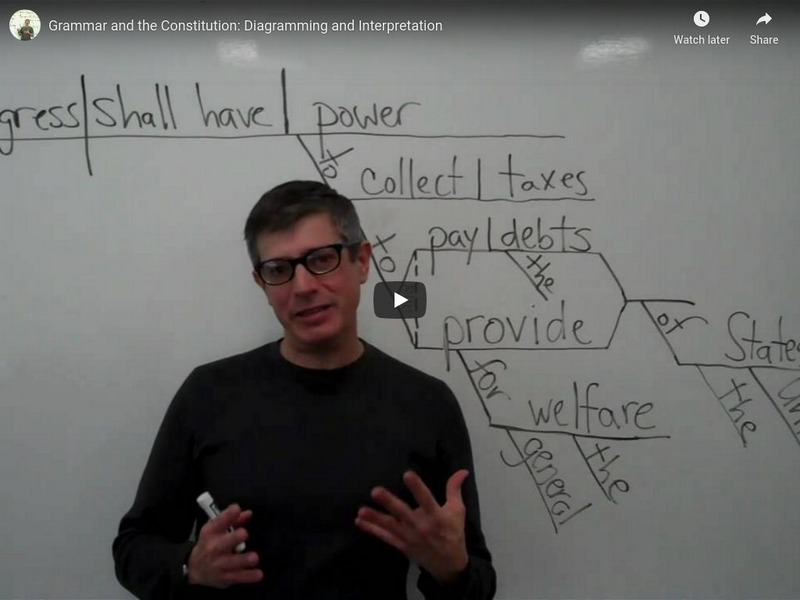
Yossarian the Grammarian: Diagramming the u.s. Constitution: Interpretation
This video lesson from Yossarian the Grammarian demonstrates how to diagram the Contitution of the United States to aid in interpreting the meaning of this document.

PBS
Pbs Learning Media: Founding Principles: Civil Rights
Learn about important civil right movements in American history. Through a study of foundational documents like the Declaration of Independence and the Constitution, students learn about the fight for equal rights by different groups...

Khan Academy
Khan Academy: Executive Orders
This video lesson from Khan Academy discusses the Executive orders that are established by Article II of the US Constitution. This lesson is intended for students taking high school or college level American Government and Civics...

Khan Academy
Khan Academy: Article Ii of the Constitution
This video lesson from Khan Academy discusses Article II of the Constitution. This lesson is intended for students taking high school or college level American Government and Civics courses, including the AP Government course.

Khan Academy
Khan Academy: The Preamble to the Constitution
This video lesson from Khan Academy discusses The Preamble to the Constitution. This lesson is intended for students taking high school or college level American Government and Civics courses, including the AP Government course.
PBS
Pbs Learning Media: Crash Course Government and Politics: Constitutional Compromises
The United States didn't always have its current system of government. Actually, this is its second attempt. Craig will delve into the failures (and few successes) of the Articles of Confederation, tell you how delegates settled on a...
PBS
Pbs Learning Media: Crash Course Us History: The Constitution, the Articles, and Federalism
John Green teaches you about the United States Constitution. During and after the American Revolutionary War, the government of the new country operated under the Articles of Confederation. While these Articles got the young nation...

Khan Academy
Khan Academy: The Constitution of the United States
This resource from Khan Academy provides a lesson about the Constitution of the United States. This lesson is intended for students taking high school or college level American Government and Civics courses, including the AP Government...

Khan Academy
Khan Academy: Article Vi of the Constitution
This video lesson from Khan Academy discusses Article VI of the US Constitution. This lesson is intended for students taking high school or college level American Government and Civics courses, including the AP Government course.

Khan Academy
Khan Academy: Constitutional Compromises: The Three Fifths Compromise
This video lesson from Khan Academy discusses the Three-Fifths Compromise, a compromise that was agreed upon at the Constitutional Convention. This lesson is intended for students taking high school or college level American Government...
Cyberbee
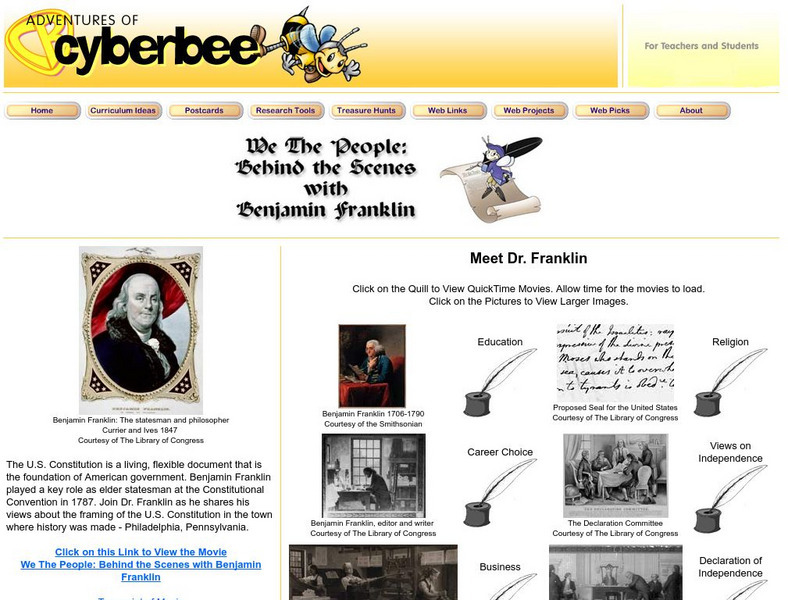
We the People, Behind the Scenes With Ben Franklin
An interactive website about Ben Franklin and the framing of the US Constitution.
Have Fun With History
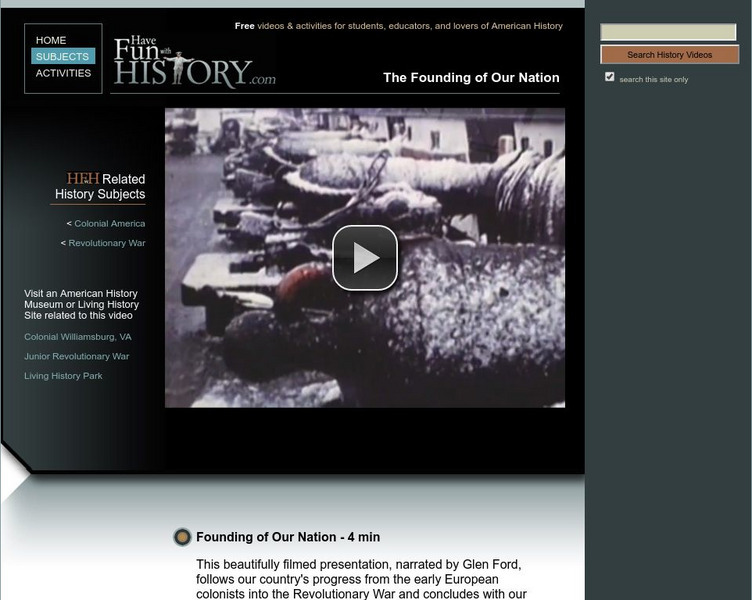
Have Fun With History: The Founding of Our Nation
This beautifully filmed presentation, narrated by Glen Ford, follows our country's progress from the early European colonists into the Revolutionary War and concludes with our country's constitution.
Center For Civic Education
60 Second Civics: Constitutional Gov't Isn't Necessarily Democratic Government
Legitimate government can come only from the consent of the governed, not from a dictatorship of a majority.
Center For Civic Education
60 Second Civics: Legal Protections of Rights Pt. 2: How Rights Are Protected
In the United States, there are various ways that the rights of individuals are protected.
Center For Civic Education
60 Second Civics: Rights in British History Pt. 17: Written Constitution
The Founders learned from experience that a written Constitution and Bill of Rights was required in order to safeguard our liberties.
Center For Civic Education
60 Second Civics: Rights After Independence Pt. 12: Federalism
One of the most important innovations in government to arise from the Philadelphia Convention was federalism.
Center For Civic Education
60 Second Civics: Rights After Independence Pt. 14: Checks and Balances
Today we discuss checks and balances.
Center For Civic Education
60 Second Civics: Rights After Independence Pt. 15: A Complicated System
Framers like James Madison believed that the competing interests in a country as large and diverse as the United States would make it harder for any one group to gain too much power.
Center For Civic Education
60 Second Civics: Rights in the Constitution Pt. 3: Protecting Individual Rights
How does the Constitution protect you from the government of your state? Find out on today's podcast.
Center For Civic Education
60 Second Civics: Ratifying Constitution Pt. 1: Constitution as Social Contract
James Madison proposed conventions made up of delegates elected by the people to approve the Constitution. This popular approval made the document a social contract.
Center For Civic Education
60 Second Civics: Ratifying Constitution Pt. 3: Debates Over Ratification
The ratification debates were intense and often bitter. The debates in New York produced a series of articles now known as The Federalist.
Center For Civic Education
60 Second Civics: Ratifying Constitution Pt. 4: The Anti Federalists
George Mason, Elbridge Gerry, Richard Henry Lee, Patrick Henry, and Mercy Otis Warren were all notable Anti-Federalists. Their strongest objection to the Constitution was that it lacked a Bill of Rights.