Hi, what do you want to do?






Next Animation Studio
Archeologists document first use of maize as food in Mesoamerica: study
Archeologists may have found out when cave-dwelling prehistoric Mesoamericans began eating maize as a staple, according to a new study in Science Advances.
AllTime 10s
10 Mysteries Of Ancient Japan
With a rich history tracing back to prehistoric times and one of the most identifiable cultures on Earth, Japan is an absolute treasure-trove of intriguing facts. But it's also home to a number of perplexing mysteries - from the purpose...
Next Animation Studio
Ancient enemy built big neighborhood in Mayan city
Researchers used laser technology to scan a hill next to an ancient Mayan city and were shocked to find the hill was actually ruins of structures from a different civilization.
Wonderscape
Science Kids: Unraveling the Neanderthal Mystery
This video explores the history and characteristics of Neanderthals, our closest extinct human relatives. It discusses their relationship to modern humans, their physical traits, their way of life, and theories about their extinction....
Next Animation Studio
Archaeologists find evidence of Babylonian conquest of Jerusalem
Archaeologists may have unearthed evidence to confirm the Biblical account of Jerusalem's destruction by the Babylonians.
Next Animation Studio
Archeologists complete first ever LIDAR survey of ancient Mayan highway
Archeologists have used laser scanning to chart an ancient 100 km-long Mayan highway built 13 centuries ago.
<br/>
Next Animation Studio
Genetic analysis suggests contact between Polynesians and South Americas before Columbus: study
Ancient Polynesians may have crossed the Pacific to make contact with Native Americans from the region that is now Colombia
Next Animation Studio
Volcanic eruption in Alaska may have helped end the Roman Republic: study
According to new research, a powerful volcanic eruption in modern-day Alaska around 44 B.C. may have contributed to the Roman Republic’s downfall on the other side of the globe.
Next Animation Studio
Children murdered, turned into mummies for aristocrats
Archaeologists in Peru have recently been finding the bodies of hundreds of children who were alive and kicking until they were turned into mummies.
Next Animation Studio
Researchers track Otzi the Iceman’s last journey using moss
Frozen plant species buried with Otzi the Iceman has allowed scientists to trace the unusual route he took before his death.
Next Animation Studio
Stonehenge mystery:'Superhenge' megaliths believed to be Neolithic ritual site
In what may prove to be the largest Neolithic site ever discovered in Britain, and possibly in Europe, archeologists have found a row of 90 megaliths near Stonehenge. The 4,500-year-old stones, which are up to 15 feet tall and five feet...

PBS
Nova Online: A Gallery of Roman Mosaics
The companion site that accompanies the NOVA program on salvaging Zeugma, an ancient Roman town on the banks of the Euphrates. It shows how archaeologists rescued many artifacts from a dam-building project.
PBS
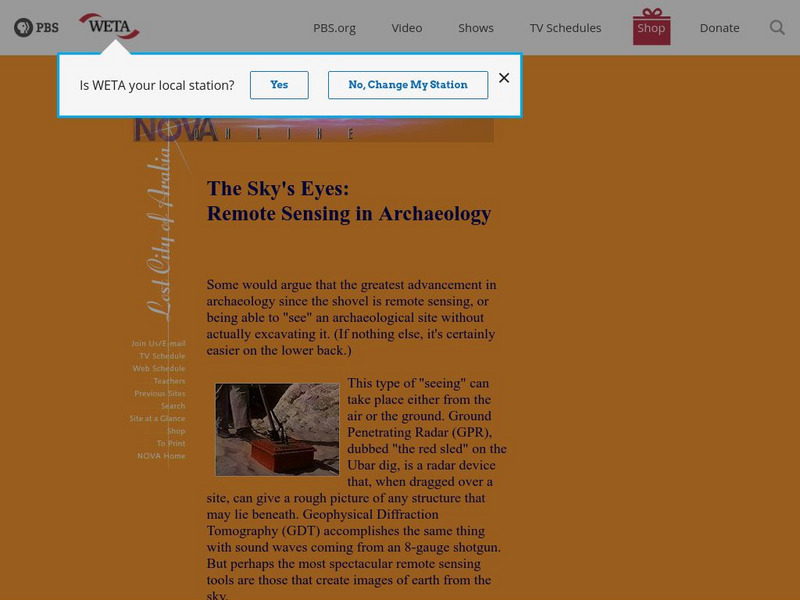
Nova Online: Remote Sensing in Archaeology
This article, a companion piece to a NOVA special called "Lost City of Arabia," explains remote-sensing technologies that are helping archeologists find ancient cities from the air.
Other
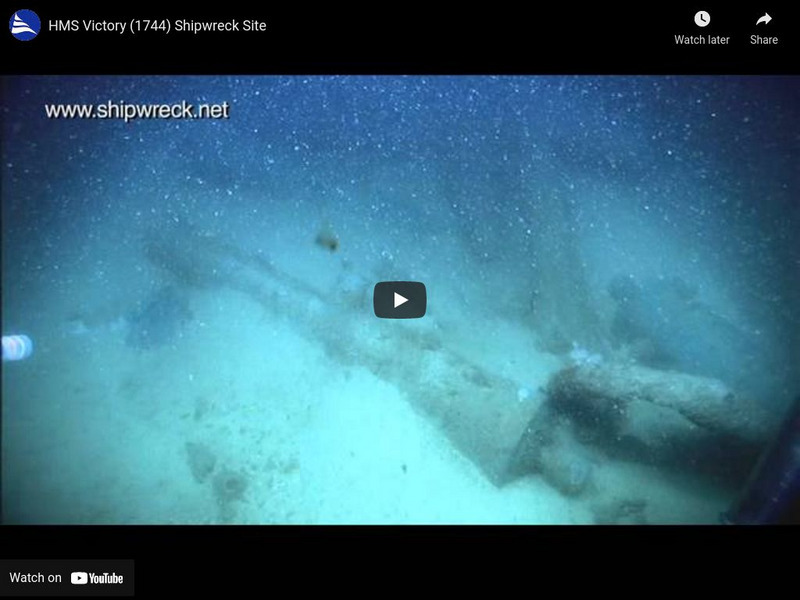
Youtube: Hms Victory: Under Water Wreckage
This brief, silent video clip shows the underwater wreckage of the HMS Victory. Thirty six seconds.
Sophia Learning
Sophia: Math in Archaeology: Lesson 4
This lesson shows students that math is part of the study of past civilizations. It is 4 of 5 in the series titled "Math in Archaeology."