Hi, what do you want to do?






Curated Video
From Spaghetti to Pole Vaulting: The Giant Catapult Experiment
Inspired by the principles of pole vaulting, the team attempts to create a catapult using a pole vaulter’s pole and giant spaghetti. They explore the physics of energy storage and transfer, culminating in a thrilling test launch. Watch...
National Science Foundation
National Science Foundation: Science of the Winter Olympics: Aerial Physics
In the sport of freestyle aerials, skiers are judged on their ability to perform complex jumps in the air. Emily Cook, a 12-year veteran of the U.S. Freestyle team, and Paul Doherty, a Senior Scientist at the Exploratorium in San...
National Science Foundation
National Science Foundation: Science of the Winter Olympics: Slapshot Physics
One of the most popular team sports in the Winter Olympics is hockey. More than just a physical game, for scientists, it's a showcase for physics on ice - especially when it comes to the slapshot. Three-time Olympian Julie Chu, Thomas...
National Science Foundation
National Science Foundation: Science of the Winter Olympics: Figure Skating
Every four years, we watch the stakes for Olympic figure skaters get higher, as they try to increase rotation in the air with their triple axels and quadruple toe loops. How do they do that? It's a scientific principle that Olympic...
National Science Foundation
National Science Foundation: Science of the Winter Olympics: Science of Skates
The ice skates worn by hockey players, figure skaters and speed skaters are vastly different from what were once used. Melissa Hines, the Director of the Cornell University Center for Materials Research, and Sam Colbeck, a retired...
National Science Foundation
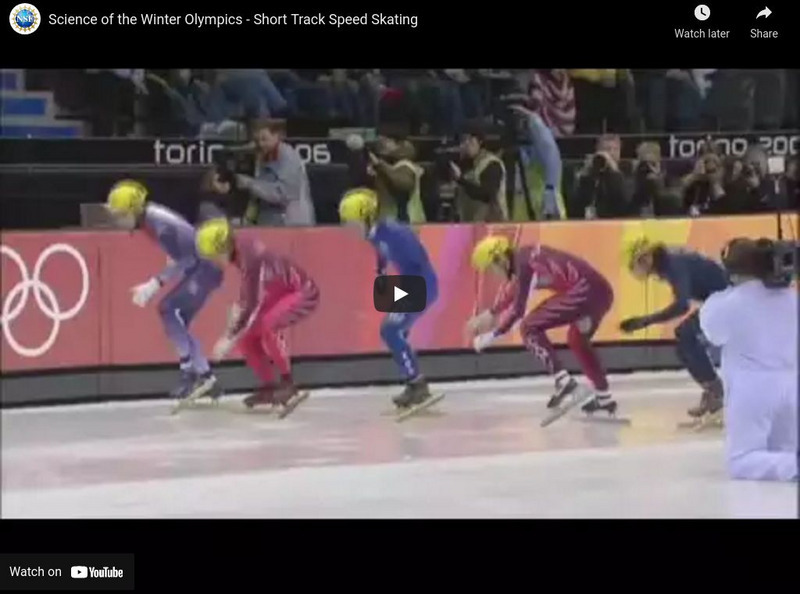
National Science Foundation: Science of the Winter Olympics: Blade Runners
Speed skating is all about force and movement - what, in physics, are known as Newton's First Three Laws of Motion. J.R. Celski, a U.S. speed skater, and physicist George Tuthill of Plymouth State University explain.
National Science Foundation
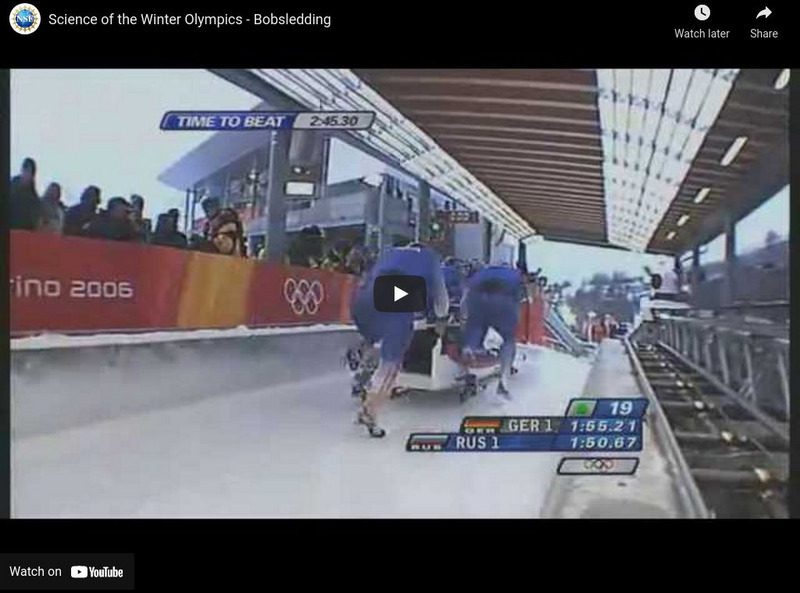
National Science Foundation: Science of the Winter Olympics: Banking on Speed
The winter games in Vancouver provided a chance for the United States' four-man bobsled team to win its first gold medal in more than 60 years. With the help of Paul Doherty, senior scientist at the Exploratorium in San Francisco,...

National Science Foundation
National Science Foundation: Science of the Winter Olympics: The Science of Skis
In skiing events like the downhill, slalom or ski jump, it's often the skis that are bound to an athlete's feet - and the materials used to make them - that give these athletes an edge over the competition. U.S. Ski Team members Julia...

National Science Foundation
National Science Foundation: Science of Winter Olympics: Science of Snowboarding
To get "max air" off the half-pipe without losing their balance, snowboarders might want to check out this experiment that Paul Doherty, a senior scientist at the Exploratorium in San Francisco, cooked up, using a skateboard and a glass...

National Science Foundation
National Science Foundation: Science of the Winter Olympics: Science Friction
Curling has been in the Winter Olympics for a while now, but it still seems a little strange to most of us. John Shuster, the captain - or "skip" - of the U.S. Curling Team in the Vancouver Winter Olympics, explains this unusual sport,...
University of Nebraska
University of Nebraska: Football Physics
Physics video lecture (1:16:39) that uses football to illustrate physics principles.