Hi, what do you want to do?





Incorporated Research Institutions for Seismology
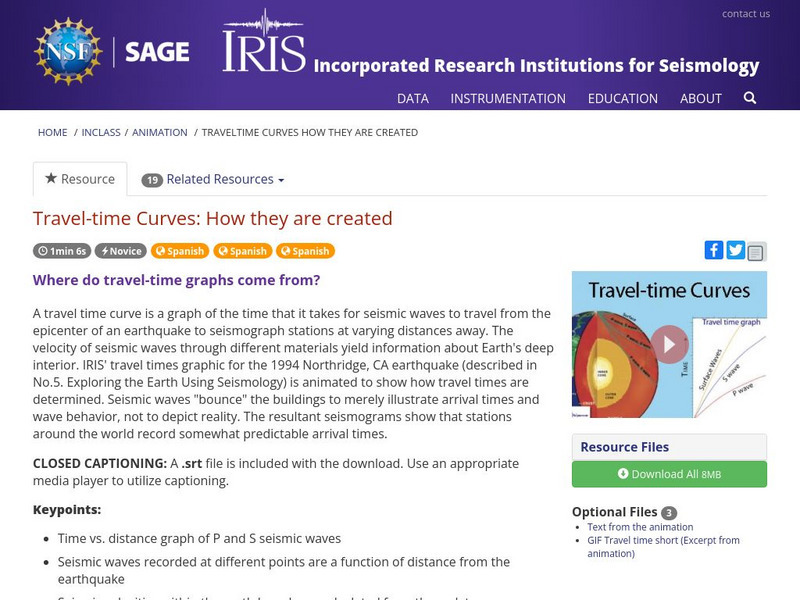
Iris: Travel Time Curves: How They Are Created
An animation which illustrates how the travel time of an earthquake is measured. What alters the velocity of the waves? [1:06]
American Geosciences Institute
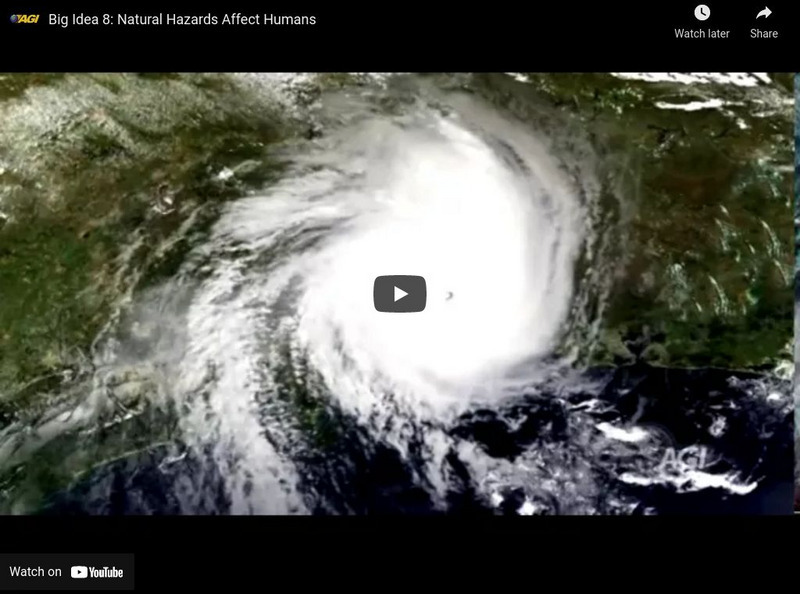
American Geosciences Institute: Big Idea 8: Natural Hazards Affect Humans
Watch how natural hazards occur, how they affect our lives and what we can do to prepare for and mitigate their effects. [4:27]
Incorporated Research Institutions for Seismology
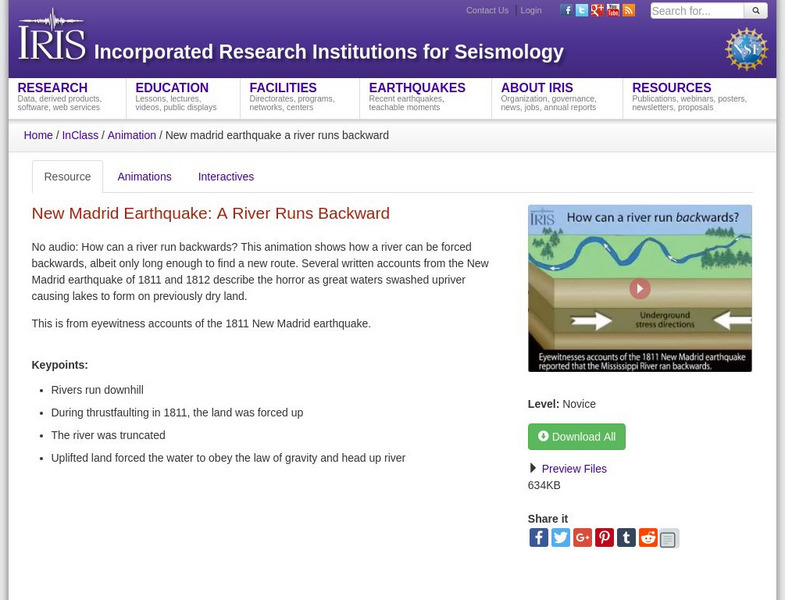
Iris: New Madrid Earthquake: A River Runs Backward
Watch a river change its course and even flow backward. An animated earthquake shows what happens to the water in a river and possible effects of the surrounding area.
Incorporated Research Institutions for Seismology
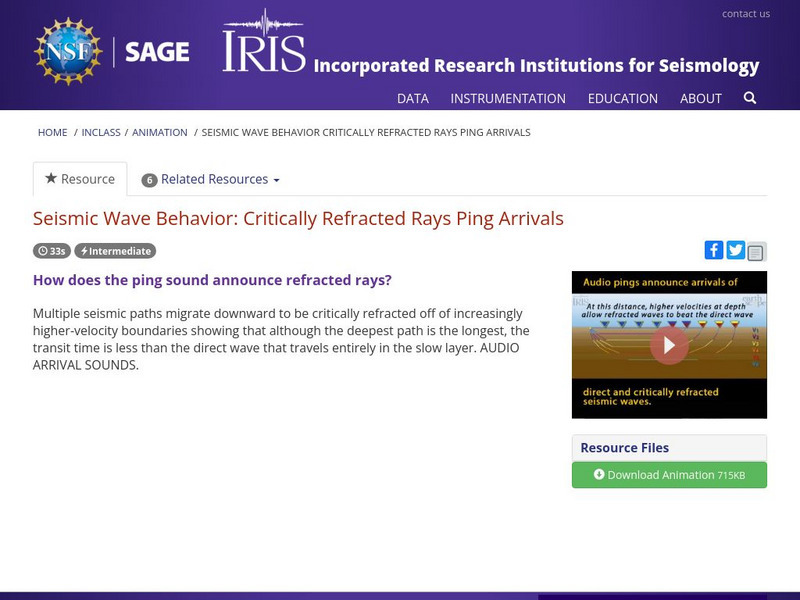
Iris: Seismic Wave Behavior: Critically Refracted Rays Ping Arrivals
A brief video will illustrate how a ping announces refracted seismic waves. [0:34]
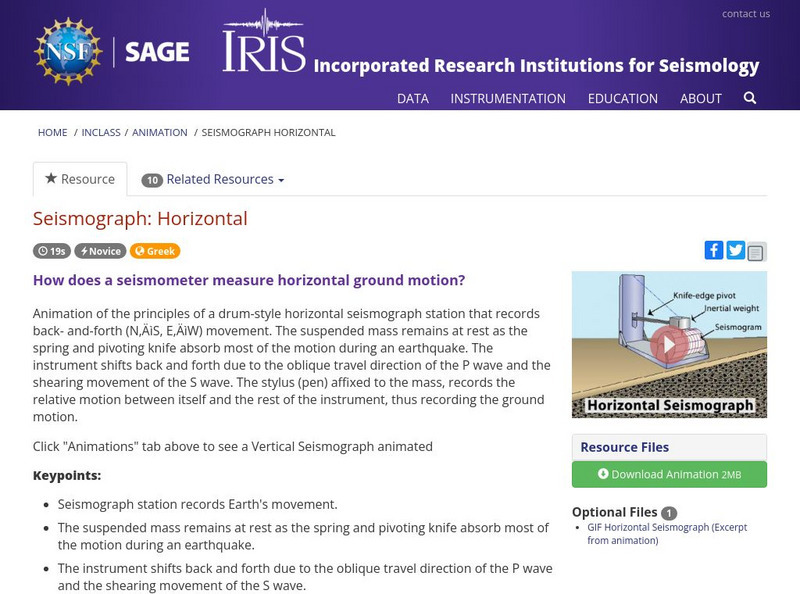
Incorporated Research Institutions for Seismology
Iris: Seismograph: Horizontal
A brief animation which illustrates how a horizontal seismograph works. A seismograph measures wave activity. [0:19]
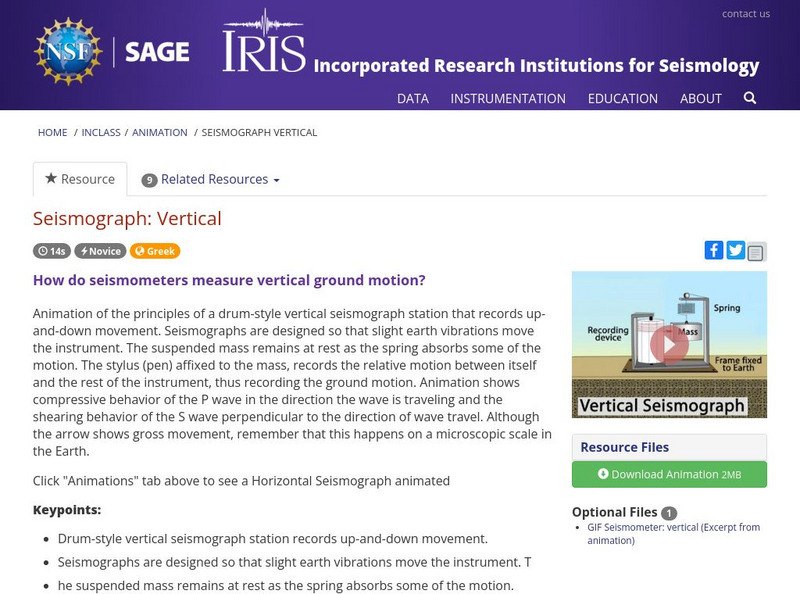
Incorporated Research Institutions for Seismology
Iris: Seismograph: Vertical
This short clip will illustrate how a seismograph measures vertical motion in the Earth. [0:14]
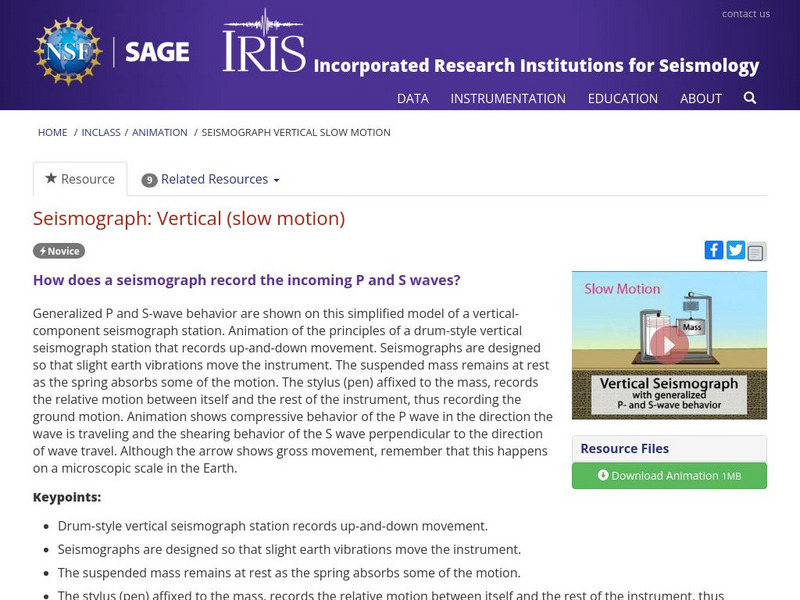
Incorporated Research Institutions for Seismology
Iris: Seismograph: Vertical (Slow Motion)
A "quick" slow motion clip illustrates how a seismograph measures the vertical motion of S and P waves. [0:13]
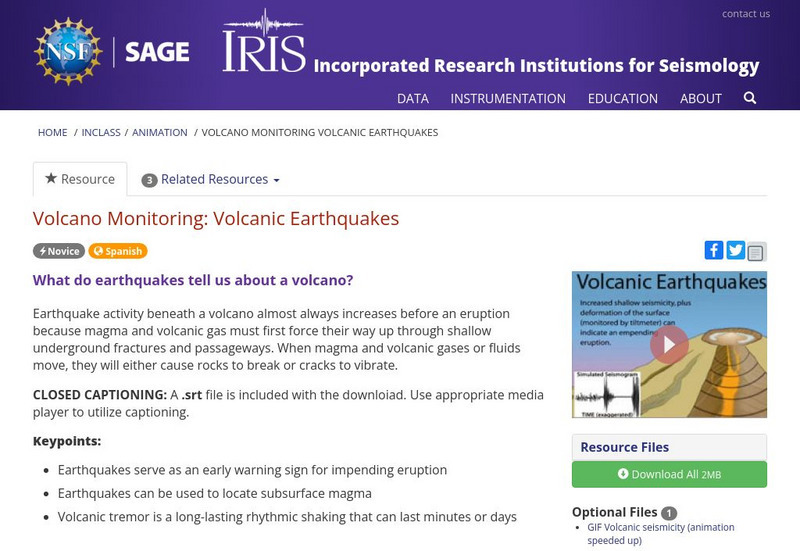
Incorporated Research Institutions for Seismology
Iris: Volcano Monitoring: Volcanic Earthquakes
Find the connection between earthquakes and volcanoes. This clip will illustrate volcanic earthquakes. [1:44]

National Science Foundation
National Science Foundation: Engineering Innovative Seismic Retrofits That Don't Break the Bank
Researchers at the state-of-the-art Structural Engineering and Materials Laboratory at the Georgia Institute of Technology are using a full-scale model building to test new ways to protect structures from earthquakes and potentially save...
US Geological Survey
U.s. Geological Survey: Earthquakes: Divergent Boundary
Nice, visual animation showing what happens under the Earth's surface at a divergent boundary.
US Geological Survey
U.s. Geological Survey: Earthquakes: Elastic Rebound
This captioned animation describes the elastic rebound effect, which happens as a result of an earthquake.
Incorporated Research Institutions for Seismology
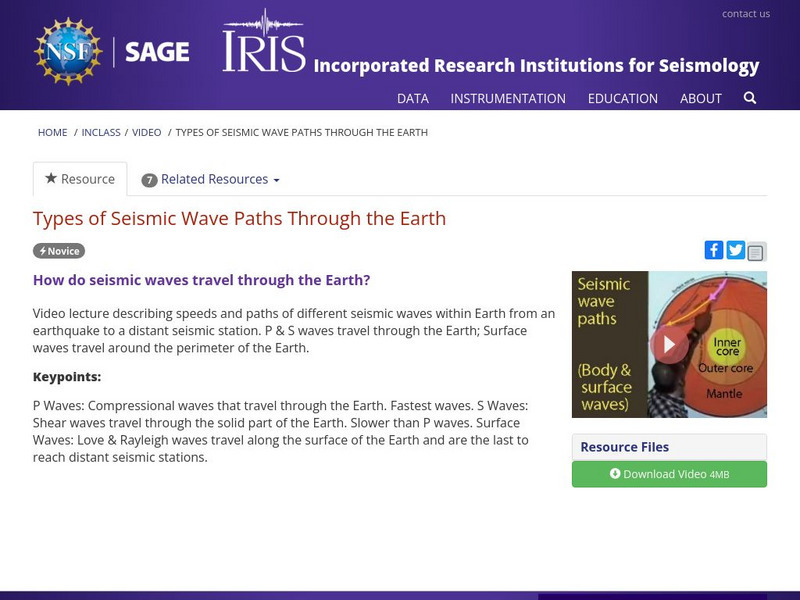
Iris: Types of Seismic Wave Paths Through the Earth
Video lecture describing speeds and paths of different seismic waves within Earth from an earthquake to a distant seismic station. P & S waves travel through the Earth; Surface waves travel around the perimeter of the Earth. [1:44]
Incorporated Research Institutions for Seismology
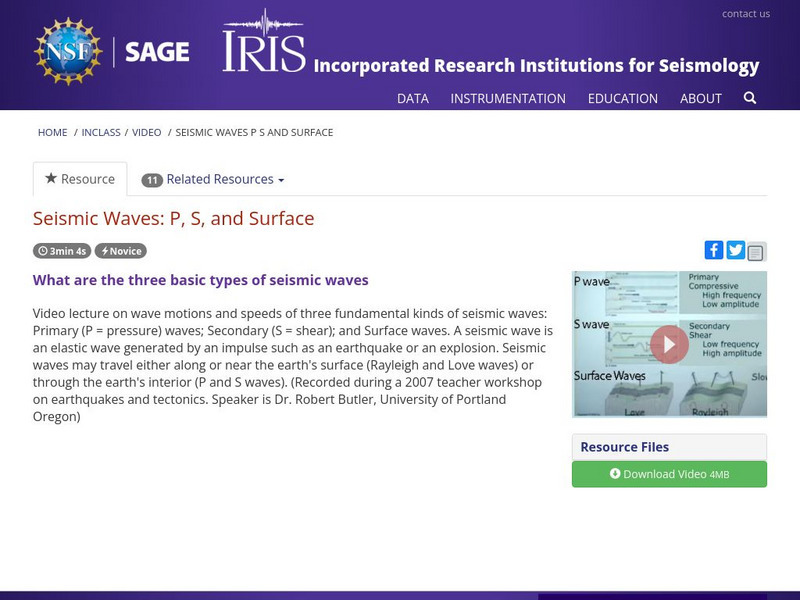
Iris: Seismic Waves: P, S, and Surface
Video lecture on wave motions and speeds of three fundamental kinds of seismic waves: Primary (P = pressure) waves; Secondary (S = shear); and Surface waves. [3:10]
Incorporated Research Institutions for Seismology
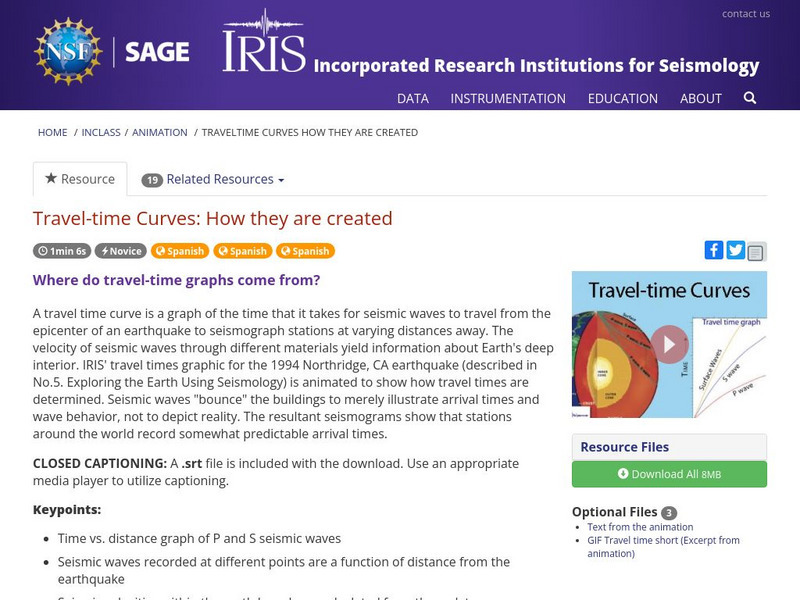
Iris: Travel Time Curves: How They Are Created
See how travel-time curves are created. [2:52]
Incorporated Research Institutions for Seismology
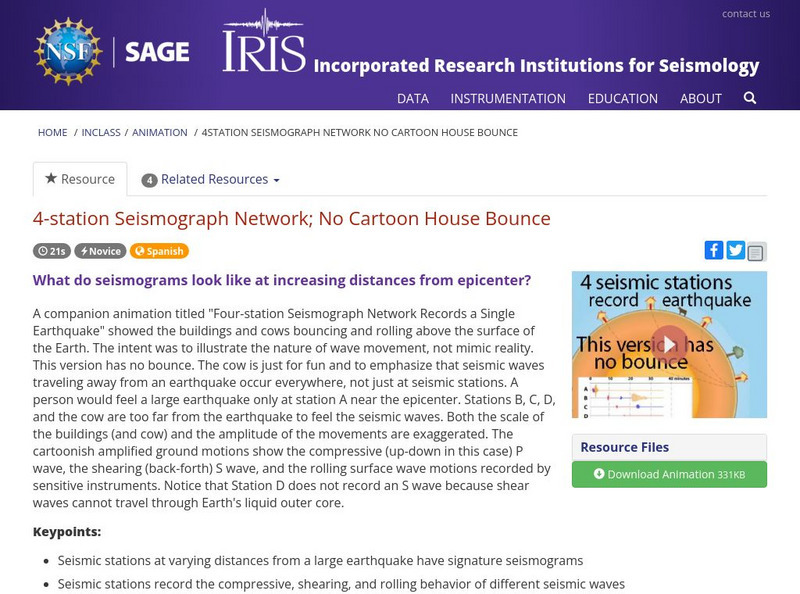
Iris: 4 Station Seismograph Network; No Cartoon House Bounce
See what seismograms look like at increasing distances from the epicenter. [0:21]
Incorporated Research Institutions for Seismology
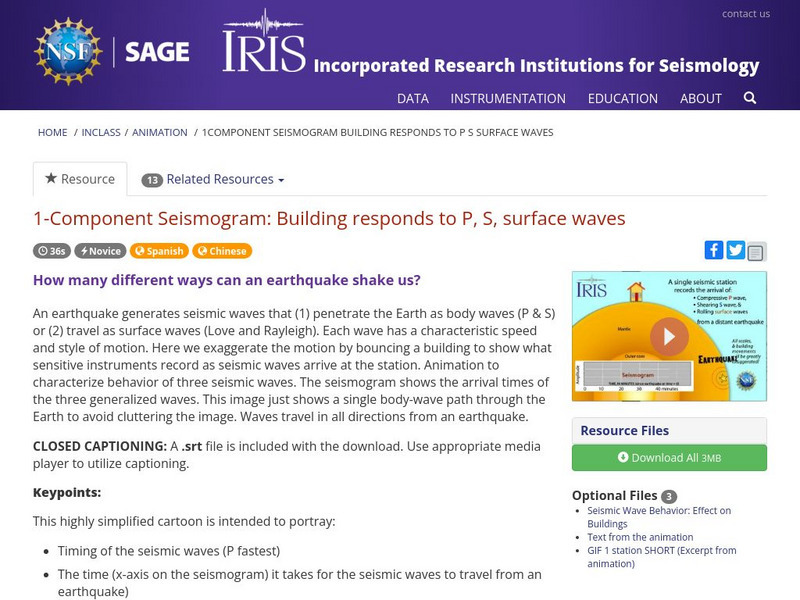
Iris: 1 Component Seismogram: Building Responds to P, S, Surface Waves
See how surface waves and P and S-Waves affect Earth's surface. [0:36]

Incorporated Research Institutions for Seismology
Iris: Magnitude Explained: Moment Magnitude vs. Richter Scale
Scientists have developed far-more sensitive seismometers that, with faster computers, have enabled them to record & interpret a broader spectrum of seismic signals than was possible in the 1930's, when the Richter magnitude was...
Incorporated Research Institutions for Seismology
Iris: Earthquake: Foreshock Mainshock Aftershock
Learn how foreshocks and aftershocks are related to the main shocks of earthquakes. [6:32]
Incorporated Research Institutions for Seismology
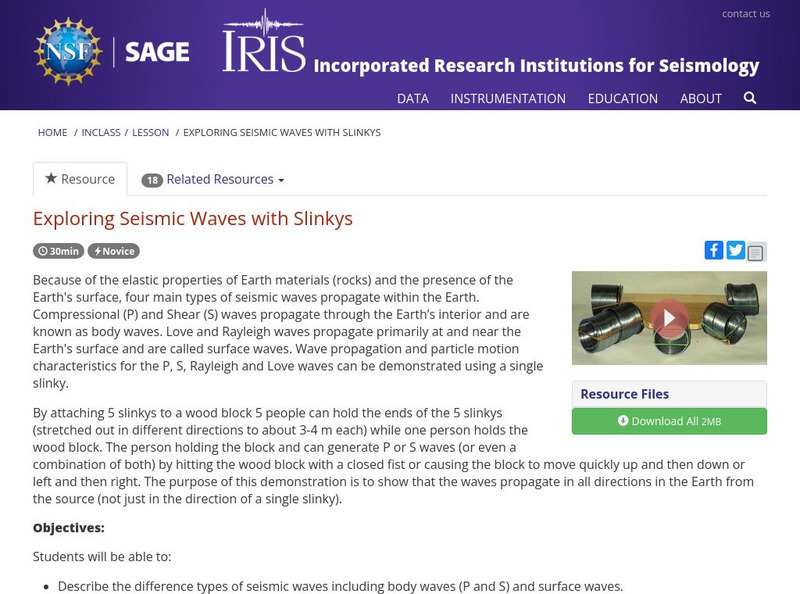
Iris: Exploring Seismic Waves With Slinkys
This demonstration shows that seismic waves propagate in all directions in the Earth from the source (not just in the direction of a single slinky). [5:13]

Incorporated Research Institutions for Seismology
Iris: Earthquake Machine: Demonstration of the 2 Block Model
See how to model differential friction along a fault. [2:30]
Incorporated Research Institutions for Seismology
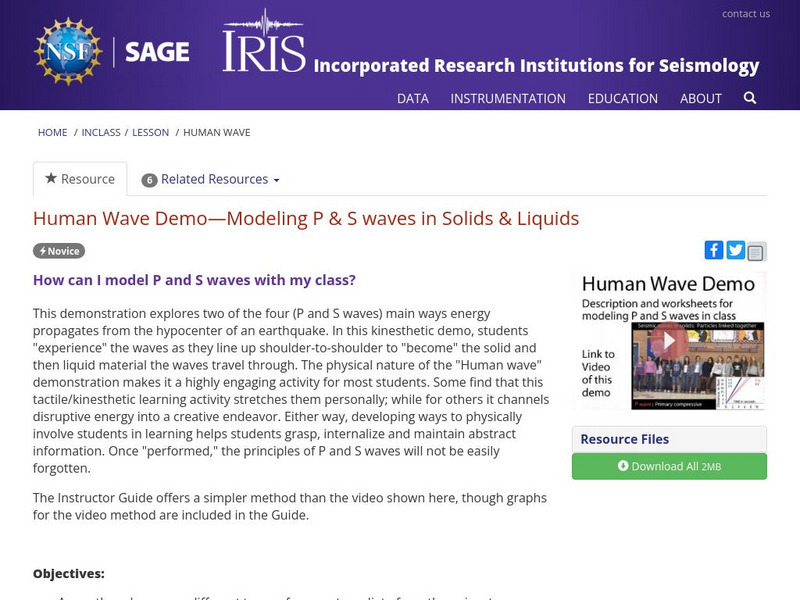
Iris: Human Wave Demo Modeling P & S Waves in Solids & Liquids
This demonstration explores two of the four (P and S waves) main ways energy propagates from the hypocenter of an earthquake. [8:27]
Incorporated Research Institutions for Seismology
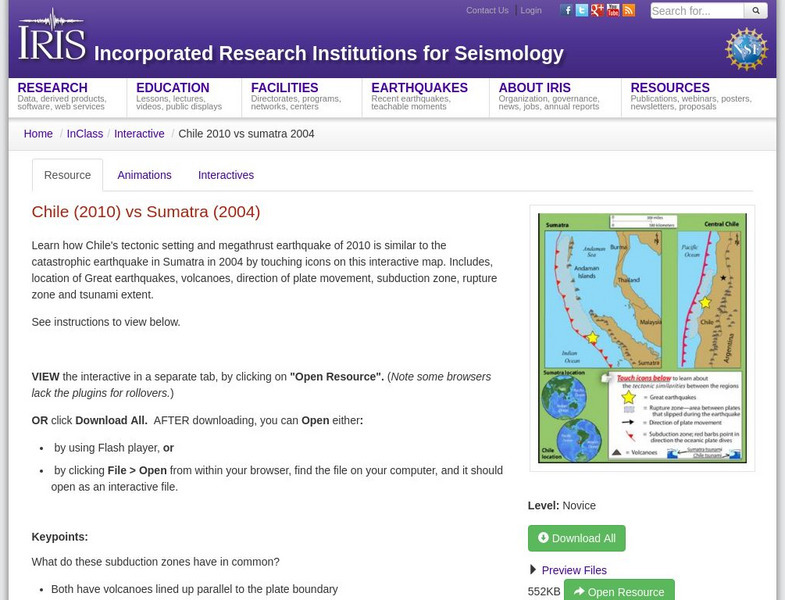
Iris: Chile (2010) vs Sumatra (2004)
Learn how Chile's tectonic setting and megathrust earthquake of 2010 is similar to the catastrophic earthquake in Sumatra in 2004 by touching icons on this interactive map.
Incorporated Research Institutions for Seismology
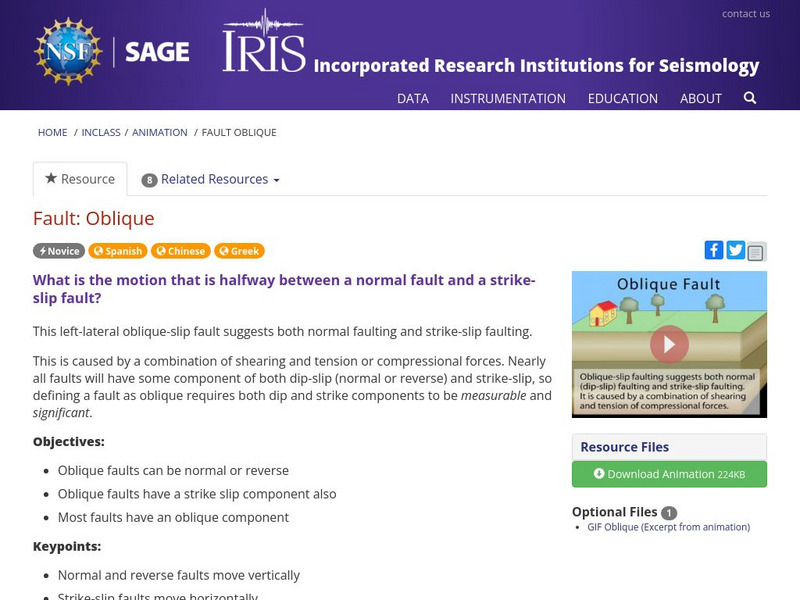
Iris: Fault: Oblique
Find out the motion that is halfway between a normal fault and a strike-slip fault. [0:15]
Incorporated Research Institutions for Seismology
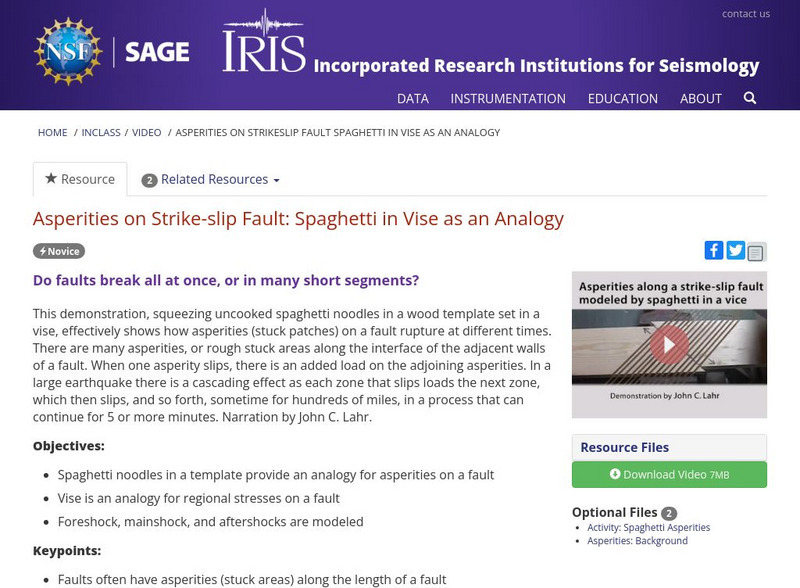
Iris: Asperities on Strike Slip Fault: Spaghetti in Vise as an Analogy
This demonstration, squeezing uncooked spaghetti noodles in a wood template set in a vise, effectively shows how asperities (stuck patches) on a fault rupture at different times. [1:44]