Hi, what do you want to do?





Next Vista for Learning
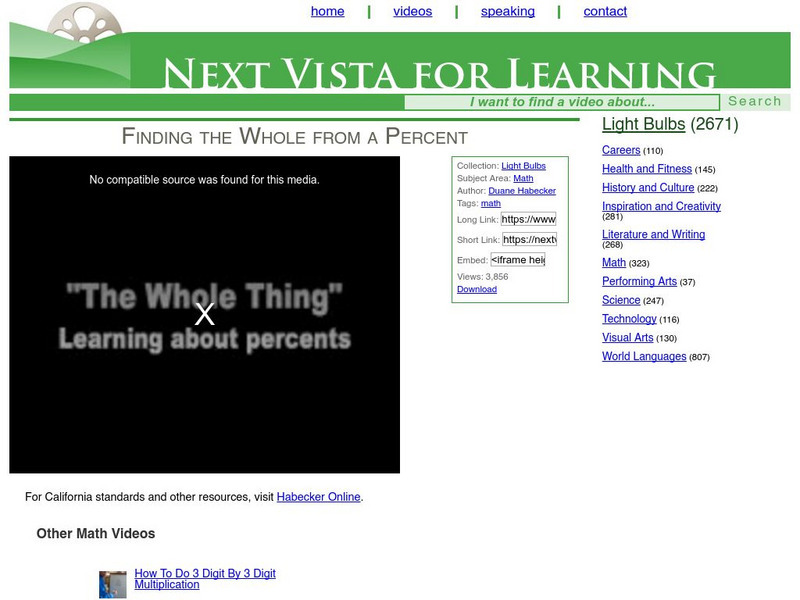
Next Vista for Learning: Finding the Whole From a Percent
Concept demonstration video [3:52] explains how to find the whole from a part and percent using three methods.

Khan Academy
Khan Academy: Dorothea Rockburne: Drawing Which Makes Itself
In this video [3:56] contemporary artist Dorothea Rockburne talks about mathematics, magic, and materials for artists. To learn about how art changes over time, enroll in one of MoMA's courses online. Created by The Museum of Modern Art.
Sophia Learning
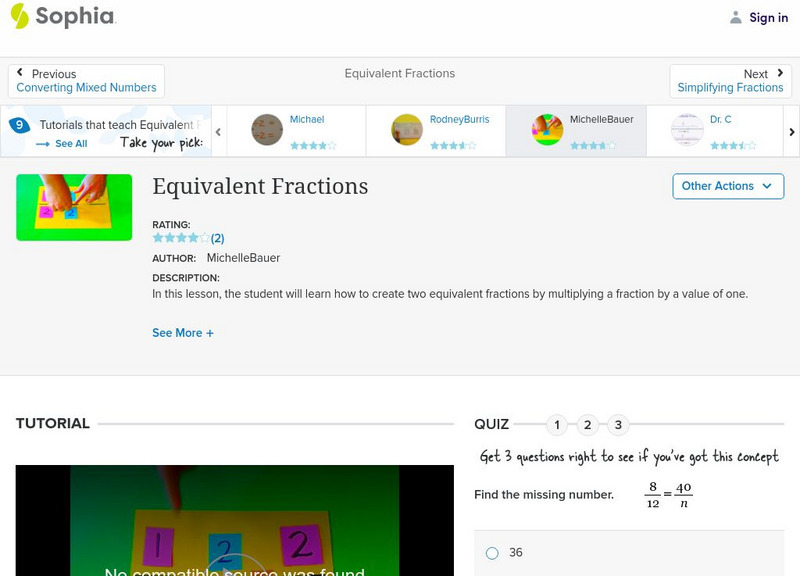
Sophia: Equivalent Fractions: Lesson 10
In this lesson, the student will learn how to create two equivalent fractions by multiplying a fraction by a value of one. It is 10 of 12 in the series titled "Equivalent Fractions."
Sophia Learning
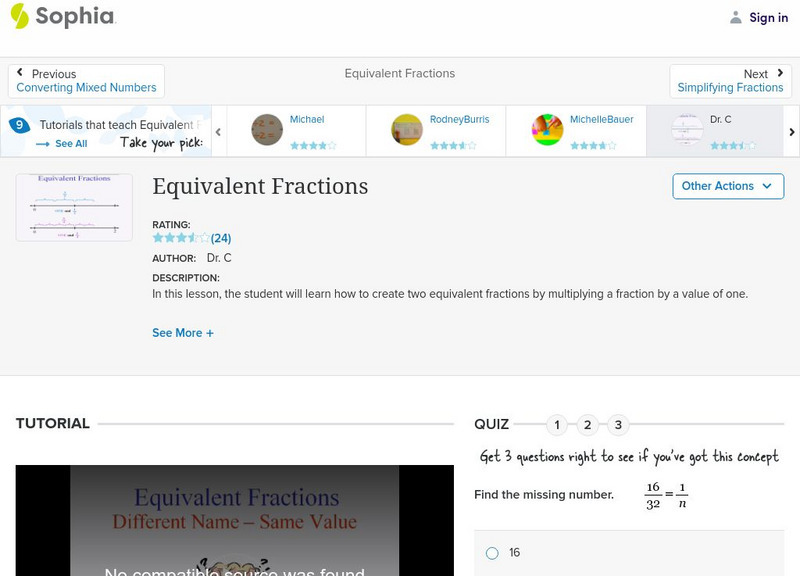
Sophia: Equivalent Fractions: Lesson 3
In this lesson, the student will learn how to create two equivalent fractions by multiplying a fraction by a value of one. It is 3 of 12 in the series titled "Equivalent Fractions."
Sophia Learning
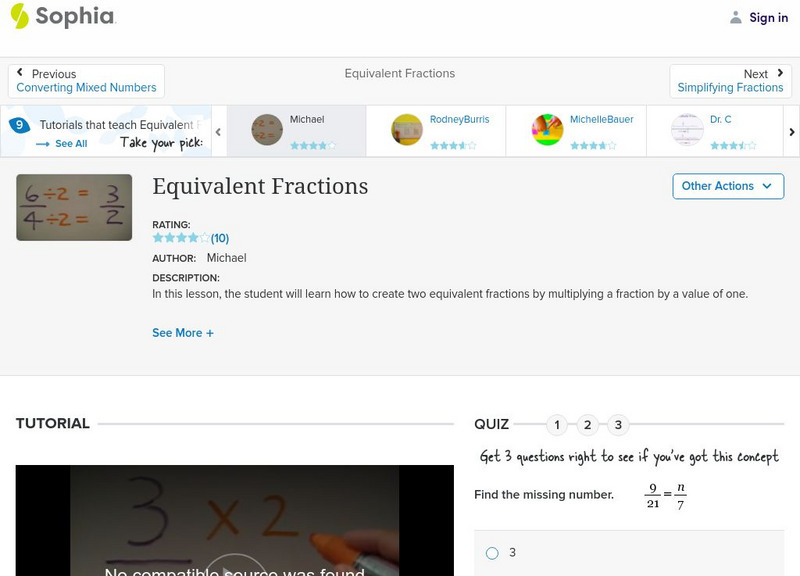
Sophia: Equivalent Fractions: Lesson 4
In this lesson, the student will learn how to create two equivalent fractions by multiplying a fraction by a value of one. It is 4 of 12 in the series titled "Equivalent Fractions."
Sophia Learning
Sophia: Equivalent Fractions: Lesson 5
In this lesson, the student will learn how to create two equivalent fractions by multiplying a fraction by a value of one. It is 5 of 12 in the series titled "Equivalent Fractions."
Sophia Learning
Sophia: Equivalent Fractions: Lesson 6
In this lesson, the student will learn how to create two equivalent fractions by multiplying a fraction by a value of one. It is 6 of 12 in the series titled "Equivalent Fractions."
Sophia Learning
Sophia: Equivalent Fractions: Lesson 8
In this lesson, the student will learn how to create two equivalent fractions by multiplying a fraction by a value of one. It is 8 of 12 in the series titled "Equivalent Fractions."
Sophia Learning
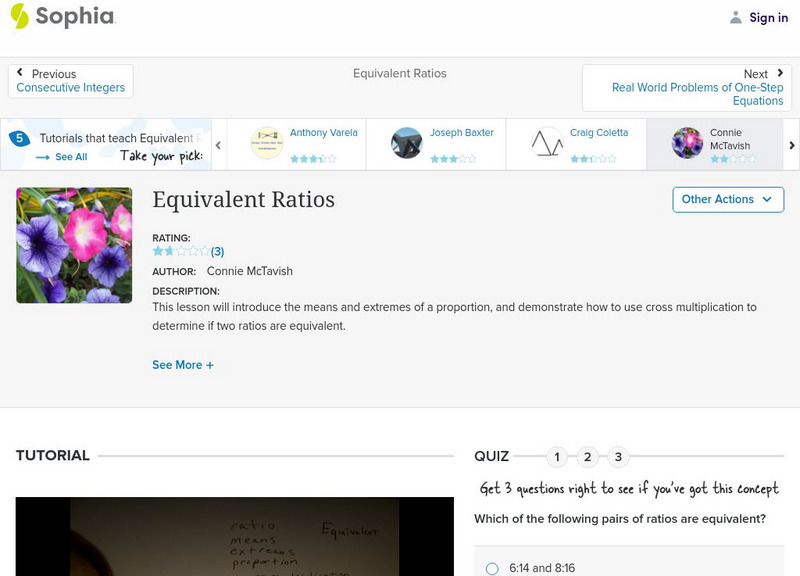
Sophia: Equivalent Ratios: Lesson 6
This lesson will introduce the means and extremes of a proportion, and demonstrate how to use cross multiplication to determine if two ratios are equivalent. It is 6 of 8 in the series titled "Equivalent Ratios."
Sophia Learning
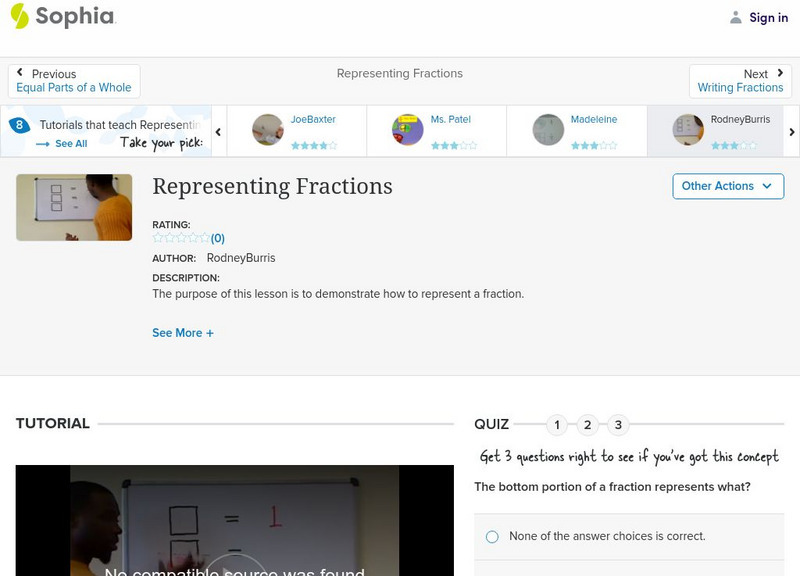
Sophia: Equivalent Ratios: Lesson 1
This lesson will introduce the means and extremes of a proportion, and demonstrate how to use cross multiplication to determine if two ratios are equivalent. It is 1 of 8 in the series titled "Equivalent Ratios."
Sophia Learning
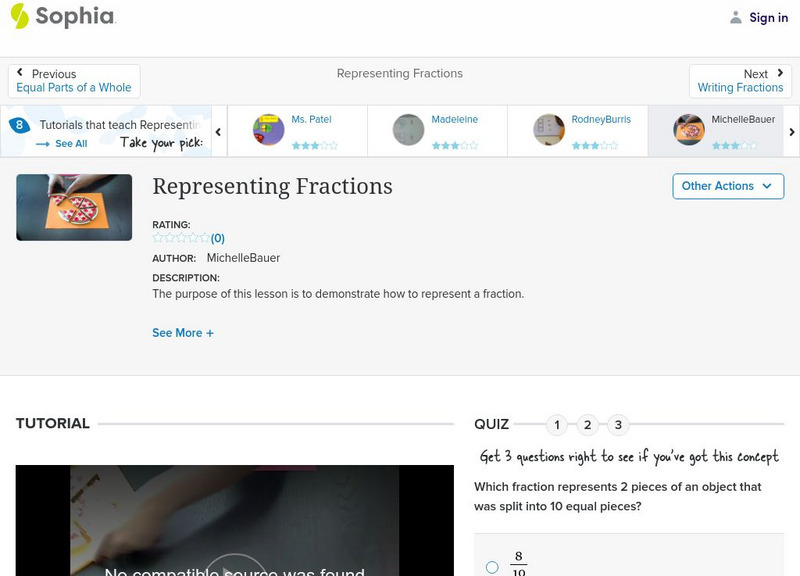
Sophia: Representing Fractions: Lesson 12
The purpose of this lesson is to demonstrate how to represent a fraction. It is 12 of 15 in the series titled "Representing Fractions."
Sophia Learning
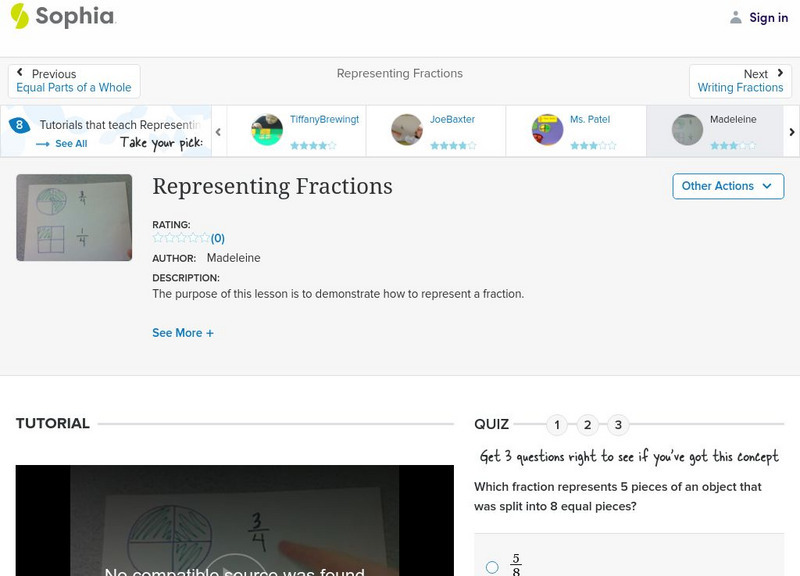
Sophia: Representing Fractions: Lesson 13
The purpose of this lesson is to demonstrate how to represent a fraction. It is 13 of 15 in the series titled "Representing Fractions."
Sophia Learning
Sophia: Representing Fractions: Lesson 1
The purpose of this lesson is to demonstrate how to represent a fraction. It is 1 of 15 in the series titled "Representing Fractions."
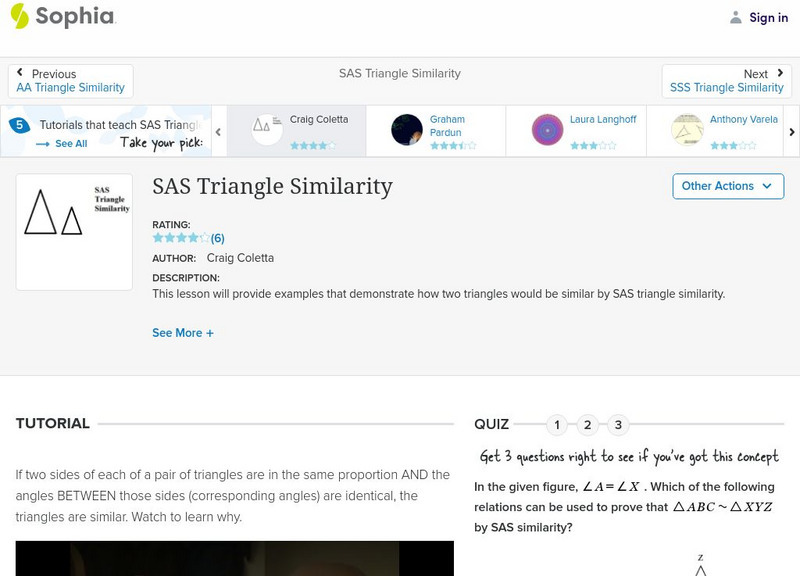
Sophia Learning
Sophia: Sas Triangle Similarity: Lesson 2
This lesson will provide examples that demonstrate how two triangles would be similar by SAS triangle similarity. It is 2 of 5 in the series titled "SAS Triangle Similarity."
Sophia Learning
Sophia: Sas Triangle Similarity: Lesson 5
This lesson will provide examples that demonstrate how two triangles would be similar by SAS triangle similarity. It is 5 of 5 in the series titled "SAS Triangle Similarity."
Sophia Learning
Sophia: Sas Triangle Similarity: Lesson 1
This lesson will provide examples that demonstrate how two triangles would be similar by SAS triangle similarity. It is 1 of 5 in the series titled "SAS Triangle Similarity."
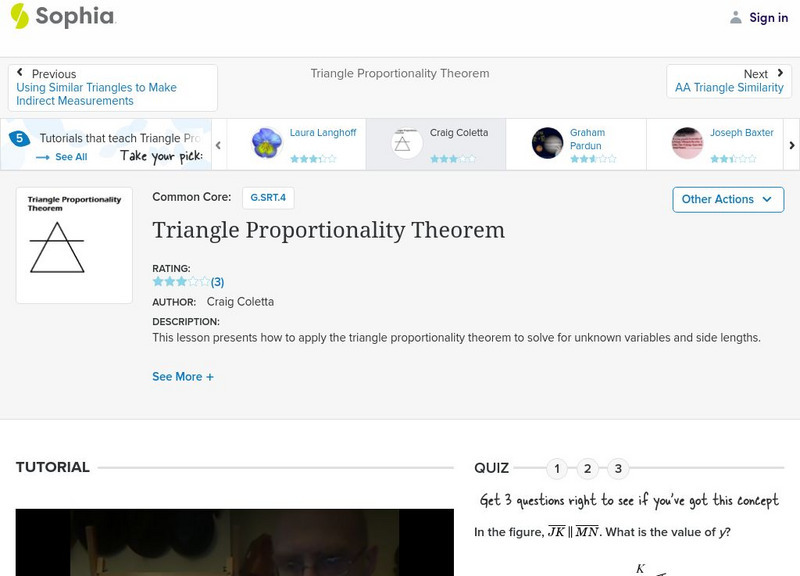
Sophia Learning
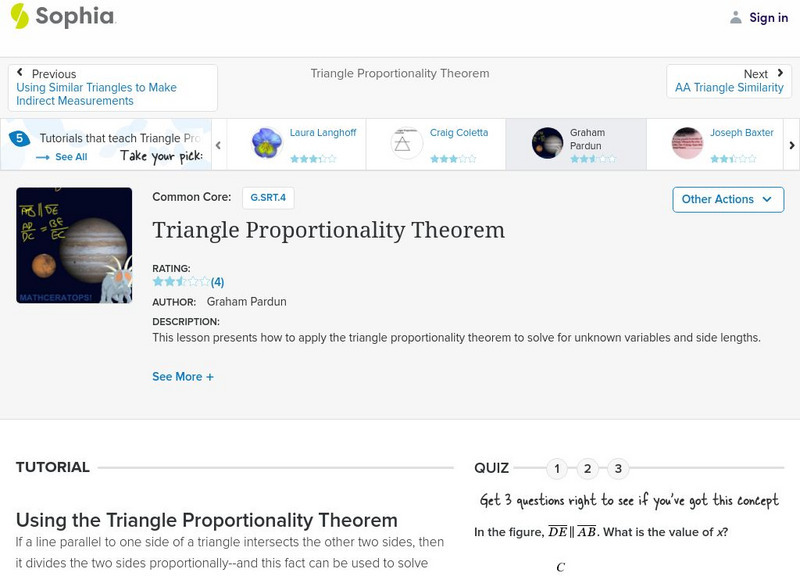
Sophia: Triangle Proportionality Theorem: Lesson 5
This lesson presents how to apply the triangle proportionality theorem to solve for unknown variables and side lengths. It is 5 of 6 in the series titled "Triangle Proportionality Theorem."
Sophia Learning
Sophia: Triangle Proportionality Theorem: Lesson 6
This lesson presents how to apply the triangle proportionality theorem to solve for unknown variables and side lengths. It is 6 of 6 in the series titled "Triangle Proportionality Theorem."
Sophia Learning
Sophia: Representing Fractions: Lesson 10
The purpose of this lesson is to demonstrate how to represent a fraction. It is 10 of 15 in the series titled "Representing Fractions."
Sophia Learning
Sophia: Representing Fractions: Lesson 11
The purpose of this lesson is to demonstrate how to represent a fraction. It is 11 of 15 in the series titled "Representing Fractions."
Sophia Learning
Sophia: Representing Fractions: Lesson 14
The purpose of this lesson is to demonstrate how to represent a fraction. It is 14 of 15 in the series titled "Representing Fractions."
Sophia Learning
Sophia: Representing Fractions: Lesson 9
The purpose of this lesson is to demonstrate how to represent a fraction. It is 9 of 15 in the series titled "Representing Fractions."
Sophia Learning
Sophia: Sas Triangle Similarity: Lesson 4
This lesson will provide examples that demonstrate how two triangles would be similar by SAS triangle similarity. It is 4 of 5 in the series titled "SAS Triangle Similarity."
Sophia Learning
Sophia: Equivalent Fractions: Lesson 1
In this lesson, the student will learn how to create two equivalent fractions by multiplying a fraction by a value of one. It is 1 of 12 in the series titled "Equivalent Fractions."