Hi, what do you want to do?





Digital History
Digital History: Ratifying the Constitution
After the Constitution was written, debated, and finally adopted by the Constitutional Convention, it was sent to the states to ratify. Read about the fears of those who did not want to ratify it and see how their fears were addressed.
Digital History
Digital History: Nullification
As with most other debates leading up to the Civil War, the debate about states' rights in reference to nullifying federal laws, ostensibly about tariffs, was really about the future of slavery in the South. Read about the issues of...
University of Chicago
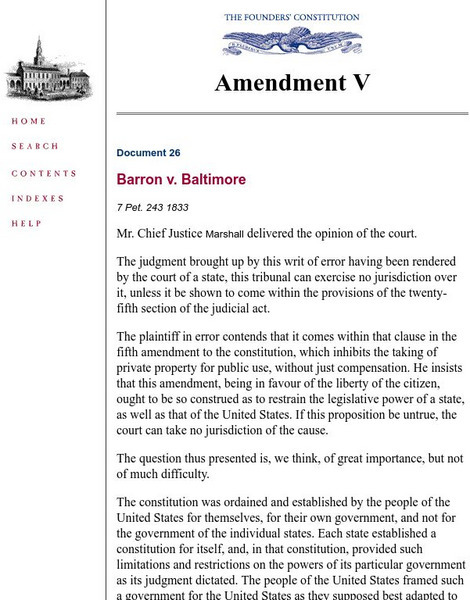
The Founders' Constitution: Amendment V: Barron v. Baltimore
Provides the opinion of the Supreme Court written by Chief Justice Marshall in the case of Barron v. Mayor of Baltimore.
University of Virginia
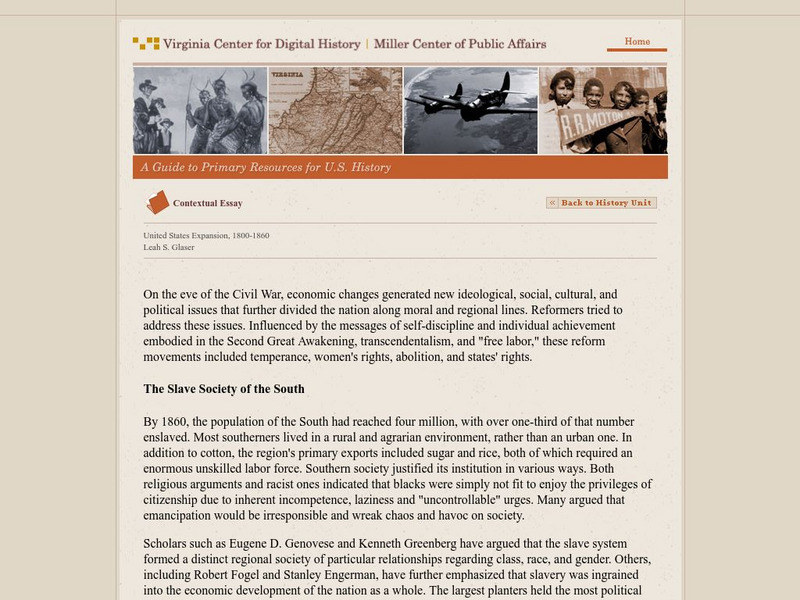
Virginia Center for Digital History: United States Expansion, 1800 1860
An essay that looks at issues affecting Americans leading up to the Civil War. These included economic changes that led to new ideological, social, cultural, and political issues that further divided the nation along moral and regional...
Other
Crisis at Fort Sumter
Detailed background information is provided to assist users in solving the dilemmas facing President Lincoln in the events surrounding the fall of Fort Sumter.
Independence Hall Association
U.s. History: Sacred Beliefs
At the beginning of the Civil War people in both the North and the South held firm beliefs about the reasons for the war. Some wanted to preserve the Union, others to end slavery. In the South the question was about states' rights and...
Independence Hall Association
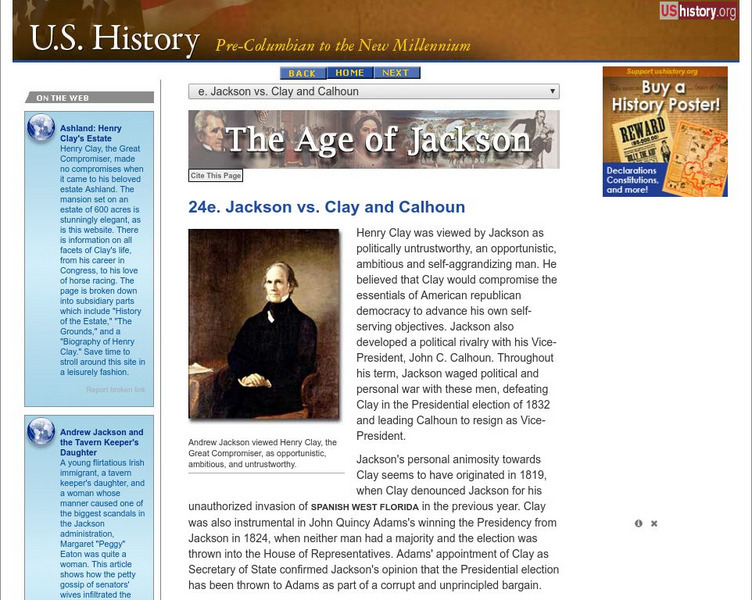
U.s. History: Jackson vs. Clay and Calhoun
Two very important politicians in the Age of Jackson were Henry Clay and John C. Calhoun. Andrew Jackson detested both for personal and political reasons. Read about the relationship between these two men individually and Andrew Jackson.
Other
Marshall University: Rosanna Blake Library of Confederate History
Online exhibition of an extensive collection of historical Confederacy artifacts.
Independence Hall Association
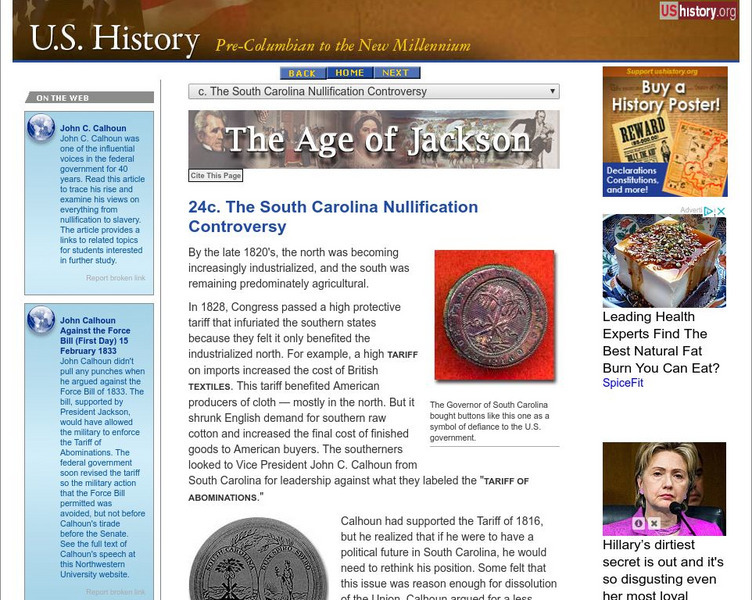
U.s. History: The South Carolina Nullification Controversy
The nullification controversy began as an economic dispute between north and south. See how the question about tariffs resulted in a states' rights issue in South Carolina. Read about what President Andrew Jackson was going to do about...
Books in the Classroom
Carol Hurst's Children's Literature Site: Civil War in Children's Literature
This page from Carol Hurst's Children's Literature offers book reviews and planning help for an upper elementary unit on the Civil War. Includes information on books for teachers, books for students, easy-purchase links, and links to...

Sophia Learning
Sophia: Causes of the Civil War
Through a comprehensive powerpoint presentation, students will learn details of the five main causes of the Civil War in the United States.
PBS
Wnet: Thirteen: The Supreme Court: Landmark Cases: Barron v. Baltimore (1833)
PBS features a summary of the landmark Supreme Court case of Barron v. Baltimore which stated that the freedoms guaranteed by the Bill of Rights did not restrict the state governments. Decision written by Chief Justice John Marshall.

Ohio State University
Osu History Teaching Institute: The Alien and Sedition Acts
Objective of this lesson is to understand the provisions of the Alien and Sedition Acts within their political and constitutional contexts.
Civil War Home
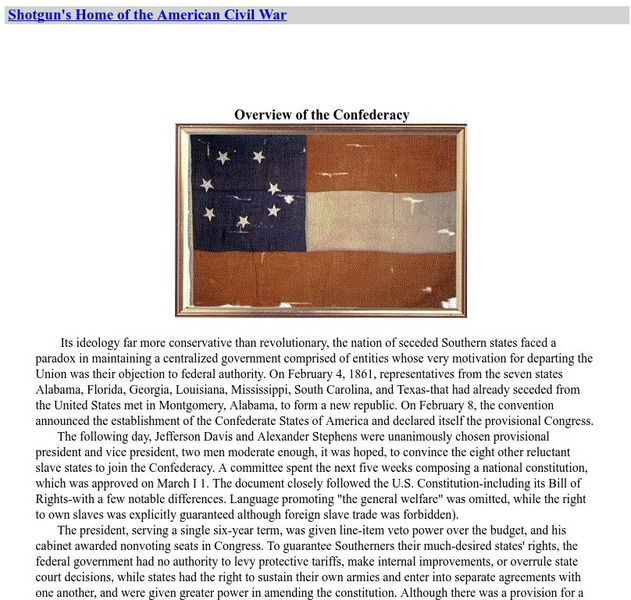
Home of the American Civil War: Overview of Confederacy
Provides an overview of the Confederate States of America from its establishment in 1861 through its abolishment in 1865.
Other
Causes of the Civil War: A North Georgia Perspective
Read about the causes of the Civil War from a southern perspective.
Library of Congress
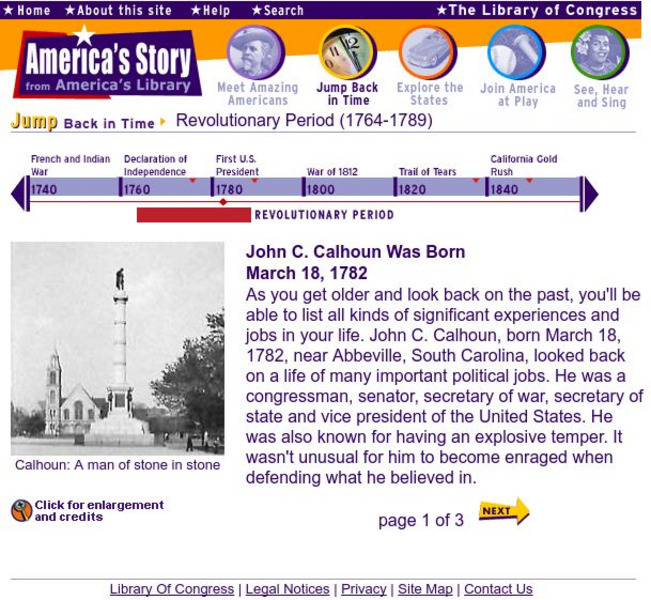
Loc: America's Story: John C. Calhoun
A brief biography of the life of Vice President John C. Calhoun, along with photos of his monument and tomb. The Library of Congress also includes a sample of Calhoun's forty-two page speech against the Compromise of 1850.