Hi, what do you want to do?






Professor Dave Explains
Practice Problem: Reaction of a Terminal Alkyne
We've got a terminal alkyne, and we're gonna do some stuff to it. What will we get? What's that Grignard reagent gonna do? Be careful!
Professor Dave Explains
Practice-Problem: Two-Reaction Pathway
This time we have a starting material, and we are gonna do just two reactions. But it's a little tricky! See if you can figure it out.
Professor Dave Explains
Practice Problem: Oxidizing Agents
For this one we need to know the ability of different oxidizing agents to react with various functional groups, and what functional groups will result.
Professor Dave Explains
Practice Problem: Diels-Alder Reactions
Rings upon rings! Forwards and backwards! Give these a shot.
Professor Dave Explains
Practice Problem: Drawing Substitution and Elimination Products (SN1/SN2/E1/E2)
I know you guys are dying for more practice choosing between SN1/SN2/E1/E2 mechanisms, so hopefully this one helps a little. Make sure to look at all the factors we talked about in my tutorial on this topic!
Professor Dave Explains
Practice Problem: Three-Step Synthesis
We've got an alkene starting material, and we are trying to get a specific alcohol. How can we do it in three steps? Give it a shot!
Professor Dave Explains
Practice Problem: Newman Projections of Conformational Isomers
Spin that sigma bond and what do you get? Draw the Newman projections and find out! Watch out for pesky gauche interactions.
Professor Dave Explains
Practice Problem: IUPAC Nomenclature Examples
Let's name these bad boys! Watch tutorials 1 through 5 on the organic chemistry playlist if you need a refresher of the rules.
Professor Dave Explains
Practice Problem: IUPAC Nomenclature and Stereochemistry
For this one we will have to be able to interpret IUPAC nomenclature to draw molecular structure, including absolute configuration using the Cahn-Ingold-Prelog convention.
Professor Dave Explains
Practice Problem: Assigning Molecular Structure From an NMR Spectrum
For this one we need to be able to interpret NMR data in order to arrive at the correct molecular structure based on an empirical formula. It's not as hard as it sounds!
Professor Dave Explains
Practice Problem: Electrophilic Aromatic Substitution Multi-Step Pathway
EAS, not once, not twice, but thrice! Draw all the molecules, please. Don't forget about ortho/meta/para!
Professor Dave Explains
Practice Problem: Aromaticity
Which ones are aromatic? Take your pick! Don't forget about Huckel's rule.
Professor Dave Explains
Practice Problem: Vicinal Dihalide Synthesis
We've got two vicinal dihalides with different stereochemistry, and we want to make them. How can we do this? Think about the reactions you know and give it a try!
Professor Dave Explains
Practice Problem: Synthesis Challenge
We've got a target molecule to synthesize, and we have to start from benzene and other reagents of three carbons or less. How are we gonna do this? Think about the reactions you know, especially some electrophilic aromatic substitution,...
Professor Dave Explains
Practice Problem: Retrosynthesis of an Alcohol
For this one we need to understand the key points of retrosynthetic analysis. What reactions make alcohols? How can we put this molecule together?
Professor Dave Explains
Practice Problem: Newman Projections and Nomenclature
For this one, we will need to be able to draw Newman projections as well as name the molecule using the rules of IUPAC nomenclature. Basic stuff!
Other
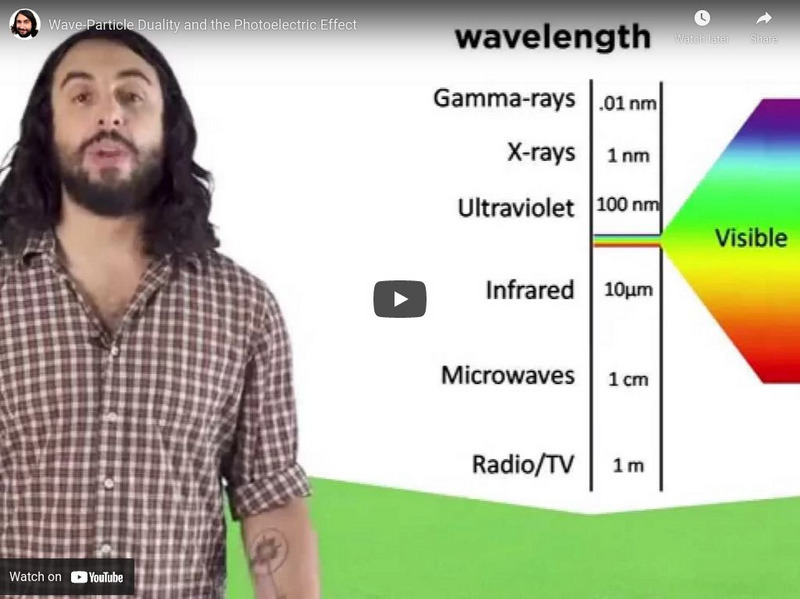
Professor Dave Explains: Wave Particle Duality and the Photoelectric Effect
Professor Dave explains what we mean by wave-particle duality and how this relates to the photoelectric effect. He discusses how this relationship was discovered through the work of Max Planck and Albert Einstein. [3:55]
Other
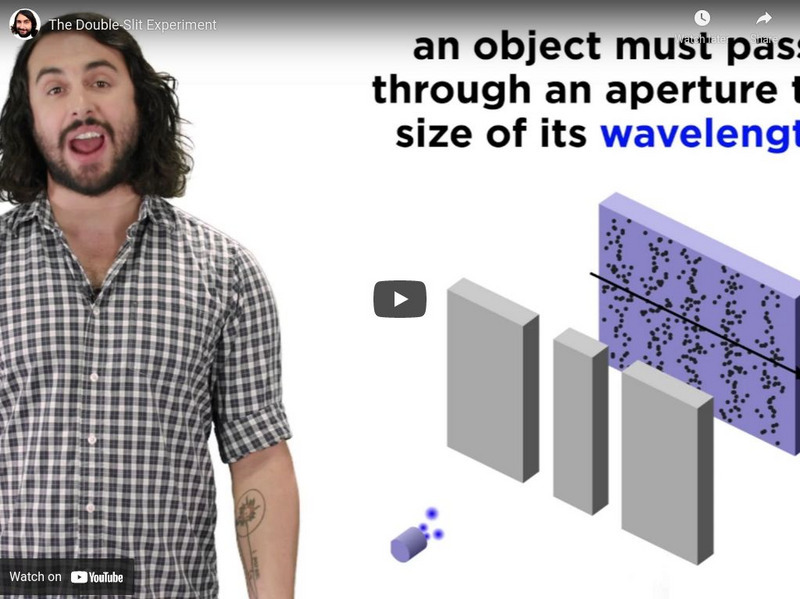
Professor Dave Explains: The Double Slit Experiment
What happens when you pass a beam of light through a screen with two slits? What about when you send electrons through there? Find out about diffraction patterns formed in the double-slit experiment, and where quantum mechanics fits into...