Hi, what do you want to do?





Crash Course
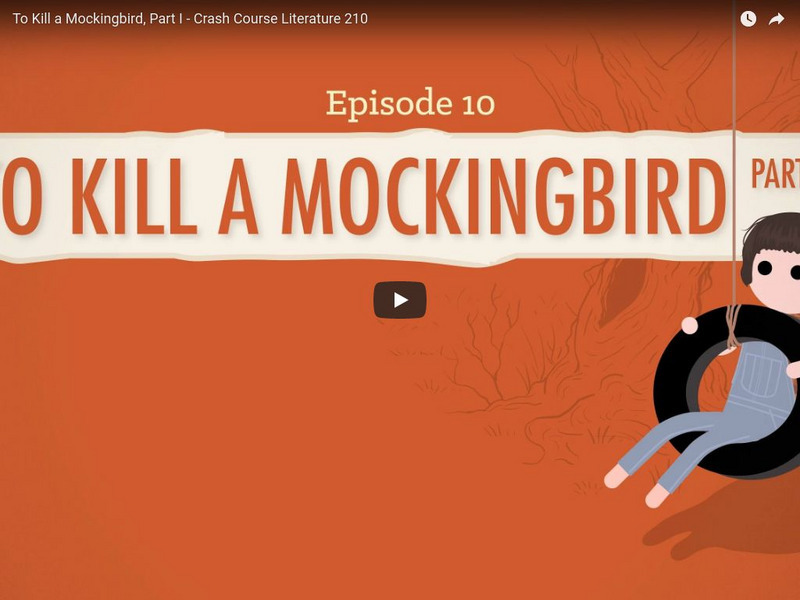
Crash Course Literature 210: To Kill a Mockingbird Part I
Crash Course Literature 210: To Kill a Mockingbird is a short video that discusses cultural, social aspects of the south as wells as character, plot and symbolism in an entertaining format.
Crash Course
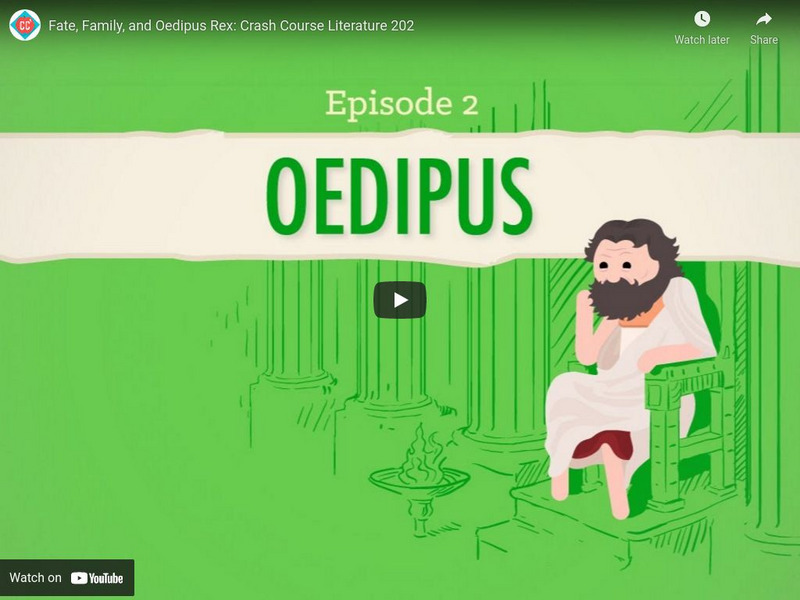
Crash Course Literature 202: #2 Fate, Family, and Oedipus Rex
This video series [13:34], Crash Course Literature, uses lively verbal explanations accompanied by entertaining visuals with a host who provides vivid explanation of the background and story of Oedipus Rex.

Crash Course
Crash Course Literature 212:aliens, Time Travel, Dresden Slaughterhouse Five p.i
A video in which author John Green discusses Kurt Vonnegut's Slaughterhouse-Five and its historical context. [10:33]

Crash Course
Crash Course Literature 213: Ptsd and Alien Abduction Slaughterhouse Five P. 2
A video in which author John Green discusses Kurt Vonnegut's Slaughterhouse-Five and the relationship between Billy Pilgrim's fantasy world and his experiences during the war. [10:25]
Crash Course
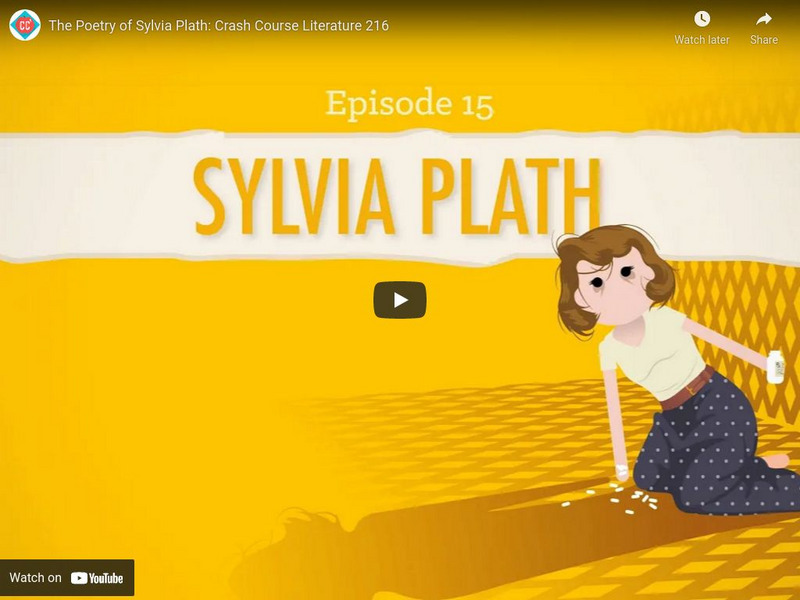
Crash Course Literature 216: The Poetry of Sylvia Plath
A video in which author John Green discusses Sylvia Plath, her life, her poetry, and her role in feminism. [11:17]
Crash Course
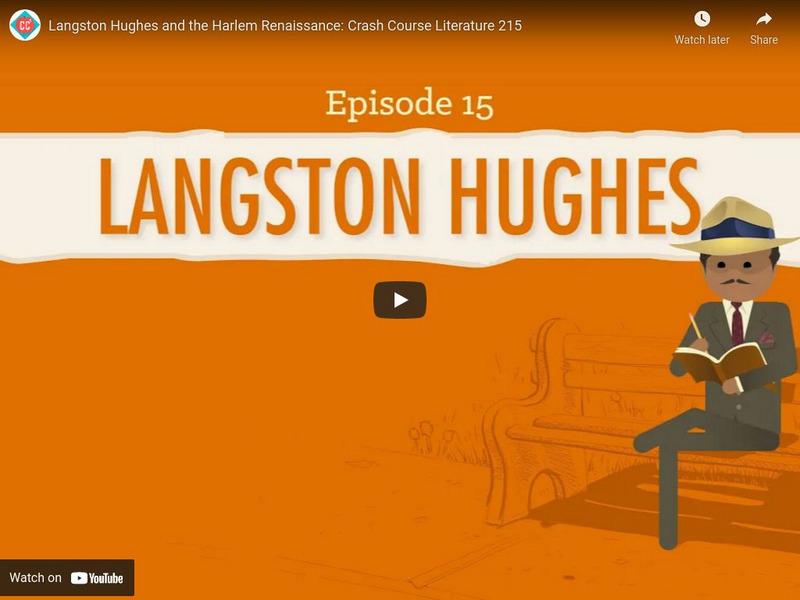
Crash Course Literature 215: Langston Hughes & the Harlem Renaissance
A video in which author John Green discusses Langston Hughes, his life, his poetry, and his role in the Harlem Renaissance. [11:31]

Crash Course
Crash Course Literature 7: Holden, Jd, and the Red Cap: Catcher in the Rye Pt. 2
A video in which author John Green discusses J. D. Salinger's The Catcher in the Rye. [8:20]

Crash Course
Crash Course Literature 211: Race, Class, and Gender in to Kill a Mockingbird
A video in which author John Green discusses Harper Lee's To Kill a Mockingbird with a focus on sharing human experiences to gain empathy. [11:36]
Crash Course
Crash Course Literature #1: How and Why We Read
This seven minute video series of Crash Course Literature uses lively verbal explanations accompanied by entertaining visuals with a host who provides compelling examples of how and why people read.

Crash Course
Crash Course Literature 203: Ghosts, Murder, and More Murder: Hamlet Part I
Crash Course Literature 203: Ghosts, Murder, and More Murder: Hamlet Part I [12:24]. This video series of Crash Course Literature uses lively verbal explanations accompanied by entertaining visuals with a host who provides historical,...
Crash Course
Crash Course Literature 204: Ophelia, Gertrude, and Regicide: Hamlet, Part Ii
Crash Course Literature 204: Ophelia, Gertrude, and Regicide: Hamlet, Part II [11:01] in this video series, Crash Course Literature, uses lively verbal explanations accompanied by entertaining visuals with a host who provides historical,...

Crash Course
Crash Course Literature 209: Things Fall Apart Part Ii
Crash Course Literature 208: If One Finger Brought Oil: Things Fall Apart Part II by Chinua Achebe is the highlighted novel that the host summarizes. Characterization, plot and symbolism is discussed in detail to give the reader a better...

Crash Course
Crash Course Literature 208: If One Finger Brought Oil: Things Fall Apart Part I
Crash Course Literature 208: If One Finger Brought Oil: Things Fall Apart I by Chinua Achebe is the highlighted novel that the host summarizes. Characterization, plot and symbolism is discussed in detail to give the reader a better...
Crash Course
Crash Course Literature 207: Reader, It's Jane Eyre
Crash Course Literature 207: Reader, It's Jane Eyre in this [13:12] video series of Crash Course Literature uses lively verbal explanations accompanied by entertaining visuals with a host who provides a multilayered insight into the...
Crash Course
Crash Course Literature #302: The Adventures of Huckleberry Finn, Part I
This video focuses on Mark Twain and his novel The Adventures of Huckleberry Finn. John Green teaches you about Mark Twain's The Adventures of Huckleberry Finn. We'll talk a little bit about Samuel Langhorne Clemens, who wrote under the...
Crash Course
Crash Course Literature #303: The Raft, the River, the Weird Ending of Huck Finn
This video continues the discussion of Mark Twain and The Adventures of Huckleberry Finn. This is part two of our talk about Huck Finn, and this time we're looking at the metaphors in the book, a little bit about what the metaphors like...

Crash Course
Crash Course Literature #304: Shakespeare's Sonnets
This video [12:27] focuses on Shakespeare's Sonnets. We're learning about sonnets, and English Literature's best-known purveyor of those fourteen-line paeans, William Shakespeare. We'll look at a few of his biggest hits, including Sonnet...

Crash Course
Crash Course Literature #305: Lord of the Flies
This video focuses on William Golding and his novel Lord of the Flies. This week, John is talking about one of his least favorite novels, The Lord of the Flies by William Golding. Lord of the Flies is a novel of ideas, and John doesn't...
Crash Course
Crash Course Literature #306: 100 Years of Solitude, Part 1
This video focuses on Gabriel Garcia Marquez and his novel 100 Years of Solitude. Our first of two episodes about Gabriel Garcia Marquez's novel, 100 Years of Solitude. This week, we're looking at the Buendia family, and their many...

Crash Course
Crash Course Literature 206: Frankenstein Part Ii
Crash Course Literature 206: Frankenstein Part II [12:38]. This video series of Crash Course Literature uses lively verbal explanations accompanied by entertaining visuals with a host who provides a multilayered insight into Frankenstein...

Crash Course
Crash Course Literature 205: Don't Reanimate Corpses! Frankenstein I
Crash Course Literature 205: Don't Reanimate Corpses! Frankenstein in this [12:57] video series of uses lively verbal explanations accompanied by entertaining visuals with a host who provides a multilayered insight into Frankenstein and...

Crash Course
Crash Course Literature 214: Slavery, Ghosts, and Beloved
A video in which author John Green discusses Toni Morrison's Beloved. Green shares thoughts on whether the ghost in the story is real or not and how the story illustrates the struggles of slavery. [11:38]