Hi, what do you want to do?





Bozeman Science
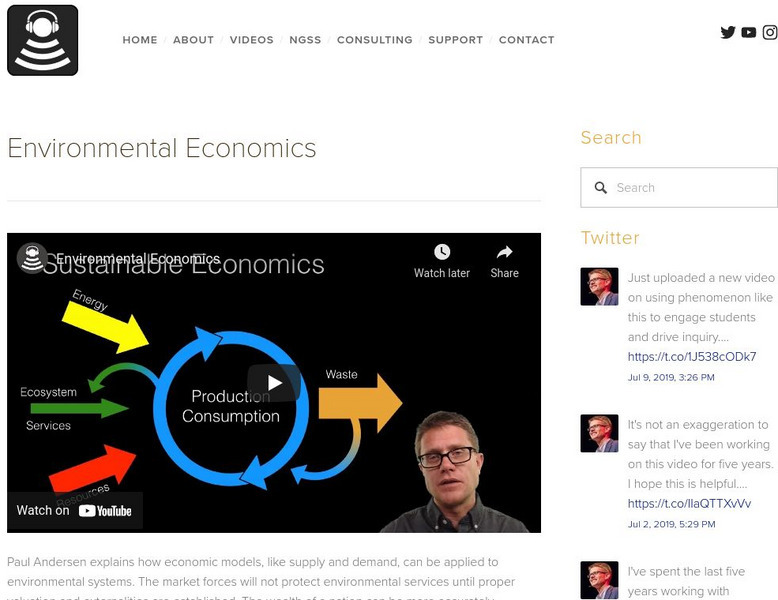
Bozeman Science: Environmental Economics
Paul Andersen explains how economic models, like supply and demand, can be applied to environmental systems. The market forces will not protect environmental services until proper valuation and externalities are established. The wealth...
Other
Think Green: Food Waste
Bill Nye shows how to live in a more sustainable world, and compost our food waste. [4:26]
Other
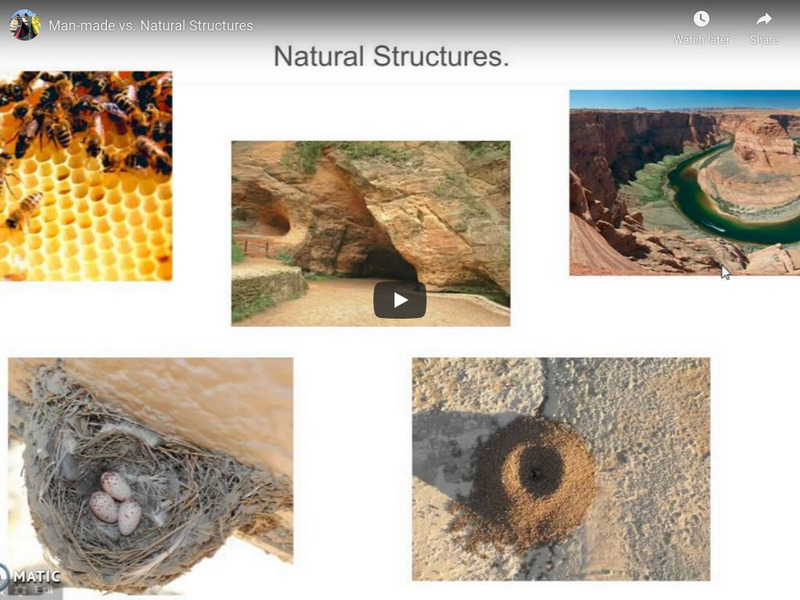
Man Made vs. Natural Structures
A teacher-made video on structures that are found in the natural world or made by people. The teacher pauses periodically for students to consider questions that she asks. [4:11]

Environmental Education for Kids
Eek!: Greening Our World
We often talk about "being green" when we take actions that are environmentally-friendly. Green and healthy actions reduce environmental impacts, improve health and wellness for people and the planet, and increase our understanding of...
Science Friday Initiative
Science Friday: Environmentalism Today
What does it mean to be an environmentalist today? Has the environmental movement grown too accommodating with the passage of time? [23 mins. 34]

Science Friday Initiative
Science Friday: Earth Day and the Environment
Next week marks the 40th anniversary of Earth Day. Has it made a difference? [23 mins. 46]
Science Friday Initiative
Science Friday: An Outhouse for the Sea
This toilet floats. You have to see it to believe it. Learn how rainwater and human waste can be converted to plants and clean water in a paddle-boat-toilet. It's a zero-waste waste disposal system that's discussed in this video and...
Other
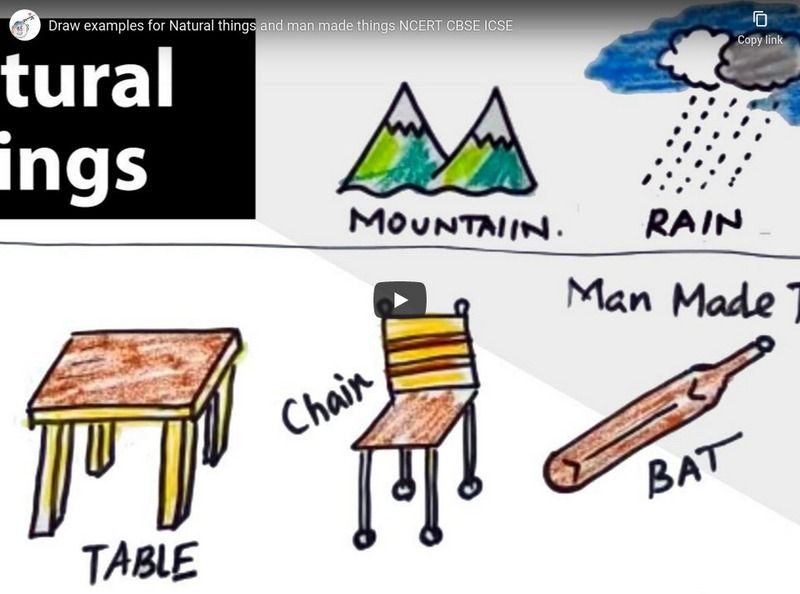
Any Body Can Draw Easily: Draw Examples for Natural Things and Man Made Things
A simple drawing lesson set to music where the artist draws, labels, and colors things found in the natural world and things made by humans. Could serve as a good model for young students. [4:11]
Other
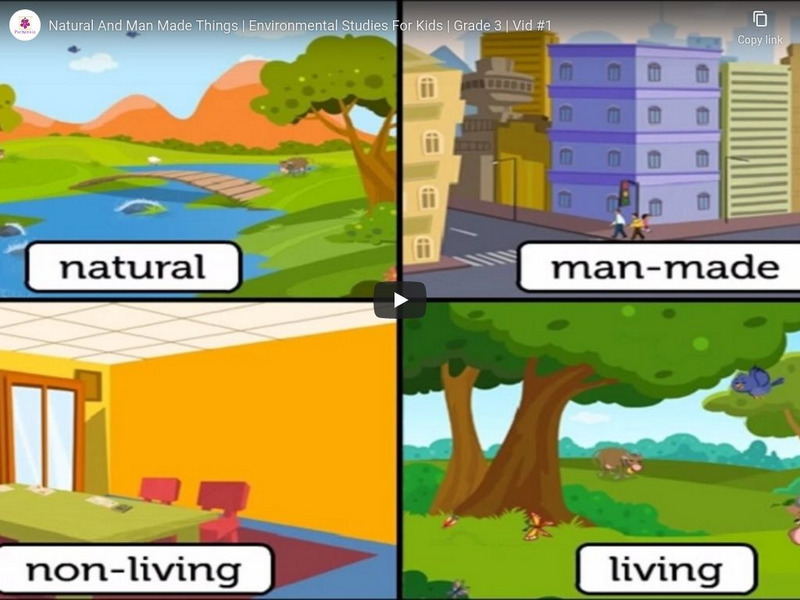
Periwinkle: Environmental Studies for Kids: Natural and Man Made Things
We see many living and non-living things around us. Some of them are living things and the others are non-living things. Certain non-living things like mountains, rivers, clouds, rain are also natural. [3:35]