Hi, what do you want to do?






Curated Video
Graphing Polynomials: Factoring and Zeros
In this video, the teacher explains how to graph polynomials by finding the zeros through factoring. They discuss the behavior of graphs as x approaches infinity or negative infinity, and how it differs depending on whether the degree of...
Curated Video
Reducing Ratios Using Common Factors
In this video, the teacher explains how to create equivalent ratios by reducing them using common factors. They provide examples and visuals to help students understand the concept.

Curated OER
How Do You Factor the Greatest Common Factor out of a Polynomial?
There are four terms in this polynomial. Find the greatest common factor. Remember to prime factor the number values to help find the GFC. Then rewrite the polynomial in simplest form. Not sure about this skill, then watch the instructor...
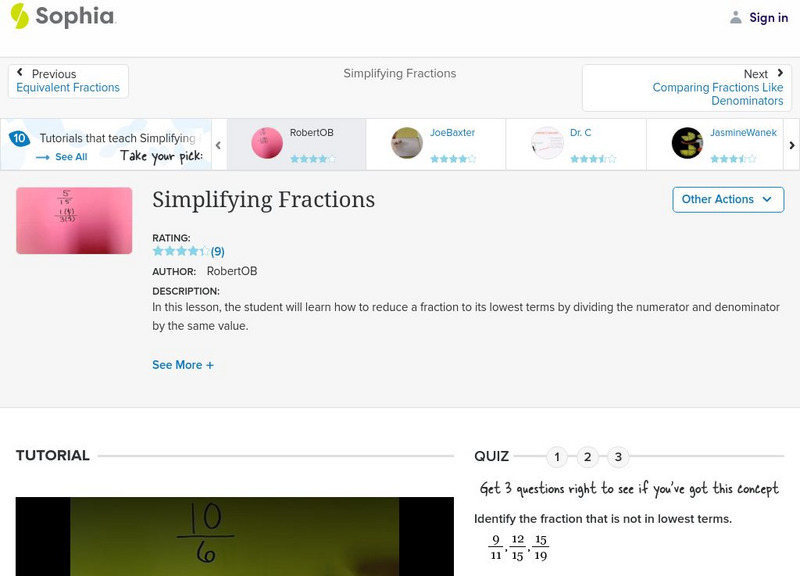
Sophia Learning
Sophia: Simplifying Fractions
In this lesson, the student will learn how to reduce a fraction to its lowest terms by dividing the numerator and denominator by the same value. Students can watch a video tutorial and then take an online quiz.
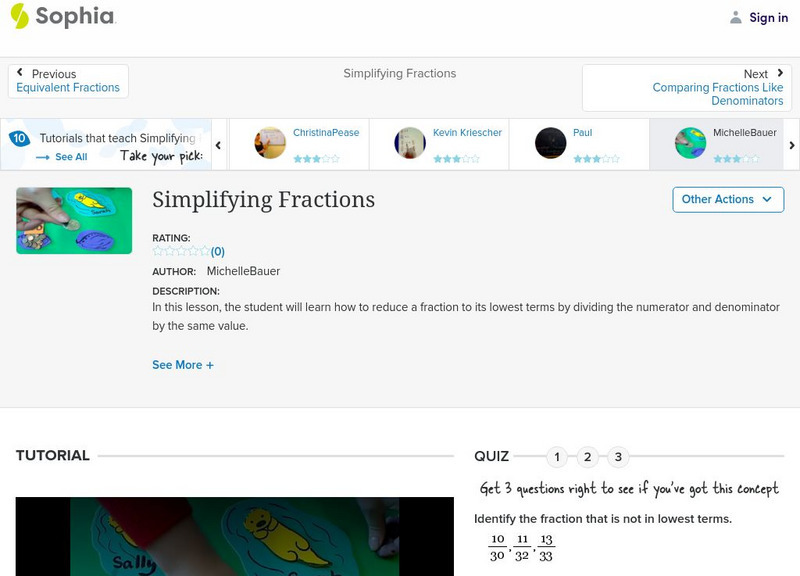
Sophia Learning
Sophia: Simplifying Fractions
In this lesson, the student will learn how to reduce a fraction to its lowest terms by dividing the numerator and denominator by the same value. Students can watch a video tutorial and then take an online quiz.
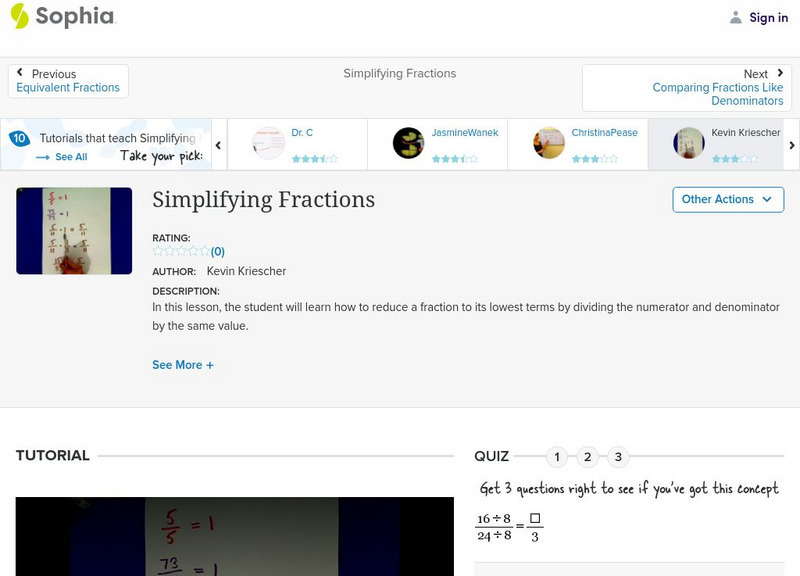
Sophia Learning
Sophia: Simplifying Fractions
In this lesson, the student will learn how to reduce a fraction to its lowest terms by dividing the numerator and denominator by the same value. Students can watch a video tutorial and then take an online quiz.
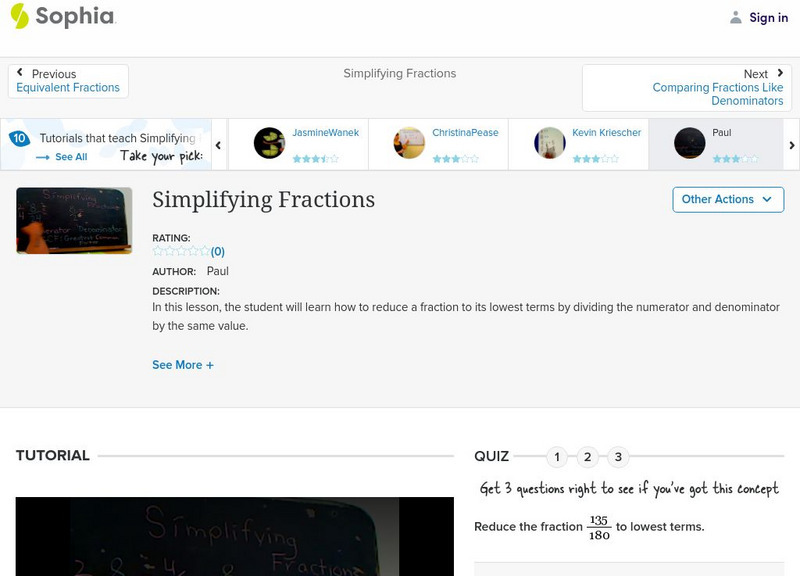
Sophia Learning
Sophia: Simplifying Fractions
In this lesson, the student will learn how to reduce a fraction to its lowest terms by dividing the numerator and denominator by the same value. Students can watch a video tutorial and then take an online quiz.
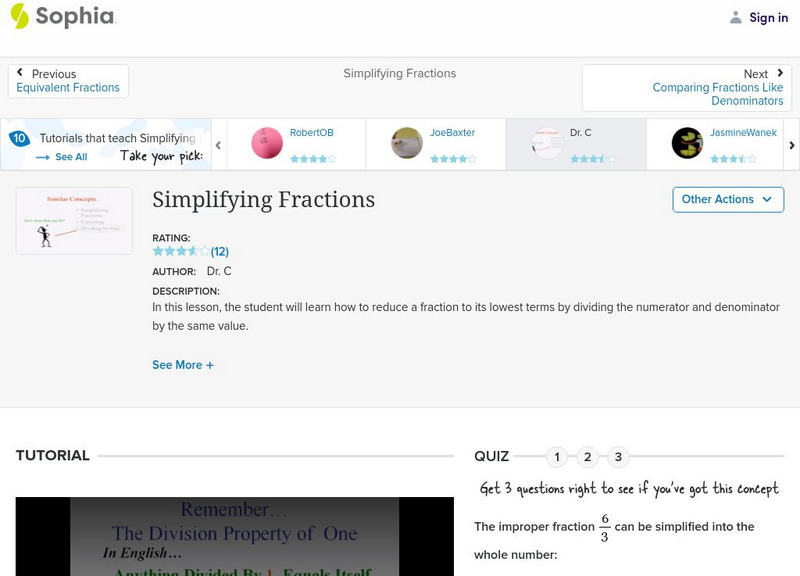
Sophia Learning
Sophia: Simplifying Fractions: Lesson 5
In this lesson, the student will learn how to reduce a fraction to its lowest terms by dividing the numerator and denominator by the same value. It is 5 of 13 in the series titled "Simplifying Fractions."
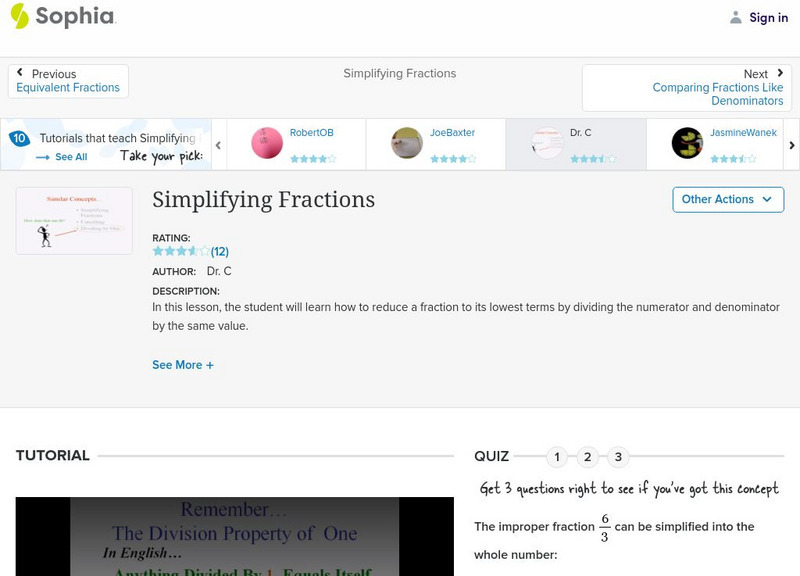
Sophia Learning
Sophia: Simplifying Fractions
In this lesson, the student will learn how to reduce a fraction to its lowest terms by dividing the numerator and denominator by the same value. Students can watch a video tutorial and then take an online quiz.
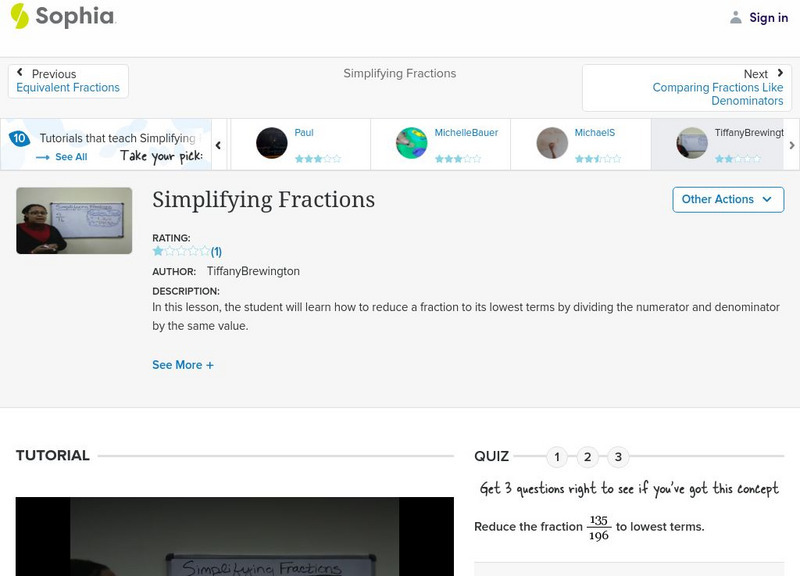
Sophia Learning
Sophia: Simplifying Fractions
In this lesson, the student will learn how to reduce a fraction to its lowest terms by dividing the numerator and denominator by the same value. Students can watch a video tutorial and then take an online quiz.
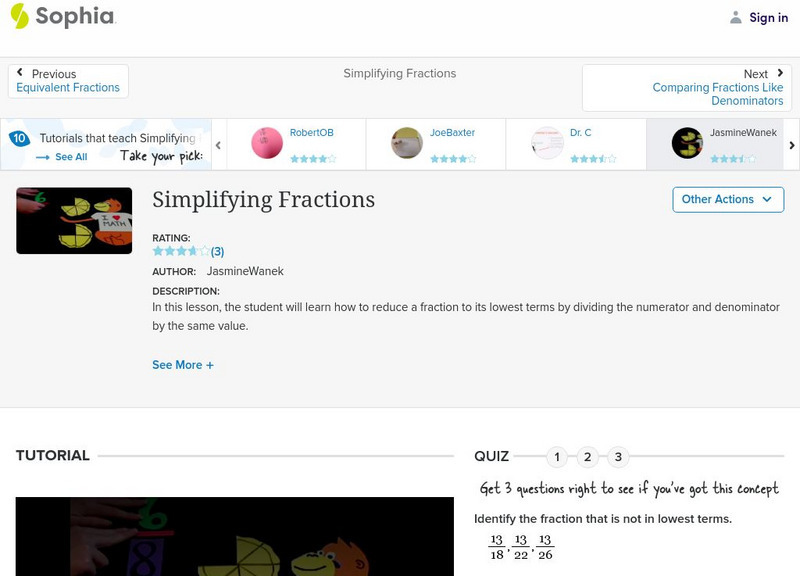
Sophia Learning
Sophia: Simplifying Fractions: Lesson 8
In this lesson, the student will learn how to reduce a fraction to its lowest terms by dividing the numerator and denominator by the same value. It is 8 of 13 in the series titled "Simplifying Fractions."
Sophia Learning
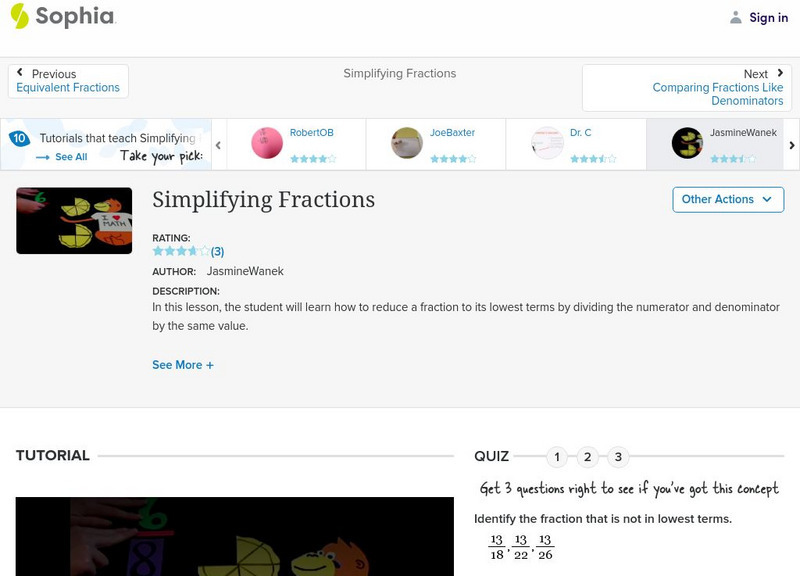
Sophia: Simplifying Fractions
In this lesson, the student will learn how to reduce a fraction to its lowest terms by dividing the numerator and denominator by the same value. Students can watch a video tutorial and then take an online quiz.
Sophia Learning
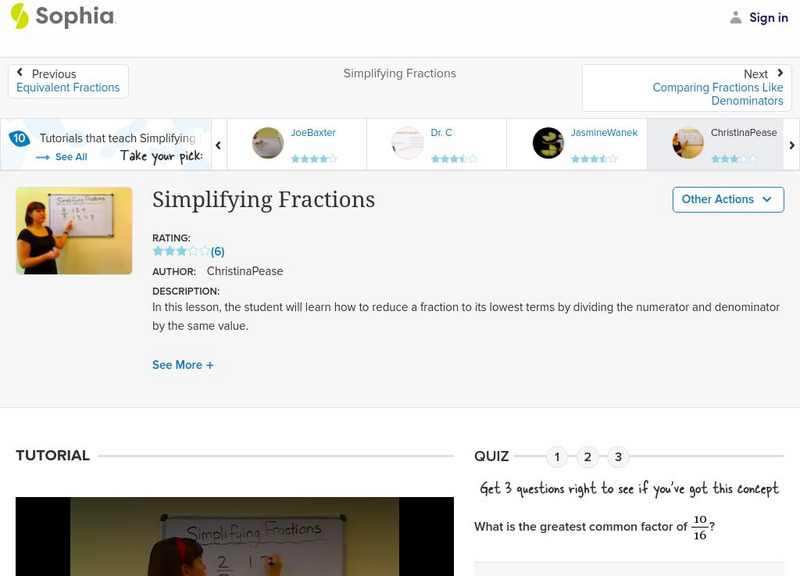
Sophia: Simplifying Fractions
In this lesson, the student will learn how to reduce a fraction to its lowest terms by dividing the numerator and denominator by the same value. Students can watch a video tutorial and then take an online quiz.
Sophia Learning
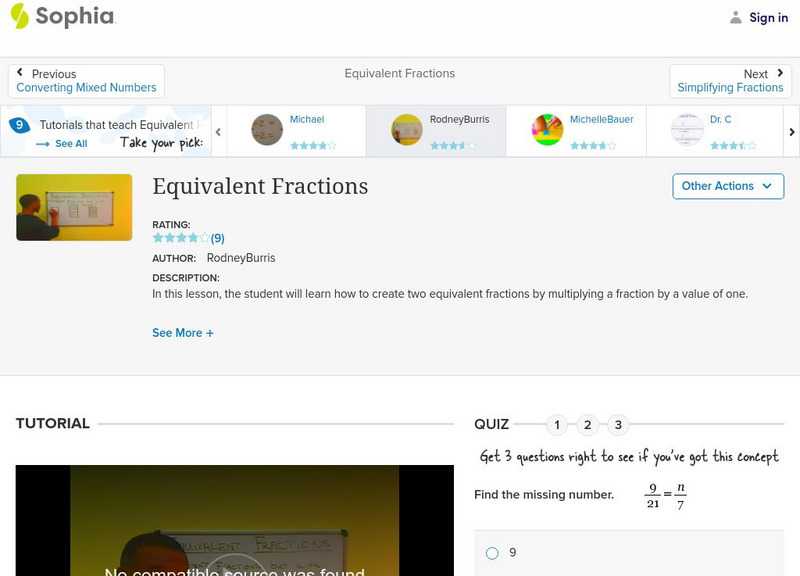
Sophia: Equivalent Fractions: Lesson 9
In this lesson, the student will learn how to create two equivalent fractions by multiplying a fraction by a value of one. It is 9 of 12 in the series titled "Equivalent Fractions."
Sophia Learning
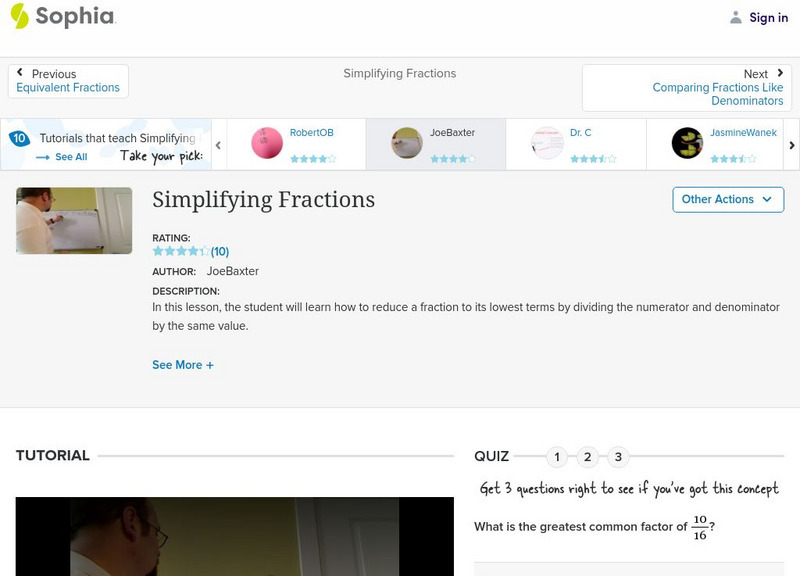
Sophia: Simplifying Fractions
In this lesson, the student will learn how to reduce a fraction to its lowest terms by dividing the numerator and denominator by the same value. Students can watch a video tutorial and then take an online quiz.
Sophia Learning
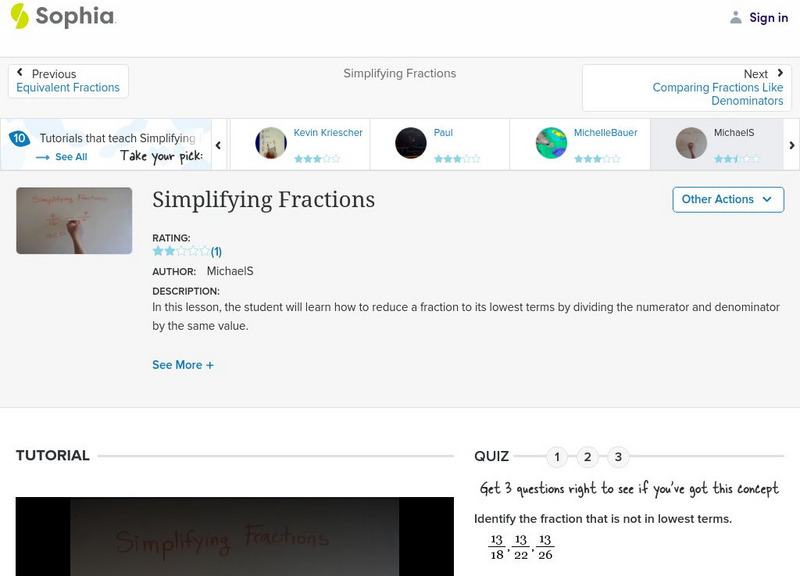
Sophia: Simplifying Fractions
In this lesson, the student will learn how to reduce a fraction to its lowest terms by dividing the numerator and denominator by the same value. Students can watch a video tutorial and then take an online quiz.
Sophia Learning
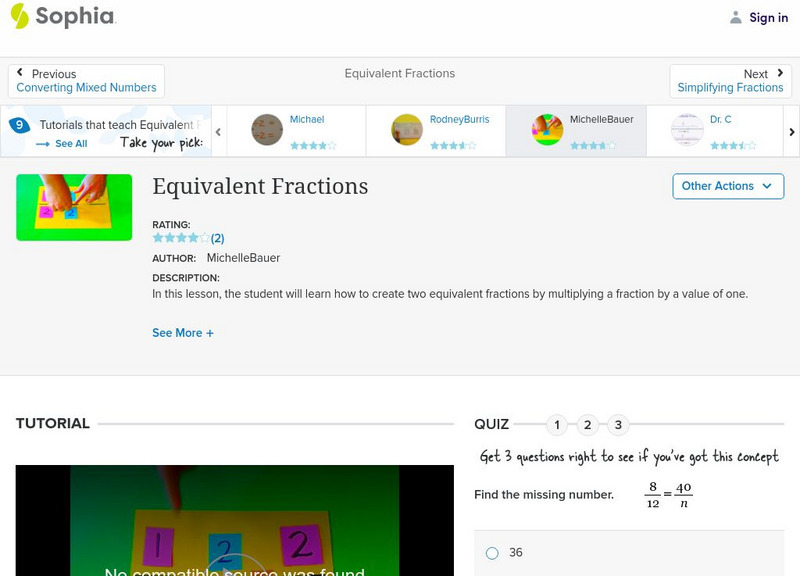
Sophia: Equivalent Fractions: Lesson 10
In this lesson, the student will learn how to create two equivalent fractions by multiplying a fraction by a value of one. It is 10 of 12 in the series titled "Equivalent Fractions."
Sophia Learning
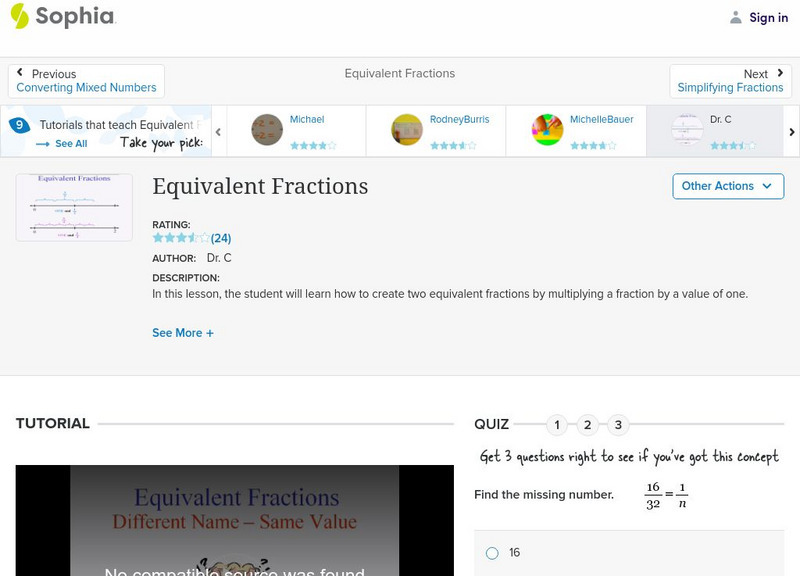
Sophia: Equivalent Fractions: Lesson 3
In this lesson, the student will learn how to create two equivalent fractions by multiplying a fraction by a value of one. It is 3 of 12 in the series titled "Equivalent Fractions."
Sophia Learning
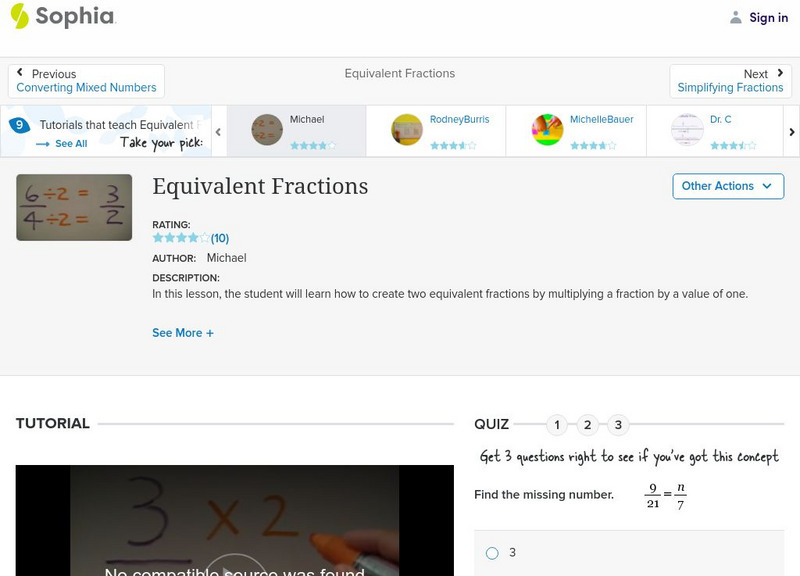
Sophia: Equivalent Fractions: Lesson 4
In this lesson, the student will learn how to create two equivalent fractions by multiplying a fraction by a value of one. It is 4 of 12 in the series titled "Equivalent Fractions."
Sophia Learning
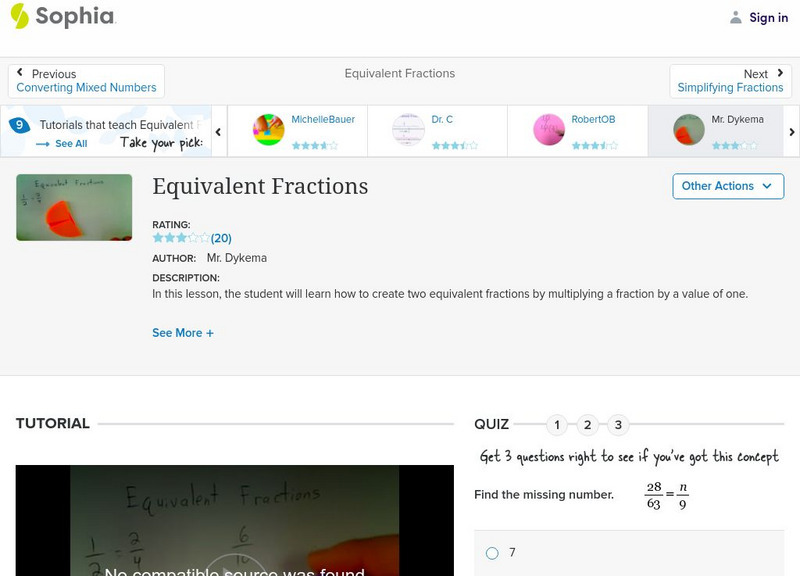
Sophia: Equivalent Fractions: Lesson 5
In this lesson, the student will learn how to create two equivalent fractions by multiplying a fraction by a value of one. It is 5 of 12 in the series titled "Equivalent Fractions."
Sophia Learning
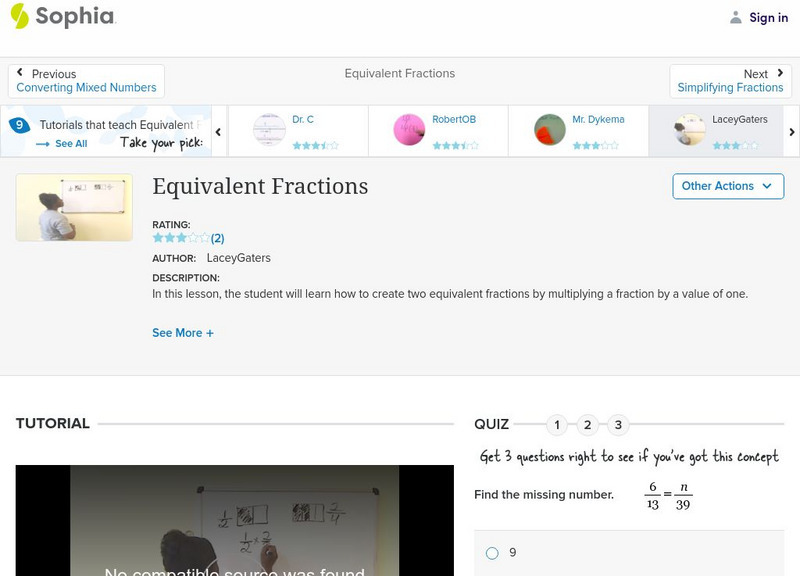
Sophia: Equivalent Fractions: Lesson 6
In this lesson, the student will learn how to create two equivalent fractions by multiplying a fraction by a value of one. It is 6 of 12 in the series titled "Equivalent Fractions."
Sophia Learning
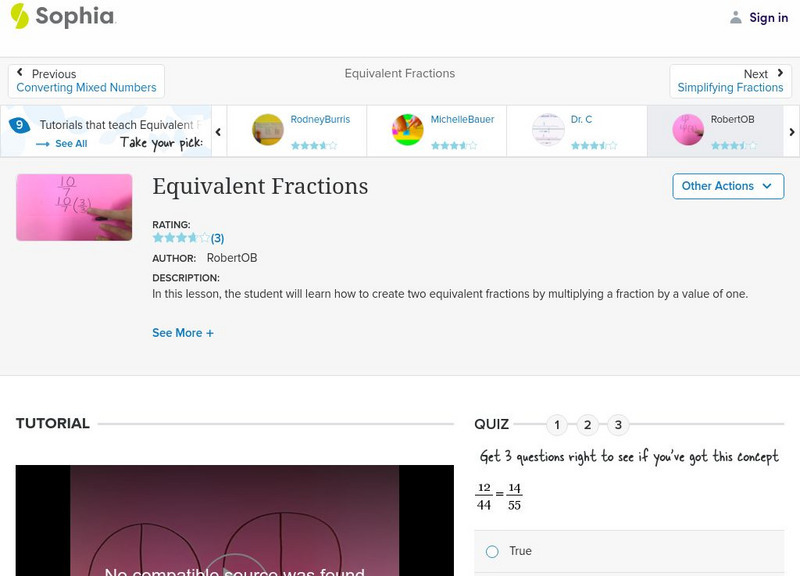
Sophia: Equivalent Fractions: Lesson 8
In this lesson, the student will learn how to create two equivalent fractions by multiplying a fraction by a value of one. It is 8 of 12 in the series titled "Equivalent Fractions."
Sophia Learning
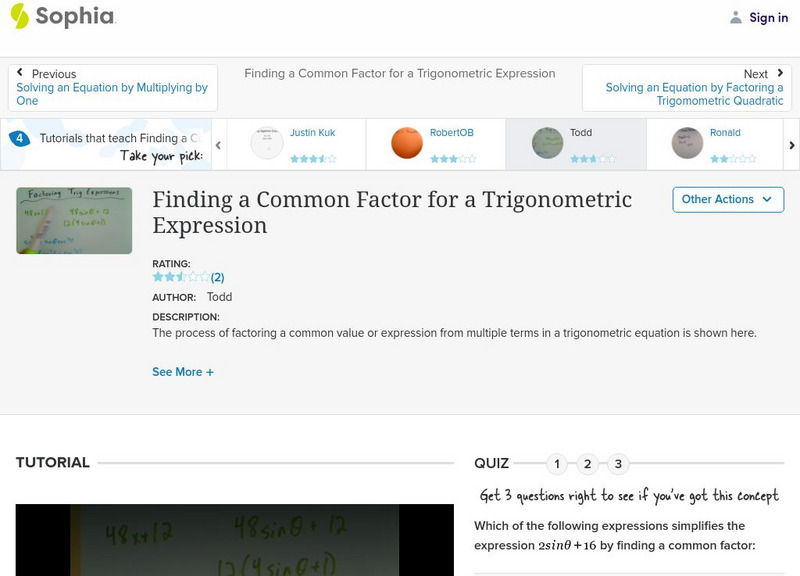
Sophia: Finding a Common Factor for a Trigonometric Expression: Lesson 7
The process of factoring a common value or expression from multiple terms in a trigonometric equation is shown here. This lesson is 7 of 7 in the series titled "Finding a Common Factor for a Trigonometric Expression."
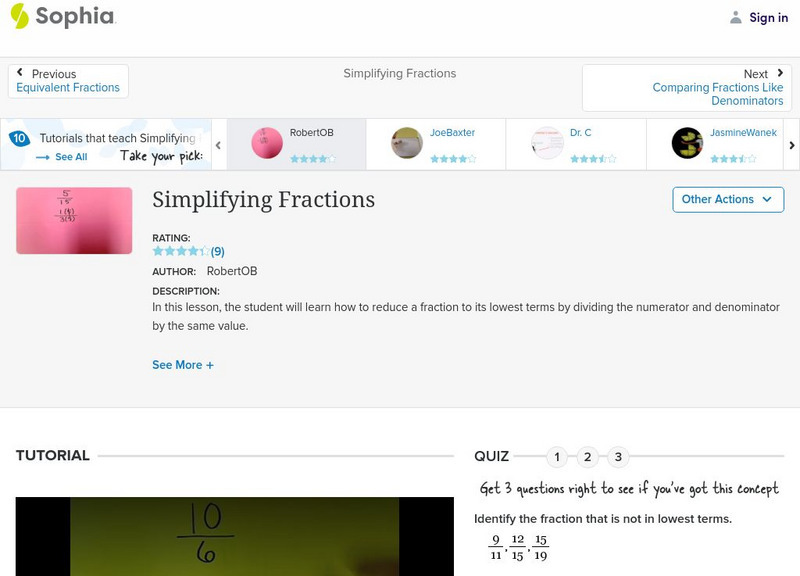
Sophia Learning
Sophia: Simplifying Fractions: Lesson 10
In this lesson, the student will learn how to reduce a fraction to its lowest terms by dividing the numerator and denominator by the same value. It is 10 of 13 in the series titled "Simplifying Fractions."