Hi, what do you want to do?






Mr. E. Science
Light
Where does bad light end up? In a prism! The presentation covers light, mirrors, lenses, and the structure of the eye. It also provides explanations of reflection, refraction, concave and convex mirrors and lenses, and a comparison of...

University of Colorado
Graphing the Rainbow
Here's a colorful resource about spectra. An intriguing lesson teaches pupils about diffraction grating and about absorption and emission spectra. They see how to represent spectra using line plots and try out this skill in a matching...

American Museum of Natural History
Dress up a T. Rex
Scholars play with an image's color and brightness to predict how tyrannosaurus rex's skin, feathers, and eyes would have appeared. Information and real-world pictures shed light on what evidence guides our assumption of how a...

American Museum of Natural History
All About Horses
Horses come in all shapes and sizes, but all belong to the same species. Young scholars explore the different traits and connect the information to genetic modification. The interactive gives them the option to read about 18 different...
Math Science Nucleus
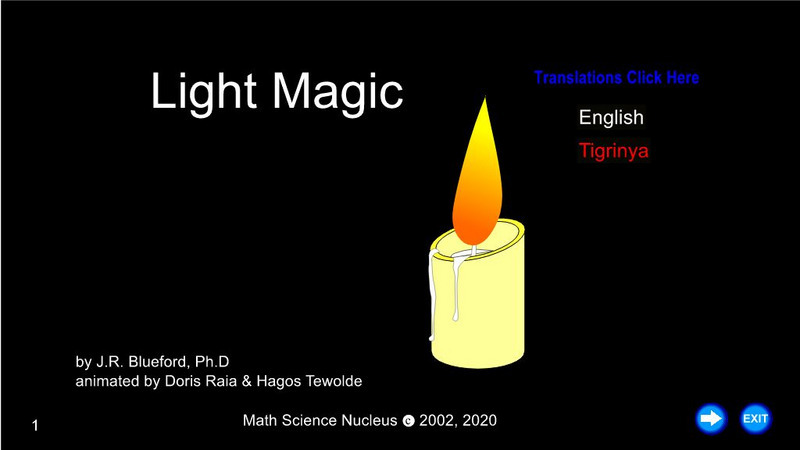
Math/science Nucleus: Light Magic
This animation discusses light and the properties of light in a storybook format. The animations cover the colors of the rainbow (ROYGBIV) along with prisms, light waves, reflection, and refraction.

South Carolina Educational Television
Know It All Media: Light and Color
Why do we see certain colors? This interactive animation demonstrates the concept of the visible spectrum, and how we see the different colors of the rainbow.
University of Colorado
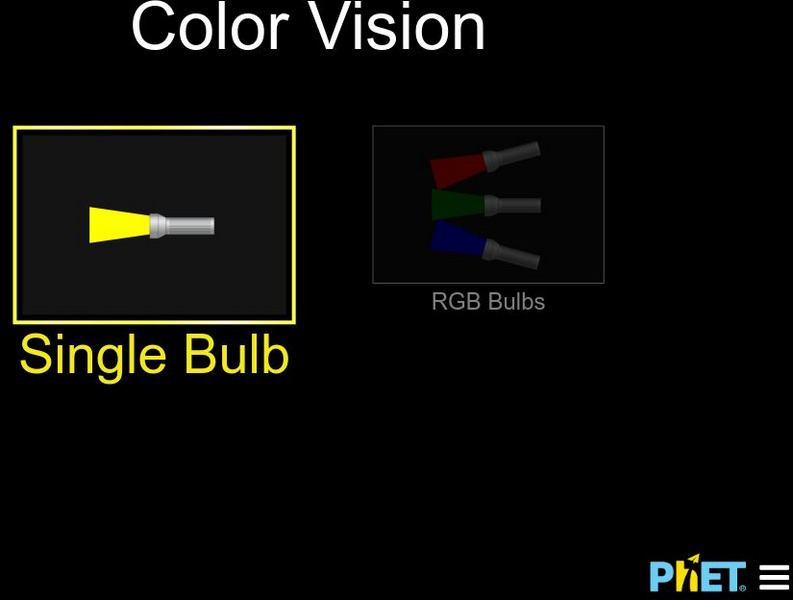
University of Colorado: Ph Et Interactive Simulations: Color Vision
Make a whole rainbow by mixing red, green, and blue light. Change the wavelength of a monochromatic beam or filter white light. View the light as a solid beam, or see the individual photons.