Hi, what do you want to do?





Science Buddies
Science Buddies: Home Sweet Biome: How Do Plants Grow in Different Environments?
In this science fair project you will learn about biomes and how different climatic conditions affect plant growth. This can explain why some plants and animals are similar in different areas of the country, and in other parts they are not.
Ducksters
Ducksters: Science for Kids: Marine or Ocean Biome
Kids learn about the marine biome. The largest biome by far, the oceans cover most of the Earth's surface.
Kidport
Kidport: Life in the Sea
Teachers can utilize this colorful interactive site so that students can explore the wonderful world of sea animals. Use this site to learn their characteristics and living environments.
Scholastic
Scholastic: Study Jams! Science: Ecosystems: Aquatic Ecosystems
A video and a short multiple-choice quiz on the topic of aquatic ecosystems. It discusses the difference between freshwater and saltwater ecosystems, then explains what the three ecozones are in a marine ecosystem.
Read Works
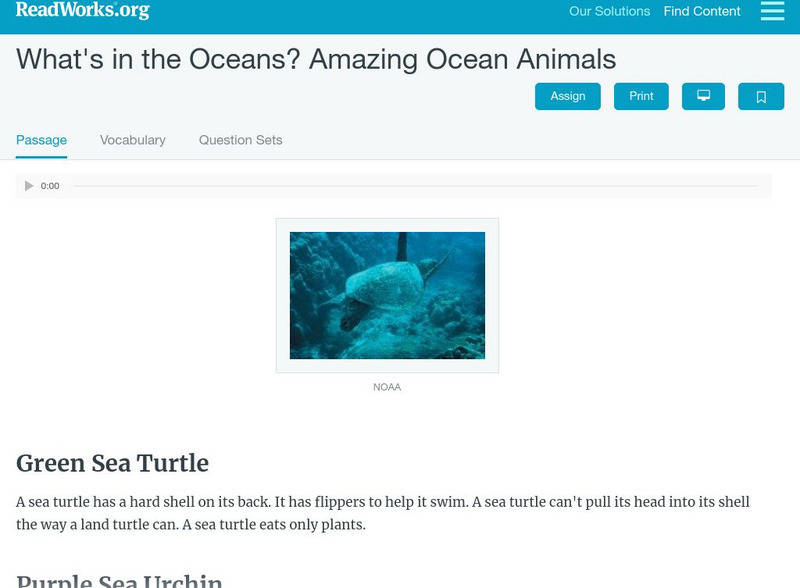
Read Works: What's in the Oceans? Amazing Ocean Animals
[Free Registration/Login Required] An informational text about some of the animals found in the ocean including: sea turtles, sea urchins, starfish, sea horses, and clownfish. A question sheet is available to help students build skills...
Science Buddies
Science Buddies: Acid Rain and Aquatic Life
Chemicals from the Earth's atmosphere are making their way down to the planet. Not in spaceships, but in rain. The acid rain can infiltrate ground water, lakes, and streams. How does acid rain affect aquatic ecosystems?
Science Buddies
Science Buddies: Heavy Metals and Aquatic Environments
You might know that lead can be toxic, and that you can get lead poisoning from eating or inhaling old paint dust. Lead is called a heavy metal, and there are other sources of heavy metals that can be toxic, too. Silver, copper, mercury,...
Society for Science and the Public
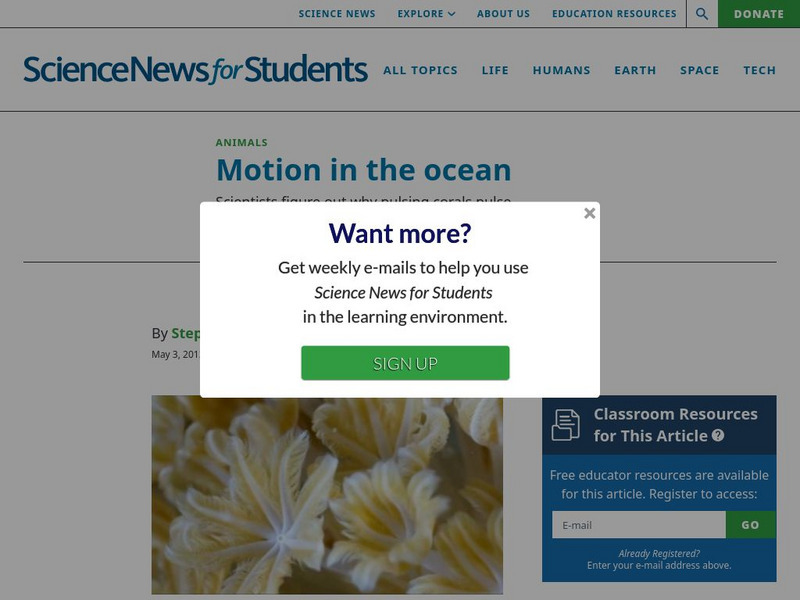
Science News for Students: Motion in the Ocean
This article reports on recent research that explains why corals are in nearly constant motion. Includes a brief video. [0:16]
![Graphic Organizers: Compare and Contrast: Land and Sea Animals [Pdf] Graphic](https://static.lp.lexp.cloud/images/attachment_defaults/resource/large/FPO-knovation.png "Graphic Organizers: Compare and Contrast: Land and Sea Animals [Pdf] Graphic")
Other
Graphic Organizers: Compare and Contrast: Land and Sea Animals [Pdf]
This PDF graphic organizer is a t-chart that will help students organize how land and sea animals are alike and how they are different. There are also color photographs of both types of animals at the top of the page. Requires Adobe Reader.
California Academy of Sciences
California Academy of Sciences: 2011 Philippine Biodiversity Expedition
The 2011 Philippine Biodiversity Expedition is the largest expedition undertaken by the Academy. It will be the first expedition to make a comprehensive survey of both terrestrial and marine diversity.
Read Works
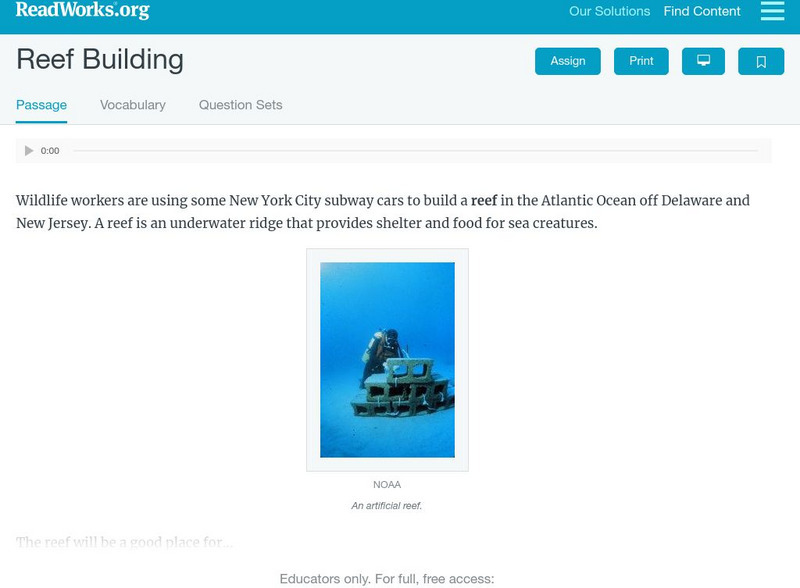
Read Works: Reef Building
[Free Registration/Login Required] An informational text about wildlife workers who are building artificial reefs to provide food and shelter for sea life. A question sheet is available to help students build skills in reading...
Ducksters
Ducksters: Science for Kids: Coral Reef Biome
Kids learn about the coral reef biome. Much of ocean life lives in this important aquatic ecosystem.
PBS
Pbs Learning Media: Sea Life Is Troubled by Noise
This article from Science a GoGo describes the risks that increasing noise pollution in ocean waters may pose to the creatures that live there. Once you read it, you'll never tap on a fish tank again!
Ducksters
Ducksters: Science for Kids: World Biomes and Ecosystems
Kids learn about the world's biomes and ecosystems. The network of life and biodiversity needed for all to survive.

E-learning for Kids
E Learning for Kids: Science: Antilles: How Can We Classify Animals?
Naomi teaches diving and meets all kinds of animals underwater. Join her and learn about grouping animals.

E-learning for Kids
E Learning for Kids: Science: Australia: How Do Environments Affect Living Things?
Noah lives near the Great Barrier Reef. Go explore this diverse habitat with him.
E-learning for Kids
E Learning for Kids: Science: Antilles: What Are the Environmental Factors of a Habitat?
Join Sam on his journey to the bottom of the sea. Explore beautiful animals living in the sea, and learn about the importance of a well-balanced habitat.

Alabama Learning Exchange
Alex: Amazing Adaptations Probing Pinnipeds
This is a technology-rich, hands-on science experiment exploring the world of pinniped adaptations using a digital probe as a data collection device.
Kinder Art
Kinder Art: Construct an Artquarium (Lesson Plan)
This lesson plan gives students a chance to create their own underwater animal out of paper-mache, and their imagination. Provides a colorful photo example, assessment criteria, and a suggested book to use for inspiration.
Exploring Nature
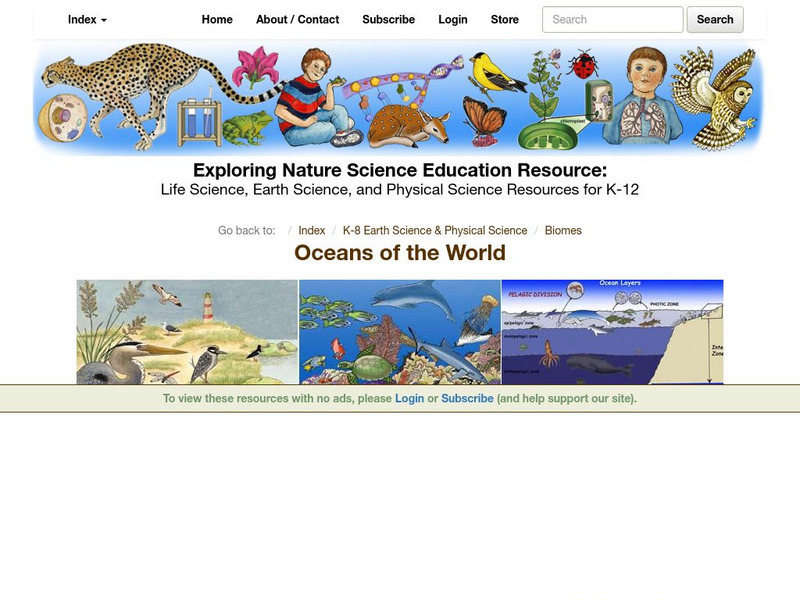
Exploring Nature Educational Resource: Oceans of the World
A set of illustrated fact pages, and some activity sheets, on coral reefs, tidal pools, and ocean ecosystems. Find maps, graphic organizers, and a movie link to tidal zones. Hyperlinks to specialized vocabulary words are also provided....
American Museum of Natural History
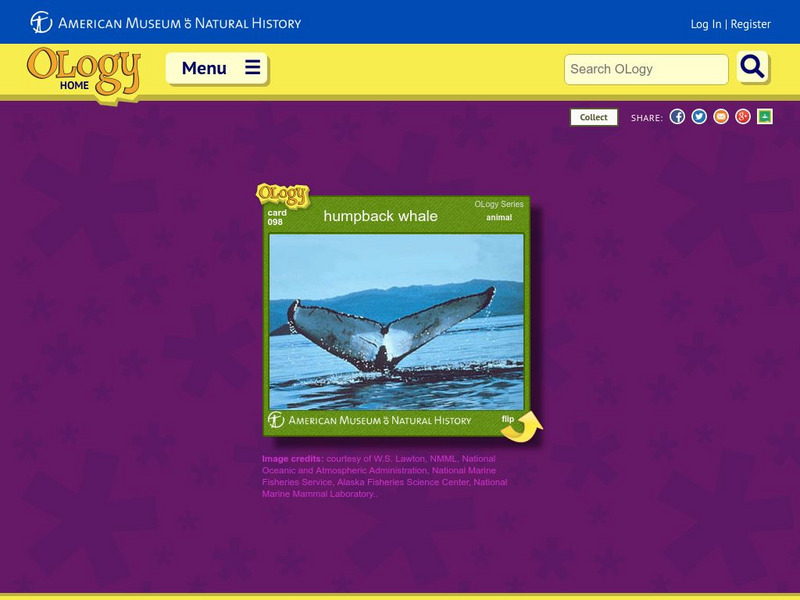
American Museum of Natural History: Humpback Whale O Logy Card
OLogy cards are like virtual baseball cards about all kinds of science topics. This one is about the Humpback Whale and it contains information about the habitat, diet, and other ecological information. See if you can answer a few...

Kidport
Kidport: Who Eats What?
At this site students are encouraged to try and answer questions that relate to what animals eat. At the bottom of the web page are beautiful pictures of land and sea animals and when selected, students will be able to read short facts...
Nature Conservancy
The Nature Conservancy: Nature Lab
These wonderful virtual field trips allow students to explore a coastal rain forest or the coral reefs in the Dominican Republic, and so much more.
The Franklin Institute
The Franklin Institute: Treasures at Sea
Learn about ocean systems and habitats. Lots of reading, writing, games, and interactive activities. Colorful and fun.