Hi, what do you want to do?






Incorporated Research Institutions for Seismology
Iris: Seismic Shadow Zones vs Light Shadows
Is it possible to compare Earth's seismic shadow zones to light shadows? Let's find out with this video! [3:16]

Incorporated Research Institutions for Seismology
Iris: Seismic Shadow Zones: P Wave
What can the P wave tell about the core of the Earth? Find out in a video. [3:26]

Incorporated Research Institutions for Seismology
Iris: Seismic Shadow Zones: S Wave Shadow Zone
What do S waves reveal about the Earth's surface? This video will illustrate the research. [2:11]
Incorporated Research Institutions for Seismology
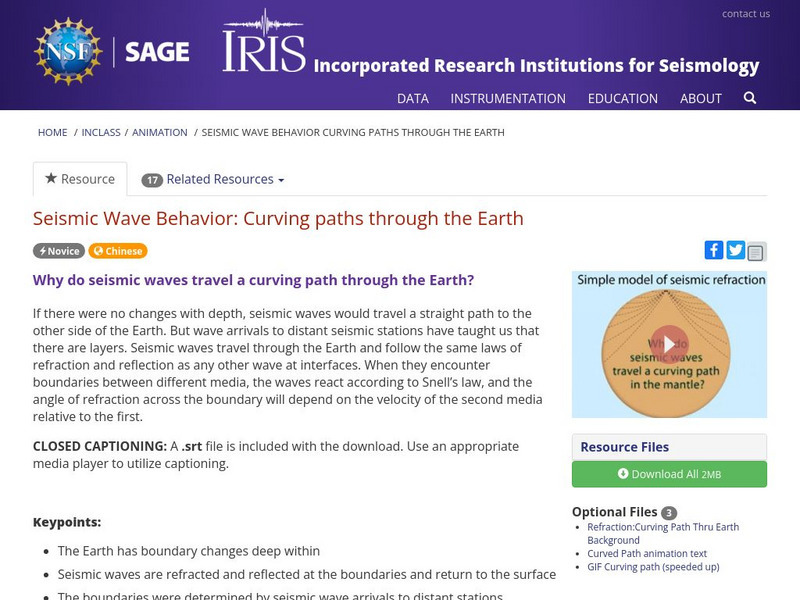
Iris: Seismic Wave Behavior: Curving Paths Through the Earth
Studying the travel paths of seismic waves in the interior of the Earth. Find out what the paths look like and why. [1:31]

Incorporated Research Institutions for Seismology
Iris: Shake Alert: Earthquake Early Warning System
The ShakeAlert technology is presented because it is a system to measure when the impact of an earthquake will hit an area. It sends out a notice to the area so the residents can find protection. Find detailed facts provided by the USGS....
Incorporated Research Institutions for Seismology
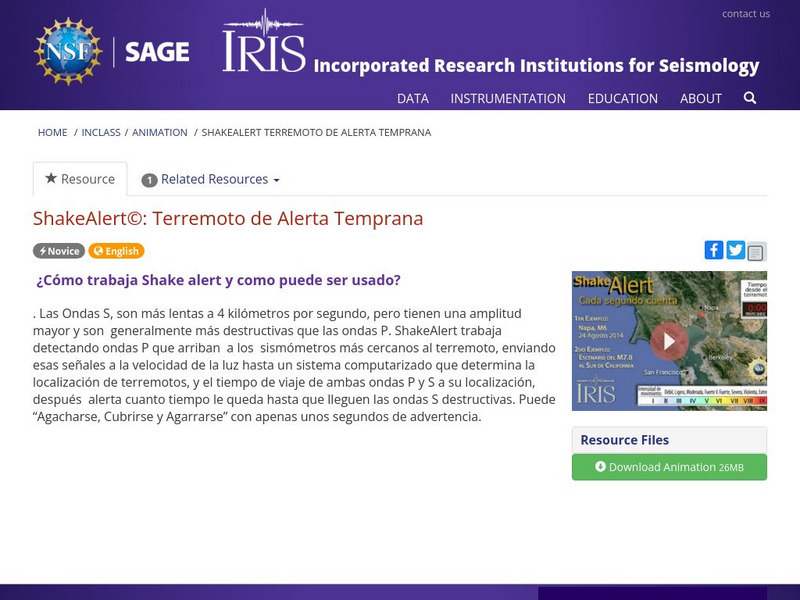
Iris: Shake Alert: Terremoto De Alerta Temprana
A resource to understand how ShakeAlert helps people know when an earthquake will begin shaking their area. The alert provides people the opportunity to find a safe place. [5:12]

Incorporated Research Institutions for Seismology
Iris: Us Array Visualizations: Tutorial on Viewing
An introduction to understanding what USArray visualizations provide. Earthquake waves are captured and turned into a graphic video. [2:24]
Incorporated Research Institutions for Seismology
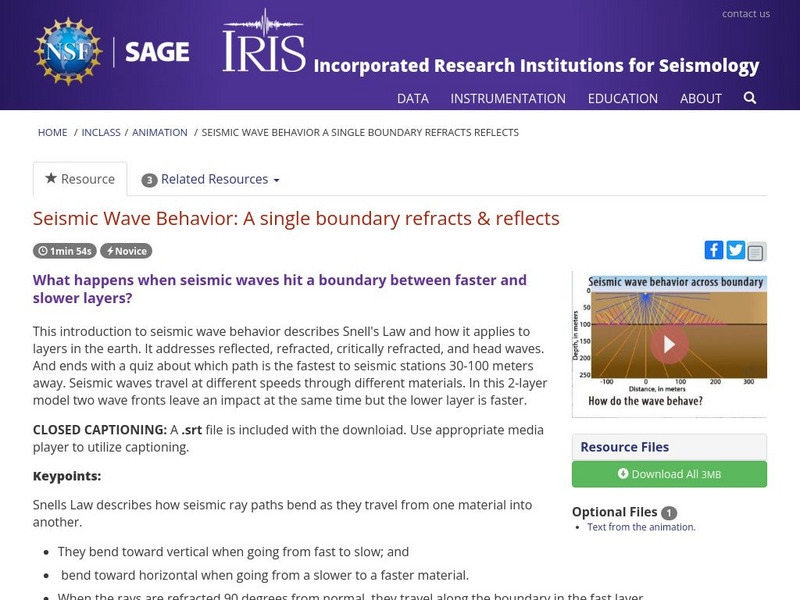
Iris: Seismic Wave Behavior: A Single Boundary Refracts & Reflects
This introduction to seismic wave behavior describes Snell's Law and how it applies to layers in the earth. It addresses reflected, refracted, critically refracted, and head waves. Seismic waves travel at different speeds through...

PBS
Pbs Learning Media: Pitch: Super Sounding Drums
This video segment, adapted from ZOOM, explores sounds made by homemade drums of different sizes, shapes, and materials. [3:41]
PBS
Pbs Learning Media: Waves of Destruction
Learn about the anatomy of a tsunami in this video segment from Nature. Essay, discussion questions, and links to related information included. [1:19]
Science for Kids
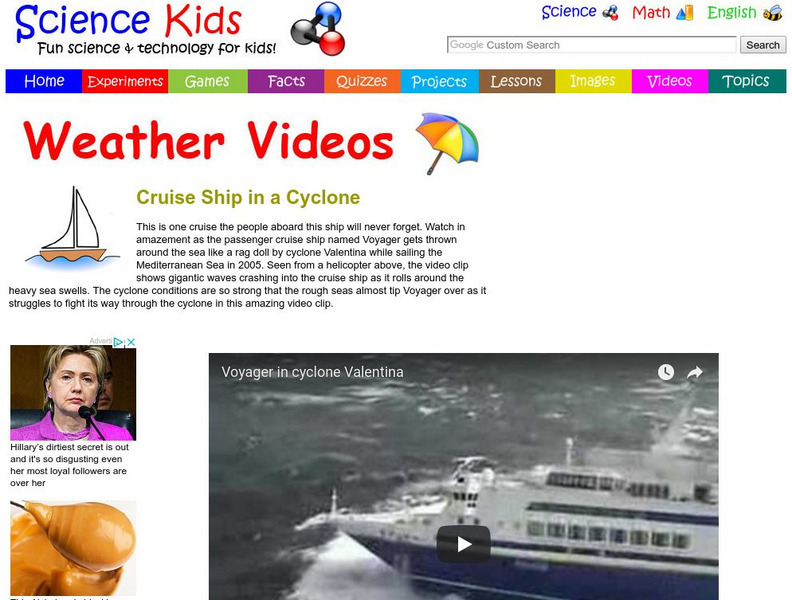
Science Kids: Weather Videos: Cruise Ship in a Cyclone
Seen from a helicopter above, the video clip shows gigantic waves crashing into the cruise ship as it rolls around the heavy sea swells. [3:32]
US Geological Survey
U.s. Geological Survey: Earthquakes: Directivity
A quick animation showing directivity, the directional movement of the seismic energy between two stations.
US Geological Survey
U.s. Geological Survey: Earthquakes: Shadow Zone
An animation showing the area of the Earth that is not detectable by seismographs, known as the shadow zone.
Bozeman Science
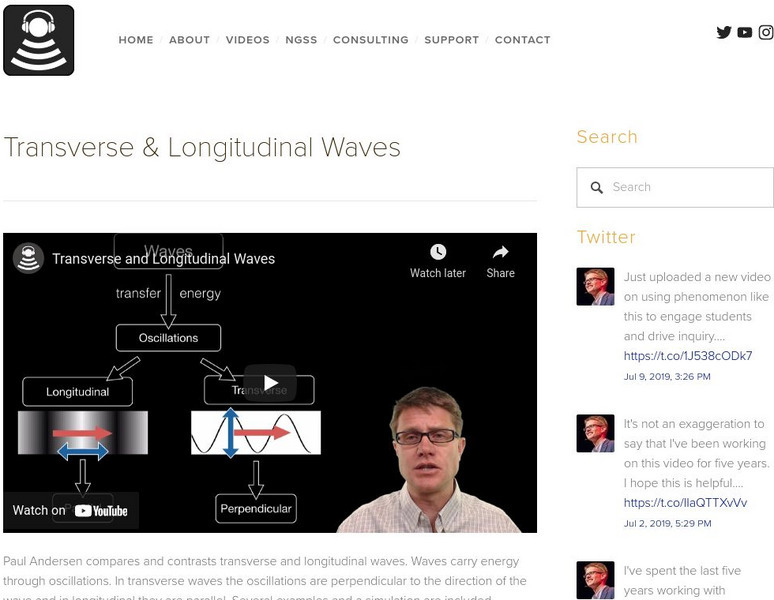
Bozeman Science: Transverse and Longitudinal Waves
In the following video Paul Andersen compares and contrasts transverse and longitudinal waves. Waves carry energy through oscillations. In transverse waves the oscillations are perpendicular to the direction of the wave and in...
Bozeman Science
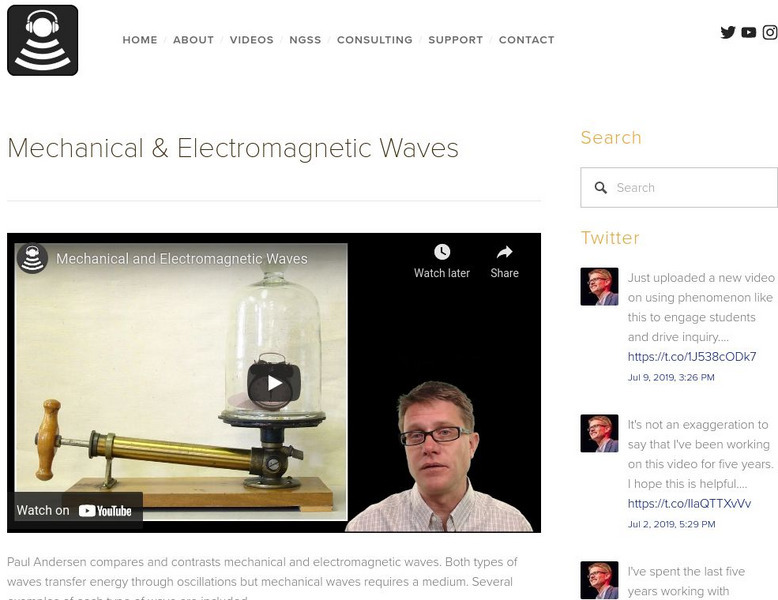
Bozeman Science: Mechanical and Electromagnetic Waves
In the following video Paul Andersen compares and contrasts mechanical and electromagnetic waves. Both types of waves transfer energy through oscillations but mechanical waves requires a medium. Several examples of each type of wave are...

Bozeman Science
Bozeman Science: Wave Amplitude
In the following video Paul Andersen explains how the amplitude of a wave is a measure of the energy of the wave. He gives several examples of wave amplitude and shows you how to calculate the wave of a transverse and longitudinal wave....
Bozeman Science
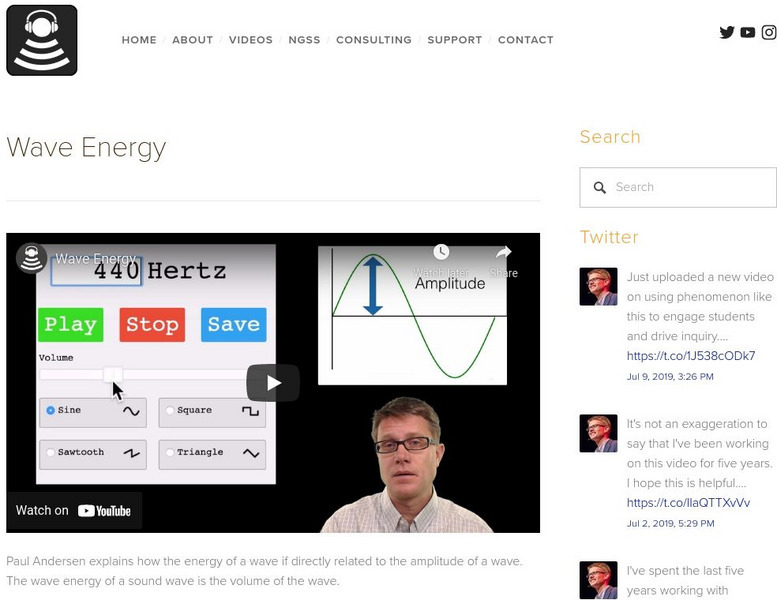
Bozeman Science: Wave Energy
Paul Andersen explains how the energy of a wave if directly related to the amplitude of a wave. The wave energy of a sound wave is the volume of the wave. [3:39]

Bozeman Science
Bozeman Science: Wave Period and Frequency
In the following video Paul Andersen explains how the period is the time between wave and the frequency is the number of waves per second. Period is measured in seconds and frequency is measured in Hertz. Wave period and wave frequency...
Bozeman Science
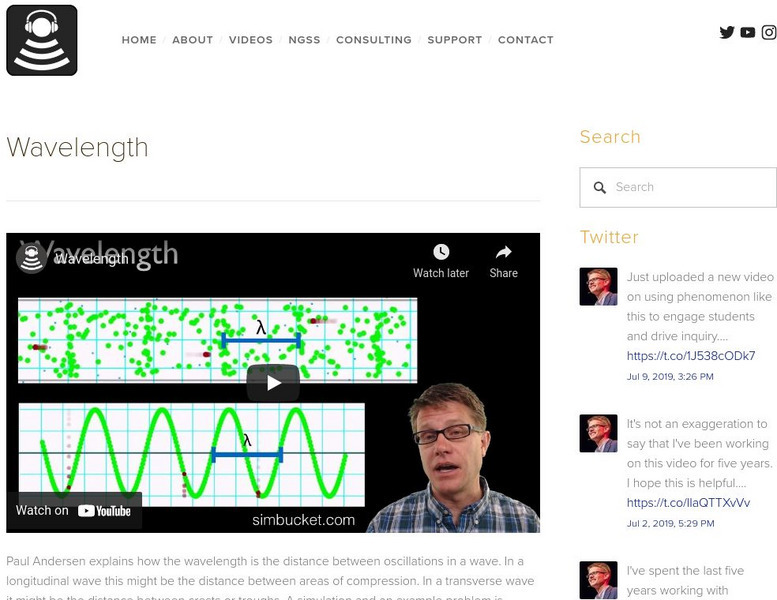
Bozeman Science: Wavelength
In the following video Paul Andersen explains how the wavelength is the distance between oscillations in a wave. In a longitudinal wave this might be the distance between areas of compression. In a transverse wave it might be the...
Bozeman Science
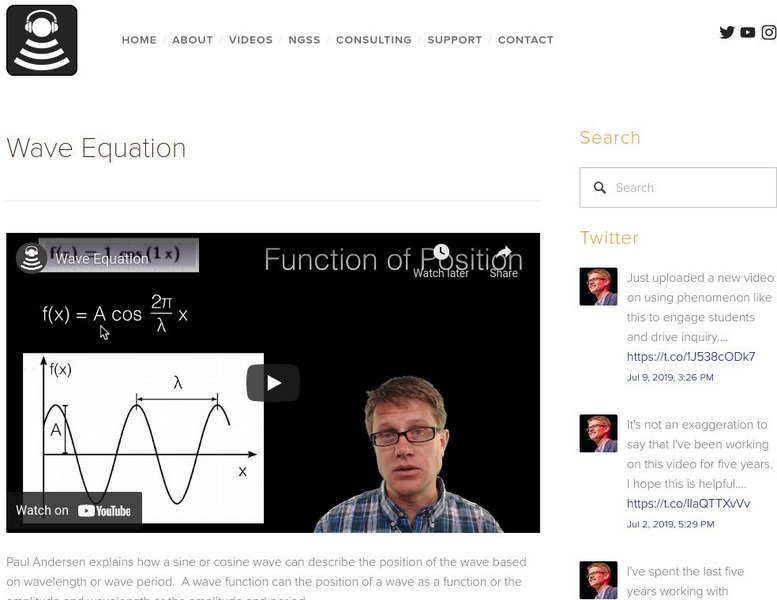
Bozeman Science: Wave Equation
In the following video Paul Andersen explains how a sine or cosine wave can describe the position of the wave based on wavelength or wave period. A wave function can the position of a wave as a function or the amplitude and wavelength or...
Bozeman Science
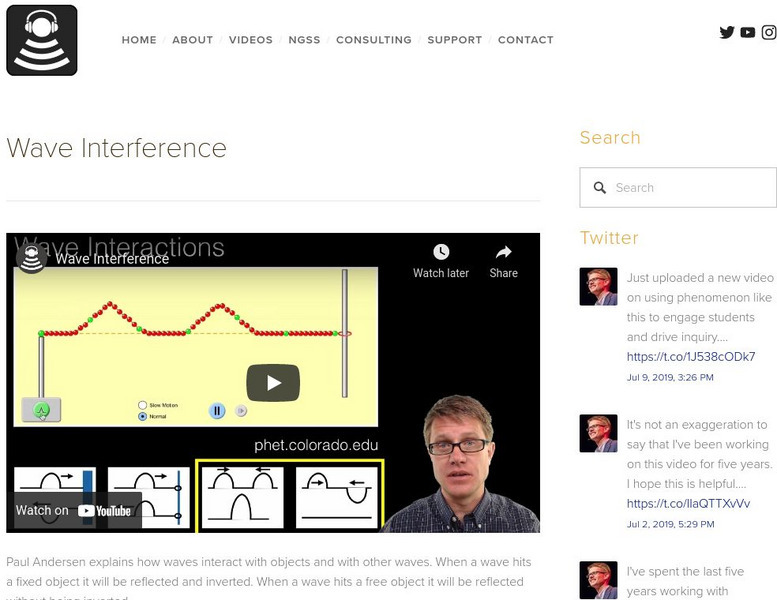
Bozeman Science: Physics: Wave Interference
Paul Andersen explains how waves interact with objects and other waves. When a wave hits a fixed object, it will be reflected and inverted. When a wave hits a free object, it will be reflected without being inverted. [6:24]
Bozeman Science
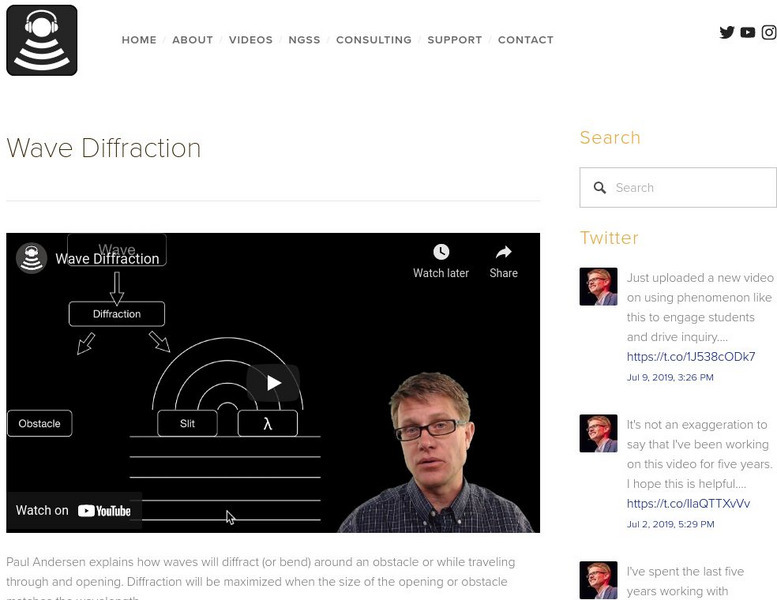
Bozeman Science: Physics: Wave Diffraction
In the following video, Paul Andersen explains how waves will diffract (or bend) around an obstacle or while traveling through an opening. Diffraction will be maximized when the size of the opening or obstacle matches the wavelength. [4:20]
Bozeman Science
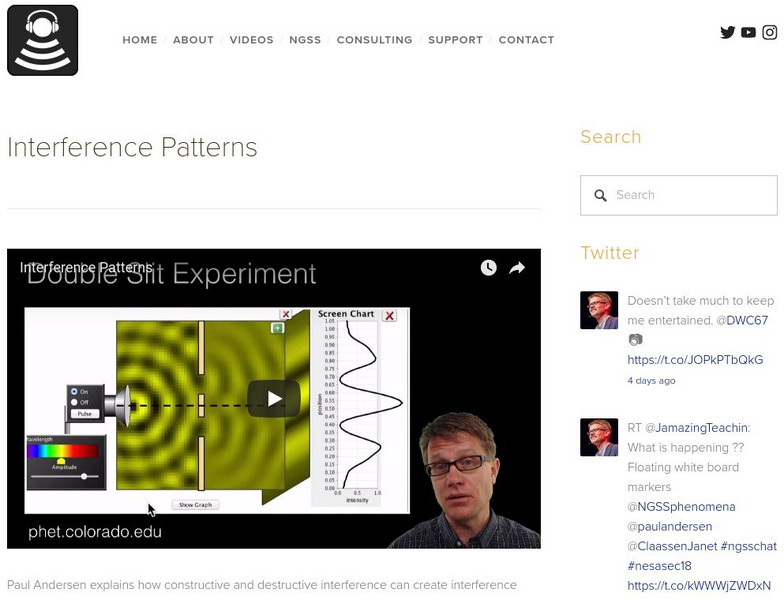
Bozeman Science: Physics: Interference Patterns
In this video, Paul Andersen explains how constructive and destructive interference can create interference patterns. Interference patterns can be created by all types of waves, including water, sound, and light. A classic experiment...
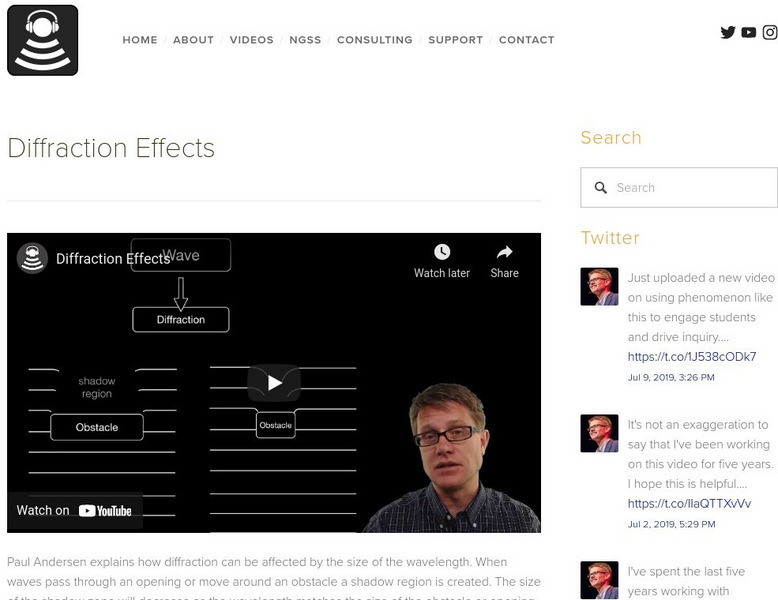
Bozeman Science
Bozeman Science: Physics: Diffraction Effects
Paul Andersen explains how diffraction can be affected by the size of the wavelength. When waves pass through an opening or move around an obstacle, a shadow region is created. The size of the shadow zone will decrease as the wavelength...