Hi, what do you want to do?





Bozeman Science
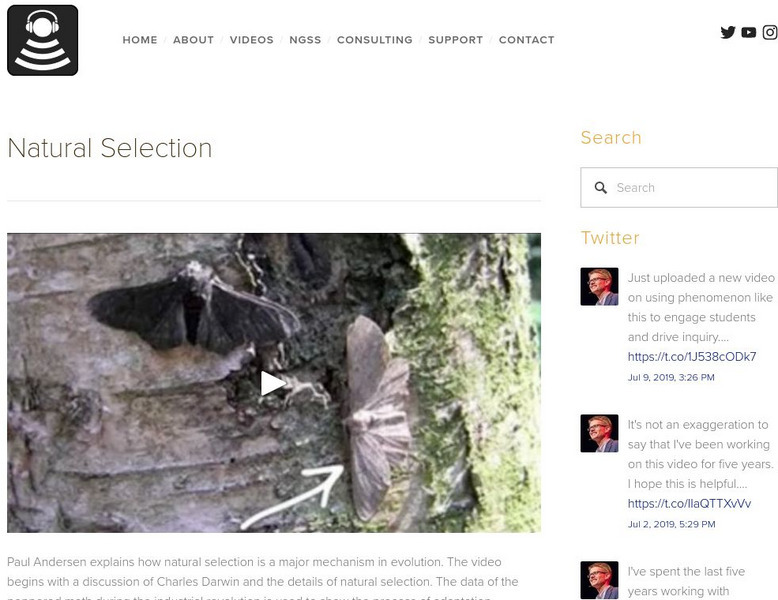
Bozeman Science: Natural Selection
Paul Andersen explains how natural selection is a major mechanism in evolution. The video begins with a discussion of Charles Darwin and the details of natural selection. The data of the peppered moth during the industrial revolution is...
Bozeman Science
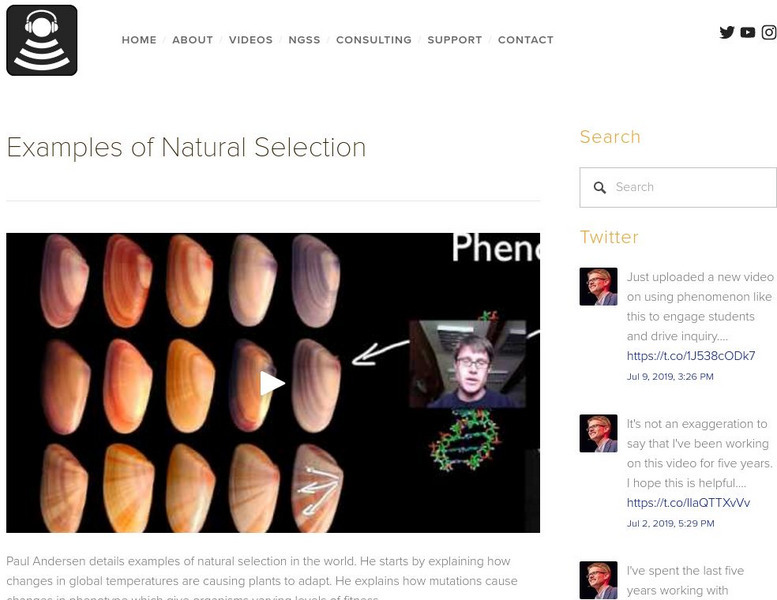
Bozeman Science: Examples of Natural Selection
Paul Andersen details examples of natural selection in the world. He starts by explaining how changes in global temperatures are causing plants to adapt. He explains how mutations cause changes in phenotype which give organisms varying...
Crash Course
Crash Course Kids 41.1: Living Things Change
Learn about some examples of how and why living things change because of changes in their environments. [4:36]
Khan Academy
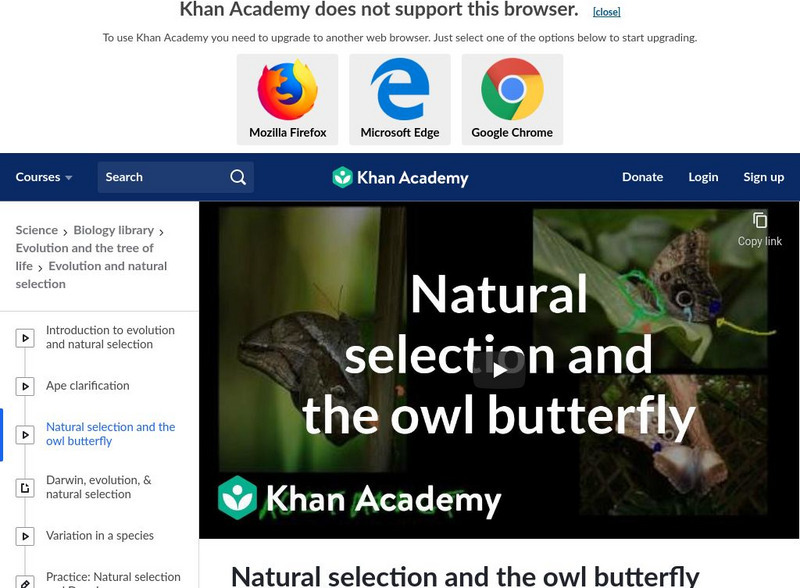
Khan Academy: Natural Selection and the Owl Butterfly
Find out how the "Owl Butterfly" may have gotten the spot on its wings. [13:29]

Howard Hughes Medical Institute
Hhmi: Bio Interactive: Pocket Mouse and Predation
Students watch a short animation showing how the pocket mouse adapts and evolves in a changing environment. Includes discussion questions. [0:20]
Howard Hughes Medical Institute
Hhmi: Bio Interactive: Natural Selection Adaptation
Classroom resources paired with a ten-minute video highlight the groundbreaking research of physical and genetic evolutionary changes in rock pocket mouse populations. [10:31]


PBS
Pbs Learning Media: Different Breeds of Cattle
In this video segment from Nature, learn about six different breeds of cattle. [6:46]
Science Friday Initiative
Science Friday: The Story of Texas Longhorns, as Told by Their Dna
Centuries of natural selection left longhorn cattle less susceptible to drought and disease.

Sophia Learning
Sophia: Natural Selection: Lesson 3
This lesson will introduce the process of natural selection. It is 3 of 5 in the series titled "Natural Selection."
Sophia Learning
Sophia: Speciation and Natural Selection: Lesson 2
This lesson discusses how and why plants and animals adapt to their surroundings over time. It is 2 of 4 in the series titled "Speciation and Natural Selection."

Bozeman Science
Bozeman Science: Behavior and Natural Selection
Paul Andersen explains how the behavior of various organisms is shaped by natural selection. The action of phototropism and the timing of photoperiodism have both been shaped by the relative availability of light. Courtship in the bower...
Bozeman Science
Bozeman Science: Social Interactions & Group Behavior
In this video, Paul Andersen explains the importance of social interactions and group behavior. Organisms live in groups because it overs them greater success and has been selected for through natural selection. Some groups are stable...
Bozeman Science
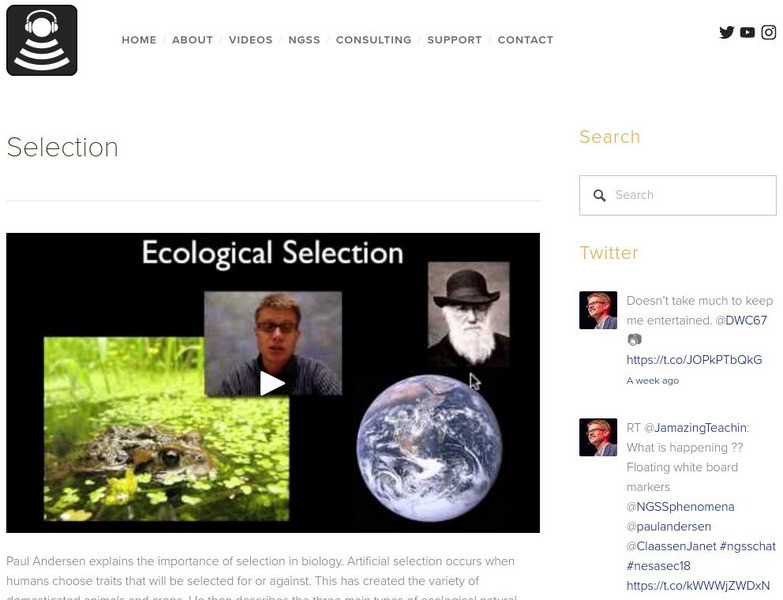
Bozeman Science: Selection
Paul Andersen explains the importance of selection in biology. Artificial selection occurs when humans choose traits that will be selected for or against. This has created the variety of domesticated animals and crops. He then describes...
Bozeman Science
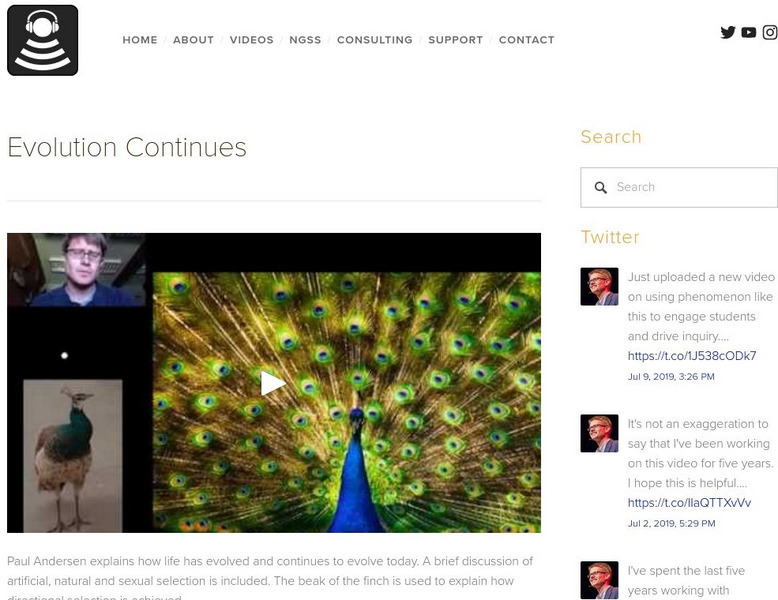
Bozeman Science: Evolution Continues
Paul Andersen explains how life has evolved and continues to evolve today. A brief discussion of artificial, natural and sexual selection is included. The beak of the finch is used to explain how directional selection is achieved.
Bozeman Science
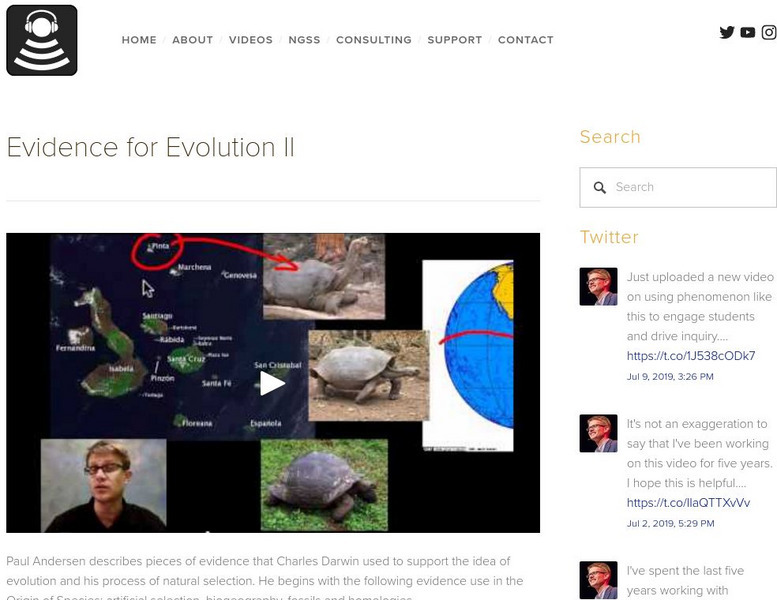
Bozeman Science: Evidence for Evolution Ii
Paul Andersen describes pieces of evidence that Charles Darwin used to support the idea of evolution and his process of natural selection. He begins with the following evidence use in the Origin of Species; artificial selection,...
Other
Human Evolution Theory: Evolution and the Structure of Health and Disease
Discusses how the forces of natural selection may have dictated the types of disease organisms and processes that influence humans. Site also discusses how life functions and how human shave responded through evolution to these threats....

Bozeman Science
Bozeman Science: Microevolution
Paul Andersen defines microevolution as any change in the frequency of the allele pool. He then explains the five mechanisms of evolution; small sample size, non-random mating, mutations, gene flow and natural selection.

Bozeman Science
Bozeman Science: Ap Natural Selection Review
Paul Andersen reviews the major within the first unit on natural selection. He starts by defining evolution and explaining how evolution can occur in a population. He reviews the population genetics and camouflage lab. [13:04]
PBS
Pbs Learning Media: A Frill a Minute
An episode of "Dinosaur Train" discussing the traits of a triceratops that allow it to ward off potential predators. [12:30]